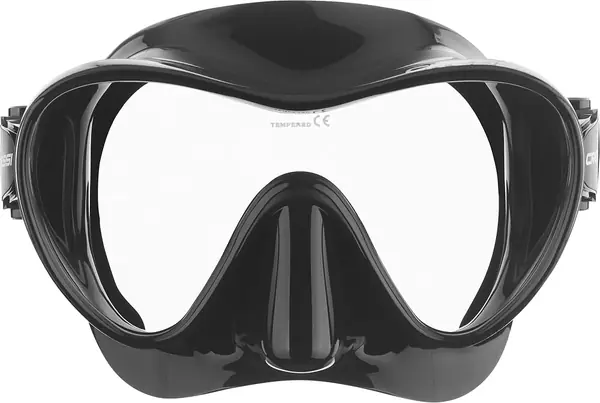
Cressi Matrix Best Overall
Key details
- Weight
- 6.4 oz
- Field Of View
- Wide, with downward view
- Internal Volume
- Extremely low
- Lens Type
- Dual-lens tempered glass
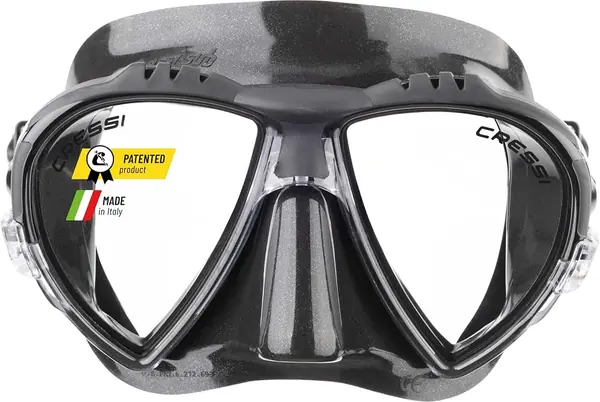
The inclined, tear-drop lenses are the first thing we notice on the Cressi Matrix, and they are why it earns our top spot. The lower edge is shaped to improve downward visibility, so checking a dive computer, BCD, or camera housing takes less head-tilting than with a plain single-lens mask. That matters on a scuba dive, where the thing you need to see is often hanging at your waist rather than swimming in front of you.
The Matrix is also a low-volume mask, which is the more important trait for freediving and easy equalization. Less air space means less work to clear and less pressure on your face as you go down; the soft silicone skirt is shaped to sit widely against the skin. At 6.4 ounces it is not the lightest mask here, but it packs reasonably, and the two-lens layout gives a broad lateral view without the seam-heavy look of a panoramic mask. We also like that the tempered-glass lenses and two-year warranty make it a serious piece of gear rather than a vacation accessory.
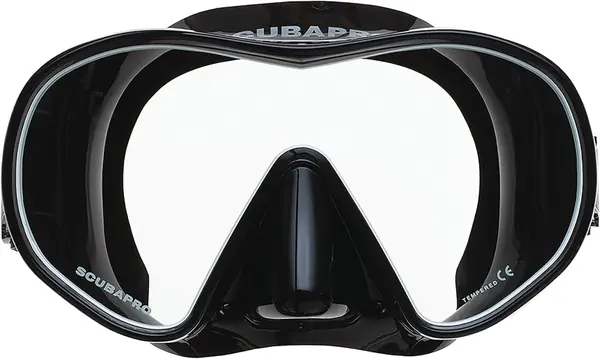
Fit is still the deciding variable: no spec sheet can tell you whether the nose pocket matches your face. We choose it as the default for scuba and freediving because the downward view and low volume are useful every time you dive, not just in one specialty. If you mostly snorkel and want something that folds flat, the F1 is the easier travel companion; if a beard breaks the seal, the Scubapro Solo is the better place to start.
Pros
- Downward view helps check gauges and gear
- Low internal volume eases equalizing
- Wide lateral view with tempered glass
- Soft silicone skirt and two-year warranty
Cons
- Costs more than our travel pick
Our top pick for scuba and freediving, the Cressi Matrix pairs a low-volume fit with a wide downward view and a secure silicone skirt.