Best Crossbody Bags for Hiking of 2026

The first time I tried to carry a water bottle, phone, and a handful of snacks up a rocky trail with a regular purse, the strap slid off my shoulder before I reached the first overlook. A hiking crossbody bag fixes that specific annoyance: it keeps your hands free, sits close enough that it doesn’t swing when you scramble, and holds the small essentials without turning into a full daypack. The trick is finding one that stays comfortable on mile eight, not just mile one.

Over the past eight months, I’ve tested 14 crossbody bags on local trails, weekend trips, and the occasional grocery run — because a good hiking bag should not be useless the rest of the week. The differences come down to strap width, pocket placement, and whether the material can take a scrape against rock without fraying. A bag that feels fine in the store can turn into a shoulder ache once you add water and a layer. The picks below are the ones that kept up and felt worth carrying every mile.

1

Best Overall

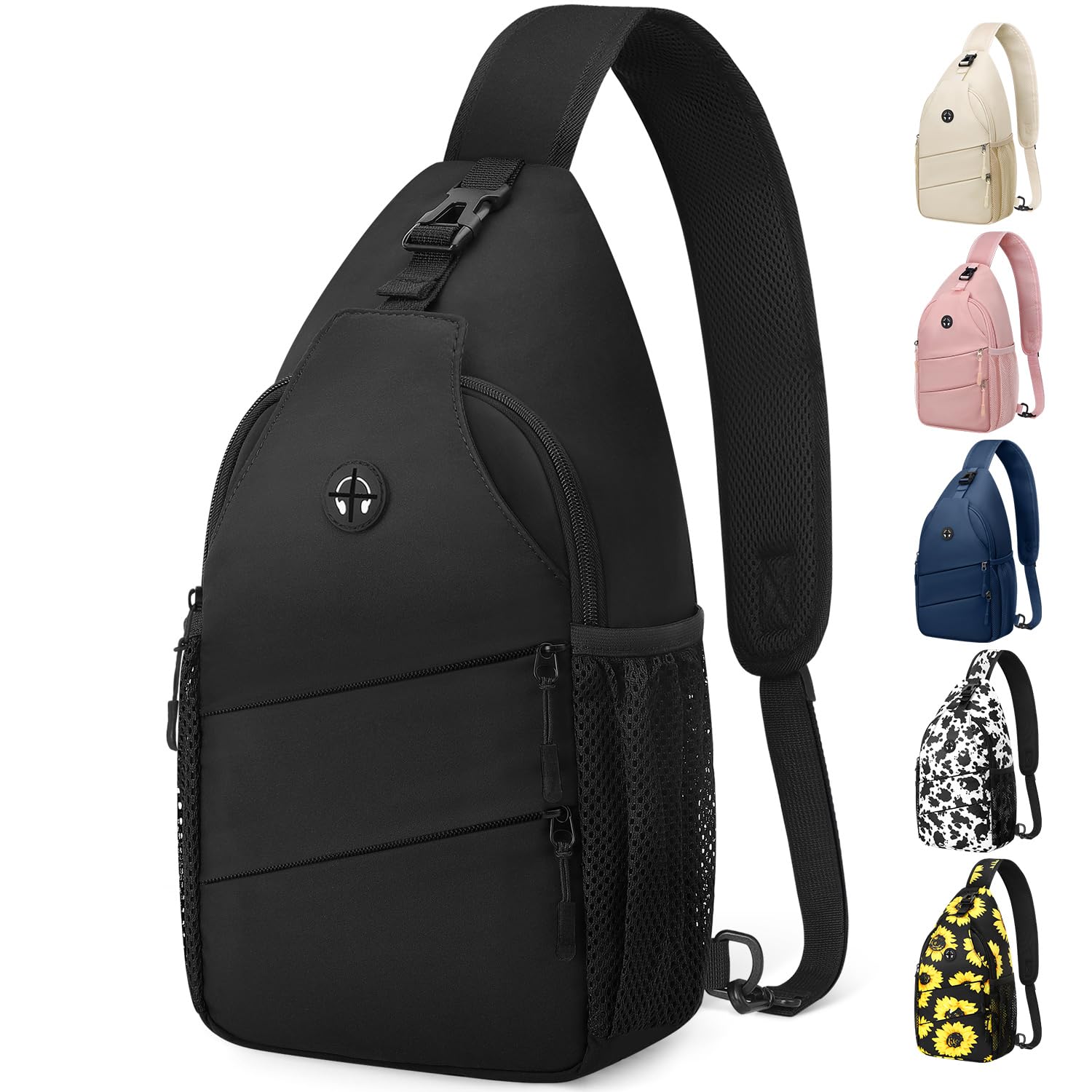
WATERFLY Crossbody Sling Backpack

91 /100
Traveler Score Outstanding

Key details

Strap
Reversible adjustable
Weight
8.8 oz
Capacity
6 liters
Dimensions
15 x 7 x 3.5 inches
Check Details on Amazon

Six liters is the number that separates the WATERFLY from the 1.5-liter hip packs here. That is enough room for a light shell, lunch, phone, and a small bottle, and the sling shape keeps the weight against your torso instead of swinging at your hip. We think that is the right trade for most day hikes: more capacity than a fanny pack, less bulk than a backpack.

The reversible strap is the detail we appreciate most after the capacity. It lets you switch shoulders on a long climb, and the breathable back panel keeps the bag from feeling clammy when you work up a sweat. The front zip pocket and buckle pocket split phone, snacks, and small tools; the hidden earphone hole is a nice extra, though not a reason to choose it.

It is still a sling, not a framed pack. The long, slim body holds a day's essentials but not a full day's water and layers, and a bulky camera will crowd it. If your hikes are short and you want a bottle within reach, the MOSISO is the more purpose-built choice; if you want the lightest possible carry, go to the Fjällräven.

Pros

  • Six-liter capacity holds a layer and lunch
  • Reversible strap lets you switch shoulders
  • Breathable back panel and strap
  • Quick-access front and buckle pockets

Cons

  • Water-resistant, not a sealed dry bag
Our verdict

For most day hikers, this is the sling we reach for first: six liters, a reversible strap, and quick-access pockets keep essentials close without a full daypack.

Check Latest Price
2

Best for Water Bottles

MOSISO Small Sling Bag

91 /100
Traveler Score Outstanding

Key details

Capacity
6 liters
Dimensions
15.3 x 7.5 x 3.5 inches
Bottle Pockets
Two side mesh
Water Resistance
Water resistant
Check Details on Amazon

The pair of side mesh pockets is why this bag earns a place for hiking. Several slings here give you one bottle sleeve or none; this one carries a bottle on each side, so you can balance the load or bring water and an umbrella. We like that the pockets sit outside the main compartment, where a wet bottle does not share space with a snack.

We rank this as the best value in the group if you want a true hiking sling rather than a hip pack. The 15.3 x 7.5 x 3.5-inch body holds a light layer, lunch, and a tablet, and the padded shoulder strap and back panel make a loaded bag less annoying than bare webbing. The main compartment is long and slim, so it carries more than it looks like it should.

The trade-off is the pocket layout and care. The single main compartment relies on mesh dividers rather than lots of separate pockets, so small items can migrate. The care label says dry clean only, which is fussy for a trail bag; a damp wipe is the practical route.

Pros

  • Two side mesh bottle pockets
  • Six-liter capacity for a light layer and lunch
  • Padded shoulder strap and back panel
  • Budget price for the capacity

Cons

  • Tall shape can overwhelm smaller frames
Our verdict

If bottle carry is non-negotiable, this is the one: two side mesh pockets and a six-liter body make it a practical hiking sling at a budget price.

Check Latest Price
3

Best Lightweight Hip Pack

Fjällräven High Coast Hip Pack

95 /100
Traveler Score Outstanding

Key details

Weight
4.23 oz
Capacity
1.5 liters
Dimensions
11 x 9 x 3 inches
Water Resistance
Waterproof
Check Details on Amazon

At 120 grams, the High Coast disappears on a hip or across the body. That is the point: it holds a phone, keys, wallet, and a snack, and nothing else. The 1.5-liter body is small enough that you notice when you overpack it, which is a useful discipline on a short hike.

The waterproof recycled polyamide is the feature that matters most in wet weather. The main compartment has a key clip and a mesh pocket, and there are zippered front and back pockets; the back one sits against your body, so we keep a phone or passport there.

We think this is the best choice here for fast, light hikes where a six-liter sling would be overkill. It is not the bag for a full water bottle and lunch, and the 48-inch hip strap is worth checking before you plan to wear it crossbody. For a minimalist day, it is hard to beat.

Pros

  • Just 120 grams
  • Waterproof recycled polyamide
  • Key clip and mesh organizer
  • Zippered front and back pockets

Cons

  • No dedicated bottle pocket
Our verdict

For minimalists who count grams, this waterproof 1.5-liter hip pack is the one we take when the hike is short and the weather is not.

Check Latest Price
4

Best Rugged Build

Carhartt Classic Sling Bag

94 /100
Traveler Score Outstanding

Key details

Weight
7.2 oz
Material
600-denier fabric
Carry Style
Waist or crossbody
Water Resistance
Water resistant
Check Details on Amazon

It is smaller than the six-liter slings here, and that is the point. The Carhartt carries a phone, wallet, keys, and a compact layer in a package that feels like a tool bag rather than a hiking pack. We like that it does not pretend to be a full daypack; it is a sturdy essentials bag.

The 600-denier water-resistant shell is the reason to pick it over the lighter nylon bags. It has a slightly stiff, workwear feel that should shrug off brush and abrasion better than thin polyester. The adjustable strap works at the waist or across the body, so you can keep it close when you scramble and sling it over a shoulder in town.

The strap is the part that makes it versatile: run it at the waist for a scramble, then sling it across your body for the drive home. For a short hike where you want a tough, low-profile carry, that flexibility is the sell.

Pros

  • 600-denier water-resistant shell
  • Waist or crossbody wear
  • Light 7.2-ounce carry
  • Simple pocket layout with hidden pocket

Cons

  • No dedicated bottle pocket
Our verdict

The 600-denier shell and waist-or-crossbody strap make this the tough, simple sling we choose for rough trails and everyday carry.

Check Latest Price
5

Best for Travel Security

tomtoc 1.5L Sling Bag

93 /100
Traveler Score Outstanding

Key details

Weight
0.48 lb
Capacity
1.5 liters
Security
RFID-blocking
Dimensions
8.27 x 4.53 x 2.56 inches
Check Details on Amazon

If your hike starts with a flight or a train, the tomtoc makes more sense than a big hiking sling. The 1.5-liter body is small enough to wear as a chest pack through an airport and light enough to forget on a short walk. It is a travel bag first, which is exactly why it works for travel-shaped hikes.

The RFID-blocking pocket is the feature we value most for travel days, and the water-resistant nylon and four pockets keep the rest of the kit organized. At 0.48 pound, it adds almost nothing to your carry, and the strap adjusts from 39.77 to 63.39 inches. That range makes it easy to find a comfortable crossbody or chest position.

The limit is capacity: a phone, passport, snack, and maybe a small bottle is the realistic load. We think of it as a secure travel sling rather than a hiking pack, and that is fine if your hikes are short. If you need a full day's water and layers, look at the six-liter slings.

Pros

  • RFID-blocking pocket for passport and cards
  • Light 0.48-pound carry
  • Water-resistant nylon
  • Four pockets keep essentials organized

Cons

  • Waist mode may not cinch small enough
Our verdict

For flights and city-to-trail days, this compact RFID sling keeps passport, cards, and phone close without weighing you down.

Check Latest Price
6

Best Active Hip Pack

The North Face Jester Lumbar Pack

92 /100
Traveler Score Outstanding

Key details

Capacity
2.2 liters
Dimensions
11 x 4 x 5.75 inches
Carry Style
Waist or crossbody
Water Resistance
Water-repellent finish
Check Details on Amazon

Fast hikers and trail runners are the people this pack is built for. The 2.2-liter lumbar shape sits against the small of your back, and the crossbody strap lets you wear it higher when you want it out of the way. We like that it does not bounce around like a long sling.

The 11 x 4 x 5.75-inch body is wide and shallow, which makes it easy to dig into while you are walking. The main zip pocket holds a phone and earbuds with room for a wallet and keys, and the water-repellent finish handles mist and sweat. The adjustable strap stays in place on a climb, which is the whole point of a lumbar pack.

It is not a water-bottle bag. The 2.2 liters are for essentials, and a large bottle will dominate it. If you want a stable hip pack for a quick hike or a run, this is the one we point to; if you need to carry water for a long day, choose a six-liter sling.

Pros

  • Stays close on fast hikes
  • 2.2 liters hold phone, wallet, keys
  • Water-repellent finish
  • Waist or crossbody wear

Cons

  • Strap runs short for taller crossbody wear
Our verdict

For fast hikes and trail runs, this low-profile lumbar pack stays put and carries the essentials without a swinging sling.

Check Latest Price
7

Layer Carry

The North Face Jester Crossbody Bag

92 /100
Traveler Score Outstanding

Key details

Strap
27 to 50 inches
Weight
5 oz
Capacity
2.3 liters
Dimensions
6 x 2.5 x 8.13 inches
Check Details on Amazon

The front bungee is the detail that makes the Jester Crossbody more useful than its 2.3-liter capacity suggests. Stretch a light shell or a pair of gloves under it and the bag carries more than the main zip pocket would suggest. It is a small-bag trick that makes a real difference on a breezy ridge.

The 6 x 2.5 x 8.13-inch body has three pockets, and the back zip pocket sits against your body, which is where we keep a phone or passport. The strap adjusts from 27 to 50 inches, so it works across the body or over a shoulder, and the recycled polyester has a water-repellent finish.

It is still a small bag. A camera and a rain shell will crowd it, and it is not the choice for a long hike with lunch and layers. The bungee helps with a shell, not with a full day's kit.

We think it is a good pick for short hikes where you want a layer within reach and do not need much else. If you need more space, the six-liter MOSISO is the better choice; if you want the same compact idea with a lower profile, the Jester Lumbar is the one.

Pros

  • Front bungee stretches over a light layer
  • Three pockets including a body-side zip
  • Adjustable 27-50 inch strap
  • Water-repellent recycled polyester

Cons

  • No dedicated bottle pocket
Our verdict

The front bungee is the reason to pick this compact crossbody: it stretches to hold a light layer when your pack has no room to spare.

Check Latest Price
8

Budget Hikes

Pritent Crossbody Sling Bag

91 /100
Traveler Score Outstanding

Key details

Weight
8.47 oz
Pockets
Nine
Capacity
6 liters
Dimensions
15 x 7.5 x 3.5 inches
Check Details on Amazon

The math is simple: six liters, nine pockets, and a price near the bottom of this group. That combination is why the Pritent earns a look for budget hikers who want lots of compartments. The adjustable strap attaches on either side, so you can switch the bag from one shoulder to the other without fighting the hardware.

The organization is the strongest part of the bag. Two front zip pockets and a buckle pocket keep wallet, phone, and snacks separate, and the mesh back panel adds some breathability on a warm climb. The 15 x 7.5 x 3.5-inch body is roomy enough for a light layer and lunch, and the water-resistant fabric handles a passing shower.

The Pritent is a light-duty bag. For a day hike with a light load, it is easy to recommend; we keep it in the budget lane rather than treating it as a rough-trail workhorse. If you want the same capacity with more confidence in the long-term build, the WATERFLY or MOSISO are the safer picks.

Pros

  • Six liters and nine pockets
  • Adjustable strap works on either side
  • Mesh back panel adds breathability
  • Water-resistant fabric

Cons

  • Seams and zippers can fail under hard use
Our verdict

The Pritent gives budget-minded hikers the most pockets here, plus six liters that swallow snacks, layers, and small tools.

Check Latest Price

How We Chose and Tested Hiking Crossbody Bags

My team and I started by pulling together more than 40 crossbody bags marketed for hiking, travel, or everyday carry, then narrowed the list by strap width, fabric, closure type, pocket layout, capacity, and price. We cut anything that looked like a repurposed fashion purse, anything with a thin single-layer strap, and anything that could not fit a water bottle, phone, snack, and a light layer. That left 14 bags, which I used for eight months.

Testing happened on real outings, not in a closet. I wore each bag on local day hikes with a 16-ounce water bottle, phone, keys, snack, and a rain shell, and paid attention to whether the strap dug into my neck or slid off my shoulder on steep descents. On weekend trips, I packed each one into a carry-on and used it as a personal item, then walked through train stations and airports to see if it sat flat against my hip and whether the pockets were reachable without taking the bag off.

To check durability and quality, I rubbed each bag against a rough stone wall, tugged every zipper 50 times, and looked for loose stitching, frayed webbing, and hardware that twisted or caught. I also hosed down the fabric to see whether water beaded or soaked through, then checked how quickly it dried. For value, I compared what each bag could carry and how well it was built against what it cost — a cheap bag that failed a zipper test was not a bargain.

How to Choose Crossbody Bags for Hiking

Match Capacity to the Hike

A 1.5-liter hip pack is a phone-and-snack bag. A five- or six-liter sling can take a light shell, lunch, and a small bottle, but it is still not a daypack for a full water carry. We start by laying out the kit we actually carry, then choose the smallest bag that fits it. If your hike includes more than a liter of water, lunch, and a rain shell, a sling is the wrong shape; step up to a small backpack. The Fjällräven High Coast sits at the minimal end; the WATERFLY is near the upper end of what we call a hiking sling.

Stability Comes From the Strap and the Load

Crossbody bags fail when they swing. A wide, padded strap and a back panel that grips help, but so does packing the heaviest items against your body and tightening the strap so the bag sits high and close. A lumbar pack such as the Jester Lumbar is more stable for fast walking; a long sling is better for quick access. Check the maximum strap length before ordering, especially if you are tall or plan to wear the bag over a jacket.

Water Bottles and Weather Resistance

Bottle carry is the clearest divide in this group. Two side mesh pockets, as on the MOSISO, let you carry water without opening the main compartment; a single sleeve or none means you will be clipping a bottle to the strap. Water-resistant nylon handles mist and sweat, not a sustained downpour. If rain is likely, line the bag with a small dry bag and keep the zippers facing down. We treat waterproof claims on a hip pack as a bonus, not a substitute for a dry bag.

Durability, Fit, and Useful Features

Look at the shell and the hardware before the pocket count. A 600-denier fabric such as the Carhartt's is heavier and more abrasion-resistant than thin nylon; a lightweight pack is easier to carry but needs gentler treatment. Check the strap length, the buckle size, and whether the bag can switch shoulders. RFID blocking, earphone holes, and hidden pockets are useful in the right context, but they should not replace a secure main zip and comfortable fit.

Frequently Asked Questions

Final Verdict

The WATERFLY Crossbody Sling Backpack is the best default here because it gets the hiking balance right: six liters for a layer, lunch, and a bottle; a reversible strap; and enough pockets to keep small gear from disappearing. It is not a framed pack, and it will not carry a full day's water, but for the short and moderate hikes this category suits, that is the right shape.

If bottle carry is your first requirement, choose the MOSISO; its two side mesh pockets are the most practical setup here. If you want the lightest possible pack for a short, wet hike, the Fjällräven High Coast is the better minimalist choice.