Best Collapsible Water Bottles for Camping of 2026

A collapsible water bottle is supposed to earn its place by disappearing—rolled into a hipbelt pocket, flattened under a sleeping bag, clipped to a pack on the way to camp. The trouble is that the same soft walls that save space can turn a cheap bottle into a leaky, plasticky mess in your pack. What you want is the space savings without the guesswork: a bottle that stands up when filled, seals when squeezed, and doesn't make water taste like a garden hose. That's what I went looking for.

I took 15 collapsible bottles on day hikes, weekend camping trips, and a few cramped flights over four months, and I paid attention to the things that actually annoy you on the trail: whether a full bottle pops open in a pack, how much weight it adds, and whether the last sip tastes like the first. The ones below are the standouts, whether you're counting ounces for a thru-hike or just want something that packs smaller than a hard bottle.

1

Best Overall

Platypus Platy 2L

92 /100
Traveler Score Outstanding

Key details

Weight
1.3 oz
Closure
Screw top
Capacity
2 liters
Material
Food-grade polyethylene
Check Details on Amazon

Two liters for 1.3 ounces is the figure that makes the Platy our default camp bottle. We filled it, set it down, and the base stayed upright instead of flopping; once empty, it rolled into a pocket alongside a rain shell. That combination of capacity, low weight, and a low price is hard to beat for basecamp water runs.

The film has a substantial feel, and it has survived being stuffed into a pack with stakes and cookware in our use. The screw top is simple and replaceable, which matters when a lost cap can end a trip. It accepts Platypus caps and drink tubes, so it can become a gravity reservoir or a spare bladder. The narrow mouth is slower to fill from a shallow source, but it is less likely to spill when you pour into another container.

The 2-liter size is the real decision. It is excellent for hauling water from a tap or stream back to camp, but a full bottle is heavy enough that we leave it at camp and carry a smaller bottle on side trips. That is a fair trade for a bottle that weighs almost nothing empty. We also like that it stands up while filling; a soft bottle that flops over is a small annoyance that adds up at a dry camp.

Pros

  • Two liters at just 1.3 ounces
  • Stable base stands when full
  • Tough film resists punctures
  • Low cost for the capacity

Cons

  • Cap threads can weep if not seated
  • No integrated filter or drinking valve
Our verdict

We recommend the Platy as the camp workhorse: it carries two liters, weighs almost nothing empty, and stands up when full. Choose it if capacity and durability matter more than a one-handed drinking cap.

Check Latest Price
2

Best 1L All-Purpose

Platypus SoftBottle 1L

90 /100
Traveler Score Outstanding

Key details

Weight
1.2 oz
Closure
Closure cap
Capacity
1 liter
Material
Polyethylene
Check Details on Amazon

The SoftBottle is the bottle we hand to someone who wants a simple 1-liter bottle for day hikes, not a hydration system. It weighs 1.2 ounces, rolls into a pocket, and has a narrow waist that makes it easier to hold when full. The polyethylene film is taste-free in our experience, which is not something every soft bottle manages.

What we like most is how little it asks of you: fill it, screw the cap on, drink, roll it up. There is no bite valve to clean and no filter to backflush. The thin film does mean we treat it as a light-use bottle; we keep it away from sharp tools and check the seams after a hard trip. For a spare bottle or a day-hike bottle, that is a reasonable trade.

The 1-liter size is the sweet spot for a day pack: enough for a lunch stop, not so much that it drags. It also accepts Platypus lids and drink tubes, which makes it a useful spare reservoir for a gravity filter. It is the bottle that lives in the bottom of a pack until someone forgets theirs, and that is a useful thing to own.

Pros

  • Rolls to pocket size when empty
  • 1.2-ounce body adds little weight
  • Taste-free polyethylene
  • Narrows at the middle for grip

Cons

  • Simple screw cap is not one-handed
  • No filter thread
Our verdict

If you want one simple 1-liter bottle for day hikes, the SoftBottle is our pick; it packs to pocket size and drinks without a plastic aftertaste, though the thin film needs reasonable care.

Check Latest Price
3

Best High-Flow

HydraPak Flux 1L

84 /100
Traveler Score Excellent

Key details

Weight
3.6 oz
Capacity
1 liter
Material
TPU laminate
Filter Compatibility
42 mm threaded filters
Check Details on Amazon

HydraPak built the Flux around a high-flow nozzle, and that is the part we noticed first. It opens and closes with one hand, the dust cover keeps the valve out of the dirt, and the water comes out fast enough that we did not have to stop and squeeze forever. The 1-liter body stands up when full, which is not a given for a soft bottle.

The dual-layer TPU film feels more abrasion-resistant than the thinner bottles here, and the 42 mm thread accepts backcountry filters. That makes it a strong choice for hikers who want one bottle that can do trail duty and camp duty. It weighs 102 grams, so it is not the lightest pick in this group, but it is still light for a 1-liter bottle with a real nozzle.

We recommend it for fast-paced hikes and filter users. The simpler Platy is still the better value for basecamp, while the Flux is the one we take when the pace is high and we want a bottle that opens without a second hand. The high-flow nozzle is the difference; once you are used to it, going back to a screw cap feels like a chore.

Pros

  • High-flow one-hand nozzle
  • Stands up when full
  • 42 mm filter compatibility
  • Abrasion-resistant TPU film

Cons

  • Premium price
  • Plastic taste lingers for some
Our verdict

We reach for the Flux when fast drinking and filter compatibility matter: its high-flow nozzle and stand-up body suit moving hikers, but the premium price and plastic taste keep it from being the default.

Check Latest Price
4

Best Pocket-Sized

HydraPak Stow 500ml

85 /100
Traveler Score Excellent

Key details

Weight
1.41 oz
Capacity
500 ml
Material
TPU, silicone, polypropylene
Filter Compatibility
HydraPak 28 mm filter kit
Check Details on Amazon

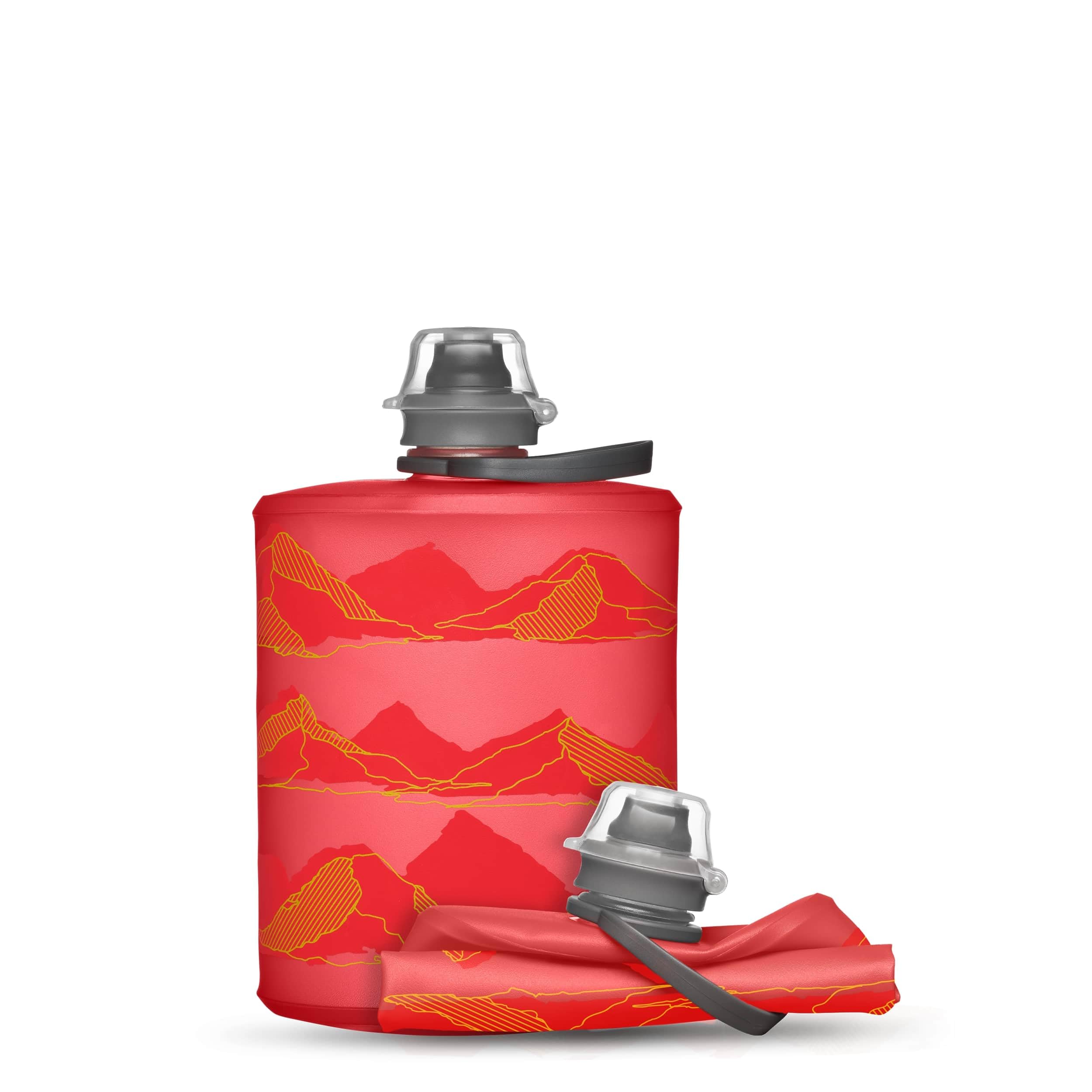
At 500 milliliters, the Stow is the one that disappears into a jacket pocket. It weighs 40 grams, rolls into a small bundle, and has a self-sealing nozzle under a flip cap. We carried it as a pocket flask on short hikes and found the nozzle easy to open with a thumb.

The 28 mm thread accepts HydraPak's filter kit, which makes it a useful backup for a gravity setup. The bail handle is simple and gives you something to clip or carry. It is also dishwasher safe, which is more than some of the thin-film bottles here can claim.

The trade-off is capacity. Half a liter is a supplement, not a primary bottle for a long day, and we topped it up often. That is the role it earns: a running vest, ski jacket, or short-hike bottle that you barely notice until you need it.

We keep the Stow in the extra-layer category. The self-sealing nozzle is the detail that sells it: you can drink while moving and tuck it away without a wet cap. If you want one bottle for a full day, go bigger; if you want a true pocket flask, this is our pick.

Pros

  • 40-gram body rolls small
  • Self-sealing nozzle limits spills
  • 28 mm filter compatibility
  • Dishwasher safe

Cons

  • Cap can be fussy to reseat
  • Plastic taste is a recurring complaint
Our verdict

The Stow is our pick for a pocket flask: it weighs 40 grams, seals with a self-sealing nozzle, and takes a 28 mm filter, though 500 ml is a short leash for all-day hikes.

Check Latest Price
5

Best Budget Filtered

Bachgold 1L Filter

83 /100
Traveler Score Excellent

Key details

Weight
3.35 oz
Capacity
1 liter
Flow Rate
0.2 liters per minute
Filtration
0.2 micron hollow fiber
Check Details on Amazon

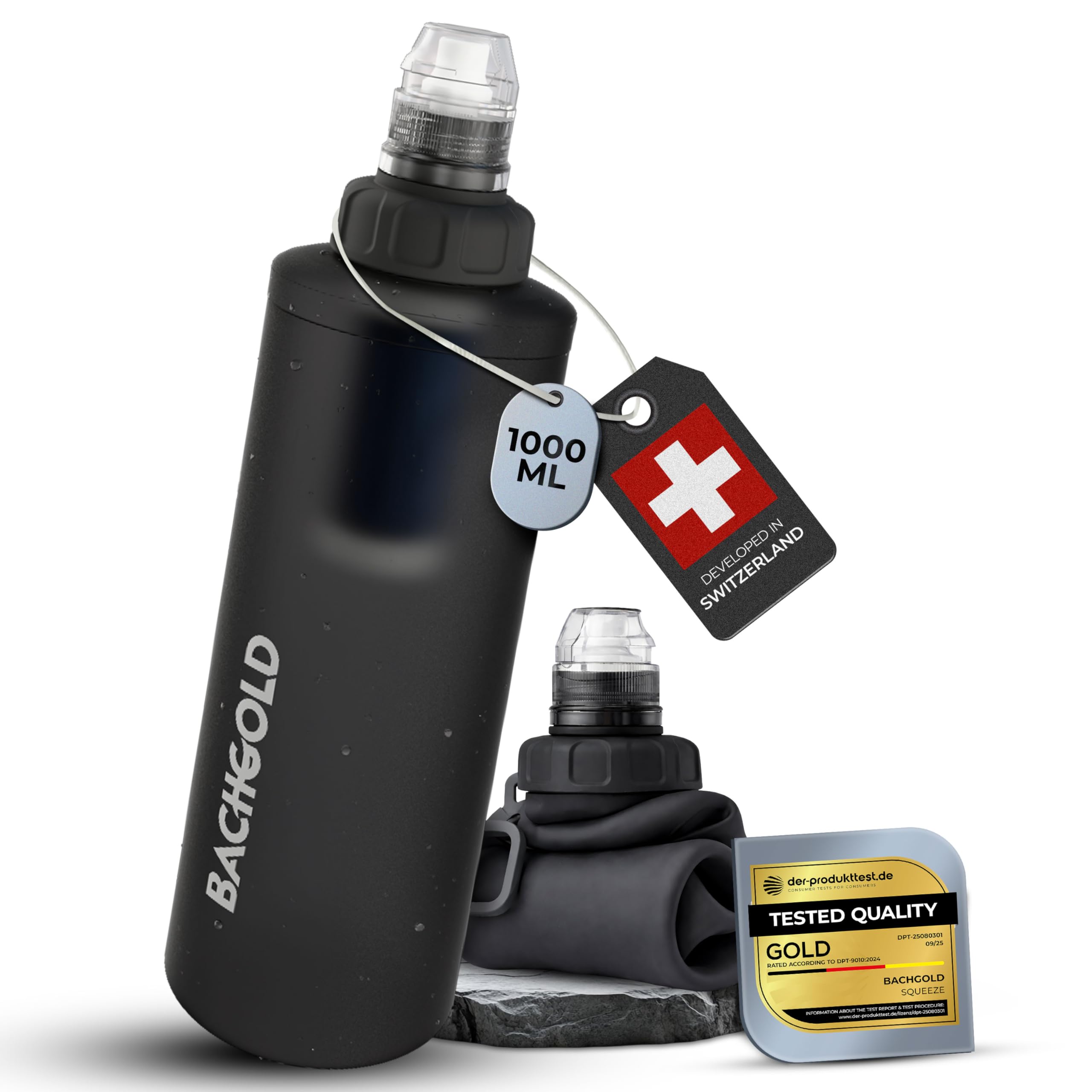
The Bachgold is the filtered bottle we point to when the budget is tight. It holds 1 liter, weighs 95 grams, and uses a 0.2-micron hollow-fiber membrane plus an electro-adsorptive layer. That is a lot of filtration for a bottle that still rolls down to pocket size.

The squeeze flow is gentle rather than gushing; the listed maximum is 0.2 liters per minute, which is a trickle compared with a gravity filter. We noticed that most when filling a bottle for two people at a small spring. For one hiker topping up a liter, it is manageable, and the rinse-to-restore flow means no replacement cartridges.

We see it as a budget specialist: the filtration spec is serious, the weight is low, and the price is easy to justify. It suits a solo camper who values light weight over speed. The 95-gram weight is the number that matters on a long carry: it is light enough to justify over a hard bottle even with the filter attached. If you filter for a group or fill often, a faster bottle is worth the extra bulk.

Pros

  • 1-liter filtered bottle at 95 grams
  • 0.2-micron hollow-fiber membrane
  • Rinse-to-restore flow, no cartridges
  • Squeeze flow needs no pumping

Cons

  • Newer design with a shorter track record
Our verdict

For a filtered bottle that costs less than the premium options, the Bachgold delivers 1 liter and a 0.2-micron membrane at 95 grams; its slow flow makes it a budget specialist.

Check Latest Price
6

Best Wide-Mouth

TakeToday 600ml

84 /100
Traveler Score Excellent

Key details

Weight
7.2 oz
Closure
Screw lid with straw
Capacity
600 ml
Material
Platinum silicone, PP lid
Check Details on Amazon

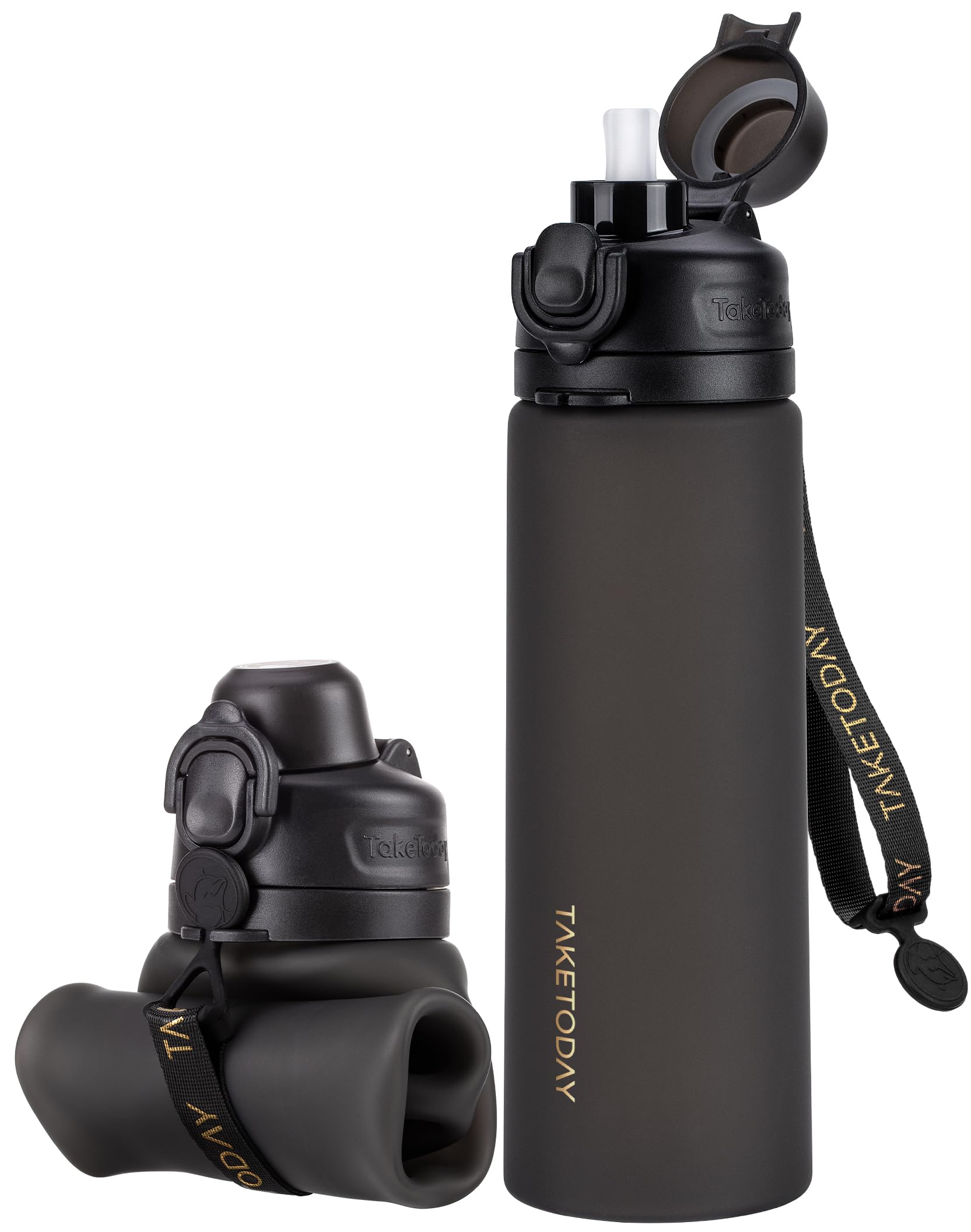
Silicone bottles usually ask you to trade structure for packability, and the TakeToday makes that trade obvious. The wide mouth opens up for filling and cleaning, the body rolls down into a small bundle, and the straw lets you drink without tipping the bottle. We used it mostly for car camping and travel, where a sink or jug is close by.

The platinum silicone body feels softer than a hard bottle, and the screw lid with a straw is easier to manage than a plain cap when you are sitting in a camp chair. The carry strap is a nice touch for clipping it to a tote or pack. It is dishwasher safe, which helps with the wide mouth's cleaning advantage.

We recommend it for campers who want a wide-mouth bottle for flavored drinks or easy cleaning, not for ultralight backpacking. The body has more structure than a soft flask, which makes it easier to set down and fill from a jug. That structure is why we reach for it when the camp kitchen is nearby, and why we leave it home on a long carry. The 600 ml capacity is enough for a short outing, not a full day without refills.

Pros

  • Wide silicone mouth is easy to fill
  • Rolls into a small bundle
  • Straw and carry strap add convenience
  • Dishwasher safe

Cons

  • 7.2 ounces is heavy for collapsible
  • Silicone can hold a plastic taste
Our verdict

We like the TakeToday for car camping and travel: the wide silicone mouth is easy to fill and the straw helps, but the 7.2-ounce body and mixed leak feedback make it a secondary bottle.

Check Latest Price
7

Backup Filtration

LifeStraw Peak 650ml

85 /100
Traveler Score Excellent

Key details

Weight
3.6 oz
Capacity
650 ml
Material
Plastic
Filtration
Hollow-fiber microfilter
Check Details on Amazon

If your camp water comes from a stream, the LifeStraw Peak Squeeze is the compact option we keep as a backup. It is a 650 ml squeeze bottle with the filter built into the cap, and it packs down almost flat when empty. The filter is rated for bacteria, parasites, and microplastics, and the squeeze flow is quick for its size.

We like it as a secondary bottle for backcountry trips where you are never far from water. The loops and compact shape make it easy to clip to a pack, and the filter is simple to prime and clean. It is the kind of bottle we stow for a just-in-case filter rather than carry as the primary on a big day.

The thicker film feels more durable than the lightest soft bottles, and the custom backwash accessory is the detail that makes it more than a novelty: you can restore flow without carrying a syringe. That is why it stays in our day pack as a backup filter, even when the Platy is the bottle we actually drink from.

Pros

  • Integrated 650 ml filter bottle
  • Packs down nearly flat
  • Quick squeeze flow for its size
  • Custom backwash accessory

Cons

  • 650 ml capacity is small for big days
  • Plastic taste is a recurring complaint
Our verdict

The Peak Squeeze makes sense as a backup filter for backcountry trips where 650 ml is enough between refills, but we keep it secondary because of its small capacity and plastic taste.

Check Latest Price

How We Tested Collapsible Camping Bottles

I began by gathering every collapsible bottle I could find from outdoor brands and general retailers—about 40 in all—and sorting them by capacity, packed size, valve style, material, and price. That list got cut to 15 bottles that represented the real range: soft flasks, roll-top bottles, and bottles with rigid bases or wide mouths. I wanted options that could work for a day hike, a weekend car camp, and a trip through airport security.

Those 15 bottles came with me on weekend camping trips, day hikes, a couple of trail runs, and two flights over four months. I weighed each one empty and full, measured how flat it packed next to a one-liter hard bottle, and noted whether it slid into a pack's side pocket or a car cupholder. On the trail, I filled each one, sealed it, and shook it upside down inside a dry stuff sack, then checked for drips along the seams, lid threads, and bite valve. I also dropped them from waist height onto granite and packed them under sleeping bags and cook kits to see if the walls held their shape.

The less glamorous checks happened back at camp. I left water in each bottle overnight in a warm tent and tasted it the next morning for any plastic or rubbery aftertaste. I drank from each with gloves on to judge flow rate and whether the valve worked one-handed, stood filled bottles on a slanted picnic table to see which tipped, and folded and unfolded each one repeatedly to check whether the seams, caps, and folding mechanism still felt solid. The bottles that made the list were the ones that stayed leak-proof, packed small, and still felt sturdy after four months of being stuffed into packs.

How to Choose Collapsible Water Bottles for Camping

Start With Capacity and Packed Size

A 500 ml bottle is a pocket flask; a 1-liter bottle is a day-hike bottle; a 2-liter bottle is a camp water hauler. Match the size to the distance between refills, not to the biggest number on the listing. The Stow is the one to take when pack space is tight, while the Platy 2L earns its place at basecamp because it carries enough water for dinner and the next morning without a second trip.

The mistake is buying a 2-liter bottle for a fast day hike: it is light when empty but heavy when full, and you will feel it on the climbs. If you hike with reliable water, 1 liter is the useful middle.

Check the Closure Before You Trust It

Most leaks start at the cap, not the bottle. A simple screw top has fewer parts to fail, but it can weep if the threads are crossed; a self-sealing nozzle is faster to drink from but adds a valve that needs cleaning. Fill the bottle, invert it, and squeeze it before you pack it. If it drips, reseat the cap or leave it home. The Stow's self-sealing nozzle is a good example of the fast-drinking end; the Platy's screw top is the simpler end.

Temperature and altitude change the pressure inside a soft bottle, so open the cap before you stow it in a warm pack or a car. That is also why a bottle that is leak-free at camp can weep on a climb.

Weigh Material Against Durability and Taste

The lightest bottles use a thin polyethylene or TPU film; they pack small but can develop pinholes at seams if you stuff them next to sharp gear. Silicone bottles are heavier and hold their shape better, but they can retain a plastic or soapy taste. Our rule: use a thin-film bottle for weight and a silicone or wide-mouth bottle for easy cleaning and flavored drinks. The SoftBottle is the film end, the TakeToday is the silicone end, and the Flux sits in between with a thicker TPU laminate.

Taste is not a spec you can compare on a chart. If you are sensitive, buy a bottle with a simple polyethylene liner, rinse it well, and let it air dry before the first trip.

Decide Whether You Need a Filter

A filter is worth carrying only if your water source is uncertain. Integrated bottles are simple: fill, squeeze, drink. Compatible bottles let you use one filter across a reservoir and a bottle, but you have to match the thread. The Bachgold's 0.2-micron membrane is a serious filter, though its 0.2-liter-per-minute flow is slow for a group. The LifeStraw Peak is the compact backup; the HydraPak Flux and Stow accept brand-specific filter kits.

Check what the filter removes, not just the micron number; a filter that handles bacteria and protozoa may not handle viruses or chemicals.

Plan for Cleaning and Drying

A wide mouth is the difference between a bottle you clean and a bottle you avoid. Narrow-neck soft bottles need a bottle brush and a long air-dry; wide silicone bottles are easier to wipe and turn inside out. Dishwasher-safe claims are useful, but heat can shorten the life of thin film. Wash with warm soapy water, rinse, and dry fully before storage; a bottle stored damp will smell before the next trip.

Frequently Asked Questions

Final Verdict

We recommend the Platypus Platy 2L for most campers. It carries the most water for the least weight, stands up when full, and has the durability record we trust for basecamp duty; the screw cap is the one part to seat carefully.

If you want a bottle for one-handed drinking on the move, the HydraPak Flux 1L is the better choice. If you need filtration and the budget is tight, the Bachgold 1L is the filtered pick to consider.