5 Best Climbing Backpack of 2026: Rope-Ready Alpine Packs

Find the right climbing backpack for rope, rack, and alpine gear—without overpaying for liters you won't use.

Climbing packs are often sold by liter count, but the volume that matters is the space left after rope, rack, and helmet are inside. A 38L pack can feel tight once tools are strapped on, while an 18L pack can disappear on a single-pitch day. What makes a climbing pack functional is the attachment system: tool loops, rope carry, and gear loops. The number on the tag only tells half the story.

For traveling climbers, the same pack often has to cover flights, roadside crags, and mountain huts, so load-carrying and versatility matter as much as capacity. A smaller pack suits quick rock days; an alpine pack handles snow and ice; a 30L middle ground works for mixed trips. Match the suspension, tool attachment, and usable volume to your most common routes, because an empty pack that doesn't hold gear the way you climb is just another bag.

1

Best Overall Alpine Climbing Pack
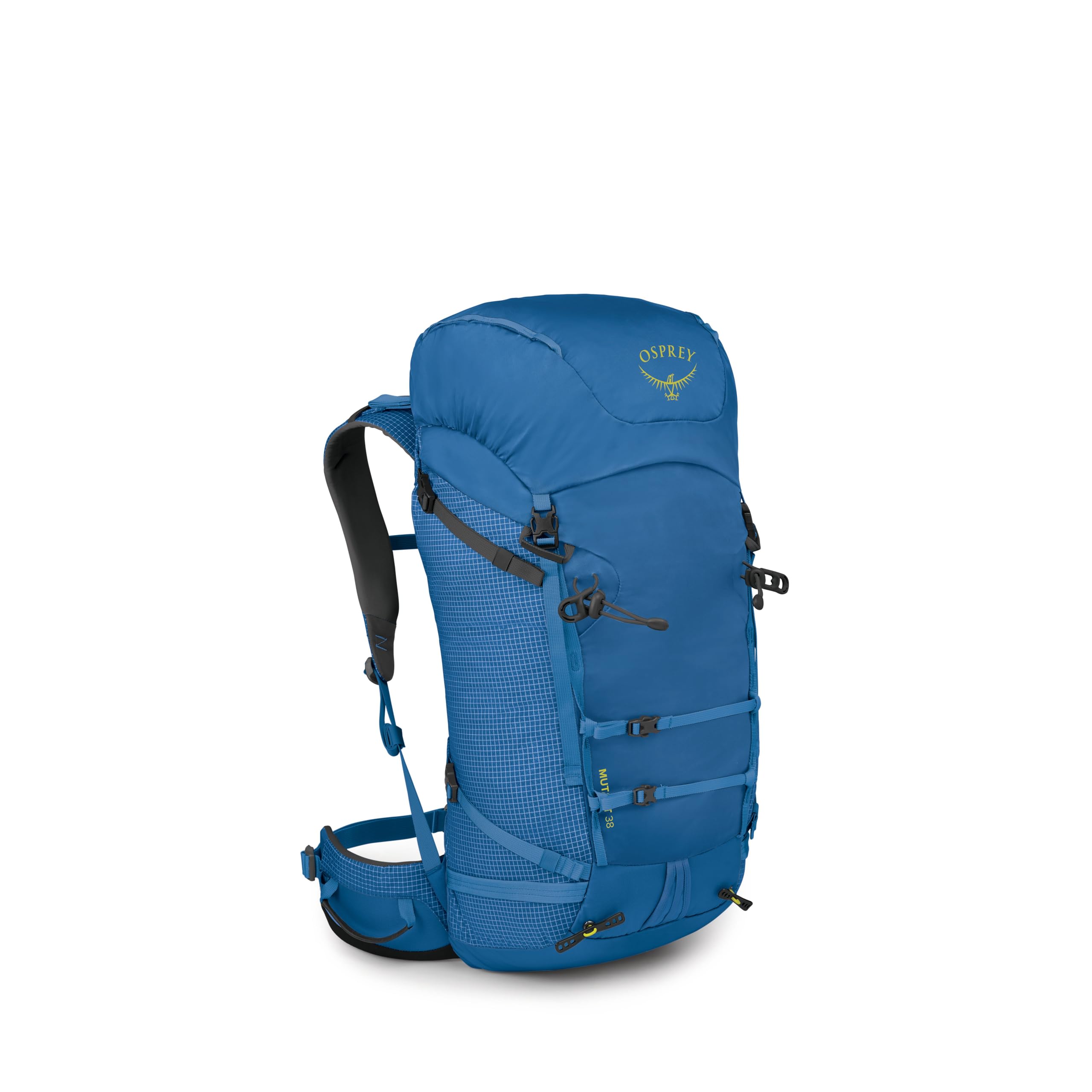
Osprey Mutant 38

85 /100
Traveler Score Excellent

Key details

Suspension Fit
Medium/Large harness, reverse-wrap hipbelt
Usable Capacity
38L
Tool & Rope Carry
Dual ToolLocks, rope carry
Integrated Features
Snowshed backpanel, ski carry
Check Details on Amazon

The Mutant 38 is a 38L alpine pack that carries rope, rack, boots, and emergency gear through ice, rock, snow, and ski approaches. It is built for routes that demand all of it in one load. Dual ToolLocks, rope carry, A-frame ski carry, snowshed backpanel, and a reverse-wrap hipbelt keep the load in place over long days; an 11-hour fully loaded push comes through without shoulder fatigue.

The removable top lid's zip pocket is useful on less exposed approaches, though the lid can feel unstable on technical terrain in some configurations; taking it off for steep rock is the workable move. Usable volume can run closer to a compact 38L once loaded: helmet, rope, pickets, shovel, clothing, and emergency gear fit, but the pack rewards deliberate packing over overstuffing.

This is for alpine mountaineers and ski mountaineers who want one pack for mixed objectives that include ice, rock, snow, and a ski approach. Those who routinely thrash packs on abrasive granite should keep an eye on the lighter recycled fabrics and small clips over time; the Mutant favors lighter alpine carry over heavy-duty expedition build.

💡 Load heavy gear close to the backpanel for a balanced feel on descents.

Pros

  • Carrying comfort holds up on loaded alpine approaches lasting a full day.
  • Carries a rope, helmet, rack, shovel, clothing, and emergency gear in one load.
  • Tool, rope, and ski attachments cover mixed alpine objectives in one pack.

Cons

  • Removable top lid can feel unstable on technical terrain in some configurations.
  • Usable volume can run closer to a compact 38L once loaded.
Our verdict

The Mutant 38 is the pack for alpine climbers who want one load-bearing system for ice, rock, snow, and ski approaches without switching gear.

Check Latest Price
2

Best Compact Day-Climbing Pack

Petzl BUG 18L

90 /100
Traveler Score Outstanding

Key details

Suspension Fit
Fold-away waistbelt
Usable Capacity
18L
Tool & Rope Carry
Adjustable rope strap
Integrated Features
Topo pocket, hydration sleeve
Check Details on Amazon

At 525 g, the BUG 18L keeps the carry light, with an adjustable rope strap, fold-away waistbelt, and a wide exterior pocket. It carries a rope and small rack comfortably on single-pitch and multi-pitch rock routes, and it fits gym-to-crag use without feeling bulky.

This is for climbers who pack light: the 18L capacity leaves little room for extra layers, water, or emergency gear, and there is no external bottle pocket, so helmets and bottles need to ride outside. The tradeoff suits disciplined day climbing better than carrying overnight gear.

Pros

  • Featherweight 525 g build holds a rope and small rack without pulling on the shoulders.
  • Day-pack sizing fits sport crags, gym sessions, and quick multi-pitch routes.
  • Rope strap, wide exterior pocket, and sleeve keep gear organized at the crag.

Cons

  • For smaller frames, the pack's width can feel too broad across the shoulders.
Our verdict

The BUG 18L is the pack to grab for a one-day rock climb when the priority is a light, close-to-body carry.

Check Latest Price
3

Best Women's Alpine Pack

Deuter Guide 32+8 SL

89 /100
Traveler Score Excellent

Key details

Suspension Fit
SL fit, detachable hip fins
Usable Capacity
32+8L (40L max)
Tool & Rope Carry
Ice axe holder, gear loops
Integrated Features
Helmet holder, ice axe attachment
Check Details on Amazon

The Guide 32+8 SL pairs a women's-specific torso fit with detachable hip fins, gear loops, helmet holder, ice-axe attachment, and 330D/630D fabric that handles rock and crampon scrapes. It expands from 32L to 40L, so a technical rack, rope, and extra layers can ride on the same carry system that stays balanced on alpine terrain.

This pack serves women mountaineers who want an SL fit for alpine climbing and the option to carry a full 40L load. Men and taller unisex users with standard torso lengths should choose the unisex 38L option instead; the SL geometry is not a neutral fit. If your day is a casual crag session with one rope and a light rack, the 32+8L format is more pack than the task needs.

Pros

  • SL torso geometry keeps the pack balanced for women's shorter frames on uneven mountain terrain.
  • Detachable hip fins and gear loops make room for climbing hardware without adding permanent bulk.
  • 330D/630D fabric takes rock contact and crampon scrapes on alpine approaches.

Cons

  • SL fit targets women's shorter torsos, so taller users should verify torso length before buying.
  • At full expansion, 40L of carrying capacity is more than a single-pitch crag day needs.
Our verdict

Women climbers on alpine routes get a dedicated SL fit with expandable carrying capacity and the hardware to keep a full rack organized.

Check Latest Price
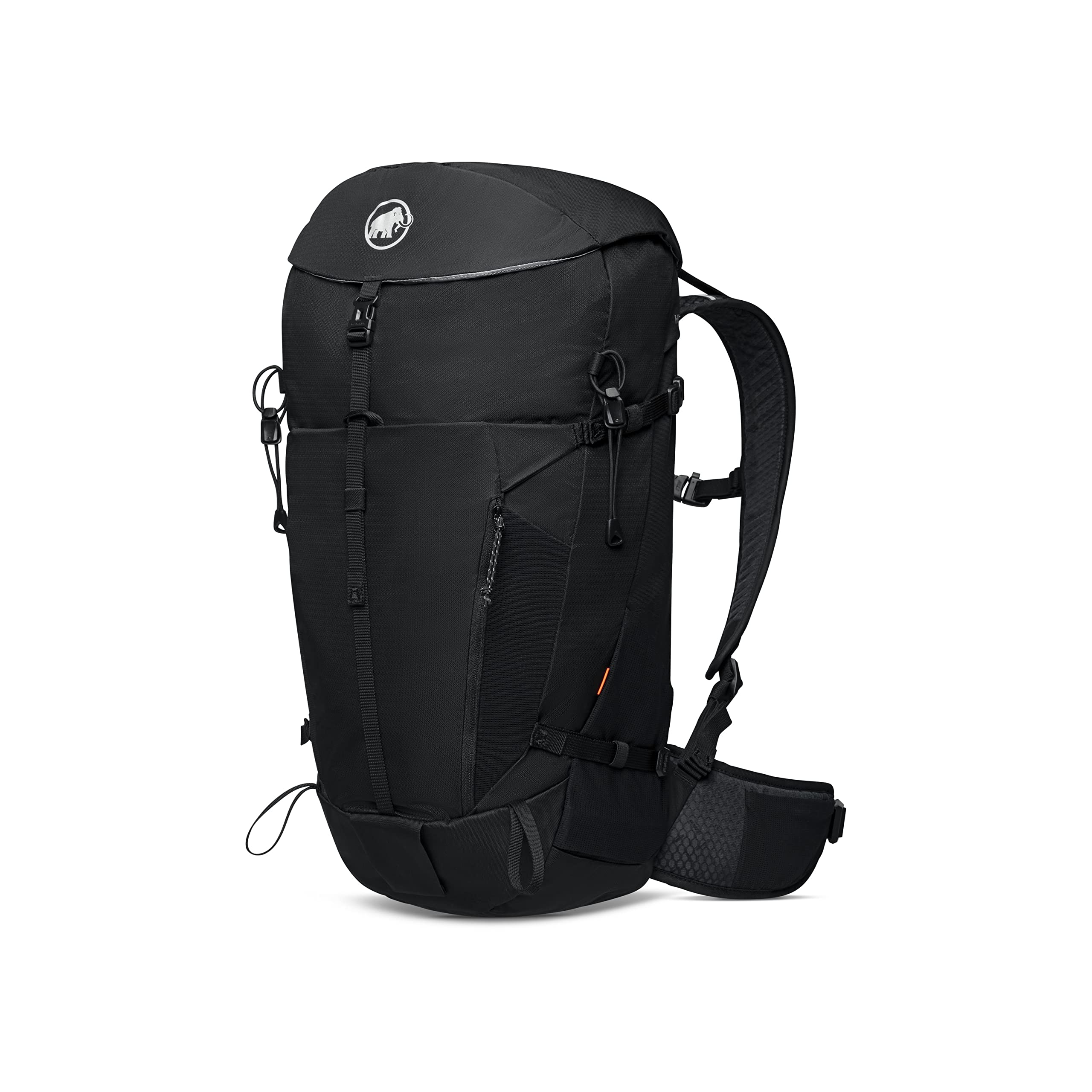
4

Best Eco-Conscious 30L All-Rounder

Mammut Lithium 30

90 /100
Traveler Score Outstanding

Key details

Suspension Fit
U-frame, detachable hip belt
Usable Capacity
30L
Tool & Rope Carry
Integrated Features
Rain cover, trekking pole carrier
Check Details on Amazon

The Mammut Lithium 30 wraps a 30L crag-to-mountain layout in a recycled body, with a U-frame that keeps loads stable on the approach and an integrated rain cover that saves travelers from packing a separate shell.

Compared with the 38L alpine pick, this is the more travel-friendly option for eco-conscious climbers: shorter mountain lines and crag days where support matters more than expedition bulk. The 30L volume is a compromise — enough for a rope and a modest rack, but smaller than alpine expedition loads and larger than a minimalist crag day. Buyers who need more than 30L or prefer a sub-20L pack should choose the other packs in the lineup.

💡 Keep the hip belt attached for loaded approaches; detach it when the route turns technical.

Pros

  • U-frame support keeps the 30L load stable on the approach and on uneven terrain.
  • Integrated rain cover gives traveling climbers one less item to pack.
  • Detachable hip belt trims weight when the route turns technical.

Cons

  • The U-frame's structure can limit how flat the pack compresses for storage or travel.
Our verdict

Carry it when the day includes both a rock climb and a mountain approach.

Check Latest Price
5

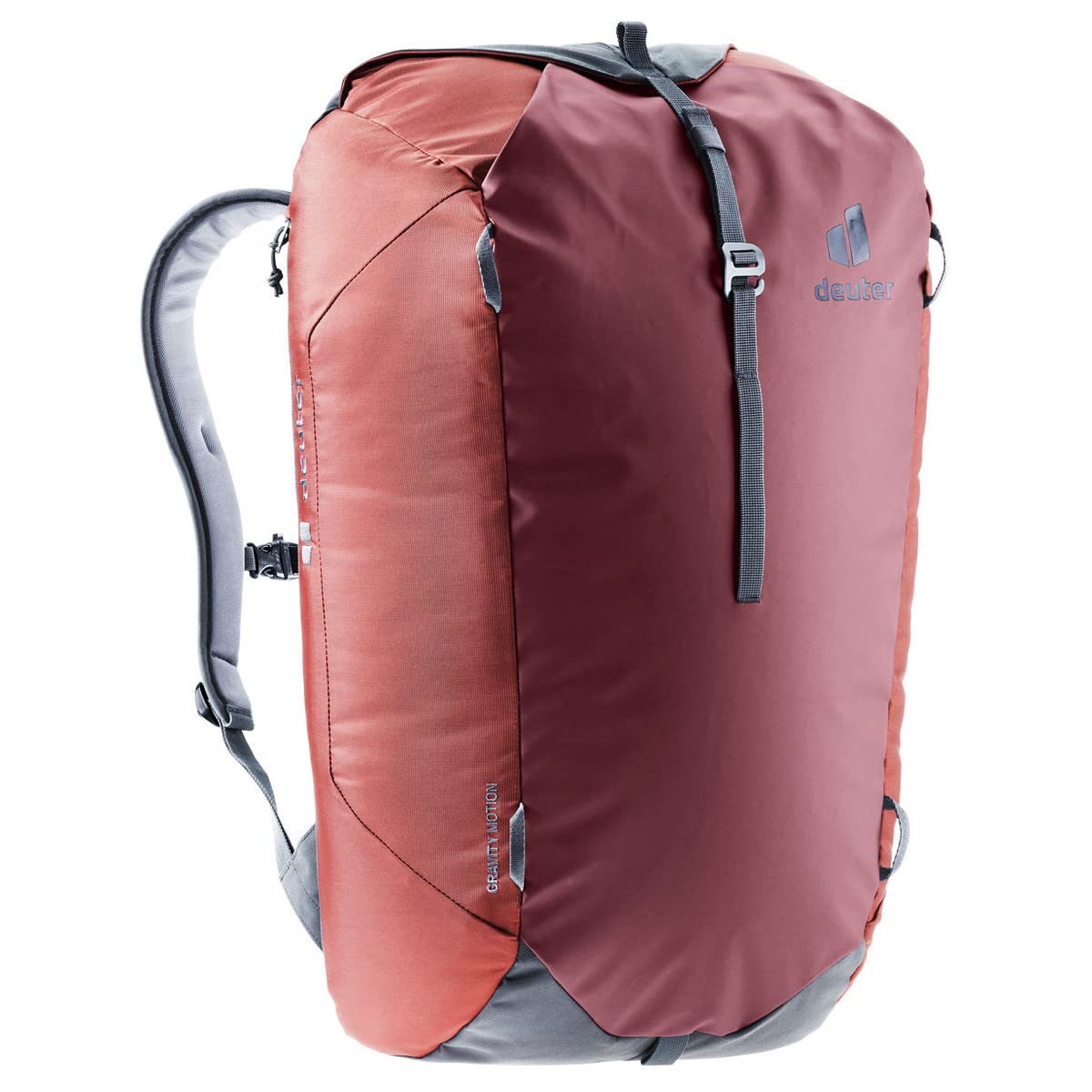
Best Organized 35L Climbing Pack

Deuter Gravity Motion 35

89 /100
Traveler Score Excellent

Key details

Suspension Fit
Usable Capacity
35L
Tool & Rope Carry
Top rope fixation, gear loops
Integrated Features
Rain cover, rear-panel zipper
Check Details on Amazon

Full-length rear-panel access separates the Gravity Motion 35 from top-loading packs, exposing the entire main compartment for packing and unpacking. Two large side pockets and internal gear loops keep rope, rack, and layers in fixed places, while the top rope fixation and included rain cover handle multi-day climbing needs.

This is for climbers who want organization across a 35L load: multi-day trips, alpine starts, and any route where a full-length rear zipper beats digging through the top. The rear-panel opening and 35L volume are more than a minimalist single-pitch day needs, so those lighter 18L days belong to the smaller pack in this set.

Pros

  • Full-length rear-panel zipper opens the whole load, so gear stays visible and accessible without top-digging.
  • Two large side pockets and internal gear loops hold rope, rack, and layers in fixed positions.
  • Top rope fixation and included rain cover make it ready for multi-day climbing trips.

Cons

  • Climbers who prioritize a featherweight approach may find this pack's organization comes at the cost of ultralight weight.
Our verdict

The Gravity Motion 35 is the choice when a 35L load needs order and full access, not when pack weight is the priority.

Check Latest Price

How to Choose

Capacity vs Usable Volume

Listed liter volume is measured with empty fabric. Once rope, rack, helmet, and layers are inside, usable space shrinks quickly because climbing gear does not compress the way clothing does.

A 38L pack can feel tight loaded for a full ice day, while an 18L pack is well suited to a single rope. Match capacity to the biggest load you routinely carry.

Tool Loops and Rope Carry

Ice tool locks, rope straps, and gear loops turn a daypack into a climbing pack. Tool locks keep axes within reach; a rope strap carries a rope outside instead of losing main compartment space.

For rock-only routes, a simple rope strap and gear loops are enough. For snow and ice, dual tool locks and compression that stops tools from swinging matter most.

Weight, Fabric, and Hardware

Every gram saved on fabric and buckles comes from somewhere. Lower-denier recycled fabrics and smaller hardware reduce weight but can wear faster against sharp rock and ice.

A 525 g pack is easy on single-pitch routes; a 1.38 kg pack with 330D or 630D fabric suits repeated alpine use. Favor fabric denier and clip size over the lightest listed number.

Suspension and Hipbelt Fit

Load transfer depends on where the weight sits. Packs above 30L need a frame and hipbelt that keep weight on the pelvis; sub-20L packs use a waistbelt mainly for stability.

A women's-specific SL fit uses a shorter torso and curved shoulder straps. Try the harness with a loaded pack, because a poor fit makes the lightest bag feel heavy.

Extra Features That Matter

Helmet holders, ski carry, integrated rain covers, and snowshed backpanels add real convenience on specific outings. A-frame ski carry only helps if you tour; a rain cover matters more for mountain travel.

Removable hip belts and top lids let you strip weight for gym days. Choose extras based on your most common trip, not your most ambitious one.

Frequently Asked Questions