9 Best Camera Insert for Travel Backpack 2026: Fit Your Real Pack

Find a padded camera insert that actually fits your travel backpack and protects your kit — without paying for marketing labels that don't hold up.

Many camera inserts advertise 'waterproof' and 'shockproof,' but inside a real travel pack those labels do not guarantee much. What actually matters is whether the cube fits your bag's interior, whether you can reach the camera without unpacking everything, and whether the padding matches how you travel.

The main trade-off is between a compact, low-cost cube that handles the basics well and a taller, pricier insert shaped around backpack compartments. A slim vertical cube gives you faster top access inside a pack, while a wider square liner carries more lenses but can waste space in a narrow daypack. Pack shape and the size of your kit should drive that decision, not the logo on the front.

Choose based on the specs that change your packing experience — exterior dimensions, interior dividers, access type, padding rigidity, and water resistance. The right insert fits your pack, keeps the camera reachable, and leaves room for the rest of your gear. That combination matters more than any label on the box.

1

Best Overall

S-ZONE Waterproof Camera Cube

91 /100
Traveler Score Outstanding

Key details

Access Type
Dual access
Padding Rigidity
Soft foam
Water Resistance
Splash-resistant
Capacity & Dividers
1 camera + 2 lenses
Check Details on Amazon

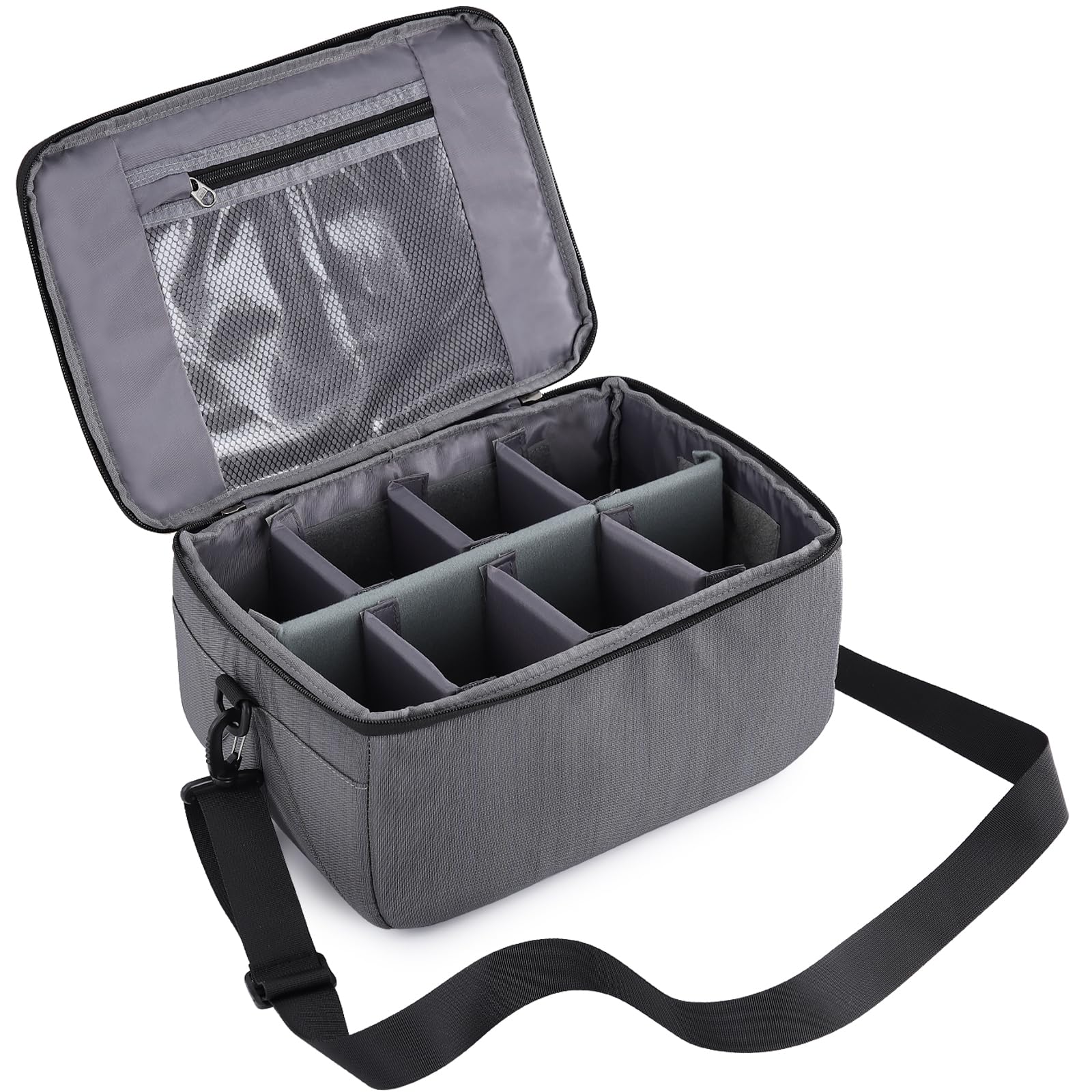
The S-ZONE Waterproof Camera Cube is a compact dual-access insert that suits mirrorless and APS-C kits. Dual zippered openings give you two ways into the cube: one for loading gear, one for grabbing the body without exposing the full interior. The 5.91 x 4.53 x 7.78-inch footprint fits a daypack main compartment or a slim shelf, leaving adjacent room for a rain shell or jacket. That narrow width is what separates it from boxy budget liners that swallow a small backpack's volume. The dual-access pattern is the main practical advantage over single-opening cubes, especially when the cube sits deep in a pack. It also works in a large tote or duffel when the camera needs a secure corner.

The interior divider splits the volume between a camera body and a second compact lens, and the padded walls cushion the gear during normal commuting. Light drizzle rolls off the shell, but a downpour or full submersion is beyond what this fabric can handle; this cube works best as a structured organizer inside a bag that provides the real weather barrier. The folding divider lets you adjust the proportions rather than accepting a fixed foam layout.

Daypack travelers with mirrorless or APS-C bodies are the right fit. Large full-frame DSLRs with battery grips push past the interior's comfortable size, so those kits need a bigger insert. The side zipper can be stiff on some units, so test it before relying on one-handed access. If your primary need is carrying a small camera inside a backpack you already own, this cube fills that role without demanding a dedicated camera bag.

Storage works best at one body and one or two compact lenses. The divider can be repositioned for a body-plus-lens setup or a pair of primes, but a telephoto zoom or flash will push the cube beyond its comfortable volume. Measure your longest lens against the interior height before buying if your kit leans telephoto. The capacity limits are clear, so the cube never overpromises.

Build quality matches the budget price tier: the shell feels denser than a basic pouch, zippers track cleanly on the main opening, and the cube stays light enough to leave in a pack between trips. At this price, it is a low-risk insert for travelers who want basic camera organization without overhauling their carry setup, and its light weight makes it easy to move between a daypack and a cabin bag.

💡 Run the side zipper through a few open-close cycles when new to smooth it out.

Pros

  • Fits a mirrorless body and a spare lens in a compact width that leaves daypack room for other layers.
  • Lightweight build keeps the insert easy to move between bags during travel.
  • Build quality feels reassuring for a budget insert, with a shell that sheds drizzle.
  • Interior divider lets you arrange a body and compact lenses without wasted space.

Cons

  • The side zipper can be stiff on some units, which can slow one-handed retrieval when new.
  • In a crowded backpack, the cube cushions routine bumps but does not replace a rigid case for hard impacts.
Our verdict

For mirrorless daypack travelers, this cube is an easy default: it organizes a modest kit, sheds light rain, and keeps the cost down.
Check Latest Price
2

Best Backpack-First Insert

Tenba BYOB 9 Slim Insert

88 /100
Traveler Score Excellent

Key details

Access Type
Top flap
Padding Rigidity
Thin padding
Water Resistance
Weatherproof polyester
Capacity & Dividers
Mirrorless/compact DSLR
Check Details on Amazon

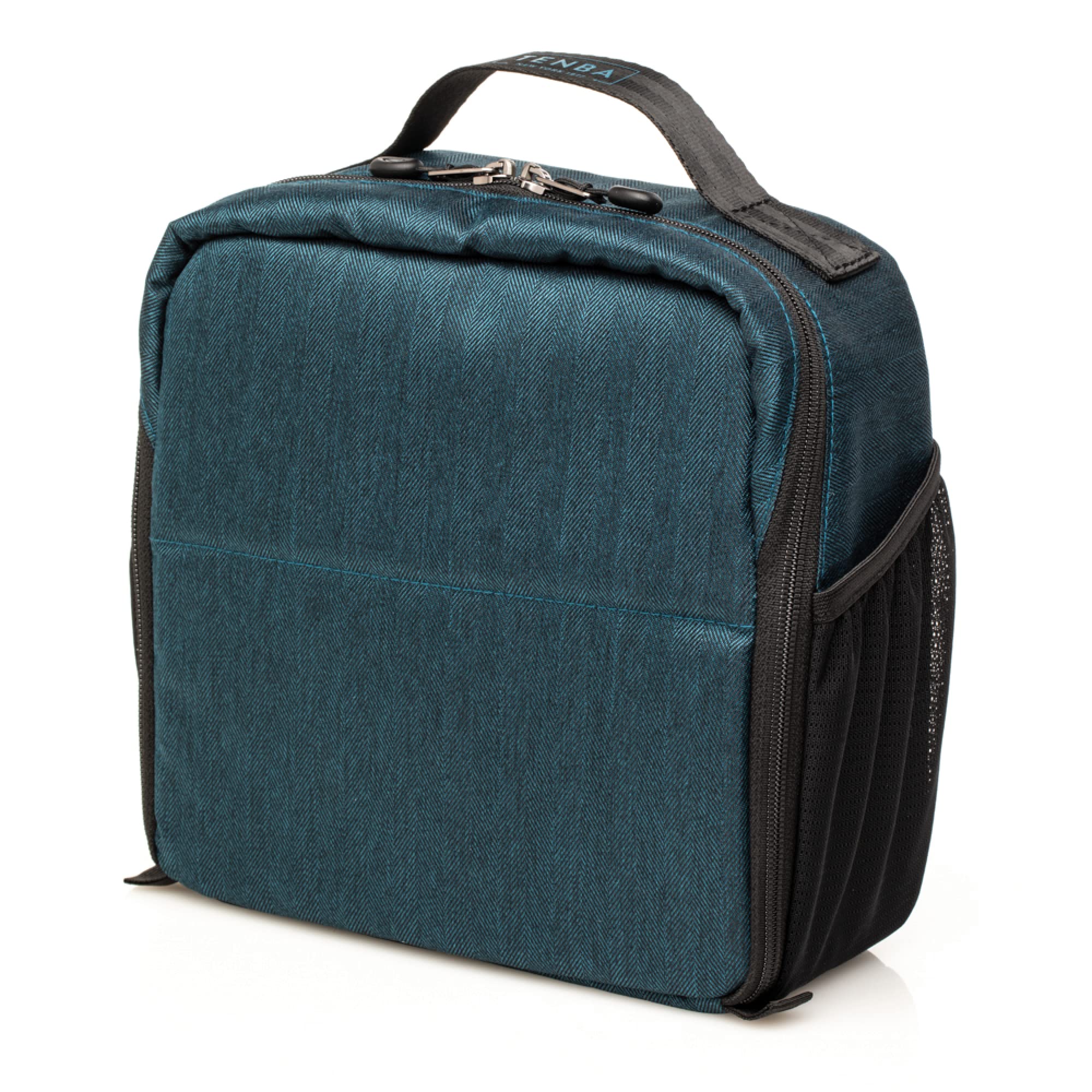
The BYOB 9 Slim is the backpack-first option in this lineup: a vertical 9 x 9 x 4-inch insert that stands upright in a tall pack compartment. Its wide top flap opens fully, so a mirrorless body can be lifted out without unpacking the rest of the bag.

Inside, the dividers hold a camera body and two lenses in position, and the vertical orientation leaves floor space in the bag for a jacket or packing cube. That makes it a better space partner than the wider horizontal inserts in the same category.

This suits backpack-first travel photographers with a Fujifilm or Sony APS-C kit. The insert's padding is thin, so the host backpack does most of the cushioning work; pack it in the center of the load and that boundary becomes manageable.

Pros

  • Vertical shape fits tall backpack compartments and leaves floor space for non-camera gear.
  • Wide top flap opens for body-and-lens swaps without pulling the insert out.
  • YKK zipper and weatherproof 300D shell hold up to travel wear.
  • Fits a mirrorless body plus two compact lenses without wasting pack space.

Cons

  • Mid-range price puts it above the budget cubes in the same category.
  • Large DSLR kits with big telephoto lenses outgrow the 9-inch vertical footprint.
Our verdict

For a compact mirrorless kit in a travel backpack, this insert provides the quickest top access in the lineup without crowding the rest of your load.

Check Latest Price
3

Best for Multi-Lens Kits

Koolertron Universal Liner Bag

90 /100
Traveler Score Outstanding

Key details

Access Type
Top opening
Padding Rigidity
Soft EPE foam
Water Resistance
Water-repellent nylon
Capacity & Dividers
Up to 6 lenses
Check Details on Amazon

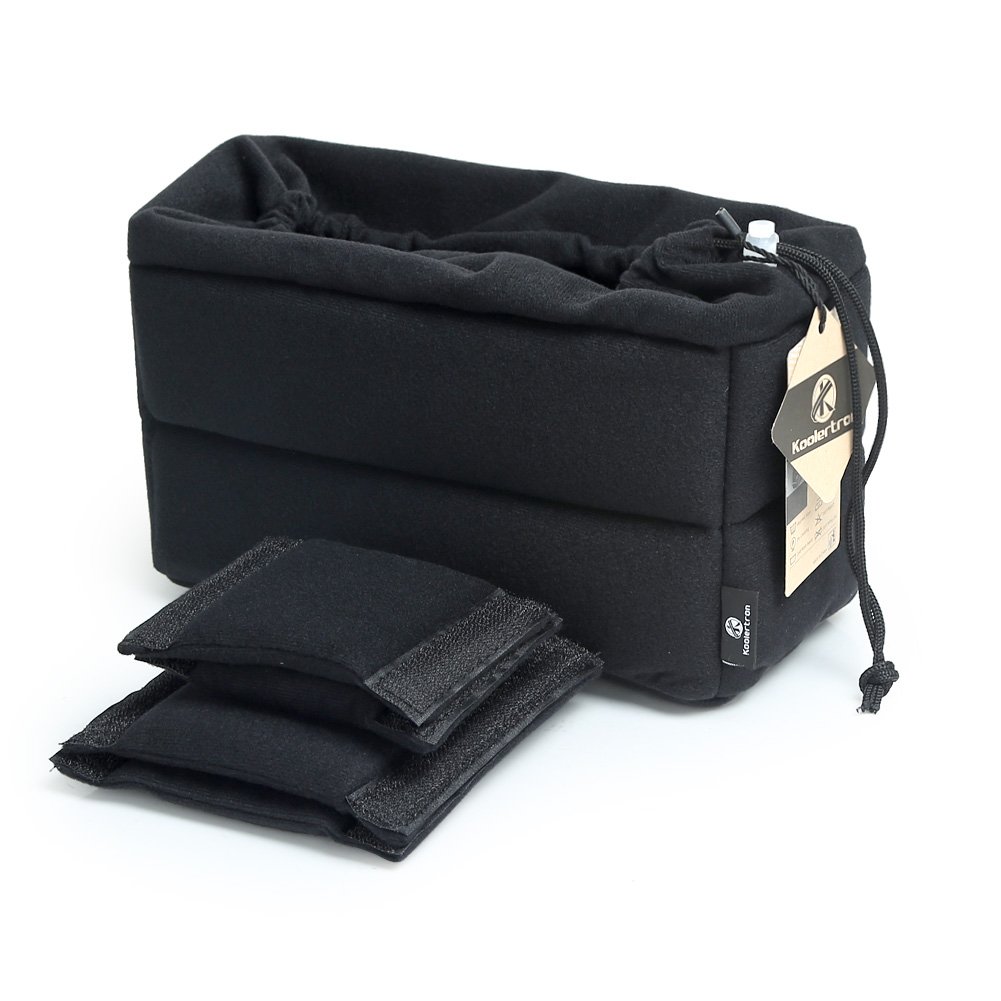
The Koolertron Universal Liner is the roomiest insert in this set, with a 13 x 9 x 6.3-inch footprint that swallows a camera body, several lenses, and a flash inside one padded cube. It is a soft-sided liner, not a hard case, so it bends around the shape of a travel backpack instead of forcing the bag into a fixed outline. Compared with rigid double-opening cubes, this liner trades direct impact structure for packing flexibility.

Travelers who shoot Sony, Canon, or Nikon and want one organized insert for a suitcase or backpack are the audience for this. The interior holds one body plus two to three lenses, or up to six smaller lenses with dividers rearranged, and the detachable shoulder strap makes it work as a handheld carry piece at the destination. The soft-sided build offers moderate rigidity; heavy pro video gear can feel unsupported, so this suits stills kits and lighter mirrorless or DSLR setups.

Water-repellent nylon Oxford and EPE padding keep the liner light while protecting gear against bumps inside a larger bag. It lies flat in a suitcase or backpack and does not need its own compartment, making it a practical way to turn existing luggage into a multi-lens camera kit.

💡 Keep heavier lenses positioned toward the backpack side so the bag's structure carries the load.

Pros

  • The 13 x 9 x 6.3-inch footprint holds a body, several lenses, and a flash with adjustable dividers.
  • Water-repellent nylon Oxford and EPE padding keep the liner light while protecting gear inside a travel pack.
  • Fits flat in a suitcase or backpack and includes a detachable shoulder strap for quick carry outside the pack.

Cons

  • Soft shell leaves impact protection largely to the surrounding backpack; a hard case offers more structure.
Our verdict

For multi-lens stills travelers packing a longer trip, this liner turns an ordinary suitcase or backpack into an organized camera kit without the bulk of a dedicated camera bag.

Check Latest Price
4

Premium Pick

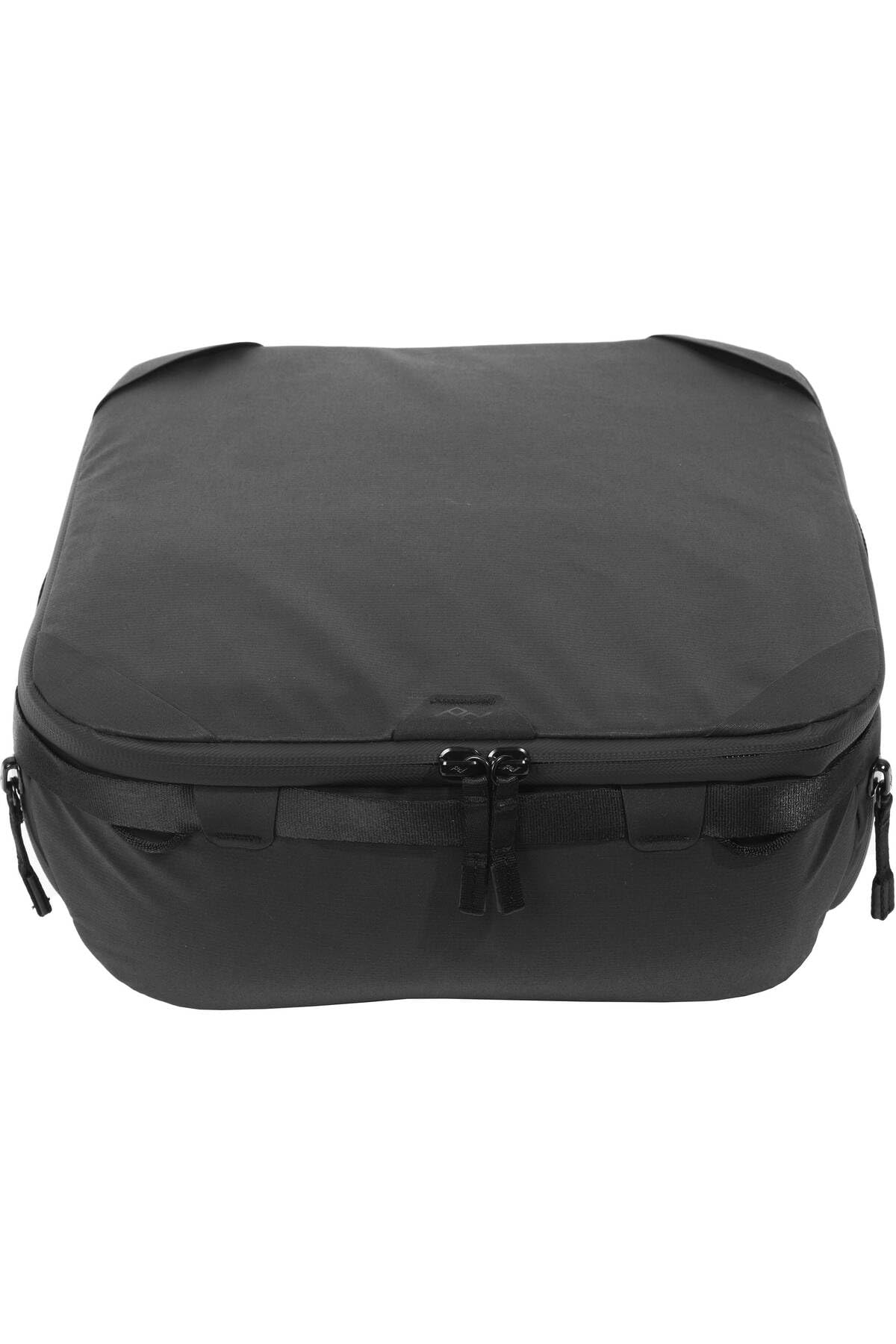
Peak Design Camera Cube V2 S

89 /100
Traveler Score Excellent

Key details

Access Type
Top opening
Padding Rigidity
Moderate foam
Water Resistance
Weatherproof zippers
Capacity & Dividers
FlexFold dividers
Check Details on Amazon

The refined weather-sealed cube in this set puts Peak Design's #8 Ultra Zips and FlexFold dividers front and center. The zippers close with a positive seal, and the dividers hold a camera without forcing a fixed layout. Unlike the convertible option in this set, this cube stays inside a host bag and locks into Peak Design Travel Bags and straps with a planted fit.

This is for travelers already using Peak Design bags or straps who want the interior of an existing pack to feel purpose-built. The Smedium size fits a mirrorless or small DSLR body plus two lenses; larger kits need a bigger cube. That boundary keeps the cube focused on controlled travel kits. The cube is a tuned accessory for a carry system, not a catch-all liner.

FlexFold dividers can be repositioned when swapping between prime and zoom lenses, and they fold flat so the cube does not dictate the compartment layout on the return leg. The #8 Ultra Zips feel more substantial than the hardware on budget cubes, and they remain smooth after repeated openings. The padded shell holds its rectangular shape, so gear position stays predictable inside a compatible pack.

Pros

  • Weatherproof #8 Ultra Zips and padded shell keep rain and dust away from gear.
  • FlexFold dividers reposition cleanly and fold flat when the compartment is not needed.
  • Drop-in fit inside Peak Design Travel Bags and straps holds tight during transit.

Cons

  • Premium pricing puts it above base-level inserts, so budget-first packers will feel the cost.
Our verdict

For Peak Design owners, this is the cube that turns a travel pack into a camera-ready carry.

Check Latest Price
5

Best Convertible Insert/Shoulder Bag

PGYTECH Small Camera Insert

85 /100
Traveler Score Excellent

Key details

Access Type
Top opening
Padding Rigidity
Steel frame
Water Resistance
Splash-proof YKK
Capacity & Dividers
1 camera + 2 lenses
Check Details on Amazon

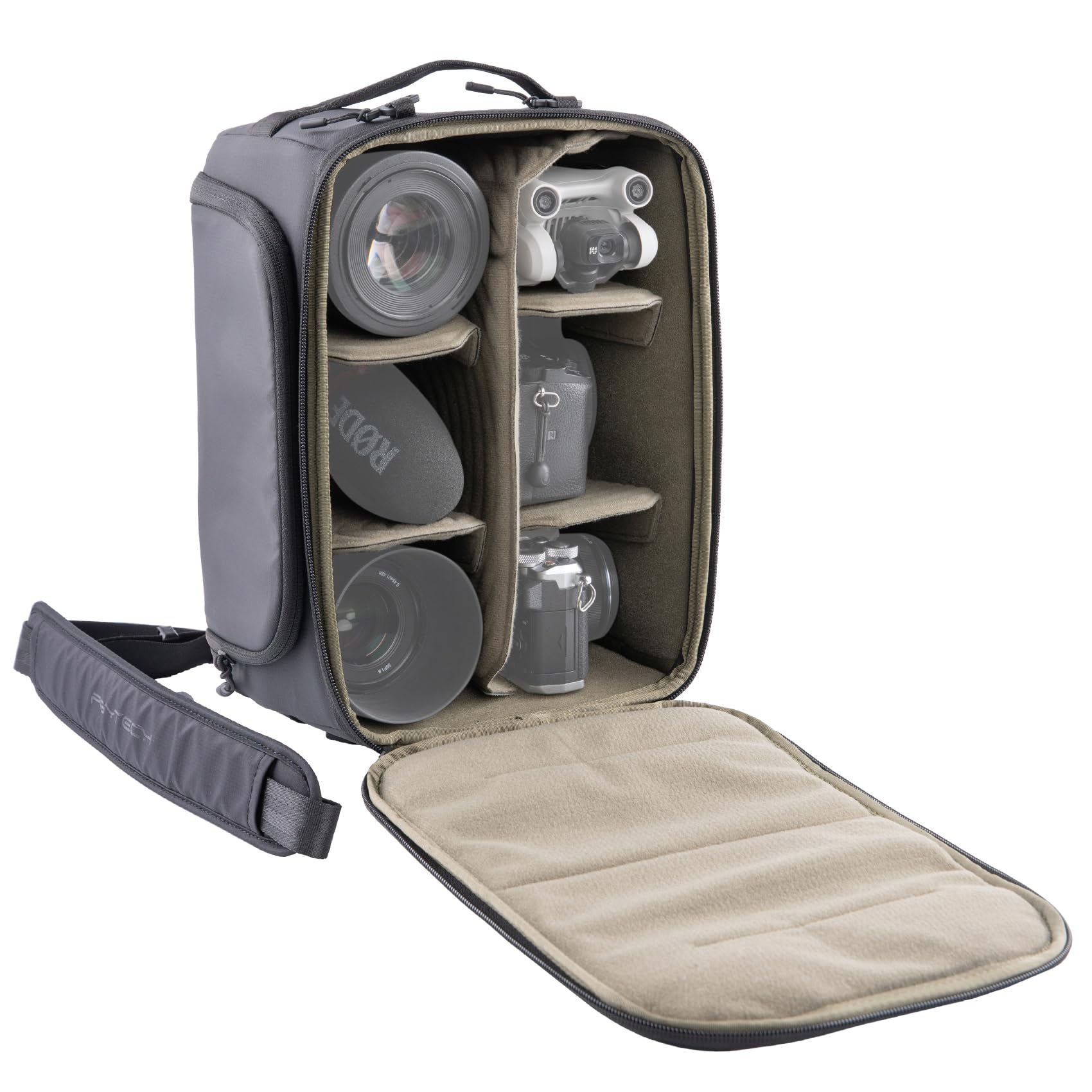
The steel-frame opening, YKK splash-proof zippers, and included strap make this the only insert in this set that works as a shoulder bag after it leaves the backpack. The frame holds the opening wide, so a pro-size body drops in without wrestling the fabric. The wide opening makes it easier to swap lenses than a folded cube, and the strap means the insert does not stay trapped in the backpack.

Travelers with a compact-to-full-frame mirrorless kit inside an existing backpack get the most use from this insert: it protects gear in the bag, then becomes a small shoulder bag at the destination. The 'waterproof' wording on the listing overstates the shell; this is splash-resistant, and the compact frame may not fit every backpack's intended compartment. This works best for shooters who value quick access and clean standalone carry over the lowest price.

The nylon shell and steel frame give it a precise, structured feel without adding bulk. The included strap clips on cleanly, so the insert rides on its own when you pull it out of the pack. Zippers move smoothly, and the frame keeps the opening from collapsing while you load gear. The shell does not feel floppy, and the steel frame keeps its shape even when the insert is only partly loaded.

Pros

  • Rigid steel-frame opening holds its shape while you load gear.
  • Included shoulder strap turns the insert into a standalone bag on site.
  • Fits pro-size mirrorless bodies without making the insert feel cramped.

Cons

  • Premium pricing runs above the usual padded-cube range.
  • Small interior suits one body plus two to three lenses; larger kits need more volume.
Our verdict

For a compact mirrorless kit, this insert does double duty: it organizes gear inside a travel pack and becomes a small shoulder bag when you arrive.

Check Latest Price
6

Budget Daypack Users

S-ZONE Padded Folding Bag

89 /100
Traveler Score Excellent

Key details

Access Type
Top zipper
Padding Rigidity
Basic foam
Water Resistance
Splash-resistant
Capacity & Dividers
2 foam dividers
Check Details on Amazon

The S-ZONE Padded Folding Bag is an entry-level insert for travelers who want to drop a light APS-C mirrorless or DSLR kit into an existing daypack. Its 10.2 x 6 x 4.7-inch footprint fits small compartments, two foam dividers keep a body and a couple of lenses separated, and the zippered top pocket holds spare batteries or SD cards. Padding thins near the seams and durability can vary, with some units feeling flimsy at the stitching, so treat it as a light travel organizer. The top pick pairs stronger waterproofing and more consistent zipper action with dual-access convenience, leaving this cube in the budget tier for daypack users who want a light organizer.

Pros

  • Compact dimensions slip into daypack compartments without hogging space for a body and two lenses.
  • Light and packable, it takes up little room in a daypack when the camera kit is left at the hotel.
  • Padded dividers and a zippered top pocket keep a mirrorless body, lenses, and small accessories organized.

Cons

  • Heavy backpack use in extreme conditions can push the fabric past its travel-oriented limits.
  • The soft shell leans on the host backpack for impact protection; no hard armor is built in.
Our verdict

For city-to-city trips with a light APS-C kit and a well-padded daypack, this cube is a cost-effective organizer; leave rough trails to the top pick.

Check Latest Price
7

Compact Mirrorless Kits

Tenba BYOB 7 Camera Insert

88 /100
Traveler Score Excellent

Key details

Access Type
Top zipper
Padding Rigidity
Dense foam
Water Resistance
Weatherproof fabric
Capacity & Dividers
Compact mirrorless kit
Check Details on Amazon

The Tenba BYOB 7 is a premium 300D herringbone cube with a smooth YKK zipper and stretchy mesh side pockets, sized to slip into an existing travel backpack. The removable shoulder strap makes it easy to lift the insert out and carry it separately, which suits daypack travelers who want camera protection without a dedicated camera bag.

The tradeoff is capacity: a 7.5 x 5.5 x 3.5-inch footprint fits a compact body plus one or two small lenses, not full-frame DSLRs or telephoto lenses. The mid-range price per liter is also higher than the taller vertical insert in this lineup, so the 7 makes sense mainly when you prioritize a tiny footprint and grab-and-go strap over maximum volume.

Pros

  • Premium 300D herringbone shell and YKK zipper feel substantial while keeping the cube compact.
  • Fits a compact mirrorless body and small lenses neatly inside a travel backpack.
  • Removable shoulder strap turns the insert into a grab-and-go carry option.

Cons

  • Mid-range pricing works out to less volume per dollar than larger cubes in the lineup.
  • Compact footprint is sized for a small mirrorless kit; full-frame DSLRs and long zooms won't fit.
Our verdict

Use it when your kit stays ultra-compact and you want premium materials plus strap carry inside an existing daypack; larger setups belong in the taller vertical insert.

Check Latest Price
8

Everyday Bag Conversion

Koolertron Shockproof Insert

90 /100
Traveler Score Outstanding

Key details

Access Type
Velcro closure
Padding Rigidity
Heavy foam
Water Resistance
Capacity & Dividers
2 repositionable dividers
Check Details on Amazon

The Koolertron Shockproof Insert is a classic budget cube: thick velvet-lined foam, two repositionable dividers, and a simple Velcro top. It slots into a travel backpack's main compartment and turns that bag into a cushioned camera pack for a DSLR body plus a spare lens. The heavy padding is the main event, and the price stays friendly for travelers who don't want to replace their existing backpack.

The protection is what you're paying for here, and for backpack conversion duty it delivers. The tradeoff is physical bulk: the foam walls make the cube noticeably larger inside a purse or small daypack, so it suits a roomy travel backpack with a dedicated compartment rather than minimalist carry. Access is top-only through a Velcro flap, which is slower than side-zipper designs in this set. That makes it a budget-focused option for larger camera bodies, not a refined quick-access insert.

Pros

  • Slots cleanly into backpacks and purses, turning a regular bag into a cushioned camera carry without a dedicated camera backpack.
  • Thick velvet-lined foam walls and padded dividers keep a DSLR secure against bag-toss jostles.
  • Two repositionable dividers let you match the compartment layout to the body plus lens or two.

Cons

  • Inside a small purse or compact daypack, the padded cube consumes more interior space than its outer dimensions suggest.
  • Top-only Velcro access keeps the cube simple but makes quick camera pulls slower than side-zipper inserts.
Our verdict

For a traveler converting a roomy backpack into a camera pack with a heavy DSLR and a tight budget, this insert gives you real foam protection without the cost of a new bag. Just account for its bulk when you pick the host backpack.

Check Latest Price
9

Large Telephoto Kits

svatin Camera Insert Bag M

88 /100
Traveler Score Excellent

Key details

Access Type
Top + side
Padding Rigidity
Rigid PP shell
Water Resistance
Capacity & Dividers
Body + large telephoto
Check Details on Amazon

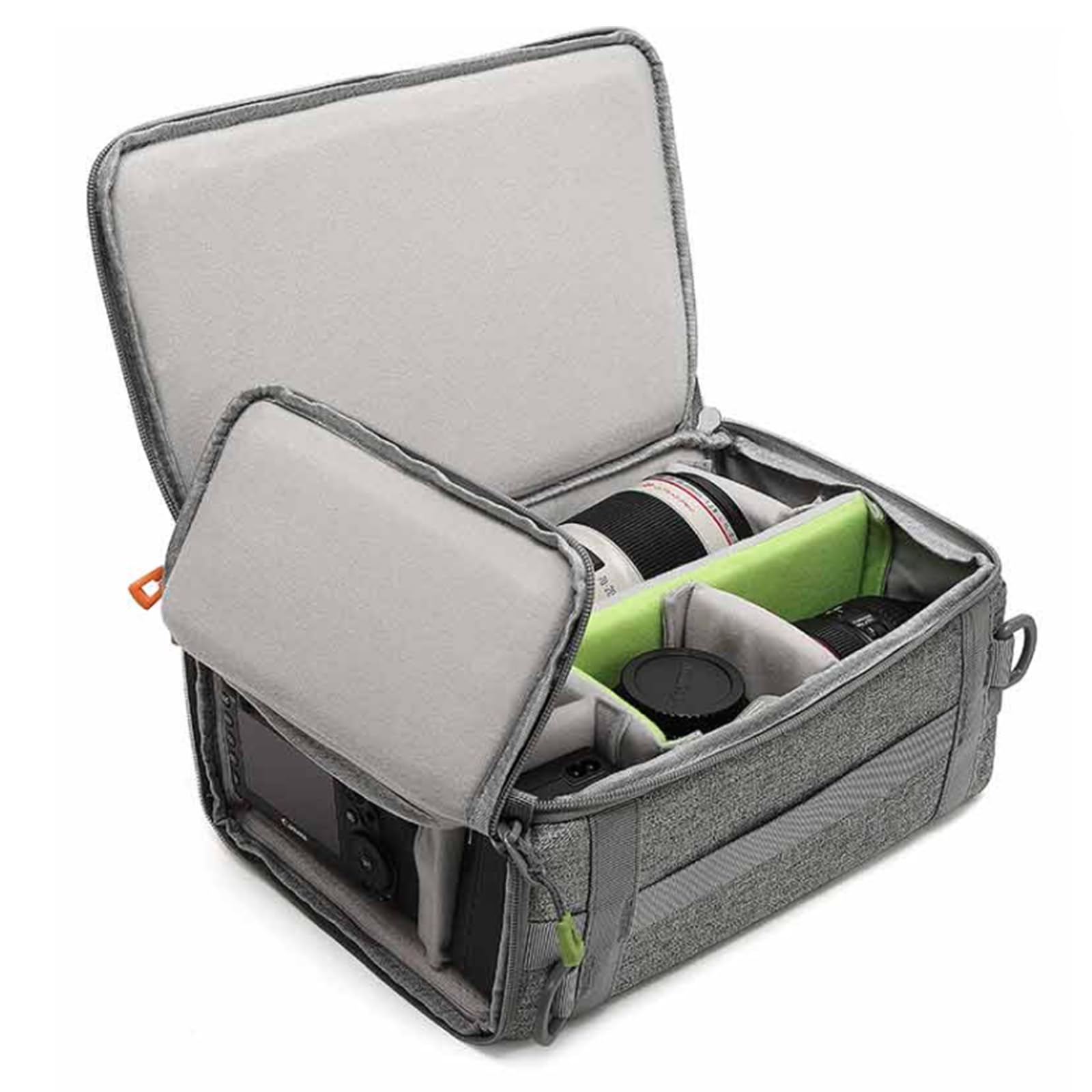
The svatin is a rigid PP-shell insert with top and side openings in a 2.2 lb frame — the strongest impact structure in this set for a body plus a 70-200 type lens. Dual access works well inside a travel pack: you can grab the body through the top or pull a stored lens from the side without digging out the whole cube. The shell and mid-range price sit above budget inserts, so this cube suits travelers who value impact protection over light packing. Capacity is the boundary: with a long telephoto mounted, the interior may fill before a second body or flash, so compare the 12.2 x 7.87 x 4.92-inch cavity with your longest lens.

Pros

  • Rigid PP shell gives heavy camera kits impact protection fabric inserts cannot match.
  • Top and side openings let you reach gear without removing the cube from your pack.
  • Six adjustable dividers let you lock the camera and lens in a custom layout.

Cons

  • At 2.2 lb, the shell eats into carry-on weight budgets more than fabric inserts.
  • The interior can fill quickly with a long telephoto mounted; verify your lens against the interior dimensions.
Our verdict

Use this cube when you carry a large telephoto and want rigid protection inside a travel pack. For ounce-counting trips or mirrorless-only kits, a fabric insert is the better match.

Check Latest Price

How to Choose

Measure Your Pack First

External dimensions decide whether the insert slides into your pack at all. A cube that is an inch too wide fits loose and wastes space, while one that is too tall can bulge the back panel against your spine. Most negative fit reviews trace back to measuring the bag after buying the insert.

Capacity and Dividers

Interior capacity determines whether your body-plus-lens setup actually closes. Adjustable dividers let you reconfigure the cube for a gripped body or a longer lens, but every extra divider consumes width that could hold gear.

A 'large' insert often means one camera and two lenses, not a multicamera kit. Match the divider layout to what you carry daily rather than what you own, and confirm the interior dimensions against your biggest lens.

Access Type

Top access lets you pull the camera out while the insert stays in the pack, which matters on a moving train or a crowded trail. Side access adds a second grab point but brings an extra zipper track, which adds bulk and can run stiff on budget models.

If you primarily shoot street and city travel, a dual-access cube is worth the trade-off. If the insert spends most of its time buried under clothes in a suitcase, a simple top-opening liner is lighter and has fewer moving parts.

Padding Rigidity

Rigid shells like polypropylene or a steel frame distribute a point impact across a wider area, so they suit checked luggage or packed buses. Soft foam cubes rely on the host backpack for extra cushioning, which works in a padded daypack but leaves gear less protected in a loosely packed duffel.

The middle ground is a vertical backpack insert with a semi-rigid frame and thinner walls, which protects best when the pack around it is already structured. Match the insert's rigidity to the type of bag you carry, not just the camera gear.

Water Resistance

Most 'waterproof' inserts are actually splash-resistant: the fabric sheds light rain but soaks through in sustained downpour or a submerged pack. The hidden trade-off is that genuinely waterproof construction, like a welded dry-bag liner, is heavier and less flexible than a coated nylon cube.

For tropical rain or boat travel, carry a separate dry bag or use a liner inside the insert rather than trusting a coated zipper.

Frequently Asked Questions