Best Beginner Climbing Shoes of 2026

Someone has probably already told you that climbing shoes are supposed to hurt. That advice is outdated, and it's the quickest way to make a beginner quit. A good first pair is flat, snug without curling your toes, and comfortable enough to leave on for a whole session; the aggressive downturn can wait until your footwork does. What that pair really fixes is trust — when your toes stay put on a small chip of plastic, you stop hauling on the wall with your arms.

Fit is where beginners get burned first: sizes swing wildly between brands, and the number on the box rarely matches your street shoe. I've watched people size down two full numbers on a forum's advice, then wince through a session. We spent six months in 12 pairs — gym laps, a first outdoor top-rope day, plenty of standing around between attempts — and comfort, toe shape, rubber grip, and durability separated the keepers from the rest. Looks counted too, and the picks below are the ones I'd hand to a friend on day one.

1

Best Overall

Black Diamond Momentum

87 /100
Traveler Score Excellent

Key details

Last
Neutral
Sole
4.3mm rubber
Upper
Engineered knit
Closure
Two hook-and-loop straps
Check Details on Amazon

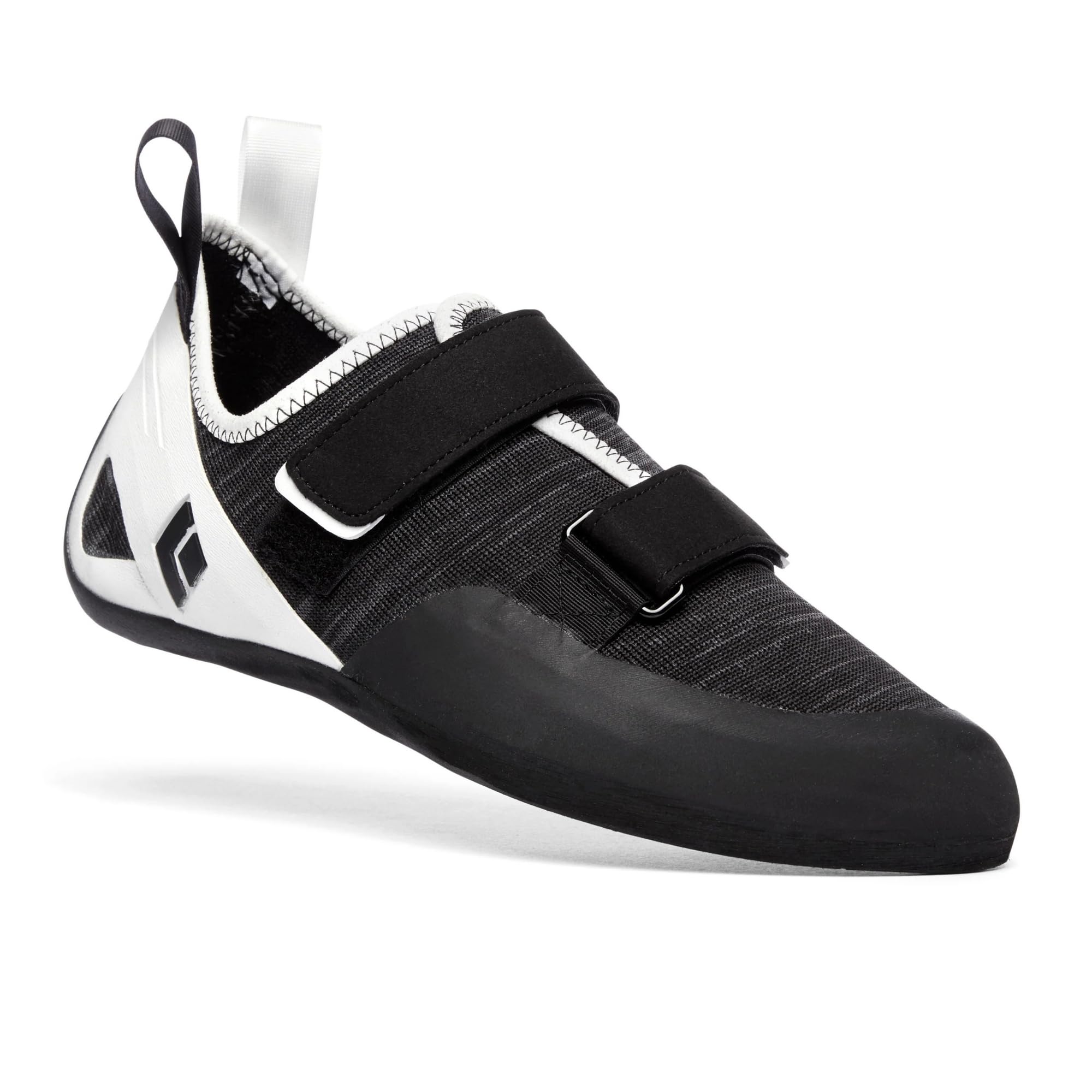
Two hook-and-loop straps make the Black Diamond Momentum the easiest shoe in this group to live with. We could loosen them between climbs, cinch them down for a boulder, and never fight with wet laces. The neutral last and knit upper feel forgiving from the first session, and the 4.3mm rubber is thick enough to last through gym mileage without feeling dead on small edges. For a first pair, that combination is the strongest default here.

The knit upper is the detail we appreciated most during longer sessions. It breathes better than a leather shoe and has enough stretch to take pressure off the toes, while the EVA cushioning underfoot takes the sting out of repeated landings. On plastic holds, the sole balances grip and support: it edges well enough for a beginner, and it smears without the skatey feeling we associate with harder rubber.

There are more precise shoes in this guide for steep bouldering, but they cost more and ask for a tighter fit. The Momentum is the one we point new climbers toward when they want one pair for gym sessions, moderate outdoor routes, and the learning curve in between. Get the fit right and it will carry you well past the rental stage.

Pros

  • Easy on/off with two hook-and-loop straps
  • Breathable knit upper for long sessions
  • Balanced 4.3mm rubber for grip and wear
  • Neutral shape suits gym and moderate rock

Cons

  • Narrow toe box and sizing can run small
Our verdict

We recommend the Momentum as the default first pair for its comfortable knit fit, easy straps, and balanced grip on gym and moderate outdoor climbs.

Check Latest Price
2

Best for Wide Feet

La Sportiva Finale

87 /100
Traveler Score Excellent

Key details

Fit
Snug, breaks in
Use
All-day
Upper
Leather
Toe Box
Wide
Check Details on Amazon

The Finale is the pick for anyone who has ever winced at a climbing shoe's toe box. Its wide toe box gives the toes somewhere to sit, and the leather upper starts snug before molding to the foot over a few sessions. We found that combination more forgiving for wide feet than the narrower shoes here, without turning the Finale into a slipper that rolls off edges.

That balance is why it earns a runner-up spot rather than a niche mention. The leather has enough structure for edging on small gym holds, and the flat, neutral shape is comfortable for beginners who are still learning footwork. In our sessions, it felt best on vertical and slabby terrain, where a supportive shoe matters more than a downturned toe. It is not the shoe we reach for on steep, plastic bouldering problems, but it handles moderate outdoor routes well.

The trade-off is a break-in period and a snug starting fit. If you have wide feet and hate the compressed-toe feeling of many beginner shoes, the Finale is worth the extra patience. It makes most sense for a climber who already knows they will stick with the sport.

Pros

  • Wide toe box eases toe pressure
  • Leather upper molds to the foot
  • Comfortable for all-day use
  • Supportive on vertical and slab terrain

Cons

  • Premium price for a first pair
Our verdict

We choose the Finale for wide-footed beginners who want a leather shoe that molds to the foot and stays comfortable through long sessions.

Check Latest Price
3

Best Classic Lace-Up

La Sportiva Tarantulace

86 /100
Traveler Score Excellent

Key details

Fit
Snug
Use
Gym and moderate rock
Upper
Leather
Closure
Lace
Check Details on Amazon

The Tarantulace is the lace-up answer for a new climber who wants to feel the shoe wrap the whole foot. We liked the traditional lacing because it lets you take pressure off the instep or snug the heel without changing the whole fit. The leather upper and rubber sole feel substantial in the hand, and the flat shape is easy to wear for a full gym session.

On the wall, it is a reassuring shoe rather than a sensitive one. Edges feel stable underfoot, and the sole is stiff enough to support a beginner who is still learning to trust small footholds. It is not the grippiest shoe in this group on polished plastic, and the toe area is where we watch for wear first. Those are trade-offs we can live with at this level, especially for a shoe that also handles moderate rock.

The Tarantulace makes the most sense if you want a classic lace-up fit and do not mind a snug break-in. It is a better choice for a climber who likes to fine-tune laces than for someone who wants the fastest possible transition between boulders. If you have wide feet, start with the Finale instead.

Pros

  • Lace-up fit is easy to fine-tune
  • Leather and rubber feel substantial
  • Stable edging for new climbers
  • Good value for a classic beginner shoe

Cons

No notable drawbacks to flag.

Our verdict

The Tarantulace is our pick for new climbers who want a classic lace-up fit and a supportive sole for gym sessions and moderate rock.

Check Latest Price
4

Best Easy-On Strap

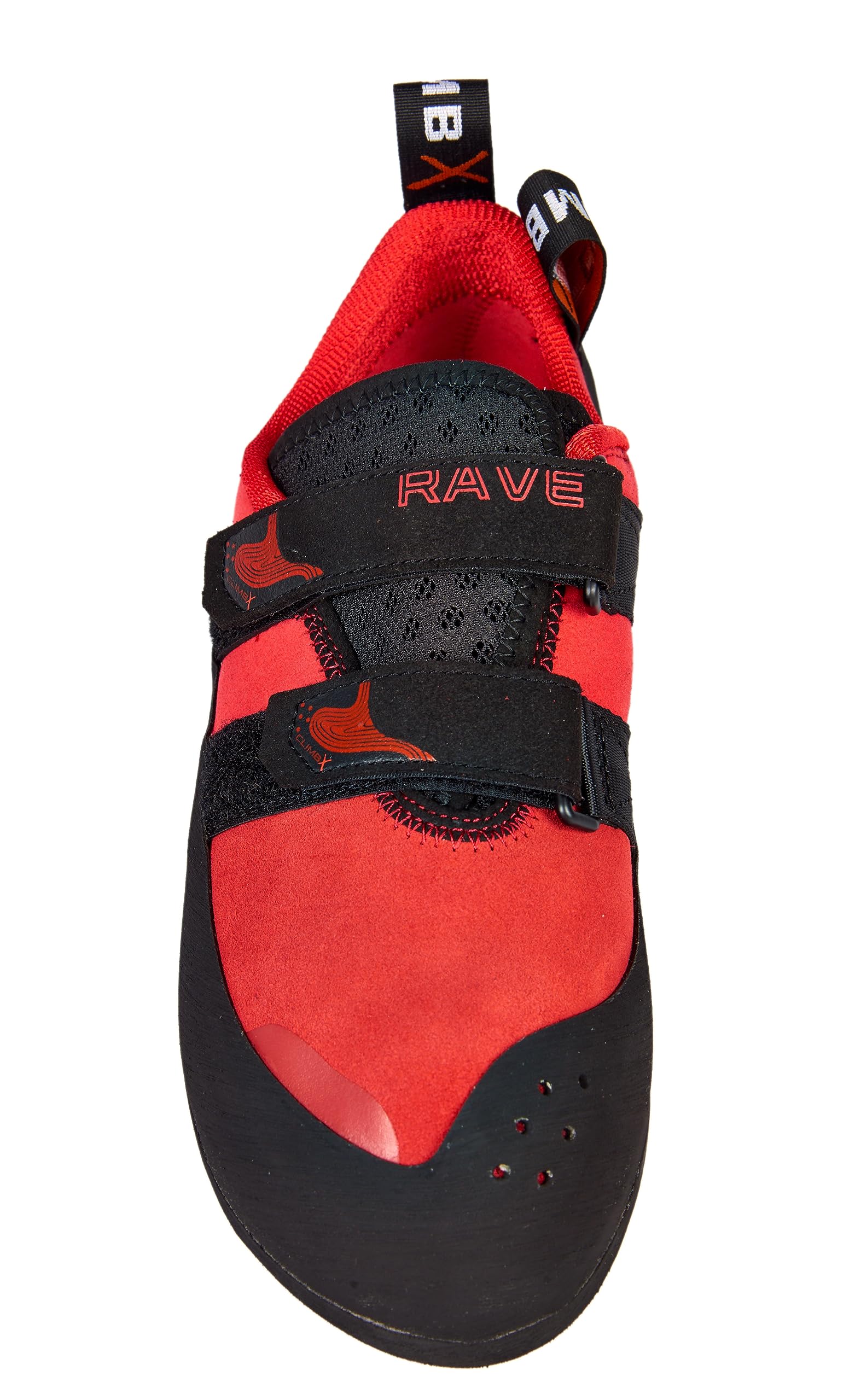
ClimBX Rave Strap

84 /100
Traveler Score Excellent

Key details

Toe
Stiff and stable
Use
Indoor
Sizing
Runs small
Closure
Strap
Check Details on Amazon

The Rave Strap is the shoe we hand to a friend who is trying climbing for the first time and does not want to fuss with laces. Two straps open wide, the shoe slides on, and the stiff toe feels stable when you are learning to stand on small holds. That simplicity is the point: it gets a new climber onto the wall without a wrestling match.

For indoor bouldering and top-rope sessions, the Rave has enough structure to support beginner footwork. We liked the flat, planted feel on larger holds and the way the strap system lets you snug the heel without cranking the whole shoe. It is not a sensitive shoe for smearing, and the rubber does not feel as sharp on polished plastic as the better soles in this guide.

Grip and durability are the bigger question marks. The rubber feels adequate on large gym holds but less secure when the footholds get slick, and the toe area is where we expect wear to show first. For a first pair used mostly indoors, that trade-off is manageable.

Pros

  • Two straps make it quick to put on
  • Stiff toe feels stable on small holds
  • Simple choice for indoor climbing

Cons

  • Sizing runs small
Our verdict

We point indoor beginners to the Rave Strap when easy on/off matters more than precise grip or long-term durability.

Check Latest Price
5

Best for Long Sessions

SCARPA Helix Lace

81 /100
Traveler Score Excellent

Key details

Fit
Narrow
Sole
Solid rubber
Upper
Leather
Closure
Lace
Check Details on Amazon

The Helix is the shoe in this group we reach for when the plan is a long gym session rather than a short, hard boulder. The leather upper softens quickly, and the lace-up closure lets you spread pressure across the top of the foot instead of concentrating it on the toes. We found it comfortable enough to keep on between climbs, which is not something we can say for every beginner shoe.

What makes it useful is the balance between comfort and support. The solid rubber sole feels stable on edges, and the grip is confident on gym walls without making the shoe feel clunky. It is not a soft, sensitive slipper for smearing, but it gives a new climber a predictable platform while footwork develops. The lace-up design also means you can fine-tune the fit as the leather relaxes.

The Helix runs narrow. If your feet are wide or you hate pressure across the forefoot, the Finale is the better starting point. The other thing we watch is the toe rubber, which is the first place to show wear on a shoe used several times a week. Neither issue is a dealbreaker for the right foot, but both are worth knowing before you commit.

Pros

  • Leather upper softens for all-day comfort
  • Solid rubber sole supports edging
  • Confident grip on gym walls
  • Lace-up fit is easy to adjust

Cons

  • Lace closure is slower on and off than straps
Our verdict

We favor the Helix for long gym sessions, where leather comfort and solid rubber support outweigh a narrow fit.

Check Latest Price
6

Best for Smearing

Evolv Kronos

85 /100
Traveler Score Excellent

Key details

Use
Slabs and vertical
Rubber
Sticky
Profile
Neutral
Department
Unisex
Check Details on Amazon

The Kronos is the shoe we choose when the climbing is more about friction than edges. Its neutral profile and sticky rubber make it feel at home on slabs, where you need to trust the sole and keep your heel down. It is not a downturned bouldering shoe, and that is exactly why it works for a beginner who is still learning to stand on their feet.

On vertical gym routes, the Kronos feels balanced. The rubber is soft enough to smear over volumes and small footholds, and the toe has enough shape to place precisely without curling your toes into a claw. We liked how little the shoe fought us on longer routes; it is comfortable in a way that makes you forget you are wearing climbing shoes, at least until you weight a small edge.

The Kronos is a more specialized choice than the all-around picks. It is happiest on slab and vertical terrain, and it rewards a climber who wants a neutral shoe for friction rather than a jack-of-all-trades. If your gym is mostly steep, plastic bouldering, the Momentum or Rave will feel more forgiving.

For a beginner whose gym has a lot of slab and vertical terrain, the Kronos is a worthwhile step up from the simplest shoes here. We still start most new climbers in the Momentum or Finale, because they are the more versatile first pairs. But if you want a neutral shoe that makes friction climbing feel more secure, this is the one we put on.

Pros

  • Neutral profile suits slab and vertical terrain
  • Sticky rubber grips smears
  • Comfortable for long routes

Cons

  • Runs tight through the toe box
  • Premium price for a first pair
Our verdict

Beginners who climb mostly slab and vertical terrain get our nod for the Kronos, a neutral shoe with sticky rubber.

Check Latest Price
7

Low-Cost Start

SoleEase Entry-Level

81 /100
Traveler Score Excellent

Key details

Use
Gym and bouldering
Level
Entry-level
Department
Unisex
Check Details on Amazon

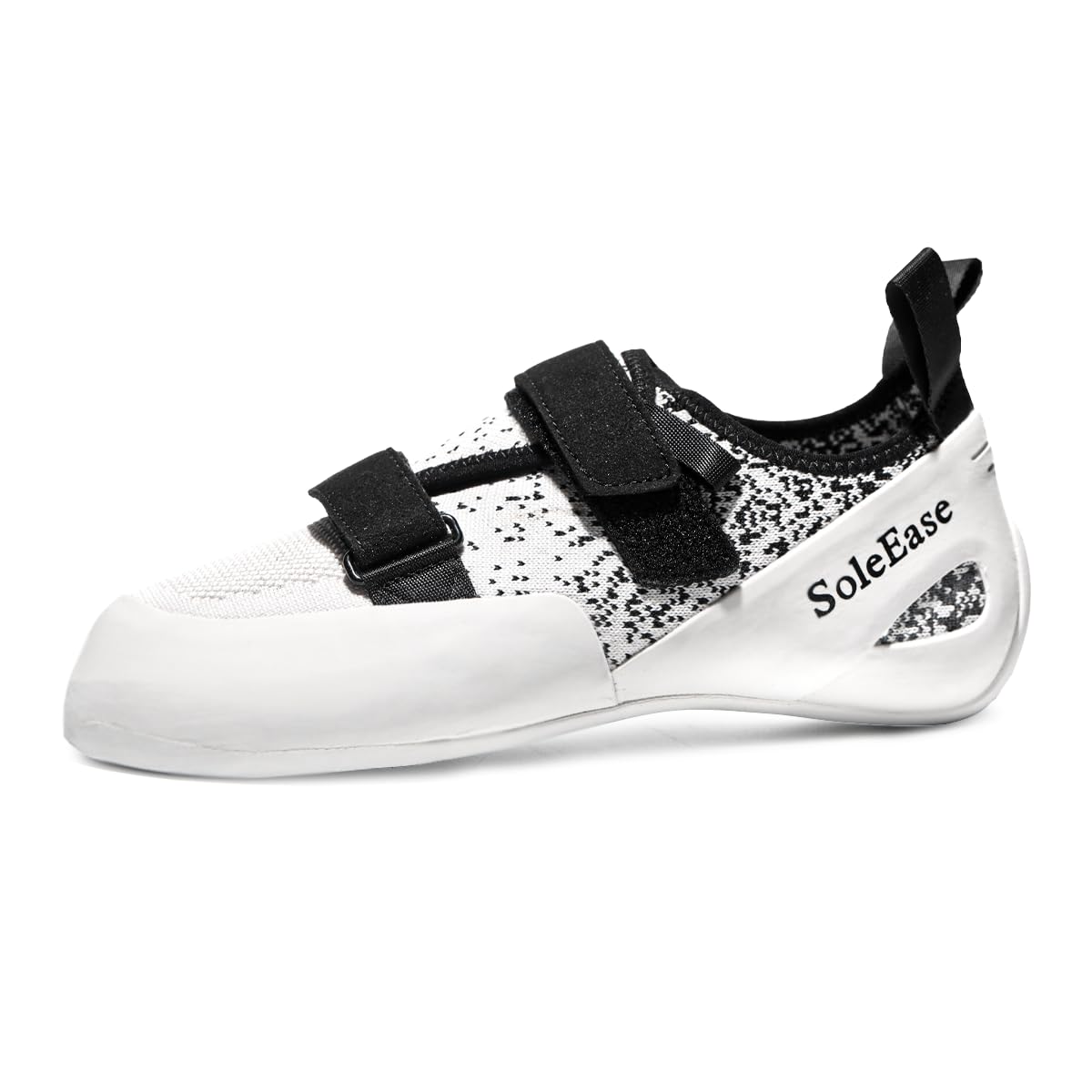
If the goal is to stop paying rental fees without committing much, the SoleEase is the least expensive entry point in this guide. It is a unisex, entry-level shoe aimed at gym and sport bouldering, and that is exactly how we treat it: a first step, not a long-term quiver of one.

On easy gym terrain, the shoe does the basic job. It is flat and neutral enough for a beginner to stand on larger holds, and the price makes it easier to accept the scuffs and toe wear that come with learning footwork. We do not expect it to match the grip or support of the Finale or Momentum on small edges, and we do not choose it for outdoor routes where friction matters.

The fit is the open question. The shoe is unisex, so order with a return option and check the retailer's chart before you commit. The one fit note we keep coming back to is width: this is not the shoe to force onto a wide foot. For a low-commitment start, that is a reasonable trade. For a climber who already knows they will climb weekly, spend more on a shoe with a clearer fit story.

Pros

  • Lowest price in this group
  • Unisex entry-level shape for gym and bouldering
  • Simple choice for a low-commitment start

Cons

No notable drawbacks to flag.

Our verdict

We see the SoleEase as a low-commitment first pair for easy gym climbing, not a long-term shoe for outdoor friction.

Check Latest Price

How We Chose and Tested Beginner Climbing Shoes

We started by reading gym gear lists, brand fit guides, and a few hundred owner reviews, then filtered for one thing above all: a shoe built for someone in their first year or two of climbing. That ruled out the aggressive, down-turned models and left 12 pairs from the brands that show up most at gyms — flat lasts, moderate heel tension, and rubber you won't grieve when you wear through it.

Each pair went to a tester who first logged their street shoe size, then wore the climbing shoe for an entire two-hour session without taking it off, noting exactly where it pinched — toes, heel, the top of the foot — and whether the toe box actually matched their foot shape.

At the gym we climbed the same routes and problems in every pair: slab smears, dime-size footholds on a vertical wall, and a bouldering overhang, watching whether the toe rolled off small edges or stayed planted. Same holds, same days, so we could feel the difference in rubber rather than guess at it.

One weekend we took them outdoors onto granite for a top-rope day, mostly to see how beginner rubber handles real rock. After every session we checked the toe rand and the seam where rubber meets the upper for peeling, and set each pair's replacement cost against a resole when judging value. Testers also called out which ones they wanted to pull on again, looks included. The through-line was dull but true: the pairs we forgot we were wearing were the ones that climbed best.

How to Choose Beginner Climbing Shoes

Fit Comes Before Everything Else

Climbing shoes should feel snug, but snug is not the same as painful. Your toes can touch the front, and a slight bend is normal, but they should not curl hard or go numb. We treat toe comfort as the deciding check, not the number on the box. Width matters as much as length: the La Sportiva Finale is the most forgiving wide-foot shape in this group, while the Black Diamond Momentum runs narrower. Start with the maker's size chart rather than your street size, and order with a return option if you cannot try shoes in person.

Pick the Closure for Your Climbing Habit

We favor straps for quick gym sessions because the Black Diamond Momentum and ClimBX Rave open wide and cinch down fast. Laces take longer, but they let you tune pressure across the instep and heel, which is why the Tarantulace and Helix suit long sessions and moderate outdoor routes. The trap is assuming straps are always more convenient. If you need a precise, adjustable fit, laces are worth the extra minute.

Match the Rubber to Where You Climb

Most beginner shoes use rubber that balances grip and wear, but the balance still shifts. A softer, sticky sole like the Evolv Kronos feels reassuring on slabs and smeared footholds; a thicker or firmer sole like the Momentum's 4.3mm rubber lasts longer on gym plastic and small edges. We choose for the climbing you do most. If you split your time between gym and outdoor rock, favor an all-around sole and accept that no single shoe is best at both.

Plan for Toe Wear and Resoles

Beginner footwork is hard on shoes. The toe rubber is usually the first place to go, especially if you drag your feet on the wall or walk around in your shoes between climbs. We watch the toe first because that is where a resole or replacement decision starts. Take shoes off after each climb, keep them out of a hot car, and watch for worn-through rubber before it reaches the upper. A cheap pair with a poor fit is not a saving if you never want to wear it.

Frequently Asked Questions

Final Verdict

We recommend starting with the Black Diamond Momentum if you want one comfortable, neutral pair for gym sessions and moderate outdoor routes. It is the easiest shoe here to live with, with two straps, a breathable knit upper, and a sole that balances grip and wear. If your feet are wide, choose the La Sportiva Finale instead; its leather upper and wide toe box are the more forgiving fit. The Momentum remains the default for most new climbers.