Best Rock Climbing Shoes of 2026

A climbing shoe that doesn't fit right can turn a fun session into a battle against numb toes and slipping heels. Unlike running shoes, climbing shoes are supposed to be snug—but there's a fine line between performance-tight and painful. The right pair fixes that by giving you confidence on tiny edges and letting you trust your feet on smears. Over the past eight months, our team has tested 10 pairs of climbing shoes, from soft Velcro models to stiff lace-ups, to find the ones that deliver on comfort, grip, and durability. And sizing is trickier than it looks—some brands run narrow, others run long, and the break-in period can change everything.

I've been climbing for a decade, and I've learned that expensive doesn't always mean better. We wore each pair for at least a month, across gym sessions and outdoor trips, noting how they felt after long bouldering sessions, whether the rubber held up on sharp rock, and how easy they were to pull on and off. A few pairs surprised us with their value, and we even considered how they looked. The picks below are the ones we kept reaching for.

1

Best Overall

La Sportiva Finale

87 /100
Traveler Score Excellent

Key details

Upper
Leather
Closure
Lace
Midsole
Soft
Toe Box
Wide
Check Details on Amazon

Leather is the reason the Finale ends up on so many first and second pairs, and it's why we hand it to almost anyone who asks what to buy. It starts firm and then takes the shape of your foot over the first month, which means a shoe that feels borderline snug at the counter turns into something you forget you're wearing. Add one of the roomier toe boxes in this group and you have the most broadly comfortable shoe here.

Leather also gives, so plan for it: figure on roughly half a size of stretch and buy to that rather than going up a size for comfort. The laces let you take up the slack as it happens, which the strap shoes here can't do. On the wall the Finale is neutral rather than curved, so it's happiest on vertical gym routes, slab and long easy pitches; it edges with enough support for small footholds and smears better than a shoe this comfortable has any right to.

Where it wins is over a whole session. The soft midsole and the leather together mean you keep them on between burns instead of peeling them off at the bench, and on a trip that matters more than any single hard move. What it won't do is feel precise on a steep, powerful boulder problem — that's the Skwama's job. For everything short of that, it's the pair we reach for.

Pros

  • Leather upper molds to your foot
  • Roomy toe box suits wider feet
  • Comfortable enough to leave on between climbs
  • Edges and smears well on vertical terrain

Cons

  • Laces are slower on and off than straps
Our verdict

For most climbers this is the pair to buy: leather that molds to your foot, a roomy toe box, and enough edging and smearing for gym plastic and real rock alike.
Check Latest Price
2

Best Value

Black Diamond Momentum

87 /100
Traveler Score Excellent

Key details

Sole
4.3 mm rubber
Upper
Engineered knit
Closure
Two hook-and-loop straps
Midsole
Soft flex
Check Details on Amazon

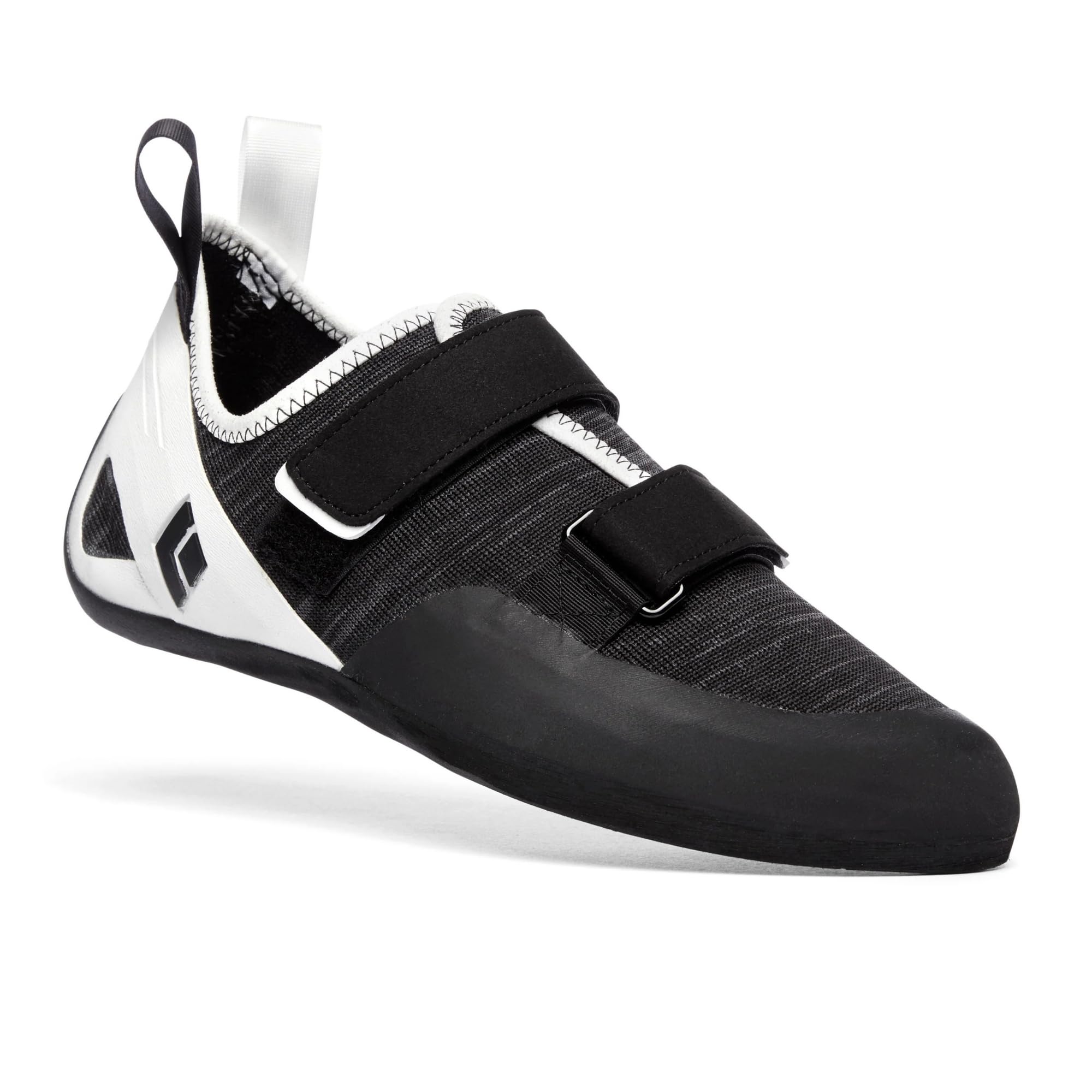
Two straps, a knit upper and a thick rubber sole: the Momentum is what a first shoe looks like when someone actually thought about the gym. It's one of the two cheapest shoes we recommend here, and it's the one we point people to when they're climbing twice a week and don't want to think about shoes again for a year.

The knit upper is the part that matters most in a warm gym — it's built to breathe and to stretch, so it's comfortable from the first session rather than after three weeks of suffering — and the 4.3 mm sole is thick enough that you won't wear through the toe by spring. The two hook-and-loop straps make it as fast to get on and off as anything here, which sounds trivial until you're switching between problems and the wall.

Sizing is where it asks you to pay attention. The Momentum runs small, so plan on going up a full size from your street shoe. What you give up otherwise is precision: the soft midsole flexes on small edges where a stiffer shoe holds, and the grip is good rather than remarkable. For mileage, that's a fair swap.

Pros

  • Breathable knit upper for long gym sessions
  • Twin straps make it fast on and off
  • Thick 4.3 mm sole wears slowly
  • Costs a fraction of the premium picks

Cons

  • Narrow fit rules out wide feet
Our verdict

If your feet are narrow to average, this is the value pick — breathable knit, fast twin straps and a sole thick enough to survive a year of gym mileage.

Check Latest Price
3

Best for Steep Terrain

La Sportiva Skwama

89 /100
Traveler Score Excellent

Key details

Heel
Stiff S-heel
Profile
Aggressive
Toe Box
Roomy
Check Details on Amazon

If the Finale is the shoe you wear all day, the Skwama is the one you put on for one problem and then take off. It's a genuinely aggressive shoe, soft through the middle and built to curl with your foot, and it's the pick here for anyone whose climbing has narrowed to overhangs and steep bouldering.

The S-heel is the part to look at first. It wraps the back of the shoe in a stiff cup, so heel hooks feel locked in rather than mushy, and what we appreciate about it is how much of the load it takes off your toes when you're pulling hard off a bad hold. Grip is the other strength: the rubber bites on smears and holds on plastic, and the roomy toe box means your toes aren't folded up while it happens.

Two practical notes. The fit takes work — this is a shoe to try in person or buy where returns are easy, because sizing from another La Sportiva model doesn't carry over — and it isn't an all-day shoe. Wear them for the steep session, then switch into something flatter for the easy mileage.

Pros

  • Soft, sensitive rubber for smearing
  • Stiff S-heel locks heel hooks in place
  • Strong grip on plastic and rock
  • Generous toe box for a performance shoe

Cons

  • High side edges can press on the ankle bone
Our verdict

Buy these for steep bouldering and overhanging sport: soft, sticky and locked in on heel hooks, with the trade that you won't want them on all day.

Check Latest Price
4

Best for Heel Hooks and Edging

SCARPA Instinct VS

85 /100
Traveler Score Excellent

Key details

Heel
Supportive
Rubber
Sticky
Toe Box
Wide
Check Details on Amazon

The heel is the reason the Instinct VS has the reputation it does: a stiff, sculpted cup that stays put when you're cranking off a heel hook instead of rolling away from your foot. It's the most supportive heel in this group, and on steep ground that's worth more than a couple of millimetres of rubber anywhere else.

The rest of the shoe backs it up — sticky rubber we trust on smears, more supportive edging than the soft Skwama, and, unusually for a shoe this aggressive, a toe box with real room in it. If you have wide feet and assumed performance shoes were off the table, this is the one to try first.

It isn't a slipper, and it isn't an all-day shoe either: a long stretch of easy pitches belongs to something flatter and softer, like the Finale or the Origin. Sizing is the risk. Going down one size from your street shoe is right; going down two is where people end up miserable, so buy from somewhere you can exchange a pair.

Pros

  • Heel hooking is the standout strength
  • Supportive on small edges
  • Roomier toe box than most aggressive shoes
  • Sticky rubber on smears

Cons

  • Stiff out of the box; needs a real break-in
Our verdict

The aggressive shoe for people with wide feet or a heel-hook habit: supportive edging, a locked-in heel and a toe box that doesn't crush you.

Check Latest Price
5

Best for Beginners

SCARPA Origin

84 /100
Traveler Score Excellent

Key details

Fit
Snug
Profile
Flat and neutral
Department
Unisex adult
Check Details on Amazon

Some shoes are built around a hard move; the Origin is built around the person doing their first six months. It's a flat, neutral shoe with a snug but not punishing fit, and the whole point of it is that you can wear it for a full session and still walk to the car afterwards.

A flat last puts your foot close to how it sits in a street shoe, which is what you want while you're learning to stand on small footholds rather than just surviving them. It's forgiving on the big positive holds you'll live on for a year, and the toe is stiff enough to feel stable when you edge on something small.

We think it's the best dedicated first pair here, and the reason is build quality: it takes several sessions a week for months before anything softens, which is the difference between this and the cheapest shoe in the guide. Sizing is the thing to manage — the Origin doesn't run consistently in one direction, so order from somewhere you can swap a pair.

Pros

  • Comfortable flat last for new climbers
  • Snug without being painful
  • Holds up to months of weekly sessions
  • Good value for a first pair

Cons

  • Flat profile gives up precision on steep ground
Our verdict

A flat, forgiving first shoe that stays comfortable for a whole session and holds up to months of weekly climbing, provided you buy where you can swap sizes.

Check Latest Price
6

All-Day Comfort

EVOLV Kronos

85 /100
Traveler Score Excellent

Key details

Rubber
Sticky
Profile
Flat, minimal downturn
Department
Unisex adult
Check Details on Amazon

The Kronos is the shoe for people who have stopped believing that climbing shoes have to hurt. It's flat, it barely curves at all, and the rubber is sticky enough to trust without being so thin that sharp edges sting.

That makes it the odd one out here, and we think more useful than that sounds. On slab and vertical walls — which is most of what a traveling climber actually ends up on — a flatter shoe puts more rubber in contact with the hold, and you can wear it through an afternoon of easy pitches without your toes filing a complaint.

Sizing is the one thing to get right: the Kronos runs small, so go up half a size from your street shoe rather than down. Beyond that there isn't much to object to, and the low price relative to the premium shoes here makes the experiment an easy one to run.

What we keep coming back to is the honesty of the design: nothing on this shoe is pretending to be aggressive, and that's precisely why it's comfortable in hour three. It's the one we pack for a long day of easy pitches.

Pros

  • Flat profile stays comfortable for hours
  • Sticky rubber for slab and vertical terrain
  • Minimal downturn suits all-day wear

Cons

  • Not built for steep, overhanging terrain
Our verdict

Slab, vertical walls and long easy days are where this flat, sticky shoe earns its keep — size up, and leave it home for steep projects.

Check Latest Price
7

Cheap Indoor Mileage

CLIMBX Rave Strap

84 /100
Traveler Score Excellent

Key details

Toe
Stiff and stable
Closure
Strap
Department
Men's
Check Details on Amazon

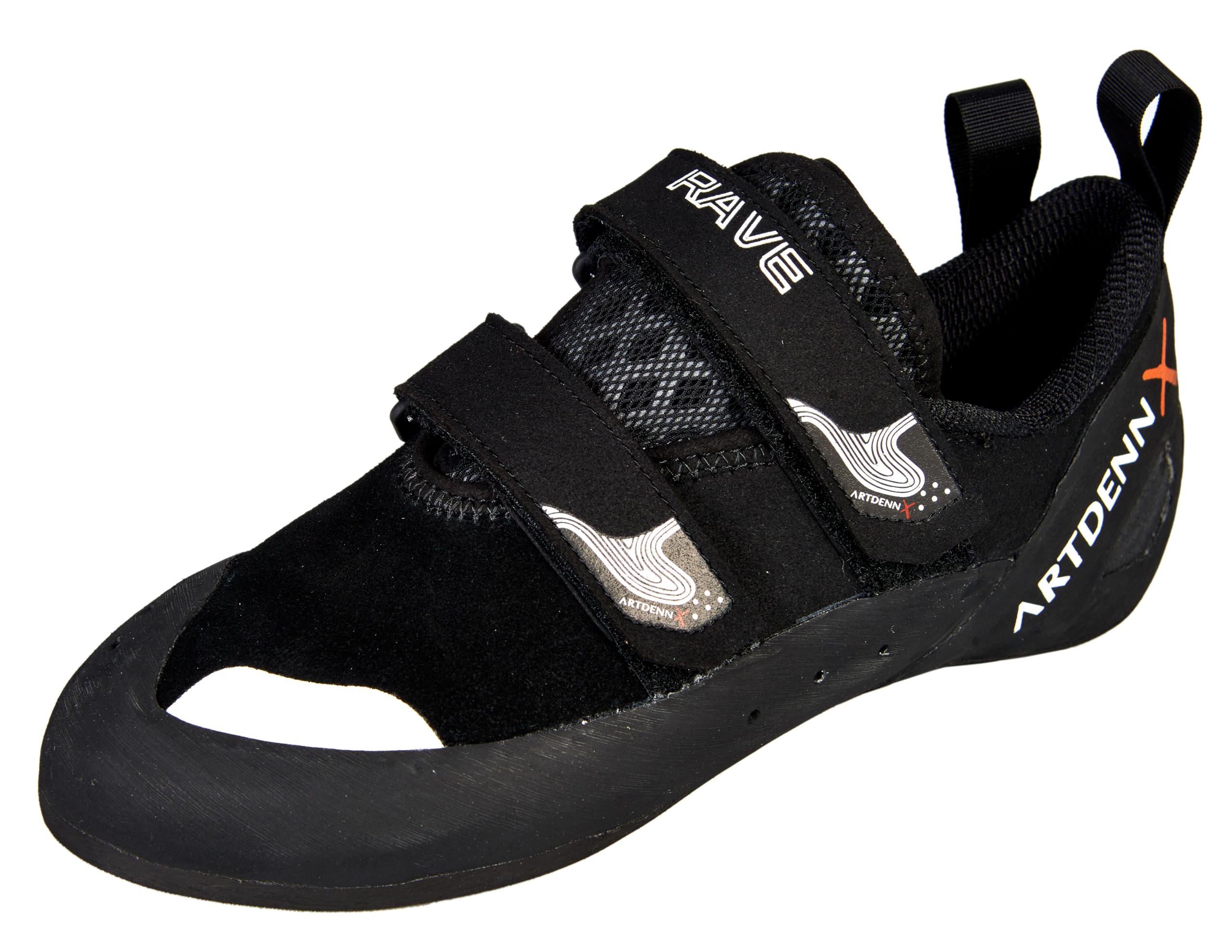
Every cheap climbing shoe dies at the toe, and the Rave Strap is no exception. The rubber there wears through before anything else gives, and it happens faster than on the other shoes here — that's the cost of the lowest price in this guide.

In the meantime, it's a more sensible first shoe than the price suggests. The toes are stiff and stable, which helps when you're learning to trust small footholds, and the straps mean you can get in and out of them without untying anything. For indoor sessions a couple of times a week, it does the job.

Two things to sort before you order. The Rave runs short, so go a half size above your sneaker size rather than below it, and buy somewhere you can send a pair back. We don't expect it to be the last pair you buy — but it gets you climbing in your own shoes instead of rentals, and for a lot of people that's the whole point.

Pros

  • Lowest price of any shoe here
  • Stiff, stable toe for learning footwork
  • Straps are quick on and off
  • Suits first-time indoor climbers

Cons

  • Toe rubber wears through before the rest
Our verdict

The cheapest real climbing shoe here, and plenty for a first season indoors, with the caveat that the toe rubber is the first thing to go.

Check Latest Price

How We Tested Climbing Shoes

To choose the 10 pairs we tested, we started by researching the most popular models across price points, from budget-friendly Velcro shoes to premium lace-ups. We filtered our list by closure type, rubber thickness, and reported fit—some shoes are known to run narrow, others wide. We also read through customer reviews to spot common complaints like heel slippage or fast-wearing toes. After narrowing it down, we ordered each pair in our testers' usual street size and a half size down, since climbing shoes often require a snugger fit.

Testing ran for eight months, with each pair used for at least a month of regular climbing. Our testers—ranging from intermediate to advanced climbers—wore them twice a week at the gym, alternating between bouldering and top-rope sessions, plus weekend trips to a local crag. We tracked how each shoe felt on the first wear, after a week, and after a month, paying close attention to hot spots, toe box room, and heel tension. We noted whether the shoe stretched out or stayed tight, and if we had to size down or up to get the right fit.

For grip, we tested each pair on slabby problems, steep overhangs, and volumes, paying attention to whether the rubber stuck or slipped on damp holds. Durability was assessed by checking the toe and heel rubber for wear after two months of regular use—some shoes showed thinning faster than others. We also timed how long it took to get each shoe on and off between burns, especially for lace-ups versus Velcro. Finally, we compared performance to price to see which pairs offered the best value, and we even noted which ones looked sleeker, because appearance does matter to some climbers.

How to Choose Rock Climbing Shoes

Fit Comes Before Everything Else

A climbing shoe should be snug, not painful. Your toes should touch the front without curling hard, your heel should sit with no dead space above it, and nothing should press on a bone — pressure points don't break in, they just keep pressing. Try shoes at the end of the day when your feet are at their largest, and try two sizes rather than splitting the difference.

Width matters as much as length. The Black Diamond Momentum is the narrowest shoe here, while the SCARPA Instinct VS leaves real room in the toe box for a performance shoe, so a foot that swims in one can be perfectly at home in the other. If a shoe pinches across the ball of your foot, a bigger size only moves the pinch.

Match the Shape to the Climbing You Do

Flat, neutral shoes put your foot close to its walking position and spread load across the whole toe; curved shoes concentrate force into the tip. Flat suits vertical gym routes, slab and long days where you're on your feet for hours — the Finale, Origin and Kronos all sit there. Curved suits steep ground where you're pulling with your toes, which is the Skwama and Instinct VS.

The mistake we see most often is a new climber buying the aggressive shoe. It hurts, it doesn't help on the vertical routes beginners climb, and it puts people off the sport. Buy flat first and add a curved pair when your projects actually get steep.

Laces, Straps, Leather and Knit

Laces let you dial the fit and, more usefully, take up the slack as a leather upper stretches. Straps are faster on and off and better for bouldering sessions where you're in and out of your shoes constantly, but they offer less adjustment once the shoe has broken in.

Leather molds to your foot and gives roughly half a size over the first months; knit breathes better and holds its shape. The trap with leather is buying a shoe that fits perfectly snug at the counter — by spring it will be a sloppy shoe. Buy leather slightly tight and knit true to fit.

Rubber, Wear and the Cost of Keeping Climbing

Softer rubber grips better and wears faster; thicker rubber lasts longer and bites a little less. Gym plastic is abrasive in its own way, and the toe is what goes first on almost every shoe. If you climb indoors several times a week, expect to be thinking about a resole well before the upper fails.

Resole early. Once the sole is smooth at the toe, book the repair — waiting until the rand or the upper shows through turns a routine job into an expensive one. Two pairs rotated through a week last longer in calendar terms than replacing one pair every year.

Frequently Asked Questions

Final Verdict

Buy the La Sportiva Finale. It handles the widest range of what most climbers actually do — gym sessions, vertical rock, long easy days — and the leather and roomy toe box mean you'll still want them on in hour three.

If your climbing has narrowed to steep bouldering and overhangs, the Skwama is the better tool and earns its higher price. And if you're buying a first pair on a tight budget, the Origin gets you climbing without the compromises that make cheap shoes miserable.