Best Sport Climbing Shoes of 2026

My first session in gym rental shoes ended with numb toes and a heel that slid out of every smear. That's the odd bargain of climbing shoes: a snug, slightly curved fit is what lets you stand on a foothold the size of a dime, and the wrong one turns a fun session into a countdown to taking your shoes off. What a good pair fixes is trust — you stop thinking about your feet and start committing to the move. It's also the one purchase where your street size is a starting point, not an answer.

Over the past six months, my team and I climbed in 12 pairs, from flat, forgiving beginner shoes to stiff, downturned models, indoors and out. I expected the expensive ones to run away with it; what surprised me was how much a well-shaped toe box mattered, and how often the shoes I liked looking at were the ones I reached for. The picks below span price points and foot shapes, and each one is a shoe you can keep on for a whole session.

1

Best Overall

La Sportiva Finale

87 /100
Traveler Score Excellent

Key details

Upper
Leather
Closure
Lace-up
Toe Box
Wide
Department
Men's
Check Details on Amazon

A wide toe box is the reason the Finale earns the top spot here. On a long bolted route, the last thing you want is a shoe that turns every rest into a toe-pain break, and the Finale's roomier front lets the toes lie flatter than most of the shoes in this group. We also like the leather upper for the way it softens around the foot; lace it snug at the start of a session and it feels less like a wooden last by the end.

That comfort is not the whole story. The sole gives a stable platform on small footholds, and the lace-up closure lets us tension the midfoot without crushing the toes. We found the shoe happiest on vertical and slabby sport routes, where you want sensitivity and support rather than an aggressive downturn.

Sizing is the detail to slow down on. The Finale should feel snug, with toes just touching the front, and the leather will relax with use; if it feels painfully tight out of the box, do not count on it opening up into a different shoe. Try it with the sock you plan to climb in, because the leather takes a few sessions to mold.

What settles it for us is the range of days it handles. It is not the cheapest shoe in this group and not the most aggressive, but it is the one we keep reaching for when the plan is a full day of bolts, from warm-up to the last route. The reward is a shoe that disappears on your foot rather than reminding you it is there.

Pros

  • Wide toe box keeps long pitches comfortable
  • Leather upper molds to the foot
  • Stable enough for small footholds
  • Handles vertical and slab terrain well

Cons

  • Roomy front can feel loose on narrow feet
  • Not the aggressive choice for steep projects
Our verdict

We recommend the Finale as the default sport shoe for climbers who want a wide, leather all-rounder that can stay on through long days.

Check Latest Price
2

Best All-Day Comfort

Black Diamond Momentum

87 /100
Traveler Score Excellent

Key details

Sole
4.3mm rubber
Upper
Engineered knit
Closure
Two hook-and-loop straps
Midsole
Soft flex
Check Details on Amazon

The Momentum's engineered knit upper is what makes it feel different from the leather shoes here. It gives across the top of the foot, breathes during a long session, and makes the shoe easy to keep on between burns. The two hook-and-loop straps are the other practical touch: they open wide enough to get the shoe off without a wrestling match, which matters at a busy gym or a cramped belay ledge.

We think that combination makes the Momentum the comfort pick of this group. The soft flex midsole is built for smearing and feeling the hold, and the 4.3mm rubber sole is thick enough to last through a lot of gym mileage. It is a forgiving platform on vertical routes, where you want feedback from the rock more than a locked-in edge.

The fit is where the shoe asks you to pay attention. It runs narrow through the forefoot and short in the sizing, and a wide foot can feel squeezed even after sizing up. We found the strap version easy to adjust, but no closure fixes a last that is the wrong shape for your foot. Try it on late in the day if your feet swell.

For all-day comfort, the Momentum is the pair we hand to a friend heading out for a first outdoor season. It is forgiving on the feet, quick to get on and off, and the knit upper keeps it from feeling like a plastic brick on a warm approach. It is a comfort shoe first, and that is exactly why it stays in the bag.

Pros

  • Knit upper breathes and flexes
  • Two straps make on/off quick
  • 4.3mm sole balances grip and wear
  • Soft midsole smears well

Cons

  • Narrow forefoot can squeeze wide feet
  • Less precise on small edges than stiffer shoes
Our verdict

We keep the Momentum in the mix for anyone who values all-day comfort and easy on/off over the sharpest edging.

Check Latest Price
3

Best for Steep Sport Routes

SCARPA Instinct VSR

89 /100
Traveler Score Excellent

Key details

Department
Unisex adult
Listed Weight
7.6 oz
Package Dimensions
13 x 6.5 x 4.5 inches
Check Details on Amazon

The Instinct VSR is built for the part of sport climbing where the wall kicks back and the footholds turn into thumbprint-sized edges. Its sticky rubber and sensitive toe put power over the front of the shoe, and we noticed the difference most on small footholds, heel hooks, and the sort of steep moves where a vague shoe rolls off the hold.

It is aggressive without being a disposable project shoe. The flexible midsole takes some of the sting out of standing on tiny holds, and the shape felt comfortable enough for a full session rather than a single redpoint attempt. We also came back to the heel and toe rubber when the route demanded a hook or a scum.

This is the shoe we choose when steep terrain is the point of the day. The trade-off is a very specific fit, so try it before you commit, especially if you are between sizes. It is a premium shoe, and it earns that place on technical ground.

For long, easy mileage, we still reach for the Finale; the VSR wants to be working. That focus is why it stays in the bag for trips where the routes are steep and the holds are small.

Pros

  • Sticky rubber grips small footholds
  • Sensitive toe and heel for hooks
  • Aggressive shape stays comfortable
  • Holds up on steep terrain

Cons

  • Tight toe box can pinch larger joints
  • Heel volume may feel loose on narrow heels
Our verdict

We reach for the Instinct VSR when the route goes steep and technical, and its sticky rubber is worth the aggressive fit.

Check Latest Price
4

Best Value for New Sport Climbers

La Sportiva Tarantulace

86 /100
Traveler Score Excellent

Key details

Sole
Rubber
Upper
Leather
Department
Men's
Check Details on Amazon

For a first season of sport climbing, the Tarantulace hits a useful middle ground: soft enough to wear for a whole session, structured enough to trust on a bolted route, and simple to lace. We noticed the comfort first; it is the kind of shoe you can leave on between routes instead of peeling off at every belay.

We think that makes it the value pick for new sport climbers. The leather upper softens around the foot, and the rubber sole is durable enough for gym mileage; the trade-off is that it does not feel as precise on tiny edges as the Instinct VSR. If your goal is mileage and confidence rather than projecting, that is the right compromise.

Sizing is the part to get right. The Tarantulace should feel snug with the toes just touching the front, and the leather will relax over the first few sessions. The sizing is inconsistent enough that we suggest trying your normal climbing-shoe size against a half size up rather than guessing from your street shoe.

The toe rand is the spot to watch if you drag your toes on the wall; that is where a softer shoe tends to wear first. Otherwise, the Tarantulace is a sensible first pair for someone who wants to learn to lead without spending a fortune or nursing sore feet.

Pros

  • Comfortable enough for all-day sessions
  • Leather upper softens with use
  • Good value for a first pair

Cons

  • Less precise on tiny edges
  • Sizing runs inconsistent
Our verdict

We recommend the Tarantulace to new sport climbers who want a comfortable, affordable shoe for learning the ropes.

Check Latest Price
5

Best Supportive Lace-Up

SCARPA Helix

81 /100
Traveler Score Excellent

Key details

Sole
Solid rubber
Upper
Leather
Closure
Lace-up
Listed Weight
1 lb
Check Details on Amazon

The Helix is the lace-up we reach for when we want the shoe to feel planted rather than painted on. Its solid rubber sole gives a stable platform for edging, which is what makes it useful for newer sport climbers moving from gym top ropes to bolted routes. We liked how the laces let us tune the midfoot while keeping the toe snug.

The leather upper is soft enough to wear for a long session, and the pressure spreads across the toes instead of concentrating on one hotspot. On vertical terrain, the Helix feels more supportive than the softer Tarantulace, though it gives up some sensitivity on smears. That is a fair trade if you are still learning to trust your feet on small edges.

The fit tends toward narrow, and the laces take longer to get on and off than a strap shoe. We also watch the toe rubber on this one: the sole is solid and supportive, but it can wear at the front with heavy gym use. The Helix rewards a patient break-in, and after a few sessions the leather softens without losing the edging platform.

Pros

  • Solid rubber sole supports edging
  • Lace-up tunes a secure midfoot
  • Soft leather distributes pressure
  • Comfortable for newer climbers

Cons

  • Narrow fit may not suit wide feet
  • Laces are slower than straps
Our verdict

We like the Helix for newer climbers who want lace-up support and a solid sole for edging without a race-fit.

Check Latest Price
6

Budget Gym Sessions

CLIMBX Rave

84 /100
Traveler Score Excellent

Key details

Sole
Rubber
Closure
Strap
Department
Men's
Check Details on Amazon

The Rave is the budget option we keep in the mix because it gets the basics right: a stiff toe, a secure strap, and a shape that is easy to wear for a gym session. For a new climber who is not ready to spend much, it is a sensible way to stop renting shoes without treating the purchase as a long-term investment.

The rubber is the compromise. It grips well enough on clean plastic holds, but it is not as sticky as the premium shoes here, and on polished footholds or smeary volumes it can feel like it is giving up sooner. We also noted the toe rand as a wear point; if you drag your toes, check it before the upper starts to go.

This is a gym shoe first and a sport climbing shoe second. The Rave tends to run short, so start a half size above your normal climbing-shoe size and check the toe before you commit. Even with the right size, it will not give you the precision of the Finale or the Instinct VSR on small edges. For easy routes, laps, and a first season, that is a trade many climbers can live with.

Pros

  • Stiff toe feels stable on gym holds
  • Strap closure is quick
  • Low-cost way to stop renting

Cons

  • Runs short; size up
  • Rubber less grippy on polished holds
Our verdict

We see the Rave as a budget gym shoe: easy on the wallet, beginner-friendly, and best bought with a careful size up.

Check Latest Price
7

First Gym Shoes

SoleEase All-Around

81 /100
Traveler Score Excellent

Key details

Department
Unisex adult
Intended Use
Gym and sport bouldering
Manufacturer
SoleEase
Check Details on Amazon

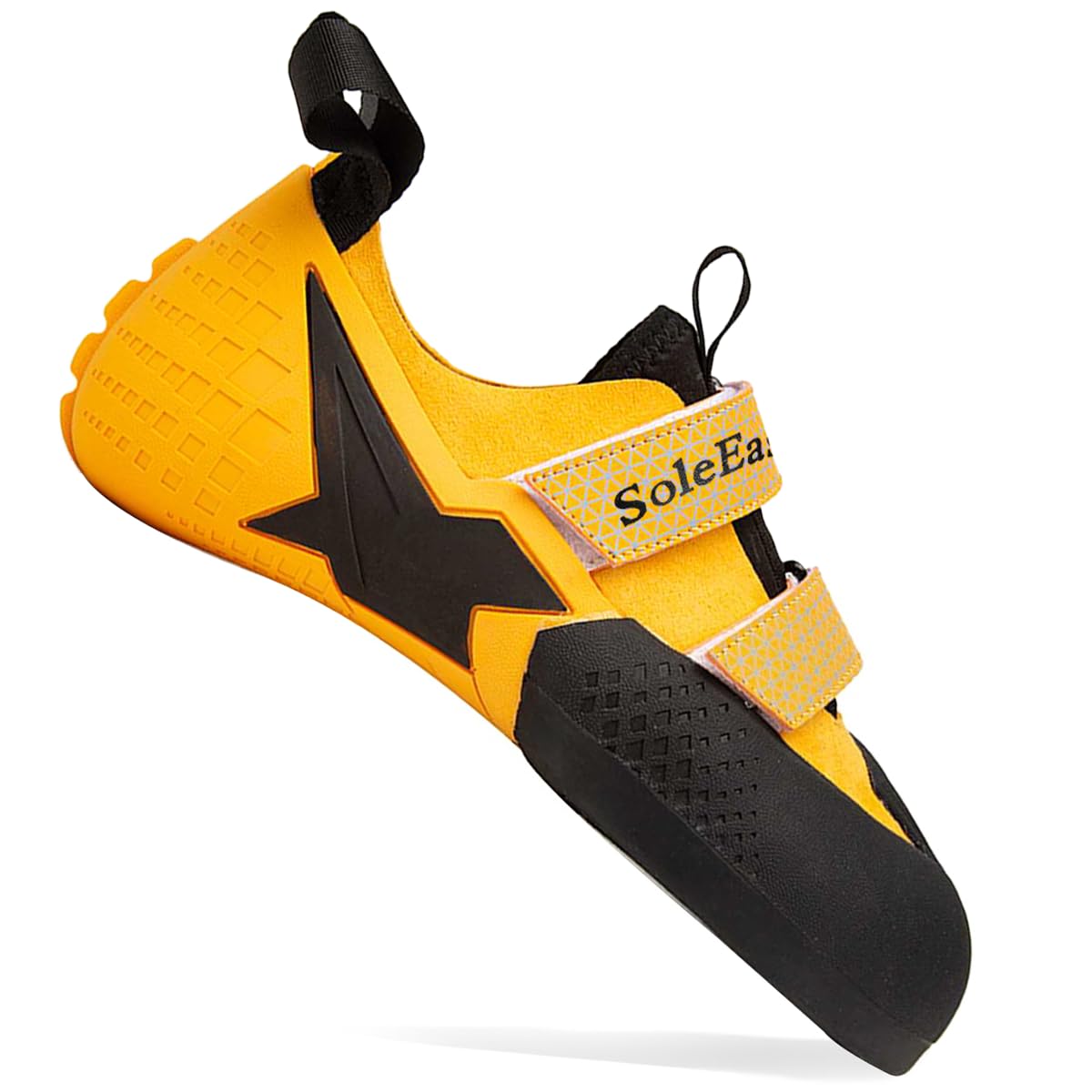
The SoleEase is the newcomer in this group, and we treat it as a first-pair shoe rather than a long-day sport climbing shoe. It is built for gym and sport bouldering, with a unisex fit and a simple all-around shape. That is a sensible brief for someone who is still deciding whether climbing will become a habit.

On easy terrain, the shoe does what a beginner needs: it covers the foot, gives a bit of structure under the toes, and does not feel like a rental slipper. The fit is the gamble: the shape can pinch across a wide forefoot, and it does not have the shaped heel or precise toe of the better shoes here. Try it on at the end of the day, when your feet are at their widest.

The upper and sole are simple, and there is no aggressive downturn or high-performance rubber to complicate the fit. That is fine for vertical gym routes and easy bouldering, but it is not the shoe for steep sport climbing or a trip where every foothold is tiny. The low cost is the point: it lowers the barrier to trying the sport.

We see the SoleEase as a low-cost way to get through an intro class or a first month at the gym, not as the pair you build a sport climbing season around. If you already know you will climb regularly, put the money toward a shoe with a fit you can trust.

Pros

  • Low-cost entry into gym climbing
  • Simple all-around shape for beginners
  • Unisex sizing

Cons

  • Fit can pinch a wide forefoot
  • Not suited to steep sport routes
Our verdict

We suggest the SoleEase only as a low-cost first gym shoe, with a fit check before you commit to a session.

Check Latest Price

How We Tested (and Slowly Wore Out) 12 Pairs of Climbing Shoes

We started with a list of more than 40 models and narrowed it by the things that actually change how a shoe climbs: the shape of the last, flat versus downturned; how asymmetric the toe is; the rubber and its thickness; and whether the closure is laced, strapped, or slip-on. We also filtered for half sizes and roomier toe boxes, since a shoe that only runs narrow is useless to a lot of feet. That left 12 pairs, which we climbed in for six months.

Fit came first. I know my street size, so for every pair I wrote down the size I actually wore and whether that was true to my street shoe or a half size down, then noted where the pressure landed: cramped toes, a heel cup with dead space that let my heel lift on a hook, or a toe box pinching the outside of my foot. I also checked toe shape against the wall — whether my toes lay flat or curled, and how that felt on small edges versus smears.

On the wall, each pair went through the same twice-weekly gym rotation plus a handful of days on real rock. I ran the same slab problem, the same overhang with heel and toe hooks, and the same thin edging traverse in every shoe so I could feel differences in grip rather than guess at them. A friend three months into climbing tried each pair on and climbed a few routes in them, which told us more about beginner comfort than any spec sheet.

Durability was a running tally: I checked the toe rand and sole for wear every ten sessions and noted which pairs were already rubbing thin where I drag my toe, then weighed that against the cost of a resole when judging value. Comfort got scored by whether I wanted a shoe off after one route or could leave it on for an hour. And we did look at how they looked — scuffs, color, whether they seemed gym-appropriate — because a shoe you don't want to wear stays in the bag.

How to Choose Sport Climbing Shoes

Fit Comes Before Everything

A climbing shoe should feel snug across the arch and heel, with your toes just touching the front, not curled into a fist. Leather uppers like the Finale's will relax with heat and sweat; synthetic knits hold their shape more closely. If a shoe is painful in the shop, walk away; break-in should soften edges, not fix the wrong length.

Width matters as much as length. A wide toe box can save a long day, while a narrow last like the Momentum's will suit some feet and punish others. Try shoes at the end of the day and with the sock you plan to wear, then stand on a small edge to see whether your toes stay flat or roll sideways.

Match the Last to the Route

A neutral, flatter shoe is easier to wear on vertical routes, slabs, and long pitches; a downturned, aggressive shoe puts more power into small footholds on steep ground. Most sport climbers do not need a competition-style shoe for their first season. The Finale is the neutral default here, while the Instinct VSR is the pick when the route kicks back.

The trade-off is sensitivity versus support. A softer midsole smears well and feels the rock, but it can fold on tiny edges; a stiffer sole stands on small holds but feels dead on smears. Choose the side of that trade that matches the routes you climb most, not the one that sounds more advanced.

Choose Closure for Your Climbing Day

Laces let you tune the fit along the whole foot, which is why they suit long routes and uneven feet; the Helix is the clear lace-up example here. Hook-and-loop straps like the Momentum's are faster for gym sessions and bouldering, where you take shoes off between attempts. Neither is stronger—they just favor different days.

If you have a high instep or a narrow heel, laces give you more ways to take up volume without crushing the toes. If you mostly climb indoors and swap shoes often, straps save time and reduce wear at the opening. Try the closure with cold hands; that is when a fiddly strap or short lace becomes annoying.

Rubber, Sole, and Wear

Sticky rubber is not one material. Softer compounds grip well but wear quickly; thicker soles like the Momentum's 4.3mm rubber trade some sensitivity for durability. A solid rubber sole like the Helix's feels supportive on edges, while a softer, thinner sole smears better. Match the rubber to how often you climb and whether you are mostly on plastic or rock.

Watch the toe and heel first. Toe dragging and indoor volumes wear the rand before the upper, and a shoe with a thin toe patch will need resoling sooner. If you climb several times a week, a durable all-arounder usually costs less over a year than replacing a soft performance shoe. Clean rubber with a damp cloth before moving from gym to rock.

Spend for Fit, Not Features

A premium shoe that pinches is worse than a budget shoe that fits. The best value in this group is not always the lowest-priced pair: the Tarantulace and Helix cost less than the Instinct VSR, but they also give up some precision. Spend up when you know your foot shape and the terrain you climb; otherwise put the money into a fit you can trust.

First-pair buyers should prioritize comfort and durability over a downturned shape. A shoe that lets you climb more often will improve your footwork faster than an aggressive shoe you can only stand for ten minutes. Once you know whether you prefer edging, smearing, or steep terrain, it is easier to justify a second, more specialized pair.

Frequently Asked Questions

Final Verdict

For most sport climbers, the La Sportiva Finale is the shoe we point to first. Its wide toe box and leather upper make long days more comfortable, and it still gives you a stable platform on vertical terrain. If comfort and easy on/off matter more, the Black Diamond Momentum is the better fit; if the route is steep and technical, the SCARPA Instinct VSR's sticky rubber earns its premium. Buy the shoe that fits the foot you have, not the one with the most aggressive profile.