Best Backpacking Shoes of 2026

Every backpacking shoe is a trade-off between weight and support, and the wrong side of that trade announces itself around mile nine. Go too light and a 30-pound pack turns a scree descent into a punishment; go too heavy and you're dragging bricks uphill. I've gotten it wrong both ways, most memorably with a pair that felt perfect in the store and had my heels blistered by the first camp. A good pair fixes that quietly — it makes the pack feel lighter than it is, then stops being something you think about.

Over six months we put 14 pairs through loaded overnighters and long, wet descents, and the gaps showed up in fit and cushioning far more than on any spec sheet. Fit them with your hiking socks on and your feet already a little swollen — the shoe that feels fine in a shop at 10 a.m. isn't the one you want at mile twelve. We weighed lightness against durability, and looks against town-day wearability. There's a pick below for your feet and your itinerary.

1

Best Overall

Merrell Moab 3

93 /100
Traveler Score Outstanding

Key details

Fit
Roomy toe box
Style
Low hiking shoe
Department
Men's
Check Details on Amazon

Most backpacking shoes ask you to choose sides: a stiff boot that braces your ankle and punishes the first few miles, or a light shoe that feels wonderful until the trail turns to rock. The Moab 3 lands in the middle, and the middle is where most trips actually live. It's a low-cut shoe, so it won't lock an ankle down the way the Columbia Newton Ridge does, but it also doesn't need a week of breaking in before it stops hurting.

The fit is what we noticed first. The toe box runs roomy enough that your feet can spread under a load, and the heel still stays put once the laces are cinched — the combination that keeps blisters off a long descent. Half sizes help here, and the shoe is soft enough out of the box that a short walk is a realistic first outing rather than a formality.

Traction is the other thing we kept coming back to. The lug pattern bites on wet rock and rooted trail and doesn't pack up with mud, which matters far more than cushioning on the day a shower catches you on an exposed ridge. Underfoot there's enough structure that a loaded pack doesn't fold your foot over every rock edge, and not so much that the shoe fights you on smooth trail.

So this is the pair we point most backpackers to. It sits mid-pack on price, near the top of this group on comfort, and it's the most forgiving shoe here if you're moving from day hikes into overnights and don't want to think hard about footwear. If your trips are consistently wet, cold, and rocky, the leather boots below are worth the trade; for everything else, start here.

Pros

  • Roomy toe box with a locked-in heel
  • Comfortable straight out of the box
  • Tread grips wet rock and roots
  • Half sizes make fitting easier

Cons

  • Toe bumper and sole edge can peel with hard use
Our verdict

Buy it if you want one shoe for mixed-terrain backpacking with a light-to-moderate pack; we've found nothing here that balances comfort, grip, and price as well.

Check Latest Price
2

Best Waterproof

Columbia Newton Ridge Plus II

91 /100
Traveler Score Outstanding

Key details

Style
Mid hiking boot
Department
Men's
Waterproofing
Waterproof (stated)
Check Details on Amazon

Some backpacking days are decided by water: a boggy approach, wet grass at dawn, a creek you have to cross to reach camp. The Newton Ridge Plus II is the boot in this group built for those mornings. The leather upper and mid-height collar make it the most protective boot here, and the sole is stiff enough to feel planted on loose scree.

Water is where it earns its keep, and that's the whole reason it's on this list. Feet stay dry through soaked grass and shallow crossings, and the boot settles in over miles rather than weeks. The one thing to plan around is width: this boot runs narrow through the midfoot, so if your feet are broad or you sit between sizes, order up rather than guessing.

Where it gives ground is underfoot feel. The cushioning is firm, and on a long descent you feel the rock through the sole — some hikers want that feedback, others will find it tiring by the end of a big day. A decent insole settles it down considerably. For cold, wet, rocky trips with a real pack, this is the boot we reach for.

Pros

  • Keeps feet dry in wet grass and shallow crossings
  • Supportive leather build that feels planted
  • Comfortable within a few miles of break-in
  • Strong value for a leather boot

Cons

  • Waterproofing can fade after a season of wet use
Our verdict

Our pick when water is the deciding factor — a supportive, dry-riding boot for wet, cold, rocky trips, as long as your feet aren't wide.

Check Latest Price
3

Best for Light Packs

Timberland White Ledge Mid

91 /100
Traveler Score Outstanding

Key details

Style
Mid hiking boot
Department
Men's
Waterproofing
Waterproof (stated)
Check Details on Amazon

Light is the word that follows the White Ledge around, and it's the right one. This is a mid-height, waterproof boot that doesn't feel like a mid-height, waterproof boot on your foot — there's none of the drag you brace for with something this protective, and the collar still comes up over the ankle where it should.

Break-in is short, and the payoff is a boot that's as happy on pavement as it is on dirt. Water resistance holds through wet grass and shallow puddles, the ankle support is real without being restrictive, and the lacing is generous enough to work with cold or gloved hands.

For day hikes, hut trips, and travel where the boot spends as much time on a sidewalk as on a trail, this is one of the best buys in the group — near the top of this set on comfort and the lightest feeling of the boots here. Load it with a heavy pack on rough ground for a week and you're asking it for something it isn't built to give.

Pros

  • Light on the foot for a waterproof boot
  • Short break-in and all-day comfort
  • Keeps feet dry in wet grass
  • Ankle support without stiffness

Cons

  • Sole adhesive can lift at the toe edge over time
Our verdict

We recommend it for day miles, hut trips, and travel on light loads, where its comfort and light feel outweigh a sole bond that can lift.

Check Latest Price
4

Best Budget Low-Cut

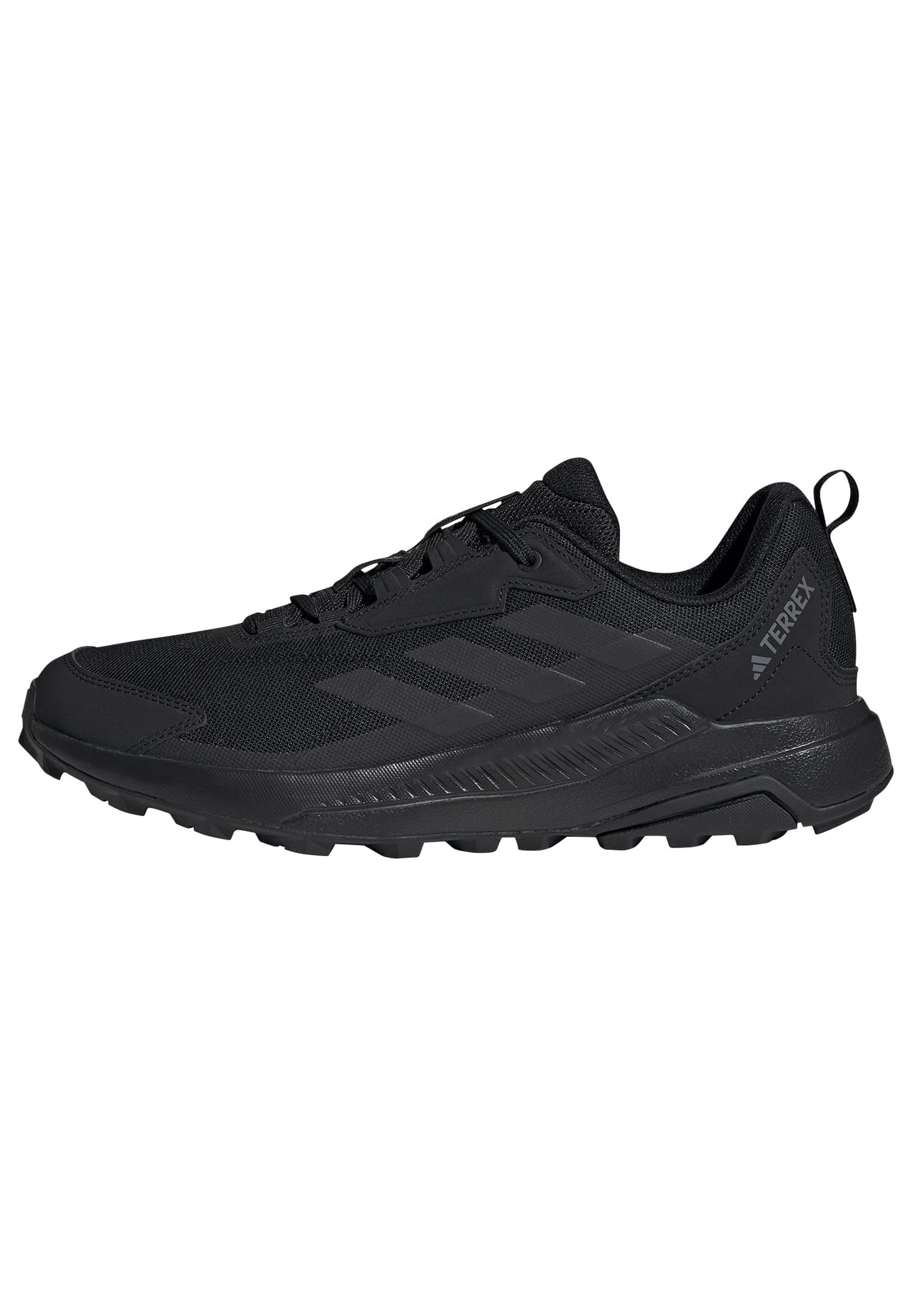
adidas Terrex Anylander

90 /100
Traveler Score Outstanding

Key details

Style
Low hiking shoe
Tread
Aggressive lugs
Department
Men's
Check Details on Amazon

It's the cheapest low shoe here, and nothing about it feels cut-rate. The Terrex Anylander is a light hiking shoe with a squared-off toe box that leaves room for wide, flat feet, and the sizing runs true, so there's no half-size guessing before your first trip.

The tread is the part that surprised us. It's aggressive for a shoe at this price, with lugs that dig into rock and loose gravel instead of skating across them. The thing to check before you commit is the arch: there's a pronounced curve underfoot and it doesn't suit every foot, so if yours run high and you can't try a pair on first, that's the risk you're taking.

For fast, light trips — a day pack, a well-trodden trail, a weekend where you're covering distance rather than scrambling — it's the best value here by a distance, and it doubles as a travel walker once the hike is over. Step up to a boot when the pack gets heavy or the ground turns ugly, because the ankle protection simply isn't there.

Pros

  • Roomy, squared toe box for wide feet
  • Aggressive tread grips rock and gravel
  • True to size out of the box
  • Cheapest low shoe in this group

Cons

  • Not waterproof
Our verdict

The best value in this group for fast, light trips: roomy, grippy, and cheap, with no waterproofing to lean on.

Check Latest Price
5

Best Budget Boot

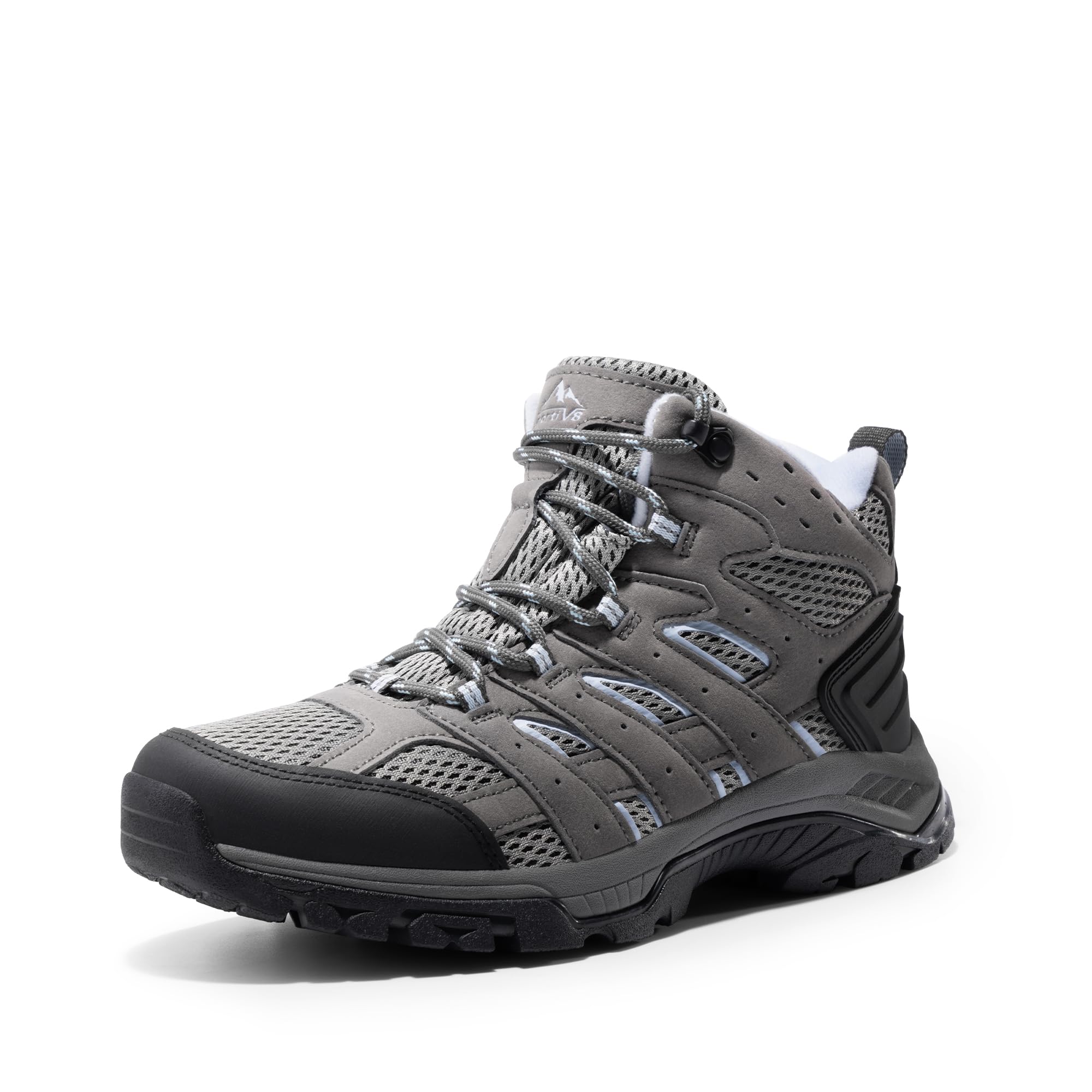
NORTIV 8 Ankle High

89 /100
Traveler Score Excellent

Key details

Style
Ankle-high boot
Department
Men's
Waterproofing
Waterproof (stated)
Check Details on Amazon

This is a chunk of a boot: high collar, stiff platform, and a sole that meets the ground with a thump. For rocky ground and scrambling that's the right instinct — the ankle is held, the foot doesn't roll, and the whole thing feels like it will take a hit. It's why we keep it on this list for backpackers buying on a budget.

Rough, rocky terrain is where it earns its keep. The build is solid, the grip is decent on dry rock, and it handles mud and steep climbs without drama. Comfort is the variable: the fit runs true and there's room for thick socks, but the padding underfoot is basic, and after a few months of regular use the footbed starts to feel thin. An aftermarket insole from day one is the cheapest upgrade you can make.

Against the Moab 3 it gives up comfort and refinement; against the Columbia it gives up refinement again. What it keeps is a genuinely solid, planted build for the least money in this group spent on a real boot. If this is your first season and the budget decides, it will get you up and down the hill.

Pros

  • Stiff, planted build for rocky ground
  • Real ankle support for scrambling
  • True to size with room for thick socks
  • Well under the leather boots on price

Cons

  • Waterproofing gives up in steady rain
Our verdict

A stiff, planted boot for rocky ground at a budget price — we recommend it when the terrain is rough and the wallet isn't deep.

Check Latest Price
6

Best Women's Value

NORTIV 8 Women's Backpacking

90 /100
Traveler Score Outstanding

Key details

Style
Ankle-high boot
Department
Women's
Waterproofing
Waterproof (stated)
Check Details on Amazon

If you're outfitting a first backpacking season on a tight budget, start here. It's the least expensive boot in this guide, and it's the rare cheap boot that doesn't feel like a compromise: comfort is the strongest thing about it, with no blisters and no break-in to speak of, and the fit runs true with enough room for thick socks.

Support is better than the price suggests — a sturdy rubber sole, real ankle hold, and enough structure for uneven ground, including for flat feet. It's a boot for dry-season weekends and first trips, and it holds together better than the money would lead you to expect.

Pros

  • No break-in and no blisters
  • True to size with room for thick socks
  • Sturdy sole with real ankle support
  • Least expensive boot in this group

Cons

  • Water resistance fails in wet grass and dew
Our verdict

We point budget-first backpackers here: comfortable, supportive, and cheap, with water resistance that stops at damp grass.

Check Latest Price
7

Dry-Weather Day Hikes

SHULOOK Hiking Boots

88 /100
Traveler Score Excellent

Key details

Style
Mid-top boot
Department
Men's
Waterproofing
Waterproof (stated)
Check Details on Amazon

The word waterproof is doing a lot of work on this listing. Treated as a light, inexpensive hiking boot, it's decent: light on the foot, true to size, with laces long enough to double-knot, and it costs less than almost everything else here. Treated as a waterproof boot — which is how it's sold — it's a gamble, and wet grass is where the claim stops holding.

So here's who it suits. If you want an inexpensive, light boot for dry-season day hikes, travel, and knocking around camp, it does the job. If your trips involve bog, rain, or creek crossings, spend a little more — the Columbia Newton Ridge is the boot built for that, and it's the difference between a wet foot and a dry one at the end of the day.

Pros

  • Light on the foot for a boot
  • True to size with generous laces
  • Comfortable for all-day wear
  • Very low price for a mid-top boot

Cons

  • Grip is uncertain on slick, wet rock
Our verdict

Buy it as a light, cheap dry-weather boot; we don't trust the waterproof label, so keep it away from bog and steady rain.

Check Latest Price

How We Chose and Tested 14 Pairs of Backpacking Shoes

To build the shortlist, I pulled every current backpacking shoe I could find, then cut anything that skipped half sizes or wide widths, anything without a rock plate or shank despite being sold for loaded trips, and anything whose return window would make a wrong-size gamble expensive. That left 14 pairs, and we bought all of them at retail rather than accepting samples so we could judge the purchase experience itself — how accurate the size charts were, how fast exchanges went through, whether a return label came in the box.

Testing ran for six months. Every pair's first outing was a five-mile walk with a 25-pound pack, deliberately short so we could feel heel slip, toe-box rub, and lace pressure before committing to an overnight. After that, each shoe went on at least one loaded overnighter plus day hikes over slick roots, long steady descents, loose talus, and at least one ankle-deep creek crossing, where we checked whether socks were damp ten minutes later. We kept a blister log the entire time and wrote down where hotspots appeared first.

Fit and cushioning got the most attention. We wore each pair fresh out of the box to see where seams landed on the foot, then noted whether arches ached after hour six and whether an aftermarket insole helped or just ate volume. Claimed weights we checked on a kitchen scale. Durability we judged at roughly 100 miles by looking at lug depth under the forefoot, toe-cap scuffing, and mesh fraying at the flex point. And since nobody wants a shoe that only works on trail, we wore every pair to the grocery store and through airport days to see which ones read as clunky.

How to Choose Backpacking Shoes

Match the cut to the load

The biggest decision isn't brand or price, it's how much shoe you need. A low-cut hiker like the Merrell Moab 3 or the adidas Terrex Anylander keeps the foot free, sheds heat, and dries faster on the move. A mid boot like the Columbia Newton Ridge adds a collar that holds the ankle and a stiffer platform that stops a loaded pack from rolling your foot on sidehill traverses.

If most of your miles are day-weight or a light overnight on maintained trail, the low shoe is the better partner. Once the pack gets heavy and the ground turns to scree and roots, the collar and the stiffness start paying for themselves.

Waterproofing cuts both ways

A membrane keeps water out and keeps heat and sweat in, and a soaked waterproof boot dries far more slowly than a mesh shoe that never claimed anything. For cold, wet, muddy trips, choose the membrane — that's the case the Columbia and Timberland boots make. For stable summer weather and shallow crossings, a breathable shoe is simply more comfortable.

Treat the label as a starting point rather than a promise. Waterproofing can wet out over a season of hard use, so if you plan to stand in water, test the boot on a short wet walk before you trust it on the crossing that matters.

Fit is two problems: the toe and the heel

Room in the toe box keeps your feet from going numb on long descents; a locked-in heel stops the sliding that turns into blisters. Size with the socks you'll actually hike in, shop late in the day when feet are at their largest, and expect some swelling over a long day — which is why half sizes and a generous toe box matter more than the number on the box.

Wide feet should look hard at the adidas Terrex and the NORTIV 8 boots. The Columbia Newton Ridge runs narrow through the midfoot, so plan on ordering up if your feet are broad.

Traction, and the parts that fail first

Lug depth and pattern decide whether wet rock and roots feel like a staircase or a skating rink, and the rubber deserves more of your attention than the marketing copy does. Look for a sole that bites at the edges as well as the center, because that's the part that catches on roots and angled rock.

The other thing to check before you buy is the sole bond. The join between upper and outsole is where budget and mid-priced boots give up first, usually at the toe edge, and a boot that lets go mid-trip ends the trip. Run a thumb along that seam before your first hike, then check it again after each season.

Frequently Asked Questions

Final Verdict

The Merrell Moab 3 is the pair we recommend to most backpackers. It's comfortable from the first mile, roomy enough for a loaded day, and grippy on the wet rock and roots that turn a good trip bad — and it costs about the same as the leather boots here.

Choose the Columbia Newton Ridge Plus II if your trips are consistently wet and cold and you want a collar around your ankle. Choose the NORTIV 8 women's boot if you're outfitting a first season on the smallest budget, and keep it out of wet grass.