5 Best Backpacking Camp Shoes of 2026: Match Fit and Season

Backpacking camp shoes should match your feet, season, and campsite surface. This guide pairs packable slippers and insulated booties with the right fit.

Many highly rated camp shoes spend their lives as house slippers. Once you put them to work on a backpacking trip, the deciding factors are fit, campsite surface, and season. A warm bootie solves a cold-weather night but becomes dead weight in July.

Fit is the first filter, not the afterthought. Camp shoe sizing runs small, narrow, or roomy depending on the brand, and half sizes are rare. The same street-shoe size can feel tight across the instep on one pair and sloppy on another, so ordering based on your normal size is the wrong starting point.

The real trade-off is pack weight versus walking confidence: a light sock slipper disappears in your pack but transmits sharp rocks, while a heavier tractioned mule walks better outside the tent but earns its space mostly in cold weather. Match those limits to your camp routine and the right product becomes obvious.

1

Best Overall

Thermoball Traction Mule

93 /100
Traveler Score Outstanding

Key details

Sizing Consistency
Runs small, size up
Insulation & Warmth
Thermoball synthetic
Weight & Packability
1.1 lb
Sole Flexibility & Traction
Rubber traction sole
Check Details on Amazon

The Thermoball Traction Mule is a cold-weather camp shoe that pairs ThermoBall insulation with a rubber outsole and a mule silhouette that works from the tent floor to wet ground outside. The cushioned interior holds heat well in snow, and the outsole grips packed snow and frost-covered dirt. It also looks presentable enough for a quick store run, which is rare for camp footwear. The same sole that grips a damp picnic table also handles tent stakes and roots underfoot.

The water-repellent upper deals with light snow and morning damp, but it is not a waterproof boot; slush and deeper puddles can soak through given time. The low collar makes quick exits from the tent easy, and the padded collar does not dig into the ankle. At a listed 1.1 pounds, it is not the lightest option in this category — the slimmer bootie companion saves weight and pack volume — but it trades that weight for a sturdier sole and a shape that does not feel like a slipper on uneven ground.

This fits cold-weather campers and winter backpackers who want one shoe to cover tent, campsite chores, and quick errands without pulling on hiking boots. Warm-weather backpackers chasing ultralight pack weight should look at the barefoot-style options instead. It will not disappear into a stuff sack the way a sock-style bootie does, but the extra ounces buy a sole you can trust on frozen ground. The main boundary is fit: the mule can run small and feel tight across the instep, so wide-footed or high-instep buyers should plan to order a half size up.

Pros

  • Cushioned interior keeps feet warm during lounge time and short outdoor trips.
  • ThermoBall insulation holds warmth in snow and cold temperatures.
  • Sturdy build holds up in snow, rain, and campsite use.
  • Mule works beyond the tent, covering home and quick errands without a boot change.

Cons

  • The opening is snug, so pulling the mule on takes more effort than a typical slip-on.
  • The insole can separate from the interior after extended use, making long-term durability a question.
Our verdict

For winter campers who want a warm, tractioned shoe after the hiking boots come off, this is the pair to keep by the tent door.

Check Latest Price
2

Best Lightweight Warm Bootie

Thermoball Traction Bootie

91 /100
Traveler Score Outstanding

Key details

Sizing Consistency
Runs small, no half sizes
Insulation & Warmth
Thermoball synthetic
Weight & Packability
8.82 oz
Sole Flexibility & Traction
Traction rubber sole
Check Details on Amazon

At a listed 8.82 ounces, the Thermoball Traction Bootie trims pack weight without giving up warm synthetic insulation or a rubber sole that handles gravel paths. The build feels sturdy, and the outsole holds up through routine camp activities. It slips on and off easily, and the soft, cozy fit makes it an easy tent slipper. For backpackers who want a camp shoe that stows neatly in a stuff sack, this is the lighter counterpart to the Mule.

This suits backpackers who want a warm room-and-camp shoe rather than a do-everything camp mule, plus winter car campers and travelers who need a packable cold-weather shoe for lodging or tent evenings. Sizing runs small for some and water resistance stops short of waterproof, so it is best for dry-camp use and for buyers who can order a half size up when needed. It handles light moisture and moist sand, which keeps it useful for damp tent floors and quick trips outside.

💡 Order a half size up if you prefer thicker socks or have wider feet.

Pros

  • Thermoball insulation delivers sleeping-bag warmth in a sub-9-ounce bootie.
  • Soft interior and a sole with enough grip for gravel paths and camp trips.
  • Slips on and off easily for camp, car camping, flights, and winter house wear.

Cons

  • Water resistance covers light moisture only; heavy rain and deep puddles will wet through.
  • Sizing runs small in length and can be tight for wider feet; half sizes are unavailable.
Our verdict

For backpackers who weigh pack space heavily, this bootie delivers warmth and traction without hogging the stuff sack.

Check Latest Price
3

Best Budget Camp Slipper

SKASO Barefoot Sock Shoes

83 /100
Traveler Score Excellent

Key details

Sizing Consistency
Often runs small
Insulation & Warmth
Uninsulated
Weight & Packability
Lightweight, packable
Sole Flexibility & Traction
EVA sole
Check Details on Amazon

The SKASO is the budget ultralight camp slipper in this set: a slip-on EVA sock shoe that packs near-flat and feels almost weightless on foot. The barefoot-style sole keeps ground feel on earth and light gravel, and the sneaker-like outer reads as a real shoe rather than a house slipper around camp.

The low-profile build slips into a pack pocket without eating space, and the value is clear at this price: you get a lightweight camp shoe for easy ground, not a replacement for a hiking boot or a warm bootie.

This is best for ultralight backpackers who want a cheap, packable camp slipper for easy ground. Thin soles and inconsistent sizing are the boundaries—light camp use is the realistic job, and campers who need cushioning, arch support, or warmth should look at the more substantial options in this set.

💡 Removing the insole adds a little extra toe room, which can help if the fit runs snug.

Pros

  • Almost weightless on foot and easy to pack for camp.
  • Comfortable barefoot feel with enough sole for earth and light gravel.
  • Good value for the price as a packable backpacking camp shoe.

Cons

  • Smooth or wet surfaces can make the sole feel slippery.
  • No half sizes and a snug toe box can make the right fit harder to land.
  • Thin EVA soles can wear through quickly with hard daily wear or rocky terrain.
Our verdict

Pack this when camp comfort matters more than cushioning and cold-weather warmth; it is a low-cost way to keep feet out of the dirt without weighing down the pack.

Check Latest Price
4

Best for Barefoot Feel

Skinners Sock Shoes

82 /100
Traveler Score Excellent

Key details

Sizing Consistency
Varies by order
Insulation & Warmth
Uninsulated
Weight & Packability
Lightweight, travel bag
Sole Flexibility & Traction
Flexible rubber outsole
Check Details on Amazon

The Skinners Original Comfort 2.0 is a fully developed barefoot ground-feel option in this camp-shoe set, pairing a flexible rubber outsole with a removable insole and a travel bag. It covers camp, trail, and everyday use without the structural weight of a mule, and it packs smaller than a standard camp shoe. The sock-style build also makes it a simpler alternative to the budget sock slipper in this set, with more surface range from the tougher sole.

This pair suits backpackers who already walk in barefoot or minimalist shoes and want one packable layer for camp, short trail detours, and town stops. It is not for campers expecting slipper-like softness or predictable standard sizing: proportions can vary between orders or colors, and the minimal sole offers little cushioning on rough camp surfaces.

Pros

  • High-quality build with a travel bag included for packable storage.
  • Sock-like comfort lets barefoot-shoe fans walk on rocks without discomfort.
  • Slip-on design makes quick camp exits easy.

Cons

  • The sock upper can hold moisture and odors during multi-day trips.
  • Once wet, the shoe material dries slowly, which can make next-morning use damp.
Our verdict

For backpackers already at home in barefoot shoes, this is the camp layer that moves between tent, trail, and town without a second pair.

Check Latest Price
5

Best Camp-To-Town Crossover

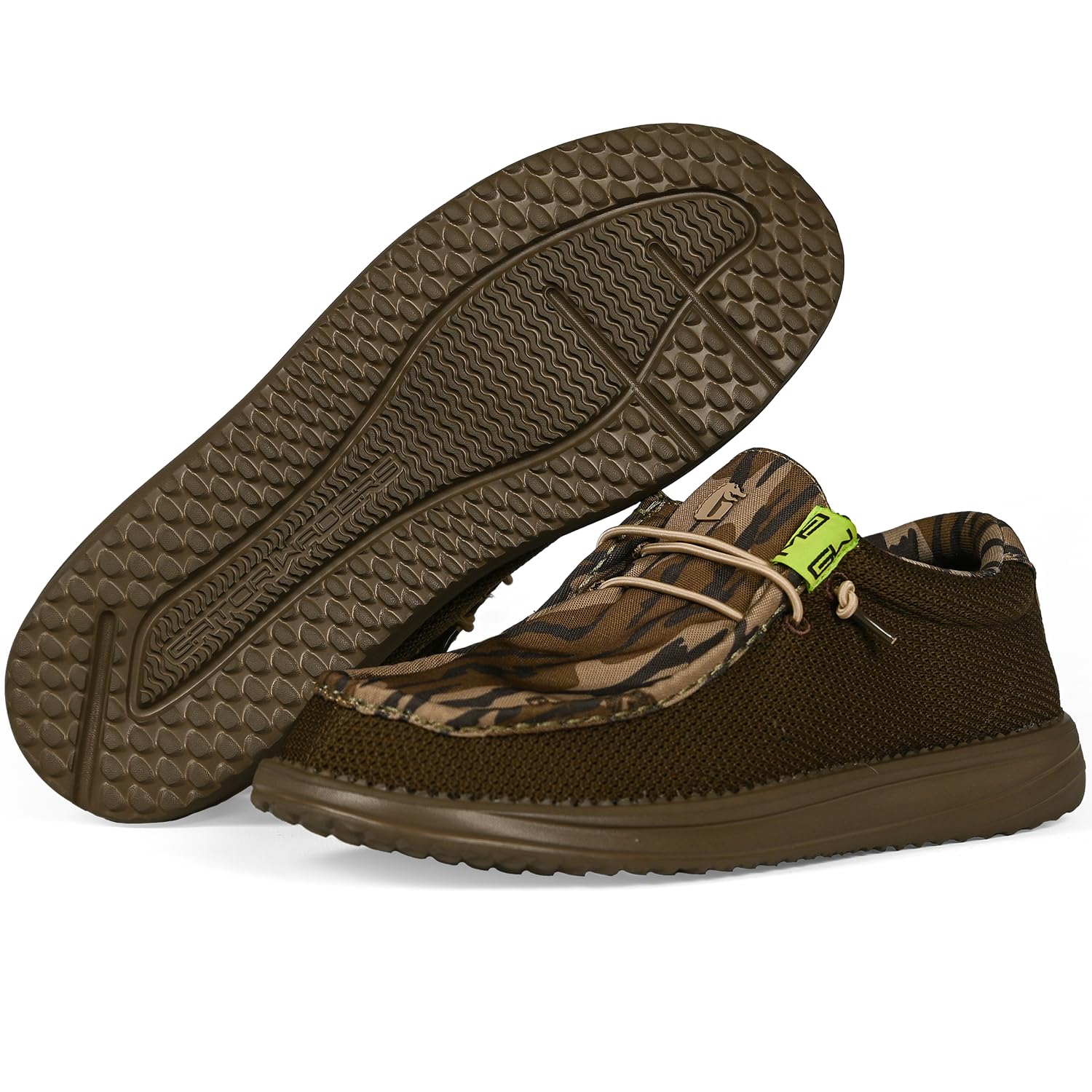
Gator Waders Camp Loafers

89 /100
Traveler Score Excellent

Key details

Sizing Consistency
Can run narrow
Insulation & Warmth
Uninsulated
Weight & Packability
Lightweight slip-on
Sole Flexibility & Traction
Check Details on Amazon

The Gator Waders slip-on is the normal-looking option in this camp-shoe lineup: no-tie loafer styling, arch support, and a silhouette that moves easily from the campsite into town. The soft, lightweight build is easy to wear for long stretches, and the camo and printed treatments give it a distinctive look compared with plain camp shoes. Where the insulated mule in this set prioritizes warmth, this one prioritizes presentability.

The no-tie closure stays out of the way, and the arch support holds up through short walks on packed gravel or paved roads. It is better suited to camp chores and drugstore runs than to trail-side scrambling, but that is the point of a crossover shoe.

This crossover works best for campers and road-trippers who want one pair for camp and casual town stops, and who are willing to carry a little more bulk than the bootie-style alternatives in this set. It is not the lightest option here, so ultralight backpackers focused on packed weight should look at the slimmer packable camp shoes instead.

Pros

  • Soft, lightweight comfort for long camp evenings.
  • Build quality feels solid for a premium-priced slip-on.
  • Camo and printed colorways stand out from plain camp shoes.

Cons

  • Sole durability can vary; isolated splitting has been noted after limited wear.
  • Fit can run narrow, particularly for average-to-wide feet.
Our verdict

For campers who want to leave the tent and walk into town without changing shoes, this pair strikes that balance.

Check Latest Price

How to Choose

Weight & Packability

A camp shoe that weighs six ounces feels negligible on a shelf but obvious at the end of a long day. The weight difference comes from the outsole and insulation, not the upper. Sock-style shoes with thin EVA soles pack down to almost nothing, while insulated mules add ounces for protection.

If camp duties are limited to the tent door, a compressible slipper is enough. If you walk to water sources or cooking areas, those ounces buy a sole that handles uneven ground.

Insulation & Warmth

Insulation only matters when your body is at rest and the air is cold. Synthetic fill like Thermoball traps heat, which is why an insulated camp shoe feels like a sleeping bag for your feet. The same chamber cannot release heat in warm weather.

Match insulation to the overnight low and how long you will sit still after dinner. Evening cooks and stargazers need more warmth than hikers who go straight to sleep.

Sole Flexibility & Traction

The sole is the trade-off between packability and walking confidence. A thin flexible outsole packs flat but concentrates sharp rocks into the ball of your foot. A stiffer rubber traction sole distributes that force and grips gravel.

For grassy or sandy campsites, a flexible sole is fine. For rocky fire rings or paths to the latrine, choose the stiffer outsole.

Water Resistance

Water resistance comes from the upper material and its treatment, not a guarantee of dry feet. A water-repellent finish makes dew and splashes bead up, but seams and the collar still let moisture in when you stand in wet grass.

Read 'water-repellent' as a convenience for dry campsites, not a license to wade. When rain is likely, keep camp shoes inside the tent.

Sizing Consistency

Camp shoes fit differently because they are made for relaxed feet at the end of a trail day. Feet swell during miles of hiking, so a snug slip-on can feel cramped later. Half sizes are rare in this category, making the gap between sizes a real decision.

Several models run small or narrow, with the instep a common pressure point. If you are between sizes, choose the larger one. A roomy camp shoe still works for lounging; a tight one gets left behind.

Frequently Asked Questions