Best Barefoot Shoes for Travel of 2026

My first full day in barefoot shoes left my calves sore and my toes free — an odd combination that made me a convert. Travel is where that freedom matters most: you're on your feet from the airport to the museum to dinner, and a cramped toe box turns every step into a countdown. A good pair lets your toes splay, keeps the sole thin enough to feel the ground, and looks normal enough for a restaurant. Over six months, I put 10 pairs through airports, cobblestones, and a few questionable hotel gyms, and the differences came down to fit, traction, and how they held up.

Barefoot shoes don't offer arch support the way a running shoe does, so the fit has to be right from the first wear — and sizing varies wildly between brands. I also learned that the most versatile pairs are the ones that look like plain sneakers, not toe shoes, and that a thin sole is only as good as the tread under it. The picks below are the ones I'd pack again.

1

Best Overall

WHITIN W81

88 /100
Traveler Score Excellent

Key details

Drop
Zero drop
Model
W81
Toe Box
Wide
Department
Women's
Check Details on Amazon

Of everything here, this is the pair that feels closest to wearing nothing. The zero-drop sole is thin and bends with your foot, the upper is light enough to forget, and the toe box is the roomiest front end in this guide, with room for toes to fan out instead of stacking. For a trip where one pair lives in a carry-on and then walks ten miles, that combination is the entire argument.

The trade is visible from above. The front of the shoe is genuinely wide, wide enough to look a little cartoonish with slim trousers, and we took that trade every time, because toes that spread are the point of buying a barefoot shoe. There is no arch support to speak of either; a thin insole adds some, but it eats the toe room you bought the shoe for.

Sort the size before you fly. Most people get their usual size here, but the fit splits, and if your second toe is longer than your big toe, start a half size up. After that it is a low-drama shoe: flat enough for lifting, light enough for a day bag, and flexible enough that a long walk does not leave you thinking about your feet.

Pros

  • Feels nearly weightless on the foot
  • Roomiest toe box in this guide
  • Zero-drop sole flexes with every step

Cons

  • Outsole slips on wet, smooth floors
Our verdict

We rank the W81 first for travel: it is the lightest-feeling, roomiest pair here, and it covers walking, gym work, and dinner without needing a second pair.
Check Latest Price
2

Best Everyday Look

AIRHAS Barefoot Sneaker

89 /100
Traveler Score Excellent

Key details

Drop
Zero drop
Model
E-AHC007
Toe Box
Anatomical
Department
Men's
Check Details on Amazon

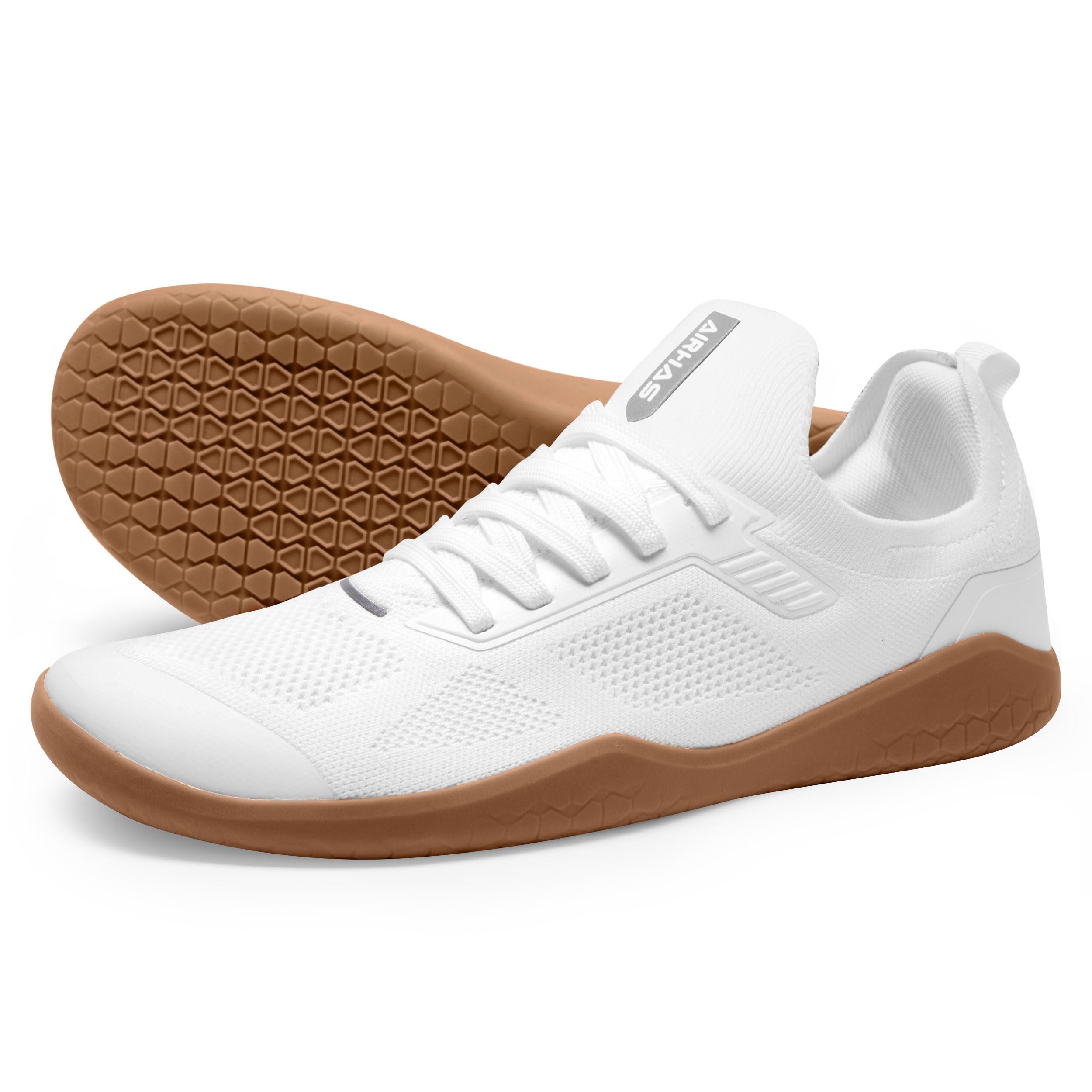
Most barefoot sneakers look like barefoot sneakers: wide, flat, and a little strange next to a pair of jeans. The AIRHAS doesn't. It is cut like an ordinary low-top in neutral colors, which makes it the pair here you can walk into a restaurant or a meeting without explaining what is on your feet. On a trip, where the shoes you packed are the only ones you have, that counts for more than it does at home.

Underneath, it is a proper barefoot shoe: zero drop, flat underfoot, and an anatomical toe box that leaves the front of the foot alone. We rate it the best everyday-looking option in this guide, and it backs the look up with the strongest quality and value signals of the group. It is stable enough for a hotel gym session and flexible enough for a long afternoon on pavement, and it slips on without untying.

Sizing is the one thing to get right. These run large, so go a half size down from your usual. Get it wrong and the heel lifts with every step, which is miserable halfway through a walking day and not something thicker socks fix in summer.

Pros

  • Passes as an ordinary sneaker
  • Flat sole works for lifting and walking
  • Slips on without untying

Cons

  • Seams can separate within a few wears
Our verdict

Our pick when you want the barefoot feel without the barefoot look: the AIRHAS passes as an ordinary sneaker and still lets your toes spread out.

Check Latest Price
3

Best for Trails

Joomra Trail Barefoot Shoe

88 /100
Traveler Score Excellent

Key details

Drop
Zero drop
Toe Box
Wide
Activity
Trail running
Department
Women's
Check Details on Amazon

Order this one a half size up, and a full size if your feet are wide. That is the most useful sentence we can write about the Joomra, and it is also why it is not our top pick: the shoe runs small, and a trip is the worst place to find that out.

Past the sizing, it is the trail shoe of the group, and a good one. There is real tread on the outsole, so gravel paths, wet grass, and a muddy park trail are all within its range, and it is the pair we pack for a trip that mixes hiking with town days. The toe box is wide where it counts, and the sole is thin enough that you feel the ground without wincing.

The one spot that stays snug is the midfoot. Even after sizing up, wide feet can feel the upper pressing across the top of the foot, which is worth knowing if you have a high instep. Otherwise it is forgiving: soft against bare feet, light enough to forget, and comfortable through a long day of mixed terrain.

Pros

  • Real tread for trails and gravel
  • Wide toe box with room to splay
  • Thin, flexible sole with ground feel

Cons

  • Outsole can wear through in months
Our verdict

The pair we pack when a trip includes real trails: grippy, forgiving, and inexpensive enough to abuse, as long as you size up before you go.

Check Latest Price
4

Easiest On and Off

HOBIBEAR Slip-On

86 /100
Traveler Score Excellent

Key details

Drop
Zero drop
Closure
Slip-on
Toe Box
Wide
Department
Women's
Check Details on Amazon

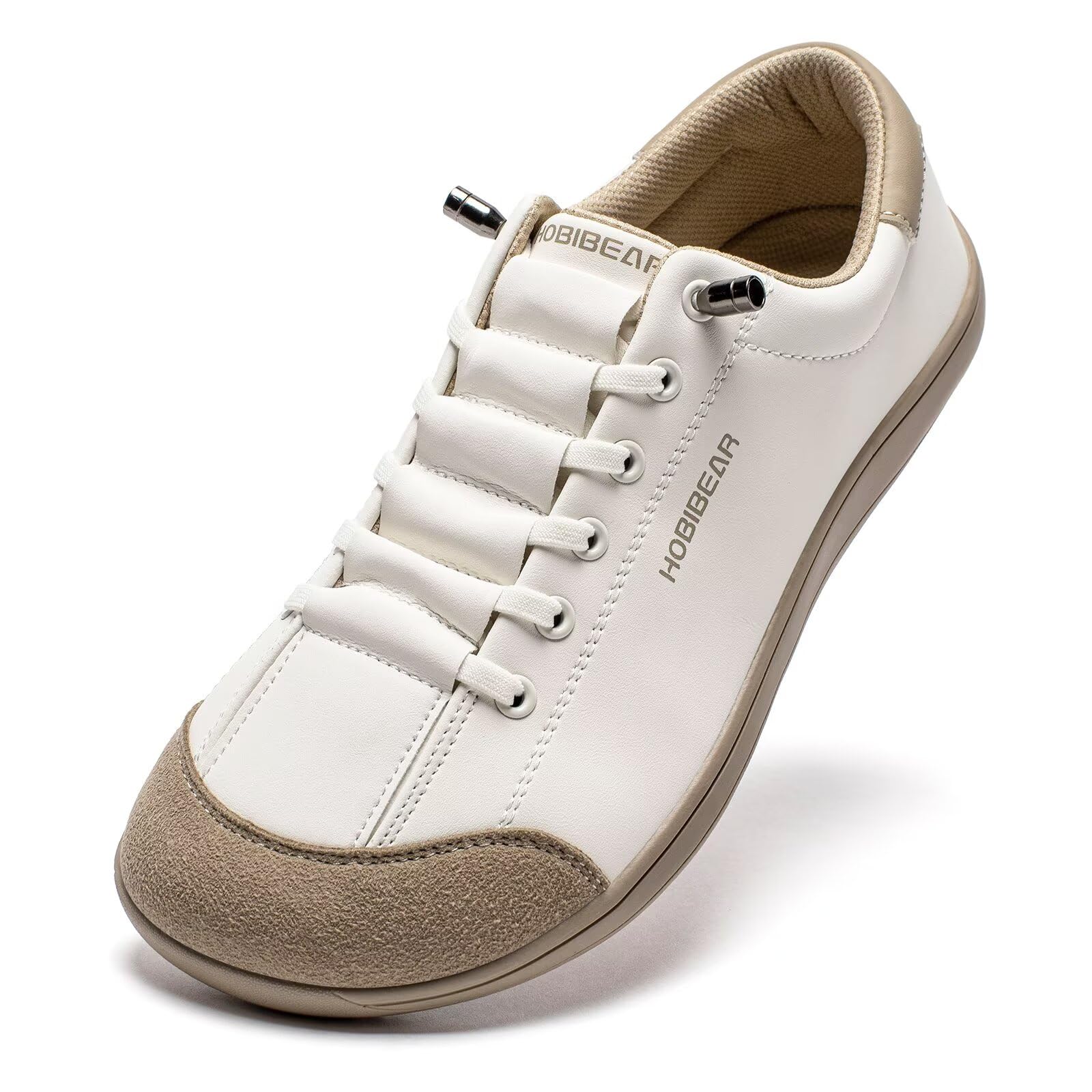
The moment that matters with a slip-on is the airport one: shoes off, tray, shoes back on, no bending, no hopping on one foot while the line moves. The HOBIBEAR handles that better than anything else in this guide. The opening is generous, the upper is soft, and we like that you can step into them without undoing anything.

It is also the neatest-looking pair of the group. The shape is trim enough to wear with something other than gym clothes, the colorways are the ones people compliment, and the sole stays thin and flat, so you keep the ground feel you came for. As travel shoes go, it is the pair that looks least like specialist kit.

Fit is the wildcard. There are no laces to dial in, so the shoe either suits your foot or it doesn't: it can run large, and a high instep can feel tight across the top. Sizing up fixes the second and worsens the first, so try them on a few weeks before you go rather than the night before.

Pros

  • Slides on and off without laces
  • Wide toe box in a neat shape
  • Light enough to pack in a day bag

Cons

  • Traction is inconsistent on smooth floors
Our verdict

For a trip where shoes come off and on ten times a day, this is the easiest pair here: light, wide, and neat enough to wear anywhere.

Check Latest Price
5

Gym and Trail

Xero Shoes Prio

87 /100
Traveler Score Excellent

Key details

Model
Prio (PRM)
Activity
Trail running
Department
Men's
Check Details on Amazon

The Prio is the most expensive pair here, and the one that feels like a training shoe rather than a sock with a sole. There is structure in the upper, the laces lock the midfoot down, and the sole is flat and firm: a barefoot shoe for someone who wants to lift, run, and walk in the same pair.

That structure is why it earns a place. It is the best of these for a hotel gym or a park workout, stable enough for squats, flexible enough for a short run, and it holds its shape when it gets stuffed into a bag. It also looks like a sneaker rather than a barefoot shoe, so it does not announce itself on a city street.

Longevity is the catch, and at this price it is a real one. The outsole is the part that lets go: some pairs separate at the sole within six months of pavement walking, while others go a year and a half of daily use. That spread is a lot to accept on the most expensive shoe in the guide, and it is why we rank it below cheaper picks despite the better build.

Pros

  • Structured build for gym and trail
  • Looks like a normal sneaker
  • Flat, firm sole for lifting

Cons

  • Traction is uneven on wet, smooth floors
  • Fit runs narrow for some feet
Our verdict

The best-built and most versatile pair here if the budget stretches: a proper training shoe that happens to have a flat, flexible sole.

Check Latest Price
6

First Barefoot Pair

MIFAWA Minimalist Shoe

86 /100
Traveler Score Excellent

Key details

Drop
Zero drop
Toe Box
Wide
Activity
Cross-training and hiking
Check Details on Amazon

This is the least expensive way into a barefoot shoe, and nothing about the first wear feels like a compromise: roomy at the toes, flat underfoot, light enough to fold into a daypack. If you are curious about barefoot walking and do not want to spend much to find out, this is the pair that answers the question.

It is a generalist, which is what we want from a travel shoe. A gym session, a walk to the market, an afternoon on your feet in a rented apartment: the MIFAWA handles all of it without complaint, and the wide toe box does what the description promises.

The compromises are in the details. The shoe runs small, so order up a half size, and go a full size up if your feet are wide. The insole is the other weak point: thin, flat, and worth replacing before a long walking trip rather than after. Neither is a dealbreaker at this end of the price range, and both are fixable before you leave.

Pros

  • Cheapest pair in this guide
  • Wide toe box with real room
  • Light and flexible enough to pack flat

Cons

  • Soles and uppers wear faster than the rest of the set
Our verdict

A cheap, honest way to find out whether barefoot shoes suit you: order up a size, plan on a new insole, and treat it as a trial run.

Check Latest Price

How We Tested Barefoot Shoes for Travel

We started by gathering every zero-drop, wide-toe-box travel shoe we could find from brands known for barefoot shapes, then filtered by weight, packability, and whether the upper looked like a normal sneaker. Price and available sizes narrowed the list to 10 pairs, which arrived in early spring and went straight into rotation. Because barefoot sizing is inconsistent, I measured my foot before ordering each pair and noted whether it ran true, small, or large.

Over six months, I wore each pair on a three-mile city walk, a weekend hike, and a week of travel that included airport terminals, cobblestone streets, and hotel gym floors. At the end of each day, I checked where the shoe pressed: across the toes, at the heel, and along the arch. I noted whether my toes could splay without rubbing the sides and whether the shoe stayed put without arch support — because barefoot shoes don't prop you up, the fit has to do the work. To judge traction, I walked the same wet cobblestone stretch and a loose gravel path, paying attention to whether the sole slipped or bit.

I packed each pair into a carry-on to see how flat it folded and whether it added bulk. After six months, I inspected the outsoles for wear at the heel and ball, checked the uppers for creasing or separation, and wore each pair with shorts, jeans, and a casual dress to see if it looked out of place. The pairs that lasted were the ones that felt comfortable on day one — no break-in period — and still looked presentable after a trip.

How to Choose Barefoot Shoes for Travel

Start with the toe box, not the weight

The barefoot contract is simple: heel and toe sit level, the sole is thin enough to bend, and the front is wide enough that your toes don't touch each other. Read the width claim carefully. A shoe can be generous at the toes and still press across the instep, so pay attention to where the snugness is described rather than to the word wide on its own.

Standing on a sheet of paper at the end of the day gives you a length you can compare against the size chart. Width you judge from the cut: how the shoe flares from the ball of the foot forward, and whether the upper has any give. If a listing gives a single width figure, treat it as the widest point, not as the fit.

Weight and how a pair packs

A thin sole and a soft upper fold flat, so most of these shoes take up less room than a pair of trainers and noticeably less weight. That is the whole reason to travel in a barefoot shoe rather than a cushioned one. The exception is a structured training shoe, which holds its shape and claims real space in a bag.

Buy early enough to swap

Sizing is the least reliable part of any shoe listing, and you cannot return a pair from a hotel room. Order three or four weeks before you fly, walk in them indoors for a week, and keep the box until you're sure. A half size is usually enough correction; go a full size only when your feet are wide as well as long.

Match the sole to the ground you'll walk on

Ground feel is the point, but grip is what keeps you upright. A treaded sole handles gravel, wet grass, and a muddy path. A smooth city sole is quieter and lighter but loses its footing on wet tile, polished station floors, and marble. Think about the week you're actually taking: a museum-and-cafe trip and a hiking trip want different outsoles, and if the forecast is wet and the pavements are stone, take the tread.

Frequently Asked Questions

Final Verdict

Six pairs, one clear answer: for most trips, the WHITIN W81 is the barefoot shoe to pack. It is the lightest-feeling, roomiest pair in this guide, it handles a gym session as happily as a day of walking, and it costs about the same as the other mid-range picks.

Two exceptions are worth knowing. If you want a shoe that looks like an ordinary sneaker, the AIRHAS is the one, ordered a half size down. And if your days are full of on-and-off — airports, tents, hotel rooms — the HOBIBEAR slip-on saves you the lacing.