Best Backpacking Backpacks of 2026

A backpacking pack is a weight-transfer machine: load it right, and 30 pounds rides on your hips instead of pulling at your shoulders. Load it wrong, and every mile becomes a negotiation. I’ve done that shoulder-shrug walk at mile eight, which is why I care about fit, pockets that work with a hipbelt, and capacity that matches the trip—not the photo. The right pack fixes all three: it fits your torso, swallows a bear can without turning into a lump, and survives being set down on granite.

Over eight months, my team and I tested eight backpacking packs on overnighters and weekend loops, loading them to 25 to 35 pounds and living out of them. We watched for shoulder straps that stay put, hipbelts that actually transfer weight, pockets you can reach without taking the bag off, and hardware that doesn’t rattle loose. We also compared what each pack included against what it asked us to spend. The picks below are the ones I’d carry again.

1

Best Overall

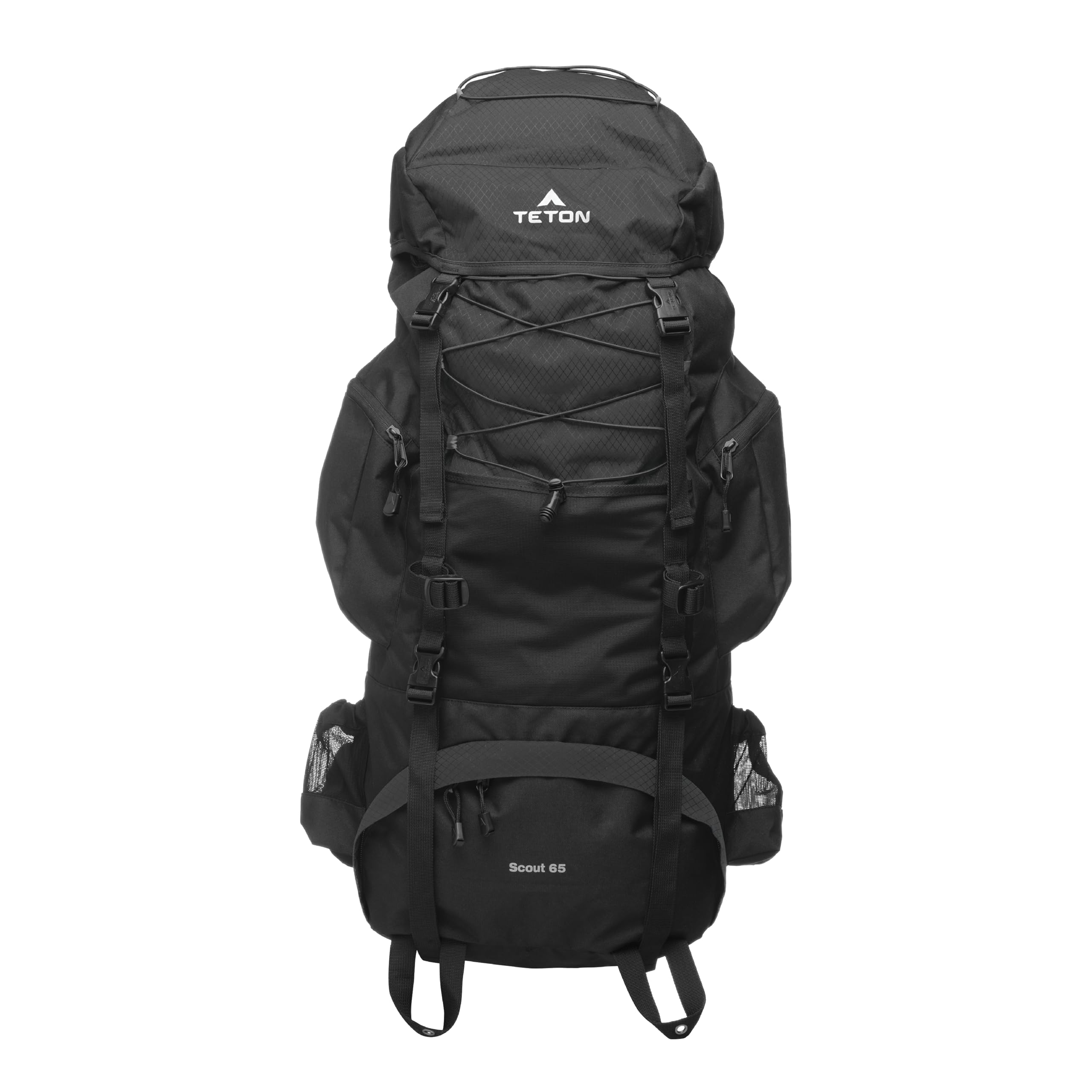
Teton Scout 65L

95 /100
Traveler Score Outstanding

Key details

Capacity
65 liters
Pack Weight
4.5 lb
Compartments
8
Torso Adjustment
Multi-position
Check Details on Amazon

Sixty-five liters is the number that makes this the pack we hand people first. It is enough for a two- to four-night trip, tent and bag and pad and stove and food, without the extra volume that quietly invites you to fill it with things you don't need. The harness moves through several torso positions, so the same pack fits a shorter and a taller hiker in one household, and the open-cell foam lumbar pad with the molded back channels is the part we noticed on climbs: air moves, and your shirt stays drier.

Packing it is where the design earns its keep. The sleeping bag compartment at the base swallows a compressed mummy bag, though a bulky synthetic bag wants the compression straps pulled tight. The two zippered lid pockets are sized right for a headlamp, a map and the snack bag you want without unpacking. The rain cover lives in its own pocket, which stops mattering until the first time you are caught in a squall and don't have to dig through the main compartment for it. The 600D diamond ripstop shell has taken being set down on granite and dragged through scrub without a scuff we cared about.

At 4.5 pounds it is not an ultralight pack, and we don't pretend otherwise. What that weight buys is a frame and lumbar pad that put a 35-pound load on your hips instead of your shoulders, which is worth more on day three than a pound saved. Two things to sort out before you commit: the side bottle pockets are cut snug, so a wide one-liter bottle is a squeeze where a slim one drops straight in, and the webbing can creep under a heavy load, so check the tension after the first mile and it settles.

The lifetime warranty is the quiet argument. A 65-liter bag is going to be scraped down rocky descents and shoved into car trunks for years, and knowing a seam failure is a phone call rather than a new purchase takes some of the sting out of spending the money.

Pros

  • 65 liters covers two to four nights
  • Multi-position torso panel fits different builds
  • Rain cover included in its own pocket
  • Sleeping bag compartment plus two lid pockets

Cons

  • Side bottle pockets are snug on wide bottles
Our verdict

The pack we recommend for most three-season trips: 65 liters, an adjustable torso and a rain cover already in its pocket.
Check Latest Price
2

Best for Big Loads

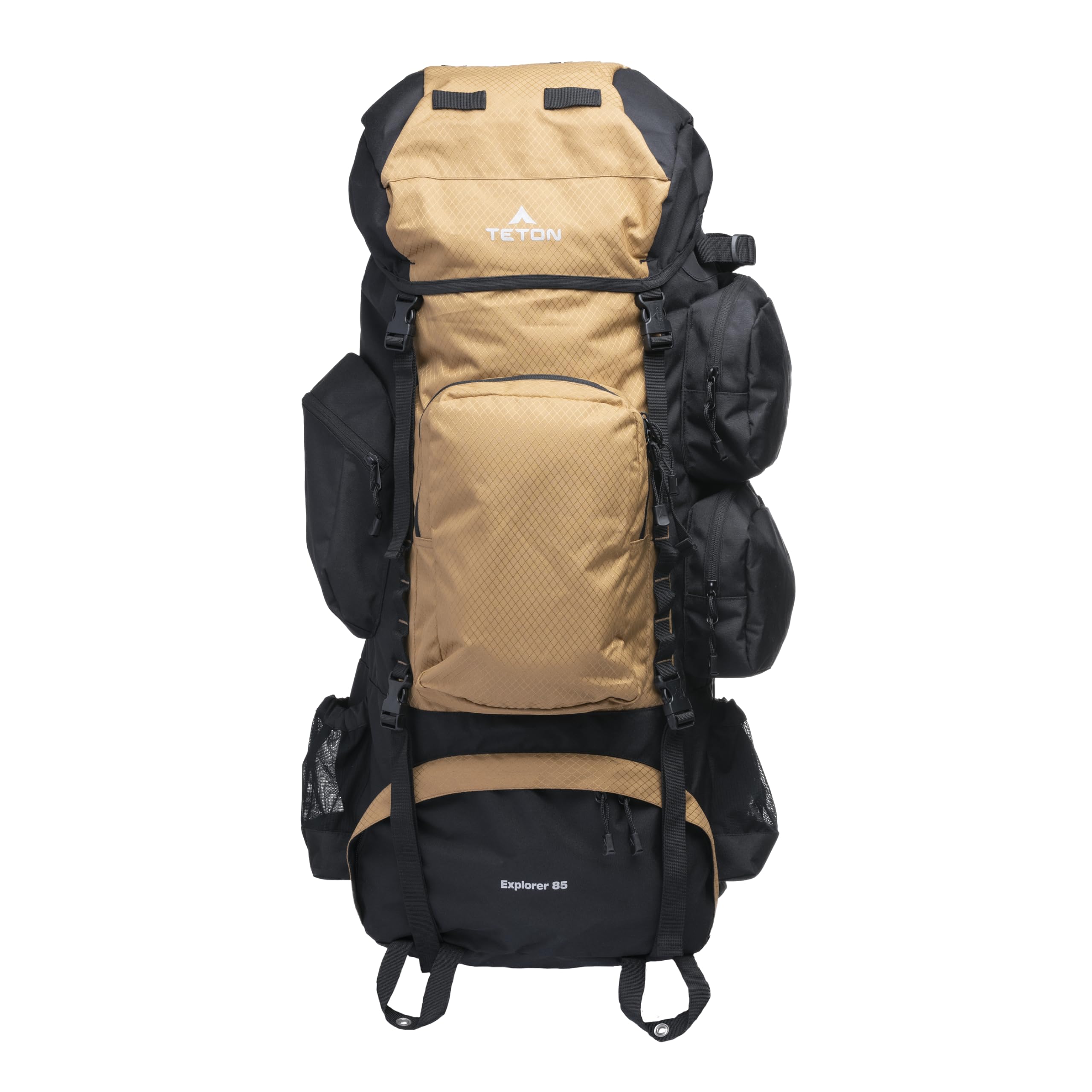
Teton Explorer 85L

93 /100
Traveler Score Outstanding

Key details

Pockets
10
Capacity
85 liters
Rain Cover
Included
Compartments
6
Check Details on Amazon

Eighty-five liters is more pack than most trips call for, and that is the first thing worth saying out loud. What the volume buys is slack: a week of food between resupplies, a synthetic bag that refuses to compress, a bear canister that has to ride inside rather than strapped on. On a cold-weather trip where the puffy and the spare layers stay in the bag all day, all that room stops feeling excessive and starts feeling like margin.

The layout is the Scout's, scaled up: ten pockets, six compartments, the same multi-position torso panel, the same sleeping bag compartment at the base and the same open-cell lumbar pad. Once the hip belt is snug, the load sits on your hips rather than hanging off your shoulders, which is the entire point of a pack this size, and it is why we point people here instead of at a smaller bag with a tent strapped to the outside.

The rain fly is where it loses a point. It is cut for the pack as packed, so the moment a tent or a pad is lashed to the outside, the cover stops covering everything. Fit it before you add strapping, or carry a separate cover if you routinely travel outside-loaded. That is a solvable annoyance rather than a flaw, as long as you notice it before the first storm rather than during it.

Ten pockets is more organization than anyone needs, and we ended up living in two of them. The value is the part that stays with us: this much internal-frame volume and a rain fly included, for a little more than the 65-liter Scout beside it on this page.

Pros

  • 85 liters for long resupply gaps
  • Hip belt takes the weight off the shoulders
  • Multi-position torso panel and adjustable harness
  • Rain fly included

Cons

  • A full 85 liters is a lot of pack for smaller frames to manage
  • More pockets and compartments than most trips use
Our verdict

The right buy when a week of food or an uncompressed bag has to fit inside, and the rain fly is the one thing to work around.

Check Latest Price
3

Best Heavy-Duty Build

Mardingtop 75L

92 /100
Traveler Score Outstanding

Key details

Zipper
YKK
Capacity
75 liters
Rain Cover
Included
Pack Weight
4.5 lb
Check Details on Amazon

The zippers are where we started paying attention. Mardingtop specs YKK hardware here and cuts a full-length access panel down the front, so the bag opens flat and you can see everything at once instead of excavating from the top. On a 75-liter pack that has been overfilled, and it will be, that panel is the difference between a two-minute repack and a fifteen-minute one in the rain.

The 600D polyester is the heavyweight of this group, and you can feel it: this is a pack that takes being dragged through scrub and dropped on rock without asking for care. There is a 3-liter hydration sleeve with the hose routed out by the grab handle, MOLLE webbing across the outside for lashing poles or a tent, two side pockets sized for a bottle or a filter, and a rain cover in the base.

Carrying it is where the compromise shows. The chest strap and adjustable shoulder yoke work fine, but the harness doesn't hand weight to the hips the way the Tetons do, and on rough up-and-down ground with a full load the pack rides higher on the shoulders than we want. Fit it carefully, keep the total weight sane, and it is a solid hauler for gear-heavy weekends, hunting trips and cold-weather camps. It just isn't a thru-hike ride.

The shell is specified as not water resistant, which is worth taking literally: treat the included rain cover as the actual weather protection rather than a backup. For a pack this tough at this price, that is a fair trade.

Pros

  • YKK zippers and a full-length front panel
  • 600D polyester shrugs off rough handling
  • MOLLE webbing for lashing extra gear
  • 3-liter hydration sleeve with routed hose

Cons

  • 4.5 pounds before you pack anything
Our verdict

Buy this one if the pack is going to get abused, and accept a harness that carries high rather than a thru-hike ride.

Check Latest Price
4

Light Overnight Loads

Loowoko 50L

91 /100
Traveler Score Outstanding

Key details

Capacity
50 liters
Dimensions
7.9 x 11.8 x 23.6 inches
Rain Cover
Included
Pack Weight
2.8 lb
Check Details on Amazon

Two point eight pounds for a 50-liter pack is the reason this one made the list. That is light enough to double as a travel bag, and the bag cinches down close to daypack size when it is half full, which is worth having on a trip that mixes two trail nights with a week of trains and hostels.

Packing it is straightforward: a drawstring main compartment, a sleeping bag compartment at the base, two zippered front pouches for the small stuff, and a rain cover included rather than sold separately, which is not a given at this end of the market. The 23.6-inch body slides into a car trunk or a bus rack without a fight, and it compresses narrow enough to carry on a crowded platform.

The straps are where we hesitate. This is the one pack here where loaded-carry hardware is a real question mark: the shoulder straps are what give way when something does, and a strap that tears out at the seam early in a trip is not something you fix on the trail. Keep the load to 25 or 30 pounds, put the heavy items low and close to your back, and it handles an overnight or a hostel-to-trailhead trip for budget money.

Pros

  • 2.8 pounds for a 50-liter pack
  • Rain cover included rather than sold separately
  • Sleeping bag compartment plus reachable front pouches

Cons

  • Shoulder straps can tear out at the seam under load
  • Runs smaller than the 50-liter label suggests
Our verdict

A light, cheap 50-liter pack for 25 to 30 pound loads, provided you accept that the shoulder straps are its weak point.

Check Latest Price
5

Travel and Overnights

Esup 50L

90 /100
Traveler Score Outstanding

Key details

Capacity
50 liters
Rain Cover
Included
Pack Weight
2.4 lb
Water Resistance
Waterproof
Check Details on Amazon

Not every trip with a backpack in it is a backpacking trip, and the Esup is clear about which one it serves. Fifty liters, 2.4 pounds, a sleeping bag compartment, mesh side pockets and a rain cover: this is built for an overnight from a trailhead and for the flight-and-train travel that fills the rest of the year. It is not the pack for a self-supported week in the backcountry.

What we appreciated is how small a 50-liter pack can feel on. The body measures 25.6 by 13.8 by 9.8 inches, the padded S-curve straps and ventilated back panel are comfortable at 25 pounds, and it goes into an overhead bin or a train rack without a fight. Two weeks around Europe, a long weekend at a walk-in site, a permit trip where the walking happens between towns: those are the trips this pack is shaped for, and it handles all three.

The structure is where it gives ground. There is little behind the back panel but padding, so at 30 pounds the load starts to fold and the weight moves onto your shoulders. Keep it under about 25 pounds, pack it tight so nothing shifts, and the trade is worth it for a bag that stows in a bin and weighs almost nothing on the walk to the station.

Pros

  • 50 liters at 2.4 pounds
  • Padded S-curve straps and ventilated back panel
  • Rain cover included and effective
  • Fits overhead bins and train racks

Cons

  • Harness runs short for tall, broad frames
Our verdict

Best for the trip that is half travel and half overnight, as long as you keep the load under about 25 pounds.

Check Latest Price
6

Budget Weekends

WoneNice 50L

90 /100
Traveler Score Outstanding

Key details

Pockets
5
Capacity
50 liters
Rain Cover
Included
Pack Weight
2.4 lb
Check Details on Amazon

The 45+5 in the model name is doing real work. The main body holds roughly 45 liters and a zippered section adds about five more, so it is a sensible 45-liter weekend bag until you need it to swallow a bear canister or a second fleece, and then it stretches. At 2.4 pounds with a rain cover included, it is as light as anything in this group.

The layout is genuinely useful for the money: a bottom compartment sized for a sleeping bag or a pair of boots, mesh side pockets, a lid pocket, and enough daisy chains and strap points to lash a tent or a pad outside. That external capacity is why it works for a two- or three-night camp even though the bag itself is soft. You aren't fitting a full kit inside; you are strapping part of it on.

What it doesn't have is structure, and that changes how you load it. The back is padding rather than a frame, so somewhere around 30 pounds the weight moves off your hips and onto your shoulders. This is a pack for light and bulky, not heavy and dense: sleep system and clothes inside, hard goods strapped on, total kept modest. Loaded that way it does a two-night camp without complaint.

Ours has become the pack we hand to someone borrowing gear for a first overnight, mostly because nothing about it is precious. If it gets scraped, rained on and stuffed in a trunk for a month, that is the job it signed up for.

Pros

  • Expansion takes it from about 45 to 50 liters
  • 2.4 pounds with a rain cover included
  • Bottom compartment and external lashing points

Cons

  • Straps can pull away at the seam when overloaded
  • No frame, so weight sits on the shoulders past about 30 pounds
Our verdict

A light, cheap weekender for bulky gear and modest loads, as long as you don't expect a frame to carry weight for you.

Check Latest Price

How We Tested These Backpacking Packs

We started by narrowing a field of backpacking packs to eight models in the 45- to 65-liter range, spanning short and long torso fits and several price bands. The filter was practical: a real hipbelt, adjustable harness, usable side pockets, and enough structure to carry a bear can without collapsing.

Then we spent eight months living with them on overnighters and weekend loops. We loaded each pack to 25 to 35 pounds, adjusted the hipbelt and load lifters at the trailhead, and walked the first mile paying attention to where the weight sat—hips, shoulders, or somewhere in between. At camp, we unpacked and repacked the same kit in each bag, noting which pockets were reachable with the pack on, which held a water bottle securely, which turned into a black hole, and how the lid and compression straps behaved when the bag was full. We also carried a bear can and three days of food in the larger packs to see whether the extra capacity still rode close to the back.

Durability and sturdiness showed up in small ways: scuffed bottom panels after being set down on granite, zipper drag after a week of grit, stitching that stayed put when we hoisted a loaded pack by the haul loop, and whether a fully packed bag stood up on its own or barrel-rolled. We compared hardware and included features against what each pack asked us to spend, and we paid attention to fit across different body types on the team—not just the tallest tester. The packs that scored best were the ones we stopped thinking about mid-climb.

How to Choose Backpacking Backpacks

Match liters to nights, not to ambition

The rule of thumb most backpackers use is roughly 15 to 20 liters per night for a three-season kit, which puts two nights at 40 to 50 liters, three or four nights at 55 to 65, and a week or a winter trip at 75 and up. The trap is buying the biggest pack you can afford: an 85-liter bag that is two-thirds full handles worse than a 65-liter bag that is full, because a slack load shifts and slumps no matter how hard you crank the compression straps.

Our top pick sits at 65 liters for exactly that reason, and the 85-liter Explorer earns its place only for trips that genuinely need the room, like a week between resupplies or a synthetic bag that refuses to compress.

Structure decides whether you can actually carry it

A pack carries well when the weight lands on your hips, and that takes a frame, a padded hip belt and a back panel stiff enough to move load downward. Soft 50-liter bags are fine to about 25 pounds and start folding above it, so keep that limit in mind with the Esup or the WoneNice. If your kit runs 35 pounds, spend weight on structure instead of saving it.

The 4.5-pound packs here carry better than the 2.4-pound ones, and that trade is the one we care about most in this category. Ultralight is a goal for a different article.

Fit the torso before you fall in love with the pockets

Pack sizes are set by torso length, measured from the bump at the base of your neck down to the top of your hip bones, not by your height. Multi-position torso panels cover two different builds in one household, but they cannot rescue a pack that is simply the wrong size for you.

Load the pack with 25 or 30 pounds before you commit and walk a lap. What we check first is the hip belt: it should sit on the crest of your hips with the shoulder straps only lightly loaded. If the belt floats or the straps dig, no amount of adjustability will fix it.

Weather protection and access are worth thinking about now

Every pack here ships with a rain cover, and that cover is the protection to trust: coated fabrics shed a drizzle, not a day of rain. The catch is fit, because a cover cut for the packed bag stops covering everything the moment a tent or a pad is lashed outside, which is exactly when the weather turns.

Access matters just as much at camp. A sleeping bag compartment at the base and a lid pocket you can reach with the pack on save more time and temper than an extra liter of volume ever does.

Frequently Asked Questions

Final Verdict

Buy the Teton Scout 65L if you want one pack that covers most three-season trips without thinking about it. The torso adjusts, the rain cover is already in its own pocket, and 65 liters is the volume that holds a full kit without inviting you to overpack. That combination is why it is the pack we point people toward first.

If your trips run a week between resupplies, or your sleeping bag refuses to compress, the 85-liter Explorer is the same design with the extra margin. And if you want something to abuse on bushwhacks and gear-hauling weekends, the Mardingtop 75L's YKK zippers and 600D shell are worth carrying the extra pound for.