Best 65L Backpacking Backpacks of 2026

A 65-liter pack is the Goldilocks size for backpacking: room for a week of food and a bear canister, but not so cavernous that every step feels like dragging a suitcase. The right one turns a heavy load into something you can carry for hours, with the weight settled across your hips instead of hanging off your shoulders. The wrong one makes a three-day trip feel like a punishment detail, no matter how carefully you packed.

I care less about a spec sheet than how a pack behaves when it's full, so over the past ten months my team and I have tested eight 65-liter packs on weekend overnights and longer back-to-back days. We paid attention to the things you actually notice on trail: whether the hipbelt and shoulder straps create hot spots, how the pocket layout works when you're tired, whether the materials and stitching inspire confidence after repeated loading, and whether the price felt justified by the build. Fit varies by body, but the best packs in this size class all share a few traits, and the picks below are the ones that earned their place.

1

Best Overall

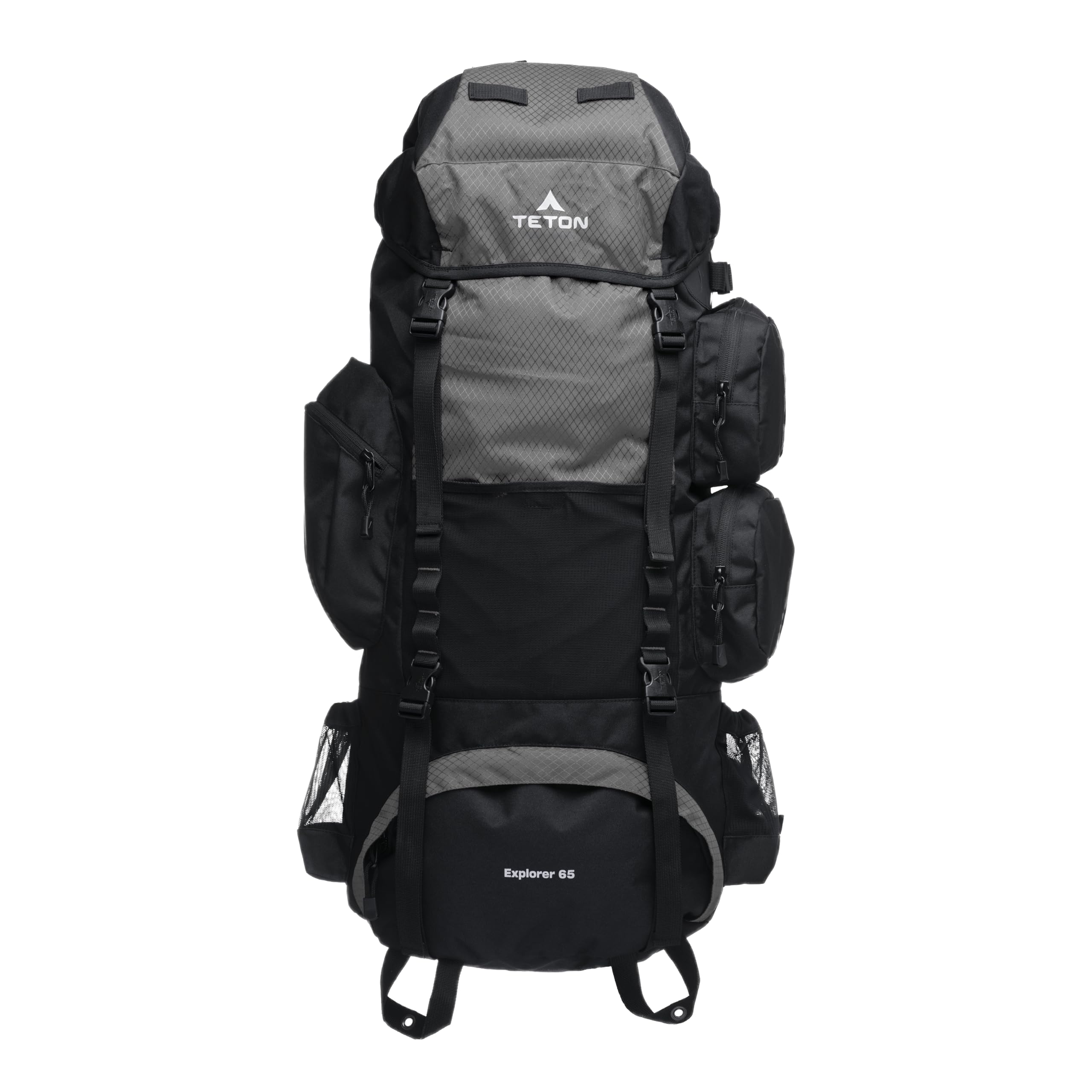
Teton Explorer 65L

93 /100
Traveler Score Outstanding

Key details

Capacity
65 liters
Torso Fit
Multi-position adjustable
Rain Cover
Included rainfly
Stated Weight
5 lb
Check Details on Amazon

A true 65 liters with a working sleeping bag compartment, at the bottom of the price range in this guide, is the arithmetic that put this Teton at the top of our list. The main compartment takes a three-season bag, a pad, a tent and four days of food, and the zippered divider at the base gives the sleep system its own space so you can pull it out at camp without unpacking the top half. For a first or second backpacking season, that combination buys a trip instead of a wishlist.

The carry is where budget packs usually give themselves away, and this one holds up better than it has any right to. The lumbar pad is open-cell foam with molded channels, so air moves across your lower back on a climb, and the torso panel slides across a range of body lengths instead of assuming one. Give it ten minutes in the driveway with the pack fully loaded: once the hip belt and load lifters are set, the weight sits on your hips where it belongs.

Two practical notes from our time with it. At five pounds empty it is the heaviest pack here, the price of the 600D diamond ripstop and the frame. And the included rainfly is cut for the pack as packed, so strap a tent or a foam pad to the outside and the cover no longer reaches around it; keep anything that has to stay dry inside the bag and treat the outside straps as fair-weather storage. The ripstop and the zippers have taken scrapes without complaint, though the shoulder-strap anchors are the part to look over before you load it to the limit.

Pros

  • Sleeping bag compartment and divider keep the load organized
  • Multi-position torso panel fits a range of body lengths
  • Rainfly included rather than sold separately
  • Hip belt and lumbar pad take weight off the shoulders

Cons

  • Five pounds empty, the heaviest pack here
  • Sleeping bag compartment is sized for a mummy bag
Our verdict

We recommend the Explorer to anyone packing for a first three-day trip: it carries a full load comfortably, adjusts to different torsos, and includes the rainfly budget packs usually leave out.
Check Latest Price
2

Best Adjustable Fit

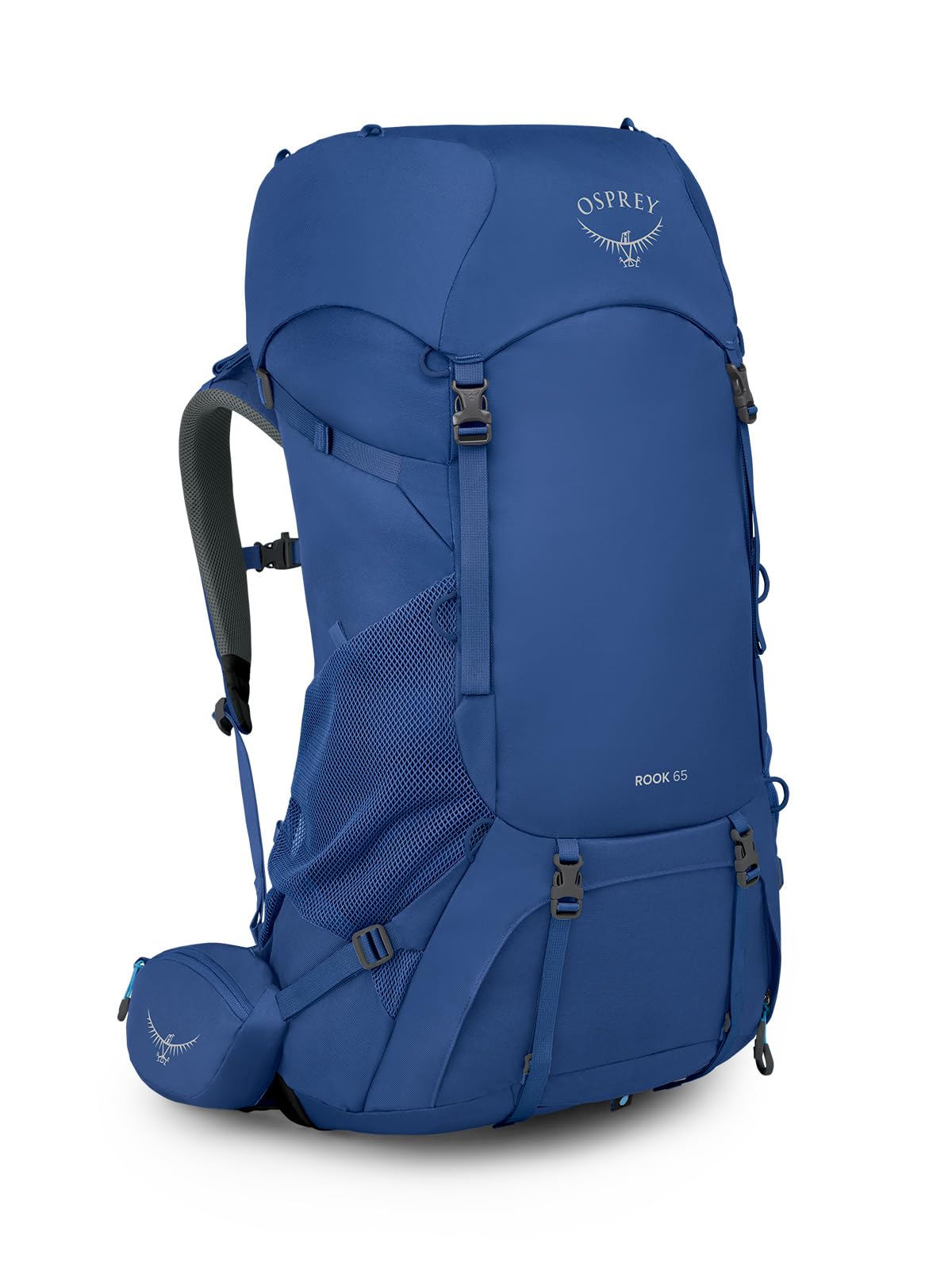
Osprey Rook 65L

89 /100
Traveler Score Excellent

Key details

Capacity
65 liters
Rain Cover
Integrated, removable
Suspension
Adjustable AirSpeed backpanel
Sleeping Bag Compartment
Zippered, floating divider
Check Details on Amazon

Buying a pack online means buying a fit you cannot feel, and the Rook is the pack here that answers that most directly. Its backpanel is tensioned mesh on a sliding frame, so you set it to your torso length rather than hoping a fixed harness lands in the right place. For anyone between sizes, or for a pack that has to fit more than one person in the house, that adjustment is worth more than any pocket count.

Ventilation is the other half of the story: the mesh holds the pack off your back so air moves through on a climb, and the LightWire frame pushes the load down onto the hip belt rather than the shoulder straps. Osprey bills this as its straightforward pack, and the pared-back build is why it costs less than the Atmos while still handling a full multi-day load.

The feature set is complete in the ways that matter on the trail. There is an integrated raincover that stows in its own pocket, a zippered sleeping bag compartment with a floating divider so the base of the pack moves with the load, seven pockets, and side bottle pockets angled forward, which is the difference between drinking on the move and stopping to unclip. Daylite compatibility means a small daypack clips on for summit days.

One thing to know before you order: this listing is the men's fit, and it is the only harness option here, so a shorter torso needs to confirm the hip belt reaches the hip bones with room to tighten before committing.

Pros

  • Tensioned backpanel slides to your torso length
  • Mesh suspension keeps air moving across your back
  • Integrated raincover stows in its own pocket
  • Sleeping bag compartment with a floating divider

Cons

  • Listed only in a men's fit
Our verdict

The Rook is our pick for anyone who has to order a pack without wearing it first: the backpanel slides to your torso length and the ventilated carry keeps your back drier on climbs.

Check Latest Price
3

Best for Heavy Loads

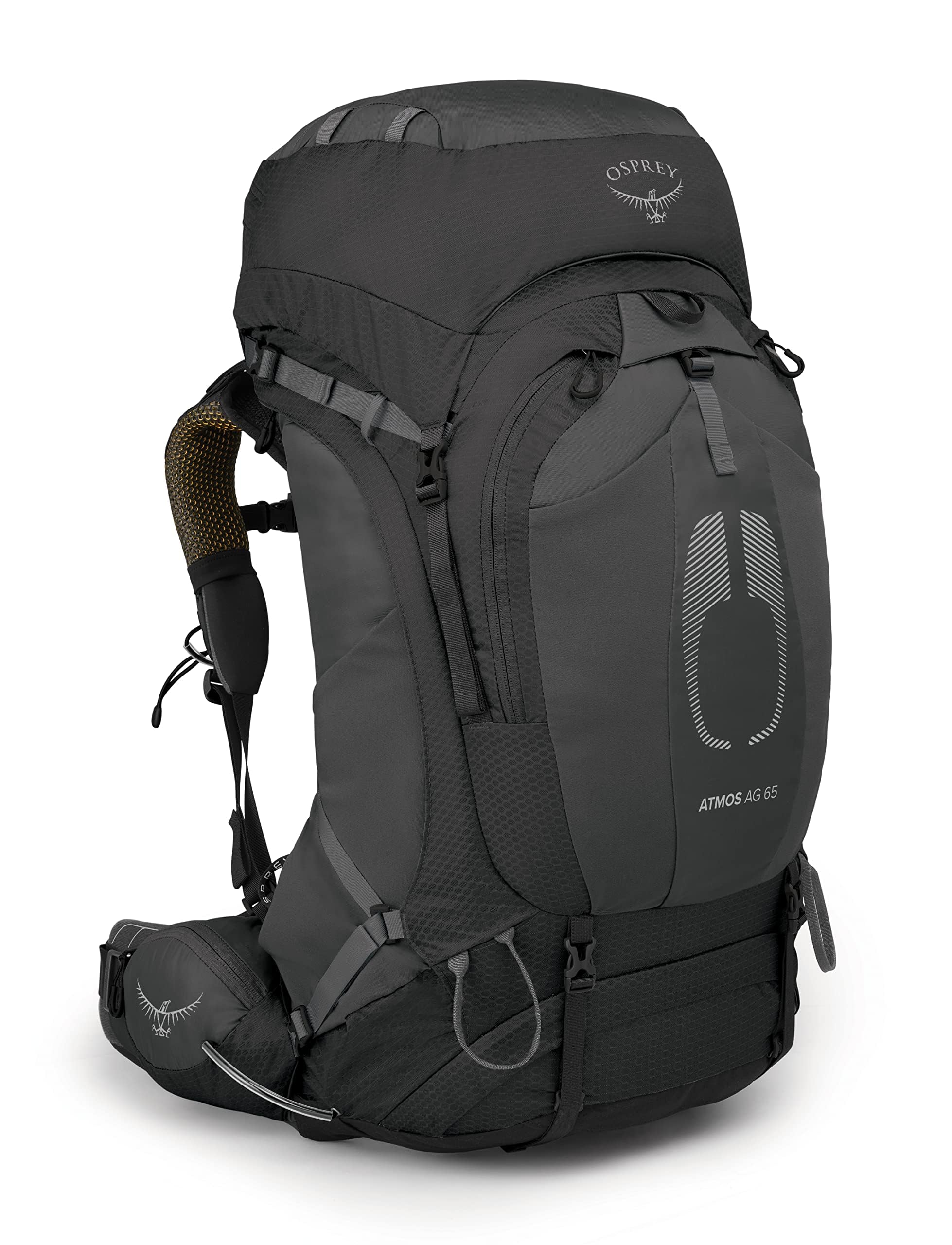
Osprey Atmos AG 65L

91 /100
Traveler Score Outstanding

Key details

Rain Cover
Included, PFAS-free DWR
Main Access
Curved side zip
Stated Volume
68 liters
Stated Weight
4 lb
Check Details on Amazon

The arithmetic is the first surprise: this is sold as a 65-liter pack, and the listing's own storage figure is 68 liters. Volume ratings are approximate across the category, but the extra room is real, and it is part of why this pack swallows a load that the others here would have you strapping to the outside.

What you pay for is the carry, and it is the best in this guide. At four pounds empty it is the lightest pack here with a stated weight, and the suspension wraps the load around your back and hips instead of hanging it off your shoulders, which is the difference between walking into camp tired and walking in with your shoulders screaming. The curved zip on one side of the panel also lets you reach the middle of the pack without unpacking it, the feature we missed most on the top-loading options.

The details are the ones Osprey is known for: a floating top lid with lash points, a zippered sleeping bag compartment with a removable divider and removable pad straps, and an included raincover made with PFAS-free DWR and bluesign approved materials. Small stuff, until you are pitching in the rain.

Two caveats. This listing is the L-XL harness, so anyone on the smaller side of the torso range should find the right size before ordering, because it is not a one-size pack. And it is the most expensive option here by a wide margin, money spent on suspension rather than pockets. If your trips are weekend-sized rather than expedition-sized, the Rook carries them comfortably for less.

Pros

  • Suspension spreads heavy loads across back and hips
  • Four pounds empty, the lightest here
  • Curved side zip reaches the middle of the pack
  • Removable divider and pad straps adjust the sleep system

Cons

  • Highest price in this guide
  • This listing is the L-XL harness only
Our verdict

If your load includes a bear canister, winter gear or a long water carry, the Atmos is the pack we reach for: the suspension spreads that weight across your back and hips better than anything else here.

Check Latest Price
4

Budget Weekends

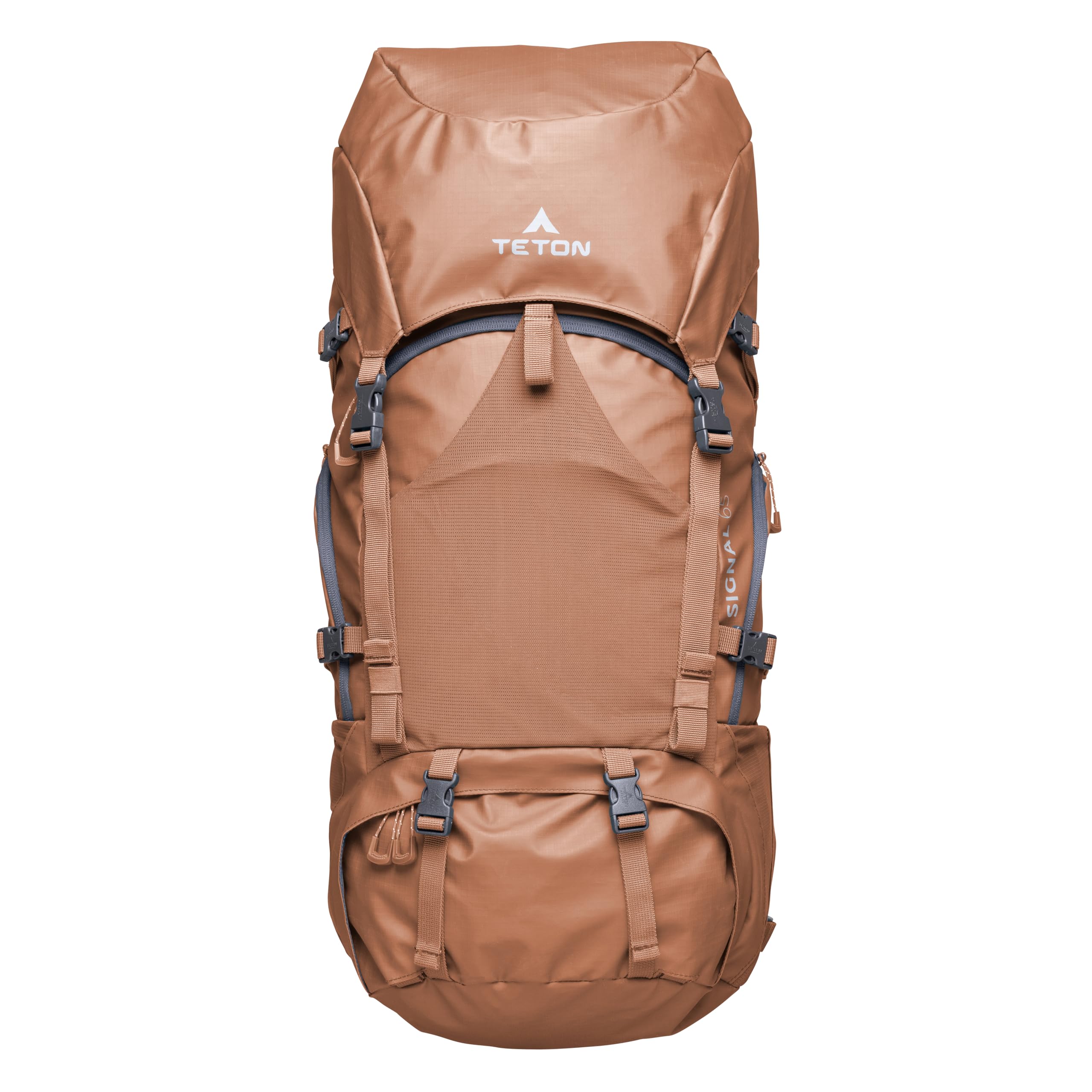
Teton Signal 65L

88 /100
Traveler Score Excellent

Key details

Capacity
65 liters
Access Points
Top, front, side
Stated Weight
4.7 lb
Bottle Holders
Two, hydration compatible
Check Details on Amazon

The Signal's real limitation is the one you cannot see in the product photos: fit at the edges of the size range. The waist belt runs short on larger frames, and taller hikers tend to find the torso smaller than the 65-liter label suggests. If you are broad-shouldered or over six feet, try it on before you commit, or choose one of the Osprey packs instead.

Get the fit right and there is a lot of pack here. It opens at the top, the front and the side, which is unusual at the bottom of the price range and genuinely useful: on a cold, wet morning you can dig out a dry layer through the front panel instead of unpacking everything you own. The two-compartment lid keeps small items findable, and the back panel adjusts at the waist, chest and shoulders.

We kept the Signal on our list because it is the least expensive way into a 65-liter internal-frame pack, and because the access design solves a real annoyance rather than a made-up one. The trade is at the joints: shoulder-strap stitching and seam sewing are where these packs come apart under a heavy load, so check the anchors before a trip and keep anything sharp away from the mesh front pocket.

Water is handled better than you might expect at this price, with two bottle holders plus hydration compatibility, so you do not have to commit to one strategy before you have even left the trailhead.

Pros

  • Three access points including a front panel
  • Two-compartment lid keeps small gear findable
  • Least expensive pack in this guide
  • Two bottle holders plus hydration compatibility

Cons

  • Waist belt runs short on larger frames
  • Shoulder-strap stitching is the weak point under load
Our verdict

Buy the Signal if budget is the binding constraint and you can check the fit in person, because the front panel access is genuinely useful and the sizing runs tight at the extremes.

Check Latest Price

How We Tested 65-Liter Backpacking Packs

We started by researching the 65-liter field, comparing suspension designs, pocket layouts, fabric deniers, and listed weights, then narrowed the shortlist to eight packs that covered a range of builds and budgets. Over ten months, we loaded each with the same three-season kit: tent, sleeping bag, pad, stove, food for three to five days, and a bear canister where required. We weighed every pack at the trailhead, then hiked local climbs and descents, including one wet, muddy week that was harder on zippers and fabric than we expected.

Fit got checked first. We adjusted torso length and hipbelt on at least two testers per pack, then walked with the load for an hour before making a call. Comfort showed up as hot spots, shoulder pressure, or a hipbelt that needed constant readjusting. We also packed and unpacked each bag repeatedly to see which pockets were reachable with the pack on, whether the lid floated over a full load, and how the hipbelt pockets handled a phone and snacks.

To judge durability and quality, we dragged packs through brush, set them down on granite, and wore them in rain, then checked abrasion at the bottom, seam stitching, zipper pulls, and buckles. To test the 65-liter claim, we loaded the same kit into every pack and noted how much room was left; some swallowed it easily, others needed the lid to float high. At the end, we compared build quality and usable capacity against price to separate good value from cheap construction.

How to Choose 65L Backpacking Backpacks

Measure Your Torso Before Anything Else

Pack volume is the number shoppers compare and the one that matters least on day one. What decides whether a 65-liter pack is comfortable is torso length, measured from the bump at the base of your neck to the top of your hip bones, and a harness that sits an inch off will hurt no matter how good the rest of the pack is.

Have someone run a tape for you. Most adults land between 16 and 22 inches, which is exactly why so many packs build in an adjustable backpanel. The Rook and the Explorer both slide to fit, and that adjustability is the safer buy when you are ordering without trying anything on.

What 65 Liters Actually Holds

Sixty-five liters is a three-to-five-day pack for one person, and the range is wide because bulk varies more than weight does. Space disappears fast when the sleeping bag is synthetic, when a bear canister is coming along, or when the trip is a winter one.

The sleeping bag compartment is the part to interrogate. The Explorer's is sized around a mummy bag, so a rectangular bag will either jam or live in the main compartment instead. Decide which bag you own before you decide which pack to buy.

Suspension, Empty Weight, and Where the Money Goes

Every pack here has an internal frame; what separates them is how much of the load reaches your hips and how much pack you carry before you have packed anything. Empty weights in this group run from four to five pounds, and that pound costs you the same whether it comes from the frame or the fabric.

Spending more buys suspension and less weight rather than more pockets. Weekend loads under roughly thirty pounds do not need a premium harness; a trip with a canister, winter layers or a long water carry does. Buy the carry your trips demand, not the one printed on the spec sheet.

Access, Pockets, and Rain Protection

How you reach your gear mid-trail is an underrated decision. A top-loading pack means unbuckling the lid and digging; a curved side zip or a front panel lets you get at the middle of the load without unpacking it, which is worth real money on a wet morning.

Then check the rain protection. A cover that stows in its own pocket is one less thing to buy, and a pack without one needs a cover sized to it. Either way, check that the cover fits over the pack as you actually load it, since a strapped-on tent or foam pad changes the shape it was cut for.

Frequently Asked Questions

Final Verdict

The Teton Explorer 65 is the pack we point most people to, and the reason is unglamorous: it carries a full multi-day load on your hips, adjusts to a range of torsos, and includes a rainfly instead of leaving it on your shopping list.

If a ventilated, adjustable carry matters more than price, the Osprey Rook is worth the step up. And for loads built around a canister, winter gear or a long water carry, the Atmos is the one that makes them feel lighter.