4 Best Airplane Car Seat of 2026: Know Which Seats Are FAA-Approved

Find the FAA-approved airplane car seat that matches your child's age, your airport routine, and your carrying limits — without overpaying or packing a seat you can't use in flight.

The phrase 'airplane ready' shows up on a lot of car-seat listings, but it does not mean the same thing as FAA approved. The lightest, most packable restraint in this category is actually not allowed on an aircraft, so verifying the printed label matters more than the marketing copy. Parents should read the seat's manual, not just the product page.

The next surprise is weight. A convertible car seat can fold flat and still weigh more than 20 lb, which changes how you get through security, down jet bridges, and into rental cars. The right airport seat depends on whether you are carrying it for an infant, a toddler, or mostly using it after you land.

That is why this guide sorts by the decision that actually matters: the child's age and where the seat will be used. Once you separate in-flight seats from ground-only restraints, the choice narrows quickly.

1

Best Overall

Doona Car Seat & Stroller

96 /100
Traveler Score Outstanding

Key details

Weight
17.2 lb
FAA Approval
Approved
Width & Fold
17.4 in wide, stroller mode
Harness & LATCH
LATCH base, 5-point harness
Check Details on Amazon

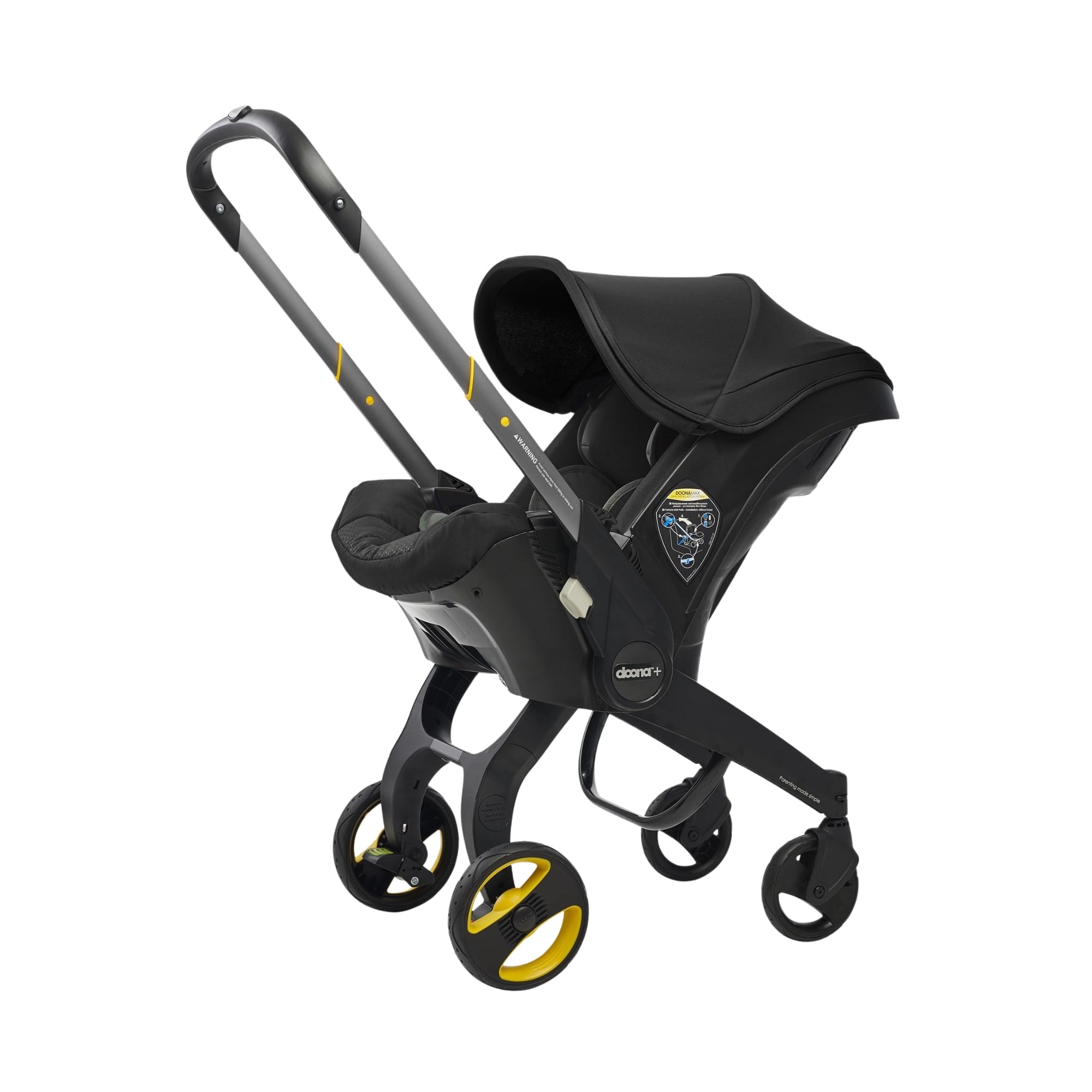
The Doona's one-click conversion moves an infant from car seat to stroller without resettling a sleeping baby, and that same latch makes car-to-plane transitions genuinely fast. The seat is FAA-approved for aircraft use, and the integrated frame replaces both a standalone infant seat and a separate stroller when you travel. In stroller mode it pushes well through narrow terminal gaps and city streets, so the premium build and maneuverability carry through daily use.

Frequent flyers get the clearest payoff: you board with one unit instead of juggling a car seat plus stroller through security, and the seat installs into a car base with a quick click. The stroller mode wheels well through narrow terminal spaces, so the integrated design saves real time on a typical airport run.

This is for parents of rear-facing infants up to 35 lb who fly or commute by car often enough that one integrated system beats separate gear. It is a stage-specific purchase: rear-facing-only through 35 lb, and heavy to lift near the upper end. Budget-focused occasional fliers are better served by a lighter, less expensive seat.

💡 Set up the one-click fold at home before the first airport trip so you can collapse and lift the unit without hunting for the releases.

Pros

  • One-click car-seat-to-stroller conversion moves a sleeping baby from car to gate without waking them.
  • FAA-approved for aircraft use and replaces a separate car seat plus stroller when flying.
  • Build quality and safety construction are strong for daily car-to-stroller use.

Cons

  • Latch, wheel, or handle looseness can surface after prolonged use, so the folding mechanism deserves periodic checks.
  • Carrying a near-limit infant makes the 17.2-lb integrated unit feel heavy for airport security lifts.
Our verdict

The Doona is the only FAA-approved infant seat in this set that converts into a stroller, so frequent flyers get a genuine one-unit travel system for the rear-facing years. Its premium price makes sense for that window; once a child outgrows it, a longer-range convertible becomes the better value.

Check Latest Price
2

Best Long-Term Convertible for Flights

Diono Radian 3R

95 /100
Traveler Score Outstanding

Key details

Weight
23.4 lb
FAA Approval
Approved
Width & Fold
16.9 in wide, folds flat
Harness & LATCH
LATCH, harness adjuster
Check Details on Amazon

The Radian 3R is one FAA-approved convertible that folds flat, spans 5 to 120 lb, and sits just 16.9 inches wide — a single seat that moves from car to plane without losing booster coverage at the other end. Unlike the infant-focused travel system at the top of this list, it is not a stroller replacement; it is a long-haul seat for families who fly occasionally and want one seat to do everything.

That durability comes from a steel-reinforced 23.4-lb frame, so terminal transits without wheels will be a workout. The right buyer drives a tight three-across car, flies a few times a year, and values not buying a second booster later.

Pros

  • Slim 16.9-inch width fits three-across car seating and airplane seat rows.
  • One seat covers 5-120 lb, replacing infant, convertible, and booster purchases.
  • Folds flat and carries FAA approval for aircraft use.

Cons

  • LATCH tightening can be finicky; getting a truly firm install may take several attempts.
Our verdict

The Radian 3R covers more years and more seats per dollar than any other travel-friendly option in this set.

Check Latest Price
3

Lightest Budget Infant Seat

Baby Trend EZ-Lift Plus

93 /100
Traveler Score Outstanding

Key details

Weight
7.8 lb
FAA Approval
Not stated
Width & Fold
Harness & LATCH
LATCH base, 5-point harness
Check Details on Amazon

The Baby Trend EZ-Lift Plus is a budget-friendly infant seat that keeps carry weight at 7.8 lb, with a five-point harness and an easy-installing base. The low shell makes it one of the easier infant carriers to haul through a parking lot or airport terminal. For a no-frills seat at this price, the base installs without special tools or extra accessories.

This one suits families who want a light, low-cost infant seat for daily rides and occasional travel, not an all-in-one stroller system like the top pick. FAA approval is not stated in the listing, so check the printed manual before relying on it in flight.

Pros

  • Lightweight 7.8-lb shell makes daily carry genuinely easy.
  • Budget price with simple base installation.
  • Respectable quality and safety for its price segment.

Cons

  • Harness straps can be hard to tighten and the plastic buckle may feel fiddly for quick adjustments.
  • The seat runs narrow and the padding is thin, so some larger or taller infants may find it snug.
Our verdict

If the manual confirms FAA approval, this is a light, budget-friendly seat for airport-to-car travel; otherwise treat it as a car-only seat.

Check Latest Price
4

Ground Transport Travel

RideSafer Gen 5 XS

90 /100
Traveler Score Outstanding

Key details

Weight
2.23 lb
FAA Approval
Not approved
Width & Fold
Packs into backpack
Harness & LATCH
Vehicle belt, vest-style
Check Details on Amazon

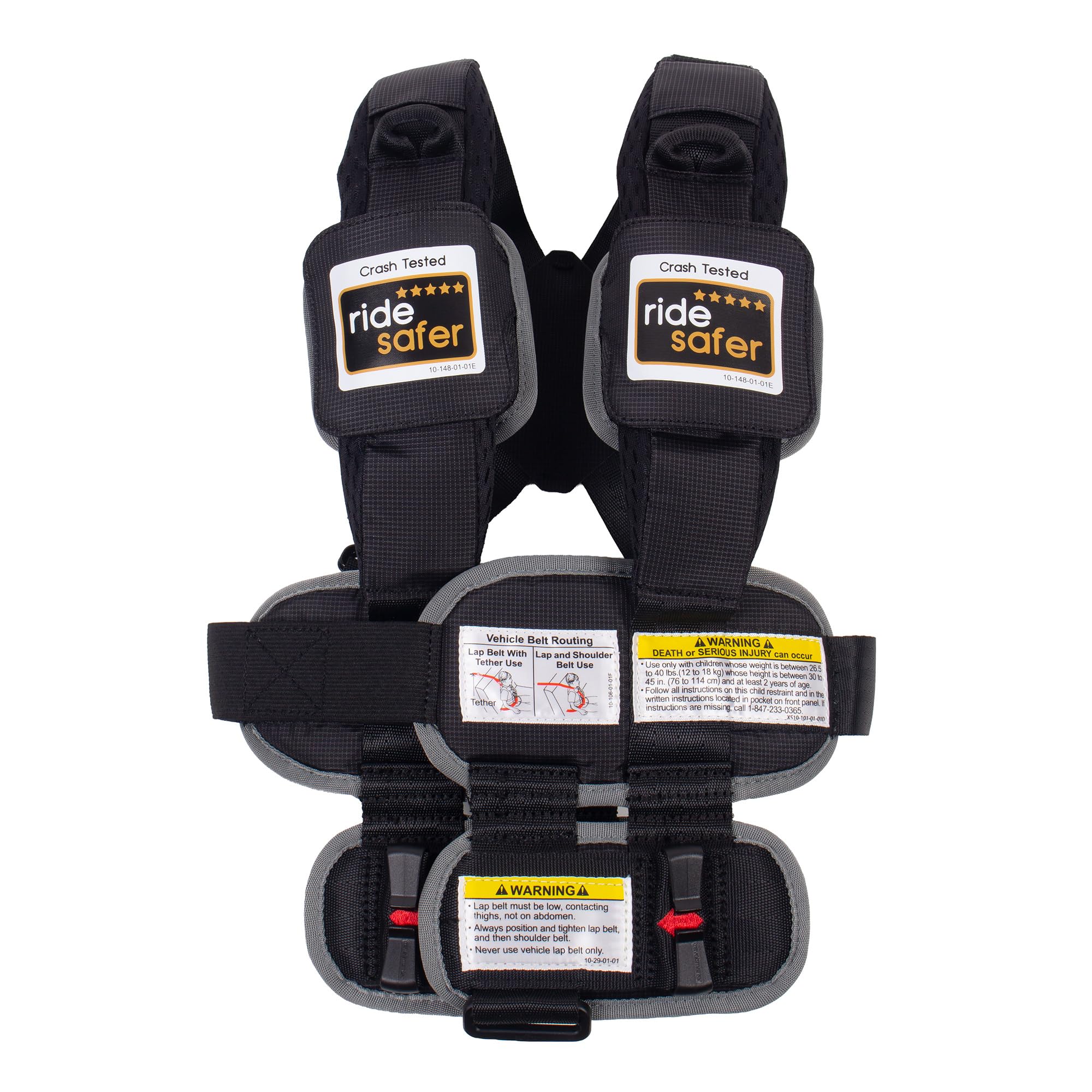
For arrivals where no car seat is waiting, this vest is the compact answer: it folds into a backpack and installs by seat belt in under a minute. It is not FAA approved for airplane use, so verify your in-flight plan separately. Children must fit 26.5-40 lb and tolerate the vest feel; within that range, it moves easily between cars.

Pros

  • Packs into a backpack at 2.23 lb, so it disappears into luggage until you reach the rental car.
  • Seat-belt installation is quick, which helps when moving between taxis and rental cars.

Cons

  • Buckle latch behavior can vary by vehicle, so a trial installation before travel is worth doing.
Our verdict

If an FAA-approved seat is already handling the flight, this vest fits the rental-car leg of the trip.

Check Latest Price

How to Choose

Weight and Carry Load

Listed weight is not the same as carry weight. An infant seat lifts by its handle, while a convertible seat has no natural carry point and gets more tiring with each hour in an airport.

Seats in the 17-24 lb range are fine on a luggage cart but hard to manage if you also have a child in your arms. If your route includes stairs, shuttle buses, or connecting flights, that weight is the first thing to reconsider.

FAA Approval vs. 'Airplane Ready'

FAA approval means the restraint has been certified to stay in position using only the aircraft lap belt. 'Airplane ready' and 'travel-friendly' are marketing phrases; the approval itself is printed on the seat's label or in the manual.

The safest step is to check that label before you book. The most packable vest-style restraint in this category is not approved for aircraft use, so it can be the right ground-transport tool and still be the wrong choice for the flight.

Seat Width and Folded Footprint

Airplane seats have a lap-belt path roughly 16 inches wide, so a narrow 16.9-inch seat slides in with less pressure against the armrests. Folded size matters for trunks and luggage carts, not for the flight itself.

A fold-flat claim can coexist with a 23-lb frame. The shape packs more neatly, but the weight is still with you gate to gate.

Harness and LATCH Usability

Tightening the harness and connecting LATCH are the two steps parents repeat daily. A seat that is technically secure but awkward to install often gets installed loosely by a parent in a hurry.

Look for a front-adjust harness and LATCH connectors that tighten without reaching behind the seat. These features determine whether the seat gets used correctly on a rushed morning.

Capacity and Lifespan

Infant-only seats cover roughly the first year; convertible seats can last a decade. The real cost per year depends on whether the seat will be outgrown by height before the weight limit.

Height limits are the hidden constraint: many babies reach the height limit while still under the weight limit, so check the shoulder-height mark rather than relying on the weight number.

Frequently Asked Questions