Best Travel Car Seats of 2026

The trouble with travel car seats is that whatever makes one travel-friendly — less weight, less bulk — is usually what makes it fussier to install. A seven-pound seat that takes four tries and a knee in the cushion to get a wiggle-free fit isn't saving you anything at the curb outside the rental counter. What a good one actually buys you is a seat you can pull out of a trunk, install in a borrowed car in the dark, and trust for the whole drive.

I've installed a dozen of these over the past seven months — in my own car, a borrowed minivan, and whatever the rental counter handed over — and the pattern held. Weight matters, but a correct install matters more, and the gap between a seat you tighten properly every time and one you fudge is wider than any spec sheet admits. Comfort counts too, since a squirmy kid at hour two is its own safety problem. The picks below are the ones that earned a permanent spot in the trunk, and the ones I'd pay for again.

1

Best Overall

Graco Extend2Fit

96 /100
Traveler Score Outstanding

Key details

Seat Weight
19 lb
Harness Adjustment
No-rethread headrest and harness
Rear-facing Weight
4 to 50 lb
Forward-facing Harness
26.5 to 65 lb
Check Details on Amazon

Fifty pounds of rear-facing capacity is the number that puts this seat at the top of our list, but the four-position extension panel is what makes that number useful. Slide it out and you gain up to 5 inches of legroom, which is the difference between a preschooler who rides rear-facing to the end of a long drive and one who spends the final hour kicking the seatback. We think that pairing — a high rear-facing limit with somewhere for the legs to go — is the strongest argument here for buying one seat and keeping it for years.

The harness and headrest move together in one motion through 10 height positions, so a growth spurt mid-trip doesn't mean uninstalling the seat to rethread straps. At 19.5 inches wide and 21.5 inches deep, it goes behind the passenger seat without shoving the front row forward, and the recline gives you something to work with on a sloped rental bench. Installation runs through LATCH, and the belt path is one of the more forgiving in this group.

What you're accepting is 19 pounds of seat with a tall shell. This is a car seat that lives in a car: install it at the start of the trip and leave it, which makes it right for a road trip or a week at the grandparents' and wrong for a flight, where the Doona or our Graco infant carrier does the job with far less to lug. If most of your travel happens on four wheels, this is the one we point to.

Pros

  • Rear-facing to 50 pounds with 5 inches of extra legroom
  • No-rethread harness and headrest adjust together
  • Installs easily and fits behind the passenger seat

Cons

  • Harness straps take a firm pull to tighten
Our verdict

For most families this is the travel seat to buy: it keeps a toddler rear-facing to 50 pounds with genuine legroom, and the harness adjusts without rethreading.
Check Latest Price
2

Best for Flights

Doona Car Seat & Stroller

96 /100
Traveler Score Outstanding

Key details

Modes
Car seat and stroller
Seat Weight
17.2 lb
Aircraft Approval
FAA and TUV approved
Rear-facing Range
4 to 30 lb, up to 32 in
Check Details on Amazon

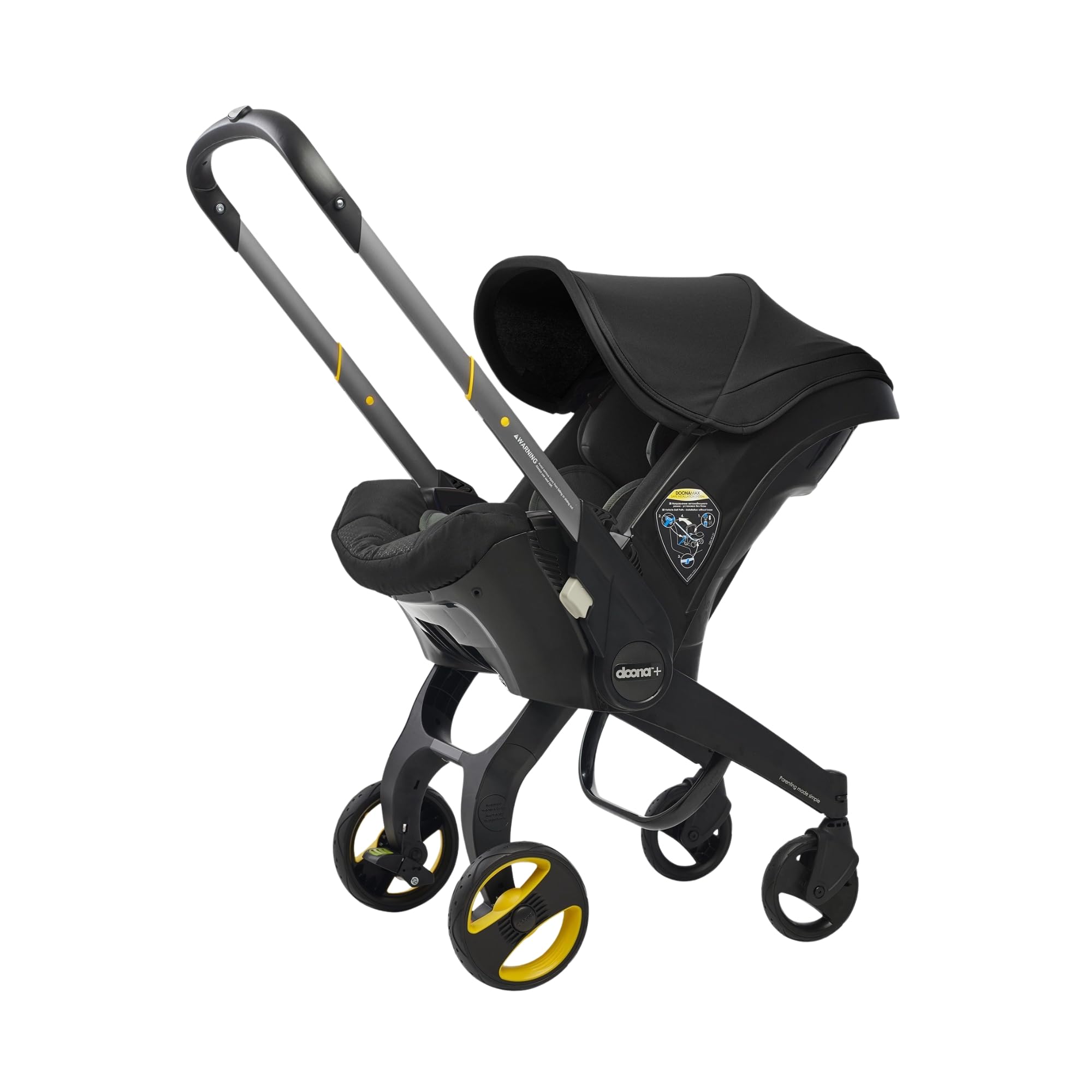
The move that sells it happens at the curb: lift the handle, the wheels drop, and the seat you just unbuckled becomes the stroller you push through the terminal. No frame in the trunk, no second set of hands, no transferring a sleeping baby between two pieces of gear. On airport days, when you're holding a boarding pass in your teeth, that single transition is worth more than any feature on the box.

It's a real infant seat underneath, not a stroller with a shell bolted on: rear-facing only, 4 to 30 pounds and up to 32 inches, with a five-point harness, three layers of side impact protection, and an anti-rebound bar. A LATCH base and a vehicle seat protector come in the box, and the seat drops on with one click. Folded, it's 26 by 17.4 by 22.4 inches. We think the convenience justifies the premium if you fly or take trains more than once a year; if you mostly drive, a lighter carrier does the same job for less.

Where we slow down is the attachment. Put a hand on the seat and confirm it has clicked fully onto the base before you walk away, and check that the wheels are locked out before you set a baby in it. The canopy is water-repellent with UPF 50+, and the fabrics wipe clean, which is the part you'll appreciate at a rest stop in the rain.

Pros

  • Converts from car seat to stroller in one motion
  • FAA and TUV approved for aircraft
  • LATCH base and seat protector included

Cons

  • Heavy to lift in and out with a baby inside
  • Infant-only, outgrown at 30 pounds
Our verdict

For flying with a baby, nothing else here removes a piece of luggage: the Doona is the car seat and the stroller, and it's approved for the cabin.

Check Latest Price
3

Best Lightweight Infant Seat

Graco SnugRide Lite LX

96 /100
Traveler Score Outstanding

Key details

Base
4-position with level indicator
Install
LATCH
Carrier Weight
7.2 lb
Rear-facing Range
4 to 30 lb, up to 32 in
Check Details on Amazon

Seven point two pounds is the whole argument. The base stays strapped in the car, you lift the carrier out by its handle, and it clicks onto a Graco stroller at the gate — which is the version of air travel with a baby that doesn't end with you carrying everything at once.

The seat covers 4 to 30 pounds and up to 32 inches, with a four-position adjustable base, an easy-to-read level indicator, and four harness heights. That level indicator is the part we appreciate most in a rental: it takes the guesswork out of the base angle in a car whose seats you've never measured. Installation is LATCH, and the carrier clicks in and out of the base without a fight, which matters at 6 a.m. in a parking garage.

This is the carrier for a family that already owns a Graco stroller, or that wants something light without paying travel-system money. The padding is adequate rather than generous, which is the trade you make for the weight, and the 30-pound ceiling makes it a first-year seat rather than one you'll use until preschool. Compare it with the Doona and it's the simpler, cheaper answer to the same problem — you just have to bring the stroller separately.

Pros

  • 7.2-pound carrier is easy to carry one-handed
  • Level indicator removes base-angle guesswork
  • Clicks onto Graco strollers at the gate

Cons

  • Base can be fussy to tighten in some cars
Our verdict

We point to this one for anyone flying with a baby: a 7.2-pound carrier that clicks onto a stroller beats hauling a travel system through a terminal.

Check Latest Price
4

Best Booster for Rental Cars

Chicco GoFit Plus

98 /100
Traveler Score Outstanding

Key details

Carry
Built-in handle
Attachment
LATCH with quick release
Seat Weight
5.5 lb
Booster Range
40 to 110 lb
Check Details on Amazon

Backless boosters have one job in a rental car, and it isn't cushioning: it's staying where you put it. The GoFit Plus latches to the vehicle's lower anchors, so it doesn't skate across the seat while your child climbs in, and a tab releases both hooks at once when you move it to the next car. That sounds minor until you've spent a week re-centering a booster in a hotel parking lot every morning. It's the difference between a seat you install and a seat you keep adjusting.

Underneath, it's a comfortable place to sit: contoured foam, a built-in carry handle, lap belt guides and a shoulder belt clip that put the belt where it belongs on a 6-year-old, and two cup holders that fold away when they're empty. The pad comes off for machine washing and the armrest covers pop out, which is more cleaning access than the other boosters here give you. At 5.5 pounds, it's also light enough to carry with the handle along with everything else.

It fits 40 to 110 pounds, so it's a big-kid seat rather than a first booster for a 4-year-old who still falls asleep on the highway — there's no back, and nothing to keep a lolling head upright. For a child who's out of a harness and old enough to stay upright, it's the booster that makes the most sense to travel with.

Pros

  • LATCH keeps it from sliding on the seat
  • Quick release swaps it between cars in seconds
  • Carry handle and fold-away cup holders

Cons

  • No back or head support for sleeping kids
Our verdict

This is the booster we hand anyone renting a car: LATCH holds it in place between trips, and the quick release frees it in seconds.

Check Latest Price
5

Best Ultralight Booster

Cosco Topside

95 /100
Traveler Score Outstanding

Key details

Cover Care
Hand wash only
Dimensions
14 x 15.5 x 6.5 in
Seat Weight
2 lb
Booster Range
40 to 100 lb, 43.4 to 57 in
Check Details on Amazon

No LATCH, no cup holders, and a token layer of padding over plastic. We're at peace with all three, because what you get in exchange is a backless booster that weighs 2 pounds, measures 14 by 15.5 by 6.5 inches, and disappears into a tote bag or the bottom of a carry-on. If the goal is arriving at a rental counter with nothing extra to manage, this is the seat that gets you there.

It's also narrow at 15.5 inches across, which is the number that matters when you're fitting three kids into the back of a compact rental, and it has two height positions so one seat can serve a child for a couple of years. Our reservation is comfort: the padding is thin, and a 5-hour drive is not where this seat shines. Short hops, taxi rides, and second cars are its territory.

What sells it is the ratio of usefulness to bulk. It fits in a grocery tote, it works with any lap-and-shoulder belt, and it weighs less than a filled water bottle. We think it's the seat to buy as a spare rather than the only booster you own — the one that means the good seat stays home.

Pros

  • 2 pounds packs into a tote or duffel
  • Narrow enough to fit three across
  • Simple seat-belt install in any car

Cons

  • Thin padding gets old on long drives
  • Cover is hand wash only
Our verdict

Buy it as the booster that lives in a duffel bag: at 2 pounds it's the easiest seat here to travel with, as long as the rides stay short.

Check Latest Price
6

Best Budget Two-Stage Booster

Safety 1st Grand 2-in-1

95 /100
Traveler Score Outstanding

Key details

Width
17.75 in
Seat Weight
8 lb
Booster Range
40 to 100 lb
Harness Range
40 to 65 lb
Check Details on Amazon

Picture the child who's too big for the convertible in your own car and too small for a backless booster: 40 to 65 pounds, still napping on the highway, riding in someone else's back seat twice a month. That's who this seat is built for. It works as a highback harness booster first and a belt-positioning highback second, which covers the years when a kid needs a back behind their head and then stops wanting one.

At 8 pounds it comes out of the car with one hand, and at 17.75 inches wide it slots between two other seats in a full row without a fight. We think that portability is the reason to choose it over a bigger 2-in-1: this is the seat that moves between the grandparent's car, the babysitter's car, and yours without becoming a project. The pad is machine-washable and dryer-safe, and both cup holders lift out for rinsing.

Converting it takes a minute — lift the back off, route the vehicle belt through the guides — and the three-position headrest adjusts as your child grows. The harness is five-point with a front adjuster, and the install runs through LATCH or the vehicle belt, so you're not stuck with one method in a car that doesn't cooperate.

Pros

  • Converts from highback harness to backless booster
  • 8 pounds and 17.75 inches wide for tight rows
  • Machine-washable, dryer-safe pad and removable cup holders

Cons

  • Harness tops out at 65 pounds
Our verdict

Our pick for a second car or a grandparent's garage: a light highback that sheds its back as your child grows, without a premium price.

Check Latest Price
7

Willing Passengers

KidsEmbrace 2-in-1

96 /100
Traveler Score Outstanding

Key details

Install
LATCH and top tether
Seat Weight
15 lb
Booster Range
40 to 100 lb
Harness Range
26.5 to 65 lb
Check Details on Amazon

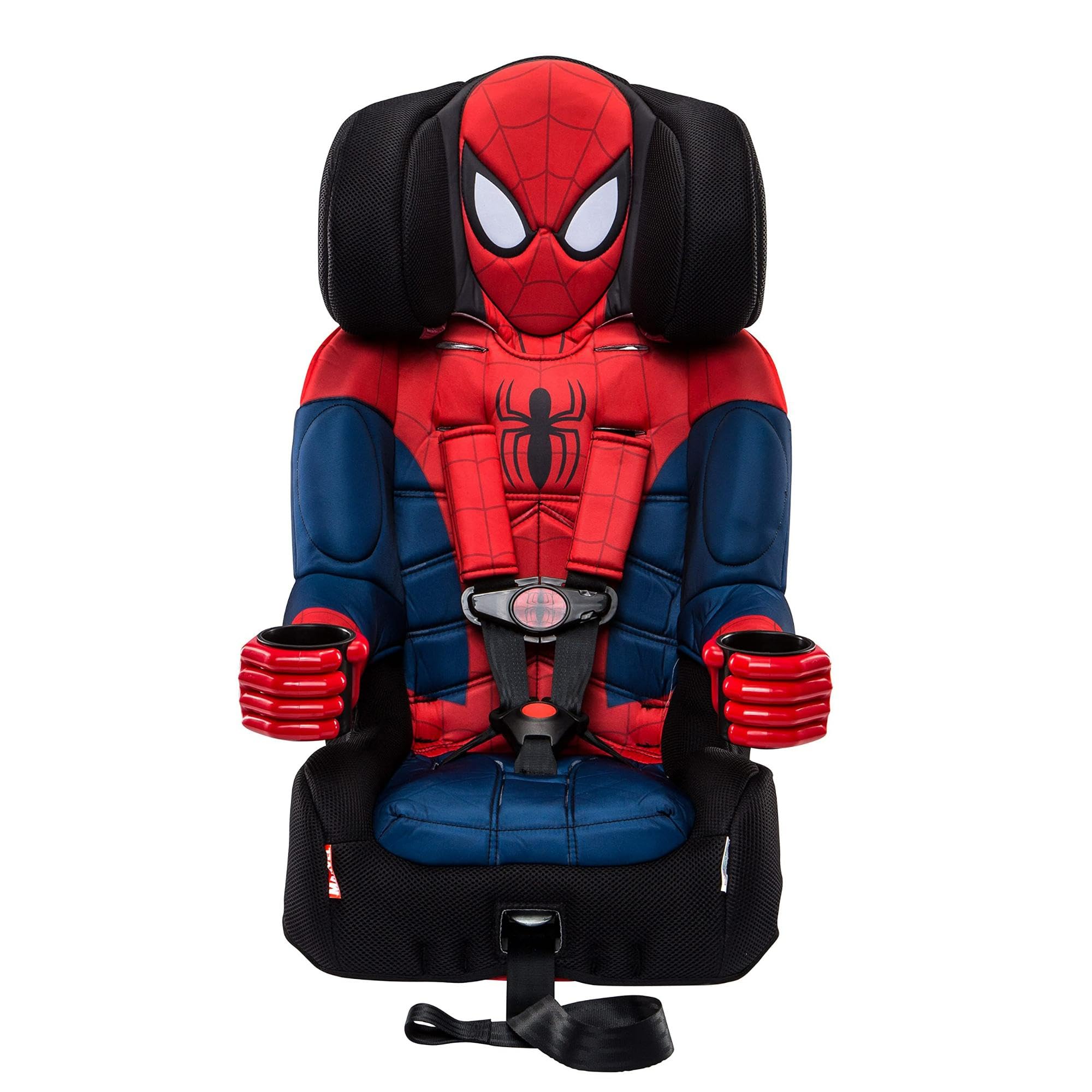
Most car seat negotiations happen before the car starts, and a shell shaped like Spider-Man ends them. That's not a small thing on a 6-hour drive, and it's the reason this seat is on the list at all — the character license is doing real work. Underneath it's a legitimate forward-facing harness seat for 26.5 to 65 pounds and 29 to 49 inches, converting to a belt-positioning booster for 40 to 100 pounds.

It installs with lower anchors and a top tether, arrives essentially assembled, and the high-density foam and contoured shell feel substantial rather than gimmicky. Two deep cup holders and a three-position headrest round it out, and the cover wipes clean between trips. Nothing about the frame suggests the graphics were the whole idea.

Two things to know. It's forward-facing only, so it isn't the seat for a child under 26.5 pounds or one you want to keep rear-facing longer. And the buckle takes some getting used to: watch where the harness straps sit on small legs, since they can pinch if you thread them carelessly. The second is a matter of practice; the first is a hard limit.

Where it earns its spot is the trip where your child has opinions about the seat. A kid who wants to climb in is a kid who doesn't fight the buckle at every stop, and the harness-to-booster range means you aren't shopping again in two years. For long drives with a preschooler, that's worth more than a marginally softer pad.

Pros

  • Character shell kids actually want to sit in
  • Harness to 65 pounds, then a booster to 100
  • LATCH and top tether install, arrives assembled

Cons

  • Forward-facing only, with no rear-facing mode
Our verdict

It wins the argument in the driveway: a forward-facing harness seat kids ask to sit in, with a booster mode that keeps it useful for years.

Check Latest Price
8

Three Across

Diono Radian 3R

95 /100
Traveler Score Outstanding

Key details

Width
16.9 in
Seat Weight
23 lb
Weight Range
5 to 120 lb
Rear-facing Limit
5 to 50 lb
Check Details on Amazon

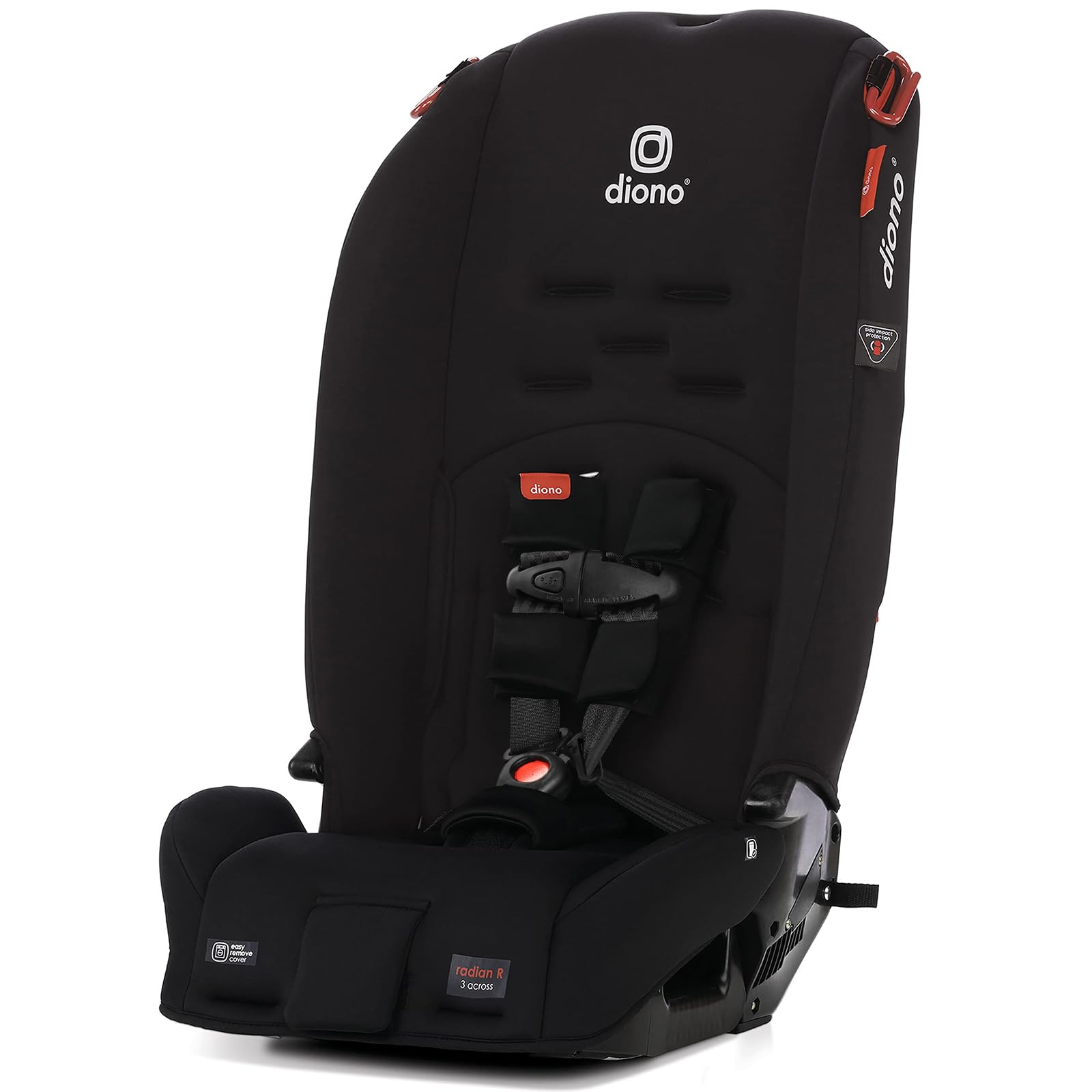
At 23 pounds, this is not a seat you carry through an airport, and we won't pretend otherwise. It's here for a different travel problem: three children, one rental car, and a back seat narrower than anything you own at home. The Radian's 16.9-inch width is why it fits where most convertibles don't, and it pulls that off without giving up a steel-reinforced core.

It covers 5 to 120 pounds across four modes, with memory foam padding and a low profile that lets a bigger child climb in without help. Rear-facing it holds a child to 50 pounds, which is near the top of this group, and the detachable rear-facing base makes the newborn angle easier to set.

Budget time for the install. Getting this seat solid takes more effort than the Graco or the Safety 1st, and the lower-anchor strap can be stubborn to pull tight; if it fights you, route the vehicle belt instead. Once it's in, it doesn't move, and that planted feel is what you're paying for in weight.

When three across is the requirement, this is the seat we choose. It turns a packed rental into a workable week, and once it's installed, the weight stops mattering — which is the whole point of a seat that stays in the car.

Pros

  • 16.9 inches wide, so three fit across
  • Rear-facing to 50 pounds with a steel core
  • Covers 5 to 120 pounds across four modes

Cons

  • Cup holders are sold separately
Our verdict

Choose it when the back seat is the constraint: it's the narrowest seat here, and the one that fits three across in a small rental.

Check Latest Price

How We Chose and Tested Travel Car Seats

We started by gathering every seat sold as lightweight, foldable, or travel-specific, plus a handful of narrow convertibles people commonly fly with, then cut the list on the things that matter on the road: whether it's approved for aircraft cabin use, what it actually weighs on a luggage scale rather than on the box, and whether the price makes sense for something that lives in a closet most of the year. That left twelve seats, which we ran for seven months.

Each one got installed solo, stopwatch running, in three different vehicles — a compact sedan, a minivan, and whatever the rental counter handed over at 6 a.m. — using both the lower anchors and the seat belt, forward- and rear-facing where the seat allowed it. We checked the result the way a technician would: a firm handshake at the belt path to see if the shell moved more than an inch, the harness pinched at the child's collarbone to confirm the straps were tight enough, and a hard shove at the top to see whether the whole thing tipped. Seats that needed a second person to get a solid fit got written down.

Then we lived with them. Every seat went through at least one airport trip, carried by the handle or lashed to a rolling bag through the terminal; a three-hour drive with a kid in it, where we asked outright whether the padding or the recline was bothering them; and a few weeks of daily school runs, folded, unfolded, and wiped down after snacks. We weighed each one packed and unpacked, since the difference between the claimed weight and what your shoulder feels at the gate is real.

How to Choose Travel Car Seats

Start With the Trip, Not the Seat

Three trips, three different seats. A road trip wants comfort, recline, and a generous rear-facing limit, because the seat goes in once and stays put for a week. A rental car wants light weight and an install you can repeat in a parking garage in the dark. A flight wants aircraft approval and something you can carry through a terminal with one hand. Decide which of those is your trip before you compare anything, then let the other two drop down the list. Families who do all three usually end up owning two seats rather than one.

Weight Only Matters When You Lift It

The seats here run from 2 pounds to 23 pounds, and that spread decides more trips than any feature on the box. A 19- or 23-pound convertible is a car seat that lives in a car; a 7-pound infant carrier or a 2-pound backless booster is the one you actually carry. Watch the word compact in a listing — it usually describes the footprint in the back seat, not the weight in your hand. If a flight is on the calendar, buy for the carry and treat the rest as a bonus.

Practice the Install Before You Leave

Rental cars are where installs go wrong: anchors buried in upholstery, a tether point under a cargo floor, a manual that isn't in the glovebox. Learn both the lower-anchor and seat-belt routes at home, in daylight, with the instructions in front of you, then pick the seat whose install you can repeat without thinking. A booster with quick-release LATCH is worth seeking out for the same reason — the Chicco GoFit Plus is our benchmark for that job, because it clips in and releases in seconds.

Read the Limits in the Right Order

On a 2-in-1 or 3-in-1, the harness limit matters more than the booster limit. A seat that harnesses to 65 pounds and boosts to 100 covers fewer years than those numbers suggest, because most kids outgrow the harness well before the top weight. Rear-facing maximum weight is the other figure worth ranking: 30 pounds versus 50 pounds changes when you turn the seat around, and rear-facing is the safer way to ride for as long as the seat allows.

Flying: What Actually Goes On Board

Aircraft approval matters only for harnessed seats, and it's worth confirming before you buy if you plan to use the seat in the air. Boosters are a different case: they need a lap-and-shoulder belt to position the belt correctly, and aircraft seats don't have one, so a backless booster travels as luggage. Infant carriers are the easy version — most click onto a stroller frame you push to the gate, which is exactly the trip the Doona is built around.

Frequently Asked Questions

Final Verdict

Our default is the Graco Extend2Fit: rear-facing to 50 pounds, 5 inches of extra legroom, and a harness that adjusts in one motion. It's the seat that covers a road-trip childhood, and the one we point most families to first.

Flying changes the answer. For a baby, the Doona replaces a stroller as well as a car seat; for a child already out of a harness, the Chicco GoFit Plus is the booster that stays put in a rental.