7 Best Wireless Earbuds for Small Ears of 2026: Fit That Stays Put

Finding wireless earbuds for small ears means weighing bud mass, tip range, and shell shape — because 'mini' on the box doesn't guarantee a secure fit.

Finding earbuds that stay in small ears depends less on the word 'mini' on the box than on nozzle shape, bud weight, and the tips included. A 3.7-gram shell can vanish in your ear, while a heavier body can work loose after an hour. The same list price can go either way.

The biggest trade-off is feature bulk. Active noise cancellation needs larger drivers, bigger batteries, and extra antennas, all of which add mass to the part that sits in your ear. For small-ear buyers, that mass often matters more than the feature itself. A lighter, sealed fit will beat a heavier, quieter one if comfort is the reason you are shopping.

Open-ear clip earbuds sidestep the problem by leaving the canal untouched, but they trade noise isolation and bass for situational awareness. Before choosing, decide what your travel day actually needs: sealed privacy on a plane or surrounding sound in a new city.

2

Best Budget ANC

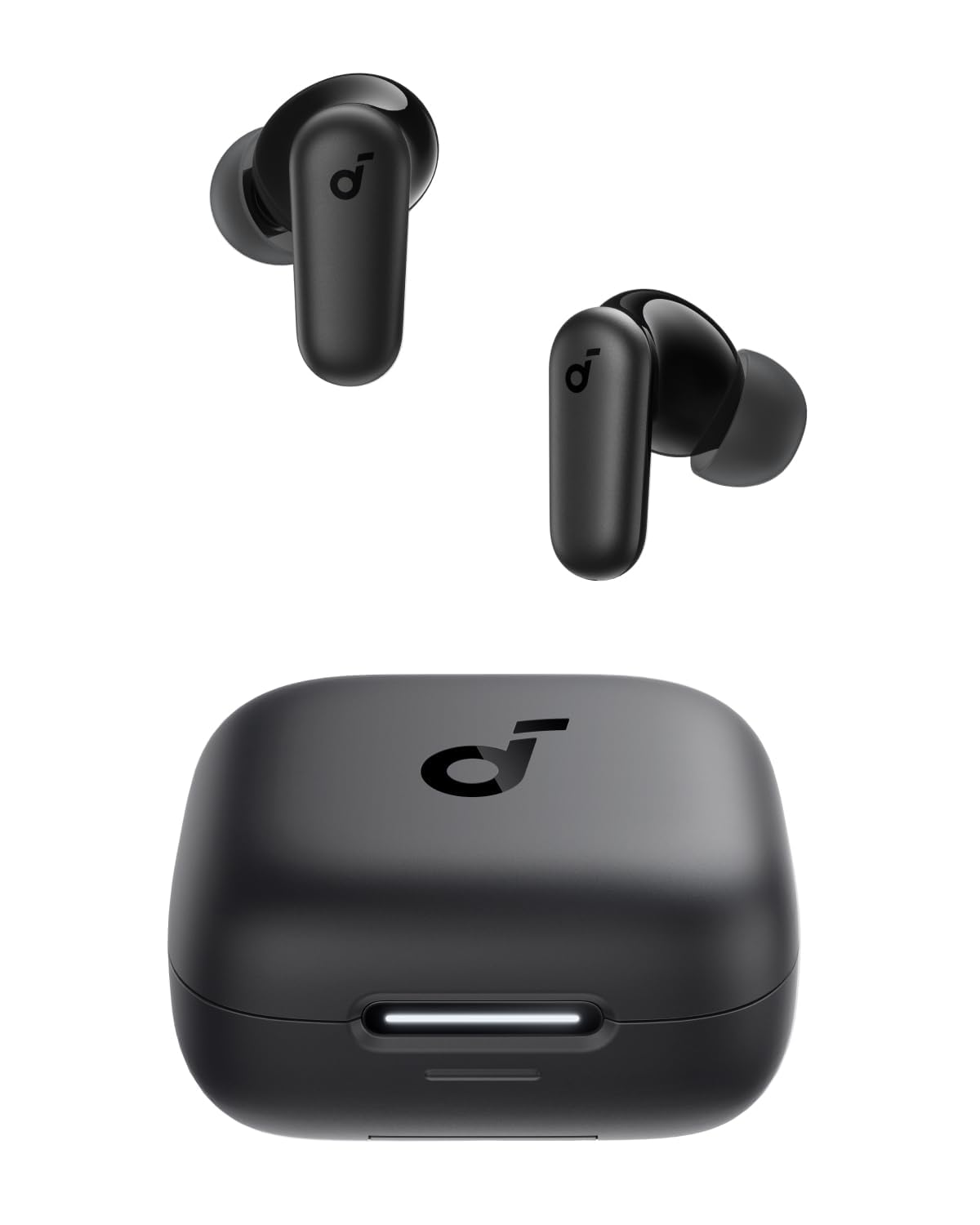
Soundcore P30i

89 /100
Traveler Score Excellent

Key details

Bluetooth
5.4
Form Factor
In-ear
Battery Life
6h ANC, 25h total
Ear Tip Sizes
Multiple sizes
Check Details on Amazon

The Soundcore P30i brings active noise cancellation, multipoint Bluetooth, and a 45-hour case total to a budget-friendly price. That combination puts it ahead of the fit-focused option in this set for anyone who wants to quiet a commute more than they want the smallest possible shell.

Sound quality is the strongest part of the package: a full-bodied tuning that stays composed at higher volumes. The 10mm drivers keep bass present without swallowing vocals, and the IP54 rating adds enough moisture protection for daily commutes. The charging case doubles as a phone stand, which is useful on a train tray table.

For office days, the multipoint connection keeps a laptop and phone paired at once, and app users can shape the sound with EQ. Commuters who move between phone and laptop will get the most from this setup. The shell is less forgiving for very small ear canals than the fit-first choice in this set, so buyers who have struggled with standard in-ear shapes should treat that as a boundary rather than a reason to skip this model. Anyone who wants an unsealed, pressure-free fit should pick an open-ear clip model instead.

💡 If one bud seems silent after a charge cycle, reseat it in the case until the charge light confirms contact.

Pros

  • Active noise cancellation tames steady commute noise at a budget-friendly price.
  • Sound quality is full-bodied, with bass that doesn't swallow vocals.
  • Sturdy build and a phone-stand case add everyday convenience.
  • Strong value for money, with multipoint, app EQ, and a phone-stand case included.

Cons

  • Battery runtime with ANC enabled drops to about 6 hours per charge.
  • ANC softens but does not remove loud chatter or sharp clatter in transit.
  • Multipoint switching can drop one side until the bud reconnects.
Our verdict

Commuters who want budget-priced ANC and can accept a standard in-ear shell get a strong travel companion here; very small canals should start with the fit-first option in this set.

Check Latest Price
3

Best Open-Ear Fit

TOZO OpenEarRing

89 /100
Traveler Score Excellent

Key details

Bluetooth
5.4
Form Factor
Open-ear clip
Battery Life
10h bud, 40h total
Ear Tip Sizes
None
Check Details on Amazon

TOZO's OpenEarRing uses a 5.1g open-ear clip that wraps around the outer ear instead of plugging the canal. That layout leaves glasses frames alone and avoids the pressure that in-ear tips create inside the ear. The low shell weight keeps the clip from pulling on the ear, even during longer sessions. The 40-hour case covers multi-day trips, and the IPX5 rating handles rain and sweat. The case's digital LED display shows remaining battery at a glance.

Sound quality is good for an open-ear design, with enough presence for podcasts, calls, and everyday music. Bass is lighter than sealed in-ears, as expected from an open design, but the open soundstage keeps voices clear. Podcasts and audiobooks remain easy to follow.

The OpenEarRing is the open-ear alternative to the top in-ear pick in this set. It suits glasses wearers, people who find tips painful, and travelers who need to hear announcements while walking through a terminal. The clip sits on the outer ear, so temple arms pass underneath without pressure. The open ear canal leaks sound and lets cabin noise in, so this is not ideal for flights. For all-day wear, the lack of in-ear pressure is the main reason people with sensitive canals can keep listening.

💡 If the buds drop their connection to each other, returning both to the case for a few seconds restores the link.

Pros

  • Clear, balanced sound for an open-ear design
  • Clip holds its position during normal movement
  • Pressure-free wear that leaves glasses frames alone
  • Long battery life and quick case recharging

Cons

  • Charging consistency can vary between units over time.
  • The open-ear hook can feel less secure on very small ears than a sealed in-ear bud.
Our verdict

The OpenEarRing is the budget-friendly open-ear clip for glasses wearers and anyone whose ear canals reject in-ear tips.

Check Latest Price
4

Best High-Rated Budget All-Rounder

JLab Go Air Pop+

91 /100
Traveler Score Outstanding

Key details

Bluetooth
5.3
Form Factor
In-ear
Battery Life
9h bud, 35h total
Ear Tip Sizes
Multiple sizes
Check Details on Amazon

The Go Air Pop+ stretches its battery story further than typical at this price: 9 hours per charge plus 26 hours in the case, with an app EQ that lets you tune the sound from three presets. It pairs that endurance with a mainstream in-ear shell, a different approach from the ultra-compact fit specialist at the top of this list.

Sound quality is well above the price category, with a warm tuning that works for music and podcasts. The case is pocketable, the buds are light, and the controls are simple enough for daily use. Build quality feels sturdy for a low-cost set, and a quick-charge feature adds convenience when you need a boost before heading out.

This is a good fit for budget-focused listeners who want long battery, app EQ, and a widely tolerated shape, and who are willing to test multiple tip sizes. If your ear canals are at the small end and generic in-ear shapes have never stayed put, the top pick's 3.7g shells are a more secure starting point. It also skips ANC, so the seal has to do the isolating work.

Pros

  • Battery life totals 35+ hours with the case, and quick charging adds a boost in a pinch.
  • Sound quality is very good for the price, with app EQ to shape the tuning.
  • Build quality feels sturdy, matching more expensive sets at a lower price.
  • Everyday performance stays consistent, so it is easy to grab and go.

Cons

  • Bluetooth can drop in certain environments and may require re-pairing.
  • Charging can vary between units, so verifying both buds charge early is worthwhile.
Our verdict

The Go Air Pop+ is the budget all-rounder for buyers who want endurance and EQ control alongside a mainstream shell.

Check Latest Price
5

Best Compact Premium

Sony WF-C510

89 /100
Traveler Score Excellent

Key details

Bluetooth
5.3
Form Factor
In-ear
Battery Life
11h bud, 22h total
Ear Tip Sizes
Check Details on Amazon

Sony's light, compact in-ear pairs a low-profile shell with phone-laptop multipoint and a five-minute quick charge that restores an hour of playback. That combination gives it an edge over the featherweight fit leader for anyone who juggles a work laptop and a personal phone, while still sitting close enough to the ear canal for small-ear comfort.

Each bud lasts about eleven hours, and the case extends total playback to roughly twenty-two. The ambient sound mode keeps announcements and traffic audible, which suits city walks and office use. Battery stamina is a real strength for daily wear, and the quick charge is useful before a commute.

There is no ANC, so the passive tip seal does the isolating; quiet rooms and cafés are fine, while airplane cabins are not. The 22-hour case total is shorter than the 40-hour-plus figures elsewhere, so this is a daily-driver option rather than a weekender. For small ears that cannot keep bulky designs seated, the Sony delivers a comfortable, stable fit, and buyers who can accept occasional multipoint stalls or uneven bud charging will get the most value.

💡 Keep the Sony paired to both devices; if a multipoint switch stalls, toggle Bluetooth off and on on the active device.

Pros

  • Clear, balanced sound keeps vocals and instruments distinct without harsh treble.
  • Compact, low-profile shell fits smaller ears securely without constant adjustment.
  • Multipoint lets the earbuds switch between phone and laptop without opening settings.
  • Five-minute quick charge adds an hour; a full charge lasts about eleven hours.

Cons

  • Multipoint handoffs can stall when a phone and laptop are both connected.
  • A bud can lose charge unevenly in occasional units, so test the pair early.
Our verdict

Sony's compact WF-C510 is the runner-up for small ears that want a low-profile fit, multipoint, and quick charging without needing ANC.

Check Latest Price
6

Best for Tiny Ear Canals

Back Bay Tempo 30

88 /100
Traveler Score Excellent

Key details

Bluetooth
5.0
Form Factor
In-ear
Battery Life
8h bud, 32h total
Ear Tip Sizes
6 sizes
Check Details on Amazon

Back Bay's Mini separates itself from the lighter top pick in this set by putting fit adjustment first: six ear-tip sizes and a compact shell. The low-profile housing sits close to the ear, which helps during a commute, a workout, or a long day at a desk. It is not the lightest earbud here, but the tip range gives it a wider fit envelope than typical competitors.

Sound is clear and balanced for everyday listening, and the IPX7 rating covers sweat and rain. The 8-hour bud battery with a 32-hour case handles all-day use without frequent top-ups, and the build feels solid for the price. The small shell also works well under a hat or tight hood, where bulkier earbuds can catch on fabric.

This is for listeners with narrow ear canals who have had generic tips loosen after a few steps. Quality control is the caveat: individual units can develop channel imbalance or charging inconsistencies, so testing both buds during the return period is wise. Because six tips are included, you can also mix sizes between ears — useful when ear canals are not identical. For anyone who has had to choose between a loose seal and constant pressure, this is a targeted solution.

💡 Try all six ear-tip sizes before judging the fit; the right tip changes the seal more than any other adjustment.

Pros

  • Six ear-tip sizes make a secure small-ear fit far easier to find.
  • Sound is clear and balanced for everyday listening.
  • The compact shell supports comfortable all-day wear.
  • Battery life covers full workdays without frequent top-ups.

Cons

  • In loud environments, isolation comes only from the ear-tip seal
  • Some ear shapes may still feel a loose grip despite the six tip options.
Our verdict

Narrow-ear buyers who value fit and sweat resistance get a practical everyday earbud with a wider tip range than typical competitors.

Check Latest Price
7

Bass-Focused Listeners

JBL Vibe Beam

88 /100
Traveler Score Excellent

Key details

Bluetooth
5.2
Form Factor
In-ear
Battery Life
8h bud, 24h total
Ear Tip Sizes
Check Details on Amazon

Deep-bass JBL tuning gives the Vibe Beam a warm, punchy sound that suits pop, hip-hop, and podcasts. The stick-closed shell follows JBL's familiar in-ear shape, and IP54 rated buds handle sweat and light rain. But for a small-ear buyer, this is a shape-confirmed purchase, not a blind buy: the housing can loosen in smaller canals, and the slimmer option in this set gives a more dependable seal. JBL fans who already know this shape sits tight can get strong bass and solid build for a mid-range price; anyone whose last earbuds slid out should look toward the compact fit leader instead.

Pros

  • Deep-bass tuning adds warmth and punch across pop, hip-hop, and spoken word.
  • Solid shell and IP54 rated buds handle everyday commutes and light workouts.
  • Mid-range price undercuts JBL's flagship line while keeping the brand's core sound.

Cons

  • Charging can be uneven between buds, so one side may run low before the other.
  • Bluetooth can drop out or ask for re-pairing while moving between devices.
Our verdict

Buy it when bass depth matters more than shell compactness and you want JBL's sound signature without the flagship price.

Check Latest Price
8

Beats Ecosystem Users

Beats Solo Buds

86 /100
Traveler Score Excellent

Key details

Bluetooth
Class 1
Form Factor
In-ear
Battery Life
18h bud, no case
Ear Tip Sizes
Check Details on Amazon

The Beats Solo Buds offer the smallest case in Beats' lineup, 18 hours of playback, and Fast Fuel's five-minute charge for an extra hour. For Apple ecosystem loyalists, pairing is familiar and the pocketable case slides into a coin pocket, but the audio leans treble-forward and the fit may not lock into smaller ear canals. That combination keeps this from being a top small-ear recommendation; it works best as a grab-and-go set for podcasts, calls, and short commutes rather than a fit-first everyday earbud.

Pros

  • Discounts can bring the price down to a more reasonable entry point for the Beats brand.
  • The smallest Beats case slips into a coin pocket and keeps the buds protected.
  • Fast Fuel adds an hour of playback from a five-minute charge, with 18 hours total.

Cons

  • No active noise cancellation, so commuter rumble and office chatter stay in the mix.
  • Charge-holding can vary between buds, so one side may need a top-up before the other.
Our verdict

Best when found at a discount as a secondary pair for Apple device owners who want a pocketable backup set.

Check Latest Price

How to Choose

Bud Weight and Shell Size

Every gram matters once a bud is in your ear. Heavier shells create more leverage, so a 3-gram bud can feel more stable than a 5-gram model with the same tip. Compact shells also avoid pressing on the outer ear, where most discomfort starts.

Think about how the bud sits on a travel day: walking through security, leaning back on a train seat, or checking a boarding gate. Low weight and a low profile mean fewer adjustments between flights.

Ear Tip Sizes

The tip seals the canal and anchors the nozzle. Too large creates pressure and works loose; too small breaks the seal and lets bass escape. More included sizes raise the odds that one matches your ear.

Treat tip count as a fit feature, not a spare-parts bonus. A secure seal also reduces the urge to raise volume in noisy places.

In-Ear vs Open-Ear

This is a form factor choice, not just a comfort choice. In-ear buds block outside noise and deliver fuller bass. Open-ear clip models leave the canal open for better awareness of traffic, announcements, and conversations.

Open-ear designs remove the canal from the fit equation, which helps glasses wearers and anyone who feels pressure after an hour. They leak sound and offer almost no isolation, so they suit city strolls more than quiet planes.

Real-World Battery

Battery numbers on the box are best-case. Noise cancellation, high volume, and multipoint drain the cell faster, and worn charging pins can stop delivering power before the buds wear out.

Plan for real-world runtime around 70-80 percent of the advertised figure. On a long haul, that means carrying a short USB-C cable and choosing a case that can deliver at least one full charge between stops.

Bluetooth Stability

Bluetooth version matters less than antenna tuning. A 5.3 chip in a compact body can still drop audio when the bud sits between your body and the phone, especially in a busy airport.

Multipoint adds convenience but can create audio hiccups when two devices are active. If you switch between phone and laptop, test the handoff during a call before relying on it for a work trip.

Water Resistance

Sweat and light rain are the realistic threats when you travel. IPX4 handles workouts and drizzle; IPX7 covers heavy downpours.

Water resistance is not a permanent state. Drops, heat, and repeated plugging degrade seals, so treat the rating as a buffer, not a license to submerge the case.

Frequently Asked Questions