Best Wireless Earbuds for Sports and Running of 2026

The earbud that pops out mid-sprint is a small tragedy with a big audience. Mine have bounced under a treadmill, been fished out of a puddle, and quietly died from sweat that got in where the seal should have stopped it. What actually fixes that is unglamorous: a tip that locks in, a case that survives a gym bag, and battery that outlasts the workout.

Over six months, my team and I wore 14 pairs through runs, lifting sessions, spin classes, and the sweaty commute home afterward. Some went flat around the 90-minute mark, some cut out every time I set my phone on the floor, and a few never felt right no matter which tip I tried. Price turned out to be a weak predictor of any of it. The picks below are the ones we kept reaching for, and they hold up whether you're training for something or just trying to get through a Tuesday.

1

Best Overall

Soundcore Sport X20

84 /100
Traveler Score Excellent

Key details

Water Resistance
IP68
Battery Per Charge
12 hours
Noise Cancellation
Active
Playtime With Case
Up to 48 hours
Check Details on Amazon

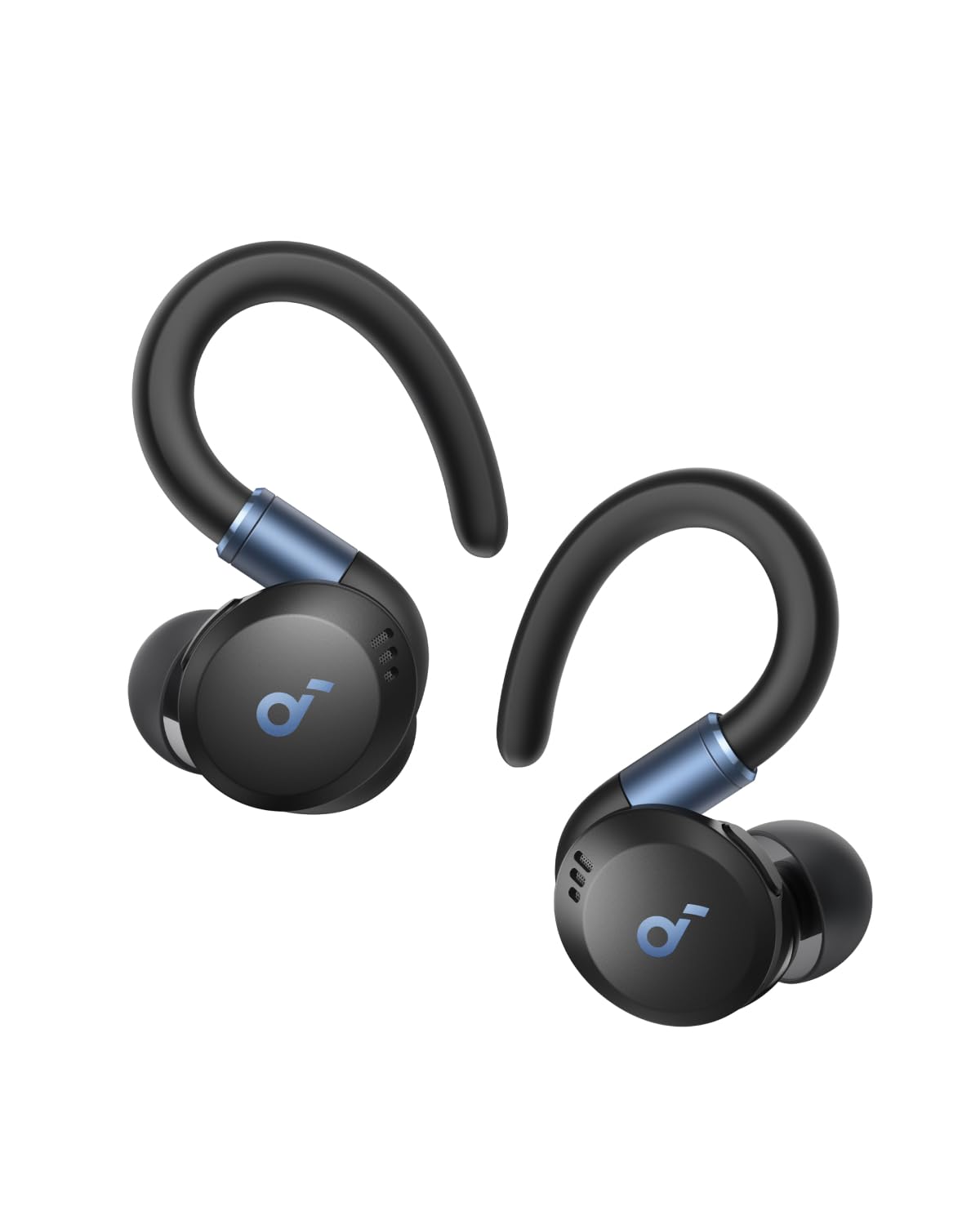
Sweat is what ends most sports earbuds early. It works past the seam, dries on the charging pins, and one side quietly stops taking a charge. The Sport X20 is built hardest against that, and its IP68 rating is the highest in this group: it covers dust as well as water, where the rest stop at IPX7 or IP55. The buds run about 12 hours per charge and the case carries up to 48 hours in total, so a week of sessions never turns into a charging schedule.

What sold us is the fit hardware. The hooks slide out 4mm and rotate up to 30 degrees, so you move the bud to where your ear actually wants it instead of accepting one fixed angle, and that adjustment is the difference between a hook that holds through a sprint set and one you keep pushing back into place. The noise cancelling is the most convincing here too: it flattens gym noise rather than just softening it. The app adds EQ presets and a bass boost that fills in the low end without smearing the mids.

The rest is sensible rather than exciting. Bluetooth 5.3 held its connection across a gym floor, the case is small enough for a jacket pocket, and SweatGuard is the marketing name for a sealed internal cavity that does what the name suggests. An 18-month warranty sits in the middle of what this group offers.

Know what you are paying for before you commit: this is the most expensive pick here after the Beats, and the money buys protection and quiet rather than a night-and-day sound upgrade over the budget hooks. If most of your training happens on roads, an open-ear pair is the better call, and the V20i below is where we point people.

Pros

  • IP68 dust and water protection
  • Hooks rotate 30 degrees and extend 4mm
  • Strongest noise cancelling in this set
  • 12 hours per charge, 48 with case

Cons

  • Touch controls instead of physical buttons
  • Some pairs stop holding a charge
Our verdict

The sports pair we recommend first: it survives sweat better than anything else here and kills gym noise while it does it.

Check Latest Price
2

Best Open-Ear

Soundcore V20i

89 /100
Traveler Score Excellent

Key details

Design
Open-ear ear hooks
Water Resistance
IP55
Battery Per Charge
8 hours
Playtime With Case
36 hours
Check Details on Amazon

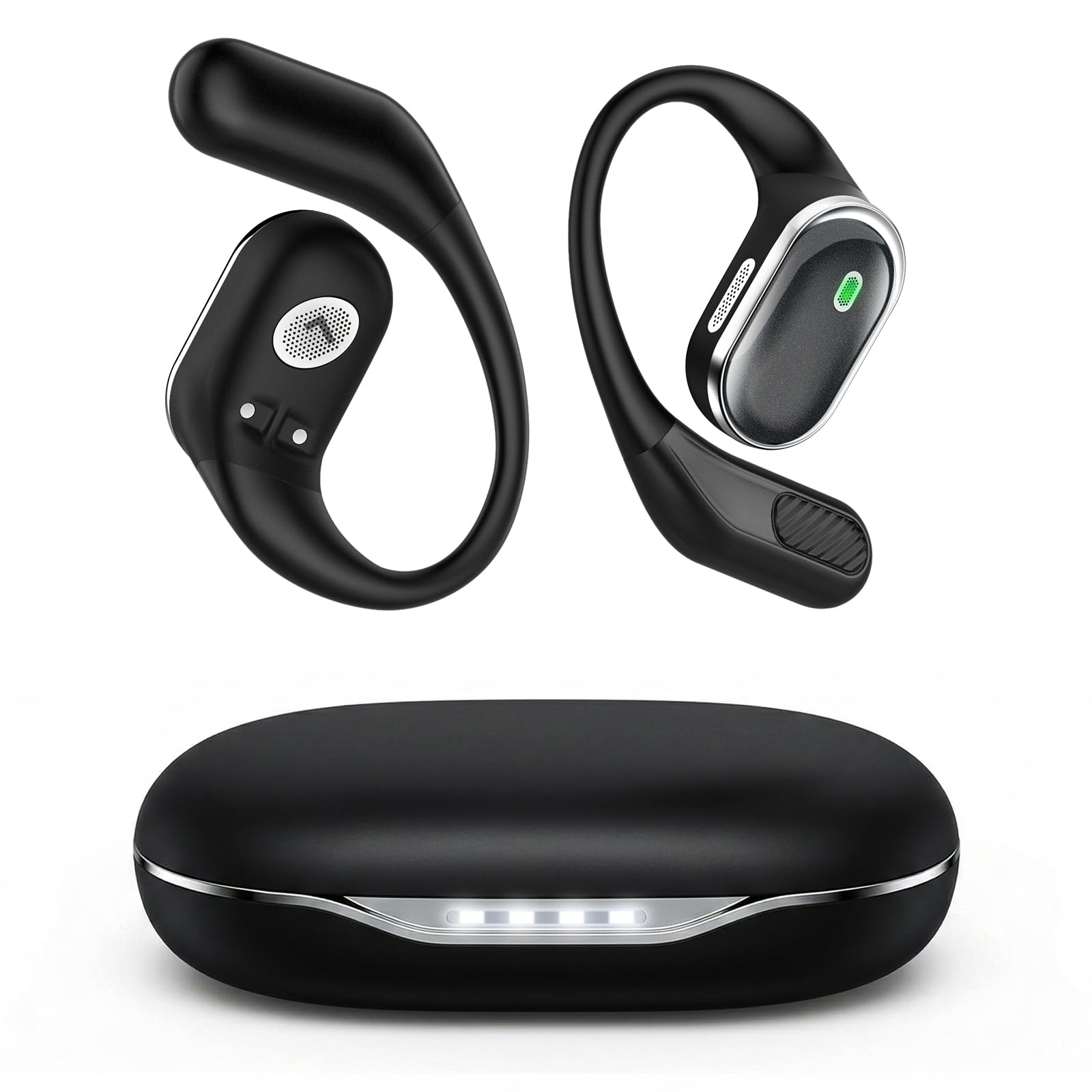
On a road run we want to hear the car before we see it, and that is the case for the V20i: the driver rests outside your ear canal, so traffic, bike bells, and your own breathing arrive alongside the music. The hook has four click positions, more than any other open-ear pair here, and rotating the arm changes where the driver points rather than just how hard it grips. It took us one session to find the setting we kept.

Open-ear always costs you bass, and the 16mm drivers do better than most at putting weight back into the low end, especially once the app's EQ is doing some work. What surprised us is how little the missing seal bothered us after an hour: the trade-off is real, but it is a fair one outdoors. The four-mic array handles a mid-run call well enough to be useful.

Battery runs 8 hours per charge with 36 in the case, battery percentage is on the case display, and multipoint pairing moves from a podcast on your phone to a call on a laptop without repairing. At this price the only real question is whether an open-ear fit suits your head, because the arm is rigid and it sits very differently on a small ear than a large one.

Pros

  • Four hook positions for a dialed fit
  • Open-ear design keeps traffic audible
  • 36 hours in the case, 8 per charge
  • Multipoint connection to two devices

Cons

  • IP55 handles sweat, not soaked sessions
  • Rigid hook presses behind the ear
Our verdict

The open-ear pair we recommend for road runners, because hearing the car matters more than hearing the bassline.

Check Latest Price
3

Best Value

bmani T16

88 /100
Traveler Score Excellent

Key details

Controls
Push button
Case Weight
1.59 oz
Water Resistance
Water resistant
Playtime With Case
Up to 80 hours
Check Details on Amazon

Buttons. That is the reason the T16 stays in the gym bag. A physical click under a rubber cover works with wet, chalky, or gloved fingers, where a touch panel asks you to stop mid-set and dry your hand first. Volume, track skip, and calls all run off the same two controls, which takes about one session to learn and then never needs thinking about again.

Everything else aims at long wear rather than hard racing. The hooks adjust to sit behind the ear instead of clamping over it, the case weighs 45 g and disappears into a jacket pocket, and total playtime reaches 80 hours with the case. The 10mm drivers give a warm, bass-forward sound that suits a gym playlist better than a quiet listen, and the LED display tells you what is left before you head out.

Where we hesitate is sweat. The listing calls these water resistant and stops there, with no IP number, so anyone who sweats heavily is taking a small bet the other picks do not ask of them. Everything else argues for the T16 as the pair you wear all day: comfortable well past the two-hour mark, loud enough for an outdoor warm-up, and inexpensive enough that losing one on a trail is annoying rather than ruinous.

Pros

  • Real buttons that work with wet hands
  • 80 hours of playtime with the case
  • 45 g case slips into a pocket

Cons

  • No IP number, only water resistant
Our verdict

The pair we hand to people who wear earbuds for hours rather than race in them, thanks to real buttons and a tiny case.

Check Latest Price
4

Best Battery per Charge

Aptkdoe HD65

88 /100
Traveler Score Excellent

Key details

Controls
Push button
Water Resistance
IPX7
Battery Per Charge
15 hours
Playtime With Case
Up to 75 hours
Check Details on Amazon

Fifteen hours from a single charge is the number that makes the HD65 worth owning. Most budget hooks here give you half that per bud, so this is the pair that covers a week of commutes and training without going back to the case, which itself holds five or six full recharges. Add IPX7, three sizes of ear tip, and push buttons rather than a touch panel, and it covers the practical side of training for very little money.

Fit is the part we normally worry about at this price, and the TPU hooks here are the flexible kind that bend rather than press, with enough grip to hold through a set of burpees. The 14.2mm drivers give a bright, bass-forward sound that is better suited to a noisy gym floor than to careful listening, and Bluetooth 5.4 paired reliably with both a phone and a laptop. The LED display on the case is a small thing we ended up using every time.

The one thing to accept is longevity. These are budget electronics, and a charging fault is the way most pairs like this eventually end, so dry the buds before they go back in the case and keep the contacts clean. If you want the same shape from a brand with a longer record behind it, the bmani pair costs about the same and trades button feel for a bigger playtime number.

Pros

  • 15 hours on a single charge
  • IPX7 for sweat and rain
  • Push buttons instead of touch

Cons

  • Longevity is the gamble at this price
Our verdict

The budget pair for people who forget the case: 15 hours a charge, IPX7 sealing, and buttons that work when your hands are wet.

Check Latest Price
5

Best Premium

Beats Powerbeats Pro 2

84 /100
Traveler Score Excellent

Key details

Heart Rate
Built-in ear sensors
Water Resistance
Sweat and water resistant
Noise Cancellation
Active
Playtime With Case
Up to 45 hours
Check Details on Amazon

Heart rate from your ears is the trick nothing else here manages. Sensors in the bud pulse more than 100 times a second and feed a live number to the app, so a run or a lifting session gets logged without a watch or a chest strap. For anyone who trains with a phone and resents extra hardware, that alone changes the arithmetic.

The rest is premium furniture: active noise cancelling tuned for training environments, the Apple H2 chip for one-touch pairing and automatic device switching, up to 45 hours with a Qi wireless charging case, and a listed sweat and water resistance. On an iPhone the pairing is genuinely effortless, and the case tops up on the same pad as your phone.

Fit is where the money gets complicated. The earpiece is large and the hook has no adjustment, so it either locks into your ear or it does not, and a small ear changes how the whole thing sits. That is the price of the shape, and it is exactly why a cheaper hook with adjustable arms can be the better buy for some people.

So: buy these for the data, the quiet, and the Apple integration, not for sound. At this money the cheaper pairs in this group get close, and some listeners will prefer them. As a training tool that happens to play music, nothing here matches the feature list, and that is the honest case for the price.

Pros

  • Heart rate without a chest strap
  • Noise cancelling tuned for training
  • 45 hours with the charging case
  • One-touch pairing on Apple devices

Cons

  • One hook size, so fit decides itself
  • Premium price with no clear sound edge
Our verdict

Buy these for ear-based heart rate and gym noise cancelling on an iPhone, not for a sound advantage over cheaper picks.

Check Latest Price
6

Travel and Gym

PocBuds T60

88 /100
Traveler Score Excellent

Key details

Charging Case
Wireless charging
Water Resistance
IPX7
Battery Per Charge
8 hours
Playtime With Case
Up to 80 hours
Check Details on Amazon

The T60's case is the only one here you can drop on a wireless charging pad, and it is also the biggest: a chunky box that lives in a backpack rather than running shorts. With 80 hours of total playtime that trade comes up about once a month rather than every session, because eight hours per bud means most people end up charging the case and not the earbuds.

The hooks are the secure part. They curve behind the ear and hold through burpees and treadmill work without the constant push-back, and IPX7 covers sweat and rain properly. The 13mm drivers put out a warm, bass-heavy sound that is fun for training and a bit much for podcasts, and the digital display on the case is genuinely useful: you know what is left without guessing.

Two caveats worth knowing. A single button handles volume, tracks, and calls, which means counting clicks for anything beyond play and pause. And these are budget electronics that eventually stop taking a charge, so dry the buds off before they go in the case and check the display is actually climbing when you plug in.

Pros

  • Wireless charging case
  • 80 hours of total playtime
  • IPX7 rated for sweat

Cons

  • One button handles volume and calls
Our verdict

A solid gym pair with the only wireless charging case here, as long as you have bag space rather than pocket space.

Check Latest Price
7

Budget Awareness

TRAUSI T6

89 /100
Traveler Score Excellent

Key details

Design
Open-ear ear hooks
Bluetooth
5.4
Water Resistance
IPX7
Playtime With Case
Up to 80 hours
Check Details on Amazon

The T6 is the least expensive route into an open-ear fit here, and it gets the essentials right. The driver rests outside the ear canal, the hook is soft enough to forget about after an hour, and IPX7 covers sweat and rain on a design that usually settles for less protection. If you want traffic audible on a commute ride or a park run, this does the job without a premium.

Bluetooth 5.4 paired quickly and held a listed 15-metre range across a gym floor, and the touch panel responds through the hook without needing a hard jab. Sound is clear and light rather than full, since open-ear designs give up bass in exchange for awareness and this one does not fight the trade. The mic is fine for a quick call between sets.

Where the T6 gives ground is backup. It is a small brand's budget model, and the support behind it is thinner than what you get from Soundcore or Beats, which matters more on a pair that will live in a sweaty gym bag. What you get in return is open-ear awareness with full water protection for very little, a fair trade if you treat the pair as replaceable rather than precious.

Pros

  • Open-ear fit at a budget price
  • IPX7 on an open-ear design
  • 80 hours with the charging case

Cons

  • 90-day warranty is the shortest here
Our verdict

The cheapest way into an open-ear fit that still shrugs off sweat, if you accept thin support behind it.

Check Latest Price

How We Tested 14 Pairs of Sports Earbuds

We started by gathering every sports pair we could find with a real water-resistance rating, a stated secure-fit design, and enough owner reviews to judge whether either claim held up, then cut the field to 14 pairs spanning budget to premium. A few cheaper options stayed in deliberately, so we could tell whether extra money bought anything you could actually feel in your ears.

Testing ran six months. The earbuds went on treadmill intervals, outdoor runs in summer heat, lifting sessions, spin bikes, and plenty of walks taken with a call going. I noted which pair needed readjusting after a set of burpees, which ones made my ears ache by the second hour, and which let enough road noise through that I felt comfortable crossing a street. After each session they were wiped down and thrown back in a bag, because nobody handles these carefully.

On battery, we timed each pair from full charge to the low-battery warning, then logged how much listening a 10-minute top-up bought. On connectivity, we walked to the far end of the gym with the phone left on a bench and re-paired to a laptop to see how fast they came back. Cases got dropped on the floor from waist height, and we paid attention to the unglamorous stuff: whether both buds woke up every time, whether a saved EQ stuck around, whether the case still charged cleanly after a month in a sweaty bag. Value came down to which pairs got those things right without charging you for a feature you'd never switch on.

How to Choose Wireless Earbuds for Sports and Running

Fit Is a Hardware Question

An ear hook does more for security than any tip size, and hooks you can adjust do more still. The Sport X20's arms rotate 30 degrees and extend 4mm; the V20i clicks into four positions; the bmani hooks bend to follow the ear. Hooks with no adjustment, like the Beats and the PocBuds, depend on whether your ear happens to match their shape.

If buds have fallen out of your ears before, buy adjustability first and worry about everything else after. The test takes half a minute: put them in, shake your head hard, jog on the spot. Anything that shifts now shifts worse at mile three.

What the IP Rating Actually Covers

The number after IP tells you what a pair survives. IPX7 handles immersion; IP55 handles sweat and sprayed water but not a soaking; IP68 covers dust as well as sustained water. Water resistant with no number tells you almost nothing, which is where the bmani T16 sits.

Sweat is the real enemy because it is salty and dries onto the charging pins. If you sweat heavily or train outdoors in the rain, buy IPX7 or better. What no rating here authorizes is swimming: pool water and Bluetooth do not mix, whatever a listing's phrasing suggests.

Noise Cancelling or the Sound of Traffic

Active noise cancelling is a gym feature. It flattens the playlist, the dropped weights, and the grunting, and the Sport X20 and Powerbeats Pro 2 do it well enough to change a session. Outdoors it is the opposite of what you want: an open-ear design like the V20i or the TRAUSI T6 leaves the canal clear, so a car, a cyclist, or a coach arrives before the chorus does.

Decide where most of your training happens and buy for that. A gym pair and a road pair are legitimately different products, and one pair that does both ends up compromising somewhere.

Battery Math and the Case in Your Pocket

Two numbers matter and they are not the same: hours per charge, and hours with the case. Per charge is what gets you through a session, where 8 hours covers nearly any workout and the Aptkdoe's 15 is the outlier. Total playtime only matters if you leave the case behind, and that is when case size starts counting.

The PocBuds case is the most convenient to top up and the chunkiest to carry; the bmani's 45 g box disappears into a jacket pocket. Match the case to how you actually carry it, not to the biggest number on the listing.

Frequently Asked Questions

Final Verdict

For most training, the Soundcore Sport X20 is the pair we point people to. It has the best water and dust protection here, hooks that adjust to your ear rather than the other way around, and noise cancelling that genuinely quiets a gym.

If you run outdoors, buy the V20i instead: hearing traffic is worth more than bass. And if you want one pair to log heart rate and pair instantly with an iPhone, the Powerbeats Pro 2 is the only one that does it, provided the fixed hook suits your ear.