Best Wireless Earbuds for Runners of 2026

A good run has a rhythm, and nothing breaks it faster than an earbud working loose at mile three or a charging case that quits on a long Sunday loop. I've knocked a bud off a treadmill belt, fished one out of a puddle, and reseated earbuds mid-stride more times than I'd like to admit. What you actually want is a pair that locks into your ear without clamping down, shrugs off sweat and a surprise drizzle, and still has enough charge for the run home.

My team and I have spent the past six months running in 12 pairs of wireless earbuds, from budget models to premium noise-canceling sets, on treadmills, sidewalks, and a few muggy trail loops. Fit sorted the field fast: the pairs that stayed put were also the lightest, and the ones I forgot I was wearing tended to have the best battery life. Sound quality mattered more than I expected on tempo runs, and a dropout at a busy intersection was the flaw nobody forgave — more than once, the pair that held up best wasn't the priciest. Here's what earned a spot.

1

Best Overall

bmani T16

88 /100
Traveler Score Excellent

Key details

Fit
Adjustable ear hooks
Controls
Push button
Battery Life
80 hours with case
Water Resistance
Water resistant
Check Details on Amazon

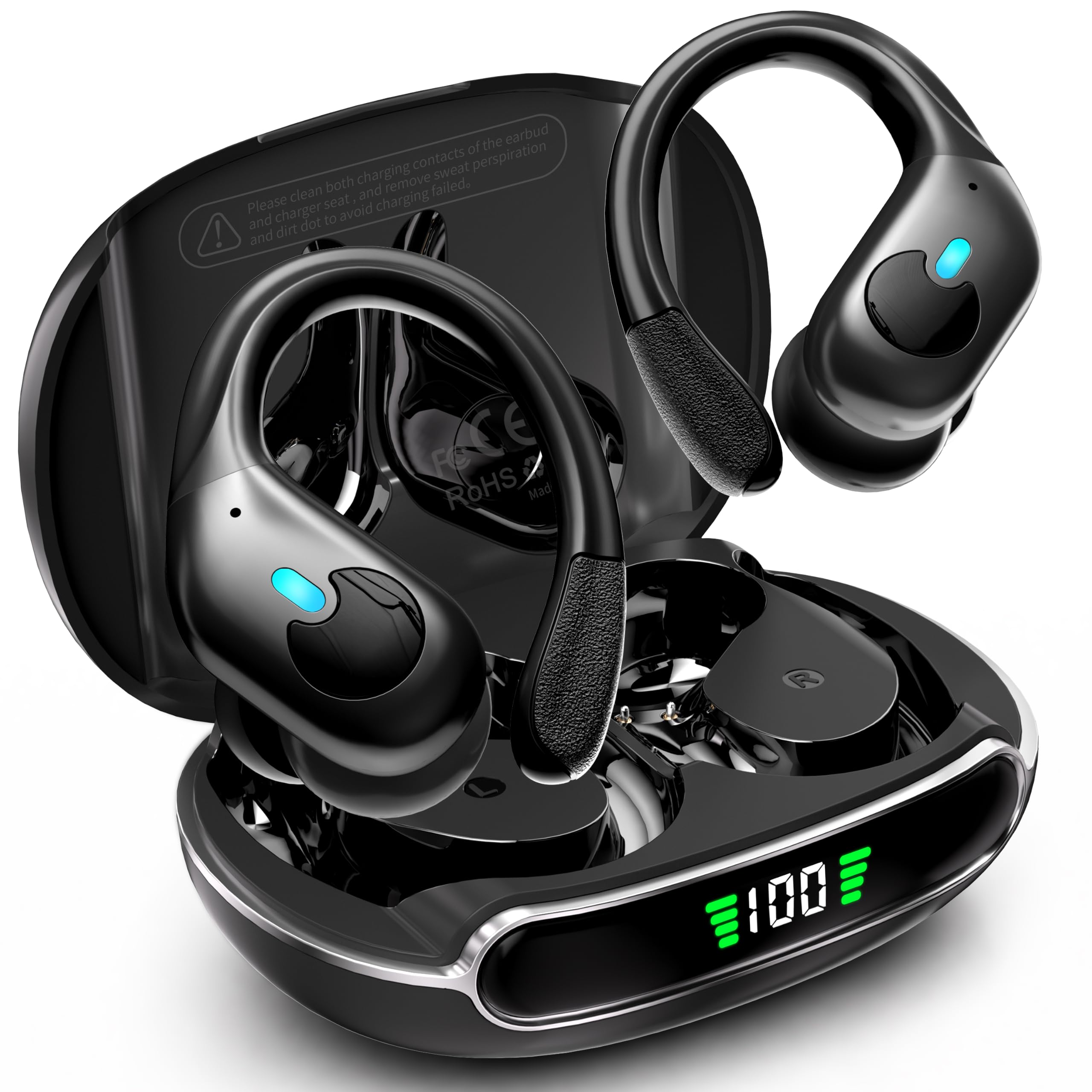
The T16 gets the two things that matter on a run right: it stays on your head, and it does not need a charge every other day. The adjustable ear hooks sit around the ear rather than deep in the canal, and the case carries enough power for 80 hours of listening. We wore them through sweaty intervals and easy miles, and the fit stayed put without the constant push-back that sends lesser buds into a pocket.

Comfort is the quieter advantage. The hooks are flexible enough to settle around glasses, and the buds sit lightly enough that we forgot about them between miles. Physical buttons are a real plus when your fingers are wet: a press changes the track or volume without the accidental taps that touch controls invite.

Sound is lively rather than neutral, with enough bass to keep tempo runs moving and clear enough treble for podcasts. Dual microphones handle calls well enough for quick check-ins, though we still take important calls away from a windy road.

The charging case shows its remaining power on a display, which makes it easy to see when to plug in, and the five-year manufacturer warranty is unusually generous for a budget pair. The case is also small enough to drop into a jacket pocket without a bulge.

For most runners, this is the pair we hand over first. The T16 is not the flashiest option here, but it nails the daily routine: secure, comfortable, easy to control, and slow to run out of power. If you regularly run through downpours, the JBL Endurance Race 2 is the safer choice; if you want your ears open to traffic, the Soundcore C50i and TRAUSI T6 are the alternatives we point to.

Pros

  • Stays put through sweaty runs
  • 80-hour case means less charging
  • Physical buttons work with wet fingers
  • Clear calls from dual mics

Cons

  • Water resistance is not IP-rated
  • Charging case can be fussy about seating
Our verdict

We recommend the bmani T16 as the default running pair: the adjustable hooks, physical buttons, and 80-hour case solve the everyday workout better than anything else here.

Check Latest Price
2

Best for Wet Weather

JBL Endurance Race 2

81 /100
Traveler Score Excellent

Key details

Fit
Twistlock wing enhancer
Battery Life
12 hours, plus 36 hours in case
Water Resistance
IP68
Noise Cancellation
Active Noise Cancelling with Smart Ambient
Check Details on Amazon

The JBL Endurance Race 2 is the pair we reach for when the forecast is ugly. Its IP68 rating is the most complete water-and-dust protection in this group, and the Twistlock wing enhancer seats the bud with a quarter-turn so it stays put when the road turns wet and gritty. That combination is why it earns a place for trail runners, rainy commuters, and anyone who sweats through a summer long run.

Battery life is generous in practice: 12 hours in the buds and another 36 in the case. The case charges over USB-C, and a short top-up gives you enough for another session. Active noise cancellation and Smart Ambient are useful on mixed routes, letting you dampen traffic on a road stretch and then open up on a bike path.

The sound is punchy and clear, with enough detail for music and enough mids for podcasts. The JBL app is worth opening once to tune the EQ and set the controls; the touch panel is responsive, though we prefer a physical button when wearing gloves.

This is not the most affordable pair here, but the weatherproof build and battery make its case. If your runs are more treadmill than trail, the bmani T16 is easier to live with; if you want the most weatherproof build, this is the one.

Pros

  • IP68 seals out sweat, rain, and dust
  • 12 hours per charge, 36 more in case
  • Twistlock wings hold the fit
  • ANC and Smart Ambient for mixed routes

Cons

  • Fit depends on wing and tip choice
  • Bluetooth can drop in crowded areas
Our verdict

We reach for the JBL Endurance Race 2 when sweat and rain are the deciding factor; its IP68 build and Twistlock wings are the most weather-ready combination here.

Check Latest Price
3

Best Premium

Beats Powerbeats Pro 2

84 /100
Traveler Score Excellent

Key details

Heart Rate
Built-in sensors
Battery Life
Up to 45 hours with case
Water Resistance
Sweat and water resistant
Noise Cancellation
Active Noise Cancelling
Check Details on Amazon

The Powerbeats Pro 2 are the only pair here that read heart rate from your ear, and that is the feature that changes how they fit into training. Instead of pairing a chest strap or glancing at a watch mid-interval, you get a pulse readout from the buds themselves. For runners who already train with metrics, that is a meaningful convenience.

The rest of the package is premium too: active noise cancellation, transparency mode, and up to 45 hours with the charging case. The Apple H2 chip makes pairing and switching between devices feel immediate on an iPhone, and the buds work with Android as well. We found the sound full and energetic, with enough clarity for hard efforts.

What holds us back is the size of the housing. The earhook is secure, but the shell is larger than the open-ear and low-profile picks here, and it can press when you wear glasses or a tight cap. We rate the heart-rate and noise-cancellation package highly; we just do not treat this as a universal fit.

If you want the most data from your ears and you already live in Apple's ecosystem, the Powerbeats Pro 2 are easy to justify. If you mainly want a secure, simple pair for everyday miles, the bmani T16 is the easier default.

Pros

  • Ear-based heart-rate tracking
  • 45 hours with charging case
  • Active noise cancellation and transparency
  • Apple and Android pairing support

Cons

  • Large housing can press on smaller ears
  • Premium price puts it in a different class
Our verdict

We see the Powerbeats Pro 2 as the premium training tool for runners who want heart-rate data and active noise cancellation without a watch.

Check Latest Price
4

Best Open-Ear

Soundcore C50i

85 /100
Traveler Score Excellent

Key details

Fit
Memory titanium FlexiClip
Drivers
12mm
Battery Life
28 hours with case
Water Resistance
IP55
Check Details on Amazon

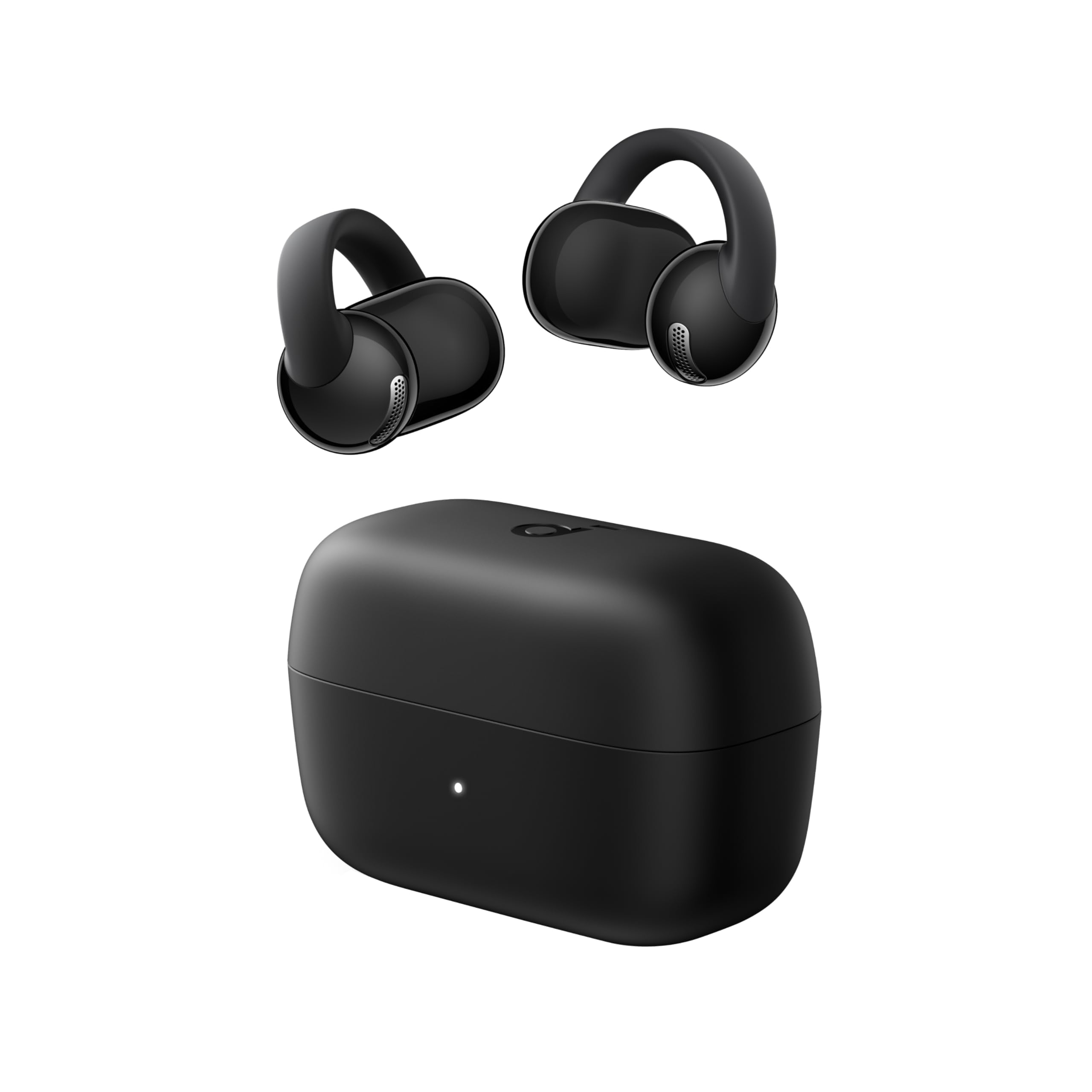
The C50i is the pair we hand to runners who hate the feeling of something inside their ear. The FlexiClip arm hooks over the ear and holds a small speaker just outside the canal, so you get music without the plugged-up pressure of an in-ear bud. On a busy road, that openness is the point: you can hear a car coming without pulling a bud out.

The clip is light and stable, and the 12mm drivers deliver more bass than the open design suggests. Battery life is 7 hours in the buds and 28 with the case, which covers a week of short runs, and IP55 protection handles sweat and rain. Calls are clear enough for quick check-ins, though we keep important conversations for indoors.

We like the C50i most for road runners who want awareness first and music second. It stays put on tempo runs, and the case is small enough to slip into a shorts pocket. The bmani T16 is the more traditional alternative if you prefer a closed in-ear fit.

Pros

  • Clip-on fit leaves ear canal open
  • 28 hours with charging case
  • 12mm drivers deliver strong bass
  • IP55 handles sweat and rain

Cons

  • No isolation from wind or gym noise
Our verdict

We like the Soundcore C50i for runners who want music and traffic awareness at the same time, thanks to its secure clip-on fit.

Check Latest Price
5

Best Budget

JLab Go Sport+

82 /100
Traveler Score Excellent

Key details

Fit
Ergonomic earhook
Warranty
2 year
Battery Life
9+ hours per earbud, 26+ in case
Water Resistance
IP55
Check Details on Amazon

The Go Sport+ has one of those small design decisions that makes a real difference: the charging cable is built into the case. There is no separate cord to lose in a gym bag, and you can top up from a laptop or a wall block without hunting for the right cable. We like that kind of low-drama practicality in a workout pair.

The earhook is sized for smaller ears, and it stays locked in during runs and HIIT sessions. Dual Connect lets either bud work on its own, which is useful when you want one ear free for a coach or a crossing. Touch controls are simple, though we still prefer a physical button when our hands are wet.

Sound is customizable through the JLab app, with signature, balanced, and bass-boost modes. The default is bright and clear, and the bass boost helps for gym music. Battery life is 9+ hours per bud with 26+ more in the case, which is enough for a full week of commutes and workouts.

The Go Sport+ is the budget pair we recommend when you want a secure hook and a warranty that covers two years. It is not the most refined-sounding option here, but it gets the workout basics right for a low cost.

Pros

  • Ergonomic earhook suits smaller ears
  • 9+ hours per bud, 26+ in case
  • Built-in charging cable
  • Two-year warranty

Cons

  • Attached cable is short and not removable
  • Durability can be inconsistent
Our verdict

We keep the JLab Go Sport+ on the short list for budget workouts: the earhooks stay put, and the built-in cable means one less thing to lose.

Check Latest Price
6

Best Long Playtime

HAOYUYAN BX17

90 /100
Traveler Score Outstanding

Key details

Drivers
14.3mm
Controls
Push button
Battery Life
80 hours with case
Water Resistance
IPX7
Check Details on Amazon

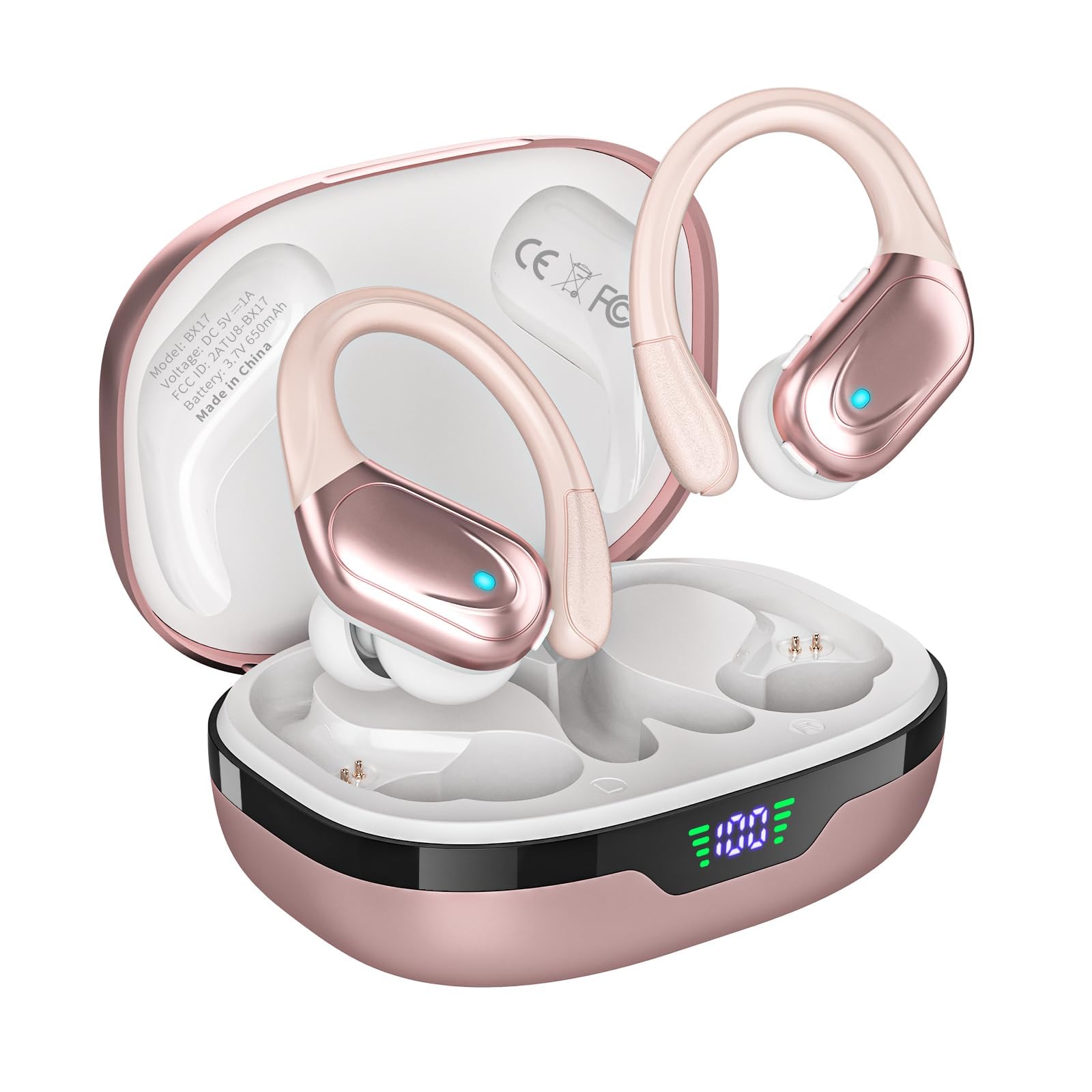
The BX17 treats battery life as its main feature, and for a lot of runners that is the right call. Each bud runs for up to 15 hours, and the case carries enough for 80 hours total. The LED display on the case shows the charge level, and USB-C fast charging means a short stop can rescue a forgotten session.

The ear hooks are soft and flexible, and they held the buds in place during road runs and gym sessions. Button controls are easy to find without looking, which matters when your fingers are sweaty or you are wearing light gloves. We also like the rose gold finish, which looks less utilitarian than most sport buds.

The 14.3mm drivers give the sound a warm, bass-forward character that suits pop, hip-hop, and podcasts. Call quality is clear enough for quick check-ins, and the case is easy to pocket. For long weeks with infrequent charging, the BX17 is an easy, comfortable choice.

Pros

  • 80-hour total playtime
  • Secure ear hooks for workouts
  • IPX7 waterproofing
  • Push-button controls

Cons

  • Noise cancellation is inconsistent
Our verdict

We recommend the HAOYUYAN BX17 for runners who measure a week by charges, not miles, because its 80-hour case and secure hooks stretch time between plug-ins.

Check Latest Price
7

Best for Awareness on Long Runs

TRAUSI T6

89 /100
Traveler Score Excellent

Key details

Fit
Ergonomic ear hook
Bluetooth
5.4
Battery Life
80 hours total
Water Resistance
IPX7
Check Details on Amazon

The T6 is built around the open-ear hook: the driver rests outside the canal, so you hear your music and the road at the same time. That makes it a natural pick for runners who do not want to be sealed off, and the IPX7 rating means sweat and rain are not an immediate worry. The case carries 80 hours of total playtime, which is a lot for a pair this light.

We found the hook comfortable over long runs, with less pressure than a sealed in-ear bud. The trade-off is that the sound is airier and less bass-heavy than a closed design, which is fine for podcasts and background music but not for anyone chasing deep isolation.

Bluetooth 5.4 paired quickly with our phones, and the touch controls are easy once you learn the tap pattern. Calls are clear enough in quiet settings, and the hook stays comfortable under a cap. We rate the T6 as a solid awareness-first pair rather than a serious noise-isolation tool.

For hot, sweaty long runs where you want to hear traffic and avoid charging, the T6 makes a lot of sense. It is not the most refined open-ear option here, but it is one of the most practical. The Soundcore C50i is the clip-on alternative; the bmani T16 is the closed-fit default.

Pros

  • Open-ear hooks keep traffic audible
  • 80 hours total with case
  • IPX7 sweat and rain protection
  • Bluetooth 5.4 pairing

Cons

  • Open design leaks sound and lets noise in
  • 90-day warranty is short
Our verdict

We choose the TRAUSI T6 when open-ear awareness and long battery matter more than deep isolation, especially for hot, sweaty long runs.

Check Latest Price
8

Lightweight Wear

Ortizan i10

84 /100
Traveler Score Excellent

Key details

Weight
0.67 oz
Bluetooth
5.3
Battery Life
10 hours
Water Resistance
IPX6
Check Details on Amazon

At 19 grams, the Ortizan i10 is the pair you notice least. The open-ear hook rests outside the canal, and the light build makes it easy to forget on a long walk or an easy run. Battery life is 10 hours, and IPX6 covers sweat and rain without making the buds feel bulky.

Air conduction keeps the ear canal open, so traffic and coach instructions come through. The 14.2mm driver gives voices and acoustic music a clear, forward tone, though bass is lighter than a sealed in-ear design. We liked it most for podcasts and easy miles rather than hard intervals.

The magnetic charging cable is a convenient touch, and the hook is comfortable for shorter sessions. The open design is easy to wear with a cap, and the controls are simple to find by feel. It is a good choice for a second pair you keep in a bag for spontaneous runs.

The i10 is a good choice for runners who want the lightest possible open-ear pair and do not need deep sound. At this weight, it is easy to forget you are wearing it, which is the point.

Pros

  • 19-gram open-ear build
  • 10 hours per charge
  • IPX6 sweat and rain resistance
  • Magnetic fast charging

Cons

  • Fit runs small for larger heads
  • Charging can stop working
Our verdict

We reach for the Ortizan i10 when weight is the priority; at 19 grams it disappears on the head, though the fit runs small.

Check Latest Price
9

Noise Control

WHYKJTEK BX30

89 /100
Traveler Score Excellent

Key details

Bluetooth
6.0
Battery Life
90 hours total
Water Resistance
IPX7
Noise Cancellation
Active Noise Cancellation
Check Details on Amazon

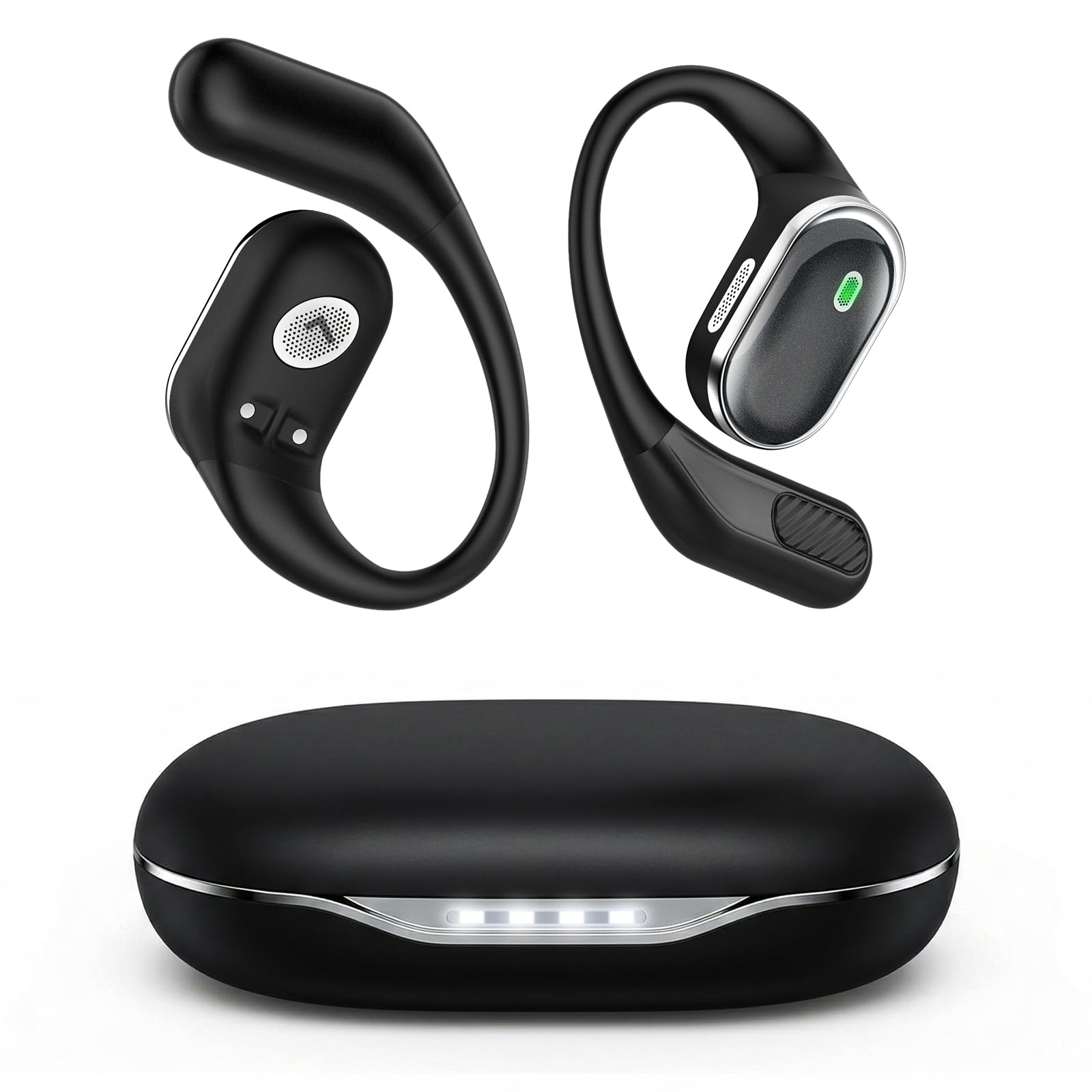
The BX30 leads with active noise cancellation in an open-ear hook, which is an ambitious combination. The buds sit outside the canal, and the case carries a claimed 90 hours of total playback. For runners who want a big battery and a bit of noise control without sealing their ears, it is an unusual package.

Battery life is the part that impressed us most: 8 hours in the buds and 90 with the case, with a dual LED display that makes the remaining charge easy to read. Transparency mode is useful on shared paths, and Bluetooth 6.0 paired quickly with our phones.

The earhooks are comfortable for easy runs, and the IPX7 rating means sweat and rain are covered. The case is small enough for a jacket pocket, and the open fit keeps traffic audible. The fit is secure enough for road running, not aggressive trail work.

For a long-battery, open-ear pair, the BX30 is worth a look. The bmani T16 is the more polished all-rounder, while the JBL Endurance Race 2 is the better choice when real water protection and effective ANC matter.

Pros

  • 90-hour total battery life
  • IPX7 waterproofing
  • Active noise cancellation and transparency
  • Bluetooth 6.0

Cons

  • ANC is mild at best
Our verdict

We see the WHYKJTEK BX30 as a budget noise-control experiment: the 90-hour case is genuinely useful, but its ANC is not the reason to buy.

Check Latest Price

How We Tested 12 Pairs of Running Earbuds

We started by collecting every pair that claimed a secure fit and at least an IPX4 sweat rating, then cross-checked those claims against what owners actually complained about: buds working loose, cases that stopped charging after a few months, Bluetooth dropping the moment a phone went into a pocket. Anything with no water-resistance rating, a proprietary charging cable, or an app that demanded an account just to change the EQ got cut. That left 12 pairs, which we ran in for six months.

Every pair went through the same routines: treadmill intervals, easy road miles, a trail loop, and at least one wet-weather run. I did a head-shake test and a set of fast strides before trusting a pair, and wore each one for a two-hour stretch on work calls to see whether comfort held past the first mile. Weight came from a kitchen scale, buds out of the case. After each run I noted whether sweat had pooled around my ears or the tips had started sliding, and whether the buds still felt locked in on the cooldown walk.

Battery testing was deliberately boring: volume at 70 percent, one continuous loop, and a note of the exact minute the low-battery chime hit, plus how many full charges the case delivered over a week. For connectivity, we left the phone in a gym locker and walked a full lap, then stood at a busy intersection to see whether the signal stuttered. Noise cancellation got judged on a four-lane road with traffic going by; transparency mode on a group run where I needed to hear a car coming up behind me. Durability and value came out of six months of real use — buds loose in a gym bag, cases dropped on pavement, tips swapped weekly — with a final re-check of charging speed and hinge wear to see which pairs still felt worth their asking price.

How to Choose Wireless Earbuds for Runners

Fit Comes Before Features

A running earbud has to stay put through sweat, head movement, and the occasional tug on a cap. Ear hooks wrap around the back of the ear and suit runners who have had buds work loose; wing tips press inside the bowl of the ear and add grip without a hook; open-ear clips sit outside the canal and rely on a light, stable clamp. We prioritize an adjustable hook or a wing that can be changed, because ear shapes vary more than product listings admit.

Test a new pair with a 20-second head shake and a short jog before you commit. If the bud moves, try a different tip or wing before deciding the design is wrong. Runners who wear glasses should check that the hook does not press on the temple.

Read the Water Rating, Not the Word Waterproof

IPX4 handles splashes; IPX7 survives temporary immersion; IP68 adds dust sealing and is the most protective combination here. Sweat is the real test, so a high rating matters if you run hot or live somewhere humid. A waterproof bud is not automatically safe to swim in, and a wet bud should be dried before it goes back in the case. The JBL Endurance Race 2's IP68 rating is the benchmark in this group; the bmani T16 is only listed as water resistant, so treat it as a dry-weather default.

Open-Ear or In-Ear?

Open-ear designs leave the canal unobstructed, which is why road runners like the Soundcore C50i and TRAUSI T6: you hear traffic, bicycles, and a running partner without pulling a bud. The cost is bass and isolation, and wind can overwhelm the music on an exposed route. In-ear designs seal the canal and deliver more punch, especially with ANC, but they can feel plugged and make it harder to hear a car. Choose open-ear for traffic-heavy roads and in-ear for treadmill or gym sessions.

Battery Life and Charging Habits

Look at both the single-charge time and the case total. A 7- to 8-hour single charge covers almost any training run, while a 28- to 80-hour case total decides how often you hunt for a cable. A built-in cable is convenient if you always forget one; check that the attached lead reaches your outlet before you rely on it. We care more about a case that seats the buds reliably than about a huge total that arrives with a fussy dock.

Controls and Calls

Physical buttons are easier to find with wet or gloved fingers, while touch panels allow more customization but can misfire when sweat beads on the surface. If you take calls mid-run, look for dual microphones and test a call in wind before you rely on it. The bmani T16's push buttons are a good example of a simple control that works when your hands are slick; the JBL app is the better choice if you want to remap controls and tune the sound.

Frequently Asked Questions

Final Verdict

We recommend the bmani T16 for most runners because it gets the fit, controls, and battery right without asking for a premium commitment. If your runs are wet and gritty, the JBL Endurance Race 2's IP68 build is the better call; if you want heart-rate data, the Powerbeats Pro 2 earns its keep. For traffic-heavy roads, choose the Soundcore C50i and keep the volume low enough to hear what is coming.