Best Wetsuits of 2026

Every wetsuit is a negotiation between warmth and movement. Thicker neoprene keeps you comfortable in cold water and turns your paddle stroke into a wrestling match, while a thinner suit frees up your shoulders and lets the chill straight in. What actually decides which side of that line you land on is rarely the millimeter number printed across the chest — it's how the suit fits at your shoulders, waist, and crotch, and whether the neck seals without strangling you. Get that right and a good suit buys you another hour in the water instead of a shivering walk back to the car.

I've owned suits that were a size too big, and I spent every session flushing cold water down my spine. That's why fit came first in our testing: over the past six months, my team and I have put 12 wetsuits — spring suits, shorties, and 3/2 and 4/3 full suits cut for men, women, and kids — through pool laps, lake paddles, and a few honest ocean sessions.

Neoprene relaxes once it's wet, so a suit that feels almost too snug on the rack is usually the one that fits in the water, and the tall and kids' size ranges are worth hunting down rather than simply sizing up. Front-zip suits are easier to wriggle into alone; back-zip suits want a buddy or a long leash but often seal better across the shoulders. Below are the suits that earned their place, sorted by who they're for and how cold the water gets.

The Best Wetsuits

1

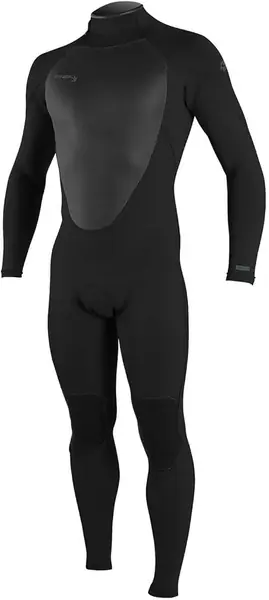
Hevto Men's 3/2mm Full Wetsuit Best Overall
93 /100
Traveler Score Outstanding

Key details

Closure
Front zip
Thickness
3/2 mm
Material
Neoprene and nylon
Size Range
16 options, short and tall
Check Details on Amazon

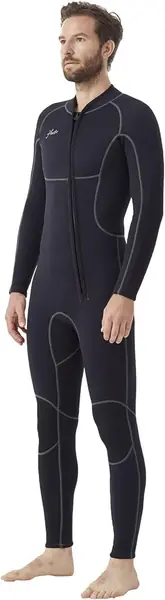
Sixteen sizes, including short and tall cuts, is the reason this suit is our top pick. Fit is where wetsuits go wrong, and a brand that gives you that many ways to get it right has already solved the hardest part. The 3/2 mm neoprene underneath covers the broad middle of conditions, from a cool summer ocean to a lake in early June.

The front zip is the second thing we noticed. On a full suit it means you close it yourself, in front of you, without the over-the-shoulder reach a back zip demands, and the tank-style puller is easy to find with cold hands. That alone changes a dawn session when there's nobody else in the parking lot.

In the water it does what a 3/2 should. The neoprene holds a warm layer against you, the shoulders stay free enough to paddle, and it doesn't balloon at the back when you duck under. We were comfortable in water that had us watching the clock in thinner suits.

Slow down on the sizing, though. Measure your chest and height and follow the chart rather than ordering your T-shirt size, and take the tall or short cut if you're near a boundary — that's the whole advantage of this suit, and it's wasted if you guess. Do it properly and it's the one suit that covers surfing, snorkeling, and a morning of kayaking on the same trip.

Pros

  • 16 sizes, including short and tall
  • Front zip closes without help
  • 3/2 mm covers cool to mild water

Cons

  • Front zip can be stiff to slide shut
Our verdict

Sixteen sizes, including short and tall cuts, make this the suit we recommend first to most adults — the fit problem is where wetsuits usually go wrong.
Check Latest Price
2

Seaskin 3mm Shorty Best Shorty

92 /100
Traveler Score Outstanding

Key details

Closure
Front zip
Thickness
3 mm
Coverage
Shorty, short sleeve
Material
90% neoprene, 10% nylon
Check Details on Amazon

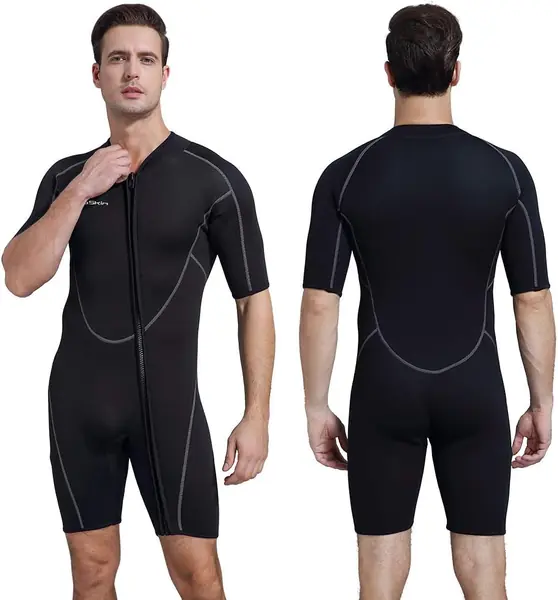
A front zip that runs from the collar down past the hip is what sells this shorty. You step in, pull it up, and close it in front of you — no reaching over a shoulder, no asking a stranger on the beach for help. On a breezy morning with the water at your ankles, that's worth more than any logo.

We also like how much suit you get for the money. Three millimeters through the torso is genuine insulation rather than a swimsuit with a zipper, and it handles spring ocean, a Florida spring, and a lake that never quite warms up. The limit is built into the shape: short sleeves and short legs leave your forearms and shins in open water, so this is a mild-water suit, not a cold-water one.

Sizing needs a second look — the suit runs large around the arms and legs on some builds, so go by the Seaskin chart and your measurements rather than your usual size. What you get in return is a suit that comes off in seconds at the car, which is exactly what a shorty should do.

Pros

  • Long front zip for easy entry
  • Real 3 mm warmth for mild water
  • Comes off in seconds at the car

Cons

  • Runs large at arms and legs
Our verdict

The shorty we keep coming back to: a long front zip, real 3 mm warmth for mild water, and the fastest entry of anything here.

Check Latest Price
3

O'Neill Epic 4/3mm Best for Cold Water

91 /100
Traveler Score Outstanding

Key details

Closure
Back zip
Thickness
4/3 mm
Coverage
Full suit
Check Details on Amazon

Cold water is a different purchase from cool water, and the Epic is the one suit here built for it. Four millimeters through the torso and three in the limbs make it the thickest full suit in this group, and the difference shows up on the mornings when the air is as cold as the sea.

The back zip has a long leash that you catch and close yourself with a tug, though the neck closure takes a second attempt more often than it should — the velcro grabs at the neoprene before it seats. Once it's on, the fit is comfortable without being baggy, which is the balance a thick suit usually loses at the shoulders.

What the price buys is warmth per millimeter and a cut that moves with you rather than against you. What it doesn't buy is forever: the neck seam is the first thing to go on a suit that gets used hard, and heavy surfers wear this out rather than hand it down. For a weekly cold-water surfer, that's a fair trade; for a once-a-year snorkeler, a 3/2 does the job.

Pros

  • Thickest full suit in this group
  • Warm in seriously cold water
  • Flexible for its thickness
  • Back zip with a long leash

Cons

  • Neck velcro catches before it seats
  • Neck seam can tear with hard use
Our verdict

If your water is genuinely cold, this is the suit worth the spend: 4/3 mm of warmth and enough flex to paddle, surf, and stay out.

Check Latest Price
4

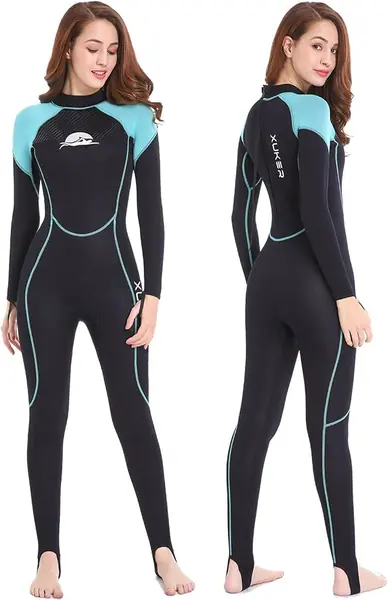
XUKER Women's 2mm Full Best Women's Fit

90 /100
Traveler Score Outstanding

Key details

Closure
Back zip
Thickness
2 mm
Coverage
Full suit, long sleeve
Material
90% neoprene, 10% nylon
Check Details on Amazon

Two millimeters is the argument, and for travel it's a good one. The suit packs down smaller than a 3/2, dries quickly enough to wear again the next morning, and keeps you comfortable in warm water where a thicker suit would have you overheating on the boat ride out.

The cut is the other half of it. This suit is drafted for a woman's torso, and it shows in the places that usually gap — the small of the back, the shoulders, the hips — so you get warmth where a men's pattern sized down leaves a cold pocket. Getting in and out without help is one of the things it does well, which is not true of every back zip here.

Where it gets tricky is the fit: some sizes run big through the middle and others come up short in the leg, so measure yourself and use the chart rather than reordering your usual size. Get it right and it's the suit that lives in a carry-on for the whole summer.

Pros

  • 2 mm packs small and dries fast
  • Women's cut reduces gapping
  • Closes without a helper

Cons

  • Sizing can run big or short
Our verdict

A women's-cut full suit for warm water and small bags: 2 mm, a back zip you can close yourself, and a price that leaves room for the trip.

Check Latest Price
5

Dark Lightning 3/2mm Best Lightweight Full Suit

89 /100
Traveler Score Excellent

Key details

Closure
Back zip
Thickness
3/2 mm
Weight
1.9 lb
Water Temperature
58–68 °F
Check Details on Amazon

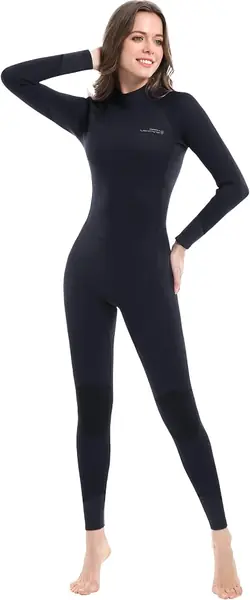
Dark Lightning lists this suit at 1.9 pounds, which is the kind of number that decides whether a wetsuit comes on a trip at all. Folded, it's the sort of thing you can justify packing for two swims and a snorkel, and it comes out of the bag soft rather than creased into shape.

What surprised us is how substantial it feels for the weight. The neoprene has real stretch through the shoulders, the seams sit flat enough to forget about, and the extended zip leash makes closing it solo a one-tug job rather than a negotiation.

The stated range is 58 to 68 degrees, and that's honest — this is a cool-water suit, not a cold-water one. Water can flush in around the legs after a duck dive, and the back zip can pop open if it isn't seated all the way, so give the pull a firm tug and press the velcro down. For cool-water sessions and a bag that's already full, that's a trade we'll take.

Pros

  • Listed at 1.9 pounds
  • Stretchy through the shoulders
  • Back zip closes solo
  • Quality holds up for the money

Cons

  • Water flushes in at the legs
  • Back zip can pop open
Our verdict

A 3/2 full suit listed at 1.9 pounds, with a back zip you can close alone — the full suit we pack when luggage space decides.

Check Latest Price
6

O'Neill Reactor-2 2mm Spring Best Spring Suit

88 /100
Traveler Score Excellent

Key details

Closure
Back zip
Thickness
2 mm
Coverage
Short sleeve spring suit
Check Details on Amazon

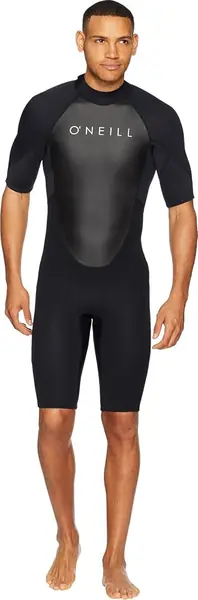
This is the O'Neill we reach for when the Epic is too much suit. There's a stretch of the year, roughly late spring through early fall in most of the country, when a full suit is oppressive and boardshorts are not enough; a spring suit — short sleeves, short legs, 2 mm across the middle — fills that gap better than anything else.

Paddling is where it earns its keep: the armpits are cut generously, the neoprene is soft rather than tacky against skin, and a long session doesn't leave you fighting the suit. The back zip is the weak point — the pull can catch, and in a big set the zip can creep down and let water in.

At this price we think of it as the second suit in a quiver rather than the only one, and that's fine: pair it with the Epic and you've covered the year in two suits. If you swim only in warm water and want a single suit, the Seaskin shorty does the same job for less money.

Pros

  • 2 mm core warmth for warm water
  • Stretchy, non-restrictive shoulders
  • Soft neoprene against skin

Cons

  • Back zip can creep down in surf
  • Runs small against the size chart
Our verdict

The suit for the in-between season: 2 mm through the core, stretchy shoulders for paddling, and half the bulk of the Epic on a warm afternoon.

Check Latest Price
7

Hevto Kids 3/2mm Best for Kids

87 /100
Traveler Score Excellent

Key details

Closure
Back zip
Thickness
3/2 mm
Material
90% neoprene, 10% nylon
Temperature Rating
67 °F
Check Details on Amazon

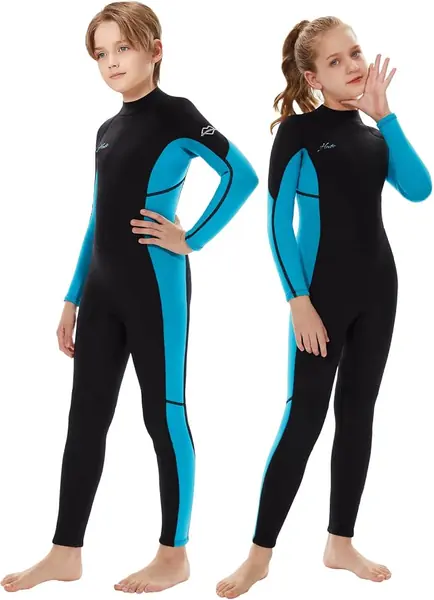
A cold child is finished swimming, and that's the whole case for a real wetsuit over a rash guard. Hevto builds this one to adult specs — 3/2 mm neoprene, long sleeves, a listed temperature rating of 67 degrees — which covers a cold pool, the Pacific in summer, and a lake in Maine that never gets above bracing.

The back zip is the practical part. It opens wide, so getting a squirming kid into the suit on a windy beach takes seconds instead of a wrestling match, and the pull is big enough to grab with wet hands. The neck sits flat rather than rubbing, which is usually the detail that decides whether a child keeps the suit on.

The wing-shaped shoulder panels and blue stripes are more than decoration — the high-visibility pattern makes a kid easier to pick out in a crowded pool or a lineup. It's the kind of detail that matters more the younger the swimmer.

Measure height and chest rather than going by age, and go up if your child is between sizes, because the numbers run small for some kids. Do that and you've got a suit that gets handed down rather than replaced, which is the only way a kids' wetsuit makes financial sense.

Pros

  • 3/2 mm warmth for cold water
  • Wide back zip for fast dressing
  • High-visibility shoulder pattern
  • Holds up for hand-me-downs

Cons

  • Size numbers run small
Our verdict

The kids' suit we point to for cold water: a real 3/2 mm build, a wide back zip for fast dressing, and sizes that go small enough for a first suit.

Check Latest Price
8

Cressi Morea 3mm Best for Divers and Snorkelers

86 /100
Traveler Score Excellent

Key details

Closure
YKK back zip with Aquastop flap
Thickness
3 mm
Panels
Ultraspan limbs, rubberized chest
Warranty
2-year limited
Check Details on Amazon

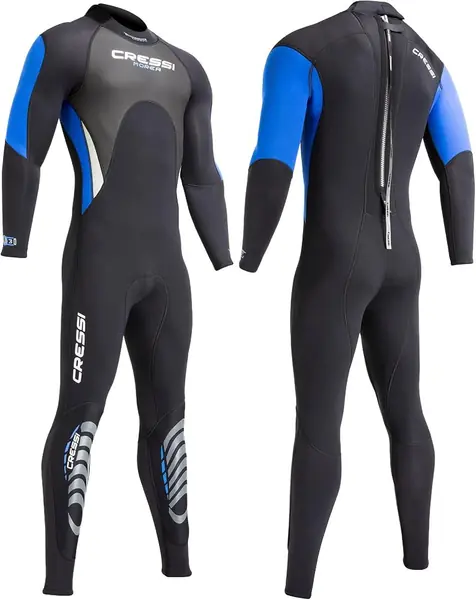
Cressi builds this the way a dive brand builds a suit: Ultraspan neoprene through the arms and legs for stretch, a rubberized panel across the chest where warmth matters most, and overlock cuffs at the wrists and ankles.

The details are why it's on this list. The back zip is a YKK with an Aquastop flap behind it, which is the difference between a suit that seals and one that trickles down your back, and the knees are reinforced for kneeling on a boat deck or a rock. A two-year limited warranty backs all of it.

We haven't had it in the water long enough to say how it ages, so treat the warranty as the durability promise you can hold Cressi to rather than taking it on faith.

You're paying for construction you can inspect: stitched panels, a real zipper, anatomical cuts that don't assume one body type. It's the suit for a diver or a serious snorkeler who wants the hardware right rather than the cheapest way into the water.

Pros

  • Ultraspan limbs for mobility
  • Rubberized chest panel for warmth
  • YKK zip with Aquastop flap
  • Two-year limited warranty

Cons

  • Costs more than the other 3 mm suits here
Our verdict

A dive-shop wetsuit at a dive-shop price: stretch panels in the limbs, a rubberized chest, a YKK zip with a flap behind it, and a two-year warranty.

Check Latest Price
9

ZCCO 1.5mm Shorty Best for Pool Laps

85 /100
Traveler Score Excellent

Key details

Closure
Back zip
Thickness
1.5 mm
Coverage
Shorty, short sleeve
Material
Neoprene and spandex
Check Details on Amazon

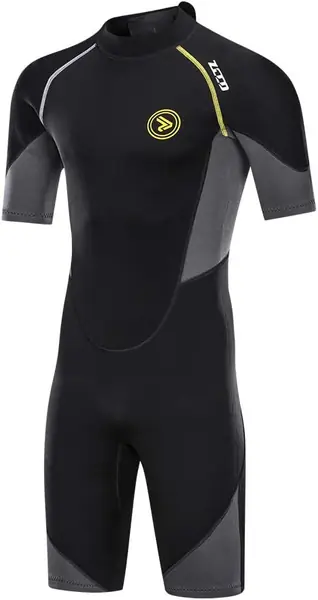
At 1.5 mm this is barely a wetsuit by cold-water standards, which is the point. It takes the edge off a pool that's a few degrees too cool, adds a little buoyancy for a nervous swimmer, and doesn't leave you overheated on the walk from the car.

The hardware is better than the price suggests: a YKK back zip with a hook-and-loop closure at the neck, flatlock seams that sit smooth against skin, and a neckline you can adjust. We think of it as the suit for the swimmer who gets in a dozen times a summer, not the surfer chasing winter swell.

Set expectations accordingly: it isn't built to be the last suit you buy, and it isn't the one for cold ocean. It's the inexpensive one you keep in the trunk for the afternoon the water looks better than you expected.

Pros

  • Light 1.5 mm for pools and warm water
  • YKK back zip with adjustable neck
  • Comfortable through the shoulders

Cons

  • Size chart runs small
Our verdict

The budget shorty for pool laps and warm-water snorkeling: light 1.5 mm neoprene, a YKK back zip, and no pretense of being a cold-water suit.

Check Latest Price

How We Tested 12 Wetsuits in Pools, Lakes, and Open Water

We built the shortlist by reading through customer reviews and scanning spec sheets for the things that genuinely separate one suit from another: neoprene thickness, front versus back zip, seam construction, and whether a suit comes in a real range of sizes, including tall and kids' fits. From there we narrowed to 12 suits, from budget picks to cold-water 4/3 full suits, and wore each one for six months in the places people actually use them — a Tuesday-night pool lane, weekend flatwater paddling, and open-water swims.

Fit and mobility: before anyone got wet, we measured each suit at the shoulders, chest, waist, and crotch, then had testers raise both arms overhead, squat, and mimic a paddle stroke. If the neoprene hauled at the shoulders or ballooned at the lower back, we noted it, then checked whether that changed after 20 minutes in the water.

Zippers and durability: we zipped and unzipped every suit 20 times with wet, sandy hands, watching whether the pull caught, the tape curled, or the leash got in the way of getting in alone. After each session we rinsed the suits in fresh water, hung them to dry, and checked the seams and stitching for lifting or fraying. We also watched for flushing — cold water rushing in at the neck, wrists, or ankles on entry — and noted whether a suit felt clammy along the spine after half an hour.

Warmth and value: testers logged how long they stayed comfortable in water around 62 degrees and set that against what each suit costs, and we checked whether each one delivered on the thickness it advertised. The kids' suit got the hardest workout of the group, in and out of a lake all afternoon, which told us plenty about how the seams and zipper hold up to repeat abuse.

How to Choose a Wetsuit

Match thickness to the water you'll actually be in

A 3/2 mm full suit is the closest thing to a do-everything wetsuit: it covers cool summer ocean, most lakes, and long sessions without cooking you on the beach. Step down to 2 mm or 1.5 mm for warm water, pools, and travel, where the suit takes the edge off and adds a little buoyancy rather than holding heat. Step up to a 4/3 when the water is genuinely cold and you're surfing, not splashing.

The trap is reading thickness without reading coverage. A 3 mm shorty and a 3 mm full suit are not the same purchase — the shorty leaves your forearms and shins in open water, which is fine in Florida in June and miserable in the Pacific in April. Buy the coverage for the coldest water you'll realistically get into, and let the thinner suits handle the hot days.

Fit decides more than any feature

A wetsuit works by holding a thin layer of water against your skin and warming it. A suit with room to spare lets that layer flush out and be replaced with cold water, which is why a baggy 4/3 can feel colder than a snug 3/2. It should feel almost too tight when you pull it on dry and loosen once you're wet.

Use the maker's own chart with your chest and height rather than your shirt size, and take a tall or short cut if you're at the edge of a range. The Hevto men's suit earns its place at the top of this list mostly on that count: sixteen sizes, including short and tall, give more people a real shot at a fit.

Front zip or back zip

A back zip is the traditional design and it works, but it asks something of you: either a buddy to close it or a long leash and a good reach over the shoulder. It's the faster suit to get out of at the end of a cold session. A front zip is the self-reliant option — you close it in front of you, with cold hands, in a parking lot, and the Seaskin shorty's long front zip is the easiest entry in this group.

The trade is that front zips can be stiffer to seat and put hardware where your chest bends. If you change alone more often than not, put entry design above everything except fit.

Spend on seams and hardware first

Neoprene is the headline, but the seams and the zip are what fail. Flatlock stitching is comfortable against skin; glued and blind-stitched seams seal better and cost more. Stretch panels in the arms and a rubberized chest, as on the Cressi Morea, are the kind of construction you're paying for at the top of the range.

Before you buy, weigh what the maker promises about the zipper and what the warranty covers. A two-year warranty on a dive-built suit is worth more than an extra millimeter of neoprene you didn't need, and the zip is the cheapest component to get wrong and the most annoying to replace.

What's different for kids

A child's suit has to be snug enough to work and roomy enough to survive a growth spurt, and those two things fight each other. Buy for the child in front of you, not the one you'll have next summer — a suit that's baggy now won't keep anyone warm.

A wide-opening back zip matters more than it does for adults, because you're the one doing the dressing, often on a windy beach with a child who wants to be in the water yesterday. High-visibility panels are worth paying for, and a suit that holds up well enough to hand down is the only kind that makes financial sense.

Frequently Asked Questions

Final Verdict

Buy the Hevto men's 3/2 for most of what you'll do. Sixteen sizes with tall and short cuts give you a real chance at the fit that makes 3/2 mm work, the front zip closes without help, and it covers everything from a cool summer ocean to a spring lake.

The exception is cold water. If your sessions happen in it, the O'Neill Epic's 4/3 mm is the difference between a short session and a good one, and it's worth the extra spend. Warm-water travelers should start with the Seaskin shorty or the XUKER full suit, depending on how much sun they plan to get.