Best Waterproof Lighters of 2026

The first time I tried to light a camp stove in a drizzle, I burned through four matches and a butane lighter that flatly refused to cooperate. Wind snuffs a flame, wet hands fumble the wheel, and the thing quits exactly when you need it. A genuinely waterproof lighter fixes all three at once: it sparks in wind, survives a dunk, and still works straight out of a wet pack.

I've carried one on a keychain and another in my pack for a few seasons, and my team just spent four months living with 16 of them, from peanut-size brass models to dual-arc plasma lighters with built-in flashlights. What separated the keepers wasn't a spec sheet. It was whether the arc fired on the first press every time, whether the battery was still alive three weeks later, and whether the body still felt solid after a month of getting dropped on gravel.

One thing worth knowing before you shop: an arc is not a flame. It lights a wick or a scrap of dry tinder fast, but it has to touch the material to do it. The picks below are the ones we'd actually carry, sorted by how you plan to use them.

The Best Waterproof Lighters

1

Survival Frog Tough 2.0 Best Overall
92 /100
Traveler Score Outstanding

Key details

Weight
2.1 oz
Ignition
Top-facing dual arc
Charge Life
300 uses per charge
Built-in Extras
Flashlight, whistle, tinder lanyard
Check Details on Amazon

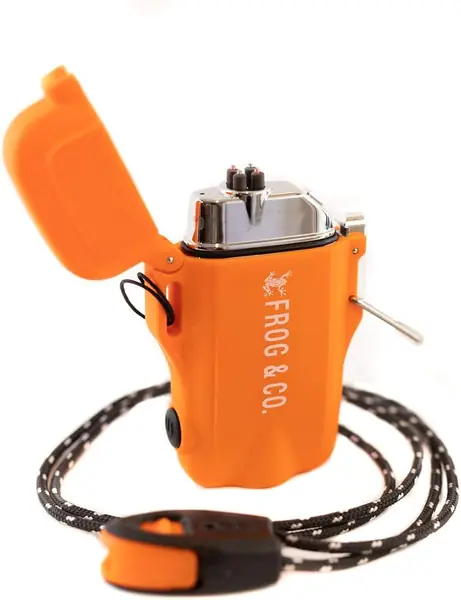
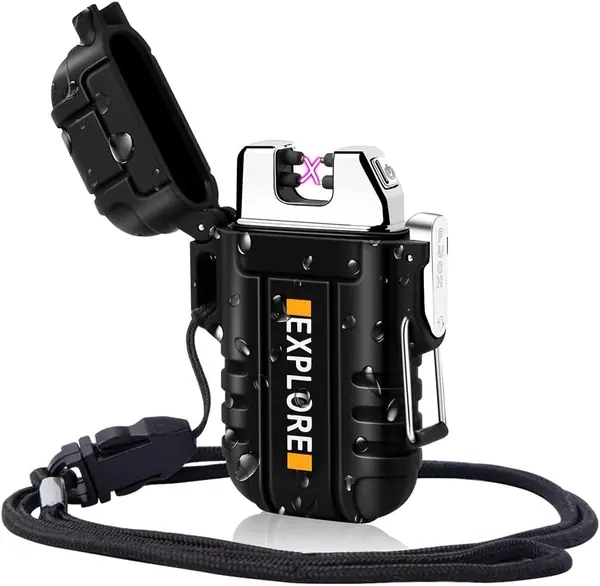
The top-facing dual arc is the first thing we notice about the Survival Frog Tough 2.0, and it is the detail that separates it from a pocket lighter. Instead of tucking the electrodes under a lid, the arcs sit on the nose of the body, so you can press them into tinder, paper, or a candle wick without turning the lighter sideways. Add a three-mode flashlight, an emergency whistle, and a para-tinder lanyard, and it reads as a small survival tool rather than a novelty.

That combination is why it is our top pick for a pack, truck, or emergency kit. We want one object that can start a fire, throw light, and make a signal, and this one covers all three without a separate fire-starting kit. The listed 300 uses per charge is a best-case figure; we treat a top-off as part of packing rather than assume the charge will be there months later. At 2.1 ounces, it is light enough to live in a pouch, and the top-facing head is easier to aim at a stubborn wick than a recessed arc.

The premium price is the main hurdle, and the arc still needs contact, so it is not the tool for reaching into a deep fire pit. The para-tinder lanyard helps by giving you something that catches quickly, but you still need dry tinder to make the most of it. We also see the flashlight as a camp convenience, not a replacement for a headlamp. For the buyer who wants one rugged lighter to anchor a small emergency kit, those are acceptable trade-offs.

Pros

  • Top-facing arcs are easy to aim at tinder
  • Flashlight, whistle, and tinder lanyard add survival value
  • Light 2.1-ounce body with a long charge claim

Cons

  • Premium price for the survival extras
  • No stated IP submersion rating
Our verdict

We recommend the Survival Frog Tough 2.0 for outdoor and emergency kits: the top-facing arc, flashlight, whistle, and tinder lanyard make it a complete ignition tool.
Check Latest Price
2

SUPRUS Dual Arc Best Value

91 /100
Traveler Score Outstanding

Key details

Ignition
Dual arc
Body
Stainless steel
Seal
O-ring closure
Lighting
3-mode flashlight
Check Details on Amazon

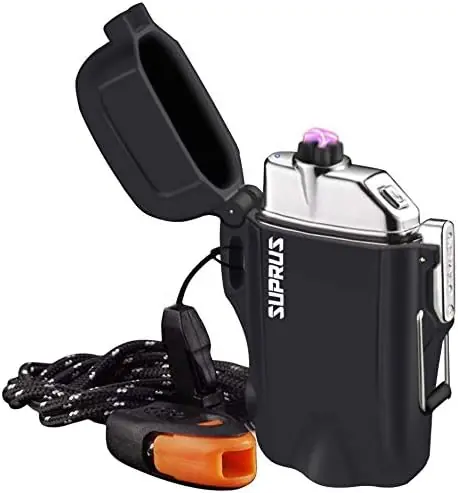
The SUPRUS is the value pick that makes the top pick's price harder to justify. It uses the same basic idea—a dual-arc lighter with a flashlight and a lanyard—but wraps it in a stainless-steel body with a wire closure and an O-ring seal. That O-ring is the detail we care about: it gives the cap a rubber barrier against rain, and the stainless shell feels more protected than the plastic budget models.

We recommend it for campers who want a sealed arc lighter and a three-mode flashlight without paying for the full survival-kit treatment. The SUPRUS adds a whistle and a wrist lanyard, so it covers the small emergency basics, and its 3-mode light is bright enough for a tent or a glovebox. We reach for the Survival Frog when we need to light tinder in a fire pit; the SUPRUS is more at home with candles, stove burners, and cigarettes.

The catch is the water claim. The O-ring is described as water-resistant rather than rated for submersion, so we treat the SUPRUS as rain-ready, not dunk-ready. It is also heavier than the top pick at 0.08 kg, which you notice in a shirt pocket but not in a pack. Those are fair trade-offs for the lower price, and the stainless body gives it a more planted feel than the cheapest plastic lighters here.

Pros

  • Stainless body and O-ring seal feel protected
  • Three-mode flashlight, whistle, and lanyard
  • Most of the top pick's utility for less

Cons

  • O-ring is water-resistant, not submersion-rated
  • 0.08 kg body is heavy for a pocket
Our verdict

We recommend the SUPRUS for campers who want a sealed arc lighter, a three-mode flashlight, and a lanyard without paying premium survival-kit prices.

Check Latest Price
3

LcFun Electric Lighter Best Budget

90 /100
Traveler Score Outstanding

Key details

Weight
1.55 oz
Charging
USB
Ignition
Dual arc
Water Rating
IP56
Check Details on Amazon

The LcFun is the budget end of this group, and it gets the essentials right: a sealed dual-arc head, a metal-ring cap, and an IP56 rating. At 1.55 ounces and roughly 2.7 by 1.9 by 0.5 inches, it disappears into a pocket, a glovebox, or a small emergency pouch. The paracord lanyard is a useful touch because it gives you a way to hang the lighter where you can find it.

We like it best as a spare rather than a primary. It is the lighter we leave in a daypack or a car door, the one that gets topped off occasionally and is there when a candle, stove, or small fire needs a spark. USB charging keeps it simple, and the sealed cap means rain is not an immediate problem. We treat the charge as a top-off item rather than a month-long guarantee, which is the right expectation for a budget arc lighter.

The arc is small, so it takes patience with a cigar or a deep candle jar, and the lid can crowd the opening when you reach down into a jar. The plastic body is the trade-off for the low weight; inspect the charge port when it arrives and keep the receipt. For a glovebox or emergency bag, though, it is a lot of sealed ignition for the money.

Pros

  • IP56 seal and locking cap keep rain out
  • Very light 1.55-ounce body
  • Paracord lanyard and USB charging

Cons

  • Small arc is slow for cigars and deep jars
  • Battery and durability are the weak points
Our verdict

We recommend the LcFun as a budget spare for a glovebox or daypack, provided you accept a small arc and a top-off charging routine.

Check Latest Price
4

lafagiet Flex Neck Best for Tight Spaces

89 /100
Traveler Score Excellent

Key details

Weight
3.53 oz
Charging
USB-C
Water Rating
IP56
Neck
360° flexible
Check Details on Amazon

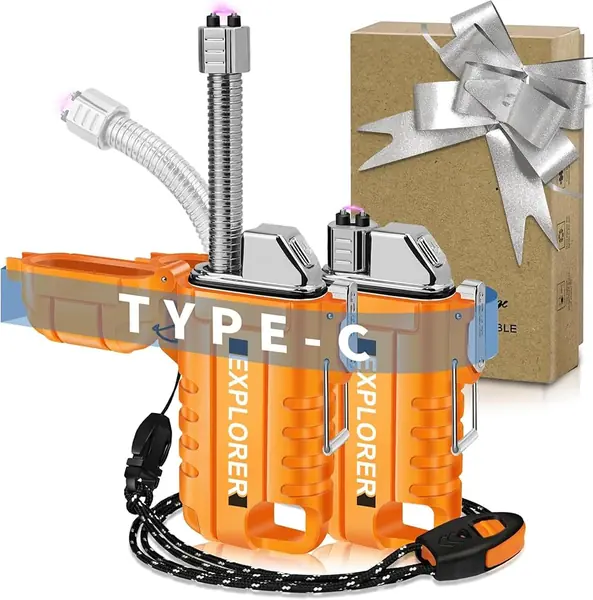
The lafagiet's 360-degree flexible neck is the reason to look at it. The head extends and bends, so you can point the arc down into a candle jar, around a stove burner, or into a fire pit without turning the body upside down. It is IP56 and USB-C, and the oversized hanging hole takes a carabiner or the included lanyard.

We think it is the best pick here for tight spaces. Standard arc lighters can be awkward when the thing you want to light sits below the rim of a jar, and the flexible neck solves that access problem without asking you to tip the lighter. The heat-resistant hose also keeps your hand farther from the hot head, which matters when you are holding the lighter over a stove or a lantern.

The trade-off is bulk: at 100 grams, it is heavier and longer than the pocket lighters, and the moving neck is one more joint to keep clean and dry. Battery life is the other question mark; we treat the lafagiet as a short-trip tool and charge it before a weekend rather than leave it for months. If you mostly light candles, stoves, and grills, the neck earns its space. If you want a keychain, the PPFISH is the better fit.

Pros

  • 360-degree flexible neck reaches into jars and stoves
  • IP56 and USB-C make it easy to live with
  • Large hanging hole and included lanyard

Cons

  • 100 g body is bulky for a pocket
  • Flexible neck is one more joint to protect
Our verdict

We recommend the lafagiet for candles, stoves, and other tight spaces; the flexible neck solves an access problem the pocket lighters cannot.

Check Latest Price
5

PPFISH Mini Brass Best Keychain Lighter

88 /100
Traveler Score Excellent

Key details

Fill
Ships empty
Fuel
Refillable fuel
Carry
Keychain
Material
H62 solid brass
Check Details on Amazon

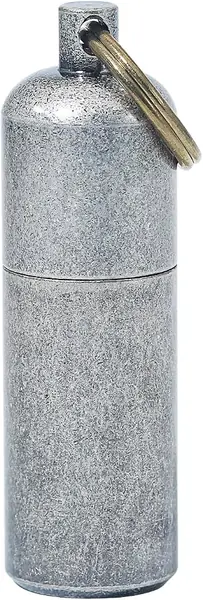
The PPFISH takes the opposite approach: no battery, no charging cable, no arc. It is a brass peanut lighter with a wick, flint, and a rubber gasket, and it hangs from a keychain. It ships empty, so you add fuel before the first use.

We recommend it for the kit that sits for months. A sealed brass body and a screw-on cap keep the fuel from evaporating, and the flint wheel works without a charge. The design is simple enough that there is very little to fail, which is why we prefer it as a keychain or glovebox backup to a rechargeable that may be dead when you need it. The H62 brass also gives it a solid, pocket-worn feel that the plastic lighters do not match.

The small size has a cost. The striker wheel is small, and the wick is large for the body, so it is fiddly for big hands. You need to check the fuel level and carry a spare flint; this is not a lighter you hand to someone without a quick lesson. It is also a flame lighter, so wind can push it around in a way the arc models resist. For a keychain or an emergency backup, those are reasonable compromises.

Pros

  • Brass body and gasket seal keep fuel in
  • No battery or charging routine
  • Keychain size with spare flint and wick

Cons

  • Ships empty and needs fuel
  • Small striker and large wick are fiddly
Our verdict

We recommend the PPFISH as a keychain or glovebox backup for anyone who wants a sealed, refillable flame lighter without a charging routine.

Check Latest Price
6

LcFun Two-Lighter Kit Backup Kit

87 /100
Traveler Score Excellent

Key details

Charging
USB-C
Water Rating
IP56
Battery
220 mAh
Contents
Arc + butane lighters
Check Details on Amazon

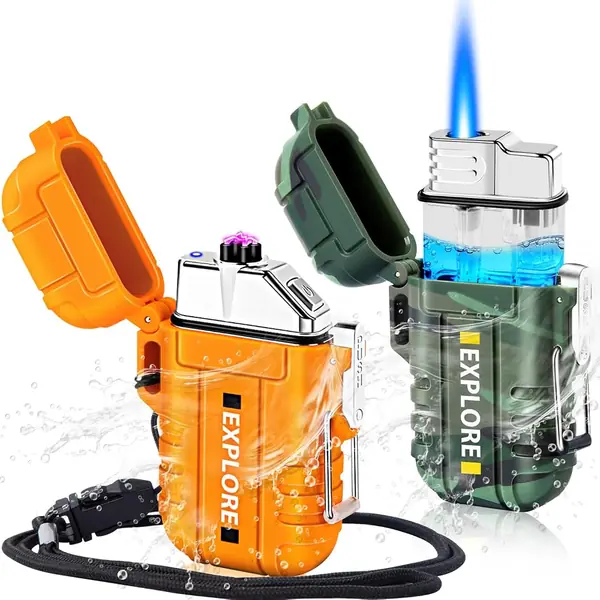
The LcFun two-pack is less a single lighter than a small ignition kit: one USB-C dual-arc lighter and one refillable butane torch, both with metal-ring seals and locking clasps. The butane lighter arrives without fuel, so it is a backup you have to prepare before you can count on it.

We like the pairing for a vehicle or cabin kit. The arc side handles candles, stove burners, and quick checks without fuel, while the butane side gives you a real flame for tinder or a wet fire pit. Both are IP56, and the electric side charges by USB-C. The two-lighters idea is genuinely useful if you want a backup for the backup, especially at the budget end of the kit spectrum.

The butane half is the fussy half. It needs fuel, and the fill valve can be temperamental if you do not purge and fill it correctly. The electric side's battery and long-term durability are the other question marks; this is a kit to check before a trip, not a leave-it-for-years tool. We prefer the single LcFun or the Survival Frog when we want one lighter to depend on.

Pros

  • Two ignition options: arc and butane
  • Both have IP56 seals and locking clasps
  • USB-C electric side with 220 mAh battery

Cons

  • Butane side needs fuel and careful filling
  • Battery and durability are inconsistent
Our verdict

We see the LcFun two-pack as a useful backup kit for a car or cabin; for a solo backcountry trip, choose a single lighter you can check and recharge.

Check Latest Price

How We Tested the Best Waterproof Lighters

We started with a long list of about 40 lighters pulled from retailer listings and customer reviews, then cut it to 16 based on price spread, ignition type, carry format, and whether the waterproof claim came from actual construction, a sealed body, an O-ring, a screw-down cap, rather than a hopeful line in the description. Each one got a full charge, a piece of tape with the date on it, and a spot in a rotation that ran four months.

They went where lighters actually go: a backyard fire pit on Saturday nights, two camping trips that turned wet, an exposed ridge on a windy afternoon, kitchen candles, and the glovebox. Every lighter got dunked in a bowl of water for a full minute, shaken off, and asked to light a candle wick right away. We noted whether it sparked on the first press or needed a second or third try.

Battery life got tracked the boring way, by counting lights until the arc died, then checking again after three weeks of sitting untouched. We held each one in front of a box fan on high and again in real wind, pressed the ignition with wet hands, and tried one at 38 degrees on a cold morning. Each lighter was dropped from waist height onto gravel three times, then pocketed with keys to see how it carried on a lanyard or a pack lid.

We also ran every built-in flashlight and whistle in the dark, and used the arcs on kindling, paracord, and a camp stove to see how far their usefulness stretched. A few lit a wick cleanly on one press even after the soak; others glowed impressively but couldn't catch tinder. That gap, flash versus function, decided more of this list than any spec.

How to Choose a Waterproof Lighter

Look for a real seal, not just a claim

Waterproof is a spectrum. An IP56 rating, a rubber O-ring, and a locking cap are the details that keep rain and splashes out; a snug lid with no gasket is a fair-weather lighter. The LcFun and lafagiet carry IP56 seals, while the SUPRUS uses an O-ring closure and the PPFISH relies on a screw-on brass body with a rubber gasket. Treat all of them as rain-ready rather than dive-rated: close the cap firmly, keep the gasket clean, and dry the arc or wick before you strike. If the seal is torn or the cap does not lock, the waterproof claim is finished.

Choose the ignition that fits the job

Arc lighters are the wind-resistant choice for emergency kits because there is no flame to blow out and no fuel to evaporate. The trade-off is contact: you touch the arc to tinder, a wick, or a cigarette, and a recessed head can make a deep candle jar awkward. A flexible neck, as on the lafagiet, solves that access problem. Butane torches give you a visible flame and more reach for a fire pit, but they need fuel and a clean fill valve. For a pack, we prioritize a top-facing arc or a flexible neck over a side-facing head.

Match the power source to your routine

USB-C rechargeable lighters are convenient, but a dead battery is a predictable way an emergency lighter fails you. A charge is only useful if you maintain it: top off the lighter before a trip and every few months in a glovebox. The Survival Frog claims 300 uses per charge; the LcFun pair includes a 220 mAh electric side. A refillable fluid lighter such as the PPFISH avoids charging entirely, but it ships empty and needs fuel, a wick, and a flint. Choose the routine you will actually keep.

Decide how much survival kit you need

A plain arc lighter is enough if you only need flame. Flashlights, whistles, tinder lanyards, and carabiner holes add bulk and cost, so pay for them only if they replace something else in your kit. The Survival Frog's three-mode light and whistle make it a compact emergency tool; the SUPRUS offers a similar light-and-lanyard package for less; the LcFun single is the lightest way to keep a sealed arc in a pocket. Check the weight and the cap size before you commit: a lighter that rides in a pocket beats a feature-packed one left at home.

Store it like the tool it is

Keep any lighter away from children and from gasoline, paint thinner, or other vapors; a sealed cap does not make it safe around accelerants. Do not leave a rechargeable or butane lighter in a hot car, and retire any model with a torn gasket, a damaged charge port, or a cap that no longer locks. Arc lighters burn hot at the contact point, so let the head cool before you put it back in a pocket. A waterproof lighter is still a lighter first.

Frequently Asked Questions

Final Verdict

For a pack, truck, or emergency kit, we recommend the Survival Frog Tough Electric Lighter 2.0. The top-facing dual arc is easier to aim at tinder than a recessed head, and the flashlight, whistle, and para-tinder lanyard earn their space in a small kit.

If you want the sealed-arc formula for less, the SUPRUS is the value alternative. If you want a lighter that never needs a charging cable, the PPFISH brass peanut lighter is the keychain answer. Start with the Survival Frog unless price or a no-charge routine is the deciding factor.