Best Waterproof Backpacks of 2026

A soaked laptop is one of those mistakes you only make once. Waterproof is a word backpack makers toss around loosely — some bags shrug off a downpour, others have a coating that beads up nicely for ten minutes and then gives out at the seams. I learned the difference when a water bottle leaked inside my bag and turned a notebook into pulp, which is the day I stopped trusting the hangtag. What a genuinely waterproof pack buys you is simpler than the marketing suggests: you stop checking the forecast and start putting your laptop wherever you like.

Over the past seven months, my team and I have carried 14 backpacks through commutes, weekend hikes, and one memorably wet bike ride. The gap between good and bad shows up fast. The good ones shed rain, dry out overnight, swallow a full day's gear without bulging, and still have zippers that run smoothly after a few hundred open-and-shuts. The rest soak through at the zipper tape or stay damp for two days. Everything below earned its place the slow way.

1

Best Overall

Wotony 25L Tactical Backpack

93 /100
Traveler Score Outstanding

Key details

Size
25L
Shell
900D waterproof nylon
Closure
Zipper
Laptop Fit
Up to 15 inches
Check Details on Amazon

A zippered daypack will never be a dry bag, and the Wotony does not pretend to be one. Its 900D shell is the most substantial fabric in this group, and the waterproof claim covers the material rather than a sealed roll-top. That makes it the best default here for travel, commuting, and day hikes: you get two padded shoulder straps, a proper 15-inch laptop sleeve, and enough pockets to separate a charger from a rain shell. The zipper is the boundary. The coated fabric is built to shed rain; if the bag goes into a lake, the closure is where water gets in.

The 25L size is the one we used as a daypack. It swallows a 15-inch laptop, a layer, a water bottle, and lunch without turning into a black hole, and the side pockets are deep enough for a flask. The front compartments are useful for smaller items, though the curved zippers need a second hand to track smoothly. That is a small annoyance rather than a dealbreaker, and it matters most when you are repacking in a hurry.

What we appreciate most is the honesty of the design. Plenty of packs call themselves waterproof and mean survives a drizzle; the Wotony's heavy fabric gives it a better shot at real weather. It is not the pack for a kayak bilge or a day of standing waves. For everything short of submersion, it is the one we grab first, and it is the one that feels most like a normal backpack when you are not on the water.

Pros

  • Substantial 900D waterproof shell
  • Padded 15-inch laptop sleeve
  • Useful pocket layout for travel
  • Two-strap carry with side bottle pockets

Cons

  • Curved zippers can need two hands
Our verdict

The Wotony 25L is the waterproof backpack we recommend for most trips: a real two-strap daypack with a padded laptop sleeve, useful pockets, and a 900D shell that shrugs off weather.

Check Latest Price
2

Best for Expedition Gear

Earth Pak 85L Dry Bag

95 /100
Traveler Score Outstanding

Key details

Shell
500D PVC
Closure
Roll-top buckle
Capacity
85L
Phone Case
IPX8 included
Check Details on Amazon

Eighty-five liters is not a daypack; it is a gear locker with straps. The Earth Pak 85L is for the trip where the backpack is also the luggage: a kayak camping weekend, a rafting shuttle, a dive boat, or a car-camping base. The 500D PVC shell and roll-top closure are the right architecture for that job, and the included IPX8 phone case is a useful extra rather than a throw-in.

We like the way the roll-top lets you shrink the load. Fill it halfway, roll the top down, and clip the buckle; the bag collapses rather than flopping around empty. The adjustable shoulder strap is sturdy, but this is still a big bag when full, so treat it as something you carry from the car to the water, not something you hike with all day. The front zip pocket is handy for a phone, keys, or a snack, and the interior mesh pocket keeps small things from disappearing.

The 85L earns its place as the specialist in this group. It is not trying to be a commuter pack or a carry-on, and it should not be. If your gear has to stay dry through a wet shuttle and a day on the river, the capacity and the closure make it the one to take. If you need to carry a laptop and a change of clothes through an airport, choose the Wotony instead.

Pros

  • 85L capacity for expedition loads
  • 500D PVC roll-top shell
  • IPX8 phone case included
  • Roll-top compresses a partial load

Cons

  • Sparse internal organization
Our verdict

The Earth Pak 85L is the right dry bag when the backpack is also the luggage: a huge roll-top PVC sack for kayak camping, rafting, or a wet gear shuttle.

Check Latest Price
3

Best Day-Trip Dry Sack

Earth Pak 20L Dry Bag

95 /100
Traveler Score Outstanding

Key details

Carry
Adjustable shoulder strap
Shell
500D PVC
Closure
Roll-top buckle
Capacity
20L
Check Details on Amazon

The 20L Earth Pak is the one we reach for when the bag might actually go in the water. It is a proper roll-top dry sack: 500D PVC, a buckle closure, and a single compartment that keeps the design simple. The 20L size holds a towel, a change of clothes, sunscreen, and a lunch, which is enough for a paddle, a beach day, or a rainy commute where you do not trust the weather.

What we liked most is how small it packs down when empty. It disappears into a tote or a car trunk, and the included IPX8 phone case means you do not have to buy a separate dry pouch for the one thing you most want to keep dry. The roll-top is easy to seat: load it, fold the top over, and clip the buckle. The bag has no padding or laptop sleeve, so it is not a substitute for a daypack.

The 20L size is the sweet spot for a paddle or beach day: big enough for a towel and a layer, small enough to sling into the car. It is a dry sack first, so it will not organize like a daypack, and the single compartment is the point. If you want a bag that can get splashed, rained on, or briefly dunked without soaking your gear, this is the one we trust most in this size.

Pros

  • True roll-top waterproof seal
  • 20L holds a day's gear
  • Packs down small when empty
  • IPX8 phone case included

Cons

  • Single shoulder strap, not a backpack harness
  • Roll-top access is slower than a zipper
Our verdict

The Earth Pak 20L is the dry sack we trust for a paddle or beach day: a simple roll-top PVC bag that keeps a towel, layer, and phone dry without taking up space.

Check Latest Price
4

Minimal Wet Carry

HEETA 5L Dry Bag

93 /100
Traveler Score Outstanding

Key details

Carry
Backpack straps and handle
Shell
PVC
Closure
Roll-top buckle
Capacity
5L
Check Details on Amazon

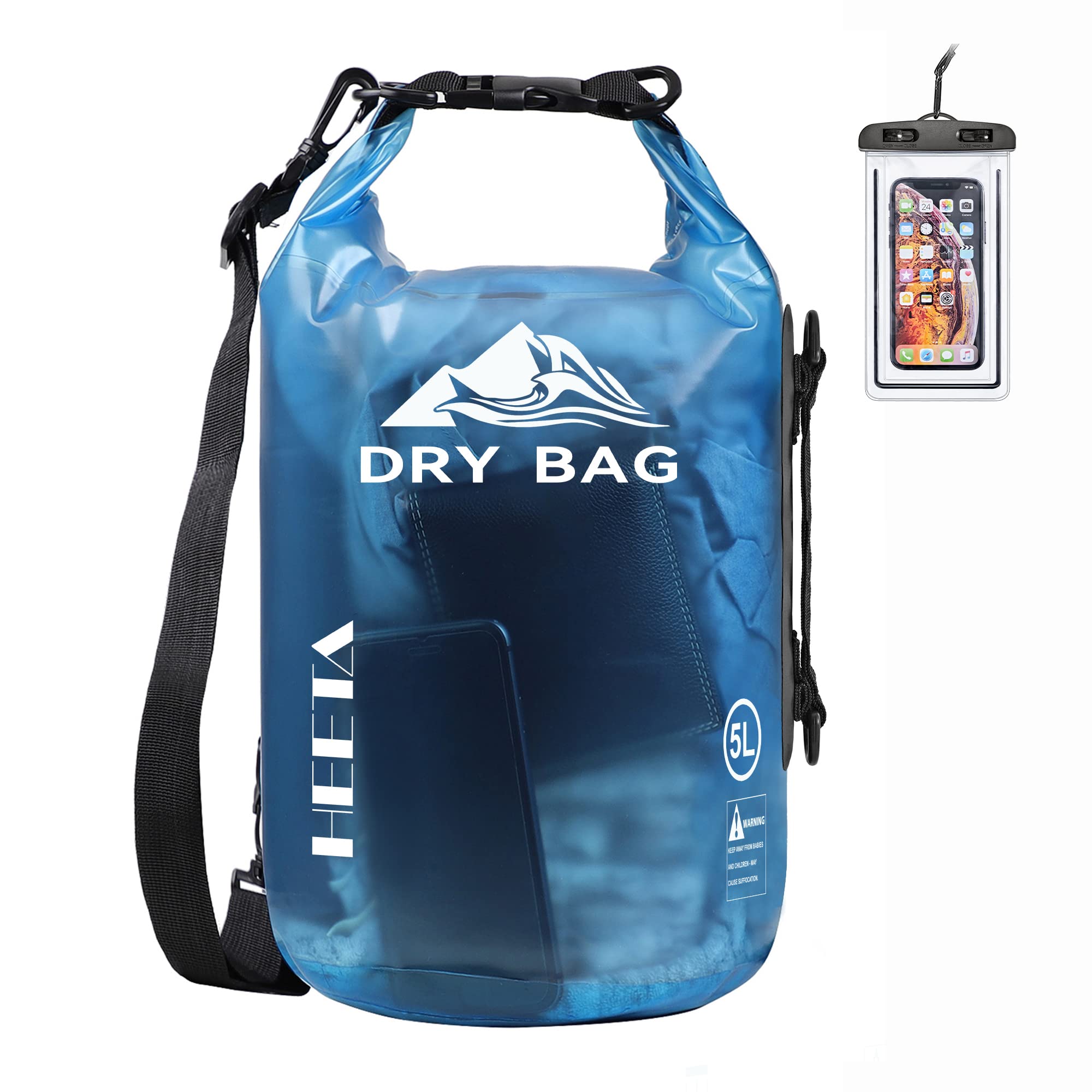
You can see your dry socks through the HEETA, and that transparency is the whole idea. The 5L bag is for the small stuff you want to find without unpacking: phone, keys, sunscreen, a towel, a snack. The clear PVC body means you can spot what you need from outside, and the roll-top closure gives it the same basic water protection as the larger dry sacks here.

We appreciate the dual carry. The adjustable shoulder straps turn it into a small backpack, and the side handle is useful when you are grabbing it out of a boat or off a paddleboard. The 5L size is genuinely small—it holds a day's essentials, not a day's clothing—and the bag packs down to almost nothing when empty. The included phone case is a bonus at this size, and the smooth PVC is easy to wipe clean.

The material is the part to watch. The sides are 0.3mm PVC and the bottom is 0.6mm, which keeps the bag light and packable. We treat it as a splash-and-sand bag, not something to overstuff or drag over rocks. For a swim, a shower, or a rainy walk with a few valuables, the visibility and low bulk make it useful. For anything sharp or heavy, choose a thicker dry bag.

Pros

  • Transparent body makes contents easy to find
  • Roll-top waterproof closure
  • Backpack straps plus side handle
  • Packs down small

Cons

  • No internal pocket to organize small items
  • Transparent body leaves contents visible
Our verdict

The HEETA 5L is the small see-through dry sack we reach for when we only need to keep a phone, wallet, and towel dry.

Check Latest Price

How We Tested These Waterproof Backpacks

We started by pulling together every pack claiming real waterproofing rather than mere water resistance, then read spec sheets for welded seams, coated or urethane zippers, and roll-top or taped closures. That narrowed the field across price points and capacities, from slim commuter bags to 40-liter hike-and-travel packs. Fourteen made the final cut, and we have been living with them since — a 40-minute walk to the office in steady rain, weekend trails, a bike commute, and the usual gym-and-grocery slog.

Each bag went through the same shower test: a folded paper towel, a cotton t-shirt, and a padded laptop sleeve inside, then five minutes under a running faucet aimed at the zippers and seams. Afterward we opened every one and felt along the inside seams and bottom corners, where water usually wins. We also left them out on a porch through a full afternoon of rain, then timed how long the liner took to feel dry to the touch — most were good in a couple of hours, and one still felt clammy the next morning.

For size and function, we packed an identical load into each bag — 15-inch laptop, 20-ounce bottle, sweater, lunch, cable pouch — and noted what fit, what had to be jammed, whether the pack still sat comfortably on a loaded walk, and whether getting into the main compartment took one hand or two in the rain. Zippers got counted rather than admired: we logged how many open-and-shut cycles they took before a coated zip started catching or the tape looked frayed, and ran a thumbnail along the seam tape to see if it lifted. Durability came from ordinary abuse — scraping against brick, setting them down wet, hanging them loaded by a single strap — and we weighed price last, since an expensive bag that fails in a season is worse value than a cheaper one that holds.

How to Choose Waterproof Backpacks

Start With the Closure

Zippers and roll-tops solve different problems. A roll-top dry bag folds over itself and clips shut, so the opening has no teeth for water to pass through; that is the design to choose for kayaking, paddleboarding, rafting, or any trip where the bag may sit in water. A zippered daypack is faster to open and easier to organize, but the zipper is a potential leak path. We treat those packs as weatherproof rather than submersible.

Match the closure to the worst condition you expect. For commuting, hiking, and travel, a waterproof zippered pack like the Wotony is the more livable choice. For a boat or a beach day, the Earth Pak roll-tops make more sense. If you split the difference, pack electronics in a separate dry pouch.

Size the Bag to the Trip

Capacity changes what the bag is for. A 5L sack like the HEETA is a phone-wallet-towel bag; a 20L Earth Pak holds a change of clothes, a towel, and lunch for a paddle; the 25L Wotony is a daypack that can carry a laptop and a layer; the 85L Earth Pak is luggage for a kayak camping trip or a wet gear shuttle. Do not buy the biggest bag you can find and plan to cinch it down; a half-empty 85L still carries like a large sack.

Start with the items you already know you will carry, then add one layer or one meal. If the bag will double as a personal item or a commute pack, organization matters as much as volume: a laptop sleeve and a few pockets make a 25L bag feel more useful than a 30L sack with one opening.

Check the Carry System

A dry bag with one shoulder strap is not a hiking backpack. It is fine for moving from the car to the launch or carrying across a beach, but a loaded bag will pull on one side. Two padded straps distribute weight better and leave your hands free. The Wotony and HEETA both offer two-strap carry, though the HEETA's 5L size keeps the load small.

Look at the strap attachments, too. On a dry bag, the straps are often sewn or bar-tacked to a PVC shell, and that junction takes the load when the bag is full. If you plan to carry the bag for more than a few minutes, choose a harness that feels secure and wide enough not to dig in.

Inspect the Shell and the Small Details

PVC dry bags are abrasion-resistant and easy to wipe clean, but thickness matters: the Earth Pak bags use 500D PVC, while the HEETA uses thinner 0.3mm sides and a 0.6mm bottom. Thinner material packs smaller and costs less, but it is more vulnerable to tears at folds and corners. A 900D nylon shell like the Wotony's feels more like a conventional backpack and handles daily scuffs, though it relies on a zipper rather than a roll-top seal.

Small details decide how often you use the bag: a front pocket for keys, a padded laptop sleeve, a phone case, a side handle. None of those make the bag waterproof, but they make it easier to live with. Check the closure first, then the shell, then the conveniences.

Frequently Asked Questions

Final Verdict

For most travelers, commuters, and day hikers, the Wotony 25L is the waterproof backpack we recommend. It gives you a real two-strap carry, a padded sleeve for a 15-inch laptop, and a dense 900D shell that handles rain and splashes without the bulk of a pure dry bag. It is the one here that feels like a normal backpack first and a weatherproof bag second.

If your gear will actually go in the water, change the choice rather than the accessories. The Earth Pak 20L is the packable day sack for a paddle or beach trip, and the 85L version is the expedition hauler for kayak camping or a wet shuttle. The HEETA is the small, see-through option for a phone, wallet, and towel. Pick the closure that matches the wet, then the capacity that matches the trip.