Best Water Shoes for Plantar Fasciitis of 2026

Water shoes and plantar fasciitis make an awkward pair. The whole point of a water shoe is to be thin, light, and quick to drain, while plantar fasciitis wants cushioning, arch support, and a heel that does not collapse after an hour on your feet. I have felt that tradeoff firsthand: a flimsy aqua sock can turn a pebbled beach into a slow, wincing walk. The right pair fixes that without turning into a heavy hiking shoe—it drains, dries, stays put when wet, and still gives your arch something to push against.

Over six months, my team and I tested 12 pairs in fitting rooms, on wet pool decks, along a rocky lake shore, and across a sandy beach. We sized them against our usual shoe size, checked whether the heel and toe box stayed put when wet, and kept wearing them after the water to see if comfort and support held up. The lightest pairs were not always the most supportive, and the best-looking ones did not always drain as fast; quality showed up in seams and soles, not just in photos. The picks below are the ones that got the balance right—supportive enough for a sore arch, water-friendly enough to actually pack.

1

Best Overall

UBFEN Water Shoes

89 /100
Traveler Score Excellent

Key details

Water Use
Beach, swim, hiking
Department
Unisex adult
Item Weight
11.2 oz
Quick-dry Upper
Yes
Check Details on Amazon

The UBFEN is the closest thing in this group to a real shoe that happens to drain. A rugged rubber sole and an upper that tightens over the instep give it more structure than the sock-style picks, and that is why it earns our top spot for plantar fasciitis: it gives a sore arch a firmer platform without turning the shoe into a heavy hiking boot. It is also unisex, which matters in a category that often splits men's and women's listings.

At 11.2 ounces, it is light enough to pack, but the sole still feels planted on wet rock and packed sand. We wore it for the wet parts of a beach day and for the walk back to the car, and it handled both without the sloppy feel of a thin aqua sock. The adjustable upper helps keep the foot from sliding forward, which is the difference between a water shoe you can walk in and one you shuffle in.

Traction is a strength, though not a guarantee on every slick surface; the tread has enough bite for wet rock and loose sand. The coverage over the top of the foot also protects against sun and scrapes, which is more than a mesh sock can offer.

The looks are a bonus: it reads more like a casual sneaker than a swim sock, so it does not look out of place on a boardwalk. For a shoe that has to move between water and pavement, that versatility is worth as much as the sole.

Pros

  • Rugged sole grips wet rock and sand
  • Unisex sizing covers men and women
  • Weighs 11.2 ounces for travel

Cons

  • Inconsistent sizing across the run
Our verdict

For most people with plantar fasciitis, the UBFEN is the best starting point: a unisex water shoe with a rugged sole and enough structure for mixed land-and-water days.
Check Latest Price
2

Best Cushioned for Women

Aleader Women's Mesh Slip-On

91 /100
Traveler Score Outstanding

Key details

Upper
Mesh
Closure
Slip-on
Water Use
Beach, pool, water sports
Department
Women's
Check Details on Amazon

The Aleader takes the opposite approach from the UBFEN: instead of a rugged, shoe-like sole, it puts a softer, more cushioned footbed under a mesh slip-on. That makes it the women's pick we reach for when the day is more pool deck than rocky trail.

Cushioning is the reason it ranks here. The underfoot feel is softer than the sock-style shoes, and the shoe has enough structure to keep the arch from feeling unsupported during water aerobics. It is not a stability shoe, and we do not treat it as one, but for plantar fasciitis it is a more forgiving place to stand than a flat aqua sock.

Drainage is the detail we loved most. Water exits through the outsole instead of ballooning around the foot, so the shoe stays light when you step out of the pool. The mesh upper also dries quickly, which matters if you are packing one pair for a trip.

The pull loop is a small thing that matters with wet hands; it makes the shoe easy to peel off without wrestling the heel. We also appreciated that the upper has enough stretch to get on without a struggle, but not so much that the shoe feels loose in the water.

Pros

  • Cushioned footbed softens hard pool decks
  • Drains through the outsole
  • Lightweight mesh dries quickly

Cons

  • Women's-specific sizing only
  • Heel collar can wear over time
Our verdict

Women who want the softest underfoot feel in a water shoe should start with the Aleader; it cushions without turning into a heavy beach sneaker.

Check Latest Price
3

Best for Wide Toe Box

DOUSSPRT Women's Water Shoes

91 /100
Traveler Score Outstanding

Key details

Water Use
Beach, swim, pool
Department
Women's
Quick-dry Upper
Yes
Check Details on Amazon

The DOUSSPRT solves the problem that sends a lot of plantar fasciitis shoppers looking for a wide water shoe: toes that feel mashed at the front. The toe box is roomy enough to wiggle your toes, and the shoe has a more athletic shape than the sock-style picks. That room is why it earns a place as our wide-fit pick.

The insole lifts out, which is the feature we care about most for plantar fasciitis. You can pull it, let the shoe dry, and put your own orthotic in once the shoe is dry; that gives you a familiar arch shape without buying a specialty water shoe. The roomy toe box leaves space for a slightly thicker sock or a slim insert.

It is lightweight and dries quickly, so it does not weigh down a beach bag. The athletic look is a bonus; it reads more like a sneaker than a water shoe, which makes it easier to wear from the pool to lunch.

The heel pull is small but useful when your hands are wet and sandy. We also like that the upper has enough structure to stay put without a tight lace, which is one less thing to fuss with on a boat.

Pros

  • Roomy toe box leaves wiggle room
  • Removable insole accepts your orthotic
  • Lightweight and quick-drying

Cons

  • Traction is mixed on smooth wet surfaces
Our verdict

If your plantar fasciitis insert needs room, the DOUSSPRT is the women's water shoe we point to first; the wide toe box and removable insole make it easier to fit.

Check Latest Price
4

Best for Arch Support

WateLves Water Shoes

91 /100
Traveler Score Outstanding

Key details

Water Use
Kayaking, boating, hiking
Department
Men's
Quick-dry Upper
Yes
Product Dimensions
5 x 5 x 0.7 inches
Check Details on Amazon

The WateLves is built for the kind of day where the water is only part of the walk: a rocky path to a swimming hole, a boat launch, a wet trail back to the car. The soft rubber sole and drainage holes in the bottom give it a more forgiving feel than a flat aqua sock.

The upper hugs the foot without pinching, and the stretch makes it easy to pull on with wet feet. Water leaves through the holes in the bottom instead of pooling under the heel, which is the practical detail that keeps the shoe from feeling like a bucket.

For men, this is the pick we recommend when you want a supportive-feeling water shoe without a stiff hiking sole. It has enough grip for wet rock and enough cushioning for a day that mixes sand and pavement. It is not a dedicated orthotic shoe, but it is a more comfortable place to stand than a minimal sock.

Sizing is the catch: the shoe runs large and the size range is limited, so size down if you are between sizes. For a week of boat days, that is an easy adjustment.

Pros

  • Soft rubber sole with drainage holes
  • Grip holds on wet rock and pool floors
  • Supportive feel for a water shoe

Cons

  • Insole and stitching can wear
Our verdict

For men who want a softer, supportive-feeling water shoe for rocky beaches and boat days, the WateLves is our pick; size down if you are between sizes.

Check Latest Price
5

Budget Firm Sole

Racqua Water Shoes

91 /100
Traveler Score Outstanding

Key details

Department
Women's
Item Weight
13.1 oz
Quick-dry Upper
Yes
Package Dimensions
13.39 x 6.54 x 3.19 inches
Check Details on Amazon

The Racqua is the budget pick that does not feel like a disposable aqua sock. Its sole is firmer than the sock-style shoes here, and the upper has enough structure to keep the foot from rolling over on uneven sand. That is a useful combination for a plantar fasciitis foot that wants a stable base without a stiff hiking shoe.

That firmness is why it earns a place. For a sore arch, a stable platform matters more than a soft, squishy sole, and the Racqua gives you that without the weight of a hiking shoe. It is not an orthotic, but it is a better starting point than a barefoot sock. The fit runs big, so size down if you are between sizes; the upper has enough adjustability to take up some slack.

At 13.12 ounces, it is heavier than the packable socks, but that weight is part of why the sole feels planted. We treat the Racqua as a short-trip shoe: it gives you a firmer base for beach walks and kayak launches without asking you to pack a second pair of sneakers. The quick-dry upper is a plus when you are moving between water and land.

Pros

  • Firm sole gives a stable platform
  • Versatile for beach, pool, and kayaking
  • Weighs 13.12 ounces

Cons

  • Insoles and laces can fail
  • Traction is mixed on slick surfaces
Our verdict

The Racqua is the budget pick for a firmer, more stable sole; it suits short beach trips, not daily wear.

Check Latest Price
6

Water Park Trips

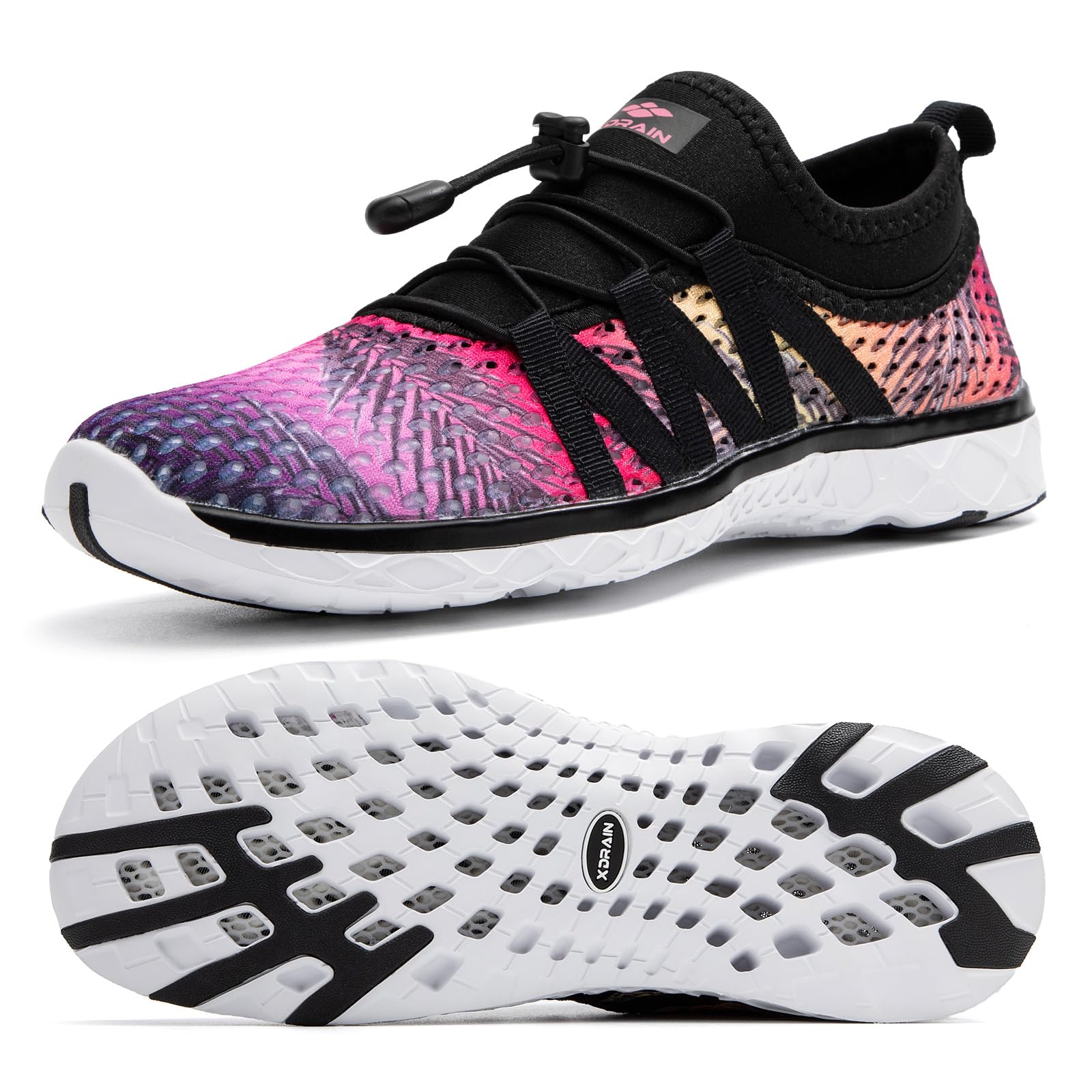
ziitop Water Shoes

91 /100
Traveler Score Outstanding

Key details

Department
Women's
Item Weight
10.6 oz
Quick-dry Upper
Yes
Package Dimensions
12.2 x 7.48 x 2.6 inches
Check Details on Amazon

At 10.58 ounces, the ziitop is the pair that disappears in a daypack. The low-profile upper and quick-dry build make it a natural choice for a water park or a pool day where you are in and out of the water all afternoon.

It is comfortable enough for short walks, and the sole has more protection than a paper-thin aqua sock. The fit runs small, so size up if you are between sizes; the toe box is not the place to save room.

It dries overnight, which is the detail that makes it useful on a trip: rinse it, hang it, and it is ready for the next morning. The stretchy upper also pulls on easily with wet hands, so it does not slow you down at the pool gate. We also like that the upper does not hold a lot of water, so it feels light when you step out.

What it is not is a support shoe. The sole is flexible, and a long walk on pavement will leave a plantar fasciitis foot wanting more. For a water park day, that flexibility is the price of the low weight; for the walk back to the hotel, change into your supportive pair.

Pros

  • Light at 10.58 ounces
  • Dries overnight for travel
  • Comfortable for short water sessions

Cons

  • Toe area can wear with use
Our verdict

If you need a light pair for a water park and already have a supportive shoe for the walk back, the ziitop packs small and dries fast.

Check Latest Price

How We Tested Water Shoes for Plantar Fasciitis

We built the shortlist from water shoes that named arch support or came with a removable, cushioned footbed, and we skipped flat, glued-in insoles and flimsy heel counters. Sizing was part of the first pass: we compared size charts, flagged models that ran narrow or wide, and noted whether half sizes were offered. That left 12 pairs, which we wore over six months.

Testing happened where water shoes actually get used—pool decks and splash-park concrete, a pebbled lake shore, wet boat ramps, and a sandy beach with a long walk back to the car. I wore each pair barefoot for at least a full afternoon, then kept them on through lunch or the drive home to see whether the arch cushioning lasted after the water drained. We tried our usual size first, then a half size up or down when available, and checked whether the heel slipped, the toe box crowded toes, or the shoe felt short after soaking.

We watched how fast water exited the outsole and whether the upper stayed heavy or dried between outings; pairs that trapped water in the insole got marked down. Each pair was weighed dry and again wet, then packed into a day bag to judge bulk and weight. After every trip we checked seams, strap anchors, and tread for fraying, stretching, or flattened cushioning, and we let pairs dry fully before wearing them again to see if they stiffened or shrank. For appearance, testers said whether they would wear them off the sand—to a boardwalk lunch or poolside cafe—without feeling like they had pool shoes on.

How to Choose Water Shoes for Plantar Fasciitis

Start With a Sole, Not a Sock

A barefoot aqua sock is fine for a few steps across hot sand, but it is the wrong tool for a painful plantar fascia. The shoes in this guide that make sense for plantar fasciitis have a firmer, more protective sole and an upper that holds the foot instead of letting it slide. Do not read "barefoot" or "compact" as support: those words describe a minimal sole or packability, not arch support. If you want the most shoe-like platform here, start with the UBFEN; if you want a softer feel, the Aleader is the women's alternative.

Make Room for Your Orthotic

The simplest way to make a water shoe work with plantar fasciitis is to use the insert you already trust. Look for a removable insole and enough depth that the orthotic does not crowd your toes. The DOUSSPRT is the clearest example here: its insole lifts out, and the wide toe box leaves room for a slim insert. A thicker orthotic can change the fit, so try it in the shoe before you commit and size up if your heel lifts or your toes touch the front.

Fit Is a Safety Feature

A water shoe that slides forward on a wet rock is a bad choice for a sore foot, no matter how cushioned it feels in the box. Look for an upper that tightens or hugs the instep, and pay attention to size runs: the WateLves runs large, while the ziitop runs small. The right fit leaves a thumb's width at the toe and no heel lift. If you are between sizes, choose the size that fits with your orthotic in place, not the size on your everyday sneaker.

Traction, Drainage, and Dry Time

Traction and drainage are separate jobs. A tread with enough bite helps on wet rock and boat ramps; drainage holes and a quick-dry upper keep the shoe from turning into a bucket. The Aleader drains through the outsole, and the WateLves has holes in the bottom for the same reason. Neither feature makes a shoe slip-proof on smooth tile, so slow down in locker rooms and pool bathrooms. For travel, a shoe that dries overnight is easier to pack than one that stays damp in a suitcase.

Decide How Much Shoe You Want to Carry

More structure usually means more weight, and that trade-off matters if you are packing for a trip. The UBFEN weighs 11.2 ounces and the Racqua 13.12 ounces, while the ziitop is 10.58 ounces. A lighter shoe is easier to carry, but a firmer sole is more comfortable on a long walk to the beach. If you need one pair for the whole trip, lean toward the more structured shoe; if you already have a supportive walking shoe, a lighter water pair can be the second pair.

Frequently Asked Questions

Final Verdict

For most people with plantar fasciitis, we recommend the UBFEN. It is the most structured unisex water shoe in this group, with a rugged sole and enough grip for the walk to the water and back. Women who want a softer underfoot feel should choose the Aleader; if you plan to use your own orthotic, the DOUSSPRT's roomy toe box and removable insole make it the easier fit. The ziitop is the pair for a water park, not a long beach walk.