Best Water Shoes for Diabetic Feet of 2026

A stubbed toe is a minor annoyance for most people. For anyone managing diabetes, a small cut on the sole of the foot is a different story — numbness can hide the pebble that caused it, and a seam that rubs in one spot can turn a beach day into weeks of trouble. Most water shoes are built thin, flat, and snug, which is exactly backwards for a sensitive foot. What you actually want is real material between your sole and the ground, uppers that drain instead of pooling, and a fit that still works when feet swell in the afternoon heat.

I've spent the past six months in 12 pairs of water shoes — pool decks, gravel lake entries, splash pads, and one memorably slick gym shower floor. Here's what first-time buyers don't hear often enough: this category runs small, so most people need a half size up, especially if they'll be wearing them late in the day when feet are at their widest. The pairs that made the list below are the ones that protected feet without looking like medical gear.

1

Best Overall

Maxome Water Shoes

93 /100
Traveler Score Outstanding

Key details

Design
Barefoot quick-dry
Insole
Removable
Toe Box
Roomy
Stated Use
Beach, pool, river, boating
Check Details on Amazon

The first thing we check is the toe box, and the Maxome is the roomiest of the water shoes here. Toes sit with room to spread rather than pressed together, which is the difference between a shoe you forget about and one you feel at every step. The sole also has enough substance that small rocks and shells don't translate straight through to the foot. We kept reaching for this pair for lake launches and rocky beach entries because it protects without the clunky feel of a hiking sandal.

Traction is the other reason it earns the top spot. The tread grips wet boat decks and uneven rocks well enough that we weren't thinking about every step. It is still a water shoe, not a cleat; algae-covered rocks and slick pool tiles deserve caution no matter what you wear. The slip-on shape keeps them simple to get on, and the light weight means they pack without taking over a day bag.

The removable insole is a small detail with real consequences: it lets you rinse and air the shoe more thoroughly, but leaving it in slows drying. Pull it out after a wet day. For a diabetic foot, that extra step matters more than it does for the average beachgoer, because trapped moisture is exactly what you don't want. We also like that the fit is roomy without feeling sloppy, though the slip-on design gives you less adjustability than a lace-up.

Pros

  • Roomy toe box leaves space across toes
  • Protective sole buffers rocks and shells
  • Reliable grip on wet decks and rocks
  • Lightweight and easy to pack

Cons

  • Removable insole slows drying if left in
Our verdict

We recommend the Maxome first for most diabetic feet because the roomy toe box leaves space across the toes and the sole shields against shells and lakebed rocks without feeling clunky.

Check Latest Price
2

Best Adjustable Fit

DLGJPA Quick-Dry Water Shoes

91 /100
Traveler Score Outstanding

Key details

Sizing
Runs large for some
Closure
Lace-up
Drainage
Perforated sole
Stated Use
Lake, beach, boating
Check Details on Amazon

The lace-up closure is the reason to look here. Most water shoes in this group are slip-ons, which is fine until you need to loosen one spot across the top of the foot or snug the heel. The DLGJPA lets you do both. We found the upper stays put without pressing hard over the instep, and the shoe is light enough that it doesn't feel like an anchor when wet.

Where it wins for diabetic feet is the combination of adjustment and a relatively protected footbed. The sole is thick enough for gravel and rough lake bottoms, and the perforated insole and outsole drain water instead of holding it. We liked it for boating and beach walks where the surface changes from sand to rock to dock. The trade-off is that those drain holes can take in small grit, so rinse them after a sandy day.

Durability is the bigger question. Some pairs hold up through a season of beach days, while others show tread separation or frayed laces. The lace-up design puts more stress on those laces, so rinse and air-dry after salt water. For occasional trips and pool days, we think the adjustability makes it worth a look.

Pros

  • Lace-up closure fine-tunes pressure
  • Perforated sole drains water
  • Lightweight even when wet

Cons

  • Sizing runs large for some feet
Our verdict

The DLGJPA is the pick when you want laces to fine-tune pressure across the instep, with a light, quick-drying build that stays comfortable in and out of the water.

Check Latest Price
3

Best Cushioned

SIMARI Water Shoes

91 /100
Traveler Score Outstanding

Key details

Design
Barefoot aqua sock
Sizing
True to size
Closure
Tie
Stated Use
Surfing, swimming, beach, kayaking
Check Details on Amazon

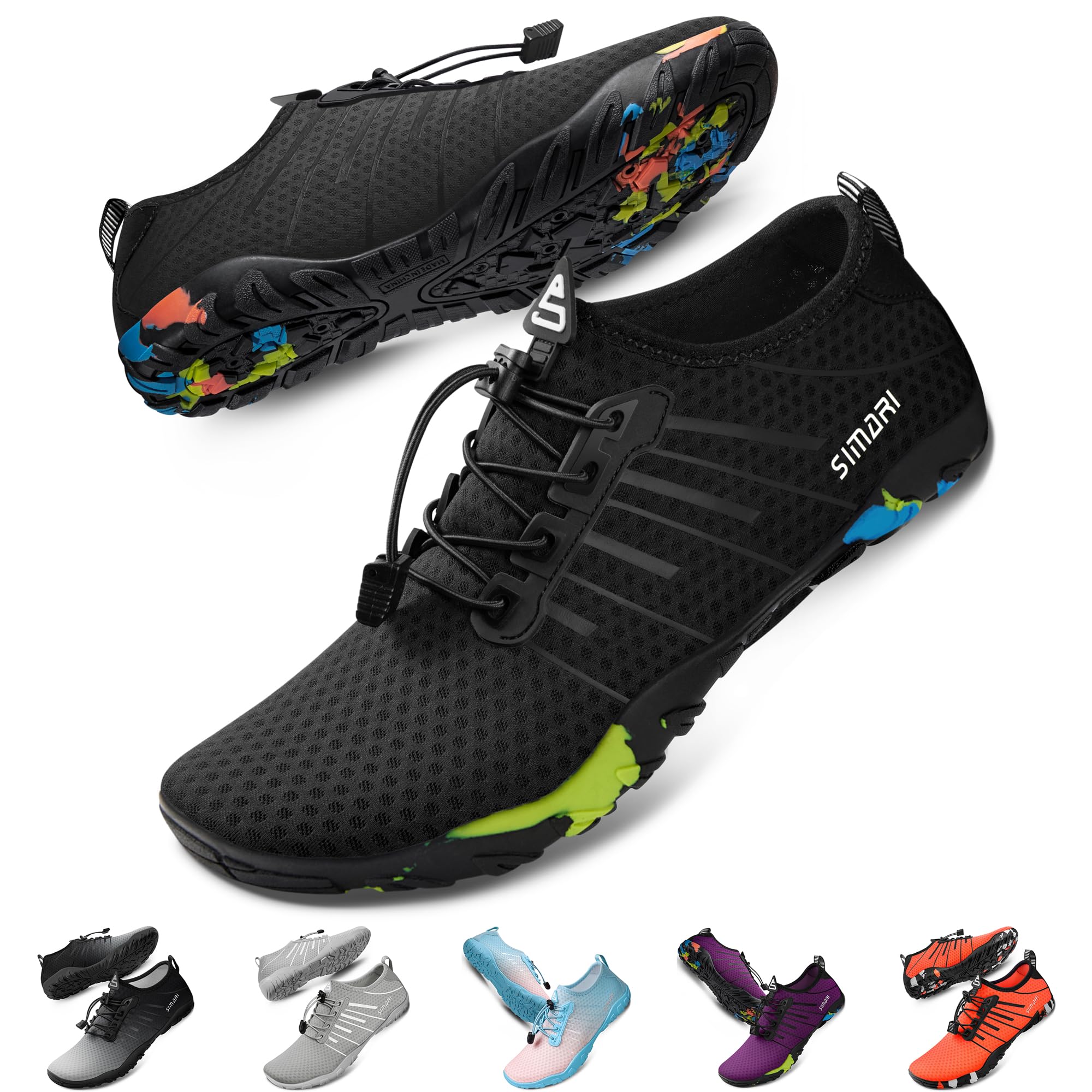
Water aerobics is harder on feet than it looks: you push off the pool floor, change direction, and spend an hour in wet shoes. The SIMARI is the pair we liked for that kind of session because the footbed has more cushion than most aqua socks here. The sole is thick enough that the pool floor and a rough lake bottom don't feel like the same surface. The tie is a useful detail, too; it lets you take up a little slack without a full lace-up.

Drain holes in the sole let water out, and the insole comes out for rinsing. We appreciated that after a sandy day, because grit that stays in a water shoe becomes a rub point. The upper is soft against the foot, and the shoe stays on through laps and side-to-side movement. It is not the most protective sole in this group, so we don't treat it as a rock-hopping shoe.

The tie helps take up volume across the instep, and the shoe is true to size for most feet. We did find the heel collar soft enough to avoid a break-in period, which is not true of every water shoe here. For a class or a vacation, the cushioning and the tie make it a comfortable, practical choice.

Pros

  • Cushioned footbed for pool classes
  • Tie adjusts fit across instep
  • Drain holes and removable insole

Cons

  • Toe area can separate over time
  • Grip is less dependable on slick surfaces
Our verdict

The SIMARI is our pick for water aerobics and long pool sessions, with a cushioned footbed and a tie that lets you snug the fit without fighting a stiff upper.

Check Latest Price
4

Best for Pool and Beach

SEEKWAY Water Shoes

91 /100
Traveler Score Outstanding

Key details

Fit
True to size
Design
Barefoot aqua sock
Drainage
Drain holes
Stated Use
Beach, pool, lake, river
Check Details on Amazon

Some water shoes feel like a compromised sneaker. The SEEKWAY feels more like a soft slipper with a sole, which is why we kept it by the pool bag. The upper is easy to pull on, the interior is soft against bare skin, and the shoe stays put when you walk from the locker room to the water.

The sole has enough cushion for pool bottoms and packed sand, and the drain holes do their job. We liked the traction on wet pool decks and smooth rocks; it is not aggressive enough that you feel every lug on land. The shoe dries overnight in most conditions, which makes it easy to pack for a trip with one pair.

Getting them off when wet is the fussy part. The same soft upper that goes on easily can cling when your feet are slick, and the insole can shift as you pull. We found it easier to rinse them on the foot and work them off at the heel. We still think the trade-off is worth it for pool-heavy trips, where you are taking them on and off all day.

Pros

  • Easy to slip on
  • Soft interior against bare skin
  • Drain holes speed drying
  • Good grip on wet pool decks

Cons

  • Durability can be uneven over time
Our verdict

The SEEKWAY is a strong choice for pool decks and easy beach days, with a soft interior, useful drain holes, and a slip-on shape that stays secure.

Check Latest Price
5

Best for Easy On and Off

BUWTDAY Water Shoes

91 /100
Traveler Score Outstanding

Key details

Design
Quick-dry aqua sock
Sizing
True to size
Toe Box
Large
Stated Use
Beach, pool, swim
Check Details on Amazon

A large toe box is not just a comfort feature when you have diabetic feet; it is the space that keeps seams and edges away from toes. The BUWTDAY has one of the roomier fronts in this group, and the shoe still stays on when you walk through surf or step onto a dock. That combination is harder to find than it should be.

The easy on/off is the part we appreciated most. The opening is generous, the upper has some give, and you don't need to wrestle with laces to get them seated. We think that matters for anyone with stiff hands, neuropathy, or a travel day that involves a lot of transitions. The sole grips wet surfaces well and has enough substance for rocky beach entries.

The fit is not universal. A few feet find the length short, so check the size chart and leave room at the toe. The shoe is also not as structured as a lace-up, so it suits calm water and easy walks better than long rocky hikes. For the right foot, though, the easy entry and roomy front make it a useful alternative.

Pros

  • Large toe box
  • Easy to pull on and off
  • Secure through surf and on docks

Cons

No notable drawbacks to flag.

Our verdict

The BUWTDAY is the easiest pair here to pull on and off, with a large toe box and a secure feel that suits stiff hands and quick transitions.

Check Latest Price
6

Wide Land-To-Water

WateLves Barefoot Water Shoes

91 /100
Traveler Score Outstanding

Key details

Drying
Slow
Closure
Adjustable
Toe Box
Wide
Stated Use
Beach, walking, running
Check Details on Amazon

The WateLves looks like a casual sneaker, and that is the point. It has a wide toe box, an adjustable upper, and enough structure for walking on land without feeling like a swim sock. We liked it for boardwalk strolls, tide-pool paths, and travel days when one pair has to do more than pool duty.

The fit is the reason it made the list. Toes have room to spread, the upper adjusts across the foot, and the shoe stays comfortable for longer walks than most aqua socks. We found it especially useful for a wide forefoot that gets pinched in narrower water shoes.

It is not quick-dry in the way the aqua socks here are. After a soaking, it can take two to three days to dry, which is a long time to carry a damp shoe. The insole and upper hold water longer, and the shoe gets heavy before it dries. That is the trade-off for the sneaker-like support.

We still see a clear role for it: a wide, adjustable shoe for trips where you split time between water and pavement and can let it dry overnight. If you need a shoe for daily water aerobics, the SEEKWAY or SIMARI is the better fit. For a travel shoe that handles a wet beach and a dry walk back, the WateLves earns its place.

Pros

  • Wide toe box
  • Adjustable upper
  • Sneaker-like support on land
  • Comfortable for wide forefeet

Cons

  • Slow to dry after a soaking
  • Some pairs come apart after a few wears
Our verdict

The WateLves is the closest thing here to a wide barefoot sneaker that can get wet, but it is a land-to-water shoe rather than a true quick-dry water shoe.

Check Latest Price
7

Firm Sole Protection

Racqua Water Shoes

91 /100
Traveler Score Outstanding

Key details

Sole
Firm
Design
Barefoot quick-dry
Stated Use
Beach, pool, creek, kayaking
Package Weight
13.1 oz
Check Details on Amazon

A firm sole is reassuring when you are picking your way across a creek bed or a shell-strewn beach. The Racqua has more structure underfoot than the softest aqua socks here, and the wide fit leaves room across the forefoot instead of tapering to a narrow toe. We noticed the difference on packed sand and small rocks, where a thin sole leaves you feeling every pebble.

The trade-off is traction. The tread is fine on dry ground and many wet surfaces, but it is not the most confident on smooth, slick rocks. If your water time is mostly pool deck and sand, that is easy to live with. If you are walking on algae-covered river rocks, treat it as a shoe that needs careful steps rather than a guarantee.

Durability is the other question. The upper and laces hold up for many users, but some pairs show insoles separating or laces breaking. Rinse and air-dry them after salt water to give them the best chance. For a firm, wide water shoe at a budget price, we think it earns a place, especially if your water is more sand than slick rock.

Pros

  • Firm sole protects against rocks
  • Wide fit across forefoot
  • Good for beach and creek walking

Cons

  • Traction is mixed on slick rocks
Our verdict

The Racqua is a good option when you want a firmer, more protected sole underfoot and a wide fit, as long as you accept mixed wet traction.

Check Latest Price
8

Water Park Days

ziitop Water Shoes

91 /100
Traveler Score Outstanding

Key details

Design
Barefoot quick-dry
Sizing
Runs small for some
Stated Use
Swim, pool, beach, river, lake
Package Weight
10.6 oz
Check Details on Amazon

Sizing is the first thing to get right with the ziitop. The shoe runs small for some feet, while others find it true to size, so the size chart matters more than the number on your everyday sneaker. Once you have the length right, the toe box is roomy enough that toes don't feel cramped, which is the part we care about most.

For water parks and pool days, the shoe does the job. It stays on through water rides, dries overnight, and has enough sole to protect against hot pavement and rough pool bottoms. The upper is soft and doesn't rub in the spots that usually blister.

The durability is the weak spot. Some pairs come apart at the outside or develop a hole near the toe after a few uses. We don't count on it as a daily shoe, but for a vacation or a season of water-park visits, it is a reasonable option.

We also like that it is light enough to pack in a day bag and easy to rinse. If you need a shoe for rocky trails or long walks, choose the Maxome or DLGJPA instead. For a trip where the shoe will get wet, get kicked off, and get wet again, the ziitop is a useful, affordable choice.

Pros

  • Roomy toe box
  • Secure through water rides
  • Dries overnight

Cons

  • Sizing runs small for some feet
  • Can develop holes or separation
Our verdict

The ziitop is a practical water-park shoe with a roomy toe box and a secure feel, though the sizing and durability are less consistent than our top picks.

Check Latest Price

How We Tested: Six Months, 12 Pairs, a Lot of Wet Tile

We started with roughly 40 styles and narrowed the field using the specs that actually matter for a foot with reduced sensation: a sole thick enough to blunt gravel and shell shards, seams kept off the toes and heel, removable insoles so custom orthotics still fit, and uppers built to drain rather than absorb. That left 12 pairs to wear.

Each one got the same routine. I measured it against its own size chart, then wore it for a full afternoon — when feet are at their widest — across a wet pool deck, a gravel lake entry, and a splash pad. Testers with reduced feeling ran a hand through the inside of the shoe after every walk, the way they'd check a foot at home, looking for grit that had worked its way in. At the end of each day we checked for red marks, hot spots, and rubbed seams.

Traction was tested on wet ceramic tile, a concrete boat ramp, and algae-slicked rocks, where we noted whether the outsole bit or slid. For water-friendliness, we timed how long each pair took to stop squelching after a soak, then repeated the soak-and-air-dry cycle all season to see which seams split and which lugs wore flat. Nobody wants to look like they're wearing medical gear, so we wore each pair with shorts to a backyard cookout and asked friends point-blank what they thought. By month six we compared notes on value — which pairs still looked and performed like new.

How to Choose Water Shoes for Diabetic Feet

Fit Comes Before Features

Start with the toe box and the heel, not the laces. You want enough room to wiggle toes without the heel lifting when you walk out of the water. A wide forefoot is useful, but a shoe that is simply too long will rub. Adjustability matters for feet that swell, so a lace-up like the DLGJPA gives you more control than a slip-on. If you have reduced feeling in your feet, do not rely on feel alone; check for red marks when you take the shoe off.

What the Sole Needs to Do

A water shoe's sole has two jobs: keep shells, gravel, and hot sand from pressing into the foot, and grip the surface under you. Thicker is not automatically better; a very stiff sole can be tiring on long walks. Look for a firm midsole and a tread that is aggressive enough for wet rocks but not so tall that it feels unstable. Drain holes help water escape, but they also let in fine sand, so rinse after beach days.

Manage Moisture, Not Just Water

Quick-dry uppers and drain holes help, but the shoe only dries if you let it. Pull out removable insoles, rinse off salt and sand, and air-dry in shade rather than direct sun. If a shoe takes two or three days to dry, it is a land-to-water shoe, not a daily water shoe. For diabetic feet, the bigger point is to get out of wet shoes and dry your feet thoroughly after swimming; no water shoe replaces that step.

Match the Shoe to the Trip

Pool decks and water parks call for easy on/off and a soft upper. Rocky lake entries and shell beaches call for more underfoot protection. Travel days may need one pair that can handle both, but a shoe that is great on pavement often dries slowly. We prefer to pack a dedicated aqua sock for water days and a wide, adjustable shoe for the walk back rather than expect one pair to do everything well.

Frequently Asked Questions

Final Verdict

For most people shopping with diabetic feet in mind, the Maxome is the pair we recommend first. Its roomy toe box, protective sole, and reliable wet grip make it the easiest water shoe to live with across beach, lake, and pool days. If you need laces to adjust pressure across the instep, the DLGJPA is the better fit. If you want a wide, adjustable shoe for land and water, the WateLves is the niche pick, provided you can let it dry for a couple of days.