Best Travel Umbrellas of 2026

A travel umbrella lives between two bad options: the tiny one that leaves your shoulders soaked, and the sturdy one you never actually carry because it doesn't fit in your bag. Then there's wind, which is where most of them die — a single gust catches a cheap canopy, flips it inside out, and bends a rib badly enough that it never closes flat again. A good one solves all three at once. It disappears into a tote or a coat pocket, opens wide enough to keep your laptop bag dry on the walk from the train, and gives with the wind instead of snapping at it.

I've carried a folding umbrella in one bag or another for years, and the difference between a good one and a bad one usually shows up in the first gust. Over the past six months, my team and I have tested 12 travel umbrellas — commuting with them, running errands, standing in the kind of sideways rain that soaks straight through a canvas tote — and the ones that held up were built around their ribs and runners, not their prints. The picks below are the ones I now grab without checking the sky first.

1

Best Overall

Repel Windproof Travel Umbrella

91 /100
Traveler Score Outstanding

Key details

Opening
Automatic open and close
Wind Rating
Up to 100 mph
Intended Use
Rain and sun
Check Details on Amazon

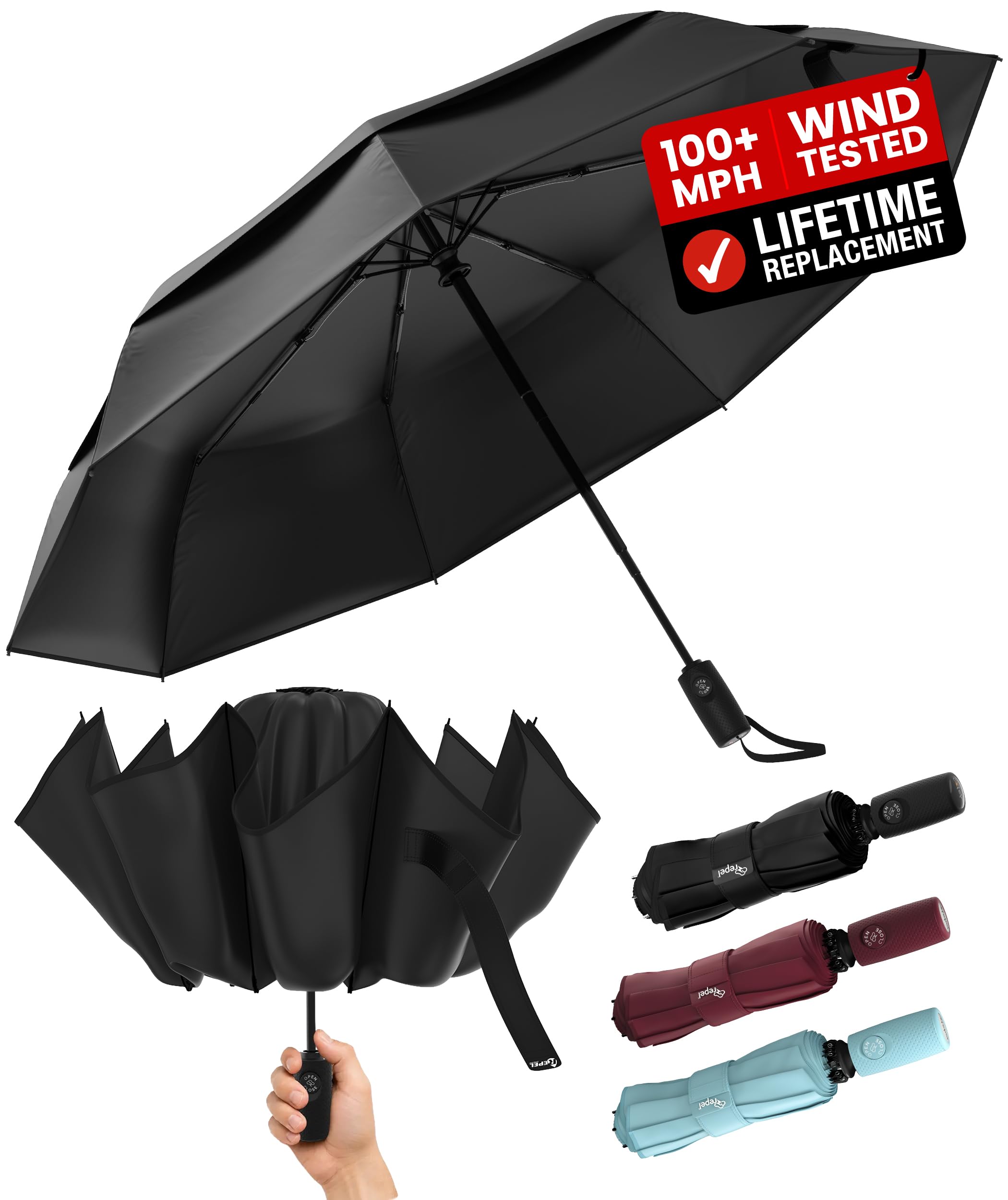
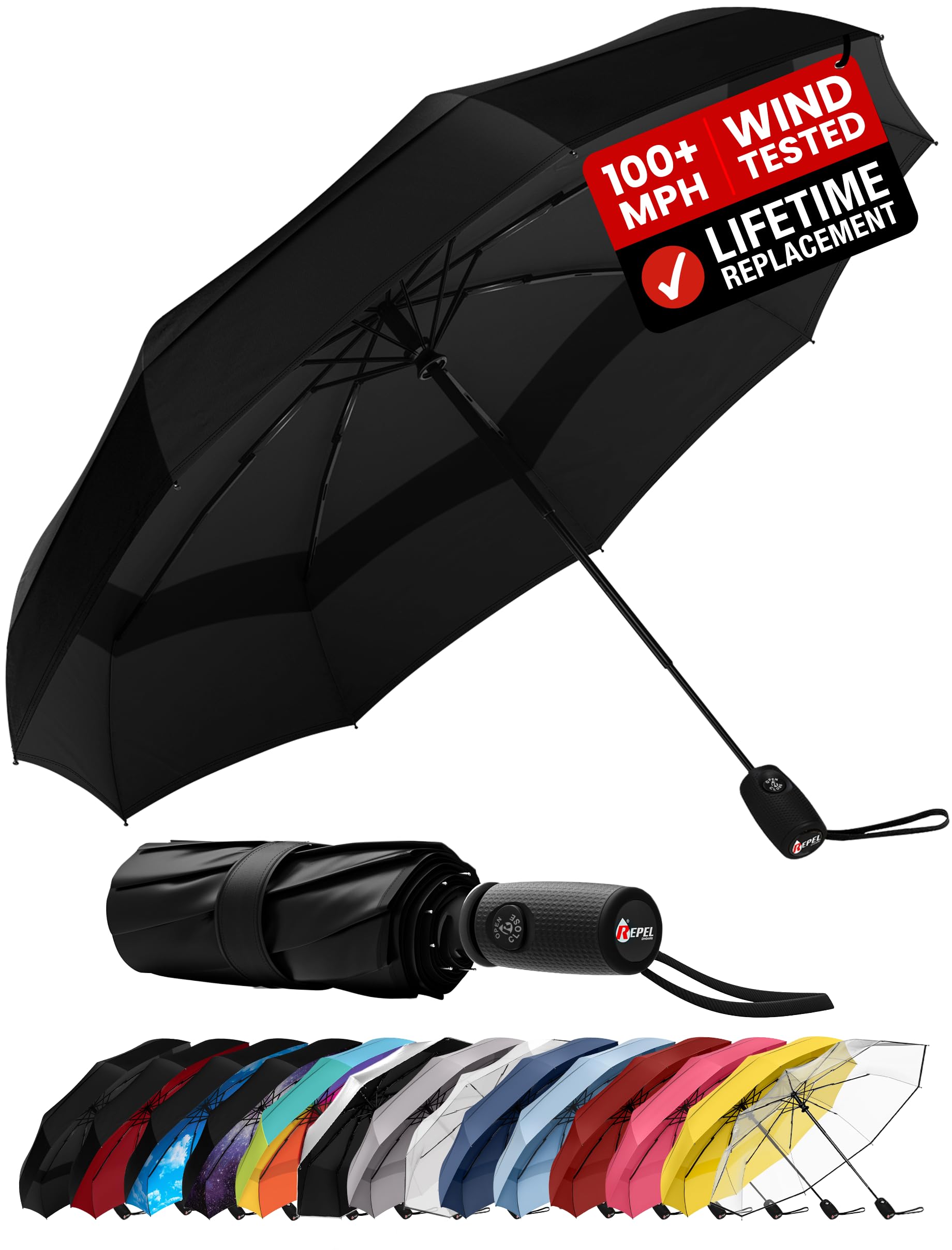
A backpack side pocket is the tightest test a travel umbrella faces, and the Repel is the one that slid in and stayed there. It earns the top spot because it does the three things that matter on a wet morning without asking anything of you: it opens one-handed, it's small enough that forgetting it in a bag costs you nothing, and it feels planted rather than rattly when the canopy fills.

The button is the part you'll use most. Press it and the canopy springs out fast enough that you should point it away from your face; press it again and the canopy folds down at the same touch. It's loud — a hard pop that carries in a quiet doorway — and we noticed it every time for the first week and never again after that. The payoff is opening it at a kerb while holding a coffee and a phone.

Where it quietly beats the cheaper picks here is water. The canopy collects runoff inside itself as it closes, so walking into a lobby or onto a train doesn't leave a trail behind you. We noticed that on the first soaked morning and appreciated it more each time after. There's also more heft in the hand than the ultralight picks in this group, and that's the trade we take for how steady it sits when a gust hits.

So the shape of the whole product is unglamorous and right: nothing clever to learn, nothing fragile to baby, and no reason to think about it again until it rains. That's a low bar that a surprising number of folding umbrellas here fail.

Pros

  • Fits a backpack side pocket without a fight
  • One-button open and close for doorways
  • Keeps runoff inside the canopy when closed

Cons

  • Closing takes a firm push against the spring
  • Ribs and shaft can give out under heavy wind use
Our verdict

Our default recommendation for travel: it opens one-handed, packs into a side pocket, and holds its shape in a gust, which is everything most people need from a single umbrella.
Check Latest Price
2

Best Lightweight

Tumella Windproof Travel Umbrella

91 /100
Traveler Score Outstanding

Key details

Weight
12 oz
Opening
Automatic open and close
Canopy Span
40.94 inches
Wind Rating
100 mph tested
Check Details on Amazon

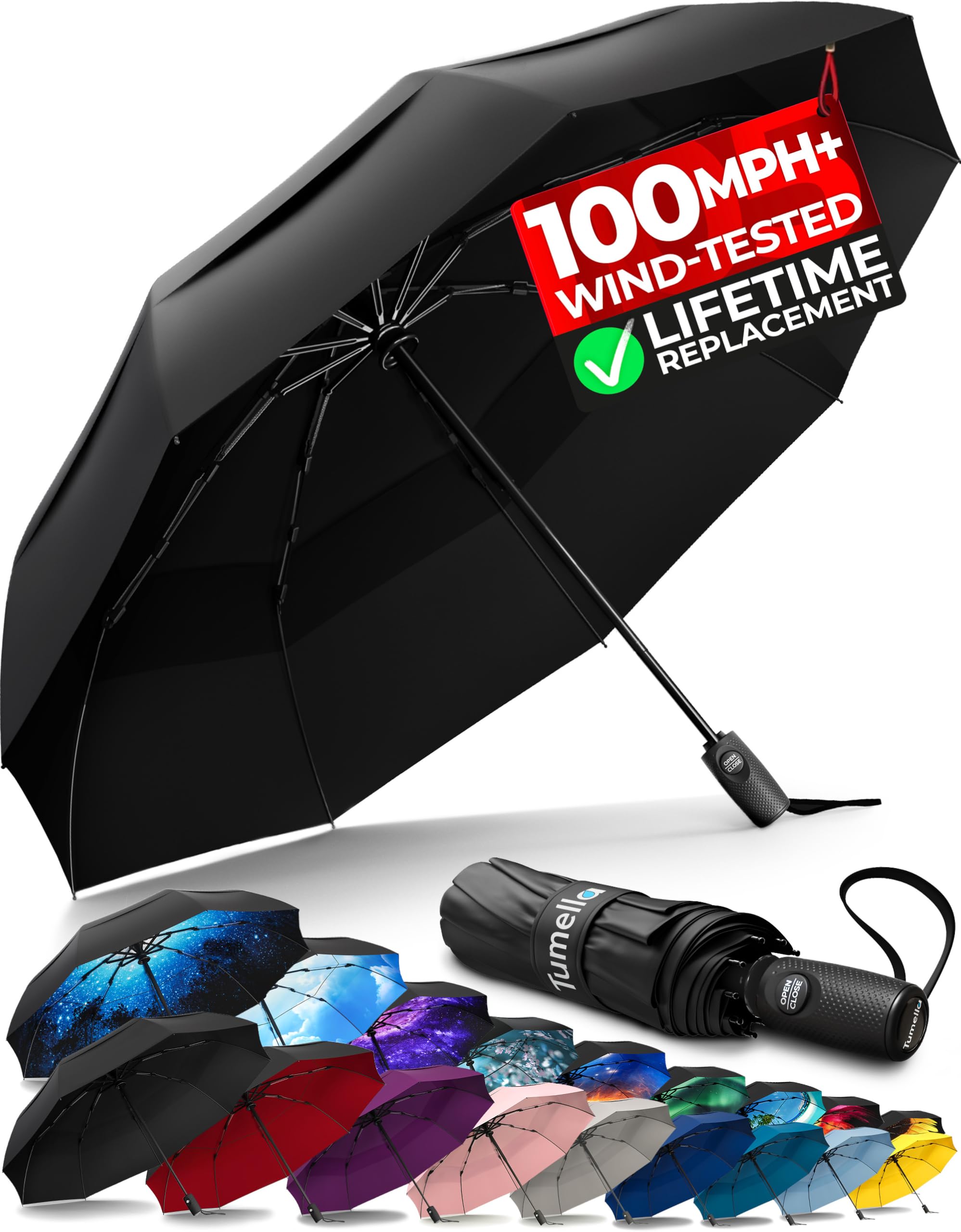
At 11.99 ounces, the Tumella is light enough that we stopped noticing it in a daypack, which is the whole point of a travel umbrella. The canopy opens to just under 41 inches, so it covers one person and a shoulder bag rather than two people sharing.

What surprised us is how little that light weight costs in feel. The shaft locks without wobble, the frame stays tight when the canopy fills, and it's the compact umbrella in this group that behaves most like a fixed-length one once it's up. On sturdiness it sits near the top of this set, which is not what we expected from the lightest of the well-supported picks.

In use it's a one-person umbrella and honest about it. It gets you from a car park to a door with your shoulders dry, the button does the opening in a second, and the packed shape is slim enough to slide behind a laptop sleeve rather than fight it.

Tumella backs it with a lifetime replacement, and that matters more on a folding umbrella than on almost anything else you'll pack, because the mechanism is the part that fails. It's not a reason to be careless with it, but it is a reason to stop worrying about the day the spring gives up.

Pros

  • 11.99 ounces with a 40.94-inch canopy
  • Frame feels tight and wobble-free when open
  • Canopy springs back after an inversion

Cons

  • Collapsing the shaft takes two hands
  • A hard gust can still turn the canopy inside out
Our verdict

The light umbrella to buy if you count ounces: 11.99 ounces, a canopy that opens to about 41 inches, and a frame that feels tighter than its weight suggests.

Check Latest Price
3

Best Budget

SY Compact Travel Umbrella

89 /100
Traveler Score Excellent

Key details

Ribs
8 fiberglass
Weight
10.9 oz
Canopy Span
38 inches
Folded Length
11 inches
Check Details on Amazon

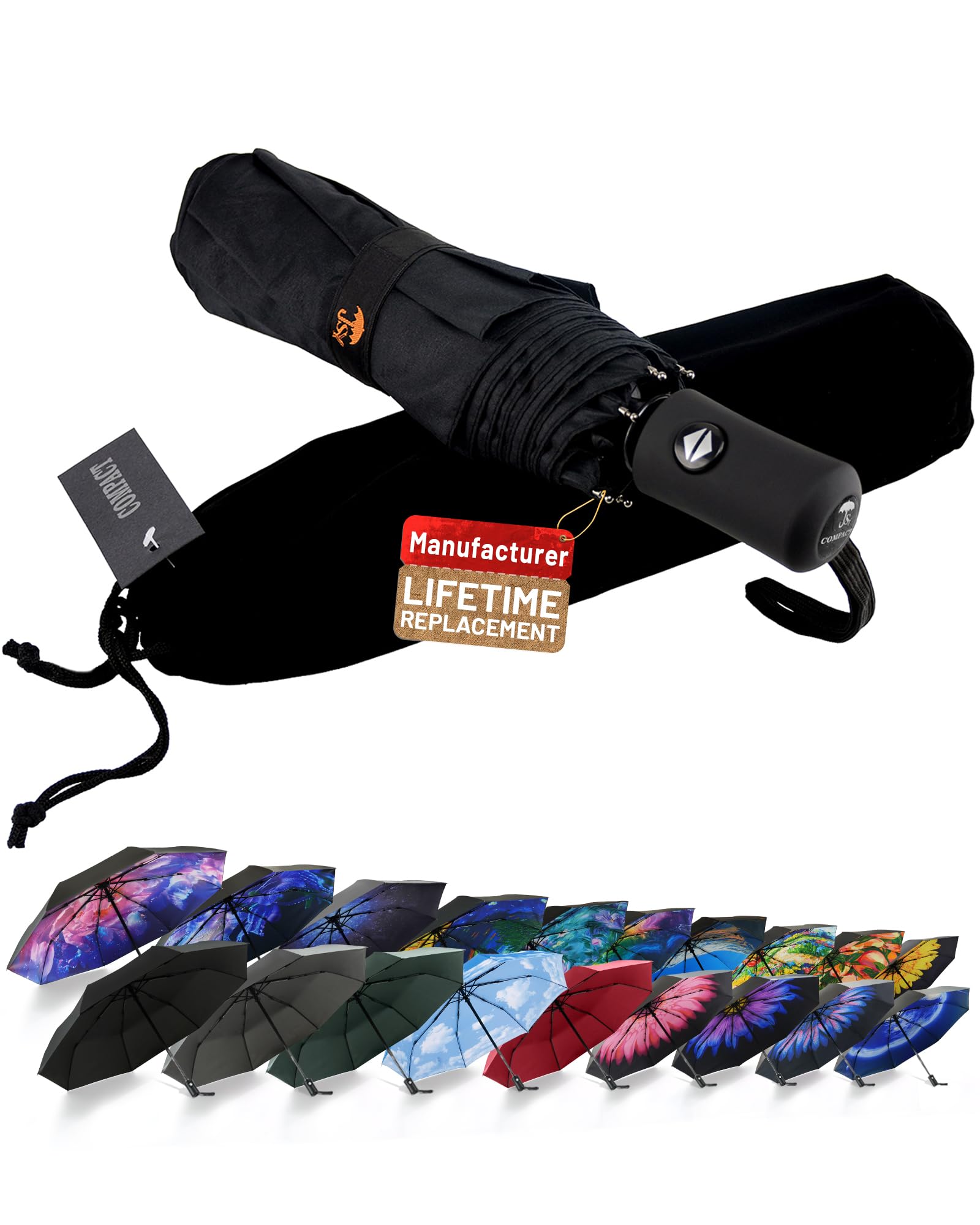
Nothing about the SY's price prepares you for the velvet sleeve it arrives in, and that sums up what it offers: more umbrella than you paid for. At 310 grams and 11 inches folded, it lives in a side pocket or a glovebox and doesn't announce itself until you need it.

The canopy is 38 inches across, the smallest in this group, which is fine for one person walking and tight once a backpack is on. Eight fiberglass ribs sit in an aluminum frame, the same recipe the midrange picks use, executed with less precision. The button opens it crisply and releases the canopy on the way down, though the last few inches of shaft need a firm push, and doing that one-handed with a bag on your arm isn't realistic.

For a second umbrella that lives in the car, a desk drawer, or a school backpack, none of that matters and the value is hard to argue with. For a single umbrella facing a daily commute in a wet city, the extra money in this group buys a mechanism you won't have to think about.

Pros

  • Eight fiberglass ribs in an aluminum frame
  • Folds to 11 inches and weighs 310 grams
  • Button-open canopy with a carry sleeve

Cons

  • 38-inch canopy is tight with a backpack on
  • Ribs and shaft can bend out of shape in a hard gust
Our verdict

The best value here: eight fiberglass ribs, a one-button canopy, and an 11-inch folded size, with the compromises showing up in the mechanism rather than the canopy.

Check Latest Price
4

Best for Car Commutes

Repel Reverse Folding Umbrella

90 /100
Traveler Score Outstanding

Key details

Fold
Reverse folding
Opening
Manual
Canopy Span
46 inches
Water Handling
Wet canopy folds inside
Check Details on Amazon

The worst part of driving in the rain isn't the rain. It's the ten seconds at the door, when you fold a wet umbrella against your leg and then set it on the passenger seat. This Repel folds upward instead, so the soaked surface ends up inside the canopy and the dry side faces out.

It's a better idea in practice than it sounds, and it's why this one stays in the car while the others rotate through bags. The 46-inch canopy is also the widest in this group, wide enough that your shoulder and a tote bag both stay under it. Two things come with the design: there's no button, so you push the canopy up by hand and pull it down again, and the water has to go somewhere, which means tipping it out over a drain before it goes back in the footwell.

The hardware is the part to watch. Handles and latches are what give out on this one, so treat the shaft kindly and buy it somewhere with a return policy you trust rather than as a gift for someone who won't check.

Pros

  • Wet canopy folds inside, away from seats
  • 46-inch span, the widest in this group
  • Holds up well once it's up in wind

Cons

  • Push-open, with no automatic button
  • Handle and latch are the weak points
Our verdict

The one to keep in the car: it folds wet side in so you never lay a dripping canopy across the seat, and its 46-inch span covers you and a bag.

Check Latest Price
5

Wide Canopy Value

Anntrue Windproof Travel Umbrella

91 /100
Traveler Score Outstanding

Key details

Ribs
8 fiberglass
Weight
Under 0.9 lb
Canopy Span
46 inches
Folded Length
11.6 inches
Check Details on Amazon

Eleven and a half inches folded, 46 inches open: that ratio is why the Anntrue is on this list. Most wide canopies here pay for the coverage with bulk, and this one folds down to roughly the length of a paperback while staying under a pound.

In use, the span is the point. It covers one person plus a loaded backpack without you steering the canopy, and the zipped pouch means it goes back into a bag without a fight, which is more than we can say for the thin sleeves on most of these. The weight is honest too: under a pound, but packed densely into the shaft and handle, so it sits in a small bag with more presence than the number suggests. We didn't mind, because coverage is what we were carrying it for.

Wind is where it stops being the bargain it looks like. In a sustained gust the canopy turns, and of the umbrellas we recommend here it's the one we trust least on an exposed bridge or in a coastal storm. For school runs, car parks, and the walk from a garage to an office, that's plenty of umbrella for the money.

Pros

  • 46-inch canopy on a small folded package
  • Zip pouch keeps the rest of your bag dry
  • One-button open and close

Cons

  • Canopy inverts in strong, sustained gusts
Our verdict

A 46-inch canopy that folds to 11.6 inches is a lot of coverage for a budget umbrella, so buy it for city showers and keep it out of coastal storms.

Check Latest Price
6

Sun and Heat

Seniny Windproof Travel Umbrella

89 /100
Traveler Score Excellent

Key details

Opening
Automatic open
Canopy Span
45.67 inches
Sun Protection
UV-blocking canopy
Check Details on Amazon

We keep a blackout umbrella in the car for August, and this is the one that earned the spot. The canopy is dense enough to cut the sun rather than glow orange through it, so the difference between it and a thin travel canopy shows up in the first block of walking rather than after twenty minutes.

At 45.67 inches across it throws a proper circle of shade over a person and a bag, which is the size that matters when the sun is directly overhead. It opens with a single button press, no wrestling, and that counts when you're stepping out of a car into glare with your hands full.

It carries like a compact umbrella should: light enough for a shoulder bag, short enough for a backpack, and wide enough that two people can share it in a pinch on the walk back from a beach.

As a rain umbrella it's ordinary. The frame is the part that gives out, and it's the pick here we trust least in wind once the canopy loads up. As a travel parasol it's the best value in this group, and the price makes a second one for the rental car an easy decision.

Pros

  • Dense canopy cuts heat as well as rain
  • 45.67-inch span shades a person and a bag
  • Button opening and light to carry

Cons

  • Frame is the weak point in wind and daily use
Our verdict

The best shade in this group: a dense 45.67-inch canopy that cuts heat as well as rain, as long as you don't ask it to fight a storm.

Check Latest Price
7

Purse Spare

SIEPASA Compact Travel Umbrella

89 /100
Traveler Score Excellent

Key details

Ribs
8 fiberglass
Weight
7.41 oz
Canopy Span
42 inches
Folded Length
11.8 inches
Check Details on Amazon

At 210 grams, the SIEPASA is the lightest umbrella in this group, and that alone earns it a place: it's the one that vanishes into a purse and stays there for a whole trip without becoming a nuisance. It folds to 11.8 inches, so it goes where a bigger compact won't.

What you give up is feel. The canopy is 42 inches, so it covers one person and not much else, and the frame has more flex in it than the heavier picks — you feel the whole thing load up in a gust rather than stand firm. The mechanism is the other compromise: the button opens it quickly, but closing it again needs a firm, careful push, and the strap that holds it shut is the first thing to go.

Buy it as the spare in the bag you don't think about, or the second umbrella in a suitcase for a trip where rain is a maybe. For a daily commute in a wet city, one of the heavier umbrellas here will last you longer.

Pros

  • 210 grams, the lightest in this group
  • Folds to 11.8 inches for a purse
  • Coated canopy sheds water and dries fast

Cons

  • Frame flexes and can fail with regular use
  • Closing takes a firm, careful push
Our verdict

The lightest umbrella here at 210 grams, and the right spare for a purse or a suitcase, as long as you don't expect the frame to take a beating.

Check Latest Price

How We Tested (and How They Failed)

We started with specs that matter on paper: packed length, canopy arc, claimed weight, and whether the frame used fiberglass or steel ribs. Then we read through customer reviews looking for failure patterns — bent ribs, runners that stick halfway, handles that crack at the collar — and used those to build a shortlist of 12 umbrellas spanning budget and mid-range models, including standard collapsibles and inverted designs that fold canopy-first so the wet side stays contained.

Each one lived in a real bag for six months: a work tote, a daypack, a coat pocket, and a carry-on. We opened and closed them one-handed on sidewalks, often holding a coffee or a phone in the other hand, and noted whether the runner slid smoothly or caught halfway. On a kitchen scale we weighed them and measured packed length against open canopy coverage, since a small folded size only counts if the canopy still covers your shoulders and the back of your neck.

Wind got its own set of walks. On gusty days we headed into an exposed block and recorded whether each canopy held its shape, inverted and stayed inverted, or popped back; with the inverted models we checked whether the wet fabric stayed wrapped when we collapsed one onto a car seat. Back inside, we cycled each umbrella open and shut repeatedly and checked joints for bends and wobble, let them dry wet to watch for rust, and looked at how fabric, stitching, and handles aged after months of being shoved into bags. Value came down to one question: what are you actually getting for the money, and how long will it last?

How to Choose Travel Umbrellas

Start With Folded Length

Every listing leads with the canopy, but folded length is the number that decides whether an umbrella comes with you. The picks here run from 11 to 11.8 inches closed, which is short enough for a backpack side pocket, a glovebox, or a tote with a laptop in it. Past about 12 inches, an umbrella starts living in the car instead of the bag, and that's fine only if it's the plan.

Measure the pocket you have in mind before you order. A canopy figure tells you nothing about whether the thing fits through a zip.

Match the Weight to Where It Lives

A 210-gram umbrella and a 15-ounce one do different jobs. The light ones disappear into a purse and survive a trip unnoticed; the heavier ones feel more planted in wind and are easier to trust on an exposed walk. We keep a light one in the daypack and a heavier one in the car door, and we've stopped expecting a single umbrella to do both.

If you only carry one, aim for the middle. Around 11 to 12 ounces is where folding umbrellas stop feeling flimsy without turning into luggage.

What Windproof Really Means

Nothing that folds is windproof in the sense the word suggests. Ribs flex, canopies invert, and a gust that gets under the edge will turn the thing inside out no matter what the listing claims. A three-digit wind figure describes a test, not your walk to the station.

What separates the good ones is recovery. Fiberglass ribs spring back when you turn the canopy into the wind, and a vented double canopy lets air pass through instead of loading the frame. More ribs mean more structure and more weight, and eight is the usual compromise here.

Understand the Open and Close Sequence

Auto-open is the feature everyone knows; auto-close is the one that surprises people. The button releases the canopy, but you still collapse the telescoping shaft by hand, and that's the step that takes force, sometimes two hands, and occasionally a firm push against your hip. If your grip is weak or your other hand is usually full, test that step before you commit.

Reverse-folding umbrellas work differently: the canopy folds upward so the wet surface ends up inside and never touches a seat. The trade is a manual push-open and a canopy holding a cupful of water until you tip it out.

Size the Canopy, Then Check the Wind

Spans in this group run from 38 to 46 inches. Thirty-eight is a solo commute canopy, enough for one person walking and tight once a backpack is on. Forty-two to 46 inches covers a person and a bag, and on the widest ones a companion in a pinch.

The catch is that a wide canopy catches more wind, so the bigger the span, the more the frame matters. If your route is exposed, take the smaller canopy with the better frame.

Frequently Asked Questions

Final Verdict

The Repel is the one we point people to first. It gets the boring things right — one-handed opening, a side-pocket footprint, and a canopy that holds its shape when the wind turns — and nothing else in this group does all three as comfortably.

If your priority is different, the alternatives are specific: the Tumella at 11.99 ounces for a daypack, the reverse-folding Repel if the umbrella lives in the car, and the SY if you want a spare in every bag for the least money. Those are the four decisions worth making; the rest is finish.