Best Beach Umbrellas of 2026

A beach umbrella has one job: hold shade where you put it. The wrong one turns a calm afternoon into a wrestling match with a flapping canopy, a pole that leans like it has had a long lunch, or a setup that takes two adults and a prayer. I have spent enough beach days re-staking someone else's runaway umbrella to care less about color and more about whether the thing stays put when the wind picks up.

The right umbrella fixes all of that: it goes up without a fight, stands firm in a crosswind, and survives a season of salt, sun, and being crammed into the car. We put 12 beach umbrellas through a full summer of real beach days, backyard afternoons, and sideline shade, paying attention to build quality, stability, and how easily one person can set one up. One thing I would flag for first-time buyers: tilt is not a gimmick — when the sun shifts at 3 p.m., a canopy that angles without collapsing is the difference between staying and packing up. The picks below are the ones that earned their spot.

1

Best Overall

beachBUB All-In-One Beach Umbrella System

96 /100
Traveler Score Outstanding

Key details

Warranty
3-year frame, lifetime base
Item Weight
9 lb
Base Standard
ASTM F3681-24 compliant
Canopy Diameter
90 inches
Check Details on Amazon

Every other umbrella here asks the sand to grip a pole. The beachBUB hands the pole a bag of sand to stand in, and that single change is why it's our top pick. The ULTRA base is a fabric tarp you fill and pile sand onto, and the system is compliant with ASTM F3681-24, the beach umbrella anchoring standard more coastal towns are starting to enforce. The maker's figure is a wind test to 44 mph; on a breezy afternoon with the canopy wide open, ours flexed at the ribs and never moved at the base.

The canopy is 90 inches across, the biggest here, and two folding chairs plus a cooler sit comfortably in the shade with room to shift as the sun moves. The frame is aluminum with fiberglass ribs, and nine pounds of it is a lot of ballast — that's the point. Setup is a short sequence you learn once: dig, set the tarp, load it, screw the pole in. What we didn't expect to care about was the warranty: three years on the frame and a lifetime on the base is cover nothing else in this group offers.

It is also a lot to move. If your beach day starts with a bike ride or a long walk from the lot, this is the wrong umbrella and one of the lighter picks will serve you better. What the weight buys is an afternoon where nobody has to hold the pole. The 220g coated polyester wiped clean of sunscreen and sand with a damp cloth, which matters more than it sounds when everything else is going back in the car damp.

Pros

  • Weighted base holds where poles pull out
  • Largest canopy in this set at 90 inches
  • Three-year frame and lifetime base warranty

Cons

  • Sand base must be filled and emptied each trip
Our verdict

Our pick if you beach where the wind actually blows: the sand-filled base and compliant anchoring keep the canopy upright when augers start leaning.
Check Latest Price
2

Best for Windy Beaches

Solbello Shade Beach Umbrella

92 /100
Traveler Score Outstanding

Key details

Item Weight
4.52 lb
Sun Protection
UPF 50+
Packed Dimensions
48.55 x 4.85 x 3.25 inches
Check Details on Amazon

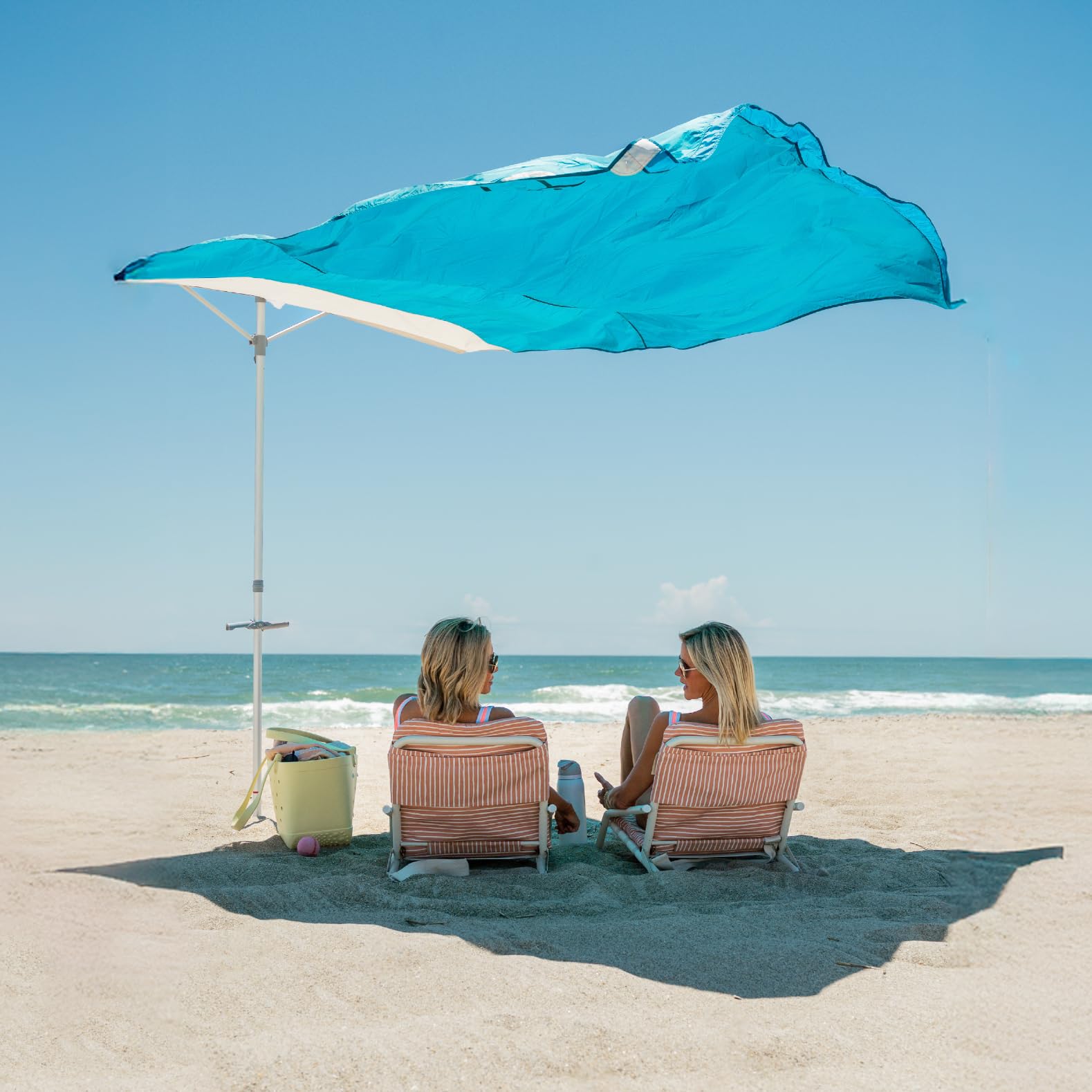
The Solbello doesn't fight the wind. Its canopy pivots around the pole and lets the breeze push it to where it wants to sit, which is either a gimmick or the whole answer, depending on the beach you go to. It weighs 4.52 pounds and packs down to a bundle about four feet long — 48.55 inches, in the listed dimensions — so it travels like a tripod bag rather than a tote.

Setup is the part people notice first. An anchor pole screws into the sand, the canopy clips on, and you're finished in a couple of minutes, on your own, without the wrestling a pole and auger usually demands. We put it up and took it down solo in a crosswind and never had to ask for a second pair of hands.

The catch lives inside the design's own logic: it wants a steady breeze from one direction. On a still morning it is a fixed shade you move by hand, and on a day when the wind swings around, the canopy follows the wind rather than the sun, so you may end up sitting in the gap. Where it earns its keep is an open coast with a dependable onshore push, the sort of beach where everyone else spends the afternoon re-staking. Shade is generous for two adults and a child, and the canopy sits high enough to see under. Ours lives behind the back seat from May to September now, which is the highest compliment we can pay a beach umbrella.

Pros

  • Turns with the wind instead of fighting it
  • 4.52 pounds in a long, slim bundle
  • One person can put it up in minutes

Cons

  • Premium price against the rest of this set
Our verdict

Buy it if your beach has a reliable onshore breeze; the canopy turns with the wind instead of fighting it, and it weighs about as much as a laptop bag.

Check Latest Price
3

Best Value

AMMSUN 7ft Beach Umbrella

91 /100
Traveler Score Outstanding

Key details

Tilt
Two-way push-button tilt
Item Weight
6 lb
Sun Protection
UPF 50+
Canopy Diameter
84 inches
Check Details on Amazon

Compared with our top pick, the AMMSUN 7ft gives up the weighted base, the 90-inch canopy and the long warranty, and in exchange it weighs six pounds instead of nine and folds into a bag you can sling over a shoulder. For a beach you drive to and a walk of a few minutes, that is the better trade for most people.

What earns it the value label in this set is that the parts you touch every trip all work. The push-button tilt moves the canopy in two directions without hauling the anchor out of the sand, the aluminum pole adjusts for height so you can drop the canopy when the breeze picks up, and the auger folds flat and goes into the carry bag instead of rattling around the trunk. Eight fiberglass ribs keep the fabric taut between spokes, which is the difference between an umbrella that looks right in photos and one that looks tired on the beach.

The anchor is where to spend your attention. It bites beautifully in damp sand and spins in the loose dry stuff, so dig a hole, screw it in below the surface, and pack the sand back around the pole; once we started doing that, the mid-afternoon lean stopped. The silver-coated polyester is rated UPF 50+ and wipes down with a dry cloth. Two chairs and the space between them fit comfortably; a third person is a squeeze.

Pros

  • Two-way push-button tilt without moving the anchor
  • Auger folds into the carry bag
  • Six pounds with a shoulder-strap bag

Cons

  • Can invert in a hard gust
Our verdict

The umbrella we hand to friends who want one good beach umbrella without premium money: usable tilt, a foldable anchor, and a sensible 84-inch canopy.

Check Latest Price
4

Best for Air Travel

AMMSUN 6.5ft Foldable Beach Umbrella

86 /100
Traveler Score Excellent

Key details

Frame
Aluminum pole, fiberglass ribs
Item Weight
2.5 lb
Sun Protection
UPF 50+
Canopy Diameter
78.7 inches
Check Details on Amazon

Two folds is the whole idea here. The pole breaks down twice, so the pieces stow short enough to lie flat in a checked suitcase, and the entire umbrella is 2.5 pounds. Of the umbrellas on this list, it is the one that travels by air rather than by roof rack.

Nothing about it feels stripped down once it is standing. The canopy is 78.7 inches across, close enough to the 84-inch AMMSUN that you won't notice the difference from a chair, and it keeps the same integrated auger, push-button tilt and UPF 50+ silver-coated polyester. Setup takes a couple of minutes: the sections lock together, the auger twists in, and the canopy opens like any other.

Where it gives ground is reserve. A 2.5-pound frame and a smaller canopy have less to offer when the afternoon wind builds, and we treat it as the umbrella for a calm, sunny week rather than a blustery one. That's a narrow brief, and it fills it better than anything else here. We also like that the auger folds small enough to go back in the bag rather than riding home attached to a sandy pole.

Pros

  • Breaks down into suitcase-length sections
  • Lightest umbrella in this set at 2.5 pounds
  • Same tilt and UPF 50+ fabric as the larger AMMSUN

Cons

  • More sections to line up than a one-piece pole
Our verdict

For flying to the beach, this is the one: it breaks down into a suitcase and weighs 2.5 pounds, as long as you're not counting on it in a blow.

Check Latest Price
5

Two Chairs of Shade

Aoxun 6.5ft Beach Umbrella

88 /100
Traveler Score Excellent

Key details

Tilt
30-degree tilt
Warranty
1 year
Item Weight
4.45 lb
Canopy Diameter
6 feet
Check Details on Amazon

Thirty degrees of tilt doesn't sound like much until you're sitting under it at four in the afternoon with the sun coming in sideways. The Aoxun tilts to exactly that angle, and it's the reason this small-canopy umbrella stays on our list: it's an inexpensive way to keep your shade when the sun drops. It's the pick for someone who carries everything themselves and wants the umbrella to be the light item, not the heavy one.

The build is a 1.26-inch fiberglass pole with fiberglass ribs, which is why it weighs about 4.5 pounds and doesn't shiver the way a thin steel pole does in a steady breeze. The canopy is 210g silver-coated oxford rated UPF 50+, and there is a one-year warranty behind it — modest, but honest.

Shade is the limit: at six feet across the canopy covers two chairs and not much else. If you want to cover a blanket and a cooler, go up to the 84-inch AMMSUN; if you're setting up alone and carrying it in one hand with a chair in the other, the smaller canopy is the easier day. The anchor's flip-down handles are the detail we didn't expect to like — real leverage to screw into packed sand, and they lie flat once it's buried so nothing snags on the way back to the car.

Pros

  • 30-degree tilt reaches the low afternoon sun
  • Fiberglass pole and ribs at about 4.5 pounds
  • Anchor bites with flip-down handles

Cons

  • Carry-bag strap is thin and the weak point
Our verdict

Worth it for the tilt and the 4.5-pound carry if two chairs of shade is all you need, and the small canopy is the trade you're making.

Check Latest Price
6

Balconies and Calm Days

Picnic Time 5.5 ft Beach Umbrella

91 /100
Traveler Score Outstanding

Key details

Pole
1.25-inch steel, two-piece
Item Weight
4.9 lb
Canopy Diameter
66 inches
Check Details on Amazon

Take the Picnic Time to an open beach on a breezy afternoon and you'll be walking it back to the car. The 66-inch canopy catches wind that the bigger, heavier umbrellas shrug off, and there's no anchor system at all — the pole pushes into the sand and stays only as long as the sand is packed and the wind is kind.

Anywhere wind isn't the issue, it's a genuinely nice piece of kit. The scalloped edge and the blue-and-white stripe look at home on a porch, the two-piece steel pole slides into the umbrella holes on Picnic Time's own chairs and tables, and 4.9 pounds is light enough to move one-handed from the yard to the porch when the sun moves.

The 66 inches cover one person and a shoulder, not a family, and the shade is best treated as a spot to read in rather than somewhere to park four chairs. For a small table that's the right trade: you're buying shade that looks good over a bistro set, not an anchoring system. The steel pole measures 1.25 inches across, which is the size those umbrella holes expect.

Pros

  • Looks good on a porch or balcony
  • Fits Picnic Time chairs with umbrella slots
  • 4.9 pounds, easy to move around

Cons

  • Fabric fades in steady full sun
  • Tilt collar can bind and be hard to slide
Our verdict

A good-looking small-space umbrella for a balcony or bistro table; it is not the one to carry to an open beach.

Check Latest Price

How We Tested Beach Umbrellas

We started with a shortlist of umbrellas from brands we have used before and models with strong customer feedback, then filtered by canopy size, pole material, carry weight, and price so we had a mix of family-sized and easy-to-carry options. Over one full summer, we tested 12 umbrellas on open beach, in a backyard with patchy shade, at a few windy lake days, and on soccer sidelines. We set each one up alone, timed it, counted the steps, and noted whether it needed two people or a second attempt.

For stability and wind resistance, we planted each umbrella in sand and soft ground, then watched how much the pole swayed in a steady breeze and in gusts; we added sandbags or stakes where the manufacturer allowed and checked whether the canopy stayed tight or started flapping. We also bumped the pole and leaned on it the way a kid or a cooler would, because sturdiness in real life is not a calm-day measurement. We adjusted every tilt mechanism through its full range, then left it set for an hour to see if it held or sagged.

To judge durability and overall quality, we set up and broke down each umbrella dozens of times, packed them into their carry bags, left them in the sun for full days, and checked seams, ribs, hubs, and locking pins for wear. We noted whether fabric stretched, poles scratched, or plastic parts felt brittle after a few weeks. The umbrellas that rose to the top were not always the biggest or the fanciest; they were the ones that went up fast, stayed put, and still looked and felt solid by the end of the summer.

How to Choose Beach Umbrellas

Start With the Anchor, Not the Canopy

Almost every beach umbrella fails at the same point, and it isn't the fabric. A pole pushed into dry sand holds until the first honest gust, so the minimum we look for is an anchor that gets below the surface: a twist-in auger, or a base you weight with sand like the one on the beachBUB. The auger is lighter and faster to set; a weighted base holds in soft or shallow sand where a screw just spins.

Technique matters as much as the hardware. Dig a hole, get the anchor into damp sand, then pack the sand back around the pole and check it again an hour later. Some coastal towns now require an anchoring system that meets ASTM F3681-24, so check the local beach rules before you travel.

Match the Canopy to Your Group, Then to the Wind

A 6-foot canopy shades two chairs; a 7.5-foot canopy shades the same two chairs with room to shift plus a cooler at the edge. The catch is that canopy area is sail area. The bigger the umbrella, the more it loads the anchor and the more of your neighbor's view it takes on a packed beach. If you walk to the water, stay smaller; if you set up camp for a full day with chairs and a cooler, the extra shade is worth carrying.

Buy for the Walk From the Car

Packed weight matters in the hundred yards between the trunk and the water, not on the product page. A 2.5-pound umbrella that breaks into short sections is the right answer if you fly or take the train; 6 pounds with a shoulder strap is comfortable for a short walk; a 9-pound system with a sand base is a two-trip carry alongside the cooler. Be honest about which of those journeys you actually make, and buy for that one rather than for the windiest beach you have ever seen.

Tilt and Vents Earn Their Place

A tilt you can work without pulling the anchor out is the feature we reach for most, because shade that stays put while the sun swings is the whole reason to carry an umbrella. Look for a push button or a sliding collar you can manage one-handed, and check the range: a 30-degree tilt handles the late afternoon, and more range lets you chase the sun further. The vent at the top of the canopy gives a gust somewhere to go instead of loading the fabric.

Frequently Asked Questions

Final Verdict

Of the umbrellas we anchored, the beachBUB is the one we put our name behind. The sand-filled base and the compliant anchoring turn a windy afternoon into a non-event, and its 90-inch canopy is the largest here — worth the extra weight if you drive to the beach and settle in for the day.

Flying instead? Take the AMMSUN 6.5ft, which packs into a suitcase at 2.5 pounds. And if your coast has a steady onshore breeze, the Solbello's pivoting canopy makes for the more comfortable afternoon.