Best Toddler Carriers for Hiking of 2026

The first time I carried my toddler up a rooty switchback, I learned that an everyday buckle carrier stops being comfortable the moment she starts pointing at squirrels and leaning toward the drop-off. A proper toddler hiking carrier keeps a growing kid high enough to see, secure enough to nap, and close enough that the weight settles into your hips instead of your shoulders. It also gives you a place for a water bottle, snacks, and the inevitable extra layer.

Over eight months, my team and I rotated 12 toddler carriers through weekend day hikes, evening neighborhood walks, and one muddy trail after a rainstorm. We noted how the shoulder straps felt after an hour, whether the hip belt carried weight, how stable the seat stayed when a toddler squirmed, and whether the storage was reachable without taking the pack off. Fit varied wildly from one parent to another, and we checked buckles, seams, and fabric for wear and real trail-grade construction. The picks below are the ones we kept reaching for.

1

Best Overall

Kelty Journey Signature

91 /100
Traveler Score Outstanding

Key details

Sunshade
Integrated
Torso Fit
PerfectFIT adjustable
Carrier Weight
7.1 lb
Child Weight Range
16–40 lb
Check Details on Amazon

The Kelty is the heaviest carrier here at 7.1 pounds, and we expected to resent it. Instead, the weight is the price of the suspension: the PerfectFIT back panel adjusts over a wide torso range, the hip belt is broad enough to take the load, and the aluminum roll cage keeps the child's seat steady when you shift. On a long climb, that matters more than saving a pound. It earns top billing for hiking days where the pack, not the stroller, does the work.

The child's side is just as considered. The seat is wide, the five-point harness is easy to reach, and the foot stirrups give a toddler somewhere to push instead of dangling. The integrated sunshade pulls out when the trail opens up, and the large zippered pocket plus hip-belt pockets hold layers, snacks, and water without a second bag. The frame also stands upright when you set it down, which is the detail we appreciated most at a trailhead with a wiggly passenger.

What you accept is bulk. At 7.1 pounds, it is not the pack you toss in a small trunk without thinking, and the fixed frame takes more space than the folding Osprey. For the trail, though, the trade is clear: you carry more pack so the child rides better. It is the carrier we pack when the day is built around the hike rather than the journey to the trailhead.

Pros

  • PerfectFIT suspension shares between caregivers
  • Stable stand simplifies trailhead loading
  • Integrated sunshade and useful pockets
  • Supportive 16–40 lb seat with stirrups

Cons

  • Fit may not suit shorter torsos
Our verdict

For long hiking days, this is the carrier we recommend: the PerfectFIT harness and hip belt make a 40-pound passenger feel manageable, even if the pack itself is heavy.

Check Latest Price
2

Best for Travel

Osprey Poco LT

89 /100
Traveler Score Excellent

Key details

Frame
Folding stainless steel
Sunshade
UPF 50 integrated
Carrier Weight
5.6 lb
Torso Adjustment
6 in (15 cm)
Check Details on Amazon

The Poco LT is the carrier we reach for when the day starts in an airport aisle or a crowded trailhead. Its stainless steel frame folds flatter than a fixed-frame pack and locks open with a solid click, so it takes up less room in a trunk or a closet. At 5.6 pounds, it is light enough to swing onto your back without a production.

The fit is the reason it works for so many families: six inches of torso adjustment let two adults share it, and the AirScape back panel has deep foam and mesh that keeps a warm climb from turning into a sweaty one. The UPF 50 sunshade lives in its own zippered pocket and deploys over the child's head, and there is enough storage for a day's layers and snacks. We liked it best for travel and shorter hikes; it is compact without feeling like a toy.

The trade is support as the passenger grows. The compact frame carries a lighter toddler well, but with more weight aboard we felt the shoulder load sooner than in the Kelty. If your hikes are long and steep, the bigger suspension is worth the bulk. If they are mixed with trains, rental cars, and city sidewalks, the Poco LT is the easier pack to live with.

Pros

  • Folding frame packs smaller than fixed packs
  • Six inches of torso adjustment
  • Integrated UPF 50 sunshade
  • Breathable AirScape back panel

Cons

  • Sunshade is not a full rain cover
Our verdict

For travel and shorter hikes, the Poco LT is the compact carrier we choose: it folds small, fits two adults, and keeps a toddler shaded without weighing you down.

Check Latest Price
3

Best Budget

ClevrPlus Cross Country

91 /100
Traveler Score Outstanding

Key details

Age Range
9–48 months
Weather Cover
Sun canopy and rain cover
Carrier Weight
5.5 lb
Child Weight Max
33 lb
Check Details on Amazon

The ClevrPlus is the budget pack that does not feel like a stripped-down compromise. It arrives with a sun canopy, rain cover, changing pad, washable drool pad, and a one-piece frame that unfolds ready to use. At 5.5 pounds, it is light enough for a first carrier, and the hip belt and lumbar padding give it a shape that actually takes some load off your shoulders.

For family walks, shorter hikes, and grandparents who need a second carrier without spending premium money, this is our pick. The seat takes a child from 9 to 48 months, the five-point harness and stirrups are easy to find by feel, and the storage is genuinely useful: a large main compartment plus pockets for water and snacks. The limits are real. The frame is bulkier packed than the folding Osprey, and the hip buckle is the part we check before a long walk. For the money, though, it covers the basics better than anything else in this group.

Pros

  • Complete kit includes sun canopy and rain cover
  • Light 5.5 lb frame with lumbar padding
  • Large storage and included changing pad
  • One-piece frame needs no assembly

Cons

  • 33 lb child limit rules out bigger toddlers
Our verdict

For a first hiking carrier or a tight budget, the Cross Country gives you the framed seat, harness, sunshade, and rain cover for far less than the premium packs.

Check Latest Price
4

Best for Easy Loading

besrey Toddler Carrier

90 /100
Traveler Score Outstanding

Key details

Weather Cover
Sunshade and raincover
Carrier Weight
5.5 lb
Seat Adjustment
3-height seat
Child Weight Range
16–40 lb
Check Details on Amazon

The besrey is the carrier we hand to someone who has to load a toddler alone. The open seat and three-height harness let you settle the child in before you swing the pack up, and the safety lock on the main buckle is easy to check by touch. In a parking lot or at the base of a short trail, that simplicity matters more than a fancy suspension system.

At 5.5 pounds, it is light, and the padded straps and waist belt are comfortable enough for a couple of hours. The storage is better than the price suggests: deep back pockets and a large compartment that holds diapers, snacks, and water. The detachable sunshade and rain cover are included, and the seat adjusts as your toddler grows. It is also one of the more plus-size-friendly harnesses here, with a waist belt that opens wide.

What it does not have is the long-day support of the Kelty or the compact fold of the Osprey. It earns its spot for errands, short hikes, travel, and grandparents, the pack you keep by the door rather than the one you plan a mountain around. It is the easy one to live with, not the one for a full day above tree line.

Pros

  • Easy to load without a second person
  • Light 5.5 lb frame with padded straps
  • Sunshade and rain cover included
  • Deep storage and wide waist belt

Cons

  • Fit can feel less snug on smaller wearers
Our verdict

For quick hikes and everyday outings, the besrey is the easiest carrier here to load by yourself, and it comes with the sun and rain protection you need.

Check Latest Price
5

Best Midrange All-Rounder

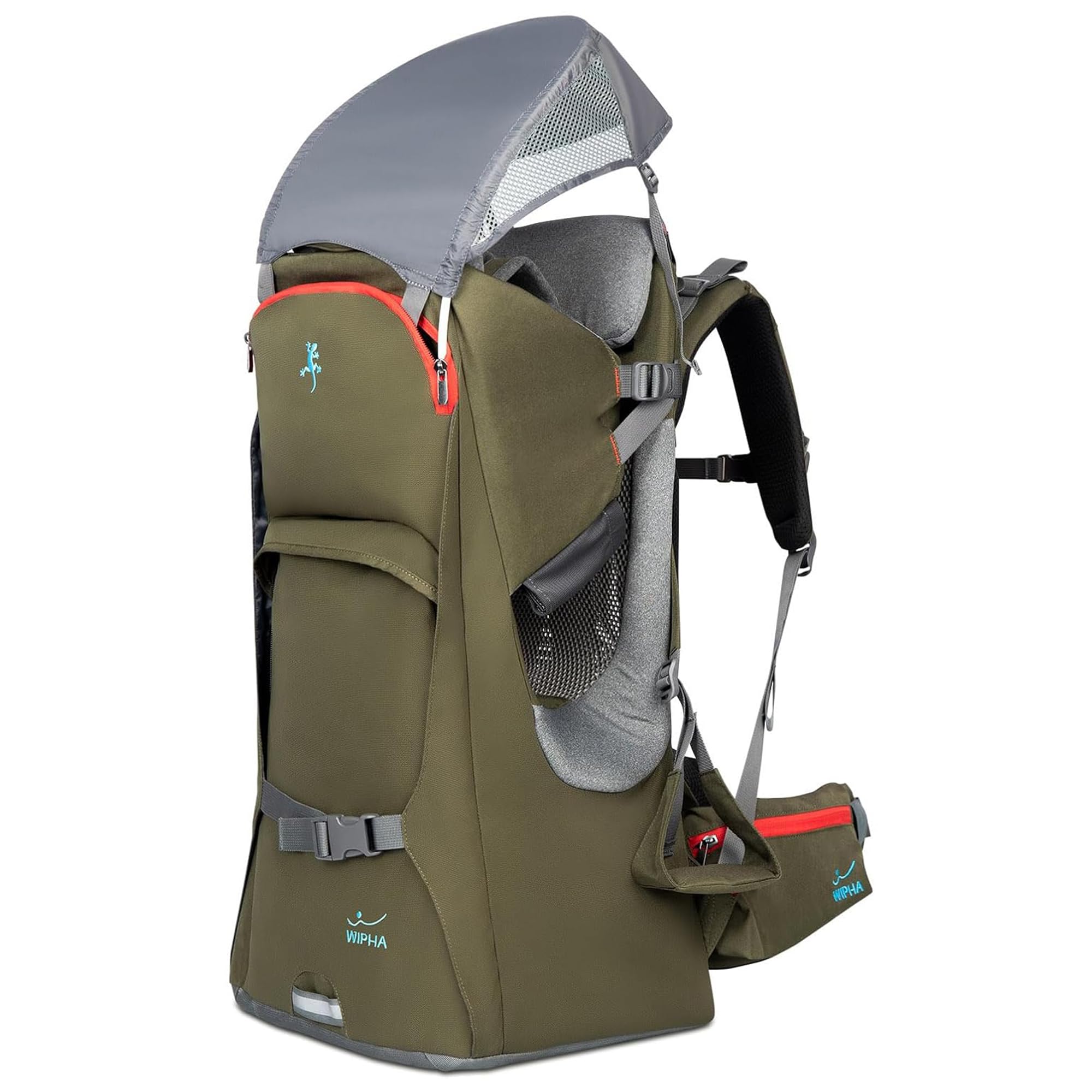
WIPHA Toddler Carrier

87 /100
Traveler Score Excellent

Key details

Dimensions
12 x 16 x 25.6 in
Sun Canopy
Included
Insulated Pocket
Yes
Child Weight Range
16–40 lb
Check Details on Amazon

The WIPHA's best trick is the storage. A deep bag under the seat swallows a lunch, water bottles, diapers, and layers, and the insulated pocket keeps a drink cold on a warm loop. The frame also locks open into a stand, so the pack sits upright while you settle the child in. That combination makes it our midrange all-rounder for family day hikes.

The child's seat is supportive for a toddler, with a five-point harness, a sun canopy, and removable washable saliva pads that make a sticky-snack day easier to clean up. The 16–40 pound range covers the toddler years, and the weight distribution is decent for a pack at this level. The catch is adjustment: the shoulder straps need deliberate dialing in, and loading takes practice. If you want one pack for picnic-style hikes, zoo days, and travel, it is a strong middle choice; if you are chasing peak bagging, spend for the better suspension.

Pros

  • Deep under-seat storage plus insulated pocket
  • Frame locks open as a loading stand
  • Sun canopy and washable saliva pads
  • 16–40 lb seat range

Cons

  • Less settled than the Kelty on steep climbs
Our verdict

For family day hikes where storage matters, the WIPHA is the midrange pack we recommend: it carries lunch, layers, and a toddler without a second bag.

Check Latest Price
6

Compact Day Hikes

OE Shoulder Carrier

88 /100
Traveler Score Excellent

Key details

Backpack
Detachable
Sunshade
Included
Dimensions
14 x 22 x 6 in
Carrier Weight
4.5 lb
Check Details on Amazon

The OE is the lightest carrier here at 4.5 pounds, and it feels more like a shoulder carrier than a full framed backpack. The child rides high and close with a clear view, the detachable daypack hangs behind, and the sunshade tucks into the backrest when you don't need it. We liked it for farmer's markets, paved paths, and short trails where the child wants to see everything.

The compactness is the point. It folds small enough to live in a car footwell, and the detachable backpack means you can leave the gear behind and carry just the child. The seat is simple to load, and the whole thing is less intimidating than a big aluminum-framed pack. For a quick outing or a trip where space is tight, that is a real advantage.

The limitation is load transfer. The hip belt helps, but the shoulder-first geometry puts more weight on your neck and shoulders than the Kelty or Osprey, especially with a heavier toddler. This is a carrier for short day hikes and travel, not for a long, heavy climb. It is a clever second carrier for grandparents or a travel backup, provided the child still fits the compact seat.

Pros

  • Light 4.5 lb compact package
  • Detachable daypack adds flexibility
  • Sunshade tucks into the backrest
  • Child gets a clear view

Cons

  • Stitching and frame joints need inspection
Our verdict

The OE is a clever compact carrier for short day hikes and crowded places, but it is not the pack we choose for a long, heavy climb.

Check Latest Price

How We Tested Toddler Hiking Carriers

We started by building a shortlist from carrier specs, weight limits, harness dimensions, storage layouts, price, and reviews that mentioned shoulder pain or a toddler trying to climb out. From that pool we tested 12 carriers over eight months, using them on weekend day hikes, evening neighborhood walks, and one muddy trail after a rainstorm. Each carrier was used by more than one caregiver, from a 5-foot-2 tester to a 6-foot-2 tester, so we could see how fit changed with torso length and shoulder width.

On the trail, we loaded each carrier with the same 30-pound toddler—or an equivalent sandbag when she was asleep—and walked a two-mile loop with climbs, roots, and loose gravel. We noted where pressure landed after 20 minutes, whether the hip belt stayed put when we tightened the shoulder straps, and if the load shifted when the toddler leaned sideways to look at a dog. We also practiced getting a squirmy kid in and out without help, adjusting the carrier while it was on, and reaching for a water bottle or snack with one hand.

We checked storage by packing a diaper, wipes, two snacks, a water bottle, and a light jacket, then seeing what was actually reachable without unclipping. Quality and durability got the less glamorous tests: we scuffed the bases on rock, set them down in mud, wiped them clean, and checked seams, buckles, and fabric for fraying or stiffness. Stability was judged on side slopes and curb drops, where a loose harness shows up fast. After eight months, the carriers we kept were the ones that stayed comfortable on long climbs and still felt secure when a toddler decided to nap.

How to Choose Toddler Carriers for Hiking

Weight Range and Load, Not Age Alone

Age labels are a rough guide; the weight limit is the specification that matters. A 33-pound carrier can be outgrown by a big 3-year-old, while a 40-pound pack may last another season. Add the child's weight to the gear you plan to carry and stay under the carrier's total limit, not just the child limit. If you are between sizes, choose the higher limit: toddlers grow, and a carrier that fits at the start of the season may not fit at the end. Weigh your child before you order.

Torso Fit and Hip-Belt Load Transfer

A framed carrier only works if the hip belt carries most of the load. Look for a torso adjustment range long enough to fit every adult who will wear it; six inches is generous, and a system like Kelty's PerfectFIT is designed to be shared. Put the pack on with the child aboard and tighten the hip belt first, then the shoulder straps. If the shoulder straps are doing the work, the pack is too long or too short in the torso. Try it before a long hike, not on one.

Framed Backpack, Folding Travel Pack, or Shoulder Carrier

A fixed aluminum frame is the most supportive choice for long hikes, but it takes up space in a car and closet. A folding frame such as the Osprey Poco LT packs smaller and suits travel, with a little less support as the child grows. A shoulder-first carrier like the OE is compact and gives a child a clear view, but it is for short day hikes, not heavy climbs. Choose the design around the days you actually take, not the most rugged trail you might attempt.

Storage, Sun Protection, and Weather Coverage

A day on the trail generates more gear than a walk around the block: water, snacks, diapers, layers, and a first-aid kit. Look for a main compartment that opens wide, plus a place for bottles that does not bury them. A sunshade is worth having integrated rather than loose, and a rain cover should be part of the kit if you hike in changeable weather. The ClevrPlus includes both at the budget end; the WIPHA's insulated pocket and deep bag are the storage benchmark here.

The Buckles and Harness Are the Real Durability Test

Frames get the attention, but the child harness, hip-belt buckle, and lower frame joints are what fail when a carrier is overloaded or stored wet. Check the child's five-point harness first, then the hip buckle under load, then the stitching where the frame meets the fabric. A carrier that has been in a hot car or a damp garage deserves a closer look before the season starts. Wash and dry it according to the care label, and never force a stiff buckle.

Frequently Asked Questions

Final Verdict

The Kelty Journey Signature is the carrier we recommend first for hiking. Its PerfectFIT suspension and broad hip belt make a growing toddler feel lighter than the 7.1-pound pack suggests, and the integrated sunshade and stable stand make trailhead life easier. Choose the Osprey Poco LT if your hikes share space with airports and small trunks; choose the ClevrPlus Cross Country if the budget is the deciding factor. The right pick is the one that matches the days you actually hike.