Best Sun Hats for Hiking of 2026

A hiking sun hat has to do two jobs at once: block the sun from your face, ears, and neck, and stay put without making you feel like you’re wearing a greenhouse. I learned that on a shadeless ridge climb, where a wide-brimmed hat caught a gust and spent the rest of the hike in my hand. The right one disappears—light on your head, cool where it touches, and cut so the brim shades your eyes without blocking the trail. A poor one turns every switchback into a fight with the chin strap.

Fit and size are the quiet dealbreakers here. A crown that’s too shallow will pop off in wind, while a brim that’s too wide can feel like a sail; some hats run small enough that measuring helps. Over a full summer, I hiked in 14 sun hats, from crushable packs to structured brims, and paid attention to how each looked and held up after repeated stuffing in a daypack. The picks below earned their place on the trail and beyond.

1

Best Overall

EINSKEY Wide Brim Boonie Hat

93 /100
Traveler Score Outstanding

Key details

Weight
8.47 oz
Head Fit
22–24 in
UPF Rating
50+
Water Resistance
Waterproof
Check Details on Amazon

The EINSKEY boonie costs less than almost anything else in this guide and still ticks every box we set for a hiking hat: UPF 50+, waterproof fabric, a brim wide enough to shade your face and ears, and a chin cord for the stretches where wind gets under it. Getting all of that near the bottom of the price range is what makes it our top pick rather than a budget consolation.

The 22-to-24-inch headband does more for that than any other single detail. It's a real range rather than a one-size gamble, and the drawstring at the back lets you cinch it down before an exposed traverse instead of walking with one hand on your brim. At 8.47 ounces it's light enough that a full day doesn't register, and the vented crown moves enough air that we stopped thinking about our heads on a warm climb.

Two things to know before you order. The brim shades your face but there's no flap behind it, so the back of your neck is on its own, and if that's where you burn, the Home Prefer below covers it. And it is unmistakably a boonie: soft-crowned, wide, with a cord under your chin, which is fine on a trail and out of place anywhere else. New ones can arrive smelling of the warehouse, so unroll it and let it sit out for a day before you pack it.

Pros

  • UPF 50+ and waterproof in one hat
  • Adjusts 22–24 in with a chin cord
  • Vented crown keeps air moving
  • Folds flat into a pack pocket

Cons

  • Leaves the back of your neck exposed
Our verdict

The hat we tell most hikers to buy: full sun protection, a real fit range, and a chin cord, for less than nearly everything else here.

Check Latest Price
2

Best Breathability

Columbia Bora Bora Booney

93 /100
Traveler Score Outstanding

Key details

Fit
Unisex
Model
Bora Bora Booney
Availability
Discontinued
Check Details on Amazon

A hat that traps heat is worse than no hat on a climb, and the Bora Bora Booney is the one here built around airflow. The fabric is thin, the vents sit above the headband where heat collects, and it moves sweat away instead of sitting damp against your forehead.

That makes it the most breathable hat in this guide for hot, sticky days and long grinds where your own effort is producing more heat than the shade can cancel out. It packs to nothing as well: wad it into a hipbelt pocket, shake it out at the top. The drawcord at the back is what keeps a loose hat from becoming a lost one.

The fit runs generous, so that drawcord is doing real work rather than fine-tuning a good fit. Where it wins is heat. On a still, humid climb this is the hat we reached for, and the difference is noticeable inside the first mile, before you have any right to expect a hat to matter.

Pros

  • Vented crown dumps heat fast
  • Wicking fabric stays dry against skin
  • Folds into a hipbelt pocket
  • Drawcord gives a genuinely adjustable fit

Cons

  • Soft brim folds up in a stiff crosswind
  • Discontinued model with limited colors
Our verdict

Buy it if heat is what ends your hikes early, since nothing else here moves air like this one, provided you accept a soft brim.

Check Latest Price
3

Best Neck Coverage

Home Prefer Mesh Sun Hat

95 /100
Traveler Score Outstanding

Key details

Brim
Wide
Crown
Mesh
Neck Flap
Yes
UPF Rating
50+
Check Details on Amazon

A brim shades your face and does nothing for the strip of neck between your collar and your hairline, which is where a lot of hikers get cooked on an exposed ridge. The Home Prefer solves that with a flap that hangs off the back, and the flap has a pocket you can fold it into once the trail drops into trees.

The rest of it is built for heat. The crown is mesh, so air crosses the top of your head, and the brim is firm enough to hold its line rather than drooping into your sightline on a descent. It scrunches into a daypack without folding and comes out wearable. Fit is the weak point: the crown runs snug, and a bigger head will feel it by the end of a long day.

For high-altitude sun, desert trail, or a day of glare off water, that flap is worth more than any other feature in this guide, and it's why this is our coverage pick. What you give up is subtlety. It reads as fishing gear rather than trail gear, and nobody is going to mistake it for a fashion hat.

Pros

  • Neck flap shades ears and nape
  • Mesh crown moves air across the head
  • UPF 50+ with a wide, firm brim
  • Packs into a daypack without folding

Cons

  • Neck flap is sewn in, not removable
Our verdict

The coverage pick for open, sun-beaten ground: a mesh crown for airflow and a flap that shades your ears and nape.

Check Latest Price
4

Best Cooling

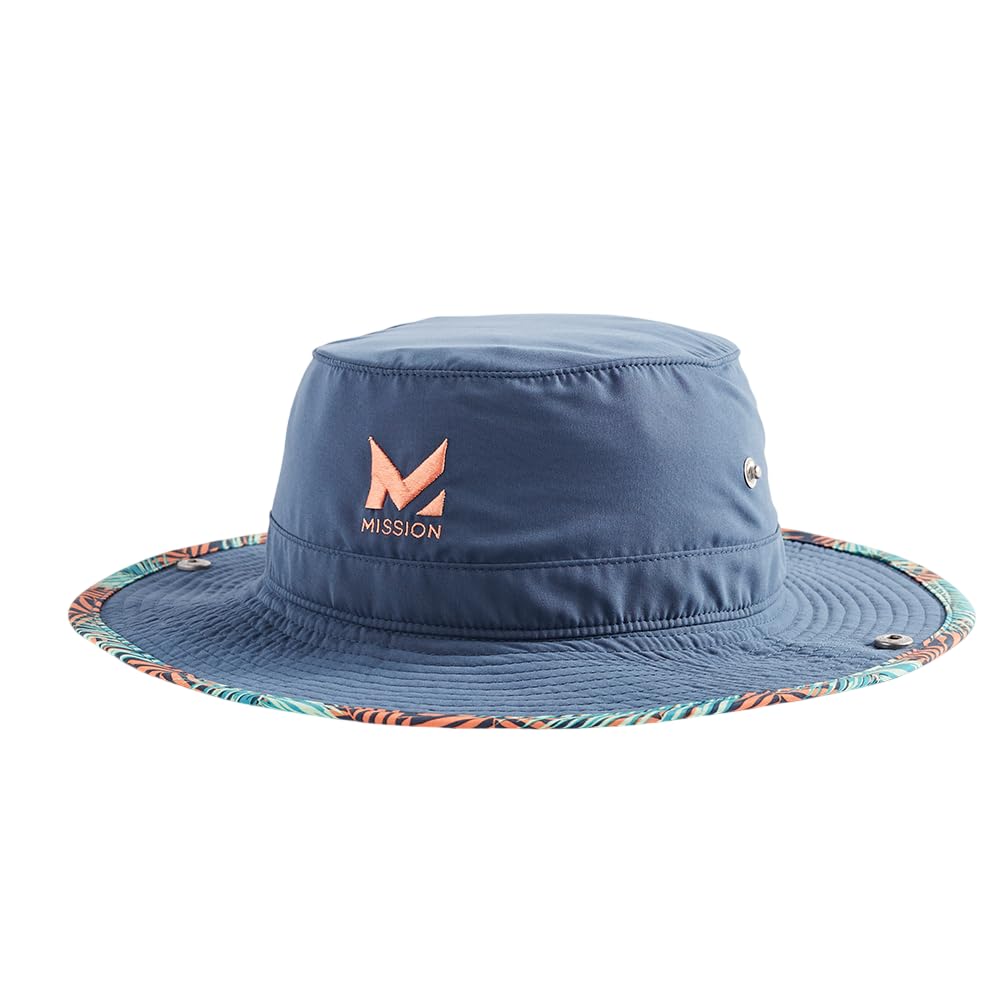
MISSION Cooling Bucket Hat

91 /100
Traveler Score Outstanding

Key details

Care
Machine wash
Fabric
92% polyester, 8% spandex
Brim Width
3 in
UPF Rating
50
Check Details on Amazon

MISSION's trick is a fabric that cools when it's wet: soak the hat, wring it out, wave it, and the company claims cooling in about a minute and up to thirty degrees below body temperature. That's a claim rather than a measurement, and it doesn't replace shade and water, but on a still, humid climb it's the difference between a hat you tolerate and one that actually helps. That's why it's our pick when heat is the problem.

It's also the easiest hat here to live with. It's machine washable, which matters once sunscreen and salt have been through it a few times, and the brim is a listed 3 inches rather than a vague promise of width. The cooling fades as the fabric dries, though, so in dry heat you'll be hunting for a stream or a bottle to re-wet it, and without water it's just a light bucket hat.

The brim is soft, and a headwind can lift it into your sightline right when you're picking a line down a rocky descent. That's the price of a hat that folds into a pocket. If you want something that holds its shape in weather, the EINSKEY is the safer call; if you want the coolest head on a windless afternoon, this is it.

Pros

  • Wet-to-cool fabric reactivates with water
  • Machine washable after sweat and sunscreen
  • UPF 50 with a listed 3-inch brim
  • Packs down into a pocket

Cons

  • One size runs large on smaller heads
Our verdict

The one we hand to hikers heading into still, punishing heat, as long as they have water to reactivate it and a head that runs large.

Check Latest Price
5

Best Wide-Brim Coverage

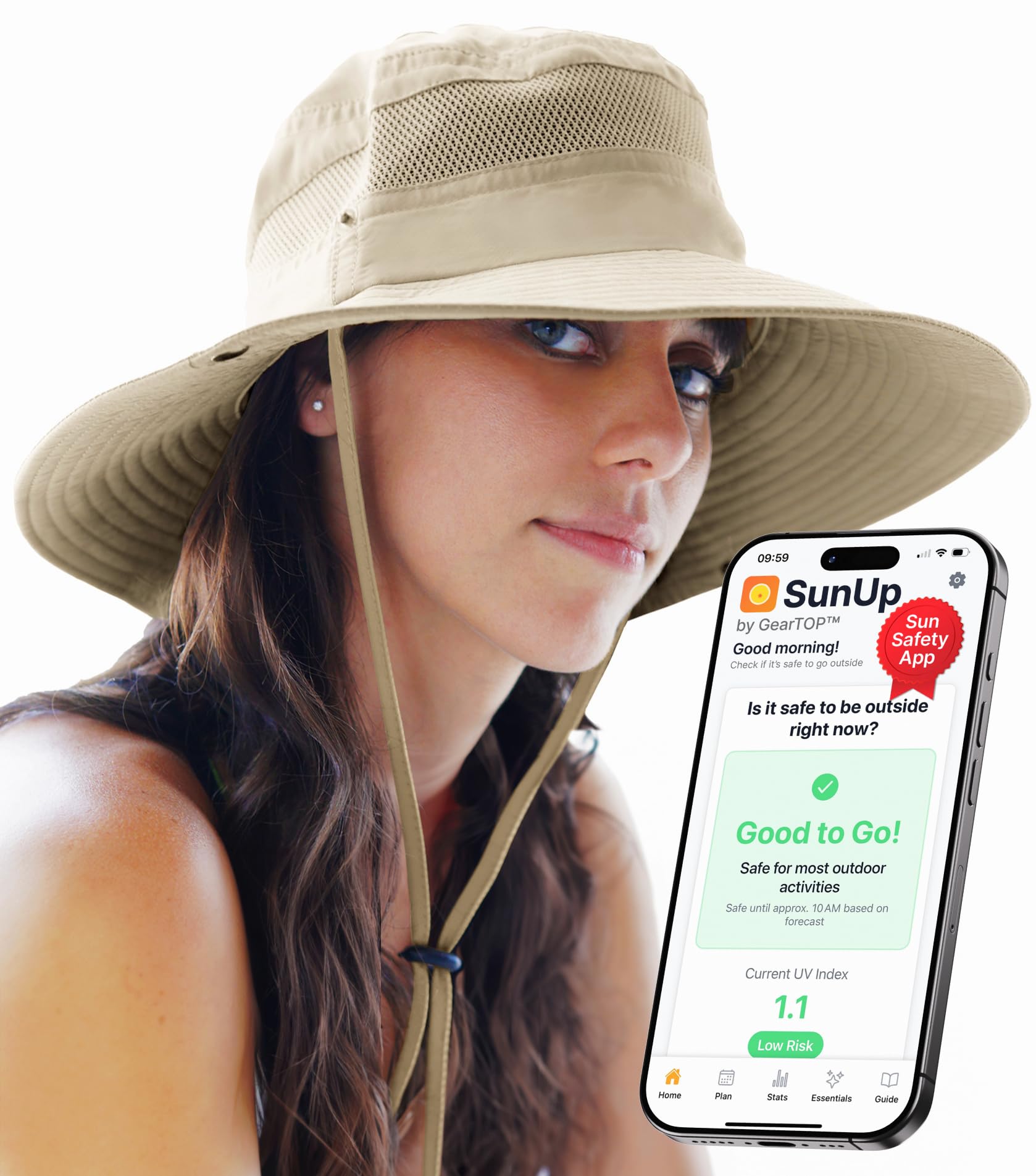
GearTOP Safari Hat

91 /100
Traveler Score Outstanding

Key details

Fit
Unisex
Brim
Wide safari
UPF Rating
50+
Check Details on Amazon

The GearTOP is the widest thing in this guide, a safari silhouette with a brim that shades your ears, the tops of your cheeks, and a fair amount of shoulder besides. If you've finished a day with a red stripe across your nose that a cap left behind, this is the shape that fixes it.

It's more packable than that shape suggests. The brim and crown fold, it comes back to something wearable, and the frame holds its line without feeling stiff. The adjuster at the back takes up the slack, and the whole thing survived being stuffed into a bag and shaken out at a trailhead.

Sizing is where it gets messy. The hat is sold by colorway rather than by size, and fit swings between them, with some running tight on an average head and some running large. Measure around your head, find your number on the chart for the specific color you're buying, and treat the drawcord as a fine adjustment rather than a rescue.

Coverage is why it earns a place: this is the most shade on this page, and it costs about what the budget picks do. If your measurement lands near the edge of the chart, order from somewhere you can send it back, because the color you want and the fit you need don't always arrive together.

Pros

  • Widest brim in this guide
  • Folds flat and recovers its shape
  • Rear adjuster takes up slack
  • UPF 50+ rating

Cons

  • Wide brim catches crosswind on exposed ridges
Our verdict

The most shade you can put on your head for the money, best for open ground where a wide brim earns its keep.

Check Latest Price
6

Best Budget

INOGIH Foldable Ponytail Hat

91 /100
Traveler Score Outstanding

Key details

Brim
Wide
Foldable
Yes
Department
Women's
Ponytail Opening
Yes
Check Details on Amazon

The ponytail hole is the reason to look at this one. It's an opening high at the back of the crown that lets you wear your hair up without the hat perching on top of it, and if you've spent a hike pushing a hat forward every ten steps because of a bun, you know exactly what that's worth.

It's also the least expensive hat here, which would mean little if it fell apart. It doesn't: it folds flat, there's an adjustment strap at the back, and it shades well enough to be a real trail hat rather than a beach souvenir. That's why it's the one we point people to when they want to try a wide brim without committing to one.

The brim takes a set if it's been folded in a pack for a while, and one bent edge tends to stay bent. Fold it along the crown rather than across the brim and it recovers better. If it arrives creased, mist it and let it dry shaped rather than fighting it with an iron.

Pros

  • Ponytail opening high at the back
  • Rear adjustment strap
  • Folds flat for packing
  • Lowest price in this guide

Cons

  • Thin fabric with almost no structure
Our verdict

The cheapest way into a proper wide brim, and the ponytail opening makes it the pick for anyone who hikes with hair up.

Check Latest Price
7

Neck and Face Shade

Camptrace Sun Hat with Neck Flap

93 /100
Traveler Score Outstanding

Key details

Fit
Unisex
Brim
Wide
Neck Flap
Yes
Check Details on Amazon

The Camptrace answers the same brief as the Home Prefer, a wide brim plus a flap over the neck, with a rounder brim that leaves more of your view open and an opening at the back for a ponytail. On a switchbacked descent where you spend the whole time looking at your feet, that rounder shape is easier to live with.

The fabric is light and dries quickly, the brim shades your face without turning into a shelf, and there are adjustments at the back and under the chin. It's the kind of hat that disappears by mile three, and the neck flap covers ears and nape rather than hanging loose around your shoulders.

We rate it the better of the two neck-flap hats for anyone with long hair, and the rounder brim is kinder on long descents. The Home Prefer still edges it out on airflow and brim shape, which is why this one sits behind it here, but if a ponytail is non-negotiable this is the more comfortable answer.

Pros

  • Rounder brim keeps your view open
  • Neck flap covers ears and nape
  • Rear and chin adjustments
  • Light fabric dries quickly

Cons

  • One size runs tight on larger heads
Our verdict

The neck-flap hat to choose if you wear a ponytail, with a rounder brim that keeps more of your view open on descents.

Check Latest Price
8

Extreme Exposure

Outrip Fishing Hat with Face Cover

91 /100
Traveler Score Outstanding

Key details

Fit
Unisex
Neck Flap
Included
Face Cover
Included
Check Details on Amazon

Most of the hats here shade you. The Outrip covers you. The brim handles your face, a neck flap covers your nape and ears, and a mesh face panel snaps on over everything below your sunglasses, with both panels coming off when the trail doesn't call for them.

That's a specialist's setup, and on the right day it's the only thing that works. On snow, at altitude, or on a long desert approach, light comes back at you off the ground, and a face panel is the difference between finishing the day comfortable and finishing it burned. The mesh breathes well enough that we forgot it was there, which isn't what we expected from a panel across the face.

Both panels detach, so it turns back into an ordinary wide-brim hat for the walk out, and the fabric dries fast after a soaking. It's light enough that the extra coverage doesn't weigh on your head, and the brim keeps its shape when you're not folding it.

Buy it for snow, high altitude, open water, or a desert crossing, where the light comes at you from everywhere at once. For a shaded forest loop in July it's more hat than the day asks for, and the panels are one more thing to keep track of in your pack.

Pros

  • Face and neck panels both detach
  • Mesh face panel breathes
  • Dries quickly after a soaking
  • Covers what a brim misses

Cons

  • One size runs large on average heads
Our verdict

The specialist pick for snow, altitude, and desert light, where the sun comes at you from below as well as above.

Check Latest Price

How We Tested Sun Hats for the Trail

We began by pulling together 30 styles from established outdoor and sun-protection brands, then narrowed that list by brim dimensions, claimed UPF rating, weight, adjustability, and price. That left 14 hats, which we wore through one full summer of day hikes, from exposed ridgelines to shaded forest climbs. I also kept a few in the car for errands and yard work, because a hiking hat should not fall apart the moment it leaves the trail.

Fit came first. We measured each hat’s internal circumference and brim width, then asked testers with smaller and larger heads to wear them on four-hour hikes, adjusting chin cords and rear straps as needed. We noted whether the crown sat low enough to stay put in wind, whether the brim blocked peripheral vision, and whether the hat left a red pressure line across the forehead. For sun protection, we checked coverage at midday: ears, neck, cheekbones, and nose. We also watched whether the fabric felt breathable on hot climbs or trapped heat under the crown.

To judge weight and packability, we weighed each hat on a kitchen scale and stuffed it into a daypack between hikes, then checked whether the brim bounced back or stayed creased. Comfort got a sweat test on a 90-degree exposed climb, where we noted whether the liner felt scratchy, whether sweat ran into our eyes, and whether the chin strap needed constant readjusting. For appearance and quality, we wore each hat around town after hikes and inspected seams, fabric, and brim shape at the end of the summer, looking for fraying, fading, or a crown that had gone limp. The hats that survived still looked presentable and felt light after a full day out.

How to Choose Sun Hats for Hiking

Choose the Brim by the Terrain You Hike

Width matters less than shape. A brim that reaches past your brow and your ears shades the parts that actually burn, but a soft brim lifts in wind and takes your shade with it, while a stiff one holds its line and can cut into your view when you look down at your feet. If your hiking runs to steep descents and scrambles, pick a shape you can see past, a rounder brim or one with side snaps, and save the full safari sweep for open, flatter ground.

UPF Is the Floor; Airflow Is What You Feel

UPF 50+ is the number to look for and it is what nearly every hat here claims. What separates them is heat management. A densely woven fabric with no vents turns into an oven on a climb, while a mesh crown or a vent band dumps heat before it builds. Cooling treatments are a different tool: they need water to activate and they stop working as the fabric dries, which suits humid climbs and waterside hikes far more than dry desert miles.

Fit and Adjustment Decide Whether It Stays On

One size is a claim rather than a measurement, and it is the most contested thing about hats in this category. Measure around your head above the ears and compare it to the listed range, then look for two adjustments: a cinch at the back and a cord under the chin. A hat that is slightly large plus a cord beats one that is slightly tight every time, since a tight band becomes a headache by the second hour and no amount of tugging fixes it.

Coverage Past the Brim

A generous brim still leaves the nape of your neck and the tops of your ears in the open, and both are common places to burn. A neck flap closes that gap at the cost of looking like you are headed out on a boat. For sun that bounces, off snow, water, or pale rock, the flap is worth the look. If you won't wear one, get sunscreen on your nape and ear tops before you set out.

What Folding Costs You

A hat that folds flat goes in the pack; a hat that doesn't gets left in the car. The trade-off is memory. Soft brims and unstructured crowns crease, and a hard fold across the brim can leave a bend that outlasts the trip. Fold along the crown rather than across the brim, pad the inside with a spare sock, and shake it out before you put it on. Hats built on a firmer frame fold less willingly but come back truer.

Frequently Asked Questions

Final Verdict

The EINSKEY is the hat we point most hikers toward. UPF 50+, waterproof, adjustable from 22 to 24 inches with a chin cord, and light enough at 8.47 ounces to forget you have it on, it covers every basic need without asking you to pay for a label, and it folds into a pack pocket at the end of the day.

If you run hot, the Columbia Bora Bora Booney breathes better than anything else here, as long as you can live with a soft brim and a model that is on its way out. And if the sun comes at you from below as well as above, on snow or at altitude, the Outrip's face panel is the only thing in this guide that covers it.