Best Ski Travel Bags of 2026

First chair on a powder day is a lovely thing to picture. Getting there is usually where it goes wrong: a ski bag that lands at baggage claim with a torn end, a snapped buckle, or a ski tip poking through the fabric. A good ski travel bag is insurance with a handle — it gets your skis, poles, and often your boots to the mountain intact, so the only thing you have to worry about on arrival is snow conditions. It should also be something you can carry through a terminal and hoist into a shuttle without needing a second person.

Over the past six months — one full season of real trips — we put 10 ski travel bags through airports, rental car trunks, and lodge stairwells. What surprised me: padding at the tip and tail matters more than a burly shell fabric, since that's where edges and bindings do their damage. Weight and fit run a close second. A bag a few inches longer than your longest ski packs easier, but only if you can still lift it loaded. The picks below are grouped by how you actually travel.

1

Best Overall

Athletico Padded Ski and Boot Combo

91 /100
Traveler Score Outstanding

Key details

Weight
3.8 lb
Padding
5 mm foam
Boot Fit
Up to US 13
Max Ski Length
200 cm
Check Details on Amazon

Two padded bags for less than several single ski bags in this guide is the arithmetic that put this combo at the top, and the bags themselves hold up their end of it. Both pieces carry 5mm foam, the ski sleeve takes skis up to 200cm, and the boot bag swallows boots to a US 13 with room left for a helmet, goggles and gloves. If you fly once or twice a season and own your boots, that's the entire kit in one purchase.

The ski sleeve is the plainer half: one compartment, a full-length zip, a padded handle and a detachable shoulder strap. We ended up carrying it by the strap more often than the handle, because a loaded sleeve sits against your back better than it swings from one hand. Empty, it flattens down to almost nothing on a closet shelf — more than the hard case here can manage.

The plastic hardware is the part to watch. Buckles are what give out first on this combo, and a cracked clip at the check-in counter leaves you hauling the ski bag in your arms. The fabric and the zips aren't the weak link, so don't crank the compression straps down to squeeze out the last inch — that's the load the clips weren't built for.

Where the pair really earns its keep is the trip home. Wet boots ride in their own bag instead of against your jacket, and the boot bag has room for a helmet and goggles so none of it rolls loose in the back of the car. Skis longer than 200cm need the hard case; everyone else gets the simplest way to fly with the whole kit.

Pros

  • Two padded bags for one purchase
  • Skis to 200cm, boots to US 13
  • 5mm foam in both pieces
  • Boot bag holds a helmet too

Cons

  • Plastic buckles are the first part to fail
  • Boot bag takes one pair plus a helmet
Our verdict

Our default for most skiers: two padded bags that swallow 200cm skis and size 13 boots, at a price below several single bags here.

Check Latest Price
2

Best Padding

Element Deluxe Padded Ski Bag

90 /100
Traveler Score Outstanding

Key details

Shell
600D ripstop
Width
7.5 in
Padding
360° padded
Max Ski Length
175 cm
Check Details on Amazon

Padding is the first thing we check on a soft ski bag, and this one is built around it: foam wraps the full 360 degrees rather than sitting in a panel down one side, with a 600D ripstop shell outside and a water-resistant liner behind it. Run a hand along the inside and the cushioning is continuous from tail to tip. That's the difference between a bag that protects edges from a trunk and one that protects them from a baggage hold.

At 7.5 inches wide and 5.5 inches tall, it takes a pair of skis and poles with room to wrap a jacket or snow pants around the bindings — the cheapest padding upgrade there is. The zip runs the full length to both ends, so the bag opens like a clamshell instead of making you feed a binding through a half-open mouth in a cold parking lot.

Length is the catch. This is the 175cm version, and dense padding eats into that measurement: a ski right at 175cm fits tight, and anything longer belongs in a different bag. Measure tip to tail before you order rather than trusting what's printed on the topsheet.

What surprised us is how much more expensive it looks than it is — the grey ripstop reads as a premium bag next to a rack of black nylon. If you own one pair of 175cm skis and fly with them, this is the bag we point to; if boots come along too, the Athletico combo covers more ground.

Pros

  • 360-degree foam the full length
  • 600D ripstop with a water-resistant liner
  • Full-length zip opens to both ends
  • Looks pricier than it is

Cons

  • 175cm ceiling, tight on a full-length ski
Our verdict

Our pick for the best padding in this group: dense all-around foam and ripstop fabric for a single pair up to 175cm.

Check Latest Price
3

Best Hard Case

Sportube Series 3

89 /100
Traveler Score Excellent

Key details

Shell
Hard HDPE
Weight
13.9 lb
Wheels
Inline
Interior Length
42" - 72"
Check Details on Amazon

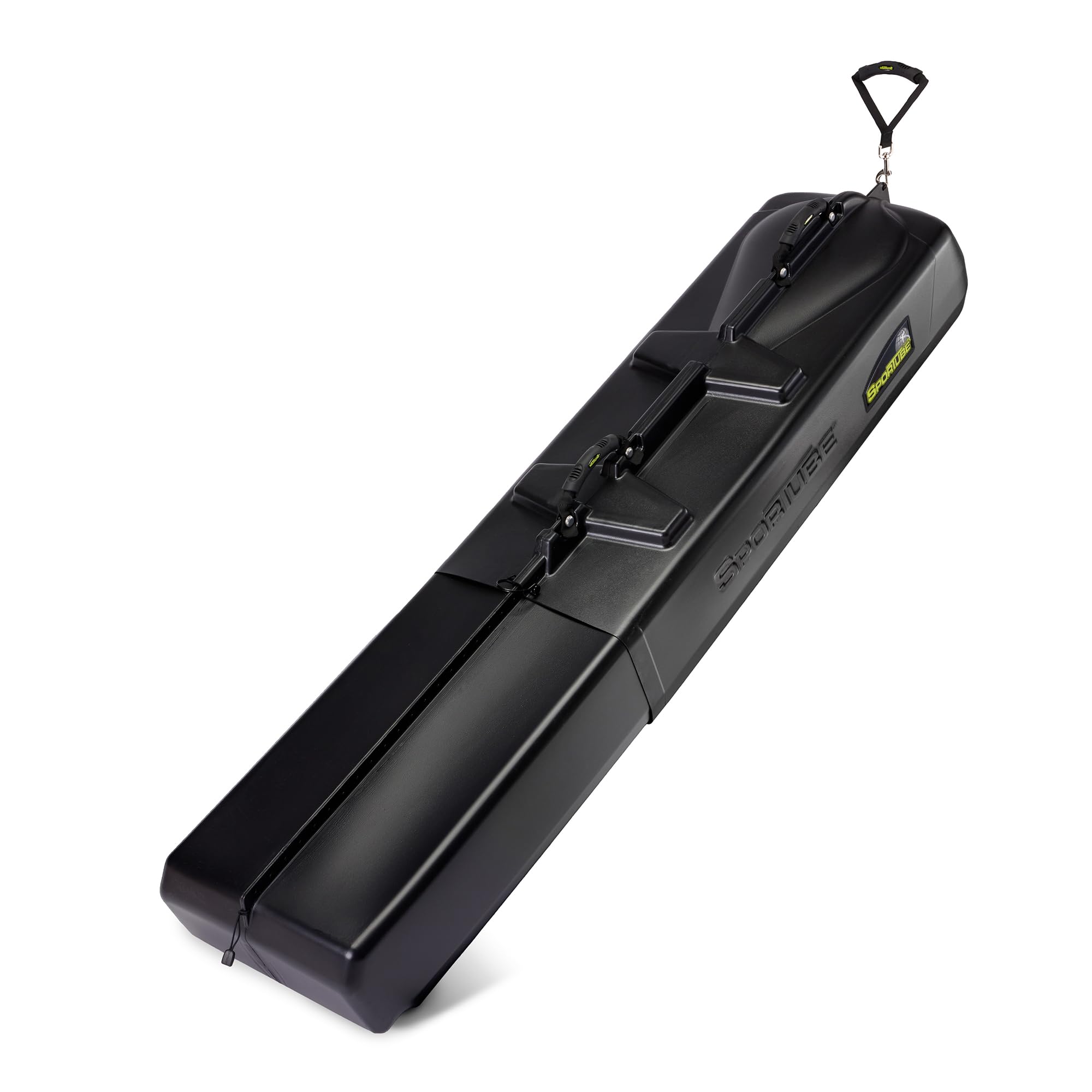
A rigid shell does something foam cannot: it keeps the weight of everything stacked on top of your skis from reaching them at all. The Series 3 is molded from high-density polyethylene with no zippers and no hinges — the two things that fail on soft bags — and the interior slides from 42 to 72 inches, so the same case takes a short slalom ski or a quiver of long fat skis. It rolls on inline wheels and carries a five-year manufacturer's warranty.

Weight is the trade, and it's a real one. The case is 6.3 kg before anything goes in it, and three pairs of skis, poles and boots put a serious dent in your checked-bag allowance — weigh it loaded at home rather than at the counter. We think the protection is worth that for expensive skis and repeated flights, and not worth it for a drive to Vermont.

A detail from the maker's own instructions is worth repeating: pull the Easy Pull Handle off and pack it inside a carry-on before you check the case. Handles are the first thing to disappear on a baggage carousel. The rest of the ownership picture is storage — a hard case doesn't fold, so it needs a corner of a garage rather than a shelf in a closet.

Pros

  • Rigid HDPE shell, no zippers or hinges
  • Interior adjusts from 42 to 72 inches
  • Rolls on inline wheels
  • Five-year manufacturer warranty

Cons

  • 6.3 kg before anything goes in
  • Does not collapse for storage
Our verdict

We reach for this when the skis matter more than the back: a rigid, wheeled case that takes three pairs and shrugs off baggage handling.

Check Latest Price
4

Best for Long Skis

Unigear SKI-MOGUL Ski Bag

88 /100
Traveler Score Excellent

Key details

Padding
360° dense foam
Ski Straps
Internal compression straps
Max Ski Length
192 cm
Outer Dimensions
76.77"L x 7.87"W x 5.91"H
Check Details on Amazon

The zip runs the whole length and the bag opens flat, which sounds like a small thing until you're packing in a condo hallway with your boots already on. Internal compression straps hold the pair steady once they're in, and the mesh pockets inside take a down jacket and a sweater — clothes that would otherwise fill a duffel and now sit as padding around your bindings.

Protection is the reason to buy it: 360-degree dense foam, a 600D shell and a waterproof inner lining, with weather-resistant zippers that stay shut in the back of a wet shuttle. At 76.77 inches it takes skis to 192cm, which covers nearly every adult all-mountain ski, and it rolls up small enough to live on a closet shelf from April to December.

The limit is length: 192cm is generous, but the two-piece combos here go to 200cm, so a long powder ski may not fit. There's no wheel either, which matters more as the bag fills. For one pair under 192cm and a flight to catch, neither is a dealbreaker, and the flat-open loading is worth more than a wheel on most trips. We like it best for a solo traveler who wants one bag to carry and no boot bag to keep track of.

Pros

  • Opens flat for easy loading
  • Internal straps hold the pair steady
  • 360-degree foam with waterproof lining
  • Mesh pockets take a jacket or sweater

Cons

  • 192cm limit, short of the 200cm combos
  • No wheels
Our verdict

We choose this one when the skis run long: a fully padded 192cm bag that opens flat, straps the pair down, and swallows a jacket.

Check Latest Price
5

Best Combo for Extra Gear

GoHimal Ski and Boot Bag Combo

89 /100
Traveler Score Excellent

Key details

Boot Fit
Up to US 13
Compartments
3
Boot Bag Size
15 x 14 x 15 inches
Max Ski Length
200 cm
Check Details on Amazon

The boot bag is what sells this set. At 15 x 14 x 15 inches it has a main well that takes boots to a US 13 plus a helmet, with two side compartments and a front pocket for gloves, goggles and the small things that otherwise roll around a trunk. Padded shoulder straps mean it rides on your back while the ski bag goes over the other shoulder, and you walk into the lodge in one trip.

The ski bag takes skis to 200cm and closes with an S-shaped zip that runs around the side rather than down the middle, which makes sliding a pair in past the bindings noticeably less fiddly than the straight-zip sleeves here. Both pieces are 600D polyester with a water-resistant finish and thick interior padding, and the set is light enough to carry by hand from the car to the condo.

Against the Athletico combo, this one wins on the boot bag — more pockets, more room for a helmet — and the S zip is a real improvement at loading time. The Athletico costs a little less. What neither solves is the carrying: two separate bags, no wheels on either, so a train connection means planning the walk.

Where it earns its place is a family trip, with the boot bag doing double duty as the helmet, goggle and glove locker and the ski bag handling the longest pair in the household. If you're traveling alone with one pair and rental boots, a padded single is less to manage.

Pros

  • Boot bag with two side compartments
  • Room for a helmet beside the boots
  • S-shaped zip eases loading
  • Skis to 200cm, boots to US 13

Cons

  • Two separate bags, neither with wheels
Our verdict

We point to this one when the boot bag matters as much as the ski bag: side pockets, helmet room, and skis to 200cm.

Check Latest Price
6

Best Lightweight Sleeve

Dakine Padded Ski Sleeve

91 /100
Traveler Score Outstanding

Key details

Weight
2.5 lb
Padding
Light padding
Material
100% recycled polyester
Max Ski Length
175 cm
Check Details on Amazon

At 2.5 pounds, this is the bag that goes where the others can't be bothered: folded behind the truck seat, slid into a roof box, hung on a hook in the garage. It's the 175cm sleeve, so one pair and poles, and the shell is 100 percent recycled polyester with a tarp-like interior that wipes dry instead of soaking up meltwater.

Lightly padded is the honest description. There's foam around the ski, but this isn't the bag for a tight connection and a handler running behind schedule. What it is good for is everything else: the zipper is heavy-duty and takes a small lock, there's a clear ID window so it doesn't get mistaken for the identical black sleeve on the shuttle, and it carries well enough by the adjustable strap that we stopped noticing it on the walk from the lot.

Two things to check when it arrives. The padding should run the length of the bag rather than stopping short at the ends, and the fit should be snug enough that the skis don't slide; if the sleeve is loose, wrap a jacket around the bindings and the problem solves itself. For car trips, roof boxes and a season of storage, it's the easiest bag here to own — just don't expect it to fight an airline for you.

Pros

  • 2.5 pounds, folds flat
  • Tarp-like lining wipes dry
  • Heavy-duty zipper takes a small lock
  • Clear ID window

Cons

  • Light padding for the car, not the hold
Our verdict

We keep this one for the car and the closet: a 2.5-pound sleeve with light foam and a wipe-clean lining.

Check Latest Price
7

Budget Car Trips

MOOCY Unpadded Ski Bag

86 /100
Traveler Score Excellent

Key details

Weight
1.72 lb
Closure
Roll-top
Padding
Unpadded
Material
600D polyester
Check Details on Amazon

There's no foam in this bag, and that's the point. The shell is the same 600D polyester the padded bags use; what's missing is everything between it and your skis. It has padded carry handles, a roll-top that shortens for a shorter ski, and room for a pair plus poles. At 780 grams it folds into a ball and disappears inside a duffel, which is more than we can say for anything else on this list.

The product page can't agree with itself on length: the title says 200cm, while the size details describe room for one pair up to 175cm. Measure your skis and confirm before ordering if you're anywhere near that line. It also won't protect an edge from a baggage handler, so wrap a jacket around the tips or leave it home when you fly.

What it's honestly good for is the drive to the mountain and the shelf afterwards — it keeps wax and edges off your back seat and keeps a pair together with its poles. This is the bag we hand someone who skis a local hill every weekend and has nowhere to store a padded bag in July. Treat it as a cover, not a case, and it does its job.

Pros

  • 780 grams, folds into a duffel
  • Roll-top adjusts for shorter skis
  • Room for a pair and poles
  • Padded carry handles

Cons

  • No padding to protect edges
  • Length fit is unclear from the title
Our verdict

We hand this to the weekend driver: an honest unpadded cover that folds to nothing and keeps wax off the back seat.

Check Latest Price
8

First Padded Bag

TYRONAL Padded Ski Bag

91 /100
Traveler Score Outstanding

Key details

Shell
600D polyester
Lengths
175 cm and 190 cm
Padding
360° padded
Max Ski Length
190 cm
Check Details on Amazon

Two lengths is more choice than most single bags here offer — 175cm and 190cm — and this is the 190. The body is 600D water-resistant polyester with padding built into the walls, an adjustable shoulder strap and a name card slot, so a van full of identical black bags doesn't cost you twenty minutes at the end of the day.

The 190cm shell is roomier than it sounds and tighter than it looks once a pair is inside. Pack one pair, poles and a jacket and it's comfortable; add a second pair or a bulky layer and the zip starts working for a living. Size by your longest ski plus a margin rather than by the number on the label.

What the bag gets right is the padding, which wraps the ski continuously instead of sitting in one panel, and the price, which lands at the bottom of the padded options here. The zip runs the length of the bag and the strap adjusts enough to wear it over a puffy jacket.

The open question is how the shell ages — the stitching and the zipper are the parts to inspect when it lands, and a bag at this price is easier to replace than repair. As a first padded bag, or a second one for a kid's skis, it's an easy call: the materials look like the bags that cost more, and it does the one job that matters.

Pros

  • Offered in 175cm and 190cm
  • Padding wraps the full ski
  • 600D water-resistant shell
  • Name card slot

Cons

  • Fit runs tight near the 190cm limit
Our verdict

We think this is the best value in padded bags here: 190cm of 600D shell and continuous padding, with a fit that runs tight.

Check Latest Price

How We Tested Ski Travel Bags Across a Full Season

To build the shortlist, we read through customer reviews and spec sheets for roughly 30 ski bags, then filtered by length options, empty weight, shell material, padding at the tip and tail, and whether the bag rolls, wears as a backpack, or does neither well. Price counted, but only as a ratio against construction — a bag that costs twice as much needed to show it in the stitching, the zipper, and the foam. Ten made the cut, and we used each one from early December through the last slushy weekend in April.

Most of the testing happened away from a workbench. Each bag was packed the night before a trip with one pair of skis, poles, and — depending on the model — boots, helmet, and a jacket, and we timed how long that took and whether the bag stayed balanced once zipped. Then came the airport: we weighed every bag empty on a luggage scale and again fully loaded, hoisted it onto the check-in counter, dragged it by its handle through a terminal, and lifted it into a rental car trunk. At the other end we hauled it up lodge stairs, wedged it into a shuttle, and repacked it at the end of each day, often with wet gear.

We checked for wear after every trip: frayed seams around the wheel housing, scuffed fabric at the tail, buckles that had bent in transit, zippers that caught on boot pockets, and foam that had flattened where ski edges press hardest. A bag earned a place here by finishing the season still looking ready for another one — and by being something we didn't dread carrying.

How to Choose Ski Travel Bags

Padding Is the Whole Point in a Baggage Hold

Foam thickness matters less than where it sits. A single panel down one side is enough for a car trunk; foam that wraps all four sides, as the Element Equipment and Unigear both claim, is what protects against a handler dropping the bag corner-first. Run a hand along the inside before you trust the word padded.

The other weak spot is the closure. Zippers and plastic clips fail before fabric does, so a full-length zip that spreads the load and sturdy hardware are worth more than an extra millimeter of foam. A bag with no zipper at all, like the hard case here, removes that failure point entirely.

Buy for Your Longest Ski, Then Add Slack

Your ski length is printed on the topsheet; the bag's length is measured on the outside, and interior padding, a fixed tail and the bulge of a binding all eat into it. A 175cm bag is tight on a 175cm ski, and a 190cm body leaves little room beside a near-limit pair once poles go in.

Size by your longest ski plus a margin rather than by your everyday pair. Roll-top designs adjust, but only within their own range, and the MOOCY's stated length is shorter in its size details than in its title, so confirm before ordering.

Single Bag or Ski-and-Boot Combo

A combo like the Athletico or GoHimal gets boots, helmet and soft goods into one purchase and one packing system, and it keeps wet boots away from your jacket on the way home. What it doesn't do is reduce what you carry: it's still two bags in your hands, and neither has wheels.

If you fly with one pair and rent boots, a padded single bag is simpler and lighter. If you own your boots and travel with other people's gear, the combo earns its keep.

Hard Case or Soft Bag

A hard shell like the Sportube removes the soft bag's failure points — no zipper, no seam, no fabric to tear — and rolls on wheels. It also weighs 6.3 kg empty and doesn't fold, so it costs baggage allowance and a corner of the garage.

Soft padded bags fold onto a shelf and cost less; they trade that convenience for the protection a rigid shell gives. Fly with expensive skis several times a season and the hard case justifies itself. Fly once a year and a well-padded soft bag is enough.

Getting Through the Airport

Only one bag here rolls, so for everything else the shoulder strap decides whether the walk from the lot is comfortable. Detachable straps pack away when the bag is checked, which is the argument for them: a strap that stays on is a strap that can snag on a carousel.

Test the handles and strap anchors with the bag loaded, not empty, and put the packed bag on a bathroom scale before you leave. Skis, poles, boots and a jacket add up faster than most people plan for.

Frequently Asked Questions

Final Verdict

The Athletico Padded Ski and Boot Bag Combo is the one we point most skiers to: it takes 200cm skis and size 13 boots, both halves are padded, and it costs less than several single bags here. For a first trip or a once-a-season flyer, nothing else in this group covers as much for as little.

Buy the Sportube Series 3 instead if you check skis several times a season and want a rigid shell around them, and look at the Element Equipment bag if you own one pair of 175cm skis and want the best padding here.