Best Ski Boot Travel Bags of 2026

Nobody warns you that ski boots are the heaviest, wettest, most awkward thing you'll carry all winter. On a powder morning you'll spot them in the lodge lot: people balancing loose boots against a hip, a helmet dangling from one finger, a glove face-down in the slush behind them. A good boot bag fixes that in one trip, moving boots, helmet, goggles, gloves, and a layer together while keeping the wet stuff away from the dry stuff. It also does the quieter job nobody thinks about until morning — letting air reach a soaked liner so your boots aren't clammy at first chair.

Here's what a first-time buyer usually learns the hard way: the zipper goes first, and it usually goes because someone forced a helmet into a bag built for two boots and nothing else. Capacity claims are slippery too, since a bag can technically swallow a pair of boots and still leave no home for your goggles. My team and I loaded, carried, and overstuffed 12 bags over one ski season to sort that out. What follows covers road-trippers, flyers, and anyone whose gear lives in the garage from November to April.

1

Best Overall

Unigear 50L Ski Boot Bag

96 /100
Traveler Score Outstanding

Key details

Shell
1050D nylon and tarpaulin
Capacity
50 liters
Back Panel
EVA padded mesh
Boot Storage
Dedicated rear compartment
Check Details on Amazon

The first thing we noticed about the Unigear is how quickly a full day's kit disappears into it. Boots go in their own compartment at the back, helmet and goggles take the main body, and gloves and small items have their own spots, so we weren't repacking the bag at the tailgate. At 50 liters, it's the size we reach for most often: big enough for boots, a helmet, goggles, gloves, and a base layer, but still soft enough to squeeze into a car trunk or hoist into an overhead bin on many flights. We like that balance more than a cavernous bag that only makes sense when the car is parked steps from the lift.

The shell is a mix of tarpaulin and 1050D nylon, which gives it a reassuringly tough feel without turning it into a hard box. The EVA padded mesh back panel keeps boot heels from jabbing you, and the adjustable shoulder straps sit well enough for the walk from the lot. We also appreciate the three zippered compartments: they make the bag easy to load in a predictable order, and the boot section is lined for wet gear.

For a resort skier who wants one bag for the essentials and doesn't need a week's wardrobe, this is the easiest recommendation here. It's the bag we reach for first when the car is packed and the day is about laps, not luggage.

Pros

  • Three compartments keep boots and clothes apart
  • Waterproof 1050D nylon and tarpaulin shell
  • Padded mesh back panel adds carry comfort
  • 50 liters fits a full resort kit

Cons

  • Narrower body can feel tight with bulky gear
Our verdict

For most skiers, the Unigear 50L is the boot bag we recommend first: it balances a full-kit layout, a water-resistant shell, and a comfortable carry without making you pay premium prices.

Check Latest Price
2

Best Premium Carry-On

Thule RoundTrip 45L Boot Backpack

93 /100
Traveler Score Outstanding

Key details

Boot Fit
Up to Mondopoint 30.5 / US 13
Capacity
45 liters
Boot Access
Rear-loading with standing mat
Goggle Storage
Padded soft-lined compartment
Check Details on Amazon

The Thule RoundTrip 45L has one feature that sounds like a gimmick until you use it: the back panel opens flat and folds down as a standing mat. We changed in and out of boots in a wet parking lot without balancing on one foot or soaking socks, and that alone made the bag feel smarter than most duffels here. The rear-loading boot compartment keeps wet soles away from the rest of the kit, while a padded, soft-lined pocket gives goggles a real home instead of letting them bounce around loose.

At 45 liters, it's the best carry-on-focused bag in this group for most people. The listed boot fit goes up to Mondopoint 30.5, or US 13, so most adult boots have room, and the tall, slim shape is easier to manage in a crowded lodge than the bigger 50- and 65-liter bags. We found the top and front access useful when we needed a layer without unpacking the boot side.

The 45-liter capacity is the real limit: it's a day bag, not a trip bag. If you pack a bulky jacket and extra layers, you'll feel the walls tighten. For carry-on skiers who want the tidiest boot-changing setup here, that's a worthwhile trade; gear-heavy travelers should look at the 80L duffel.

Pros

  • Flip-down back panel works as a standing mat
  • Dedicated padded goggle compartment
  • Rear-loading boot compartment keeps wet boots separate
  • Compact enough for carry-on travel

Cons

  • Premium price for a day-sized bag
Our verdict

If you fly carry-on and want the tidiest boot-changing setup here, the Thule 45L is worth the premium; just don't expect it to swallow a week's layers.

Check Latest Price
3

Best for Wet Boots

OutdoorMaster POLAR BEAR 50L

92 /100
Traveler Score Outstanding

Key details

Carry
Backpack straps and twin handles
Bottom
Non-slip reinforced
Capacity
50 liters
Boot Storage
Two vented boot compartments
Check Details on Amazon

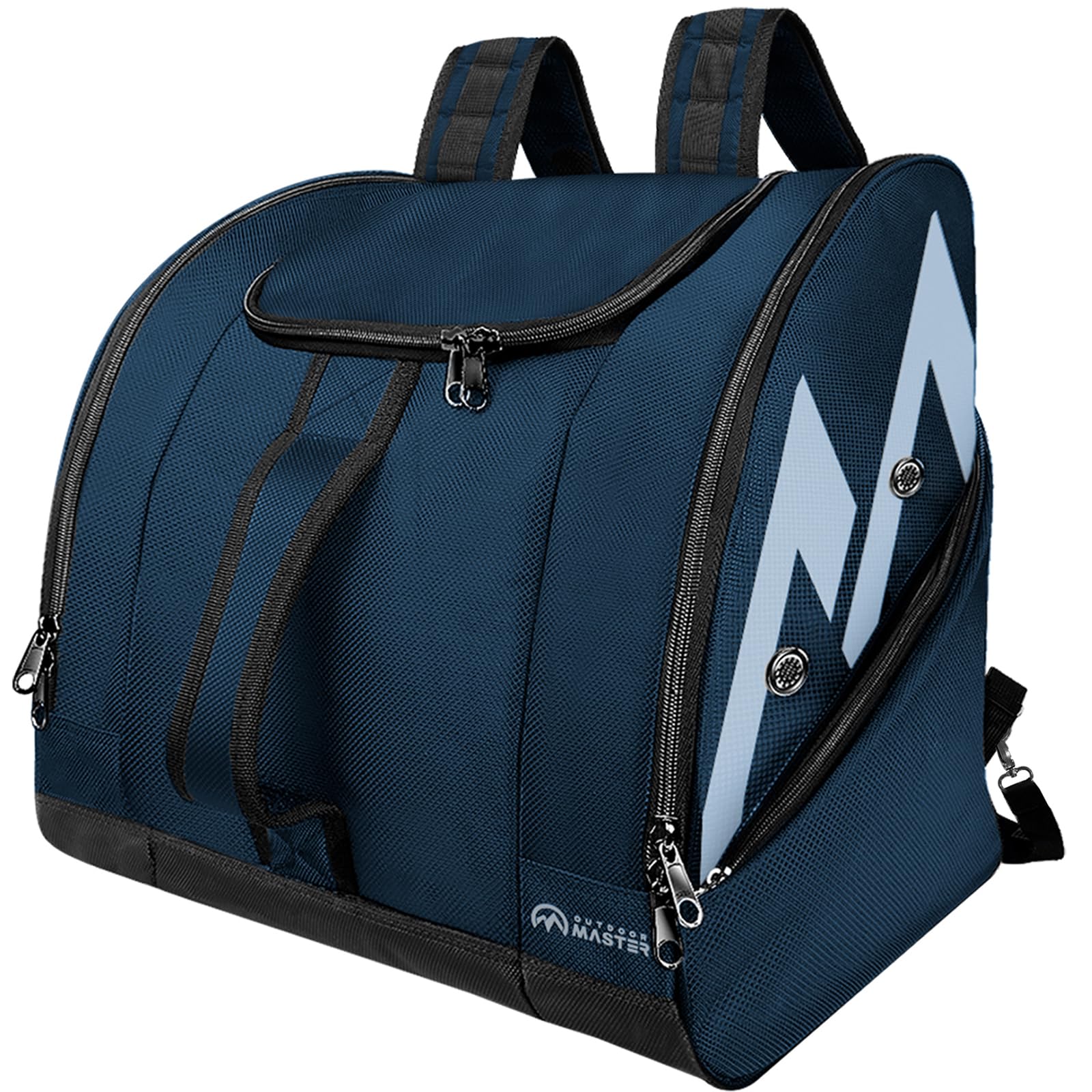
Two separate boot compartments with drainage holes are the reason the OutdoorMaster POLAR BEAR earns a place here. Instead of one big wet-boot sack, each boot gets its own vented side, so snowmelt can escape and the rest of your gear stays dry. The non-slip reinforced bottom is a small detail that matters in an icy parking lot; we noticed the bag stayed put when we set it down while unloading.

The rest of the layout is sensible for the money: a large main compartment for a helmet and layers, three external zippered pockets, a wet/dry pocket inside, and backpack straps plus two carry handles. At 50 liters, it holds a full day kit without turning into a duffel you have to drag.

The POLAR BEAR makes the most sense for budget-minded skiers who mostly drive to the mountain. The compartment design is genuinely useful, and the money saved can go toward a boot dryer or a spare set of gloves. It's not the bag we reach for when we're flying with a full week's gear, but for a day at the resort it earns its keep.

Pros

  • Separate vented boot compartments with drainage
  • Non-slip reinforced bottom
  • Wet/dry pocket and three external pockets
  • Backpack straps plus two carry handles

Cons

  • Top handles and straps can fail under load
Our verdict

The POLAR BEAR is our pick for wet-boot separation on a budget: each boot gets a vented compartment and a non-slip bottom, though handles and straps are the wear points.

Check Latest Price
4

Best for Long Trips

Thule RoundTrip 80L Duffel

92 /100
Traveler Score Outstanding

Key details

Boot Fit
Up to Mondopoint 30.5 / US 13
Capacity
80 liters
Included
Dry bag
Travel Feature
Luggage pass-through strap
Check Details on Amazon

The Thule RoundTrip 80L is less backpack than rolling-duffel companion: it has a luggage pass-through strap, a wide duffel opening, and enough room for a multi-day kit. It suits the traveler who already checks a ski bag and wants one boot bag to sit on top of it rather than another backpack to wrestle through the terminal. The boot compartment still includes Thule's flip-down standing mat, so you get the same dry-foot change without kneeling in slush.

Inside, the organization is deliberate: a dedicated boot compartment, a separate essentials compartment for helmet, goggles, gloves, buff, and pass, and a dry bag included for damp gear. The 80-liter capacity is the point; it swallows boots, helmet, outerwear, and spare layers without the daily repacking that a 45-liter bag forces. We found the wide mouth easy to load, and the separate boot section keeps the rest of the kit from sitting in meltwater.

The trade-off is that this is a travel duffel, not a daily backpack. It's big enough that you won't want to carry it far when it's full, and the wide shape is happiest in a car trunk or a checked-luggage stack. If your trips are fly-in, multi-day, and gear-heavy, that's a fair exchange; for resort laps out of the car, a 50-liter backpack is easier.

Pros

  • 80 liters swallows a multi-day ski kit
  • Luggage pass-through attaches to rolling ski bag
  • Boot mat keeps feet dry during changes
  • Dry bag included for wet gear

Cons

  • Premium price for a checked-luggage companion
  • Internal dividers take space when empty
Our verdict

For fly-in ski trips where one bag has to carry boots and several days of layers, the Thule 80L duffel is the roomiest and most travel-minded pick here.

Check Latest Price
5

Best Budget Organizer

RESVIN Ski Boot Backpack

92 /100
Traveler Score Outstanding

Key details

Shell
1680D nylon
Boot Fit
Men's boots up to size 12.6
Compartments
Six separate compartments
Water Resistance
Waterproof
Check Details on Amazon

The RESVIN bag is built around one idea: give every piece of gear its own compartment. There are six in total, including separate boot storage and pockets for goggles, gloves, and smaller items, and the 1680D nylon shell feels tougher than the price suggests. If you're the person who hates digging through a single black hole for a glove, this layout is the appeal.

We found the compartments useful for a family or a skier who brings a jacket, pants, and spare layers, not just boots and a helmet. The padded back panel and shoulder straps make the load bearable, though the bag is at its best when you pack it deliberately rather than stuffing it full. It's one of the larger bags here, and the boxy shape uses that space efficiently.

The bag is bulky when packed full, so it's better for car trips and family gear hauls than for tight overhead bins. If you need a bag that stays streamlined in transit, the Thule 45L or Dakine is easier to live with. For the gear-heavy skier who wants a place for everything, the RESVIN is a strong budget organizer.

Pros

  • Six compartments keep gear sorted
  • 1680D nylon shell feels durable
  • Fits men's boots up to size 12.6
  • Waterproof exterior for wet snow

Cons

  • Straps feel less substantial than the shell
Our verdict

The RESVIN is the choice for gear-heavy skiers who want maximum organization on a budget; its six compartments are the draw, provided you're not counting on plush straps.

Check Latest Price
6

Compact Day Pack

Dakine Boot Pack 50L

91 /100
Traveler Score Outstanding

Key details

Shell
Recycled polyester
Capacity
50 liters
Boot Access
Rear tarp-lined compartment
Helmet/goggle
Padded pocket
Check Details on Amazon

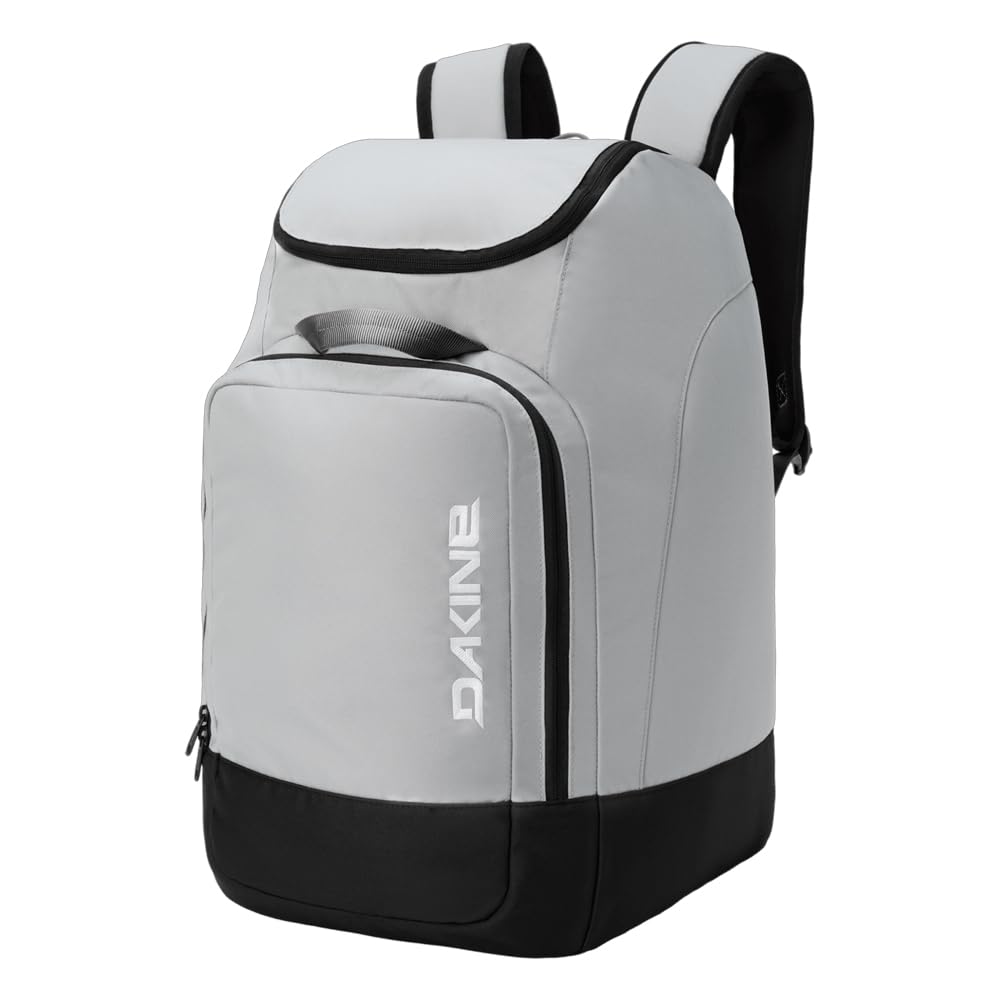
The Dakine Boot Pack 50L looks more like a commuter backpack than a ski bag, which is exactly why it earns a place for tight cars and crowded lodges. The rear-access boot compartment is tarp-lined, so wet boots stay contained, and the bag sits close to your back instead of ballooning out like a box with straps.

A padded helmet and goggle pocket protects the fragile stuff, and the front cargo pocket handles gloves, hats, and a tuning kit. The 50-liter capacity is enough for a day kit, but this is not the bag for a family's spare layers. It rewards a deliberate pack rather than a stuff-and-go approach.

We also appreciate the recycled polyester build, which feels more considered than the price alone suggests. The shoulder straps are basic but adequate for the walk from the car, and the low profile makes the bag easy to stow under a seat or in a locker.

Our verdict is that this is the best compact day pack here for skiers who want one bag for boots, helmet, goggles, and gloves without hauling a duffel. If you need extra clothing or travel for a week, the bigger Thule and RESVIN bags make more sense.

Pros

  • Rear-access tarp-lined boot compartment
  • Padded helmet and goggle pocket
  • Low-profile backpack shape
  • Recycled polyester construction

Cons

  • Top compartment is tight for bulky layers
Our verdict

The Dakine Boot Pack is the compact day bag we reach for when the car is tight and the kit is simple: boots, helmet, goggles, gloves, done.

Check Latest Price
7

Boot Separation

Athletico Ski Boot Bag

91 /100
Traveler Score Outstanding

Key details

Dimensions
15" x 15" x 18"
Boot Access
Side-entry zippered compartments
Back Support
Padded lumbar panel
Safety Detail
Reflective piping
Check Details on Amazon

The Athletico takes a different approach from the top-loading backpacks here: each boot gets its own side-entry zippered compartment, so you can slide wet ski or snowboard boots in without opening the main bag. We like that for a quick change at the car, and the reflective piping on the sides and handles is a genuinely useful detail when you're walking back to the lodge in dusk or fog.

The main compartment is roomy enough for a helmet, jacket, gloves, and accessories, and the padded lumbar panel and hidden backpack straps make the load easier to carry than a simple duffel. The separate side compartments also keep boots from mixing with clothes, which matters more than the spec sheet makes it sound.

For drive-up skiers who want easy boot access and a visible bag at dusk, the Athletico is a practical choice. It's roomier than its side-entry layout suggests, and the lumbar panel gives it an edge on the walk from the lot. It's not the bag we reach for on a fly-in trip, where a more compact pack is easier to manage.

Pros

  • Side-entry boot compartments ease loading
  • Reflective piping improves visibility
  • Padded lumbar support and backpack straps
  • Separate boot storage keeps clothes clean

Cons

  • Zippers are the likely wear point
Our verdict

The Athletico is a smart pick for drive-up skiers who want side-entry boot compartments and reflective visibility, as long as you keep an eye on the zippers.

Check Latest Price
8

Organized Weekend Trips

SEMSTY 55L Ski Boot Bag

92 /100
Traveler Score Outstanding

Key details

Shell
840D nylon
Capacity
55 liters
Back Panel
Padded EVA mesh
Dimensions
20.8" x 13.3" x 20.8"
Check Details on Amazon

The SEMSTY's rubberized bottom is the first thing you notice when you set it down in a wet parking lot. It shrugs off grit and slush, and it gives the bag a more planted feel than a plain nylon sack.

Inside, the 55-liter body is divided into individual compartments and handy zippered pockets, so boots, helmet, goggles, gloves, and pants each have a place. The 840D nylon exterior has a substantial feel, and the padded EVA mesh back panel keeps boot edges from digging into your spine on the walk from the car.

This is a bag for the skier who likes a place for everything. The multiple compartments make it easy to assign one pocket to gloves, one to goggles, and one to a hat, and the 55-liter body has room for a weekend's soft layers. It's more organizer than minimalist stuff sack.

For the skier who wants a place for everything, the SEMSTY is a strong organizer: the compartments make packing a weekend kit feel orderly, and the padded back panel keeps it comfortable on the walk from the car. It's a practical family gear hauler, not a minimalist stuff sack.

Pros

  • Rubberized bottom resists wet grit
  • 55 liters with multiple compartments
  • 840D nylon exterior
  • Padded EVA mesh back panel

Cons

  • Large cube shape is awkward in tight spaces
Our verdict

The SEMSTY is a strong organizer for weekend and family gear hauls, provided you have the trunk space for its wide cube shape.

Check Latest Price

How We Tested Ski Boot Bags Over a Full Season

To build the shortlist, I started with the bags that show up year after year in shops near resorts, then read through owner reviews looking for complaints that repeat — split zippers, straps tearing out at the stitching, liners that soak through by February. From there I filtered by listed dimensions, packed weight, and price, and landed on 12 bags running from plain boot duffels to wheeled and backpack-style models.

Testing stretched across one full ski season, roughly November through April, plus a few weeks of off-season storage. Most of it happened in a lodge parking lot at 6:30 in the morning: I loaded each bag with a pair of boots, a helmet, two pairs of gloves, goggles, and a midlayer, then carried it close to a quarter mile to the lodge and back — by shoulder strap where there was one, by handle where there wasn't, noting where a strap dug in or a bag swung against my hip.

Zippers got their own scrutiny, since that's the part that fails. I ran each one the full length of its track 100 times, then shut each bag with a helmet wedged in past the point of comfort to see whether the teeth split or the pull bent. Wet-boot duty came after every storm: soaked liners went in at night, and eight hours later I checked whether the interior had wicked water into the outer shell or let it drain and breathe. I also confirmed whether each bag fit under an airline seat or in an overhead bin, whether it slid into a trunk alongside three others without becoming the bag nobody could shift, and whether the price lined up with the hardware and stitching in front of me.

How to Choose Ski Boot Travel Bags

Match capacity to the trip, not the biggest number

We reach for 45 to 50 liters for a standard day kit: boots, helmet, goggles, gloves, and a base layer. Step up to 60 or 80 liters only when you're packing spare layers, a second pair of gloves, or gear for more than one person. Remember that soft bags bulge when full, so a 50-liter pack can behave like a larger bag in an overhead bin. If you fly carry-on, pack the bag before you leave and check it against your airline's limit; if you drive, a bigger bag is usually the easier trade.

Look for a separate, ventilated boot compartment

Wet boots are the reason a boot bag exists, and the best ones keep them away from everything else. A dedicated boot compartment with drainage holes or a wipeable lining means snowmelt stays contained instead of soaking your gloves. We prefer rear-loading or side-entry boot pockets because they let you load wet boots without opening the clean side of the bag. OutdoorMaster's twin vented compartments and Thule's rear-loading boot door are the clearest examples here. If the boot compartment is just a shared sack, pack boots in a plastic bag.

Test the carry system with weight in mind

A 50-liter bag loaded with boots and a helmet gets heavy fast, so shoulder straps and back padding matter more than the pocket count. Look for wide, adjustable straps, a padded back panel, and a shape that keeps the load close to your body. We noticed the difference on the walk from the parking lot: bags with a flimsy back panel let boot heels dig in. A hip belt helps with heavy loads, but these bags rely on shoulder straps and lumbar padding. Load boots first, closest to your back, then soft gear around them.

Treat hardware as the wear point

Zippers, handles, and strap anchors take the stress when a boot bag is overpacked or dragged by one handle. Check for reinforced stitching, chunky zipper pulls, and handles that are attached across a wide patch rather than a single seam. We don't expect any soft bag to survive years of airline abuse without wear, but the hardware is where trouble shows up first. Avoid forcing a zipper shut; if the bag is bulging, repack it. A boot bag that opens easily at the end of a cold day is worth more than an extra pocket.

Decide how much organization you actually need

More compartments can be a gift or a chore. A six-pocket organizer like the RESVIN is great for family gear and keeping gloves, goggles, and layers separate, but all that structure adds bulk and weight. A simpler bag like the Dakine is faster to pack and easier to squeeze into a car. If you mostly ski locally, choose the layout you can pack in the dark; if you fly with a full kit, the extra organization earns its space.

Frequently Asked Questions

Final Verdict

For most skiers, we recommend the Unigear 50L first. It has the best balance here of usable capacity, a separate boot compartment, and a carry system that doesn't punish you on the walk from the car. If carry-on organization matters more than capacity, the Thule RoundTrip 45L is the upgrade: the flip-down standing mat and padded goggle pocket make changing at the car easier. If you need one bag for a multi-day trip, the Thule 80L duffel is the roomier answer.