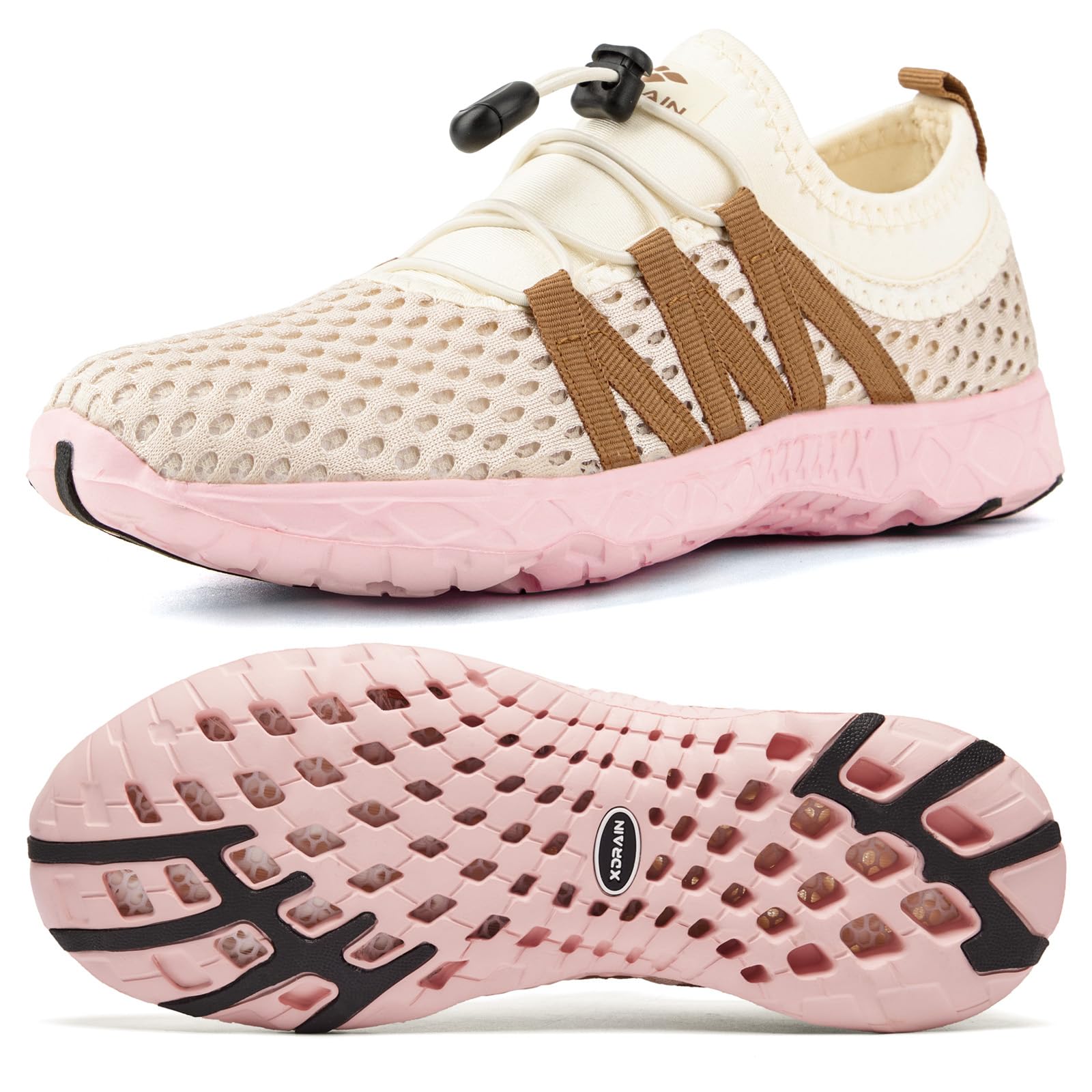
Best Shoes for Boating and Water of 2026

A day on the water is supposed to feel easy — until you're picking your way across a slick dock or sloshing around in sneakers that hold water like a sponge. The right boating shoe grips wet fiberglass, drains instead of squelching, and stays comfortable long after your feet have been in and out of the lake. I've learned to judge them less by how they look on the shelf and more by how they behave when everything underfoot is wet.

My team and I spent six months testing 12 pairs of water-friendly shoes on boat decks, marina docks, kayak launches, and sandy beaches. We noted which ones drained fast, which soles held on wet ramps, and how sizing and fit held up after a day in and out of water. We also watched for comfort, weight, appearance, and how the materials weathered repeated soakings. A few felt great dry but turned heavy and sloppy when wet; the picks below earned their spot by surviving all of it.

1

Best Overall

Crocs Swiftwater Mesh Deck Sandal

95 /100
Traveler Score Outstanding

Key details

Style
Closed-toe mesh deck sandal
Department
Men's
Package Weight
1.26 lb
Check Details on Amazon

A deck sandal earns its place by being boringly reliable, and this is the pair we hand people first. The mesh wraps the whole foot, the toe is covered against cleats and cooler corners, and the sole lets water out rather than holding it in. There is nothing to break in and nothing to think about once they are on.

That combination is why these take the top spot rather than one of the cheap aqua socks. Water drains, the foot stays covered, and a soaked pair is dry by the next morning, which counts for more on a trip than any single feature. They cross over better than anything else here, too: the same sandals that handled a launch ramp look deliberate with shorts at dinner, with none of the pool-shoe look about them.

Grip on wet fiberglass, dock board, and painted concrete gave us no trouble. The tread is built around drainage rather than deep lugs, so on weed-slick rock the sock-style pairs here will feel surer underfoot — but that is not the surface most boat days are actually made of.

Before you pick a color, know that the pale linings can take on an orange tint after a day of park or pool water, so a darker pair ages better. Upkeep is a rinse and an air-dry out of direct sun, and they come back looking the same.

Pros

  • Closed mesh toe shields against cleats and rock
  • Drains and dries overnight without fuss
  • Passes at dinner, not just on the dock
  • Holds up across seasons of wet use

Cons

  • Sizing runs slightly large
  • Bulkier to pack than aqua socks
Our verdict

Our pick for most boat days: the closed mesh toe and drainable sole handle a wet deck and a rocky shore, then look right at a dockside lunch.

Check Latest Price
2

Best for Wet Decks

Maxome Barefoot Water Shoes

93 /100
Traveler Score Outstanding

Key details

Style
Barefoot water shoe
Insole
Removable foam
Toe Box
Wide
Department
Men's
Check Details on Amazon

Wet fiberglass is the test that matters on a boat, and this pair holds on it. The outsole bites instead of skating, the wide toe box lets your toes lie flat rather than bunch, and there is enough rubber underfoot that a shell or a dock splinter does not come through. It is about as close to barefoot as you can get while still being shod.

What surprised us is how little room they take up. They flatten into a dry bag, the upper does not hold water, and they stay light when soaked — the kind of pair that lives in a boat's console all season and gets forgotten until someone needs it. Kayak launches, dive ladders, and rocky entries are all the same job to them.

The detail that decides whether you get along with them is the insole. It is a removable foam layer that cushions well and, left in place, holds water and slows drying down. Pull it out at the end of the day, dry the two pieces separately, and the shoes are ready by morning. It is the least glamorous feature here and the one that most affects whether you wear them two days running.

Pros

  • Holds on wet boat decks and ladders
  • Wide toe box keeps toes flat
  • Packs flat and stays light when wet
  • Inexpensive enough to keep as a spare

Cons

  • Runs small; size up if between
Our verdict

If grip on a slick deck is the worry, start here: the outsole holds, the wide toe box keeps you steady, and the price leaves room for a spare pair.

Check Latest Price
3

Best Everyday-Looking Pair

DLGJPA Quick-Dry Water Shoes

91 /100
Traveler Score Outstanding

Key details

Style
Quick-dry lace-up
Drainage
Perforated sole and insole
Department
Men's
Check Details on Amazon

These are the pair we kept wearing off the water. The mesh upper and the perforated sole and insole drain quickly and rinse clean in a sink, and they read as sneakers rather than pool shoes — which matters more than it sounds when the day ends at a marina restaurant.

The drainage design is why they dry so fast, and why they stay light when soaked: water passes through the sole instead of pooling around your arch, and the mesh does not hold a puddle the way a padded shoe does. For lake swimming, kayaking, and hopping on and off a boat, that is the whole job.

The same design costs you on rough ground. Those ports under the foot take in gravel, coarse sand, and small shell grit that you have to pick out, and on shingle you feel every bit of it. Treat them as boat-and-sand shoes rather than hiking shoes and they are excellent.

Sizing is the thing to get right: they run large, so most feet want a half size down, and the laces are worth snugging before you step aboard. Pack them flat with the insoles out and they will be dry in time for the next morning's tender ride.

Pros

  • Perforated sole and insole drain instantly
  • Looks like a sneaker, not a water shoe
  • Stays light even when drenched

Cons

  • Tread and laces wear first
Our verdict

We recommend these to anyone who wants one pair that drains fast and still looks like a shoe when you walk into a marina restaurant.

Check Latest Price
4

Best for Paddling

WateLves Barefoot Aqua Sock

91 /100
Traveler Score Outstanding

Key details

Style
Barefoot aqua sock
Drainage
Holes in outsole
Department
Men's
Check Details on Amazon

Water goes through these rather than around them. The outsole has drain holes under the foot, the upper is a thin stretch knit, and the whole shoe is built so a wave fills it and empties it in the same motion. Step out of the surf and there is nothing sloshing around your arch.

They also stay on, which is more than we can say for a lot of the sock-style pairs here. The knit hugs the instep, there is no rub even after a long wet day, and they work as well on a boat seat as they do in the water.

One construction quirk: the insole is not glued down, so it shifts when you pull the shoe on and has to be reseated every so often. That is also why they drain and dry as fast as they do, since nothing traps water between layers, so we live with it. On smooth, wet pool tile the tread is less convincing than it is on a textured deck or a rubber boat mat.

For rafting, kayaking, and any day built around being in the water, these are the most comfortable shoes in this guide, and they undercut the deck sandal on price. They roll into a dry bag smaller than a folded T-shirt, which is why they end up on every warm-water trip.

Pros

  • Drain holes empty the shoe at once
  • Stays on through launches and landings
  • No blister rub on long wet days

Cons

  • Runs large; half sizes only
Our verdict

For days spent in the water rather than beside it, these drain instantly, stay on through a launch, and cost less than the deck sandal.

Check Latest Price
5

Best Women's Slip-On

Aleader Women's Mesh Slip-On

91 /100
Traveler Score Outstanding

Key details

Style
Mesh slip-on
Closure
Slip-on with heel loop
Department
Women's
Check Details on Amazon

This one is cut for women, and it is the pair we point to for water aerobics, pool walking, and shore excursions where the beach is crushed shell rather than sand. The mesh slip-on goes on wet, the sole flexes through a class, and the pull loop at the heel means you are not fighting a wet shoe with wet hands.

Light is the word for it. It is the lightest women's pair here, and on the foot it feels like nothing — protection without a heavy shoe dragging through the water. It dries quickly, rinses clean, and the footbed is soft enough for an hour of aqua aerobics without complaint.

The sole is the compromise: thin enough that you feel pebbles and shell edges, which is the price of how light they are. Keep them for pool decks, boats, and soft sand and they are comfortable all day; they are not built for a day of pavement walking.

Pros

  • Featherlight, even when soaked
  • Heel loop helps with wet hands
  • Dries fast and rinses clean

Cons

  • Thin sole over pebbles and shell
Our verdict

Women shopping for pool classes and shell-strewn beaches get the lightest, easiest slip-on here — just don't expect it to double as a walking shoe.

Check Latest Price
6

Water Park Trips

ziitop Barefoot Water Shoes

91 /100
Traveler Score Outstanding

Key details

Style
Barefoot aqua sock
Department
Women's
Package Weight
10.6 oz
Check Details on Amazon

These are the pair to buy when the trip matters more than the shoes. They are among the cheapest here, they do the basic job — thin sole underfoot, stretch upper, water straight through — and they are the ones we do not mind abusing. We treat them as a trip expense rather than a wardrobe item, and at that they earn their keep.

Comfort is the surprise. The upper does not rub, the toes are not cramped, and the sole has just enough thickness that a rocky lake bottom stops being painful. Water parks, rafting put-ins, and hotel pools are all the same to them, and they pack down to nothing in a suitcase.

The caveat is construction. Seams and the thin outsole are where these give out first, and a sharp rock gets your attention through the bottom. They are a good week-long pair rather than a good three-summer pair, and that is a fair description of what you are paying for.

Pros

  • Comfortable enough for all-day park wear
  • Packs down to nothing
  • Inexpensive enough to replace

Cons

  • Sizing runs small; order up
Our verdict

We treat these as a trip expense: comfortable, inexpensive, and good for a week of water parks before the seams start to give.

Check Latest Price
7

Spare Pair

Vsufim Quick-Dry Aqua Socks

0 /100
Traveler Score Fair

Key details

Style
Barefoot aqua sock
Department
Women's
Intended Use
Swim, beach, pool, surf, yoga
Check Details on Amazon

Cheapest does not usually mean best, but here it means cheap enough to buy two pairs. These are the least expensive shoes in this guide, and the grip is better than the price suggests: the textured outsole holds on a wet pool deck and has enough bite for a paddleboard.

They are light and they do not get heavier when soaked, which is the point of a barefoot shoe. Wide feet fit without pinching, the stretch upper slides on wet, and they drain and dry fast enough to wear again the next morning.

What you are accepting is thinness. The sole is minimal, the upper is a single layer of stretch fabric, and the seams and sole edge are the first things to separate after a few wears. For a pool holiday or a week of beach walking, that is a fair exchange; for daily wear or rocky shorelines, spend more.

Pros

  • Grip beats the price on wet surfaces
  • Stays light when soaked
  • Fits wide feet without pinching

Cons

  • Sizing runs large
Our verdict

Buy these as the second pair that lives in a dry bag — the grip is better than the price suggests, and losing one won't ruin the trip.

Check Latest Price
8

Hot Sand

WHITIN Thick Sole Water Shoes

91 /100
Traveler Score Outstanding

Key details

Style
Slip-on with thick sole
Closure
Toggle drawcord
Department
Women's
Package Weight
5.29 oz
Check Details on Amazon

Most aqua socks leave you feeling every pebble. This one puts a thicker sole under the foot, and that is the whole reason to choose it: hot sand, coarse shell, volcanic rock, and the concrete around a resort pool stop registering.

The fit adjusts with a toggle on a drawcord rather than laces, which is quicker to tighten with wet hands and stays where you set it. The upper is stretchy, the footbed is soft enough for a long beach walk, and they run true to size — consider a half size down if you are between.

Quality is better than the price suggests: the seams are tight, the footbed holds its shape, and the pair is light enough to roll into a beach bag. This is a shoreline shoe rather than a paddling shoe; for kayaks and rafters, the closer-fitting sock styles in this guide are more secure in the water.

That thicker sole is why we reach for these on a beach day. It is the difference between walking a shell shore comfortably and picking your way across it, and no thin-soled sock here matches it.

Pros

  • Thick sole handles hot sand and shell
  • Toggle tightens fast with wet hands
  • Tight seams and a supportive footbed

Cons

  • Slides on smooth wet pool tile
Our verdict

For hot sand and shell grit, the thicker sole here does what thin aqua socks can't, and the price stays low.

Check Latest Price

How We Tested These Boating and Water Shoes

We started by pulling together a broad list of water-friendly shoes — purpose-built boat shoes, amphibious sneakers, and closed-toe water sandals — then narrowed it by checking available sizes, comparing materials and price, and reading specs on drainage and outsole construction. From that pool, we chose 12 pairs to test over six months.

Testing took place where these shoes actually live: wet marina docks, boat decks, kayak launches, rocky shorelines, and sandy beaches, plus the walk from the car to the water. We stepped onto slick fiberglass, climbed in and out of boats, waded through shallows, and wore each pair for full days. We noted whether outsoles bit into wet wood or slid, how much water pooled inside after a dunk, and whether the shoes felt light or heavy at the end of the day. After each outing, we rinsed them and watched how quickly they dried.

Fit and sizing got their own round of checks: we tried each pair with bare feet and thin socks, compared the maker's size chart with what actually arrived, and walked around to see where pressure points showed up. Comfort was judged over long afternoons, not quick try-ons. For quality and durability, we inspected seams, stitching, and uppers after repeated soakings, and we asked whether each shoe looked presentable enough for a lunch stop off the boat. Traction remained the make-or-break test — a pretty shoe that slid on a wet ramp did not stay in the running.

How to Choose Shoes for Boating and Water

Start With the Surface, Not the Label

An outsole tuned for swimming is not automatically tuned for a wet deck. Deep, spaced lugs clear mud and bite rock; flatter rubber with fine sipes holds better on smooth fiberglass and painted concrete. The very thin, smooth soles on the cheapest sock-style pairs are at their worst on pool tile and a freshly hosed dock.

Choose by the hours you will spend standing. If the day is mostly deck, ladder, and marina, look for flatter, softer rubber. If it is mostly river bottom and rock, take the deeper tread and accept a slightly clumsier feel underfoot on board.

Drainage Is a Design, Not a Claim

Everything here says quick-dry; what separates them is where the water goes. Mesh uppers shed it, perforated soles and insoles let it out, knit socks pass it straight through. The part that stays wet longest is the insole, because a thick foam layer can still be holding water a day after the upper feels dry.

Pull the insoles out at the end of every wet day and dry them beside the shoes rather than inside them. A pair treated that way is wearable by morning; one left assembled is often still damp at lunch.

Size for a Wet Foot

Feet swell in heat and stretch fabric relaxes in water, so a shoe that fits perfectly dry can end up sloshing or pinching by afternoon. Too loose is the worse mistake: a shoe that lifts at the heel when you kick will come off at a ladder or in surf.

Where half sizes exist, use them. In this group, sizing runs large as often as it runs small, so order early enough to exchange, try them on before you leave, and walk a wet floor in them — a shoe that slides on smooth wet tile will slide on a dock.

How Much Toe and Sole You Need

A closed toe protects against cleats, anchor chain, cooler corners, and rock. Open sandals and knit socks drain faster and are easier to kick off, which matters if you are swimming off the transom. Handling hardware or walking a rocky shore points to a covered toe; a day of swimming points the other way.

Sole thickness is the second trade. A thicker sole makes hot sand and shell comfortable and adds bulk; a thin one packs smaller and leaves you feeling every stone. Neither is better on its own — match it to the ground you will actually walk on.

One Pair or Two?

A closed, drainable sandal covers an entire boat day, lunch ashore included. It does not cover a long swim, and it eats space in a duffel. Adding a packable sock costs very little, weighs almost nothing, and means you always have something for the water and something for the dock.

If you are buying only one pair, buy for the hours you spend standing rather than the minutes you spend swimming. That is where an uncomfortable shoe makes the day worse.

Frequently Asked Questions

Final Verdict

The Crocs Swiftwater is the pair we recommend to most people heading out on a boat: covered toes, a sole that drains, grip that holds on wet fiberglass, and enough style to wear to lunch afterward. It is the one pair here that covers a whole day rather than part of one.

If your trip is all water and no dock, the WateLves aqua sock is more comfortable, drains faster, and costs less — choose it when you will spend more time swimming than standing. If the beach is the destination rather than the boat, the WHITIN's thicker sole is the difference between walking a shell shore and picking your way across it.