Best Portable Wi-Fi Hotspots for Travel of 2026

Picture the moment your phone drops to one bar in the back seat of a rental car, the map spins uselessly, and the hotel you booked an hour ago wants fifteen dollars a night for a lobby network that can't load a photo. A portable hotspot is the fix: a battery-powered device not much bigger than a deck of cards that turns a cellular signal into your own private network, so your laptop, tablet, and everyone else's phone join without hunting for passwords or trusting a public connection with your work email.

I've juggled these things through airports and train stations for years, and my team recently did a more disciplined version of that habit: 11 hotspots, eight months, real trips instead of a lab bench. The lesson that surprised me most is that the device matters less than the plan behind it. An unlocked hotspot you can pair with whichever carrier actually covers your route will beat a fancier model locked to a network that goes thin the moment you leave the city. Below are the ones that held a signal when it counted, and the ones I'd hand to a friend without a caveat.

1

Best Overall

RoamWiFi R10 Mobile Hotspot

88 /100
Traveler Score Excellent

Key details

Weight
7.05 oz
Coverage
160+ countries
Bundled Data
10GB US, Canada, Mexico + 1GB global, 30 days
Connected Devices
10
Check Details on Amazon

Most travel hotspots hand you a second job along with the device: pick a carrier, source a SIM, buy a plan before you've reached the gate. The RoamWiFi R10 arrives with its data loaded — 10GB for the US, Canada and Mexico plus 1GB that works worldwide, live for 30 days — and it takes no SIM at all. Power it on and up to 10 devices can share the connection.

That head start is why it's our default recommendation. Coverage is listed for 160-plus countries, the body is 200 g and genuinely pocket-sized, and the security is current rather than decorative, with WPA3 on a dual-band 802.11ac radio. Nothing in the setup asks you to understand prepaid cellular, and in a category where the friction is administrative rather than technical, that's worth more than a faster chip. For two weeks away with a phone, a laptop and a tablet, this is the one we hand to friends.

Battery is the caveat. All-day use is the promise, and it's realistic for mail and maps on a couple of devices; add a laptop, a tablet and a video call and you'll spend the afternoon planning around the charge. We keep a small power bank in the bag for long transit days and treat the internal cell as a head start rather than a guarantee.

Past the first month, data comes through the app on a pay-as-you-go basis, with no contract to cancel when you get home. That's the part frequent travelers underestimate: a device you feed only when you travel beats a subscription that bills you through eleven quiet months.

Pros

  • 10GB for North America included, no SIM to buy
  • Coverage listed across 160+ countries
  • 200 g body slips into a jacket pocket
  • Ten devices share one WPA3-secured connection

Cons

  • Battery runtime shrinks with several devices connected
  • Only 1GB of the included data works outside North America
Our verdict

We recommend it to most travelers: the data is already loaded, it works in 160-plus countries without a SIM, and the setup is the least fussy here.
Check Latest Price
2

Best for Fast 5G

GlocalMe Numen Air 5G

83 /100
Traveler Score Excellent

Key details

Network
0.18 oz
Peak Speed
2.5 Gbps
5G Countries
90+
Connected Devices
16
Check Details on Amazon

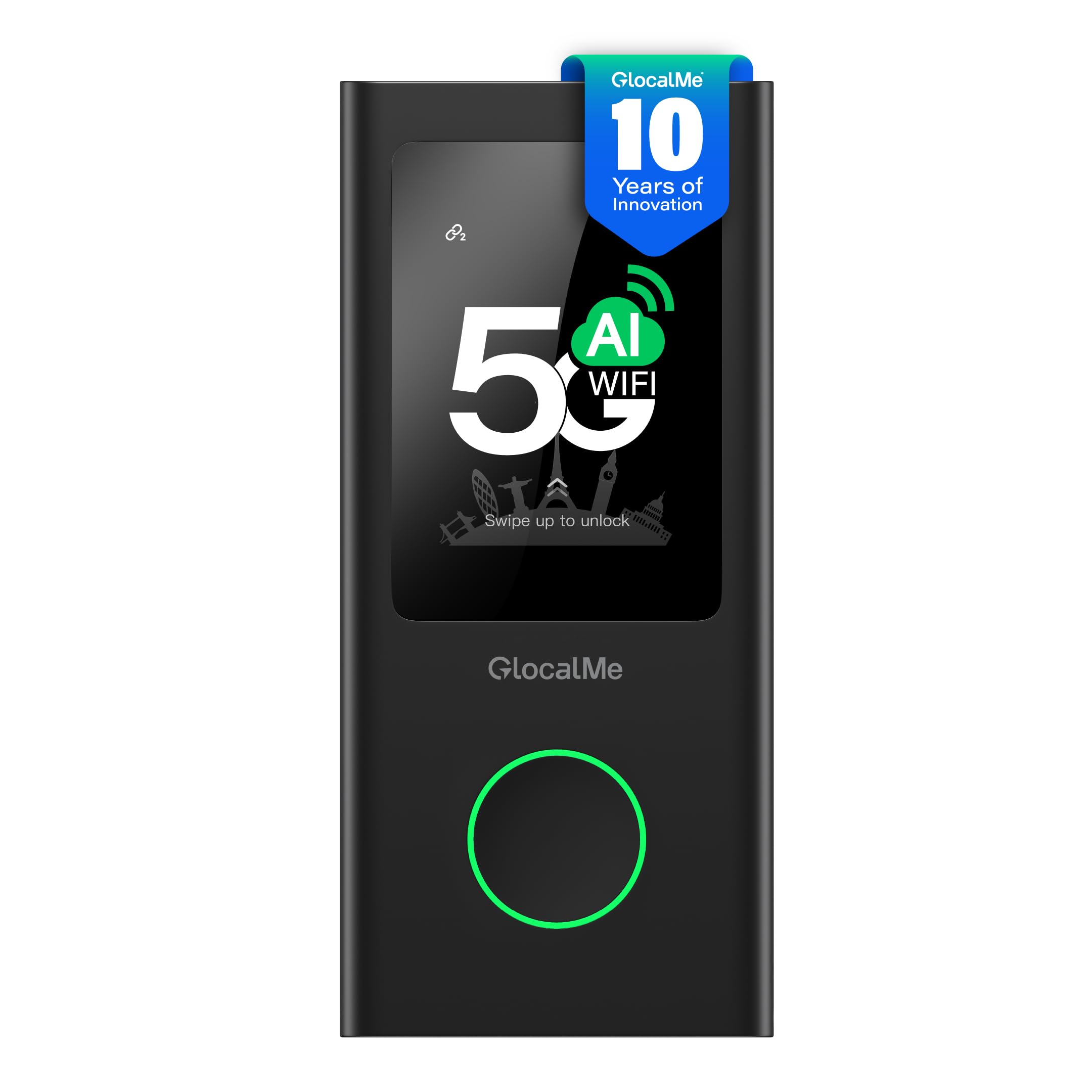
A steep premium over our top pick buys one clear thing here: speed. The Numen Air is a 5G device with a stated peak of 2.5 Gbps, listed coverage across more than 90 5G countries and 390-plus operator networks, and room for 16 devices at once. If a trip means uploading work files, joining video calls from a rental flat or streaming on a shared connection, that headroom is the whole argument — and it's why we rate this the fastest pick in the group.

CloudSIM is the other half of the design. There's no SIM tray scavenger hunt and no carrier contract: the device picks a network itself, and the 2.4-inch touchscreen shows data used, signal strength and connected devices without opening the app. We appreciate that in practice, because the question you actually have on a trip is whether you're burning data or standing in a good spot, and the screen answers it at a glance.

The hardware also doubles as a power bank, which takes some of the sting out of the price on a long day away from outlets. The reservation is running cost: this is the most expensive device we're recommending, and its plans are priced for people who need 5G rather than people who check email. If your work doesn't demand the bandwidth, the RoamWiFi does the same job for much less.

One practical wrinkle. If you plan to slot in your own SIM rather than use CloudSIM data, activation wants a live connection, so configure it at home instead of in an arrivals hall on airport Wi-Fi. Ten minutes at the kitchen table saves an hour of standing still.

Pros

  • 5G peak speeds up to 2.5 Gbps
  • CloudSIM picks a network with no SIM to buy
  • Sixteen devices on one connection
  • Touchscreen shows data and signal at a glance

Cons

  • Premium price for 5G headroom many trips won't use
Our verdict

Buy this one when speed is the job: our fastest pick, with real 5G headroom for uploads and video calls, provided the premium doesn't put you off.

Check Latest Price
3

Best With a Built-In Power Bank

SIMO Solis Hero

82 /100
Traveler Score Excellent

Key details

Battery
5,250 mAh power bank
Coverage
140+ countries
Bundled Data
1GB/month + 30GB global pack
Connected Devices
10
Check Details on Amazon

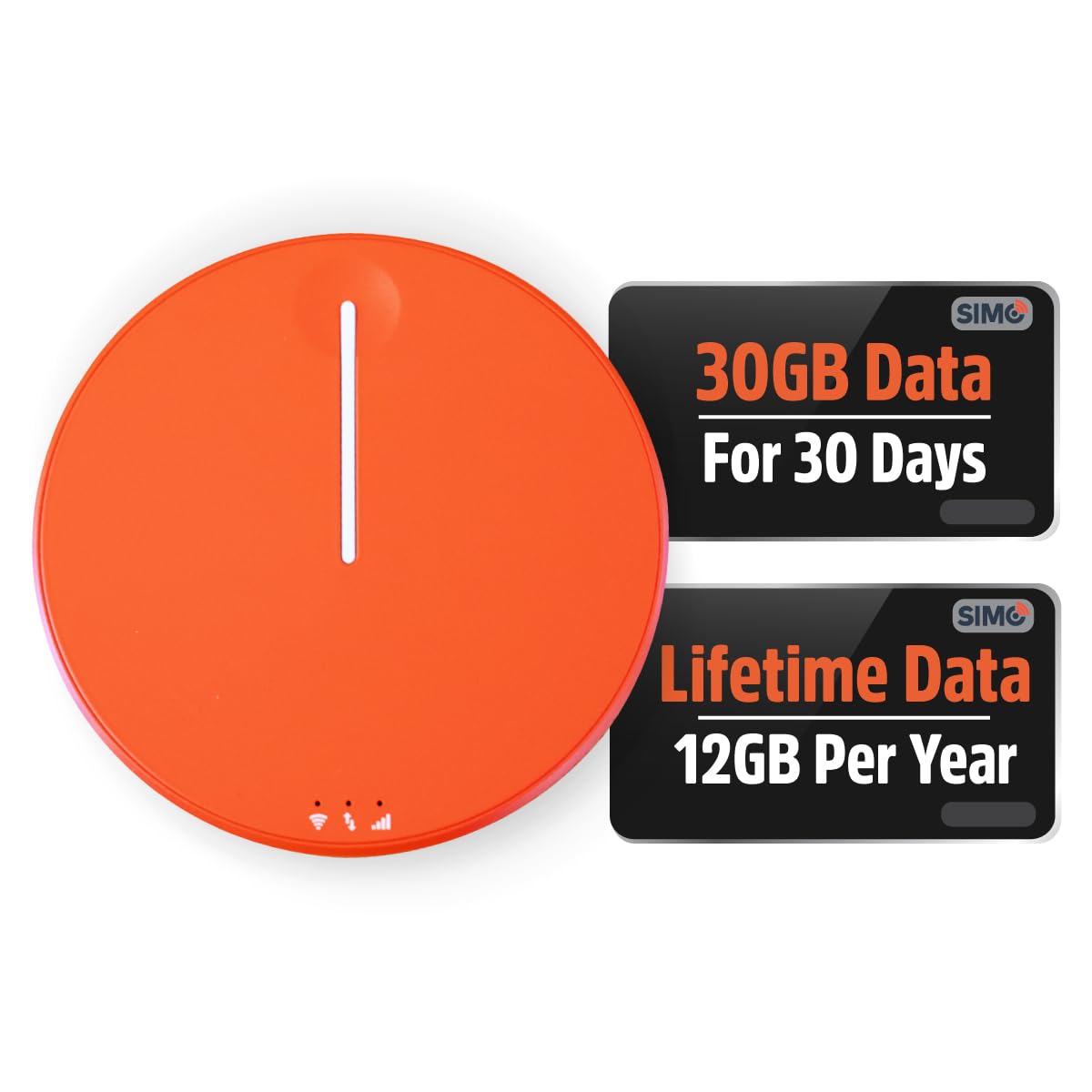
The Solis Hero's 5,250 mAh battery does two jobs, and the second one is the reason to look at it: it charges your phone. A dead handset at the gate is a worse problem than a mediocre connection, and this device covers both from the same case while serving up to 10 devices over Wi-Fi.

Data is the other draw. The bundle includes 1GB a month for as long as you keep the device, plus a one-time 30GB global pack, and coverage is listed across 140 countries and 300-plus carriers, with automatic carrier switching hunting for the strongest signal. No SIM, no contract, and pay-as-you-go top-ups through the app when you need more.

Speed is where we hesitate. On a strong local network the Hero handles browsing, messaging and maps comfortably; on a congested one, or where it settles on a weaker partner carrier, it feels sluggish next to the 5G Numen Air. Before a trip, check that your destination's networks appear on the supported carrier list — the automatic switching is only as good as the list it works from. Travelers who need mail and navigation will never notice; anyone planning to work from it should.

Worth saying plainly: charging a phone from the Hero draws on the same cell that runs the hotspot, so a day of doing both is a shorter day of connectivity. We top it up whenever we top up the phone, which keeps the two jobs from competing.

Pros

  • 5,250 mAh battery doubles as a phone charger
  • 1GB free monthly plus a 30GB global pack
  • 140 countries on 300+ partner carriers
  • Ten devices, no SIM and no contract

Cons

  • Global data is a one-time pack, not a monthly allowance
Our verdict

Our pick if you want one device that keeps the hotspot running and your phone charged — just confirm your destination's carriers before you rely on it.

Check Latest Price
4

US Road Trips

Statelinker S2 Hotspot

77 /100
Traveler Score Very Good

Key details

Weight
3.4 oz
Network
4G LTE, Wi-Fi 6
Coverage
North America
Bundled Data
10GB + 2GB monthly
Check Details on Amazon

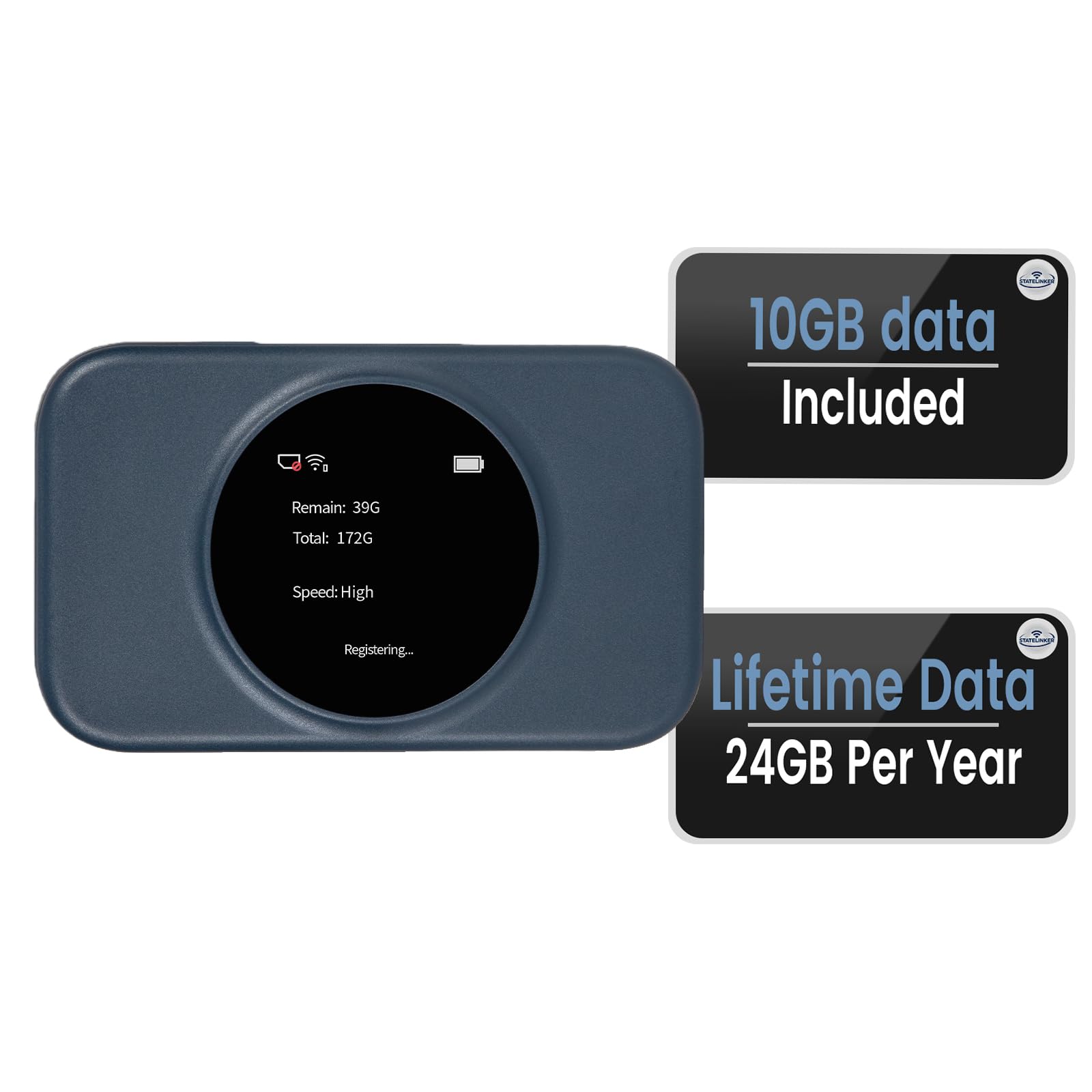
The S2 is the least expensive way into this category, and it comes with a boundary drawn around it: it's built for North America. Buy it for a US road trip, a long truck route or a domestic work trip and it does the job for a fraction of what the global devices cost; take it to Europe or Asia and it's dead weight. That's the whole decision, so make it before you compare anything else.

Inside that boundary, the specification is surprisingly complete. The body weighs 3.4 ounces, the screen shows remaining data at a glance without an app, Wi-Fi 6 carries up to 8 devices, and the bundle is 10GB of US data plus 2GB every month for as long as you keep it. For something that lives in a glovebox and only wakes up when you need it, those are sensible choices.

Signal is the variable to plan around. In good coverage the S2 holds comfortably for a handful of devices; in marginal areas it's the pick here most likely to drop, which is the nature of a single-band 2.4 GHz design in a small body. Test it at home on a real errand before you leave rather than discovering the problem at a campsite, and keep the box until you've done one trip with it.

What makes it worth living with is the small stuff: a data readout you can check without the app, a body that vanishes into a jacket pocket, and a monthly allowance that keeps the thing alive between trips instead of letting it go dark. For domestic use it's the one you stop thinking about.

Pros

  • 3.4 ounces, small enough for a glovebox
  • 10GB of US data plus 2GB every month
  • On-device readout of remaining data
  • Wi-Fi 6 for up to eight devices

Cons

  • North America coverage only, with no overseas use
Our verdict

The value choice for a US road trip: light, simple and loaded with data, as long as your travels stay in North America.

Check Latest Price

How We Tested the Best Travel Hotspots

We built the shortlist from manufacturer spec sheets and carrier compatibility charts, starting with roughly 30 models and cutting anything that couldn't run on more than one network, leaned on older bands, or cost more than its hardware justified. That left 11 devices, which became our only internet connection for eight months: on commuter trains, in a rental where the building's Wi-Fi crawled, in a basement cafe, and through a week-long work trip with two laptops and a tablet connected at once.

Setup came first. We timed the run from unboxing to a working network without opening the manual, then handed each device to someone who isn't a gadget person and watched exactly where they stalled. On the road, we ran speed tests morning, midday, and night from the same spot to see how much the connection moved, and kept a running log of dropouts, stalls, and the moment a page simply stopped loading. Portability was judged by pocketing each hotspot for a full day, case and cable included, and noticing whether it disappeared into a jacket or sat there like a brick.

Battery life we measured by streaming video from full charge to shutdown, then repeated with three devices attached. Data usage got checked against our carrier dashboard at the end of every trip, since a hotspot that quietly eats a gigabyte overnight is no bargain at any price. Value closed the loop: the cost of the device plus a realistic year of data, weighed against what it actually delivered on those trips. The picks below are the ones we'd pack again.

How to Choose Portable Wi-Fi Hotspots for Travel

Coverage First, Speed Second

Devices here fall into two camps. Global hotspots roam across 140 to 160-plus countries; regional ones are built for a single continent, and the Statelinker S2 is a North America device that no amount of Wi-Fi 6 will make useful in Portugal. Write down every country on your itinerary before you compare anything else, then confirm each device lists them.

Speed is the second question and the more oversold one. A 5G hotspot like the Numen Air earns its premium when you're uploading files or joining video calls; for maps, messages and the occasional booking, 4G is plenty. A coverage failure is absolute. A slow connection is merely irritating.

Decide How You'll Buy Data

Two models, and they change your running cost more than the hardware does. SIM-free hotspots — CloudSIM on the GlocalMe, the preloaded plans on the RoamWiFi and the SIMO — place themselves on a partner network, so there's no kiosk queue and no passport at a counter. The alternative is an unlocked device that takes your own SIM or eSIM, which is cheaper per gigabyte if you already have a local plan.

Read 'unlocked' carefully. It means the device isn't tied to one carrier, not that every carrier is certified to work with it. Compatibility varies by country and network, so check the supported list for your destination before you count on the SIM already in your wallet.

Read the Data Bundle Like a Contract

The headline number is rarely the whole allowance. Bundles split by region — the RoamWiFi's 10GB covers the US, Canada and Mexico while a single gigabyte goes worldwide — and they run on a clock, often 30 days from activation. Others meter out a small monthly amount indefinitely, as the SIMO does with 1GB, or add a one-time global pack on top.

Estimate a normal day of your own usage, then price the top-up before you buy the device. A cheap hotspot with expensive data is an expensive hotspot, and the hardware is the smaller number across a few years of trips.

Battery, Weight and the Power-Bank Trade-Off

A hotspot runs a cellular radio and a Wi-Fi access point at once, which is why runtime is this category's most common shortfall and why 'all day' deserves a skeptical read. How long it lasts depends far more on how many devices are attached and what they're doing than on any number in the listing.

Two shapes come out of that. Pocket models around 3 to 7 ounces disappear into a jacket and ask you to carry a power bank separately; the SIMO folds a 5,250 mAh cell into the same case and charges your phone, at the cost of one battery doing two jobs. For long transit days, either carry a power bank or buy the device that already has one.

Frequently Asked Questions

Final Verdict

The RoamWiFi R10 is the hotspot we point most travelers toward: the data is loaded before you fly, coverage runs to 160-plus countries with no SIM to source, and the 200 g body disappears into a day bag. Battery on a heavy multi-device day is the weak spot, and a small power bank covers it.

If the trip is a working one — uploads, video calls, a shared connection — the GlocalMe Numen Air's 5G headroom justifies its premium. Traveling mostly within the US? The Statelinker S2 does the domestic job for a fraction of the money.