Best Portable Propane Fire Pits of 2026

A fire you can start with a knob and shut off before bed is a hard thing to argue with — no splitting wood, no smoke in your jacket, no midnight bucket of water. The catch is that plenty of portable propane pits are only portable on paper: they throw heat at your shins and nothing else, they weigh as much as a packed cooler, or the lid feels loose the first time you lift it. What a good one buys you is a real fire on a deck, at a campsite, or in a tailgate lot, with none of the ash or the cleanup.

Eight months, 11 pits, and a lot of cold evenings later, my team and I can tell you the differences come down to more than flame height. Here's the thing first-time buyers don't know: the BTU number on the box tells you almost nothing about how the heat actually lands. A wide, low burner keeps a whole group warm; a narrow, tall one mostly warms whoever is sitting directly in front of it. The picks below are the ones that got the fundamentals right.

1

Best Overall

Outland Living 893 Deluxe

96 /100
Traveler Score Outstanding

Key details

Weight
23 lb
Diameter
19 in
Carry Kit
Cover and carry case
Heat Output
58,000 BTU
Check Details on Amazon

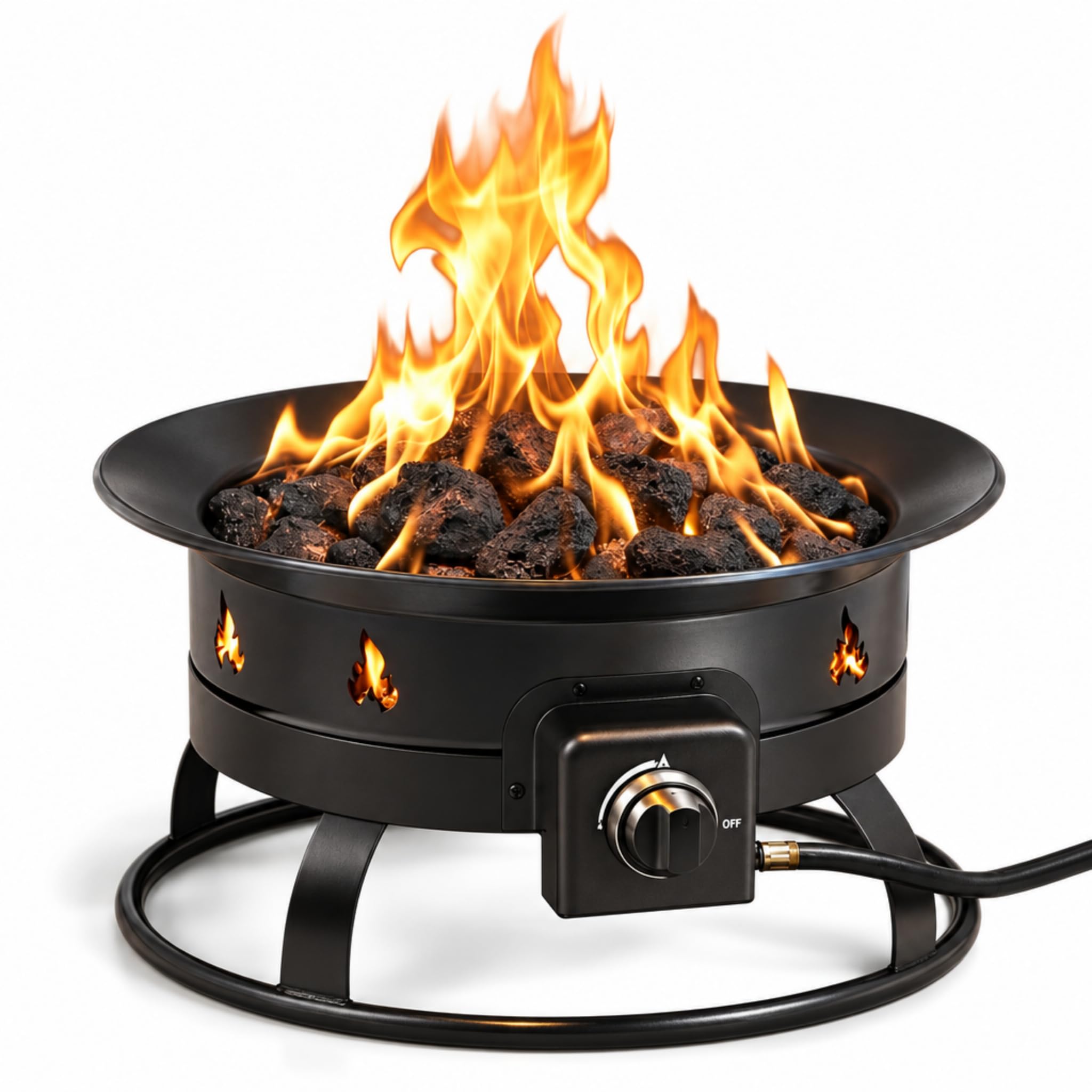
A portable fire pit has three problems to solve before the flame even matters: the rocks spill, the tank ends up in somebody's lap, and there's nowhere to put the hot bowl when the evening ends. The 893 Deluxe handles all three in one box. The bowl is 19 inches across and 23 pounds, the burner is stainless steel and rated at 58,000 BTU, and Outland Living packs in a 4.4-pound lava rock set, a cover that turns into a carry case, and a 10-foot hose with the regulator already attached. There's nothing to assemble.

That completeness is why it's our pick. We've unboxed fire pits that arrive as a bowl, a bag of rocks, and a hose you thread yourself, and the difference shows up in the first five minutes of a cold evening. Here the hose reaches far enough to tuck a 20-pound tank behind a chair, the stabilizer ring keeps that tank upright on uneven ground, and the lid locks the rocks down when you're done, so the truck bed doesn't end up full of gravel. Turn it on low and the flames sit under the rocks; give those rocks a few minutes and they throw the warmth themselves, which is the part that makes it feel like a fire rather than a burner.

The caveats are honest ones. Wind steals heat from any open burner, so a breezy site gets less out of it than a sheltered one. It's CSA approved for use during most campfire bans — a claim worth checking against the rules where you're going rather than taking as permission. What surprised us is how much range the valve has: turned down, it's a small, kid-friendly flame for marshmallows, and turned up it's a genuine heat source when the temperature drops.

Pros

  • Cover doubles as a locking carry case
  • 10-foot hose keeps the tank out of the circle
  • 58,000 BTU stainless burner, no assembly
  • Rocks, regulator, and stabilizer ring all included

Cons

  • Heaviest of the 19-inch bowls at 23 pounds
Our verdict

For one fire pit that handles both deck and campsite, we recommend this one: 58,000 BTUs, a lid that doubles as a carry case, and a hose that keeps the tank out of the circle.
Check Latest Price
2

Best for Lightweight Carrying

Flame King FKG6501D

91 /100
Traveler Score Outstanding

Key details

Weight
18 lb
Diameter
19 in
Ignition
Self-igniting piezo
Heat Output
58,000 BTU
Check Details on Amazon

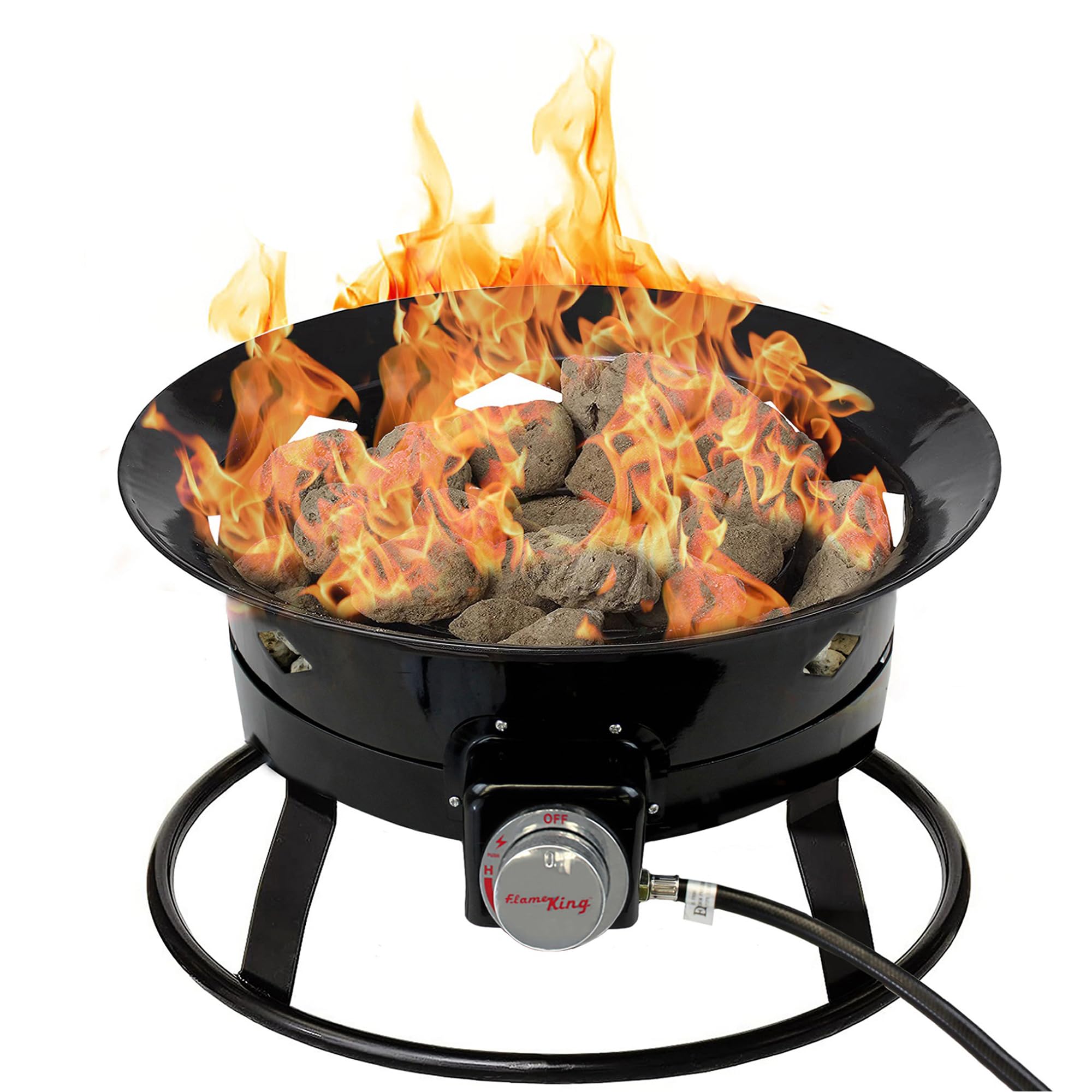
At 18 pounds, the Flame King is the lightest full-size bowl in this group, and that's the whole recommendation. It's the same 19-inch, 58,000 BTU package as our top pick, minus five pounds, plus a push-button igniter. Lifting it out of a storage bay, carrying it to a picnic table, setting it down, then doing all of that again a day later is exactly the job a travel fire pit has, and the lighter bowl wins that job. A cover and carry strap come in the box, and the 10-foot hose ends in a standard QCC connector, so it fits the same tanks as everything else here.

What the missing pounds buy you is a bowl that sheds heat quickly once the gas is off, which sounds like a drawback until you're the one packing up. We shut it down after the marshmallows and had it back in the bag while the chairs were still out. The flame itself is the same size and shape as the rest of the 19-inch group, sitting under a lava rock bed that takes a few minutes to warm and then radiates at your shins. Ours has become the one that goes in the truck by default.

Pros

  • Lightest full-size bowl here at 18 pounds
  • Self-igniting piezo, no matches needed
  • Cover and carry strap included

Cons

  • 30-day warranty, versus a year on our top pick
Our verdict

The version to buy if the pit lives in a camper bay: 18 pounds, self-igniting, and light enough to lift out one-handed.

Check Latest Price
3

Best for Maximum Heat

GasBRUH 19-Inch Fire Pit

91 /100
Traveler Score Outstanding

Key details

Weight
18.7 lb
Diameter
19 in
Carry Kit
Cover and carry handle
Heat Output
60,000 BTU
Check Details on Amazon

Sixty thousand BTU is the highest number in this group, and GasBRUH gets there in the same 19-inch, 11-inch-tall bowl everybody else uses. What that buys is a flame that pushes warmth past the first row of chairs — with four people around it on a cool evening, the two on the far side still get something out of it. The kit is complete in the usual way: cover, carry handle, 10-foot braided stainless hose, regulator, and a lid that turns and locks down so the rocks stay put in transit.

The braided hose is a detail we appreciated more than we expected. It lies flat instead of coiling into a spring and it doesn't kink when you drag the tank around to the far side of the fire. The bowl is finished in bare silver rather than the black most of these use, which looks sharp on a driveway and less sharp once soot finds it.

Where it lands: this is the pick for a tailgate or a cold-weather campsite, where the fire is doing warmth duty rather than atmosphere. The trade is fuel — 60,000 BTU at full tilt empties a tank faster than anything else here, and the valve does the work when you want a long evening out of one cylinder. Turned down, it sips; turned up, it's the warmest seat in the parking lot.

Pros

  • 60,000 BTU, the highest output here
  • Braided stainless hose resists kinks
  • Lid turns and locks for travel

Cons

  • Bare silver finish shows soot quickly
Our verdict

More burner than anything else here: 60,000 BTUs, a braided hose, and a lid that locks, for the camper who wants heat first and doesn't mind feeding it.

Check Latest Price
4

Best Budget

EcoNook 20-Inch Fire Pit

90 /100
Traveler Score Outstanding

Key details

Lid
Latching, with handle
Weight
25.7 lb
Diameter
20 in
Hose Length
8.5 ft
Check Details on Amazon

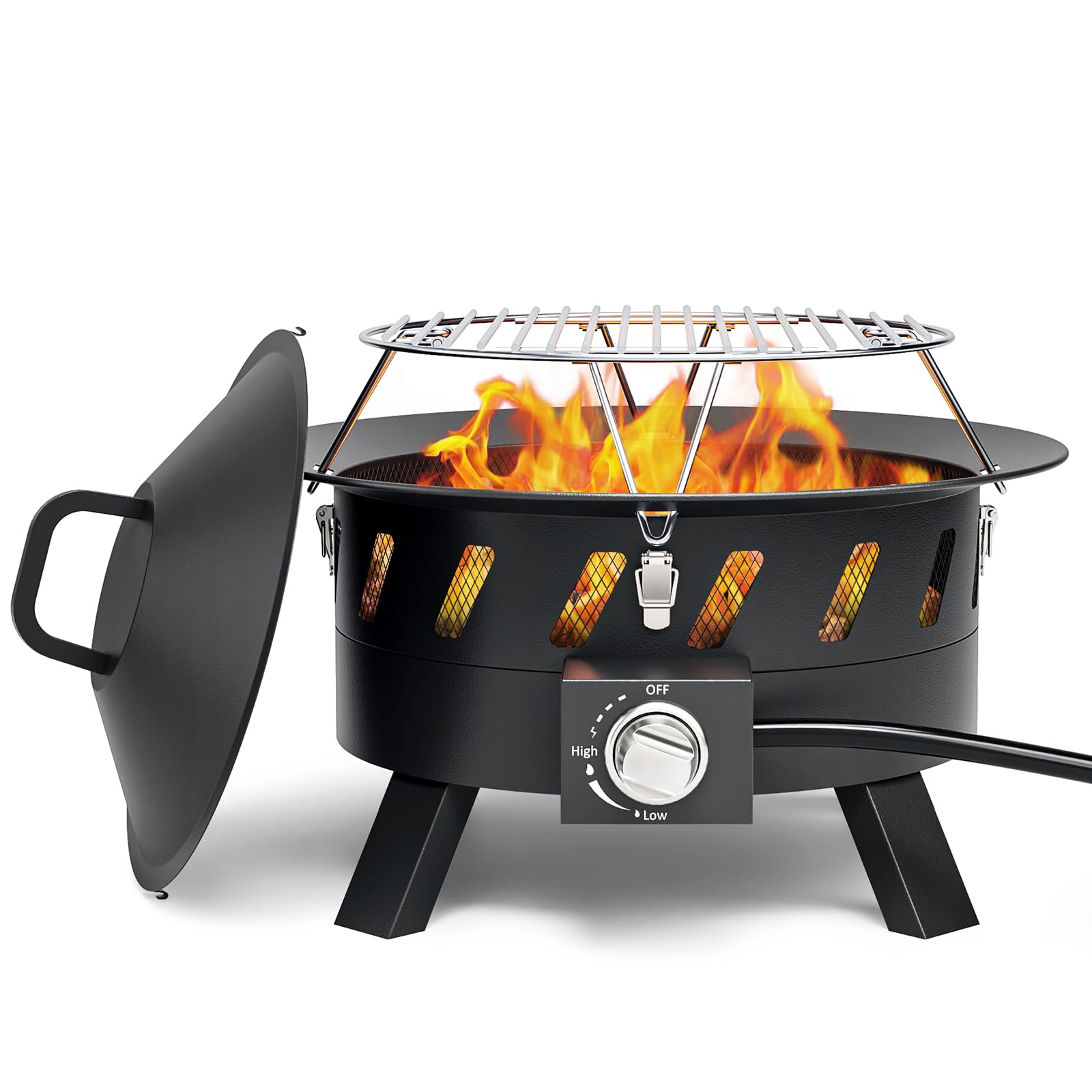
Price is why this one is here. It's the least expensive full-size bowl in the group, and it doesn't feel like a compromise once you're sitting in front of it: a 20-inch bowl, an inch wider than most of the others, with a lid that latches and turns into a handle. What it doesn't publish is a BTU figure, and we minded that more than we expected — output is the number you want to compare when you're choosing between pits, and EcoNook leaves you to guess.

What you do get is a pre-attached 8.5-foot hose, a mesh screen, and a steel bowl with a protective finish. The igniter is the weak point, so pack a long lighter as backup — lighting through the mesh takes a second and works fine. Where it earns its keep is the long evening: the 20-inch bowl throws a wider pool of light and heat than a 19, which matters when there are five chairs around it and one of them is yours.

Pros

  • Cheapest full-size bowl in this group
  • 20-inch bowl, wider than most here
  • Lid latches and doubles as a handle

Cons

  • Heaviest of the round bowls at 25.7 pounds
Our verdict

The cheapest way into a full-size bowl, and a good one if you pack a lighter: 20 inches, a latching lid, and heat that keeps up with pits that cost more.

Check Latest Price
5

Best for Solo Campers

Ignik FireCan

89 /100
Traveler Score Excellent

Key details

Fuel
Refillable 5 lb tank
Weight
11.5 lb
Hose Length
5 ft
Packed Size
12 x 6.25 x 8.5 in
Check Details on Amazon

The FireCan is a propane fire pit shaped like a steel ammo can, and the shape isn't a gimmick. It measures 15.5 by 6.5 by 10.75 inches open and packs down to 12 by 6.25 by 8.5, small enough to slide under a truck seat or into a duffel. The legs fold out, the lid comes off and becomes a handle, and the hose is a 5-foot quick-release with an adjustable regulator that connects to a refillable 5-pound tank without tools.

We like it for exactly one job, and it does that job better than anything else here: a fire for one or two people when space is the constraint. The flame comes up through a burner bar behind steel mesh, so you watch the fire through the sides rather than from above, and you light it through a pilot hole instead of lifting the lid and leaning over the burner. It heats the space directly in front of it and not much else. Compared with a 19-inch bowl, the warm zone is a wedge rather than a ring.

That narrowness is the trade. This is a fire you sit close to, not one that gathers a circle of chairs, and the flame reads as a bright, busy torch rather than a bed of glowing rocks. The tank is the other thing to plan for, since the natural partner is a small refillable cylinder rather than the 20-pounder in your garage. What sold us is the packing: fold the legs, drop the lid on, and it takes up less room in the vehicle than the cooler.

Pros

  • Packs to 12 by 6.25 by 8.5 inches
  • 11.5 pounds, lightest pit here
  • Tool-free quick-release hose
  • Lid doubles as a carry handle

Cons

  • Priciest pit here, and the tank is extra
Our verdict

The one that fits where nothing else will: an 11.5-pound ammo can that packs to shoebox size and heats the two people sitting in front of it.

Check Latest Price
6

Patio Only

Heininger 5995 Fire Pit

94 /100
Traveler Score Outstanding

Key details

Weight
22 lb
Diameter
19.25 in
Heat Output
58,000 BTU
Hose Length
10 ft
Check Details on Amazon

Put the Heininger next to our top pick and the specifications line up almost exactly: a 19.25-inch bowl, 58,000 BTU, a pre-attached 10-foot hose, lava rocks, CSA approval, and nothing to assemble. The difference is in the box. This one ships with the bowl, the hose, and the rocks, and that's the list.

What it has going for it is the basics done properly. It weighs 22 pounds, a pound less than the Outland Living, and the black enamel bowl reads as a fire pit rather than a piece of outdoor equipment. Sitting next to it, we found the flame shape essentially the same — big, yellow, and steady once the rocks are hot — and the heat comes off it the way you want on a cool evening, without the smoke.

So it's a patio pit. Twenty-two pounds is easy to shift around a deck and annoying to load twice a weekend, and the enamel finish looks better on a porch than the silver bowls here do. Choose it if the pit will live outside at home and you already own a tarp; if it will ever ride in a vehicle, the carry case on our top pick is worth having.

Pros

  • 58,000 BTU in a 22-pound bowl
  • Black enamel finish looks like a real fire pit
  • CSA approved for most campfire bans

Cons

  • No cover or carry kit included
Our verdict

A 19-inch bowl with the same 58,000 BTU output as our top pick and no carry kit, which makes it a patio pit rather than a travelling one.

Check Latest Price
7

Flat Storage

Ciays 19-Inch Folding Fire Pit

90 /100
Traveler Score Outstanding

Key details

Grate
Cast iron grill grate
Weight
23 lb
Heat Output
58,000 BTU
Folding Size
19 x 8 in
Check Details on Amazon

The legs fold, and that changes the shape the thing packs into: 19 by 8 inches instead of a full bowl with three feet sticking out. Everything else follows the familiar formula — a 19-inch bowl, 58,000 BTU, a 10-foot hose, cover and carry strap, lava rocks — with a couple of additions nobody else here includes.

The first is a cast iron grate that drops over the burner. It's a small grate, good for a couple of hot dogs or a pan, not a replacement for a camp stove, but it turns a fire into something you can cook over. The second is flameout protection, which shuts the gas off if the flame goes out. On a windy ridge that's the feature we appreciated most, because a burner quietly spilling propane is the one thing you never want to guess about. The piezo igniter needs no batteries.

The rest is sensible detail work: hooks keep the hose tidy, a holder on the frame keeps the tank upright, and the cover doubles as a carry strap. How the folding legs hold up over a few seasons is the open question — it's a simple mechanism, but it's newer than the designs that have been around for years, so it's worth keeping an eye on the hinge pins.

Where it fits is the person with a shallow storage bay: a tailgater, an SUV camper, someone whose garage is already full. For a big patio and a permanent spot, a fixed bowl with a wider base is the easier thing to live with day to day — but for a pit that goes in and out of a vehicle, folding legs earn their keep.

Pros

  • Folds flat to 19 by 8 inches
  • Cast iron grill grate included
  • Flameout protection shuts off the gas
  • Hose hooks and a tank holder

Cons

No notable drawbacks to flag.

Our verdict

A folding 19-inch bowl with a grill grate and flameout protection, and the one here that stores flat enough to disappear into a cupboard.

Check Latest Price
8

Patio Tables

BAIDE HOME 36-Inch Tabletop

90 /100
Traveler Score Outstanding

Key details

Length
36 in
Weight
27.5 lb
Wind Guard
Glass shield and glass rocks
Heat Output
40,000 BTU
Check Details on Amazon

This one isn't a campfire, and it's worth saying plainly: the 36-inch BAIDE is a tabletop fire feature, 36 inches long and 27.5 pounds, built to sit on a dining table, a coffee table, or a table with an umbrella hole. Set up that way, it's the best-looking thing in this group by a distance.

The glass wind shield is why it works. The panels stand on brackets with hooks that hold each piece in place, so a breeze doesn't lay the flame flat the way it can on an open bowl, and the shield plus the glass rocks make a deck table look like a hotel terrace rather than a campsite. The hose connects at the rear, and the fitting can be moved from the bottom to the side so it sits flat over an umbrella hole — a small design decision that decides whether the whole thing wobbles.

Heat is the compromise. At 40,000 BTU it's the lowest here, which is plenty for a table of people with their hands out and not much beyond that. And it needs the right table: 36 inches of fire bowl belongs on something sturdy and wide, and it will do nothing for a ring of camp chairs on the ground.

What we like most is how little it asks of a small outdoor space — no ash, no wood, no footprint beyond the table you already own, and a flame you can switch off when the guests go in. Treat it as patio furniture with a fire in it and it earns its spot; treat it as a portable fire pit and you'll be disappointed.

Pros

  • Glass wind shield steadies the flame
  • Fits umbrella-hole tables via side connection
  • Looks the part on a patio table

Cons

  • Glass wind panels are the fragile part
Our verdict

A tabletop fire feature rather than a campfire: lovely on a patio table, steady in a breeze, and not something you carry to a campsite.

Check Latest Price

How We Tested Portable Propane Fire Pits

We started with roughly 40 pits sold at major retailers and filtered hard on the things that make a portable pit worth owning: packed weight, footprint, burner size, price, and whether it ran on a 1-pound cylinder, a 20-pound tank, or both. Anything too heavy or bulky to fit in a car trunk beside a cooler got cut. That left 11 models, from tabletop bowls to two-burner units that fold up like a small suitcase, and each one ran the same tests over eight months.

Setup was timed the first time, solo, in a driveway: uncrate, connect the regulator, open the valve, hit the igniter. We counted the steps and noted whether the spark caught on the first click or the fifth, and how easy the knob was to feather down to a low flame. Then the pits went where people actually use them — a backyard deck on 40-degree evenings, a campsite with a steady crosswind, a tailgate lot, and a patio where one sat out overnight in the rain.

Heat got judged by sitting, not by reading a spec sheet. We parked at three, six, and ten feet from each pit and noted where the warmth stopped on high and on low, and whether the wind knocked the flame around. We weighed every pit empty and full, carried it one-handed up a flight of steps, and checked whether it slid under a tonneau cover. To get at build quality, we lifted lids and folded legs dozens of times, looking at weld neatness, hinge and latch play, and how much the knob loosened after a dozen burns. After each session the pit was wiped down, and we watched for rust at the burner tube and paint bubbling around the rim — the two places cheap construction shows up first.

How to Choose Portable Propane Fire Pits

Start With the Carry, Not the Flame

Weight is the specification that reshapes everything else, and the spread in this group runs from 11.5 pounds to 27.5. A pit that lives on a deck can afford to be heavy and planted; a pit that rides in a camper bay or gets carried to a picnic table should land near 20 pounds or less, because you lift it twice a trip and once more when you get home.

Packed shape matters as much as the number. The Ignik FireCan folds to shoebox size, the Ciays legs collapse to 19 by 8 inches, and a fixed bowl takes a full circle of space no matter how light it is. If the pit is going in a vehicle, measure the bay before you fall for a bigger bowl.

What 58,000 BTU Actually Buys You

The pits here that publish a figure sit between 40,000 and 60,000 BTU, and the honest read is that the gap between them is smaller than the numbers suggest. BTU rates fuel burn, not how warm your knees get: the flame sits in the middle of a bowl, the lava rocks absorb and then radiate the heat, and wind takes a share before any of it reaches you.

Bowl diameter shapes more of your evening than output does. A 19- or 20-inch bowl comfortably serves three or four chairs pulled close, and none of these is a crowd heater. Buy the output you can afford, then sit close.

Burn Bans: The Rule That Decides the Trip

Every listing here pitches the same benefit — a valve you can shut off beats a wood fire when restrictions land — and it's mostly true. What isn't true is that certification covers every jurisdiction. CSA approval means the appliance is certified for outdoor use, not that your campground, county, or park allows it this week.

Check with the land manager before you load the truck. Higher restriction stages sometimes close gas appliances too, and a ranger's answer on Friday is worth more than a bullet point.

Hose Length and Where the Tank Sits

No 20-pound tank comes in the box, and the hose decides where the cylinder lives. Ten feet — the length on the Outland Living, Heininger, GasBRUH, and Ciays — puts the tank well behind the seating, which is what you want if the fire is the centerpiece. The 8.5-foot hose on the EcoNook and the 5-footer on the FireCan keep it closer, so plan the circle around it.

Look for a stabilizer ring or a tank holder if you'll be on gravel or uneven ground; a cooler lid is not a substitute. And if you'd rather travel with a small refillable 5-pounder than a full cylinder, the FireCan is the one built around that.

Lids, Carry Kits, and the Details That Decide It

The line between a pit that travels easily and one that doesn't is usually a lid. A lid that latches turns the bowl into a case: the rocks stay put, the soot stays inside, and you can carry the whole thing by one handle. A fabric cover without a lock is better than nothing, but the rocks shift and the inside of your vehicle learns about it.

Give the bowl time to cool before anything goes back on it — steel holds heat longer than the flame does. If the pit never leaves the patio, spend that money on a better burner instead.

Frequently Asked Questions

Final Verdict

For most people, the Outland Living 893 Deluxe is the one to buy. It arrives complete — burner, rocks, cover, carry case, and a hose long enough to keep the tank out of the circle — and it covers both jobs on this list: a fire on the deck on Friday, a fire at the campsite on Saturday.

If you'll be lifting it in and out of a camper every trip, the 18-pound Flame King is the easier carry. If your site is a two-person tent and a small vehicle, the Ignik FireCan goes where the others won't. Everything else here comes down to which compromise suits you.