Best Paddle Boards for Beginners of 2026

Almost everyone worries about the same thing the first time they stand up on a paddle board: going in. It's why so many people rent once, wobble for twenty minutes, and quietly decide the sport isn't for them. A board that's stable enough to forgive a shaky first stroke changes that entirely — you stop bracing and start looking around. What you want is something wide enough to feel planted, stiff enough that it doesn't flex underfoot, and light enough that getting it from the car to the water isn't a workout of its own.

Here's what nobody tells a first-timer: a board that feels wobbly is usually under-inflated, not badly made, and pumping it to the full recommended pressure is the cheapest upgrade you'll ever make. My team and I spent the past seven months paddling eight beginner-friendly boards on calm lakes and a slow river, inflating each with its own hand pump and hauling each one from car to shoreline. The ones worth your money — including a couple that look far nicer than their price — separated themselves quickly, and they're below in roughly the order I'd hand them to a friend.

1

Best Overall

Skatinger 11'6" SUP

95 /100
Traveler Score Outstanding

Key details

Deck Width
35 in
Board Length
11 ft 6 in
Listed Weight
19.8 lb
Weight Capacity
450 lb
Check Details on Amazon

The Skatinger's 35-inch deck is the first thing that separates it from the beginner-board pack. Most of the boards here are 32 or 33 inches wide; this one gives you an extra two to three inches of platform overall. Add the 11-foot-6 length and 450-pound capacity, and it is built for a first-timer who wants to stand up without feeling every ripple.

That width has a cost. A 35-inch board is slower to turn than a 32- or 33-inch board, and at 19.8 pounds it is not the lightest board in this group. We still think the trade is right for beginners: the extra stability buys confidence in the first hour, and the three handles and padded shoulder strap make the walk from car to shoreline manageable. The 1680D backpack is sturdier than the thin bags that come with many budget kits.

This is the board we recommend first to most beginners because it solves the thing that makes new paddlers quit: the feeling that the deck is about to tip. The 450-pound capacity also means a parent can bring a child or a dog without pushing the limit. The accessory kit is complete enough to launch the same day, with a paddle, 10-inch fin, ankle leash, dry bag, phone case, and dual-action pump.

Two years of manufacturer coverage is a useful cushion for a first board, and the six-point front bungee plus four-point rear bungee give you real places to stash a dry bag. The caveat is for solo paddlers who carry their board a long way or want a quick-turning play board; the Niphean is lighter and the Roc feels more compact. For everyone else, this is the stable default.

Pros

  • 35-inch deck is the widest here
  • 450-pound capacity handles a passenger
  • Complete kit includes dry bag and strap
  • Three handles ease carrying

Cons

  • Heavier and pricier than 10-foot-6 picks
  • Long, wide shape turns slowly
Our verdict

Buy the Skatinger if you want the most forgiving deck here for a first stand-up session, especially with a child or dog aboard.

Check Latest Price
2

Best Budget

SereneLife 10'6" SUP

93 /100
Traveler Score Outstanding

Key details

Thickness
6 in
Deck Width
32 in
Max Pressure
15 psi
Weight Capacity
275 lb
Check Details on Amazon

The SereneLife is the lowest-cost complete kit in this guide, and it still arrives with the pieces a beginner actually needs: a three-piece aluminum paddle, ankle leash, removable fin, repair kit, pump, and backpack. The catch is capacity. The stated maximum rider weight is 275 pounds, so this is a board for smaller solo paddlers, not a family barge.

We recommend it for a first-timer who wants to test the sport without spending much and will paddle calm lakes or slow rivers. The 32-inch width is narrower than our top pick, so it is quicker to turn but less forgiving for a heavy or wobbly beginner. If you are near the top of that 275-pound limit, spend more for a 450-pound board; otherwise the SereneLife is an easy budget yes.

Inflation is straightforward with the double-action hand pump, and the deflated board rolls into the backpack without a fight. The non-slip EVA deck is comfortable underfoot, and the three-fin setup tracks well enough for flat water. We like that the kit includes a repair patch, because a first board inevitably meets a rock or a dock.

The one-year warranty is the shortest among our main picks, so keep the receipt and inspect the seams and valve before your first launch. The SereneLife does not pretend to be a premium board; it is a low-cost way onto the water, and that is exactly why it earns a place.

Pros

  • Complete kit at the lowest price tier
  • Simple hand-pump inflation
  • Turns quickly for a beginner board
  • Non-slip EVA deck

Cons

  • 275-pound weight limit
  • 32-inch deck is less forgiving
Our verdict

Choose the SereneLife if the lowest-cost complete kit matters more than a wide deck or a high weight limit.

Check Latest Price
3

Best All-Around Value

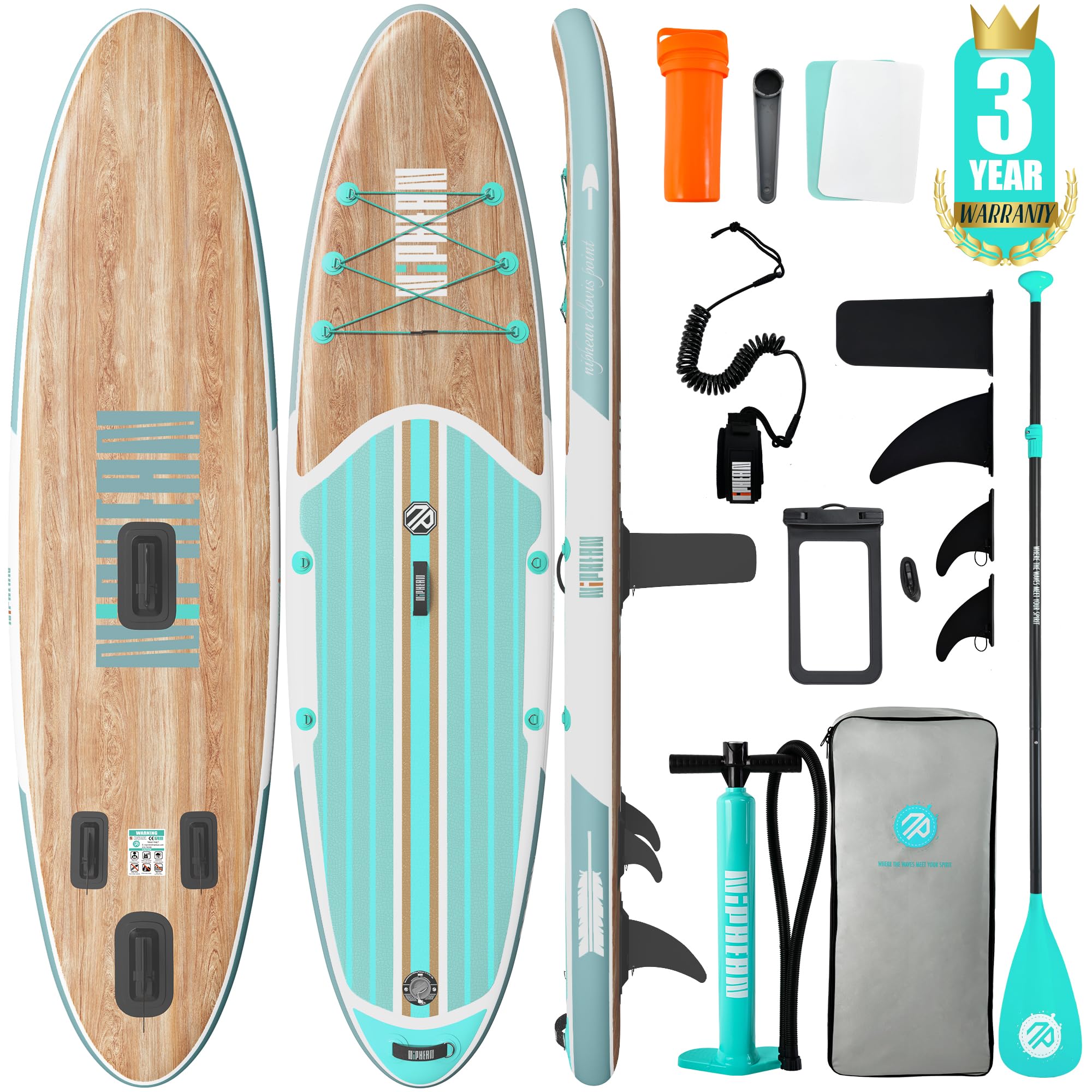
Niphean 10'6" SUP

93 /100
Traveler Score Outstanding

Key details

Deck Width
33 in
Max Pressure
20 psi
Listed Weight
19 lb
Weight Capacity
450 lb
Check Details on Amazon

At 19 pounds, the Niphean is the board we pick when the walk to the water is part of the workout. That is light for a 10-foot-6 board with a 450-pound capacity, and the double handles make it easy to grab from the car or carry under an arm when inflated. It is the midrange board that feels least like a chore to own.

The 33-inch width is the sensible middle ground for beginners: wider than a 32-inch budget board, narrower and quicker than the 35-inch family decks. The kit includes an adjustable paddle, three detachable fins, ankle leash, pump, backpack, waterproof phone bag, and repair kit. The 20 psi pressure ceiling is higher than several boards here, which gives you room to firm up the deck as you get comfortable.

The pump is the part we trust least. The board itself has a solid feel at pressure, but the gauge and plastic connection are the parts to watch. We treat the included pump as a starter item rather than the long-term solution; a separate pump with a reliable gauge is worth having before a big trip.

For most solo beginners, this is the value pick: light enough to carry, wide enough to steady, and rated for a rider plus gear. The three-year warranty is also one of the longest in this group, which takes some of the risk out of the pump question. If you need a 35-inch deck for a child or dog, go with the Skatinger; if you want the lowest cost, the SereneLife is still the budget choice.

Pros

  • 19-pound listed weight
  • 450-pound capacity
  • 20 psi max pressure
  • Three-year warranty

Cons

  • Pump gauge and fitting are weak points
Our verdict

The Niphean is the midrange board we recommend to most solo beginners: light enough to carry, wide enough to steady, and rated for 450 pounds.

Check Latest Price
4

Best Hard-Board Feel

Roc 10'6" SUP

92 /100
Traveler Score Outstanding

Key details

Deck Width
33 in
Board Length
10 ft 6 in
Listed Weight
29.8 lb
Weight Capacity
350 lb
Check Details on Amazon

The Roc is the board in this group that feels most like a hard board underfoot. Its 10-foot-6 length and 33-inch width are middle-of-the-road on paper, but at full pressure the deck feels dense and planted, and the board tracks smoothly enough for a beginner who wants to paddle rather than wobble. That firmness comes with heft: the listed 13.52 kg is the heaviest package here, so this is a board for launches close to the car, not a long hike.

The backpack is the best part of the package for storage. It swallows the deflated board, pump, paddle, and leash, and the whole thing can live in a closet or trunk without taking over. We also like the three-year warranty, which is longer than the one-year coverage on several budget boards.

The Roc comes with the usual starter kit, and the 350-pound capacity is enough for most solo paddlers plus a dry bag. The 33-inch width is stable without the barge feel of a 35-inch board, so it is a good choice if you want a little glide along with confidence. Just do not plan to carry it far; the weight is the trade-off for that rigid feel.

For a beginner who paddles from a nearby launch and wants a board that feels solid immediately, the Roc is a strong alternative to the Niphean. It costs more than the budget picks and weighs much more, but the firm ride and three-year warranty are the reasons to choose it.

Pros

  • Firm, hard-board feel
  • 33-inch width balances stability and glide
  • Backpack holds the full kit
  • Three-year warranty

Cons

  • 13.52 kg package is a long-carry burden
Our verdict

Pick the Roc if you want a firm, hard-board feel and can launch close to where you park; its weight makes it a poor choice for long carries.

Check Latest Price
5

Best for Tracking

ZLX 11'6" SUP

91 /100
Traveler Score Outstanding

Key details

Deck Width
33 in
Board Length
11 ft 6 in
Package Weight
28.2 lb
Weight Capacity
507.1 lb
Check Details on Amazon

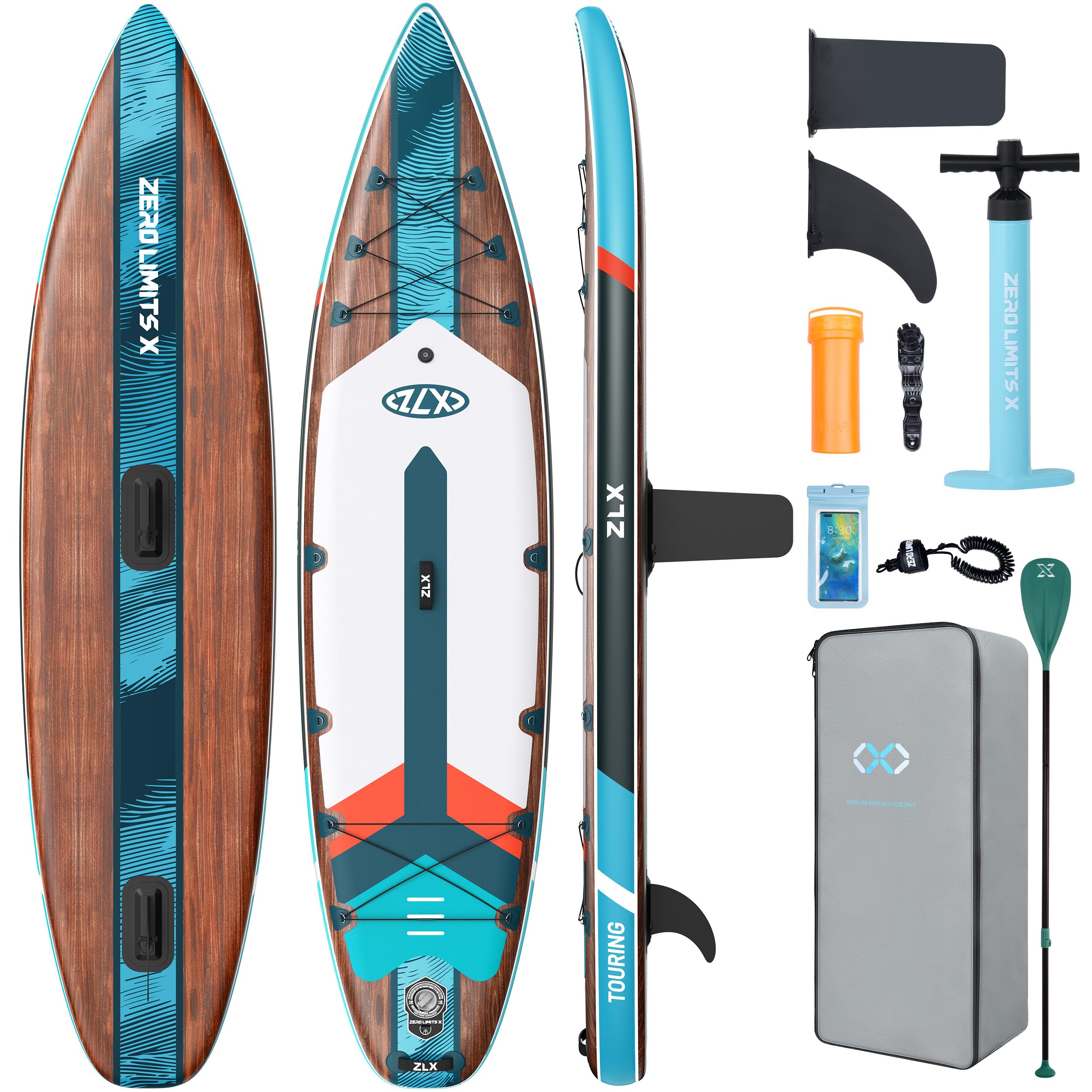
The ZLX's removable StabilTrac center fin is the feature that makes it interesting for beginners. A center fin helps the board hold a straight line, which means less switching sides and less frustration when you are first learning. The 11-foot-6 length adds glide, and the 33-inch width keeps the deck stable without going full family barge.

We recommend the ZLX for beginners who will paddle across open water or longer lake stretches and want the board to track while they build confidence. It is not the best choice for short, playful sessions: the longer shape turns more slowly than the Roc or Niphean, and the 28.2-pound package is a real haul from the parking lot. If your launch is close and your sessions are short, the extra length is more burden than benefit.

The kit is generous, with a paddle, backpack, ankle leash, repair kit, pump, balance fin, surfing fin, and waterproof bag. The two fin options let you change the board's manners as you improve, and the 230 kg capacity covers heavier riders and gear. The 15 psi pressure ceiling is standard for this group, but the board holds its shape well when inflated properly.

The three-year warranty is a point in its favor, and the marine teak finish is one of the better-looking decks here. The ZLX earns its place for tracking and capacity, not for light carrying or quick turns. If you want one board for long, straight paddles, it is the specialist in this group.

Pros

  • Center fin adds straight-line tracking
  • 230 kg capacity
  • Long waterline glides well
  • Three-year warranty

Cons

  • 28.2-pound package is heavy
  • Longer shape turns slowly
Our verdict

The ZLX is for the beginner who wants to paddle straight across open water and does not mind a heavier board to get there.

Check Latest Price
6

Best Wide-Deck Value

ATPROSS 11'6" SUP

92 /100
Traveler Score Outstanding

Key details

Thickness
5 in
Deck Width
35 in
Board Length
11 ft 6 in
Weight Capacity
450 lb
Check Details on Amazon

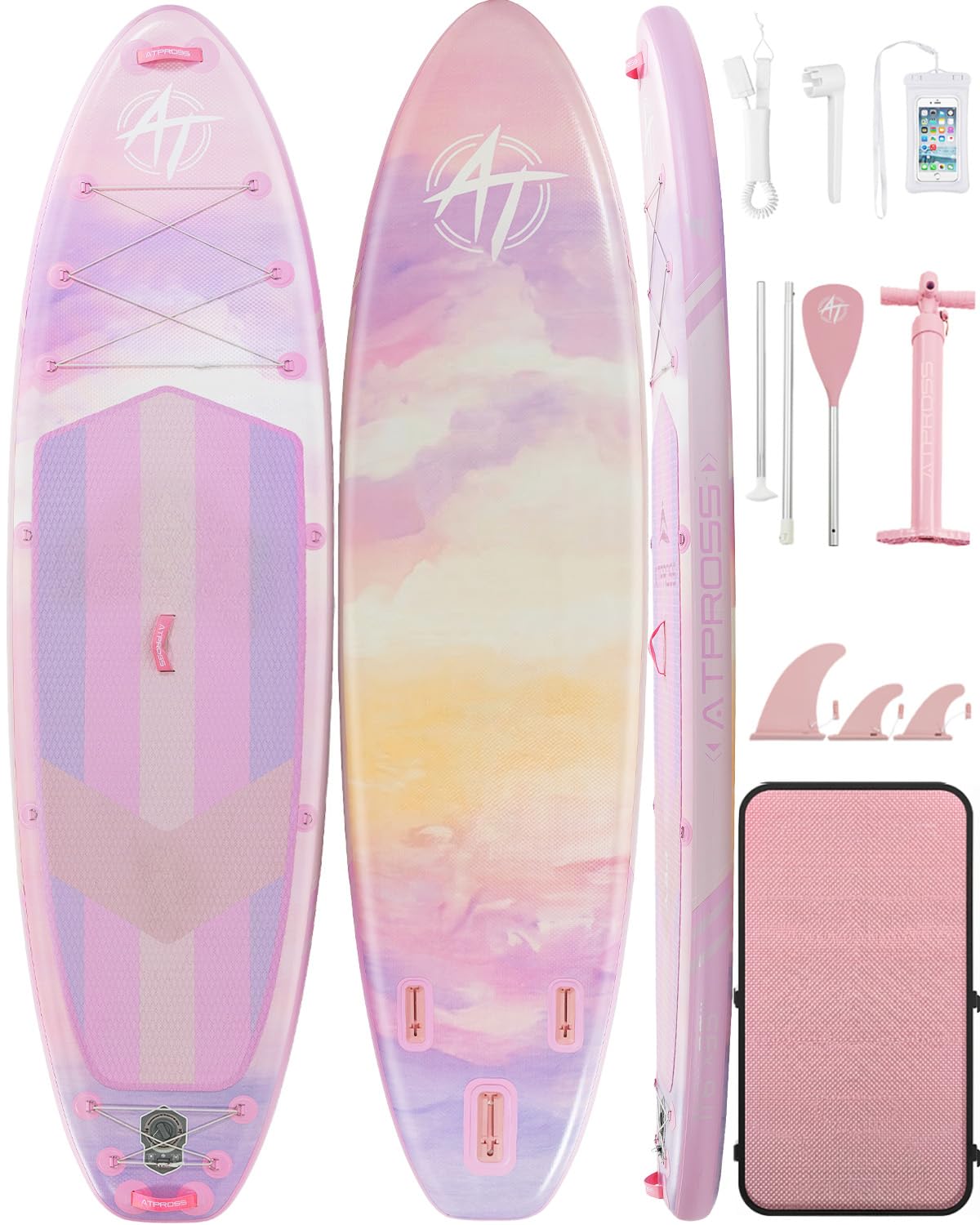
The ATPROSS gives you a 35-inch deck and a 450-pound capacity for less than our top pick, which is the simplest reason it is here. The extra width is obvious the moment you stand up: there is room for a child, a dog, or a cooler, and the deck does not feel like a balance beam. The gradient coral pink finish is also the boldest look in this group.

The 11-foot-6 length and 35-inch width make it a family-friendly platform, and the listed 5-inch thickness is thinner than most boards here. That does not automatically make it less rigid, but it is worth inflating to the recommended pressure and checking the deck before you head out. The kit includes a backpack, paddle, leash, fins, pump, phone pouch, and repair kit, so you can launch without adding much.

We recommend the ATPROSS for a family that wants a wide, high-capacity deck without paying premium prices. The trade-offs are a one-year warranty and a hand pump that can make the last few psi a chore. If you paddle mostly solo and carry your board far, the Niphean is lighter and easier; if you need room for a passenger, the ATPROSS is the value play.

The 450-pound rating is generous enough for two smaller adults or an adult and a child, and the wide deck is forgiving for a first stand. The coral finish is not for everyone, but it is nice to see a budget board with some personality. Just budget for an electric pump if you hate pumping.

Pros

  • 35-inch deck for family stability
  • 450-pound capacity
  • Complete accessory kit
  • Bold coral finish

Cons

  • One-year warranty
  • Hand pump makes inflation a chore
Our verdict

The ATPROSS gives families a 35-inch deck and 450-pound capacity for less than our top pick, with a shorter warranty as the trade-off.

Check Latest Price
7

Best for Kayak Conversion

iTAOSTAR 11'6" SUP

89 /100
Traveler Score Excellent

Key details

Deck Width
35 in
Board Length
11 ft 6 in
Listed Weight
20.5 lb
Weight Capacity
450 lb
Check Details on Amazon

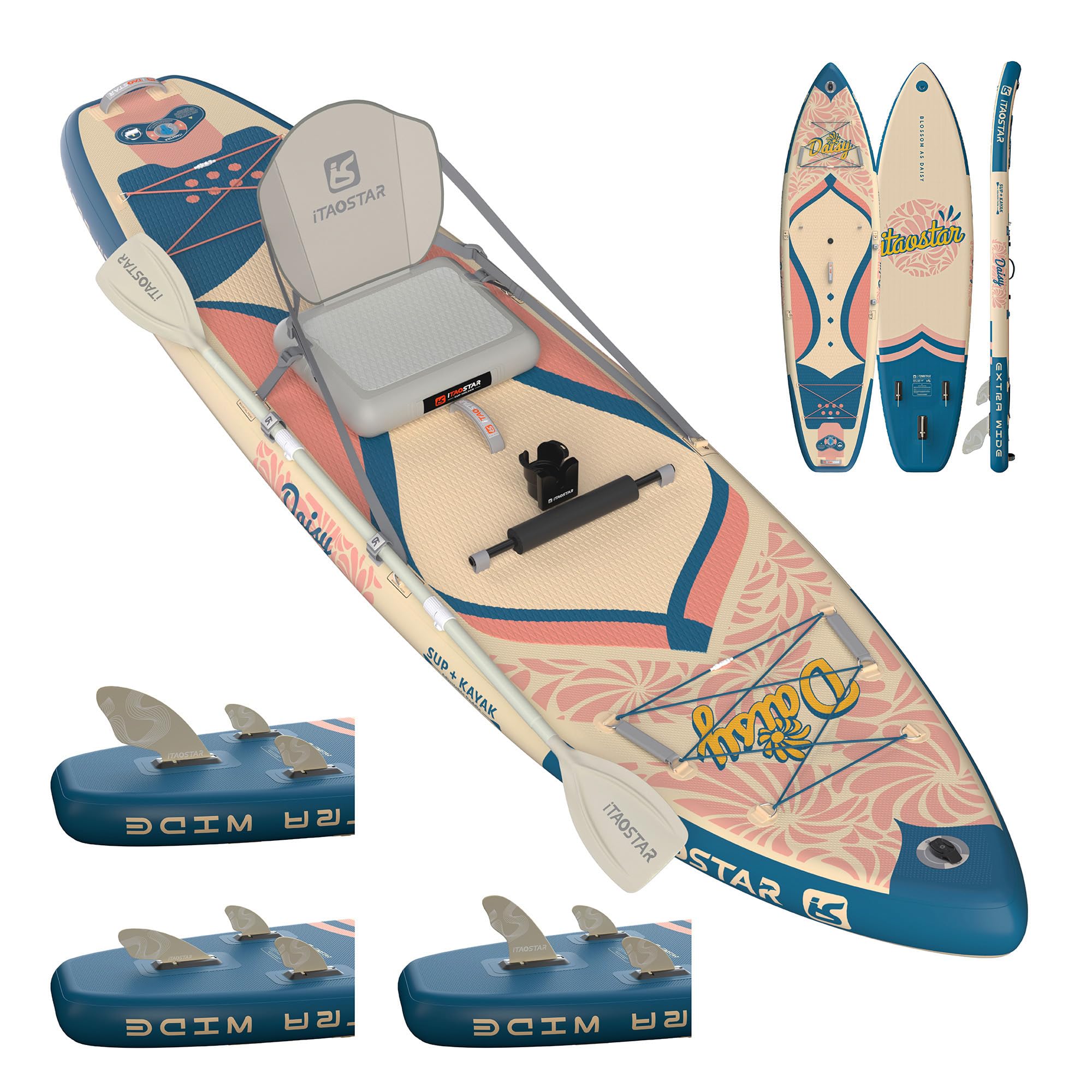
The iTAOSTAR is the only board here that comes with a seat and footrest for kayak-style paddling, and that changes the first-day experience for a beginner. When your legs tire or the wind picks up, you can sit down and keep going instead of kneeling or heading back. We like that kind of flexibility in a first board, because it keeps a shaky paddler on the water longer.

The board itself is 11-foot-6 by 35 inches with a 450-pound capacity, so it has the wide, stable platform that beginners want. The accessory list is almost comically long: five removable fins, a kayak conversion kit, shoulder strap, 10L dry bag, phone bag, cup holder, action camera mount, flag, whistle, pump, leash, and backpack. The five-fin setup lets you tune the board for rivers, lakes, or deeper water.

At 9.3 kg, it is manageable for one person to carry, and the backpack has room for the full kit. The 15 psi pressure ceiling is standard, and the six-inch thickness gives the deck a solid feel when properly inflated. The one-year warranty is shorter than the three-year coverage on several picks here, which is the main reason we do not recommend it more broadly.

This is a premium board for a beginner who wants one craft to do standing and sitting paddling, or a parent who wants a stable platform with a seat for a child. If you only stand and paddle, the Skatinger gives you the same width for less; if you want the kayak option, the iTAOSTAR is the one.

Pros

  • Converts to kayak with seat and footrest
  • 35-inch deck and 450-pound capacity
  • Five removable fins
  • Loaded accessory kit

Cons

  • Premium price tier
  • One-year warranty
Our verdict

Buy the iTAOSTAR if you want to sit and paddle as well as stand, and you value a loaded accessory kit over a low price.

Check Latest Price
8

Budget Heavy Riders

Overmont 10'6" SUP

90 /100
Traveler Score Outstanding

Key details

Deck Width
33 in
Board Length
10 ft 6 in
Max Pressure
15 psi
Weight Capacity
450 lb
Check Details on Amazon

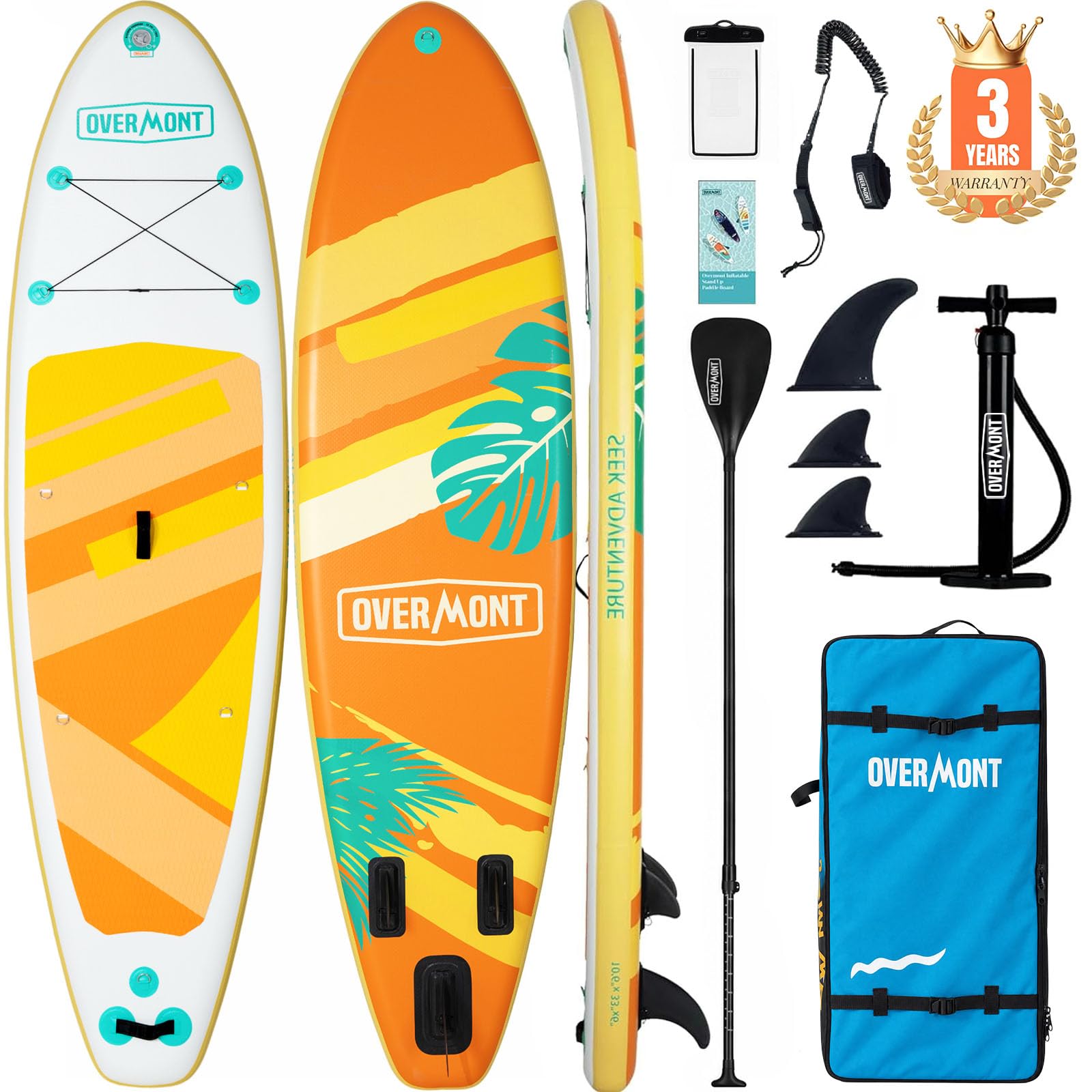
The Overmont looks like a budget board until you reach the 450-pound capacity and the three-year warranty. Those two numbers are unusual at the lower end of this group, and they make it worth a look for a heavier beginner or a parent who wants a little margin. The 10-foot-6 length and 33-inch width are a familiar all-around shape.

The kit is complete: adjustable paddle, removable fins, safety leash, pump, waterproof phone pouch, repair kit, backpack, and instruction guide. The 15 psi maximum pressure is standard, and the non-slip EVA deck is the same basic setup you get on boards that cost more. We like that it does not skimp on the accessories just because the board is budget-priced.

The 33-inch width is the compromise. It is stable enough for a solo beginner on flat water, but it is not as forgiving as the 35-inch decks if you want to bring a child, a dog, or a cooler. The three-year warranty gives you some protection while you find out how the board holds up over a few seasons.

We recommend the Overmont for a budget buyer who needs the 450-pound capacity more than a wide family deck. It is not the board for a paddler who wants the widest platform or premium fittings, but it covers the basics at a low price and backs them with a long warranty. If width matters more, the ATPROSS is the step up.

Pros

  • 450-pound capacity at budget price
  • Complete kit with backpack and pump
  • Three-year warranty
  • 15 psi max pressure

Cons

  • 33-inch deck is narrower than family boards
Our verdict

The Overmont is a budget board for heavier paddlers who want a complete kit and a long warranty, as long as a 33-inch deck is enough.

Check Latest Price

How We Chose and Tested These Beginner Paddle Boards

We started by pulling every inflatable board aimed at beginners that landed in a sensible first-board budget, then cut anything that shipped without a pump, a leash, or a carry bag — nobody should have to buy three extras before their first paddle. Width, thickness, and claimed weight capacity narrowed the field further, since those numbers, rather than graphics or logo, are what actually make a board forgiving underfoot. That left eight boards, which we paddled for seven months, from early spring through the end of summer.

Each board got the same treatment. We inflated it from flat with its own hand pump, counting pump strokes and timing the whole job, then packed it back into its bag and carried it from the car to the shoreline — some slung over a shoulder with a hand free, others needing two hands and a rest stop halfway. On the water we paddled from a knee, stood up, walked to the nose and back, and rocked side to side to see how fast each board settled. A friend who had never paddled also took every board out for ten minutes.

Stability got judged the honest way: on a breezy afternoon with boat wake rolling across the lake, we noted which boards felt tippy at the rail and which let us keep our feet without thinking about it. Durability, the thing that quietly decides whether a board lasts three seasons or one, we checked by dragging each up a gravel ramp, leaving it inflated in direct sun for a week, and inspecting seams and valves after every session. At the end we looked at how deck pads and finishes had held up, and tallied what came in the box against what we still had to go out and buy.

How to Choose Paddle Boards for Beginners

Start With Deck Width, Then Length

For a first board, width is the stability dial. A 32-inch deck is manageable for a smaller paddler on calm water, but 33 inches is a better minimum for most adults, and 35 inches is the forgiving choice for heavier riders, nervous beginners, or anyone who wants to bring a child or dog. Length changes the feel too: a 10-foot-6 board turns more easily and packs smaller, while an 11-foot-6 board tracks straighter across open water but takes more effort to swing around. We think most beginners are happiest at 33 inches unless they need the extra family platform.

Match Capacity to the Paddler and the Gear

Capacity is not just a number. It has to cover you, your clothes, a dry bag, and anything else on deck. A 275-pound board can be fine for a smaller solo paddler, but a 450-pound rating gives a heavier beginner or a parent with a child real margin. Remember that capacity is a ceiling, not a target; a board loaded near its limit sits lower and feels less lively. If you plan to bring a dog or a cooler, start with a 450-pound board and a 35-inch deck.

Budget for the Pump, Not Just the Board

Every kit here includes a hand pump, and every hand pump becomes work in the last five psi. That is where beginners underestimate the chore: the board feels almost firm, but the gauge is still climbing and your arms are done. A double-action pump helps, and a pump with a clear gauge is worth more than a fancy paddle. If you paddle often, an electric pump is the upgrade we prioritize first; it turns setup from a workout into a few minutes of waiting. Check that the valve fitting matches your board before you buy.

Carry Weight Decides How Often You Go

A 19-pound board and a 30-pound board feel very different at the end of a parking lot. The listed weight is only part of the story; the packed bag adds the paddle, pump, leash, and fins, and a wide board is harder to grip than its weight suggests. Look for a center handle, a second handle at the nose or tail, and a backpack with real shoulder straps. If your launch is more than a few hundred yards from the car, choose the lighter board even if it gives up an inch of width. We prioritize an easier carry when the walk to the water is long.

Accessories and Warranty Complete the Kit

A beginner kit should include a paddle, ankle leash, removable fins, pump, repair kit, and backpack; without those, the low price is not the real price. Check the paddle's adjustment range, because a three-piece aluminum paddle that is too short is miserable. A one-year warranty is common, but three-year coverage is a meaningful advantage on a board that will meet rocks and docks. We place more value on a long warranty than on a spare fin or a phone pouch.

Frequently Asked Questions

Final Verdict

For most beginners, the Skatinger is the board we recommend first. The 35-inch deck and 450-pound capacity make the first stand-up less wobbly, and the complete kit means you can launch without shopping for extras. If you want to spend less, the SereneLife is the budget pick, but its 275-pound limit and 32-inch width suit smaller solo paddlers. If sitting and paddling matters, the iTAOSTAR is the versatile alternative.