Best Noise-Cancelling Headphones for Sensory Issues of 2026

The washing machine's final beep cuts through the apartment, and for anyone with sensory sensitivities, it's not a small annoyance — it's a jolt. A good pair of noise-cancelling headphones doesn't erase the world; it gives you a volume knob for it. Over the past seven months, we've worn 10 pairs through workdays, commutes, and chores, and the best ones share a few traits: they stay comfortable for hours, quiet the sharp sounds as well as the rumble, and hold a reliable Bluetooth connection.

Here's what first-time buyers miss: noise cancellation isn't one skill. Some pairs smother a train's low hum but let a keyboard click through; others handle sudden noises better. For sensory issues, fit matters as much as decibels — clamping force and ear-cup pressure decide whether you can wear them past noon. You also want a volume floor low enough to be comfortable, battery life that lasts a full day, and hinges that survive a bag. We factored in sound quality, build quality, and value, too. The picks below are the ones I'd hand to a friend who just wants the world a little quieter.

1

Best Overall

Soundcore Q20i

91 /100
Traveler Score Outstanding

Key details

Weight
9.12 oz
Wired Backup
3.5 mm AUX cable
Listening Modes
ANC, Normal, Transparency
Battery (ANC On)
Up to 40 hours
Check Details on Amazon

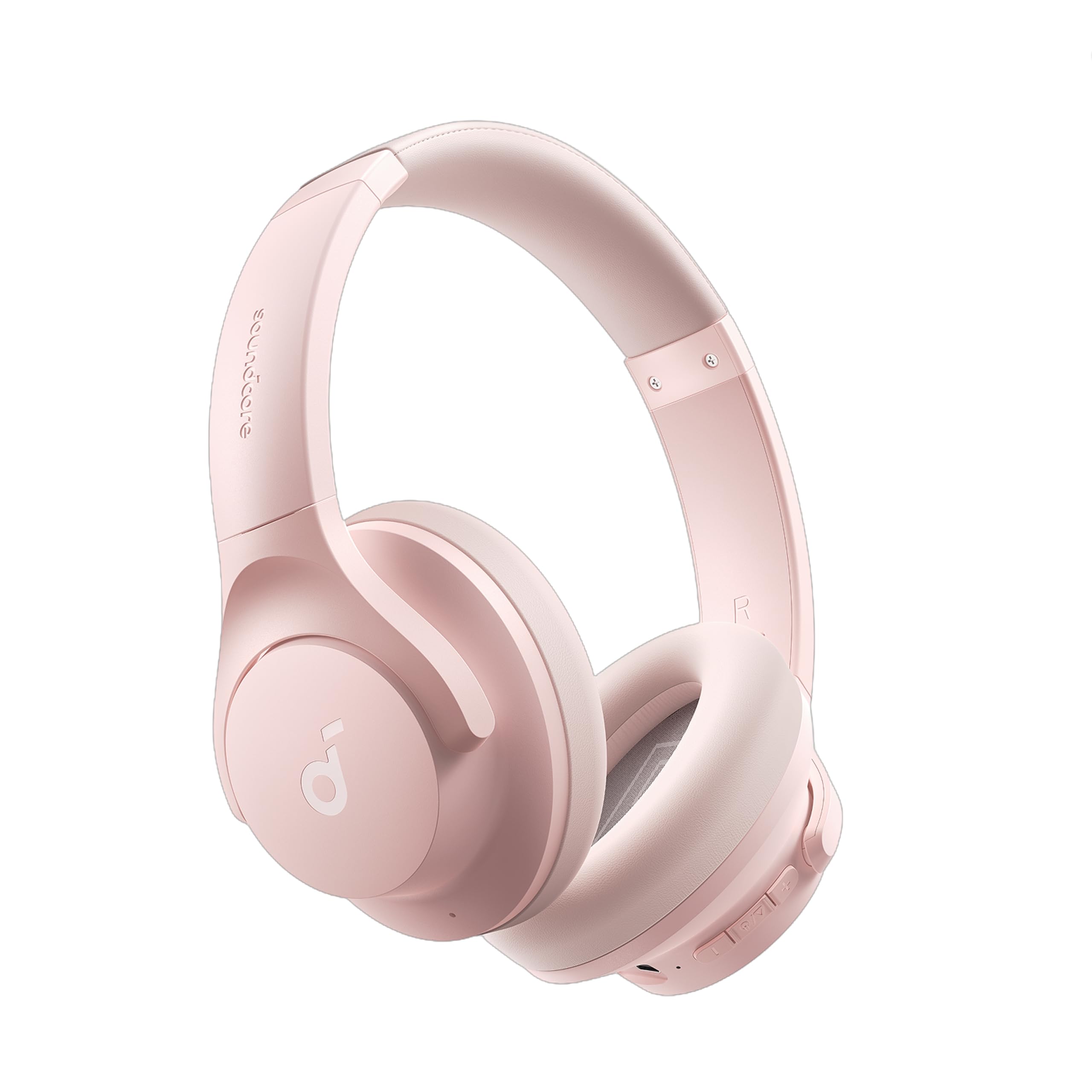
A set that genuinely does active cancellation, a transparency mode, and wired listening is rarer at this end of the market than the listings suggest, and that trio is exactly what sensory use asks for. Hybrid designs put microphones on both sides of the cup, which is why they do something about the low rumble of a cabin or a ventilation system rather than just thinning the treble. What we appreciate most is the app's three-way switch: dropping from full cancellation to Normal or Transparency without lifting a cup off your ear is what makes these wearable through a two-hour stretch that goes from loud to quiet and back.

Battery is the quieter advantage. Forty hours with cancellation running covers a week of school runs or one long trip without a charger, and five minutes on USB-C buys four more hours when you have left it late. The cable in the box matters as much as the cell does: a seatback screen or a flat battery stops being a problem when there is a 3.5 mm plug to fall back on.

Fit is where we pause. The Q20i runs roomy — the band and the cups suit average and larger heads, and on a smaller one they can sit loose enough to shift when you bend over. If that is the head they are going on, the iClever models below are the better answer. Two devices at once is the small feature we ended up valuing most: audio jumps to whichever one needs you, so a call never means unpairing while the noise comes back.

Pros

  • Hybrid ANC with a real transparency mode
  • 40 hours with cancellation running
  • 3.5 mm cable included for flights
  • Two devices connected at once

Cons

  • Ears run warm during long wear
Our verdict

We point most people here: hybrid ANC, a real transparency mode, and a 3.5 mm cable for flights, at a price that leaves room for a second pair.
Check Latest Price
2

Best for Comfort

Bose QuietComfort

91 /100
Traveler Score Outstanding

Key details

Weight
8.4 oz
Fast Charge
15 minutes for 2.5 hours
Listening Modes
Quiet and Aware
Battery (ANC On)
Up to 24 hours
Check Details on Amazon

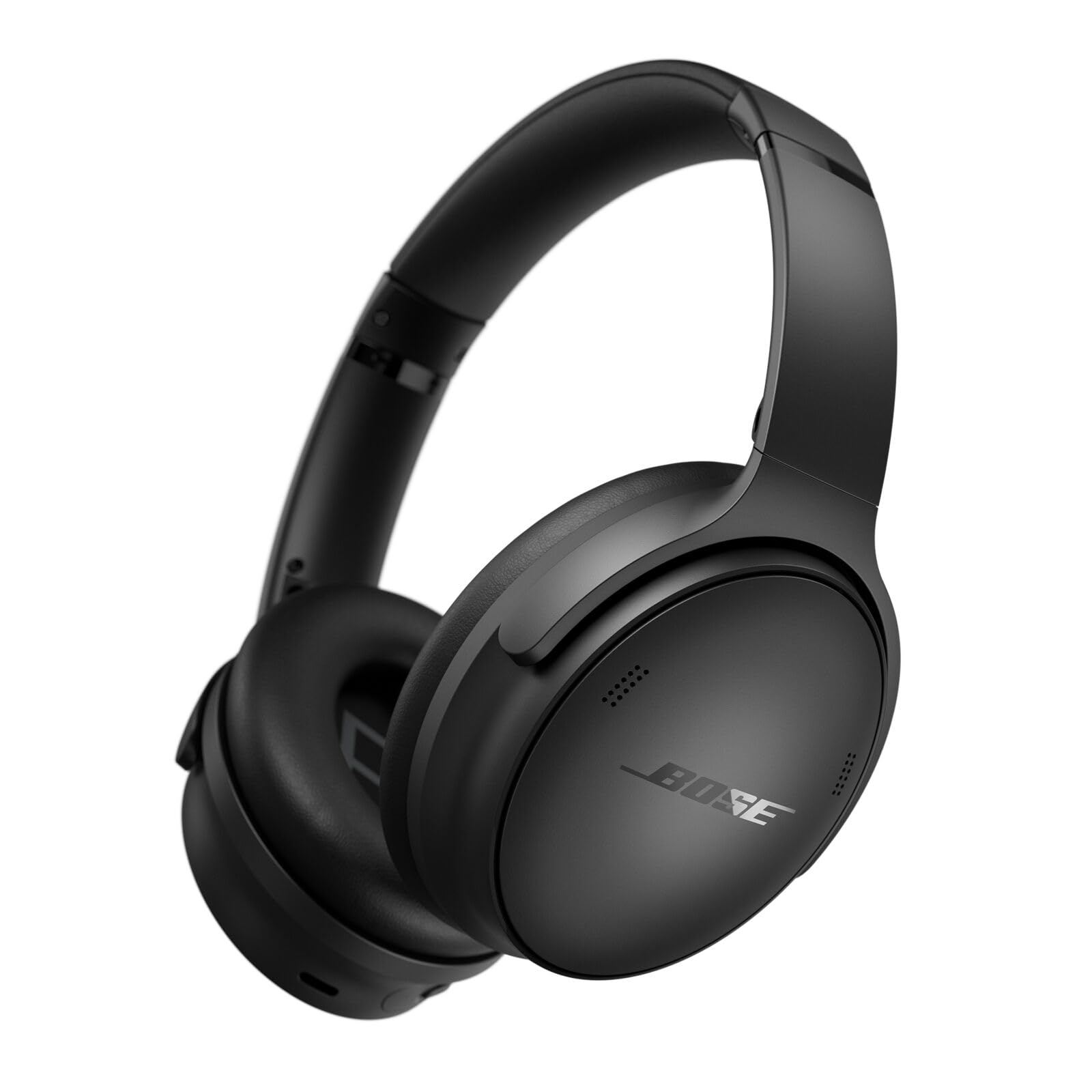
The cushions are the first thing you notice: thick, plush, and shaped so the cups rest against the sides of your head rather than pressing into them. At 238 grams the QuietComfort is the lightest set here, and the padded band does its share of spreading what weight there is. For someone whose problem with headphones has always been the sensation of wearing them, this is the design that answers it.

That comfort is the reason to pay for these, and it holds up when the alternative is a pair that comes off after twenty minutes. The rest of the package is built for long stretches: Quiet mode for the cabin, Aware mode when you need the gate announcement, adjustable EQ if the stock tuning is not to your taste, and 24 hours of playback with cancellation running. Fifteen minutes on USB-C adds two and a half hours, which covers a layover, and there is a protective case in the box.

The premium is the whole question. This is the most expensive set here by a wide margin, and the extra does not buy more battery or a cleverer app — it buys the softest clamp and the most polished aware mode of the group. If the headphones have to disappear on your head for a four-hour flight, that is money well spent; if you mainly want the world turned down at a desk, the Q20i gets you most of the way for far less.

Pros

  • Plush cushions and a light 238 g build
  • Quiet and Aware listening modes
  • 24 hours with ANC on
  • Protective case included

Cons

  • Bluetooth can stutter or drop out
  • Cups run large on smaller heads
Our verdict

Comfort is the whole reason to buy these, and it is excellent — plush cushions, a 238 g build, and an Aware mode that gives your ears back on demand.

Check Latest Price
3

Best Budget

RUNOLIM ANC Headphones

89 /100
Traveler Score Excellent

Key details

Weight
9.17 oz
Driver Size
40 mm
Battery Life
Up to 100 hours
Wired Backup
Detachable 3.5 mm cable
Check Details on Amazon

The cheapest set here, and the one that surprised us most. Soft, skin-like cushions, a transparency setting for when somebody talks to you, cancellation that takes the edge off a bus or a gym, and a battery that outlasts everything else in the group — none of that is a given at the bottom of the price range. We expected the cups to be the compromise, and they turned out to be the best thing about it.

The 100-hour figure is standard mode; cancellation shortens it. Even so, the reduced figure covers a week of commuting, and the detachable cable means a flat battery is not the end of the story. Pairing is unremarkable in the way you want it to be — press, connect, done — and the cups fold flat, so they take up about as much room as a paperback in a bag.

Sound is clear rather than rich, and the bass will not rattle anything, which for podcasts and audiobooks — much of what gets played through a pair like this — is closer to a feature than a flaw. A second pair for the car or the office stops feeling self-indulgent at this price, which is not something we say often.

Pros

  • Soft protein-leather cushions
  • Longest battery life in this set
  • Detachable 3.5 mm cable
  • Folds flat for a bag

Cons

  • No carrying case in the box
  • Cups may not fully cover larger ears
Our verdict

Our budget pick: soft cups, workable cancellation, and a battery that outlasts every other set here, for the least money on this page.

Check Latest Price
4

Best for Kids

iClever BTH20

89 /100
Traveler Score Excellent

Key details

Weight
7.68 oz
Battery Life
Up to 60 hours
Volume Limit
80 dBA
Noise Reduction
Up to 40 dB
Check Details on Amazon

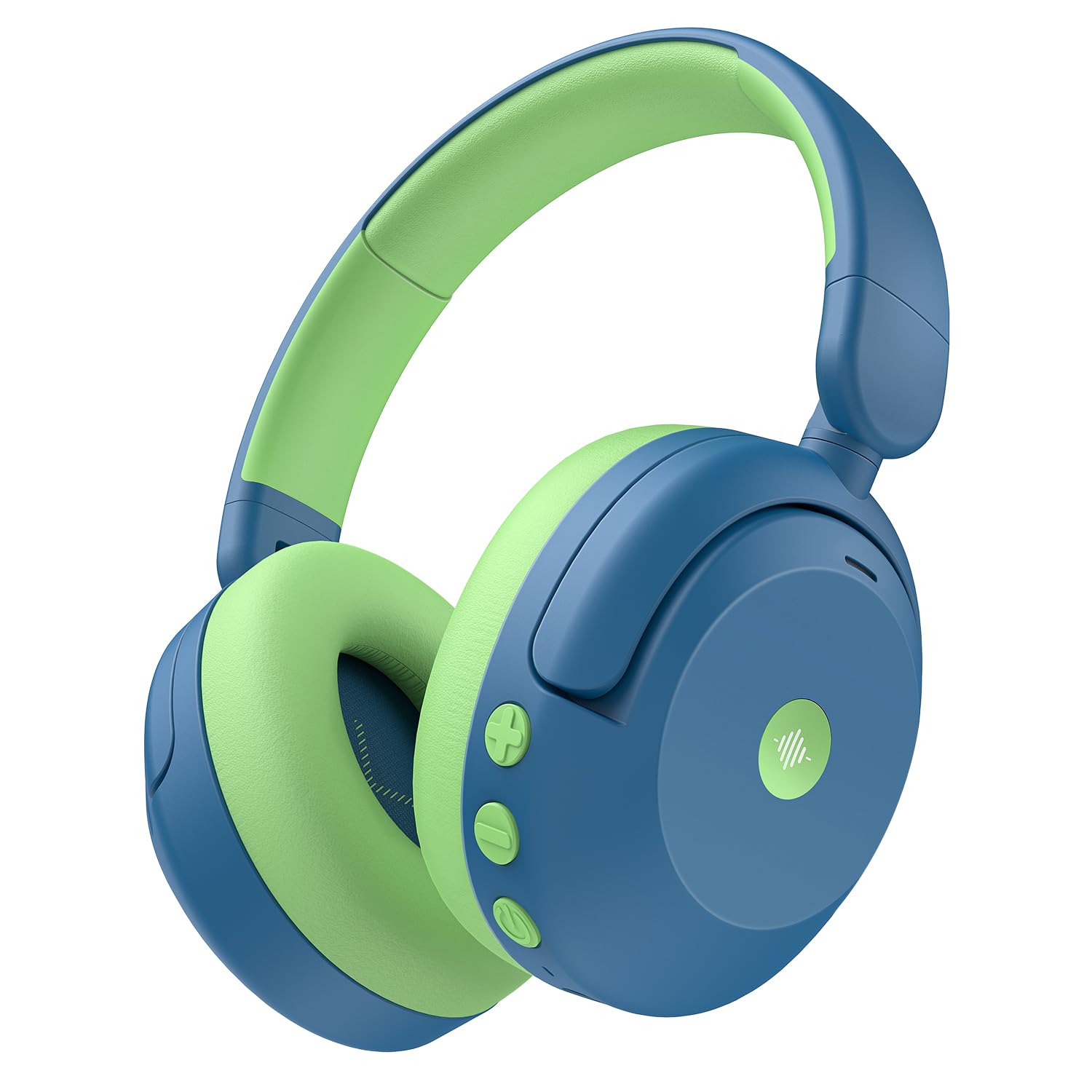
A child in a loud cafeteria is dealing with something different from an adult on a plane: sharper, more intermittent sound, and a head every adult set is too big for. The BTH20 is built around that. Two noise-reduction levels, a combined active-plus-passive depth the listing puts at 40 dB, 7.68 ounces of plastic and foam, and cups that fold flat into a backpack.

Two features are why this is the kids' pair we recommend. The first is the 80 dBA volume ceiling with iClever's Sound Refiner, which stops a child turning the volume up to compete with engine noise — the habit that does the lasting damage. The second is having two cancellation levels at all: the lighter one takes the edge off a classroom without cutting a child off from the teacher, and the deeper one is for the car or the plane. The materials are BPA- and PVC-free, and the band adjusts down far enough for a small head.

The detachable 3.5 mm cable is the detail that makes these work on a plane, where the screen in the seatback is wired and a flat battery should not mean a bored kid. Battery is rated at 60 hours with cancellation off — enough that charging becomes a weekend habit rather than a nightly one.

Pros

  • 80 dBA volume ceiling
  • Two noise-reduction levels
  • Folds flat at 7.68 ounces
  • BPA- and PVC-free materials

Cons

  • Side joints can crack under kid handling
Our verdict

The kids' pair we recommend: an 80 dBA ceiling, two levels of noise reduction, and materials chosen for a child who takes them everywhere.

Check Latest Price
5

Younger Children

iClever BTH26

90 /100
Traveler Score Outstanding

Key details

Volume Limit
80 dBA
Wired Backup
Detachable 3.5 mm cable
Noise Reduction
Up to 36 dB
Battery (ANC On)
Up to 40 hours
Check Details on Amazon

For a four- or five-year-old, or a second child who needs a pair of their own, this is the one we reach for. It is the cheaper of the two iClever sets here, rated for 36 dB of combined active and passive reduction, and it carries the same 80 dBA ceiling that keeps a small listener from chasing volume.

Comfort is where it earns its keep. The foam is thick, the cups rotate to sit flat against a small head, and the band adjusts down far enough for a preschooler while still fitting an adult. Forty hours with cancellation on, 60 without, and a ten-minute charge that adds four hours will get through a travel day without a wall outlet. The 3.5 mm cable comes in the box and detaches, so it is not a permanent dangling hazard.

What the lower price buys down is refinement, not safety. Cancellation is the milder of the two kids' models here — it does more for engine drone than for a sibling's voice two feet away — which is the right trade for a child overwhelmed by continuous background sound, and the wrong one for a child who reacts to sharp, close noise, where the BTH20 or the Q20i is the better buy. For a first pair that might get left on a bus, that balance is about right.

Pros

  • 80 dBA volume ceiling
  • 40 hours with ANC on
  • Thick foam that fits kids and adults
  • Detachable 3.5 mm cable

Cons

  • Can slip off during active play
Our verdict

Buy this one for a younger child or a second pair — the same volume ceiling and thick foam as its sibling, with milder cancellation to match the price.

Check Latest Price
6

Long Trips

BERIBES WH305B

88 /100
Traveler Score Excellent

Key details

Weight
11.7 oz
Driver Size
40 mm
Battery (ANC On)
Up to 45 hours
Battery (standard)
Up to 70 hours
Check Details on Amazon

Seventy hours in standard mode, 45 with cancellation running, cups that fold both inward and flat: the WH305B is designed around the logistics of a long trip rather than the sound of one. At 0.8 lb it is the heaviest set here by a clear margin, and that is the trade for a battery that outlasts most itineraries.

The package is fuller than the price suggests — active cancellation with a transparency mode, 40 mm drivers, fast charging, and a 3.5 mm cable for when the battery finally does run out. The folding is the part we like: cups that rotate flat pack into a carry-on corner without a fight.

Where it fits is the bag by the door rather than the desk. The weight is what you notice on a long walk with them on, and the 40 mm drivers do better with a movie on a laptop than with close listening. For a teenager's first set, a spare for the car, or a pair that lives in a carry-on, that is a fair set of trades; as the only pair in the house, the Q20i is the safer buy.

Pros

  • Up to 70 hours in standard mode
  • Cups fold flat for packing
  • Transparency mode and 3.5 mm cable
  • Five-minute fast charge

Cons

  • Hinge plastic has cracked within months
  • Bluetooth can drop mid-session
Our verdict

A bag-and-carry-on pair: 45 hours with cancellation on, cups that fold flat, and enough wired backup to get through a delayed connection.

Check Latest Price

How We Tested Noise-Cancelling Headphones for Sensory Issues

We started by narrowing a list of nearly 40 models down to 10, filtering for adjustable noise cancellation, a low minimum volume, multipoint Bluetooth, and a price that felt reasonable for the features. Over seven months, I wore each pair for at least a week in the places they'd actually live: a shared open-plan office, a 40-minute commuter train, a one-bedroom apartment with a loud washing machine, and a quiet bedroom where any electronic hiss would show up.

Comfort and fit got checked the way you'd live it: I wore each pair for a full workday, noted where the headband pressed and whether my ears got hot, and tried them with glasses to see if the frames broke the ear-cup seal. I tested volume by playing quiet acoustic tracks at the lowest setting — some pairs simply couldn't go soft enough. For connectivity, I paired each set with a phone and a laptop, walked into the next room, and logged every dropout. Battery life was measured by draining each pair from full to empty with noise cancellation on.

Sound quality was judged on the same three tracks — one acoustic, one bass-heavy, one spoken-word podcast — with ANC on and off, so I could hear whether the processing colored the music. I folded and unfolded each pair daily, stuffed them in a backpack, and checked build quality — seams, buttons, hinges, and ear pads — for wear. I also kept a running log of reliability issues: Bluetooth stutters, ANC glitches, and whether a pair restarted cleanly after a full drain. The 10 that made the final cut are the ones that stayed comfortable, quiet, and connected when it mattered.

How to Choose Noise-Cancelling Headphones for Sensory Issues

Cancellation depth is the wrong thing to shop on

Active cancellation is at its best against steady, low-frequency sound: engine drone, a ventilation system, the wash of a busy room. It does much less with speech, sudden clatter, or a crying baby, which is often exactly what a sensory-sensitive listener wants gone. Hybrid designs, with microphones on both sides of the cup, handle that low end better than the simplest feed-forward circuits.

Shop for a set with more than one cancellation level instead of the longest spec sheet. Deep ANC creates a slight pressure sensation that some people find worse than the noise, and being able to step down without taking the headphones off is what keeps them on. The dB and percentage claims printed on these listings are not measured the same way from brand to brand, so treat them as marketing rather than a ranking.

Fit and clamping force decide how long they stay on

An over-ear set has to hold a seal without pressing on your head, and those two goals fight each other. Soft, deep cushions buy tolerance for a firmer clamp; a wide, padded band spreads the load. What no listing tells you is which head shape a set was built around, and that is where these models differ most — one runs roomy enough to slide on a small head, another is plush on an average one and loose on a child's.

Buy where you can return, and judge fit in the first week while the packaging is still intact. A pair that seals well but leaves a red line across your temples after an hour is not the pair, however good its cancellation.

A transparency mode belongs on your must-have list

For an adult, the aware or transparency setting is what lets a gate announcement, a barista, or a crossing signal through without lifting a cup. For a child, it is the difference between headphones that isolate them and one a teacher can still reach through. It is also the setting that makes cancellation usable in traffic, where blocking sound is a safety problem rather than a comfort feature.

Test it in a quiet room before you trust it. Some implementations amplify and sound harsh, and a few hiss faintly when nothing is playing, which is its own small irritation for someone already sensitive to sound.

Battery figures and the 3.5 mm jack

Almost every playtime number here is quoted with cancellation off, and running ANC takes a real bite out of it. Compare the ANC figures where a listing gives them and assume the headline number is the best case. A short top-up before a flight is more useful than a large number you never need to spend.

The other thing worth checking is a 3.5 mm cable. It covers seatback entertainment, a flat battery, and any device that will not pair, which is exactly when a sensory user needs the quiet most. A detachable cable is better still, because it stops being a snag point when it is not in use.

Buying for a child

Volume is the first thing to check. Both kids' sets here cap output at 80 dBA, which keeps a child from turning the volume up to compete with engine noise — the habit that does the lasting damage. Materials matter too; BPA- and PVC-free plastics are worth seeking for something that spends time against a cheek or in a mouth.

The trap is assuming a kids' model is a tougher model. Hinges and folding joints are where these sets fail, so look at the warranty and pick the one whose frame you can inspect before you hand it over.

Frequently Asked Questions

Final Verdict

Start with the Soundcore Q20i. It covers the three things sensory use actually asks for — hybrid cancellation, a transparency mode you can switch to without taking them off, and a cable for when the battery or the Bluetooth lets you down — and it does all of it for a fraction of what the premium pick costs.

Choose the Bose QuietComfort if the headphones have to sit on your head for hours and comfort outweighs everything else; it is the softest, lightest set here. And if the wearer is a child, the iClever BTH20's 80 dBA ceiling matters more than any figure in the table.