Best Mirrorless Cameras for Travel Video of 2026

A travel video camera has one job: to disappear into your bag until you need it, then hand back footage that looks deliberate. The trouble is that the small, light bodies which make that possible are also the ones that overheat on a long take, drain a battery before your flight lands, and start hunting for focus the second the light drops. Pick the wrong one and you spend the trip nursing a camera instead of seeing the place.

I've shot travel footage on everything from a phone to a borrowed cinema rig, and the cameras that stick with me are rarely the ones with the biggest spec sheet — they're the ones that fit in a jacket pocket, hold focus at dusk, and still have charge at dinner. Over the past eight months, my team and I carried seven of them through airports, up dawn hikes, and around a rainy street festival. Picture quality gets the headlines, but battery life and a body you don't mind carrying all day decide whether you come home with footage or excuses, and every pick below clears both bars.

1

Best Overall

Canon EOS R50 V

85 /100
Traveler Score Excellent

Key details

Video
4K 59.94p crop / 4K 29.97p full-width
Sensor
24.2MP APS-C CMOS
Weight
1.2 lb
Kit Lens
14-30mm F4-6.3 IS STM PZ
Check Details on Amazon

The R50 V is the one here built around the way travel video actually gets shot: at arm's length, with one hand, while you're moving. Its 14-30mm power zoom (about 22-48mm equivalent) is the widest kit lens in this group, and the front record button and vertical tripod mount are small conveniences that make a difference when you're filming yourself in a crowd. We also like that it records 4K at 60p in a crop and full-width 4K at 30p, with 10-bit capture for more flexibility in color. This is our top pick for travelers whose main output is video.

The 14-30mm lens is the reason to choose this kit, but it's slow at the long end. In dim markets and evening streets, we had to raise the ISO and accept some noise, or switch to a faster lens. That's a fair trade for a kit that stays compact, and the optical stabilization helps when you're standing still. For daylight city walks, cafe clips, and talking-head pieces, it's an easy camera to live with.

If you mostly shoot stills and only occasionally hit record, the Sony a6400 or the R10 bundle will feel more familiar; both have a more traditional stills workflow. But for a travel kit that lives in a sling bag and comes out for quick clips, the R50 V's wide power zoom and front record button are the details we kept coming back to. It's the camera we reach for when the trip is the story and the video is the point.

Pros

  • Widest kit lens here for handheld vlogging
  • 4K60 crop and full-width 4K30
  • 10-bit capture and front record button
  • Light body with vertical tripod mount

Cons

  • No in-body stabilization
  • 4K60 uses a crop
Our verdict

For travelers who shoot video first, the R50 V pairs the widest kit lens here with front-button recording and 10-bit 4K in a body you can carry all day.
Check Latest Price
2

Best All-In-One Zoom

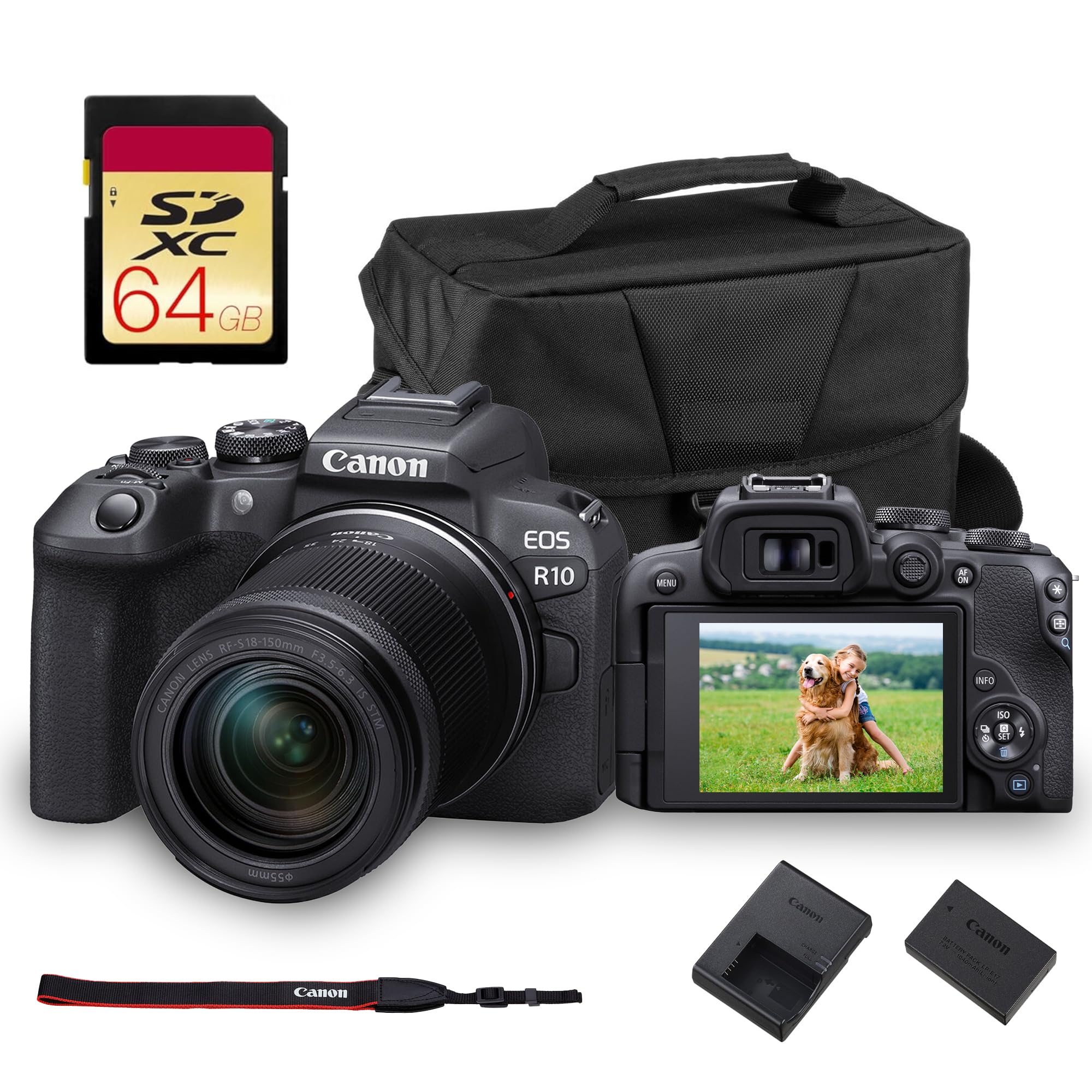
Canon EOS R10 Bundle

87 /100
Traveler Score Excellent

Key details

Video
4K 60p oversampled from 6K
Sensor
24.2MP APS-C CMOS
Weight
3 lb
Kit Lens
18-150mm f/3.5-6.3 IS STM
Check Details on Amazon

The R10 bundle answers a different travel question: what if you want one lens and no bag of extras? The 18-150mm zoom covers wide street scenes to distant details, and the body adds 4K60 oversampled from 6K, fast Dual Pixel AF II, and 15 fps mechanical shooting. For a trip where you might film a market, a landscape, and a friend's face without swapping lenses, that range is genuinely useful.

We think the R10 is the best all-in-one travel kit here for reach, but it's also the heaviest option in this group. The 3-pound bundle is not a pocket camera; you'll feel it on a long day, and the slow f/3.5-6.3 lens means indoor shots need more light. The payoff is flexibility: you can shoot a wide establishing shot, then zoom to a detail without changing lenses, and the 4K60 gives you slow-motion options the R50 V only offers with a crop. If your travel video is more documentary than selfie, this is the one.

The R10 also has the most comfortable stills handling of the group, with a proper grip and a viewfinder that makes framing easy in bright light. That matters if your travel video is part of a mixed photo/video workflow. It's not the camera we grab for a solo vlog, but it's the one we pack for a trip where the scenes keep changing and we don't want to miss the long shot.

Pros

  • One 18-150mm lens covers wide to tele
  • 4K60 oversampled from 6K
  • Fast Dual Pixel AF II and 15 fps

Cons

  • Heavy 3-pound bundle
  • No in-body stabilization
Our verdict

For travelers who want one lens for wide-to-tele coverage and 4K60, the R10 bundle is the most flexible all-in-one here, provided you can carry the weight.

Check Latest Price
3

Best Hybrid Alternative

Sony Alpha a6400

91 /100
Traveler Score Outstanding

Key details

Video
4K UHD
Sensor
20.1MP APS-C CMOS
Weight
10.3 oz
Kit Lens
16-50mm zoom
Check Details on Amazon

The a6400 is the smallest camera here with a built-in viewfinder, and that combination is why it keeps landing in our bag for hybrid trips. Its 425 phase-detect points and real-time eye autofocus make it easy to keep a subject sharp while you're walking and talking, and the 180-degree tilting screen flips up for self-framing. The 16-50mm kit lens is compact enough to leave on the camera all day, though it starts at a less-wide equivalent than the R50 V's power zoom.

Video is capable rather than cutting-edge: 4K capture, useful slow-motion modes, and a familiar Sony color profile. We found the autofocus more trustworthy than the older body design suggests, especially for face tracking, and the viewfinder is a real advantage in bright sun. The tilting screen is good for self-framing, but it doesn't flip out to the side like the Canon screens, so you lose some flexibility when the camera is on a tripod. Battery life is the weak spot; pack spares.

For travelers who want a stills camera that also shoots good video, the a6400 is the safer hybrid than the R50 V. It's not the video-first pick—the R50 V's wide lens and 10-bit footage are more useful for talking-head travel clips—but the viewfinder and mature lens ecosystem make it a better long-term travel companion if you shoot both. We still choose the R50 V for pure video, but the a6400 is the one we hand to a friend who wants one camera for photos and clips.

Pros

  • Fast eye autofocus for walking shots
  • Compact body with built-in viewfinder
  • Flip-up screen and 4K video

Cons

  • Battery life is short
  • No in-body stabilization
Our verdict

For a compact hybrid that handles both stills and video, the a6400 gives you a viewfinder and dependable eye autofocus without a steep learning curve.

Check Latest Price
4

Best Budget Vlogging Kit

Nikon Z30

85 /100
Traveler Score Excellent

Key details

Video
4K UHD
Sensor
20.2MP APS-C CMOS
Weight
12.3 oz
Kit Lens
16-50mm zoom
Check Details on Amazon

Nikon's Z30 kit reads like a vlogging starter pack: flip-out screen, stereo mic, red REC light, 16-50mm zoom, and a body that weighs about as much as a paperback. The 20.2MP APS-C sensor records 4K, and the USB-C port supports plug-and-play webcam use and constant power, which is more than many travel cameras at this level offer.

The compromises show up in low light. The kit lens is slow, and the autofocus is less confident than the Canon and Sony systems when the light drops. For daylight street scenes and indoor talking-head clips with a window nearby, it's fine. The flip screen is easy to read outdoors, and the built-in mic picks up a clear speaking voice without accessories, though wind noise is still a problem.

What we like most is how little friction there is between taking the camera out and pressing record. The front-facing screen, REC light, and built-in mic mean you can hand it to someone else or set it on a table and know it's working. If you want the least expensive dedicated vlogging kit here, this is it; if you need a viewfinder or better low-light autofocus, spend more on the Sony or Canon.

Pros

  • Flip screen, stereo mic, and REC light
  • Compact body with 4K video
  • USB-C webcam and constant power

Cons

  • No viewfinder
  • Battery life falls short
Our verdict

For a first vlogging kit, the Z30 delivers a flip screen, stereo mic, and 4K video at the lowest cost in this group.

Check Latest Price
5

Full-Frame Video

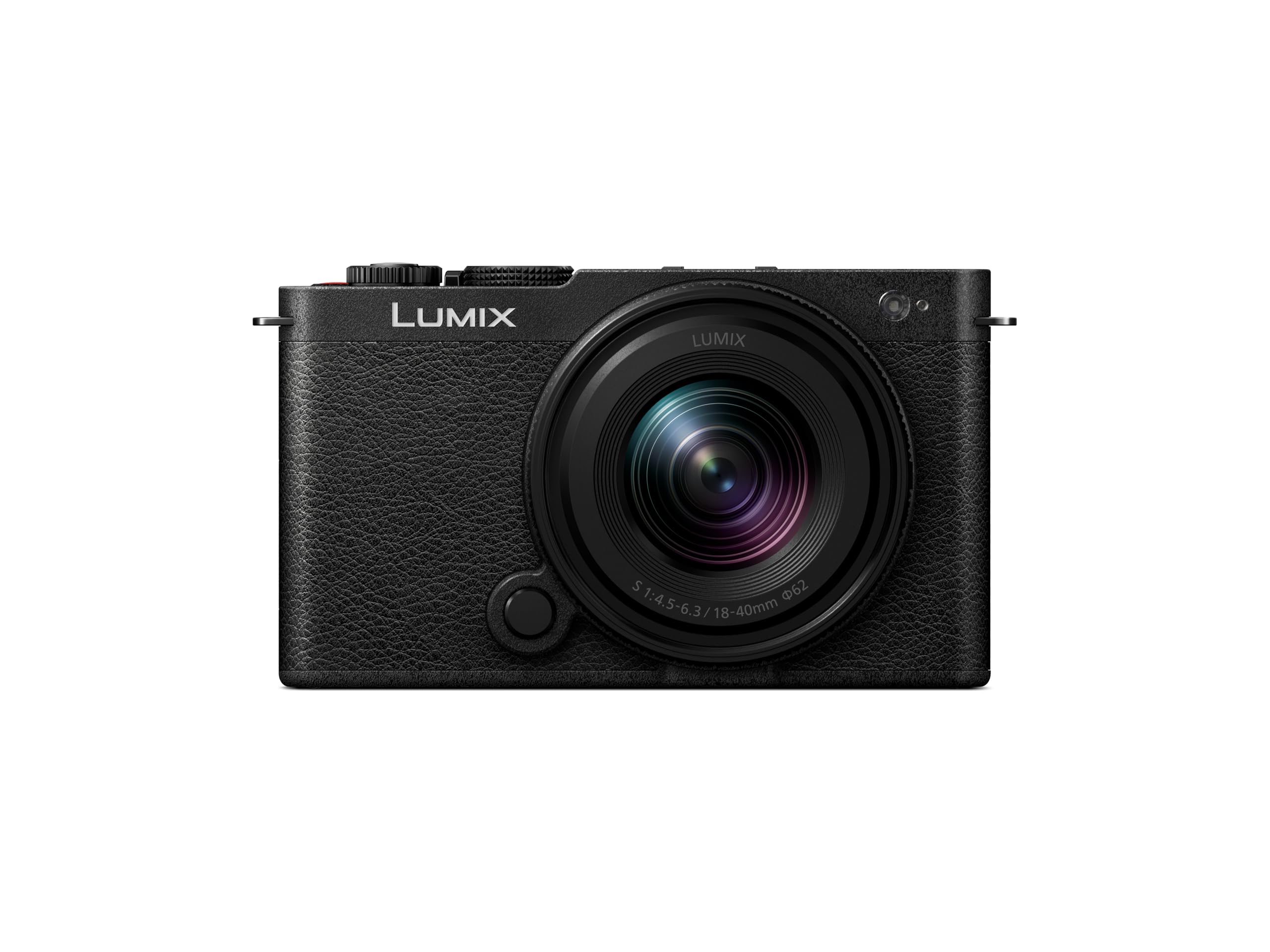
Panasonic Lumix S9

78 /100
Traveler Score Very Good

Key details

Video
6K MOV
Sensor
24.2MP full-frame CMOS
Kit Lens
18-40mm F4.5-6.3
Stabilization
Sensor-shift and optical
Check Details on Amazon

The S9 is the odd one out here: a full-frame body barely bigger than some APS-C kits, with 6K open-gate recording that lets you crop one shot into vertical and widescreen versions later. For travel video, that flexibility is more useful than it sounds—especially if you're editing for both YouTube and social. The 18-40mm kit lens is compact and wide enough for handheld framing, and the sensor-shift stabilization is a real advantage over the other picks.

We think the S9 is the best full-frame option here for low-light travel scenes and shallow-depth-of-field shots, but it asks for more lens commitment. The L-mount lenses you'll want for travel are generally larger than the APS-C kit lenses, and 6K files need fast V90 cards and serious storage. Autofocus is the other question mark; the S9 uses contrast-based depth-from-defocus, which is fine for landscapes and slow scenes but less sticky for a subject walking toward you. It suits cinematic travel more than run-and-gun vlogging.

What we like most is the open-gate flexibility: shoot once, crop later for vertical and widescreen. If you're building a travel film with shallow depth of field and don't mind carrying bigger glass, the S9 earns its place. If you want a compact all-day vlogging kit, the R50 V or Sony a6400 is a better fit.

Pros

  • Full-frame 6K open-gate recording
  • Sensor-shift stabilization
  • Compact full-frame body

Cons

  • Full-frame lenses add bulk
  • 6K files need fast, costly cards
Our verdict

For cinematic travel footage with full-frame depth and open-gate 6K, the S9 is the most distinctive pick here, as long as you accept larger lenses.

Check Latest Price

How We Tested the Best Mirrorless Cameras for Travel Video

The shortlist came from research before anyone packed a bag. We started with bodies that shoot at least 4K/60, weigh under roughly a pound and a half with a lens mounted, and sit in a price range a serious hobbyist could justify, then cut anything with a thin lens ecosystem, a menu system that fights you, or a reputation for shutting down mid-take. That left seven cameras. We bought each one at retail and used them for eight months rather than an afternoon.

Those eight months looked like actual travel. I carried a different body on each trip — three airport days, two dawn hikes, a rainy street festival, and a week of ordinary evenings in a rented apartment — shooting handheld walking footage through markets, talking-head clips in hotel rooms lit only by a window, and long takes at a friend's birthday dinner. My team ran the same tests alongside their own trips so no single copy or set of conditions decided the outcome.

We kept notes on the things that ruin a travel clip. In the dusk footage we watched how fast shadow detail turned to mush and how much noise crept into a face lit only by a shop window. For autofocus, a friend walked toward the camera through a crowd while we tracked whether the box stayed locked on them or jumped to a stranger's coat. Battery life was logged against the clock with three spares in the bag, and heat was judged by how long the grip stayed comfortable and whether a 20-minute take triggered a shutdown. We handed each camera to someone who'd never touched it to see how quickly they were recording, timed how long it took to move clips to a phone over hotel wifi, and checked the bodies monthly for scuffs, loose ports, and card-write stumbles. Value got scored on the body plus a second lens, not the body alone.

How to Choose Mirrorless Cameras for Travel Video

Start With the Lens, Not the Body

The lens determines whether you can frame yourself, fit a street scene, or zoom to a detail without moving your feet. On APS-C, a 14-30mm kit is roughly 22-48mm equivalent, while a 16-50mm kit is about 24-75mm; the wider start makes handheld vlogging easier, and the longer end is better for scenery. A 4K badge does not tell you whether the video is cropped, so check the full-width mode. Pick the lens first, then the body that fits it.

Resolution, Frame Rates, and Crop

Uncropped 4K at 30p is the useful baseline for travel video. 4K60 is a bonus for slow motion, but it often crops the sensor, which makes your wide lens less wide. 10-bit capture helps if you grade footage, but 8-bit is fine for simple edits. Do not pay for 6K unless you plan to crop or reframe. Prioritize full-width 4K30 and reliable autofocus over a higher frame rate that limits your framing.

Stabilization and Handling

Stabilization comes in three forms: in-body, lens-based, and digital. Digital stabilization can crop and look wobbly at the edges, and lens stabilization helps with handheld shake but will not fix walking. Most compact kits here rely on lens or digital stabilization; the Lumix S9 is the exception with sensor-shift. If you shoot handheld, budget for a compact tripod or gimbal. A flip screen is easier for self-framing, while a viewfinder is better in bright sun.

Battery, Heat, and Recording Limits

Compact bodies run hot, and battery life is the most common letdown in this class. Many kits ship with one battery and no charger, so buy two spares and a charger before your trip. Long 4K takes can hit clip limits or heat warnings, so shoot in shorter clips and let the camera cool between scenes. The Nikon Z30 can run on constant USB-C power, which helps for long interviews or streaming. A power bank is cheap insurance.

Autofocus and Low Light

For solo travel, face and eye tracking matter more than a long list of autofocus points. Phase-detect systems such as Canon's Dual Pixel and Sony's hybrid AF are generally more confident for video than contrast-based systems, especially when you or your subject is moving. Low light is a balance of sensor size, lens aperture, and stabilization; a fast prime often helps more than a bigger sensor with a slow zoom. If you film at night, plan for a fast lens or accept some noise.

Frequently Asked Questions

Final Verdict

For travel video, our pick is the Canon EOS R50 V. The wide 14-30mm power zoom, front record button, and 10-bit 4K make it the easiest kit here to shoot with at arm's length, and the compact body disappears into a day bag. If you need one lens for wide-to-tele coverage and 4K60, the Canon R10 bundle is the better all-in-one; if you want a viewfinder and a more stills-friendly hybrid, the Sony a6400 is the safer choice.