Best Mirrorless Cameras for Bird Photography of 2026

A bird in flight is a moving target, and the camera that nails it one second can hunt for focus the next. That’s the real test for a mirrorless body here: whether it can find a warbler in a thicket, hold a hawk against a bright sky, and still have battery left when the flock moves. I care about image quality, but also how the camera feels after three hours behind a long lens—menus, grip, buffer, all of it. The right one makes the chase feel less like fighting your gear.

Over nine months, I tested seven mirrorless cameras at backyard feeders, coastal mudflats, and woodland trails before sunrise and after work. We shot perched birds, birds in flight, and plenty of missed frames, then compared sharpness at high ISOs, autofocus hit rates, battery drain, and how quickly each body became second nature. Some were brilliant on paper and frustrating in the field; value showed up in lens ecosystem, controls, and whether the camera got out of the way. Here’s what held up.

1

Best Overall

Sony Alpha a7 V

89 /100
Traveler Score Excellent

Key details

Sensor
33MP full-frame
Autofocus
759-point AI with bird recognition
Stabilization
7.5 stops
Continuous Shooting
30 fps
Check Details on Amazon

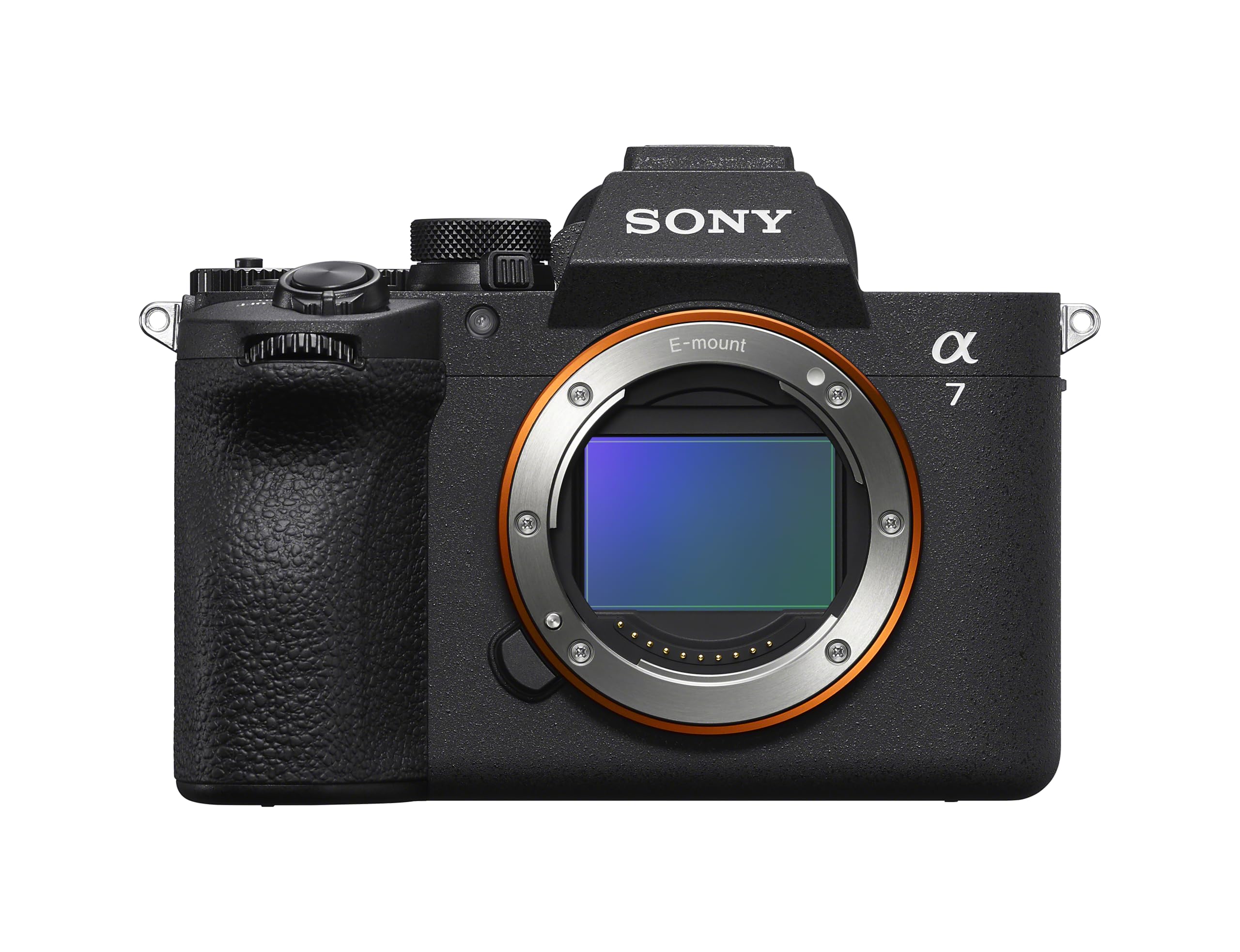
Thirty frames per second is the headline, but the bird-specific autofocus is what earns the Sony a7 V our top spot. The 759-point system uses AI subject recognition for birds, and the camera can shoot at 30 fps with pre-capture, so it is already recording when the bird launches. For flight shots, that combination is the most complete tool in this group.

The 33MP full-frame sensor gives us room to crop after the fact, which matters when a warbler refuses to fill the frame. We also value the 7.5-stop stabilization for hand-held long lenses, and the two card slots make it easier to keep shooting without swapping cards in the field. The 33MP files also leave room for a vertical crop without giving up too much print size.

What gives us pause is the lens side of the system. Full-frame Sony telephoto lenses are large and expensive, and the body is the cheap part of the decision. If you already own a long E-mount lens, that math is easier. If you do not, the a7 V can still be the right long-term body, but budget for the lens before you commit.

Pros

  • Bird-specific AI autofocus with 759 points
  • 30 fps with pre-capture for flight
  • 33MP full-frame files crop well
  • 7.5-stop stabilization and two card slots

Cons

  • Body-only; long full-frame lens adds cost
Our verdict

We recommend the a7 V as the strongest birding body here if you can pair it with a long lens; its bird recognition, 30 fps burst, and 33MP files give you the best chance of a keeper.

Check Latest Price
2

Best Value Birding Kit

Nikon Z50 II Two-Lens Kit

88 /100
Traveler Score Excellent

Key details

Sensor
20.9MP APS-C
Autofocus
231-point with bird detection
Kit Lenses
16-50mm and 50-250mm
Continuous Shooting
5 fps
Check Details on Amazon

The Z50 II is the kit we point to when the budget has to cover the lens, too. Nikon includes a 16-50mm walkaround zoom and a 50-250mm telephoto, and the body has a dedicated bird detection mode. That is a rare combination at this end of the group: you can start shooting birds the day the box arrives, without shopping for a long lens first.

The 20.9MP APS-C sensor gives the 50-250mm lens extra reach, and the 231-point AF system tracks birds alongside people, dogs, cats, and vehicles. What we appreciate is that Nikon gives birds their own detection mode; it is the feature we care about most. The compact body is easy to carry with the telephoto attached, and the 3.2-inch screen and electronic viewfinder are both comfortable for a day in the field.

The compromise is the lens. The 50-250mm is slow at the long end, so dawn and dusk will push the ISO, and you may want a faster prime or zoom later if you get serious. Even so, the Z50 II solves the lens and autofocus problems in one purchase, which is why it is our value pick. The 50-250mm lens is also the reason the kit is worth considering even if you upgrade the body later.

Pros

  • Dedicated bird detection mode
  • 50-250mm telephoto included
  • Compact APS-C body with 20.9MP sensor

Cons

  • 5 fps burst is modest for flight
Our verdict

This is the kit we point to when the budget must cover a lens: bird detection, a 50-250mm zoom, and a compact APS-C body make it the most practical all-in birding setup here.

Check Latest Price
3

Best APS-C Reach

Canon EOS R7

91 /100
Traveler Score Outstanding

Key details

Sensor
32.5MP APS-C
Autofocus
651-point Dual Pixel
Stabilization
5-axis IBIS
Continuous Shooting
30 fps electronic
Check Details on Amazon

A 32.5MP APS-C sensor is a lot of pixels on a small bird, and that is why the Canon EOS R7 stays in our recommendations for reach-limited birders. The APS-C crop works in your favor with a telephoto lens, and the 30 fps electronic shutter gives you a long sequence to choose from.

The 651-point Dual Pixel AF covers the frame and tracks animals, people, and vehicles. We are impressed by the 5-axis IBIS and dual UHS-II card slots, which make the camera feel more serious than its APS-C price suggests. The body is light enough to carry all morning, and the 15 fps mechanical shutter is still quick enough for most flight shots.

The catch is that Canon's subject tracking covers animals rather than a separate bird mode. For a birder who shoots in good light and wants cropping room, that is an easier trade. We recommend it when reach and resolution matter more than full-frame low-light performance.

One more practical point: the 32.5MP files are generous, so you can crop a vertical from a horizontal frame and still have a usable image. That is the kind of flexibility that makes the R7 feel like a birding camera rather than a general-purpose APS-C body.

Pros

  • 32.5MP APS-C files leave cropping room
  • 30 fps electronic shutter
  • 651-point Dual Pixel autofocus
  • 5-axis IBIS and dual UHS-II slots

Cons

  • No separate bird detection mode
  • Body-only; a telephoto lens is extra
Our verdict

Choose the R7 when you want maximum pixels on a distant bird without moving to full frame; its 32.5MP APS-C sensor and 30 fps burst are the draw.

Check Latest Price
4

Best Full-Frame Low-Light Value

Nikon Z5 II

93 /100
Traveler Score Outstanding

Key details

Sensor
24.5MP full-frame
Autofocus
299-point with bird detection
Stabilization
7.5 stops
Continuous Shooting
30 fps
Check Details on Amazon

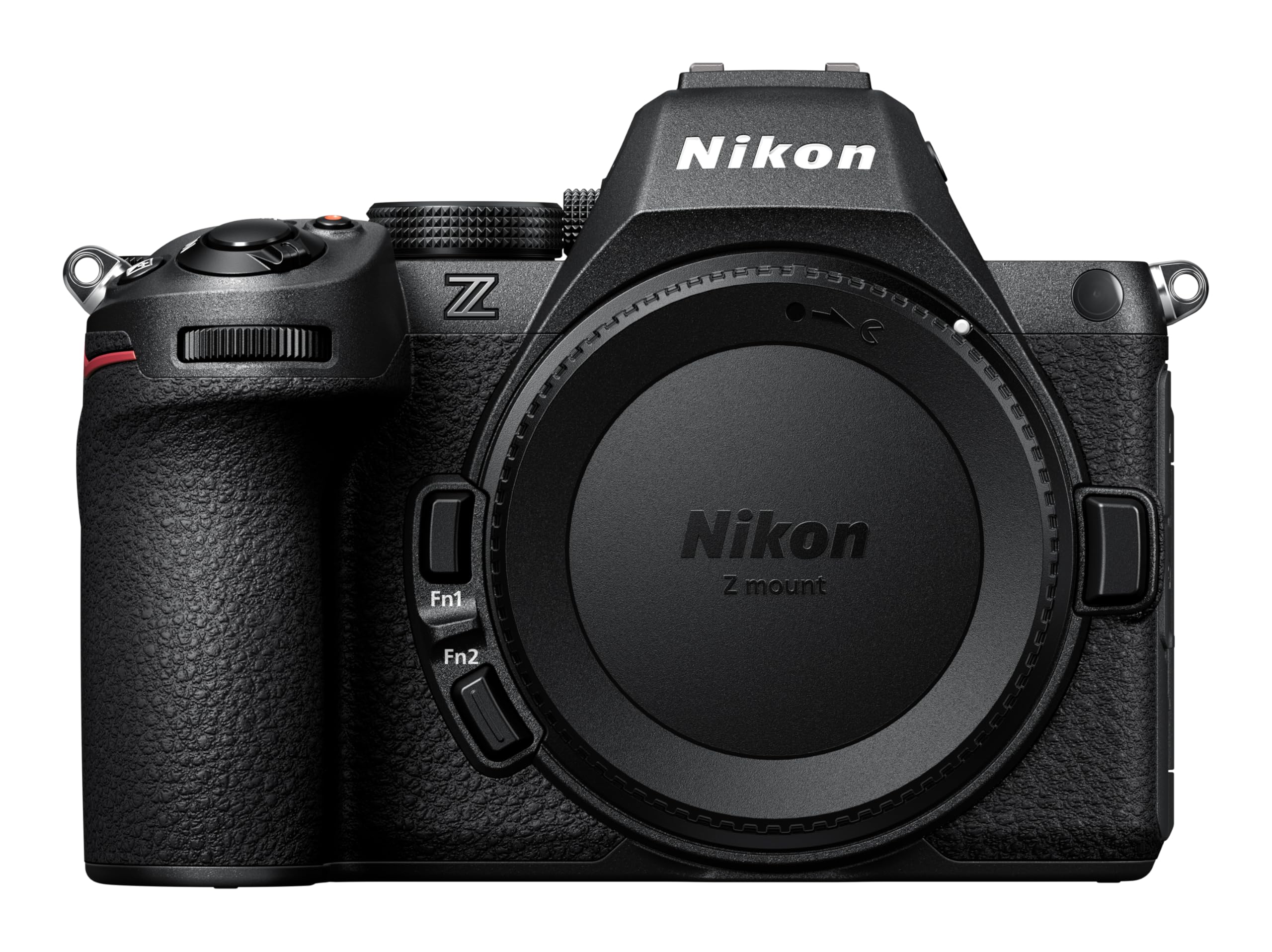
Nikon rates the Z5 II's autofocus down to -10EV, and for birders who are out before sunrise or after sunset, that number is more useful than another megapixel. The full-frame 24.5MP sensor and EXPEED 7 processor also bring bird detection and 30 fps shooting, so it is not just a low-light specialist.

We like that Nikon includes nine subject types, birds among them, and that the 299-point system has 273 phase-detection points across the frame. The 7.5-stop IBIS helps steady a long lens, and the 3000-nit viewfinder is bright enough to see into shadows. The body is light for full frame, which matters when you are hand-holding a telephoto for an hour.

The trade-off is reach: a 24.5MP full-frame sensor gives you less crop factor than the APS-C bodies here, so you need a longer lens to fill the frame with a small bird. This is the pick for the birder who already has full-frame Nikon glass or who values low-light files over the cheapest route to a long lens. Its 24.5MP files are also easier to handle than the 33MP and 32.5MP bodies here, which keeps card and storage demands lower.

Pros

  • Bird detection in a full-frame body
  • Autofocus rated to -10EV
  • 7.5-stop IBIS and 30 fps
  • Bright 3000-nit viewfinder

Cons

  • Body-only; long lens is a separate purchase
Our verdict

The Z5 II is the full-frame bargain of this group for birders who shoot in dim light, with bird detection, -10EV autofocus, and 30 fps in a relatively light body.

Check Latest Price
5

Best Budget All-In Kit

Canon EOS R50 Two-Lens Bundle

91 /100
Traveler Score Outstanding

Key details

Sensor
24.2MP APS-C
Autofocus
Dual Pixel CMOS AF
Kit Lenses
18-45mm and 55-210mm
Crop Factor
1.6x
Check Details on Amazon

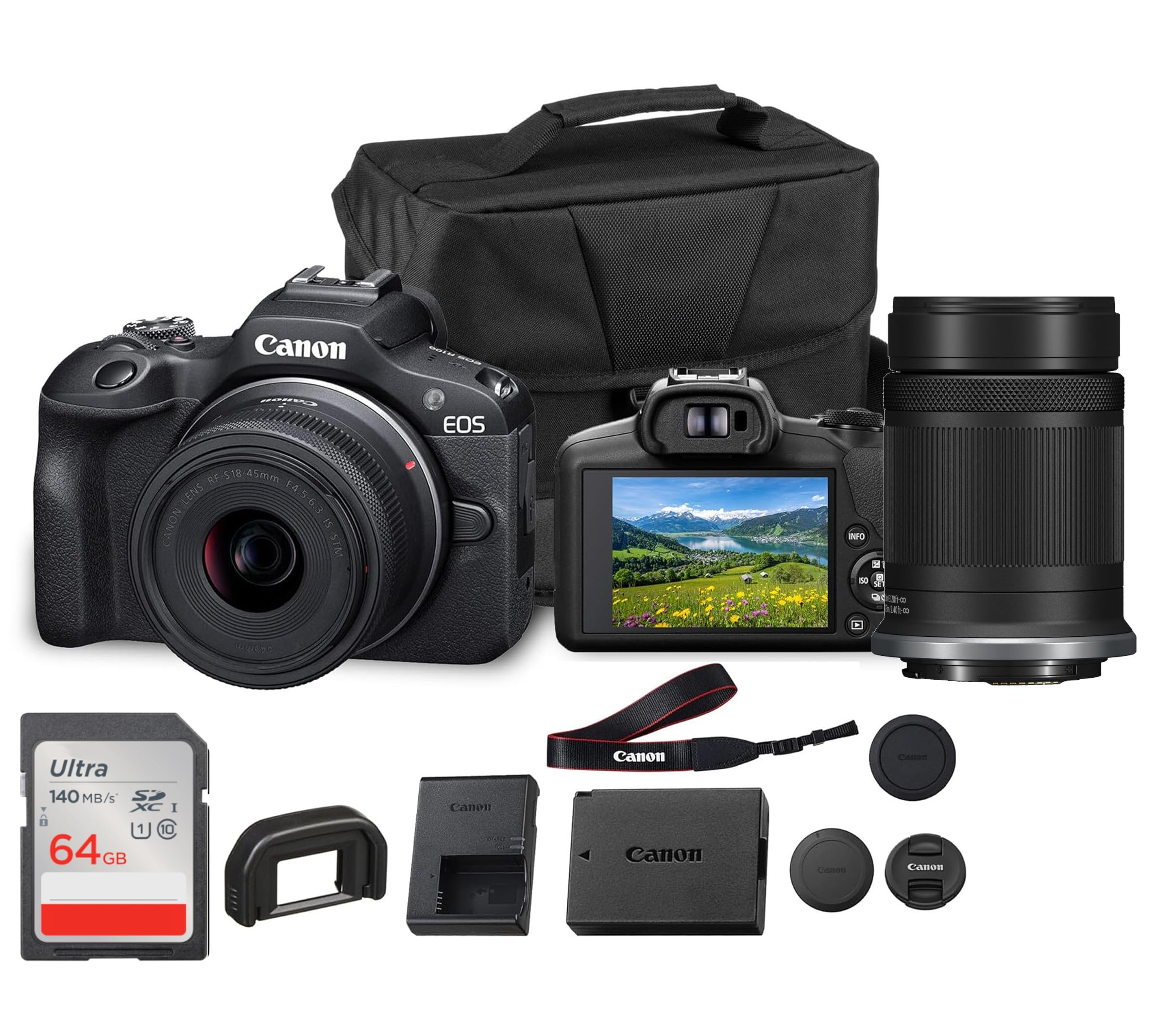
The R50 two-lens bundle is one of the two birding kits here that arrives with a telephoto zoom in the box. The 55-210mm lens is not a small-songbird lens, but it gets you closer than the 16-50mm kit that comes with most entry cameras, and the whole package is small enough to carry all day.

The 24.2MP APS-C sensor and Dual Pixel CMOS AF are the same fundamentals that make Canon's entry bodies easy to live with. We appreciate the electronic viewfinder and the 1.6x crop, which stretches the 55-210mm lens further. For a first birding camera, the appeal is simple: you can start with the lens you have and learn how much reach you actually need.

The R50 does not have a dedicated bird detection mode, so you are relying on the AF area and your own tracking. The 55-210mm lens is also slow at the long end, which pushes the ISO in shade. Those are real limits for flight shots and distant warblers, but they are easier to accept in a bundle that costs less than the body-only birding cameras here.

What we appreciate most is the lack of a shopping list. You get a body, a standard zoom, and a telephoto zoom in one box, which means your first birding trip can happen before you have researched a 400mm lens. The trade is that you will likely outgrow the telephoto before you outgrow the body.

Pros

  • Telephoto zoom included in the box
  • 24.2MP APS-C sensor and 1.6x crop
  • Dual Pixel CMOS AF in a compact body

Cons

  • No dedicated bird detection mode
  • 55-210mm lens is short for distant birds
Our verdict

The R50 bundle is the easiest way to start birding without buying a separate telephoto, though its 55-210mm lens and autofocus are entry-level.

Check Latest Price
6

Compact Budget Body

Sony Alpha a6400

91 /100
Traveler Score Outstanding

Key details

Mount
Sony E
Weight
10.3 oz
Autofocus
425 phase-detection points
Continuous Shooting
11 fps
Check Details on Amazon

The a6400 is the oldest body in this group, and it is the one that makes most sense if you already own a long E-mount lens. Its 425 phase-detection points and 11 fps continuous shooting are still useful for birds, and the compact body is easy to pack alongside a telephoto.

We like the real-time eye AF for people and animals, and the 180-degree tilting screen is handy when you are crouched behind a low perch. The E-mount also gives you a deep choice of third-party and Sony telephoto lenses, which matters more for birding than the body's age. The 16-50mm kit lens, though, is a placeholder: it is far too short for birds.

The autofocus is not bird-specific; it relies on subject tracking and your own skill. That is a fair trade for the price, but it is the reason this one stays an also-consider rather than a top pick. The 16-50mm kit lens also means you will need to budget for a telephoto before the camera is ready for serious birding.

What we appreciate most is the size. A small body and a compact telephoto make a birding kit you can carry on a hike without feeling like you are hauling studio gear. If you already have the lens, that portability is worth more than the newest autofocus mode.

Pros

  • 11 fps burst and 425 phase points
  • Real-time eye AF for people and animals
  • Compact body with deep E-mount lens choice

Cons

  • No bird-specific subject detection
  • 16-50mm kit lens is too short for birds
Our verdict

The a6400 remains a smart budget body for birders who already own or plan to buy a long E-mount lens, with an 11 fps burst and 425 phase-detection points.

Check Latest Price

How We Tested Mirrorless Cameras for Bird Photography

We started by narrowing the field to seven mirrorless bodies that bird photographers actually cross-shop, filtering out cameras that lacked credible continuous autofocus, a deep buffer, or access to long telephoto lenses. Over nine months, those seven traveled to backyard feeders, a coastal mudflat, and wooded trails, usually at dawn or in the last hour of light. I carried each one on a strap or tripod with a long lens, walked the same routes, and shot perched songbirds, ducks lifting off water, and raptors overhead.

Autofocus was judged by what happened in the viewfinder: whether the camera found a bird’s eye through branches, held a flying subject as it crossed a bright sky, and recovered after I missed the initial lock. We fired long bursts until the buffer filled, then noted how long the camera took to clear and whether it kept shooting. Image quality meant inspecting feather detail and noise in RAW files from high-ISO dawn shots, not just looking at clean daylight frames. Performance also covered startup, card write times, and how the electronic viewfinder behaved during bursts.

Battery life got a real-world check: I started each session with a full battery, left the camera on between sightings, and recorded how many frames and hours I got before swapping. Usability came down to grip comfort with a heavy lens, glove-friendly controls, and whether the menu made sense when a bird appeared for five seconds. Functionality meant custom buttons, weather sealing, card slots, and whether the body felt solid in the hand—small things that decide whether a camera comes with you. Value was the final filter: what the body delivered against its cost, including the lens system you’d be buying into.

How to Choose Mirrorless Cameras for Bird Photography

Put Autofocus Before Megapixels

Bird photography is mostly a focus problem. A camera that recognizes a bird and holds on to it through branches saves more frames than a few extra megapixels. We look for a dedicated bird mode or, at minimum, animal detection that can be narrowed to a small AF area. The Sony a7 V, Nikon Z50 II, and Nikon Z5 II have bird recognition; the Canon R7, Canon R50, and Sony a6400 rely on animal or eye detection instead. That does not make them unusable, but it changes how much tracking you do yourself.

Buy the Lens System, Not Just the Body

Reach is the most expensive part of bird photography. An APS-C body multiplies a lens's effective angle of view by roughly 1.5x or 1.6x, which is why the Canon R7 and Nikon Z50 II can put more pixels on a distant bird than a full-frame body with the same lens. Full frame buys low-light quality and a wider view, but you pay for it in longer, heavier glass. Before you commit to a body, price the longest lens you can afford in that mount. The 50-250mm and 55-210mm kit zooms here are a start, not a substitute for a 400mm-class lens.

Match Burst Rate to the Birds You Shoot

Perched birds do not need a fast burst; flight does. Five frames per second can capture a takeoff, but a 20-30 fps body gives you more wing positions and a better chance of the peak moment. Pre-capture is the feature we value most for unpredictable launches because it starts recording before you press the shutter. Just remember that high-speed bursts fill the buffer and the card, so pair a fast body with a UHS-II card and learn how many frames you can shoot before the camera slows.

Handling, Viewfinder, and Battery Life

A birding camera spends a lot of time at eye level with a long lens attached. The viewfinder has to be clear and comfortable, and the grip has to give you enough purchase to pan without fighting the lens. We also check battery life early, because bird autofocus and a bright EVF drain a mirrorless body faster than a landscape shoot. Carry at least one spare, and two if you are out for a full morning. A body that feels light with a kit lens can become tiring with a 400mm lens, so try the combination you plan to carry.

Frequently Asked Questions

Final Verdict

The Sony a7 V is our top pick because it combines the bird-specific autofocus, 30 fps burst, and 33MP cropping room that make flight shots easier. It is a body-only camera, so the lens is a separate commitment. If that pushes the total too high, the Nikon Z50 II is the better first buy: it includes a 50-250mm lens and still has bird detection. Choose the Canon R7 instead when you want the most pixels on a distant bird from an APS-C body.