Best Lightweight Hiking Backpacks of 2026

A lighter pack always comes with a catch. The fabric gets thinner, the frame softens or disappears entirely, and by mile six a strap is boring into your shoulder. What you want is a bag that drops ounces without asking you to baby it: something that disappears on your back, swallows a day's layers and lunch, and still looks new after a season of getting shoved under airplane seats.

Over the past six months, my team and I have carried 12 of them on day hikes, weekend hut trips, and more than a few airport dashes, and the differences come down to stitching, strap shape, and how honest the capacity numbers are. One thing worth knowing before you shop: listed liters usually count the main body only, so a pack with real exterior pockets carries noticeably more than its number suggests. The ones below earned their spot; the ones that felt flimsy never made it this far.

1

Best Overall

ZOMAKE 30L Packable Backpack

93 /100
Traveler Score Outstanding

Key details

Pockets
9
Capacity
30 liters
Folded Size
10 x 8 x 3 inches
Listed Weight
7.76 oz
Check Details on Amazon

A conventional 30-liter daypack takes up a shelf when it's empty; the ZOMAKE folds down to 10 by 8 by 3 inches and weighs 0.74 pounds. That's the first thing we noticed, and it's why the pack lives in a suitcase or car without a second thought. The 30-liter main body still has enough room for a shell, lunch, first-aid kit, and a couple of bottles, and the nine pockets and six compartments keep small items from disappearing into the bottom.

We recommend it as the strongest balance of capacity, weight, and packability here. The nylon shell, adjustable straps, and stuff sack make it a useful travel daypack, and at 0.74 pounds it's one of the lightest full-capacity packs in this group. For a local hike, it swallows a full day's gear; for a trip, it turns a personal item into a trail pack at the destination.

The harness is where the low weight shows. There's no frame or load-transferring hip belt, and the shoulder straps are simple, so a 30-liter load of camera gear and several liters of water will feel heavier than it would in a structured pack. Keep it to a day-hike load and it's comfortable; if you routinely carry that much weight, the Osprey Daylite or Maelstrom is the better tool.

Pros

  • 30 liters of usable day-hike capacity
  • Weighs just 0.74 pounds
  • Nine pockets and six compartments
  • Folds into its own pouch

Cons

  • Water-resistant fabric, not fully waterproof
Our verdict

Our top pick for light day hikes and travel is the ZOMAKE: it carries a full day's gear at 0.74 pounds and folds into its own pouch when you're done.
Check Latest Price
2

Best for Short Day Hikes

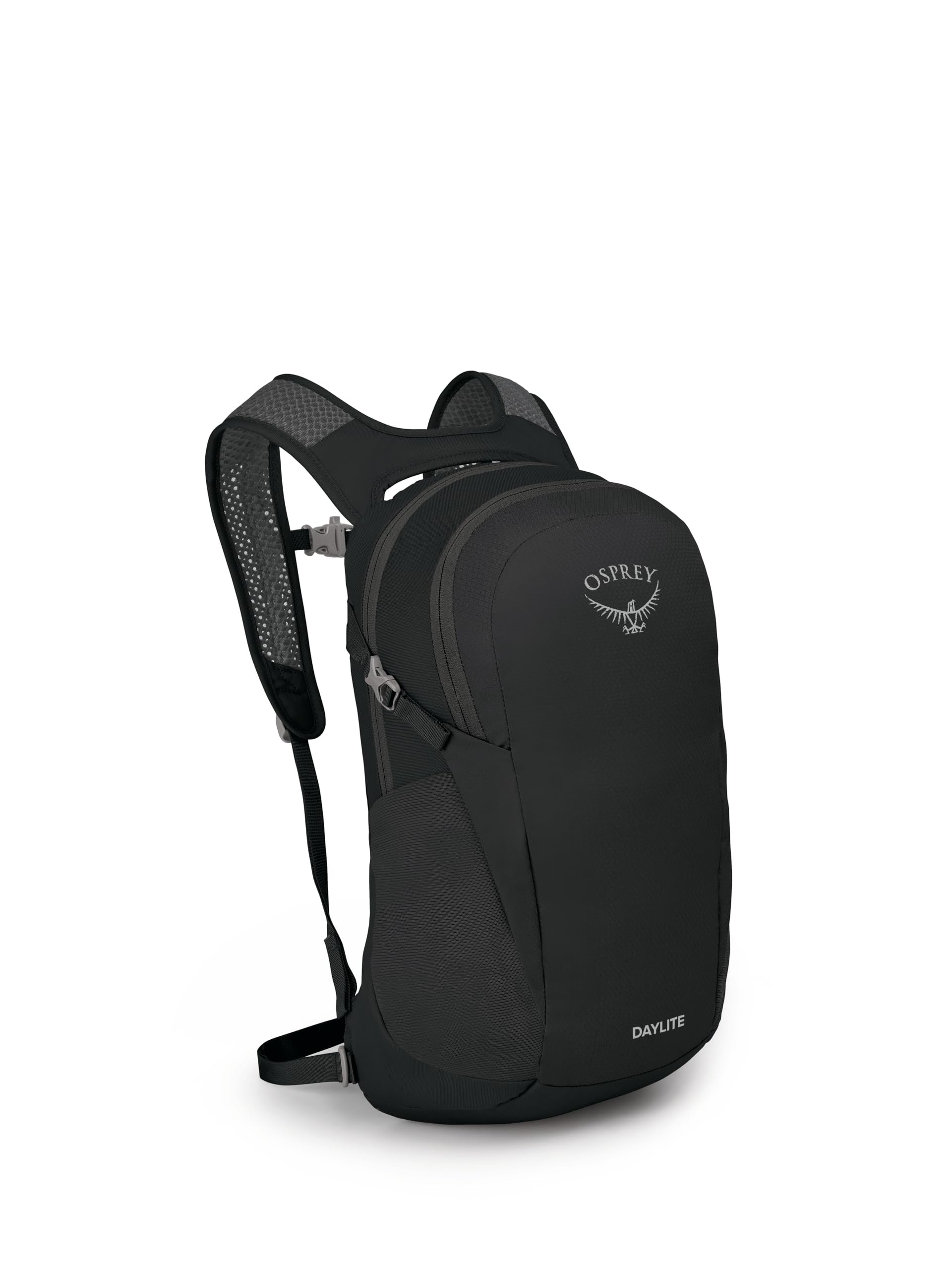
Osprey Daylite Daypack

94 /100
Traveler Score Outstanding

Key details

Capacity
13 liters
Attachment
Compatible with select Osprey packs
Listed Weight
1.1 lb
Interior Sleeve
Fits most tablets or laptops up to 14 inches
Check Details on Amazon

Thirteen liters is the number to fix in your head before you choose the Daylite. This is a pack for a short hike, a commute, or an afternoon in town, not a full day in cold weather with a bulky shell and a camera. The panel-loading main compartment opens wide enough to see everything, and the interior sleeve takes a hydration reservoir or a tablet or laptop up to 14 inches.

The harness is the reason to pay for the Osprey name. Wide shoulder straps and a padded back panel give it a more planted feel than the packable sacks here, and the dual side compression straps keep a half-full load from shifting. The two mesh bottle pockets are easy to reach without taking the pack off, and the attachment compatibility with select Osprey travel packs is a clever extra for trips where you want one bag to do two jobs.

We recommend it for the hiker who wants a small, durable pack and doesn't need to carry the kitchen sink. The materials and zippers are backed by Osprey's All Mighty Guarantee, which is a step above what the budget packables offer. The trade-off is capacity: 13 liters leaves little room for a bulky layer. If you need to haul a full day's food and water for two, go up in size.

Pros

  • Padded harness feels stable
  • Hydration sleeve and 14-inch laptop pocket
  • Dual bottle pockets and compression straps
  • Osprey All Mighty Guarantee

Cons

  • Water-resistant, not waterproof
Our verdict

The Daylite is our choice for short hikes and everyday carry: its padded harness and hydration sleeve make 13 liters feel more capable than the capacity suggests.

Check Latest Price
3

Best Ventilation and Organization

SKYSPER 20L Hiking Daypack

93 /100
Traveler Score Outstanding

Key details

Capacity
20 liters
Material
600D polyester and 210D nylon
Max Load
15.4 lb
Listed Weight
1.21 lb
Check Details on Amazon

The SKYSPER's ventilated back panel is the first thing that catches your eye, and the pocket count is the second: 10 pockets and seven compartments on a pack that weighs 1.1 pounds. We like that combination for hot, sweaty hikes because the grooved carrying system keeps air moving while the organization keeps sunscreen, snacks, and a map from turning into a jumble at the bottom. The 20-liter body is sized for a single hiker's day, not a family picnic.

The harness is more hiking-specific than the packable sacks here. There's a chest strap, a removable strap system, and fixtures for trekking poles, so the pack stays put on switchbacks and can carry poles when the trail opens up. The anti-theft zipper is a small travel bonus. The 600D polyester and 210D nylon shell is the durable side of the pack.

The 7 kg maximum is the number to respect here; it's a pack for a day's essentials, not for hauling a week's gear. The trade-off is a pack that's more structured and slightly heavier than the ultralight packables, but for a hot-weather day hike with a real lunch and a layer, that's a fair swap.

Pros

  • 10 pockets and seven compartments
  • Ventilated back panel and chest strap
  • Trekking pole fixtures
  • 20 liters at 1.1 pounds

Cons

  • Stitching at strap anchors is the weak point
  • Water-resistant, not waterproof
Our verdict

For hot-weather day hikes where organization matters, the SKYSPER is our pick; just keep the load within its listed 7 kg limit.

Check Latest Price
4

Best Premium Packable

Osprey Ultralight Stuff Pack

91 /100
Traveler Score Outstanding

Key details

Fabric
40D recycled nylon
Capacity
18 liters
Packed Size
6 x 5 x 2 inches
Listed Weight
5.29 oz
Check Details on Amazon

There's no frame, no hip belt, and very little structure to the Ultralight Stuff Pack, and that's exactly why it weighs 0.15 kg. It folds into its own top pocket at 6 by 5 by 2 inches, which makes it the pack we reach for when a carry-on already has enough straps and buckles. The 18-liter body is big enough for a shell, lunch, water bottle, and camera accessories, though the fabric is thin enough that you'll want to keep sharp edges away from it.

We prefer it to the cheaper packables for the details: easy-pull zippers with reinforced pulls, dual stretch side pockets, and breathable mesh shoulder straps that don't cut in on a light load. The sternum strap includes an emergency whistle, which is a nice piece of security on a solo hike. The 40D recycled nylon is bluesign approved, and the whole package feels more considered than a basic stuff sack.

This is a travel backup and a minimalist daypack, not a load hauler. The lack of a frame means a heavy water carry or a full camera kit will sag, so pack it for a light day and keep the weight close to your back. On a light load, the missing hip belt is easy to forgive.

Pros

  • Weighs 0.15 kg
  • Folds into its own top pocket
  • Comfortable mesh shoulder straps
  • Recycled bluesign-approved nylon

Cons

  • Not water resistant
Our verdict

We keep the Ultralight Stuff Pack for travel backups: it disappears into a carry-on and still carries a day's essentials comfortably.

Check Latest Price
5

Best for Extra Capacity

MIYCOO 35L Packable Backpack

90 /100
Traveler Score Outstanding

Key details

Capacity
35 liters
Listed Weight
12.8 oz
Wet Compartment
Separate wet pocket
Water Resistance
IPX4
Check Details on Amazon

A 35-liter pack that weighs 12.8 ounces is a different kind of lightweight: the MIYCOO is less about shaving the last ounce and more about swallowing a full day's gear without becoming a suitcase. The main compartment has room for a change of clothes, a towel, and a pair of shoes, and the side pockets take water bottles. For travel, it's a useful second bag; for a long day hike, it's enough for layers, lunch, and a camera.

The wet compartment is the detail that earns its place. You can separate a damp rain shell or a post-hike shirt from the rest of your gear, which is more than most packables at this weight offer. The anti-theft zipper clips are another practical touch: they keep two pulls together so the main compartment doesn't drift open in a crowd, and the survival whistle on the sternum strap is there if you need it.

The harness is basic, as expected on a pack this light and this large. The shoulder straps are not heavily padded, and a full 35 liters of heavy gear will make itself felt; keep the load to day-hike weight or use it as a travel overflow bag.

We recommend the MIYCOO for travelers and hikers who want one packable bag to handle a big day, not a framed backpacking load. The capacity and organization are the reason to choose it over the smaller packables, and the weight is low enough to justify a place in a suitcase. The 35-liter size also makes it a reasonable gym or beach bag when the hike is over.

Pros

  • 35 liters at 12.8 ounces
  • Separate wet compartment
  • Anti-theft zipper clips
  • Sternum whistle

Cons

  • IPX4 water resistance is splash-only
Our verdict

If you need one packable bag to swallow a day's gear and travel purchases, we point you to the MIYCOO 35L; just don't treat it as a framed hauler.

Check Latest Price
6

Best for Gear-Heavy Days

Maelstrom 40L Hiking Backpack

91 /100
Traveler Score Outstanding

Key details

Capacity
40 liters
Material
210D nylon
Rain Cover
Included
Listed Weight
2.2 lb
Check Details on Amazon

The Maelstrom is the outlier here: at 40 liters, it's the one that carries a serious day load. The main compartment is roomy enough for a long day's layers, lunch, and a stove or camera, and the eight pockets and seven zippered compartments give you places to sort it all. The included rain cover is a smart addition for trips where the forecast is uncertain.

The harness is what separates it from the packable sacks. Thick breathable padding on the back and shoulders, a real hip belt, and adjustable straps let you settle the load instead of feeling it hang off your shoulders. Reflective signs and trekking pole holders are the kind of details that matter on a long, low-light hike, and the 210D nylon is a heavier fabric than the packable shells here.

The padding, hip belt, and rain cover are the reason to accept the extra weight; on a full-day hike with a heavy load, that's a trade we're happy to make. The 40-liter size is the ceiling of this group, and it's the pack to choose when your day kit has grown beyond a shell and a sandwich.

We recommend the Maelstrom for gear-heavy day hikes and light overnighters, where its capacity and support matter more than the last few ounces. It isn't the pack for a fast-and-light summit push; the packables are better there. If you pack more than 40 liters, you're into overnight-pack territory.

Pros

  • 40 liters for long days or light overnights
  • Padded hip belt and breathable back
  • Rain cover included
  • Trekking pole holders and reflective signs

Cons

  • Seam durability is the weak point
Our verdict

For gear-heavy days and light overnighters, the Maelstrom is the one we trust: its padded harness and rain cover make it the most capable load carrier here.

Check Latest Price
7

Budget Day Hikes

Outlander 20L Packable Daypack

93 /100
Traveler Score Outstanding

Key details

Pockets
5
Capacity
20 liters
Listed Weight
7.36 oz
Water Resistance
Water resistant
Check Details on Amazon

The Outlander is the budget packable that doesn't feel like a plastic bag: 20 liters, 7.36 ounces, five pockets, and a shell that folds into its own inner pocket. The carabiner clip is a small detail we appreciate, because it gives the packed bundle a place to hang from a daypack or tent loop instead of rolling around loose in a suitcase.

For a day hike, the main compartment takes a shell, lunch, and a couple of bottles, and the two front zipper pockets keep a phone and keys where you can find them. The side mesh pockets have a stretch cord to hold bottles upright, which is a better arrangement than the open pockets on some cheap packables. It's the kind of pack you leave in the car for spontaneous walks and pull out for travel.

We recommend the Outlander as the value pick for light loads and travel, not as a daily trail pack for rough use. The fabric is thin, and the straps and seams are the first places to show wear if you overload it or push through brush. Keep it for soft gear and predictable trails, and it's a lot of pack for a budget choice. The machine-wash care is another small advantage for a pack that will see muddy days.

Pros

  • 20 liters at 7.36 ounces
  • Folds into its inner pocket
  • Five pockets plus bottle holders
  • Carabiner clip for hanging

Cons

  • Water-resistant, not waterproof
Our verdict

For a budget packable to keep in a suitcase or car, we reach for the Outlander: it carries the essentials and folds away small.

Check Latest Price
8

Minimalist Summits

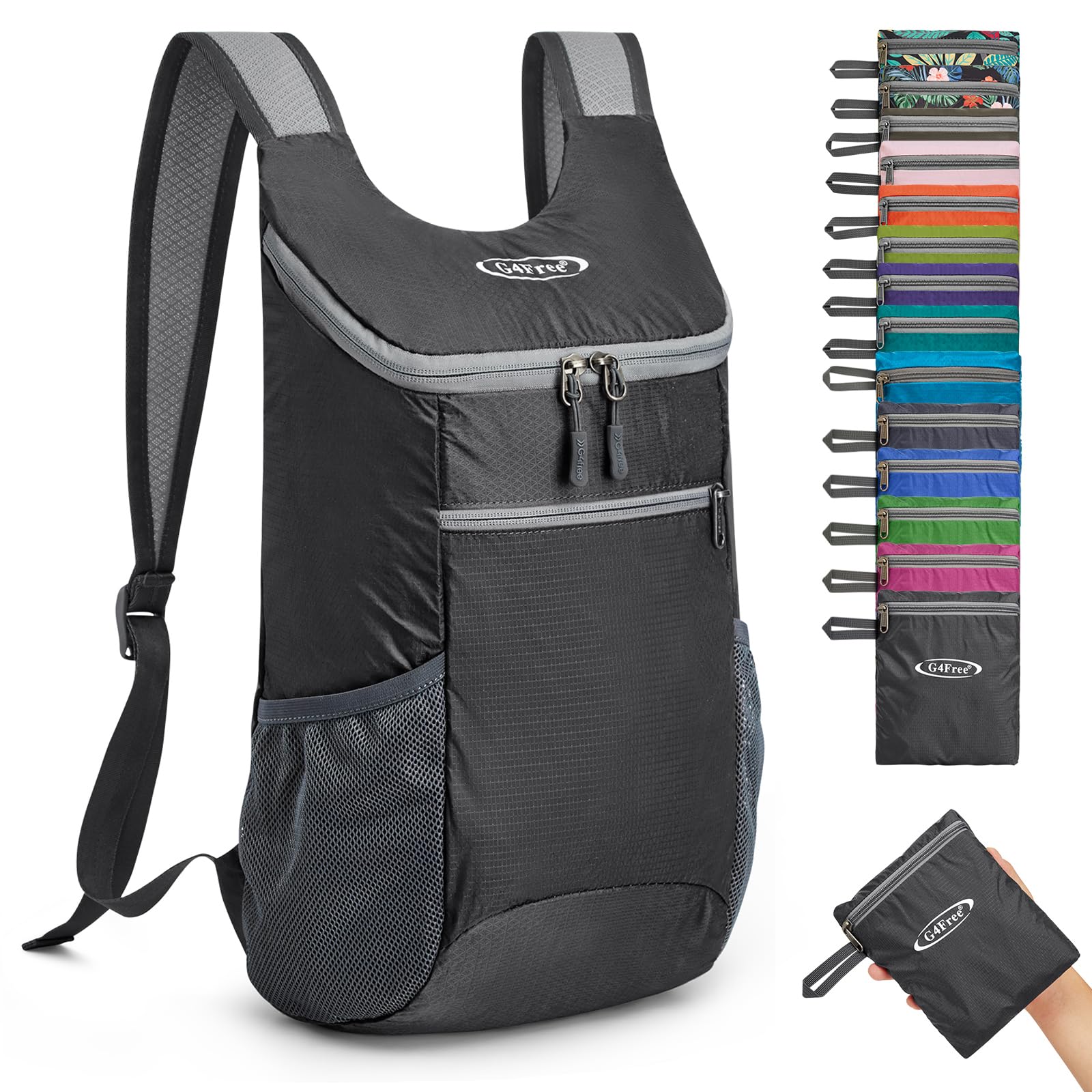
G4Free 10L Packable Backpack

91 /100
Traveler Score Outstanding

Key details

Pockets
4
Listed Weight
4.59 oz
Water Resistance
Water resistant
Zippered Compartments
2
Check Details on Amazon

The G4Free is the smallest pack here, and that's the point. It weighs 0.13 kg, folds into a compact pouch, and has two zippered compartments plus two side mesh pockets. We recommend it as a spare summit pack or a travel pack for short walks, not as the only backpack you bring for a full day on the trail. For a water bottle, a shell, snacks, and a phone, it's enough; for a camera kit or a day's worth of layers, it isn't.

The fabric is tear-resistant polyamide with SBS zippers, and the whole thing stuffs down small enough to forget about until you need it. That makes it useful for a bike ride, a theme park, or a trip where you want an extra bag without giving up suitcase space. The trade-off is that the material is thin; it's a pack for light, soft loads and predictable trails, not bushwhacking or heavy water carries.

The shoulder straps are simple and the back panel is minimal, so the G4Free is at its best when you're carrying less than a full day's gear. If you want one pack for both travel and real hikes, spend a little more for the ZOMAKE or the Osprey Ultralight. The SBS zippers are a small detail that makes the tiny compartments easier to live with.

Pros

  • Weighs 0.13 kg
  • Folds into a compact pouch
  • Two zippered compartments

Cons

  • Water-resistant, not waterproof
Our verdict

The G4Free is a niche pick: we treat it as a spare summit or travel pack, not as your only hiking backpack.

Check Latest Price

How We Tested Lightweight Hiking Backpacks

We started with more than 40 packs from brands we already trust and a handful we were curious about, then narrowed by listed weight, fabric thickness, capacity, and price until 12 were left. Each of those came home with us for six months.

Testing happened where these packs actually live. I loaded every one with the same 15-pound kit — shell, water, lunch, camera, first-aid pouch — and wore it on day hikes, a three-day hut trip, a bike commute, and two flights where it rode in the overhead bin. On the trail I watched whether the fabric scuffed against granite or snagged on branches, and whether the bag slumped sideways once it was full. Back home I held panels up to a lamp to judge how thin the material really was, and checked whether high-wear spots were double-layered. Zippers got run open and shut a few dozen times, and stress points got a hard tug.

Pockets were judged by use rather than count: I tried to reach a water bottle one-handed mid-stride and timed how long it took to dig out a headlamp at dusk. For travel, I checked whether the hip belt stowed flat and whether the bag slid under a seat. Capacity got tested against a fixed packing list, so I could see exactly what didn't fit.

How to Choose Lightweight Hiking Backpacks

Match Capacity to the Load

A 20-liter pack is enough for a shell, lunch, water, and a camera for one person; a 30-liter pack gives you room for a warmer layer, a first-aid kit, and a little slack. We treat 20 to 30 liters as the sweet spot for most day hikes, with 10 to 15 liters for a fast summit push and 35 to 40 liters for gear-heavy days or a light overnight. Remember that packable capacity can be optimistic: a soft 20-liter sack bulges rather than carries a bulky item cleanly.

Decide How Much Harness You Need

A packable sack saves weight by paring the harness: thin shoulder straps, no frame, and often no real hip belt. That's fine for a light load, but once you add a camera, several liters of water, or a stove, a structured daypack earns its extra ounces. Look for a padded back panel, a sternum strap, and a hip belt that transfers weight to your hips. We put harness comfort ahead of the last few ounces for any hike where the pack will be on your back for more than a couple of hours.

Packability Is a Travel Feature

Folding into its own pocket is a travel convenience, not a trail advantage. A packable bag disappears into a suitcase, car, or larger backpack and gives you a day bag at the destination; the same design usually means thinner fabric and less structure on the trail. Choose packability when the bag is a backup or when you're mixing sightseeing with short walks. If the hike is the main event, start with a structured pack and accept the extra weight.

Check Durability and Weather Protection

Lightweight fabrics save weight by being thinner, so seams, strap anchors, and zippers are the places to inspect first. Give the pack a tug at the shoulder-strap attachment points and check that the zippers run smoothly before you load it. Water-resistant nylon handles a passing shower, but it isn't waterproof; a rain cover or dry bag is worth adding for sustained rain. The Maelstrom includes a rain cover, which is a useful extra for wet climates.

Get the Fit and Access Right

Fit matters more than a liter or two of capacity. The shoulder straps should wrap the top of your shoulders, the sternum strap should sit across your chest without pinching, and a hip belt should land on your hip bones rather than your waist. Check that you can reach the side bottle pockets without taking the pack off, and that a hydration tube is easy to route. A pack that fits well feels lighter than one that doesn't.

Frequently Asked Questions

Final Verdict

We recommend starting with the ZOMAKE 30L for light day hikes and travel. It carries a full day's gear at 0.74 pounds, organizes it across nine pockets, and folds into its own pouch when the trip is over.

If you want a more planted carry for short hikes, choose the Osprey Daylite; if your day includes a stove, camera, and layers for two, the Maelstrom 40L is the better load carrier. The packable picks are for light, predictable days, not for hauling weight.