10 Best Insulated Rubber Boots of 2026: Picks That Fit and Stay Dry

Insulated rubber boots that actually match your cold-weather needs — without sizing surprises, premature cracks, or hard pull-on struggles.

Insulated rubber boots are the gear most people buy once and hope they got right. Sizing and durability vary widely between models — even within the same brand — so 'waterproof and insulated' on the box says little about fit or how long the sole stays attached.

The real differences show up in sizing with thick winter socks, the rubber-to-neoprene seam, and how hard a boot is to pull off after a long day. That last point sounds minor until you add mud and cold hands. A boot that needs a boot jack is a different product from one you can kick off after travel.

There's also a trade-off at the top: maximum warmth for standing in extreme cold requires thick insulation and heavy construction, while lighter boots are easier to move in and pack. Choose based on how much standing you actually do in the cold.

1

Best Overall

MUCK Woody Max

96 /100
Traveler Score Outstanding

Key details

Insulation
Outsole Traction
Sizing Consistency
Roomy fit
Check Details on Amazon

The Woody Max is the balanced option in this insulated rubber boot lineup: enough cold-weather warmth for active days, a waterproof upper for wet grass, mud, and shallow water, and a fit that stays comfortable through long wear. It moves from hunting to barn chores without the bulk of a heavy sub-zero boot or the premium cost of a flagship cold-weather model. The roomy interior accepts thick socks, and the build quality holds up through repeated brush, mud, and wet-field use.

The waterproofing sheds puddles and wet ground well, and the comfortable interior carries through full workdays. The roomy fit takes thick socks without pressure, which extends the practical range into colder weather, and the boot's weight stays low enough to walk in for hours.

At a mid-range price, the Woody Max delivers the durability and water resistance that cheaper rubber boots can lack, while staying lighter and easier to live with than the warmest extreme-cold option in this set. For hunting, farming, and outdoor work, the balance of warmth, fit, and build quality makes the price reasonable. The value is strongest for buyers who need one boot rather than a separate pair for each season.

This boot suits hunters, farmers, and outdoor workers who want one insulated rubber boot for cold, wet conditions without steel-toe protection or sub-zero stationary capability. The main boundaries are activity-dependent warmth and tread wear on abrasive surfaces: a heavier insulated model covers long sedentary sits in deep cold, and constant gravel or concrete can shorten tread life. For mixed terrain and active cold-weather days, that trade-off is easy to live with.

💡 Warmth is strongest while moving; add a heavier sock for long stationary sits.

Pros

  • Field build quality holds up through repeated hunts and chores.
  • Warmth reaches low teens and single digits during active use.
  • All-day comfort and a roomy fit leave space for thick socks.
  • Waterproofing sheds wet terrain and damp work conditions.

Cons

  • Tread can wear faster on abrasive surfaces like gravel or concrete.
  • Warmth is activity-dependent; stationary hunters near freezing will need a heavier boot.
Our verdict

The Woody Max covers everyday cold/wet hunting and chores; choose a heavier model only when your winter is built around long sedentary sits in deep cold.

Check Latest Price
2

Extreme-Cold Heavyweight

MUCK Arctic Pro

95 /100
Traveler Score Outstanding

Key details

Insulation
Outsole Traction
Sizing Consistency
Varies between runs
Check Details on Amazon

The MUCK Arctic Pro is the warmest boot in this comparison, with sub-zero insulation that has made it a regular choice for ice fishing and cold-environment work. That warmth comes from a 6.5-lb build that is heavy enough to notice on anything more than short walks. It is not the balanced all-rounder of the group; it is the specialist for buyers who care more about staying warm than moving fast.

For stationary cold — ice fishing, hunting in single-digit temps, outdoor work in severe conditions — this boot’s warmth is the point. The 6.5-lb build is the cost of that protection, sole separation can occur after heavy use, and quality control varies, so ordering from a shop with easy returns is sensible. It suits people who prioritize warmth over weight, not those looking for a light travel boot.

Pros

  • Serious cold-weather warmth holds up in sub-zero conditions and stationary use.
  • Overall construction feels solid and well-built for demanding outdoor work.
  • Comfort holds up during long wear in cold conditions.

Cons

  • Under prolonged heavy use, the interior lining can tear.
  • Between production runs, the same size can fit differently.
Our verdict

For anyone who needs to stay warm while standing still in negative temperatures, this is the boot that makes the weight worth it.

Check Latest Price
3

Premium Deep-Snow Hunter

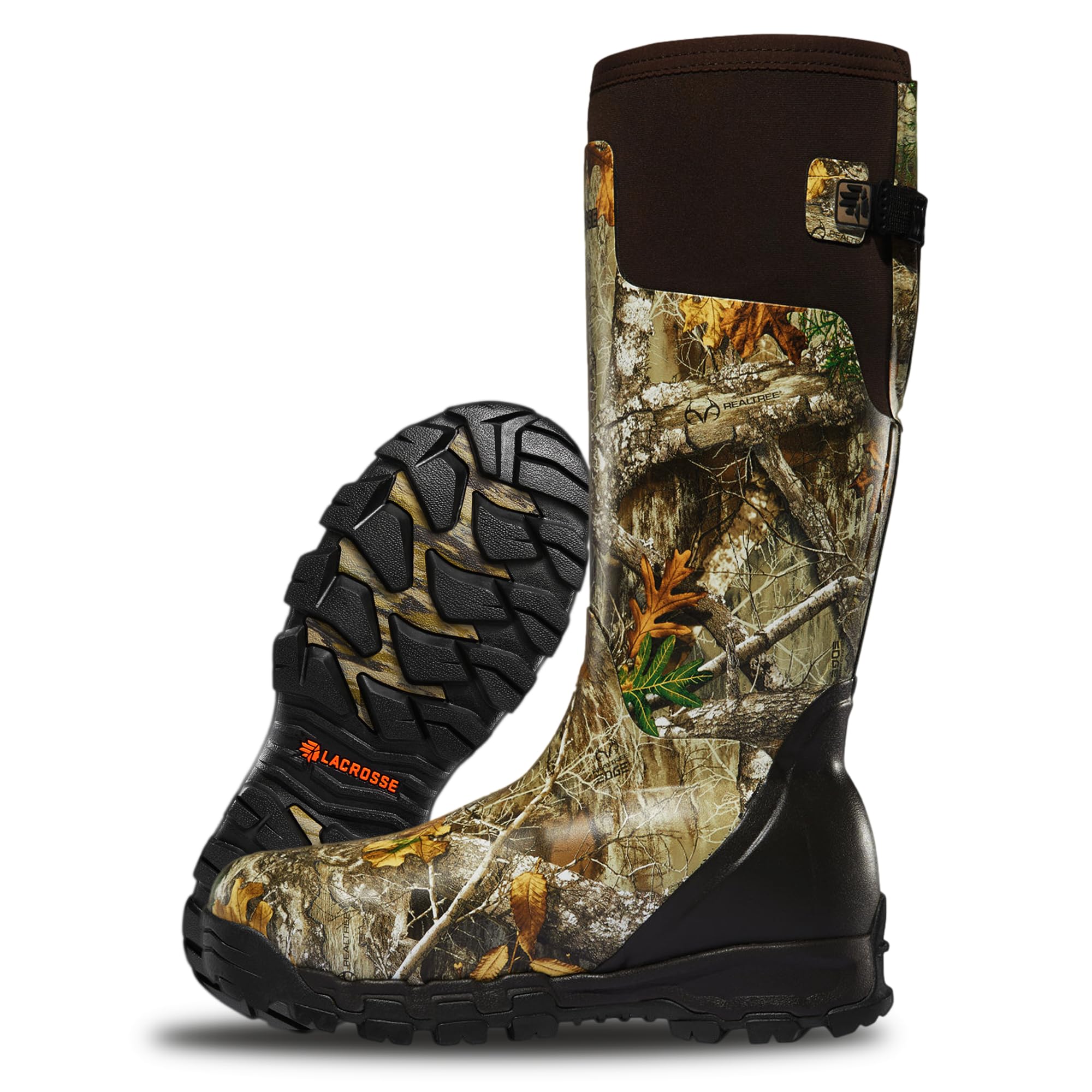
LaCrosse Alphaburly Pro

91 /100
Traveler Score Outstanding

Key details

Insulation
1600g
Outsole Traction
Mud/snow traction
Sizing Consistency
Fits thick socks
Check Details on Amazon

The Alphaburly Pro pairs 1600g insulation with an 18-inch natural-rubber shaft and aggressive mud-and-snow traction, giving cold-weather hunters a boot built around long stationary sits. Lighter rubber boots in this class balance all-day comfort against warmth; this one leans hard into warmth, and that focus shows in the deep-snow performance. The 18-inch height keeps snow from working into the calf, and the outsole bites into mud and packed snow with more authority than a standard farm-boot sole. The payoff is a boot that keeps feet warm in freezing conditions without needing constant movement to generate heat.

The right buyer is a serious deer or turkey hunter who sits in snow and accepts the tradeoffs: heavy, hard to remove without a boot jack, and occasional holes or cracks. That same build rules out lightweight daily chores and casual travel. For a hunter planted on a stand, the insulation is the point; for someone moving all day, a mid-tier rubber boot will feel easier on the legs.

💡 A boot jack near the door makes removal a one-step process.

Pros

  • Keeps feet warm in cold conditions without requiring movement to generate heat.
  • Accommodates bulky cold-weather socks while holding the foot securely.
  • All-day comfort supports long hunts and stationary sits.

Cons

  • Removal takes effort, and a boot jack becomes a practical addition.
  • Heavy build adds up on longer walks and can contribute to leg fatigue.
Our verdict

The Alphaburly Pro is a serious cold-weather hunting tool, not an everyday chore boot.

Check Latest Price
4

Budget All-Rounder

TIDEWE 6mm Neoprene Boot

0 /100
Traveler Score Fair

Key details

Insulation
6mm neoprene
Outsole Traction
Sizing Consistency
Sizing varies
Check Details on Amazon

The 6mm unisex boot leads with comfort, warmth, and budget value. The reinforced toe and CR Flex-Foam rubber handle mixed chores, fishing trips, and cold wet commutes without the bulk of a men's 7mm hunting build. The calf fit leaves room for heavier socks, so all-day wear stays comfortable. Water resistance holds up in slush and puddles, and the sole keeps its footing on damp barn floors.

This is for men and women who want one affordable insulated rubber boot for varied wet-weather work. It covers mucking stalls, stream fishing, and wet parking-lot commutes without demanding premium-boot money. The unisex sizing also makes it a practical household boot. Durability trails premium brands, so treat it as a budget workhorse for mixed chores rather than a multi-year heavy-ranch boot. That boundary is easy to accept at this price point.

💡 If you're between sizes, order the larger half-size — thick socks close the extra room without sacrificing warmth.

Pros

  • Comfort holds up over long days of chores and fishing.
  • Build quality and materials feel above the budget price.
  • Warmth holds in cold wet conditions without excess bulk.

Cons

  • Sizing varies between runs; a half-size adjustment may be necessary.
  • Sole or seam separation can show up within a year under heavy ranch use.
Our verdict

For budget-minded shoppers who want comfort and warmth across mixed cold-weather chores, this 6mm boot is strong value. Keep expectations realistic for heavy ranch use, and it's an easy pick.

Check Latest Price
5

Best Women's Budget Boot

HISEA Women's Mud Boot

93 /100
Traveler Score Outstanding

Key details

Insulation
Neoprene
Outsole Traction
Anti-slip
Sizing Consistency
Runs small
Check Details on Amazon

The HISEA women's mud boot pairs a knee-high anti-slip rubber shell with neoprene insulation, giving cold-weather chores an easy pull-on option that stays light on the foot. The women's-specific shape fits more neatly than the adjustable-calf men's budget boot, and the clean styling moves from barn to errands without looking like heavy work gear.

Wet barn floors and muddy garden paths are where the anti-slip outsole and waterproof upper do their job. Warmth is enough for active cold-weather use; long stationary sits in deep cold call for a heavier insulated boot.

This boot suits women who need budget-friendly insulated mud boots for barn chores, gardening, dog walks, and casual winter travel. It runs small for some feet, and durability is below premium insulated boots, so the practical buyer sizes up and leaves heavy-duty daily farm work to a heavier boot.

Pros

  • Comfortable neoprene lining that holds up through all-day barn and garden wear.
  • Warmth in cold, wet conditions without the heavy feel of a winter work boot.
  • Build quality lands well above what the entry-level price would suggest.

Cons

  • Sizing skews snug, so a half-size-up order is the safer fit with thick socks.
  • Under heavy use, seam and sole separation can show up sooner than with premium rubber boots.
Our verdict

For women who need an affordable warm mud boot for barn chores, gardening, and winter travel, this is the value pick.

Check Latest Price
6

Budget Work/Ranch Value

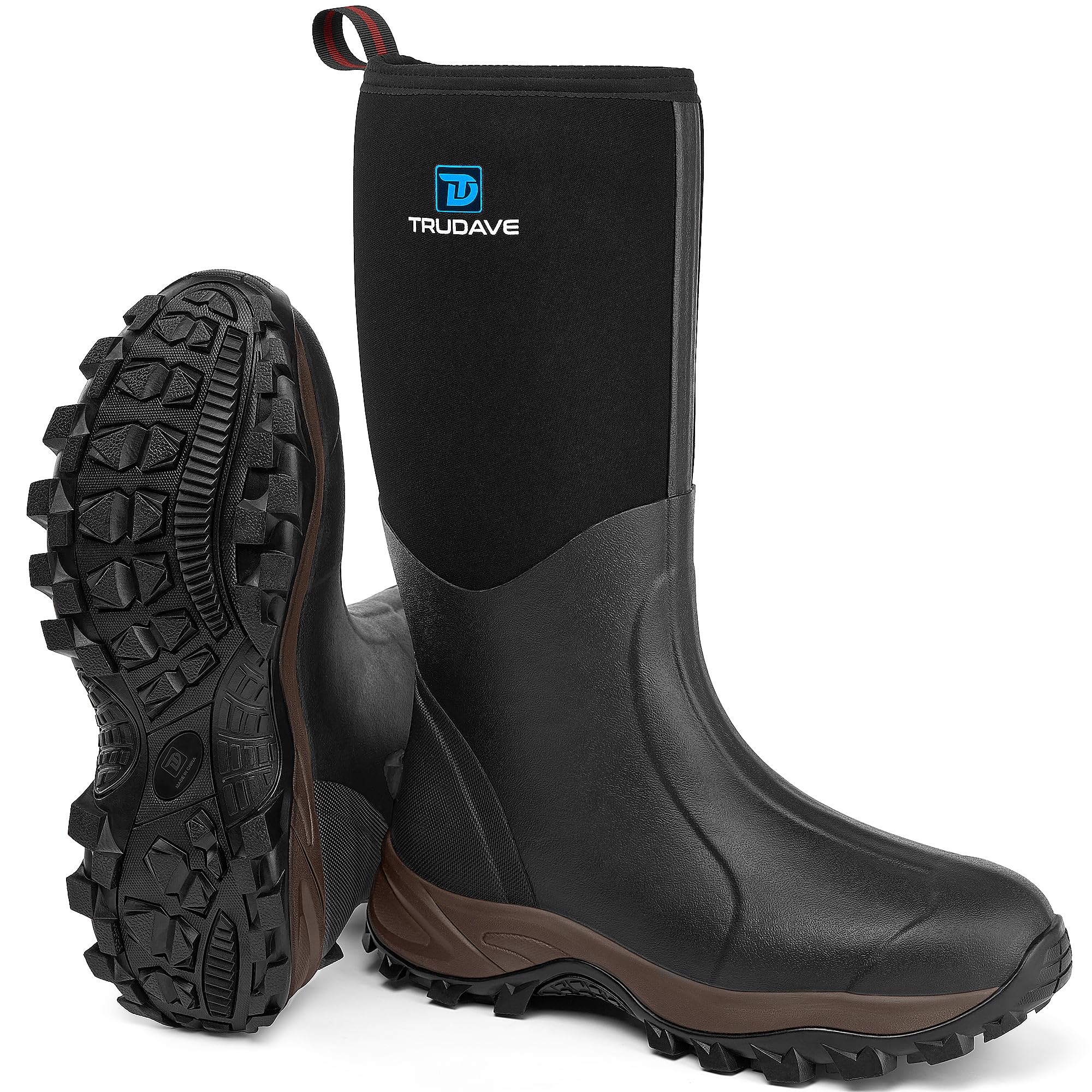
Trudave 6mm Neoprene Boot

88 /100
Traveler Score Excellent

Key details

Insulation
6mm neoprene
Outsole Traction
High-traction
Sizing Consistency
Check Details on Amazon

The Trudave tall boot leads with steel-shank support inside a 6mm neoprene shaft, giving ranch and farm work a stable platform in mud, manure, and wet grass. It carries the coverage of a tall mud boot without a heavyweight pac-boot feel, and it undercuts the brand's ankle-height deck boot for buyers who need actual wet-weather protection.

The high-traction outsole holds on slick barn floors and muddy slopes, and the 6mm neoprene upper keeps water out during normal chores. Warmth suits active cold-weather work; sub-zero extreme cold is outside its comfort zone.

This budget-friendly unisex boot fits a wide range of foot shapes with room for thick socks and works best for ranch and farm buyers who want steel-shank support at a reasonable price. It is not as battle-tested as premium brands, so the heavy-ranch buyer should treat the outsole as the wear point to monitor.

Pros

  • Build quality and cushioned comfort keep muddy chores manageable.
  • Unisex fit runs true for a wide range of buyers, with room for thick winter socks.
  • Budget price puts a steel-shank tall boot in reach for cost-conscious buyers.

Cons

  • Sub-zero extreme-cold sits are beyond what the 6mm neoprene can deliver; active cold-weather chores are the right match.
  • Under sustained heavy ranch work, the outsole can wear through sooner than premium farm boots.
Our verdict

Budget-conscious ranch and farm buyers get a tall steel-shank mud boot that handles wet cold-weather chores without a premium price tag.

Check Latest Price
7

Tall Farm/hunt

LaCrosse Burly Classic 18"

0 /100
Traveler Score Fair

Key details

Insulation
Foam
Outsole Traction
Slip-resistant
Sizing Consistency
True to size
Check Details on Amazon

The Burly Classic is a tall 18-inch rubber boot with EVA foam comfort and foam insulation for cold wet chores at a mid-tier price. The simple rubber shaft seals against mud and shallow water, and the footbed stays comfortable through all-day wear without the bulk of heavy 1600g boots. The calf area is snug for larger legs, and rubber at stress points can crack or tear over time under heavy work. It lacks the extreme-cold insulation of the premium 1600g hunting model, so this suits buyers who want classic tall coverage without flagship cost.

Pros

  • Quality construction keeps the tall 18-inch rubber shaft strong through mud and brush.
  • EVA foam footbed provides a soft underfoot feel during long wet days.
  • Foam insulation adds cold-weather warmth without the weight of heavy 1600g boots.

Cons

  • Pulling the boots off can need a boot jack, especially after layering socks or pants.
Our verdict

This works best for buyers who want a classic tall rubber boot for cold wet chores and don't need the warmest option in the lineup.

Check Latest Price
8

Cold-Weather Hunting

TIDEWE 7mm Hunting Boot

90 /100
Traveler Score Outstanding

Key details

Insulation
7mm neoprene
Outsole Traction
Non-slip
Sizing Consistency
Occasional variance
Check Details on Amazon

This men's 7mm neoprene hunting boot delivers cold-weather warmth and rugged build quality at a mid-range price, giving it a clear place ahead of the budget all-rounder in this set. Water resistance and all-day comfort keep it suited to wet hunting grounds and long sits. The main limit is mass: it is heavier and bulkier than the 6mm TIDEWE, so hunters who cover a lot of ground on foot will feel the difference.

Pros

  • 7mm neoprene holds warmth during cold-weather hunts and long sits.
  • Build quality and water resistance hold up in wet hunting conditions.

Cons

  • Sizing can be off for some feet, so a size exchange may be needed with hunting socks.
Our verdict

It fits best when the hunt is short on walking and long on standing in the cold.

Check Latest Price
9

Boat and Travel

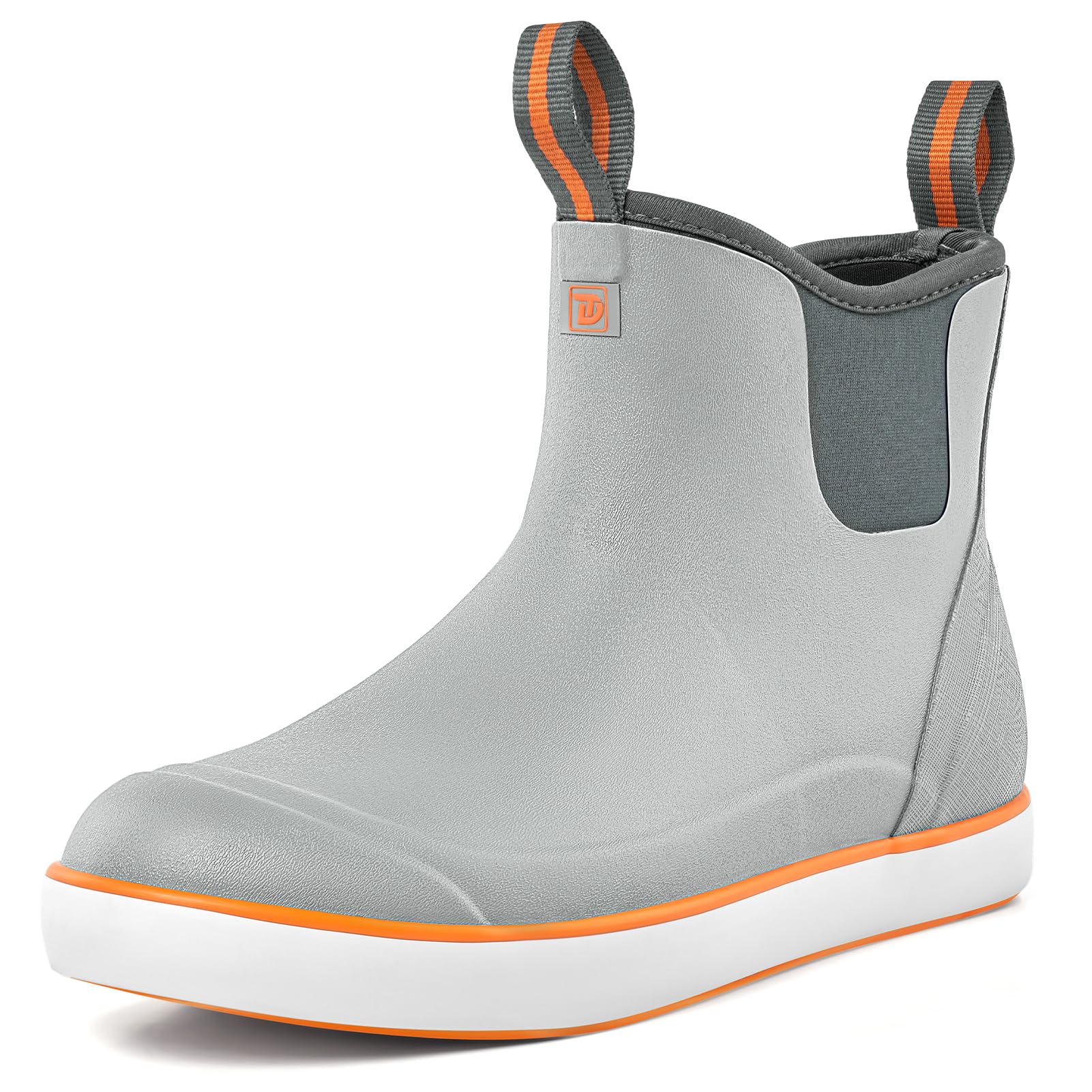
Trudave Deck Boot

89 /100
Traveler Score Excellent

Key details

Insulation
Insulated
Outsole Traction
Sizing Consistency
Check Details on Amazon

Fishing, boating, and travel scenes are where this boot earns its place: it slips on fast, feels light, and supports the foot through a day on deck. Comfort and fit are immediate strengths, and the rubber build holds up well for the price. The boundary is its intended role: ankle height leaves deep mud, snow, and standing water above the cuff, and cold-weather hunting is not a realistic assignment. For travelers and anglers who want a light, easy boot for wet destinations, this one fits.

Pros

  • Comfortable fit makes it easy to keep on through a day on the water.
  • Quality construction at a budget-friendly price.

Cons

  • Deep mud, snow, or standing water can top the ankle cuff.
Our verdict

For travelers and anglers who want an easy, lightweight wet-weather companion, this ankle boot is the right call.

Check Latest Price
10

Mid-Calf Chores

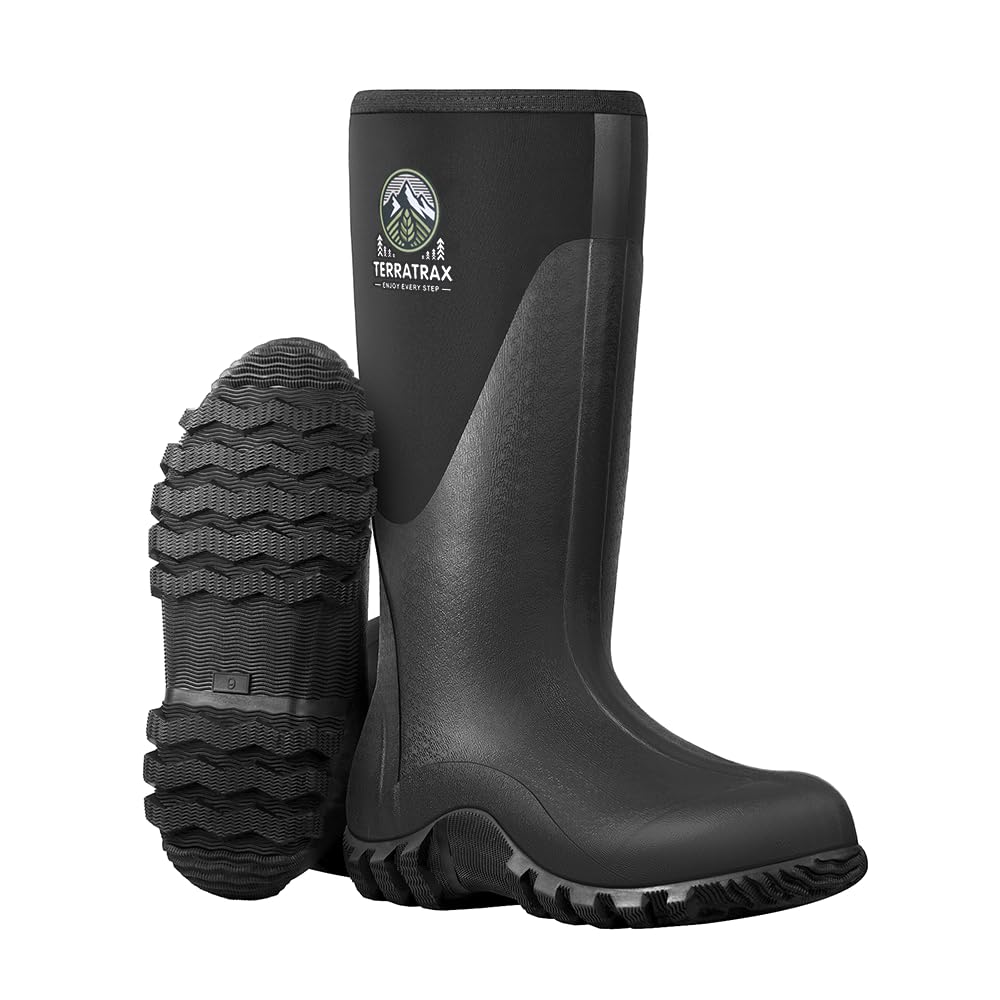
TerraTrax Mid-Calf Muck Boot

88 /100
Traveler Score Excellent

Key details

Insulation
Insulated
Outsole Traction
Anti-slip
Sizing Consistency
Check Details on Amazon

Comfortable, insulated mid-calf coverage at a budget-friendly price makes this an easy pick for moderate winter yard work. The anti-slip outsole and roomy fit suit quick outdoor chores and short walks between snowfalls. Quality and comfort are the strongest points for the price. Heavy ranch work and guaranteed deep-water use are outside its range, so this is a budget second boot for light cold-weather wear.

Pros

  • Quality for the price with a comfortable fit for short winter chores.
  • Warmth holds up for moderate winter yard work and quick walks.

Cons

  • In deep-water crossings, waterproofing can vary between units; puddle splashing is more reliable.
  • Under heavy ranch work or daily abuse, sole or upper separation can occur within months.
Our verdict

Keep this as the backup pair that lives by the back door for snow shoveling and dog walks.

Check Latest Price

How to Choose

Insulation Thickness

Insulation comes as neoprene thickness (6mm, 7mm) or grams of synthetic fill (1600g being the heavy end). Thicker insulation traps more still air around your foot, which is what keeps it warm when you're not moving.

The trade-off is weight and bulk. A 7mm neoprene boot is noticeably heavier and stiffer than a 6mm boot, and a 1600g boot feels like a different category. If you're hiking or traveling, choose the thinnest insulation that still covers your coldest stationary conditions. If you'll sit in a stand or ice fish, go heavy.

Shaft Height

The shaft height decides how deep you can step into snow, mud, or water before the boot top becomes the weak point. An 18-inch boot clears typical snow and shallow floodwater; an ankle boot only handles light splashes.

Taller shafts also increase pull-on and pull-off effort, especially when the calf opening is snug. That snug fit keeps water out, but it also means some tall boots need a boot jack. Match the height to the deepest conditions you'll actually stand in, not the worst case you can imagine.

Outsole Traction

Outsole lug pattern determines whether a boot holds on wet grass, mud, boat decks, or slick snow. Deep, widely spaced lugs clear mud and bite into soft ground; flatter soles feel steadier on hard wet surfaces but pack up in muck.

If your days mix farm mud and paved walkways, look for a middle-ground tread. If you'll spend time on a boat ramp or wet deck, a slip-resistant rubber compound matters more than lug depth. No single outsole excels at both deep mud and smooth wet concrete.

Sizing and Winter Socks

Neoprene and foam insulation take up volume, so fit is less forgiving than a leather boot. Most buyers in this category find that their normal size feels fine without socks but tight with the socks they plan to wear outdoors.

Since many insulated rubber boots stop at whole sizes, the safer move is to size up when you are between sizes. A slightly loose boot can be corrected with sock thickness; a tight boot restricts circulation and makes your feet feel colder.

Seam and Sole Construction

The rubber shell meets the neoprene upper at a seam, and the outsole is bonded to the shell. Both joints flex with every step, and that repeated flexing is where waterproofing and longevity are decided.

Boots that survive heavy use have reinforced seams and outsole bonds that tolerate cold-weather flexing. Boots that crack or split after a season usually go at these stress points, often because the rubber was too stiff or the bond was too thin. Letting boots dry naturally and avoiding sharp folds at the ankle preserves these joints.

Frequently Asked Questions