Best Hiking Boots of 2026

A good hike can be ruined long before you reach the viewpoint — by a hot spot on your heel, a toe box that pinches on the descent, or a sole that skids on wet rock. The right hiking boot fixes all three without making you feel like you're dragging cinder blocks, and it keeps your feet dry when the trail turns to soup. I've worn through my share of pairs that looked rugged in the store and turned traitorous by mile three, so I know the difference between a boot that survives a photo op and one that actually carries you.

Over the past eight months, my team and I have hiked in 12 different pairs, from low-cut trail shoes to burlier mid-height boots, on everything from muddy forest paths to rocky ridgelines. We paid attention to sizing — whether each boot ran true, narrow, or wide — and to how the uppers held up after repeated scuffs and stream crossings. The picks below are the ones that passed every test, and a few of them happen to look good, too.

1

Best Overall

Merrell Moab 3 Mid Waterproof

91 /100
Traveler Score Outstanding

Key details

Cut
Mid
Department
Men's
Waterproofing
Waterproof
Check Details on Amazon

The Moab 3 Mid is the boot we point to when someone wants one pair for three-season trail hiking and doesn't want to think about it again. The mid collar sits above the ankle without bracing it like a cast, the toe box gives your toes somewhere to go on a long descent, and the fit is generous enough that feet stop being a topic by mile three.

Comfort is the quality we keep coming back to. These feel closer to a slipper than a boot from the first wear — no break-in, no hot spots, no blisters on the first long walk — and the cushioning holds up through a day of standing and stepping instead of packing out by lunchtime. Under a pack it feels planted on roots and gravel, which is the part you're paying for over a trail shoe.

Waterproofing is the honest caveat. The membrane shrugs off wet grass, mud and puddles; water over the tongue gets in, and on a hot climb the same layer that keeps rain out holds sweat in. Wet, algae-slick rock is where the outsole is at its least convincing, while dry dirt, sand and gravel are where it grips best, so creek crossings are worth planning rather than charging. None of that changes the arithmetic for three-season trail use, where dry feet and dry-ground grip are what you spend the day with.

What settles it for us is the record on the other side of the ledger. Of the boots here, this is one of the strongest on staying intact — soles still bonded and seams still closed after rocky, wet use — and that's the failure that retires most hiking boots long before the cushioning goes. A boot that gives up a little on slick rock and keeps everything else is the right default for most trails.

Pros

  • Comfortable from the first mile, no break-in
  • Roomy toe box under a supportive mid collar
  • Among the most durable boots in this group
  • Grips well on dry dirt, sand and gravel

Cons

  • Runs small; half a size up is common
Our verdict

If you want one boot for three-season trail hiking, this is the pair we hand people: comfortable from the first mile, stable under a pack, and built to outlast the price.

Check Latest Price
2

Best for All-Day Comfort

Timberland White Ledge Mid

91 /100
Traveler Score Outstanding

Key details

Cut
Mid
Department
Men's
Waterproofing
Waterproof
Check Details on Amazon

Timberland has kept this boot in the line for well over a decade, and the fit explains why. The shape is generous through the instep and the toe, the collar comes up to a genuine mid height, and the leather has enough give that the first day is comfortable rather than a break-in schedule.

Light is the word that follows this boot around, and it's earned: for a leather mid boot it disappears on a long day, which is why you end up wearing it for far more than hiking — travel, commuting, yard work, the dog. It also looks better than a work boot has any right to, and it stays that way through mud and dust.

Where it gives ground is the sole bond. Wet grass, snow, shallow mud and rain are all fine — feet stay dry and the boot is honest about its limits — but the sole is the wear item, and a hard daily working life is where it starts to let go. For trails and everyday wear it holds up well; for a job that has you on your knees in wet ground, the Merrell is the safer buy, and that's why the Timberland sits second rather than first.

The insole lifts out, and that small thing decides more purchases than it should. If you wear orthotics or a prescription insert, most boots at this level won't take one without cramping your toes, and this one will. It's the reason we keep recommending it to people with foot issues who want to keep hiking.

Pros

  • Comfortable on day one, no real break-in
  • Light for a leather mid boot
  • Insole lifts out for orthotics

Cons

  • Sole bond can fail under hard daily work
Our verdict

Light, roomy and comfortable from the first wear, this is the boot for long days on mixed ground rather than technical terrain — just know the sole bond is the part that ages.

Check Latest Price
3

Best for Women

Columbia Newton Ridge Plus Amped

90 /100
Traveler Score Outstanding

Key details

Widths
Wide option available
Department
Women's
Waterproofing
Waterproof
Check Details on Amazon

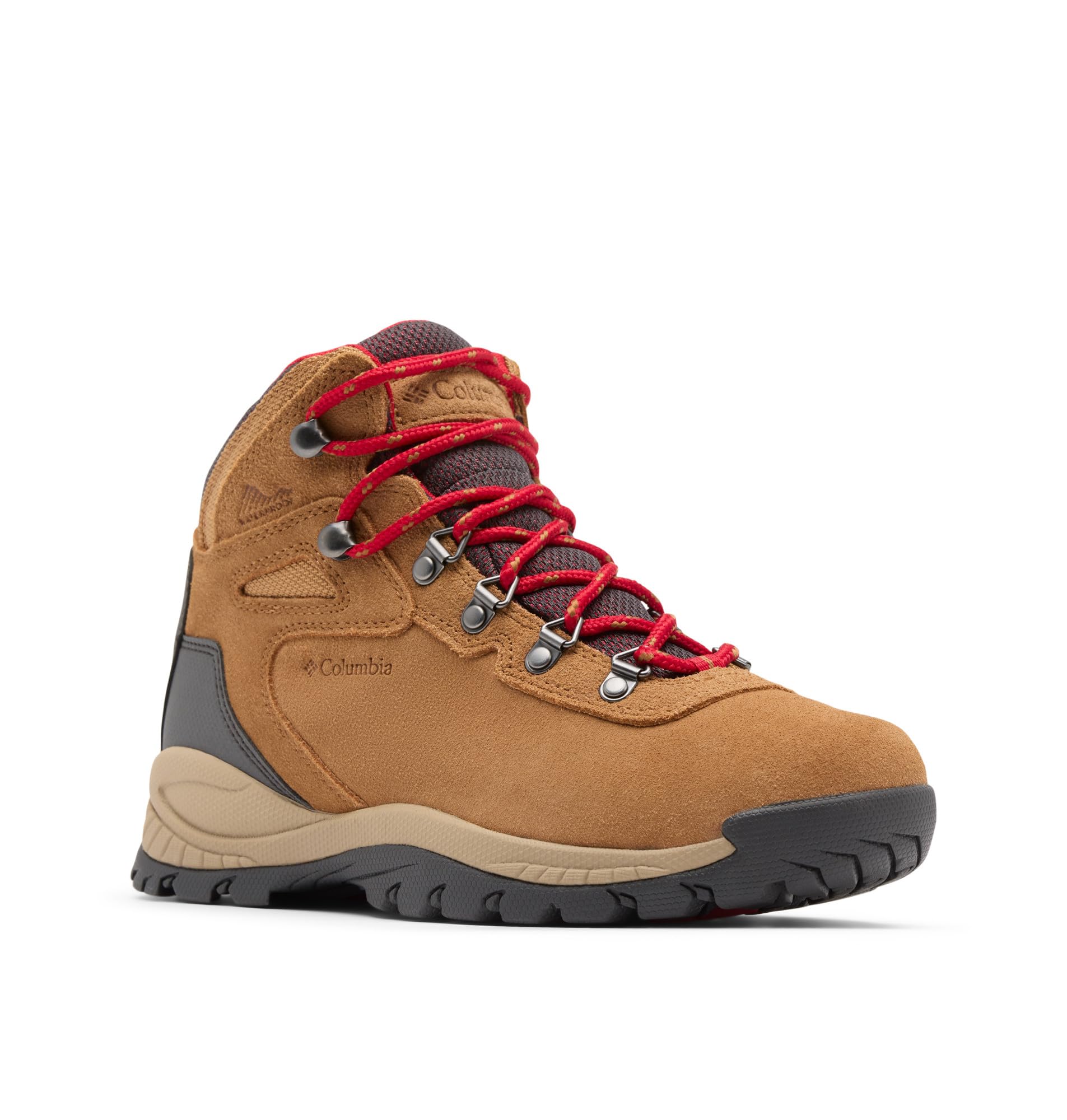
The usual women's-boot compromise is a narrower last and a different colorway. This one starts from a roomy shape instead, which is why it's the women's boot we recommend first: there's space across the ball of the foot and in the toe box, and a proper wide option for feet that need more, so thick socks and a sore joint don't become the story of the day. The pink laces are the only frivolous thing about it.

Support is where it beats expectations. The collar comes up high enough to hold the ankle and stays flexible enough that it doesn't feel like a brace, and the boot handles roots, rocks and long days without the clumping weight of a full leather boot. Water resistance is well covered too — rain, wet grass, snow and beach walks all stay on the outside — which is more than several boots here can claim.

Comfort isn't automatic, though. Most feet wear these all day happily, from the first hike, but the ankle collar can rub before it softens, and no amount of support makes up for a hot spot on a long descent. Give them a week of short walks before a big day. Sizing runs true for most, and if you're between widths, take the wide rather than a size up.

Pros

  • Wide width with real toe room
  • Ankle support without a stiff, bulky feel
  • Keeps feet dry in rain and snow
  • Good-looking enough for town

Cons

  • Ankle collar can rub before it softens
Our verdict

The women's boot we recommend first: a genuinely roomy last with a wide option, real ankle support, and waterproofing that copes with a wet week away.

Check Latest Price
4

Best Value

Columbia Transverse Hike

91 /100
Traveler Score Outstanding

Key details

Style
Hiking boot
Department
Men's
Waterproofing
Waterproof
Check Details on Amazon

Budget boots usually ask you to give something up. The Transverse gives up the least of any here: a waterproof membrane, a mid-height collar and a genuinely roomy toe box, at the bottom of this group's price range. It even looks the part, which is not a given at this end of the market.

Durability is what sold us. This has the strongest durability record of the budget boots in this group — the sole-and-seam failures that show up on cheaper pairs are largely absent, and one of these came back from a twelve-day backpacking trip still in one piece. For a first season of real hiking, or a boot that has to survive a working week and a weekend, that's the quality that matters most.

The cushioning is firm and the stock insole is thin, so you feel the ground through it, and a better insole is the first thing most people will add. That's a small fix and the only change the boot needs. What you're not getting at this end of the range is a plush ride or a soft lining; what you are getting is a waterproof, roomy boot that will still be a boot next season.

Pros

  • Waterproof membrane at a budget price
  • Extremely roomy toe box
  • Best durability record among the budget picks

Cons

  • Runs large for some feet
Our verdict

The cheapest boot here we would actually put on a trail: waterproof, roomy, and the most durable of the budget picks, as long as you size it right.

Check Latest Price
5

Best for New Hikers

NORTIV 8 Women's Waterproof

91 /100
Traveler Score Outstanding

Key details

Style
Trekking boot
Department
Women's
Waterproofing
Waterproof
Check Details on Amazon

This boot doesn't feel like a hiking boot. It feels like a sneaker with a taller collar — soft underfoot, no break-in, no blisters on the first walk — and for someone who hikes a few weekends a season, that softness is the point rather than a shortcut. It's the pair we suggest to women who want to try real trails without committing to a technical boot.

What we didn't expect is how much boot is underneath. The collar is sturdy at the ankle, the arch support is real enough that a full day on your feet doesn't leave you hobbling, and it handles uneven ground and shallow water without drama. Waterproofing holds as long as the water stays below the cuff — creek crossings that come over the top are where these get wet, and that's true of every mid boot here.

Fitting is the fussy part. These run narrow through the middle for a boot with this much padding, and going up a size doesn't fix a narrow last, so if your feet are wide the Columbia women's boot is the better answer. Traction is fine on dry trail and less convincing on wet roots and slick boardwalk, and the laces need a proper double knot to stay put.

Pros

  • Sneaker-soft from the first wear
  • Sturdy ankle and arch support
  • Holds together better than most budget boots

Cons

  • Narrow through the midfoot
  • Laces work loose
Our verdict

The pair we suggest to women who hike a few weekends a season: sneaker-soft, supportive at the ankle, and waterproof as long as the water stays below the cuff.

Check Latest Price
6

Winter Walks

Skechers Relment-Pelmo

89 /100
Traveler Score Excellent

Key details

Style
Hiking boot
Department
Men's
Dimensions And Weight
10 x 15 x 6 inches; 3.28 pounds
Check Details on Amazon

Skechers took its sneaker playbook and made a boot out of it, and we found the result the most immediately comfortable thing in this group: plush underfoot, warm, and easy to wear out of the box. There's no break-in period to speak of.

It's warm enough that people treat it as a winter boot, and water-resistant enough for slush, wet pavement and wet grass, though sustained rain is where it stops behaving like a waterproof boot. As a hiker it's honest about its limits: fine on a fire road, a groomed trail or a walk in the woods, and out of its depth on talus, where the soft sole gives you nothing to push against.

So the trade is longevity. This is a soft boot, and soft boots wear out — the sole and the seams are what go, and under daily work wear it can happen inside a season. If you want one pair for a decade of weekends, spend more. If you want a warm, comfortable boot by the back door for winter and easy trails, this does that job, and it feels better on day one than boots costing twice as much.

Pros

  • Plush, worn-in comfort from day one
  • Warm enough for winter wear
  • Water-resistant for slush and wet grass

Cons

  • Runs about a half size large
  • Soft sole and seams can fail within a season
Our verdict

A soft, warm, inexpensive boot for winter walks and easy trails; comfortable from the first minute, with a sole and seams that won't last a decade.

Check Latest Price
7

Cold-Weather Walking

ANJOUFEMME Women's Hiking Boot

89 /100
Traveler Score Excellent

Key details

Cut
Ankle
Department
Women's
Waterproofing
Waterproof
Check Details on Amazon

Warmth is why this boot is in the group. Most hiking boots are built to dump heat; this pair isn't. It's the one for a cold morning, a winter walk, or a shoulder-season trail where everything else leaves your toes numb.

It's roomy, which cuts both ways: there's space for thick socks and a wide forefoot, which is exactly what you want in cold weather, and if your feet are narrow they'll swim. The upside is comfort from the first step — soft, no bite at the ankle, easy to wear all day — and at this end of the price range it's the warmest competent boot here.

What it isn't is a technical boot. The sole is softer than the others, support sits closer to a walking shoe than a hiking boot, and the failure to expect is the sole separating from the upper. For easy to moderate trails, winter dog walks and a lot of standing, it's a good, inexpensive buy; for rocky ground and long days, the Columbia women's boot is the better spend.

Pros

  • Warm for cold-weather hiking
  • Roomy enough for thick socks
  • Comfortable from the first wear

Cons

  • Sole can separate from the upper
  • Soft sole gives limited support on rough ground
Our verdict

A warm, roomy, inexpensive women's boot for cold-weather walks and easy trails; not the one to take onto rocky or technical ground.

Check Latest Price

How We Put 12 Pairs of Hiking Boots Through Mud, Rock, and Rain

We started by pulling together more than 30 candidates from established hiking brands, then filtered by price, available sizes, and the specs that matter — lug depth, waterproof membranes, and weight per pair. That left us with 12 pairs, which we tested over eight months.

Each pair went on at least three day hikes — a rocky ridgeline, a muddy forest loop after rain, and a long weekend backpacking trip — plus a few neighborhood walks to see how they felt on pavement. We noted where blisters started to form, whether our heels lifted on steep climbs, and how much room our toes had on descents. To check water resistance, we stood in ankle-deep puddles and walked through shallow streams, then felt for dampness inside. For traction, we tested wet rock slabs and loose gravel, paying attention to slips and confidence on descents. We weighed each pair on a kitchen scale and wore them for full days to judge whether that weight translated to fatigue. After each outing, we inspected stitching, hardware, and sole wear — and we noted which boots we reached for again, and whether they still looked presentable after a few muddy hikes. Sizing was its own test: we compared each boot's fit to our regular street shoes and marked whether it ran true, narrow, or wide.

The boots that rose to the top had a few things in common: they felt broken-in on the first hike, kept our socks dry through stream crossings, and didn't leave us thinking about our feet at the end of the day. Some looked better than others, but appearance never outranked the fundamentals.

How to Choose Hiking Boots

Fit Comes Before Features

A boot can have the best outsole in the world and still ruin a trip if the last doesn't match your foot. Hiking boots don't stretch much, so shop for the foot you have on a Saturday afternoon, in the socks you'll hike in, and take the larger size if you're between two — a boot that's slightly long is survivable, while one that's short will take your toenails on a long descent.

Width is the other half of fit, and it's the half people skip. The Columbia women's boot here comes in a wide; the Merrell runs small enough that a half size up is routine. If you wear thick socks or have a wide forefoot, start with a wide width rather than sizing up in a standard one, because length won't fix a narrow last.

How Much Ankle You Actually Need

Mid-cut boots dominate this group, and the coverage they add is real but specific. A collar above the ankle helps most when you're carrying a load, crossing rough ground, or walking out tired at the end of a day. It doesn't make you immune to rolling an ankle, and a tall, soft collar can rub the tendon before it softens.

If your hiking is fast day trips on good trail, a low shoe is lighter and perfectly fine. Add height as the weight on your back or the roughness underfoot goes up — that's the trade, not a rule about experience.

Waterproofing: What the Label Covers

Almost every boot here has a waterproof membrane, and the label means less than it sounds. Membranes keep out rain, wet grass, mud and shallow puddles; they don't survive water coming over the tongue, and a mid boot is not a wader whatever the box promises.

The other cost is heat. The same layer that keeps water out holds sweat in on a warm climb, which is why some hikers save the waterproof pair for wet seasons and wear something breathable in July. Think about the weather you actually walk in before you pay for a membrane you don't want.

Outsole, Weight and the Trade You Feel

Lug depth gets the attention, but rubber compound is what keeps you upright. A boot that bites on dry granite can slide on wet rock — the Merrell is the clearest example here, sure-footed on dirt, sand and gravel and at its least convincing on algae-slick slab. If your trails run wet, walk descents slowly and treat wet roots as a warning rather than a challenge.

Weight is the other daily trade. A light boot is a pleasure on a day hike and less steady under a heavy pack, so match the boot to the ground you actually walk rather than the trip you keep meaning to take.

Where Boots Fail, and When to Retire Them

Soles come unglued and seams open long before the cushioning dies, and that's the usual ending for a hiking boot. Check the bond between sole and upper along both sides and at the flex point behind the toe before a long trip.

A boot whose outsole is separating no longer gives reliable traction and won't hold a waterproof line, however much tread is left. That's the point to replace it rather than push another season out of it.

Frequently Asked Questions

Final Verdict

One pair covers most of it. The Merrell Moab 3 Mid is comfortable from the first mile, planted under a load, and among the most durable boots in this group. Its weak spots are wet, slick rock and a waterproof line that stops at the tongue, and neither is enough to displace it as the default for three-season trail hiking.

Change the requirement and the answer changes. Women with wide feet get a better start in the Columbia Newton Ridge Amped, and anyone hiking on a tight budget gets waterproofing, a roomy toe box and the best durability at that end of the range in the Columbia Transverse.