Best Hiking Backpacks for Men of 2026

A hiking backpack is a simple idea with a complicated job: carry your gear without making you think about it. Compare a few and the tradeoffs show up fast — more capacity usually adds empty weight, more pockets can mean more places to lose your sunscreen, and a pack that fits one torso will rub another the wrong way. What a good one fixes is everything you notice at mile eight: weight that sits on your hips instead of your shoulders, a lid that opens without a wrestling match, and fabric that shrugs off being set down on granite.

Over the past eight months, my team and I have loaded a dozen men's hiking backpacks for day hikes, overnighters, and a few soggy weekends. The biggest lesson: liter count is a starting point, not a fit guide — measure your torso, then look at how the harness adjusts. The packs below are the ones that carried well, kept essentials reachable, and showed no worse for wear; you'll find the right match for your mileage and load.

1

Best Overall

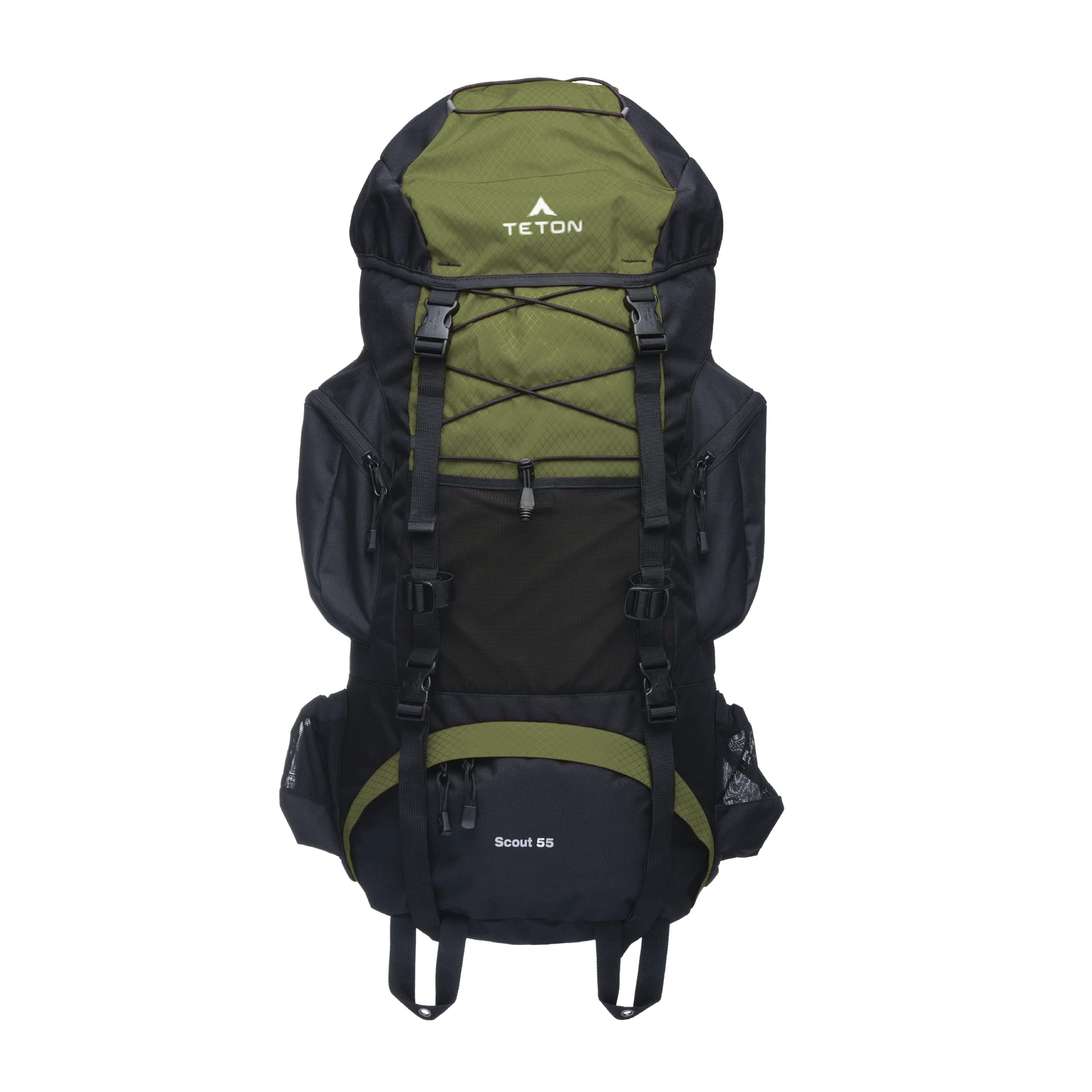
Teton Sports Scout 55L

95 /100
Traveler Score Outstanding

Key details

Weight
4.1 lb
Capacity
55 liters
Torso Fit
Multi-position adjustable
Rain Cover
Included
Check Details on Amazon

Fifty-five liters is the size we point most men toward, and this is the pack we point them at. The Explorer below carries a third more, but most hikers never fill it. The Scout is big enough for two or three nights of food and gear and still sensible on a long day hike with a half load, which is exactly the range one pack has to cover.

What earns it the top spot is the harness. The torso panel moves through several positions, so the pack fits a medium-to-tall frame without a sizing gamble, and the open-cell foam lumbar pad has molded channels that let air move where the pack sits. That difference shows up on a climb, when a sweaty lower back is the first thing that makes a pack annoying. Seven pockets, including a sleeping bag compartment at the base and a hydration sleeve with a hose port, mean gear goes in a place rather than a cavern.

The rain cover is the detail we appreciate most. It stows in its own pocket, so nobody is digging through a lid in a downpour, and it is included rather than sold as an add-on. The 600D diamond ripstop shell is heavier fabric than the daypacks here, which is what you want when a pack gets set down on granite. Teton backs it with a limited lifetime warranty.

Two practical notes. The bottle holders are cut close, so a wide 32-ounce bottle is a fight and a slim bottle or a bladder in the sleeve is easier. And the sleeping bag compartment is sized for a bag that packs down, so a bulky synthetic will need a compression sack or a strap to the outside. Neither is a reason to look elsewhere.

Pros

  • Adjustable torso fits a range of heights
  • Rain cover included and stowed in its own pocket
  • Seven pockets with a sleeping bag compartment
  • 600D ripstop shell resists abrasion

Cons

  • Bottle holders are tight for wide bottles
Our verdict

Our pick for most men: one pack that covers weekend overnights and long day hikes, with an adjustable torso and a rain cover in the box.
Check Latest Price
2

Best for Multi-Day Trips

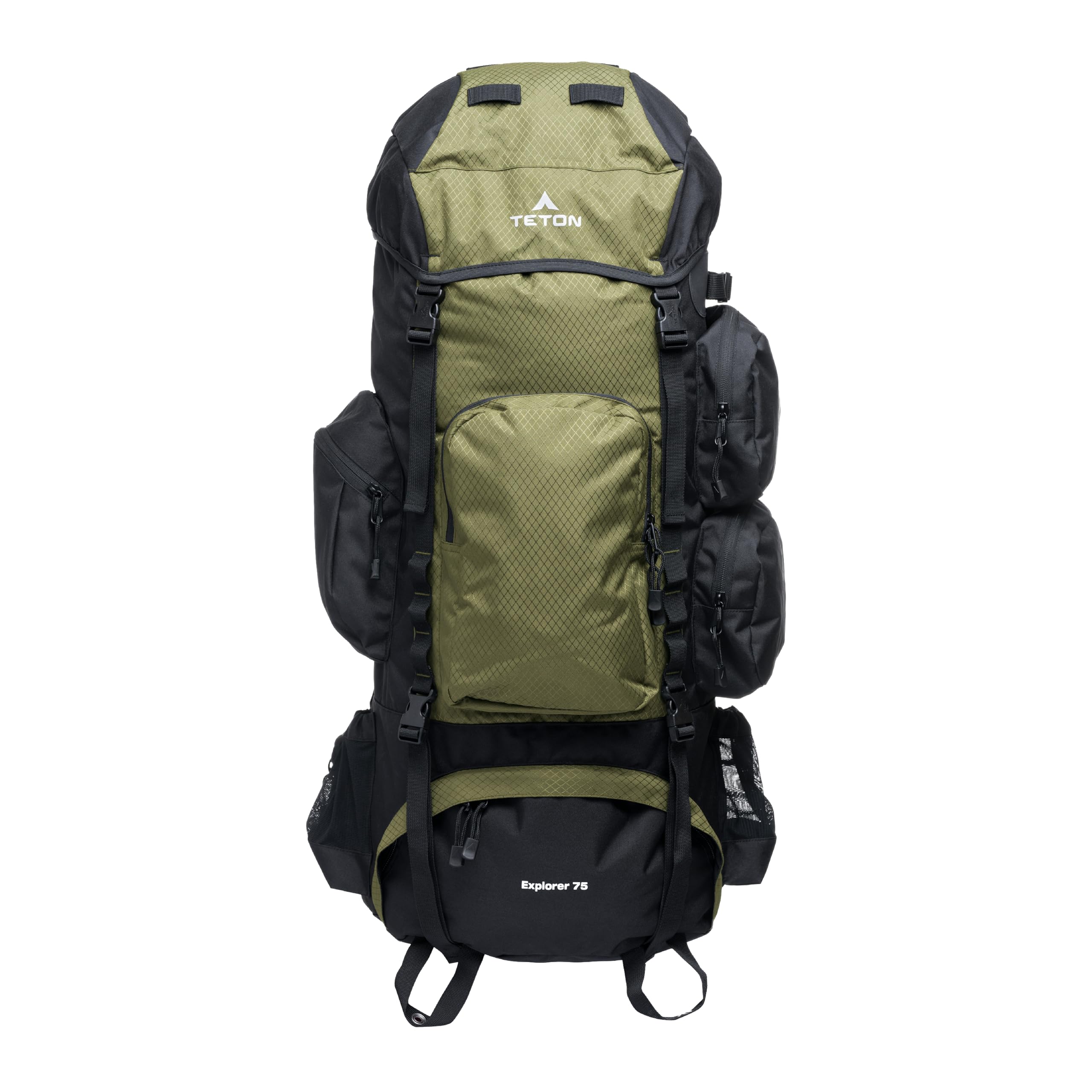
Teton Sports Explorer 75L

93 /100
Traveler Score Outstanding

Key details

Weight
5.5 lb
Pockets
6
Capacity
75 liters
Rain Cover
Included
Check Details on Amazon

Seventy-five liters is more pack than most men need, and that is the first thing to say about it. If your trips run a week, or your gear is bulky, a synthetic bag, a four-season tent, a bear can, the volume stops being excess and becomes the reason the trip works.

Under that load it is the most comfortable carrier in this group. Same multi-position torso adjustment as the Scout, same open-cell foam lumbar pad with molded ventilation channels, and a padded harness built for weight: settle the belt on your hips and the pack rides there instead of dragging at your shoulders. Six pockets and a sleeping bag compartment keep a week of gear sorted, and that compartment is cut for a mummy bag, so a rectangular bag will fight it.

The rain fly is where it comes up short. It is included and it works on the bare pack, but it will not stretch over a tent or a pad strapped to the outside, so either pack everything inside the bag or carry a larger cover. That is an easy fix once you know about it, and it is the only design decision here that genuinely annoys us.

Pros

  • Seventy-five liters swallows a week of gear
  • Padded harness and lumbar pad carry heavy loads
  • Rain fly included with the pack
  • Sleeping bag compartment cut for mummy bags

Cons

  • 5.5 pounds before you pack anything
Our verdict

Buy it only if your trips run a week or your gear is bulky; in exchange you get a harness that carries real weight and volume nothing else here matches.

Check Latest Price
3

Best Lightweight Daypack

SKYSPER Lantc 20L

93 /100
Traveler Score Outstanding

Key details

Weight
1.21 lb
Pockets
10
Capacity
20 liters
Max Load
15.4 lb
Check Details on Amazon

Five hundred and fifty grams, about the weight of a pint of water, is what this daypack adds to your back. That number is most of the argument: on a four-hour hike, a pack you forget you are wearing beats one with a better hip belt.

Ten pockets and seven compartments in a 20-liter body sounds like overkill until you are on a ridge with weather coming in. There is a place for the shell, the lunch, the phone and the keys, a chest strap that stops the load shifting when you scramble, and a grooved, meshed back panel that keeps sweat from pooling, which is the thing that makes a light pack feel cheap in summer. The 600D polyester and 210D nylon plaid shrug off brush, and the water-resistant finish beads a shower.

Trekking pole fixtures are the detail we did not expect at this weight; they hold a pair steady on the outside of the pack when the trail turns into a hands-free scramble. Understand what it is, though: the waist strap stabilizes rather than carries, so a day of water, food and layers is the sensible load, and a full bladder plus a camera bag is where it starts to pull. The anti-theft pocket against your back is a good place for a passport on travel days.

Pros

  • Light enough to forget at 550 grams
  • Ten pockets and seven compartments
  • Grooved, ventilated back panel
  • Trekking pole attachments included

Cons

  • Stated maximum load is 7 kg
  • Strap-anchor stitching can come apart
Our verdict

At 550 grams with ten pockets, this is the daypack we reach for when the forecast is good and the plan is four hours of fast walking.

Check Latest Price
4

Best With Hydration Bladder

N Nevo Rhino 18L

92 /100
Traveler Score Outstanding

Key details

Weight
1.74 lb
Bladder
3 liters
Capacity
18 liters
Bladder Compartment
Insulated
Check Details on Amazon

A three-liter bladder, hose and bite valve come in the box, and that is the reason to look at this one. Buying a reservoir separately means hoping it fits the sleeve you have; here the two are designed together, and the bladder slides into an insulated compartment rather than a plain nylon pocket.

Three liters is more water than most day hikes need, which is a feature rather than a problem: fill it two-thirds and you are carrying a couple of quarts without a bottle knocking against your hip. The insulated sleeve holds the temperature better than an uninsulated one over a long morning, and the ventilated mesh on the back panel and straps is the difference between a hot-weather pack you tolerate and one you like. The 18-liter body takes lunch, a shell and a first aid kit without turning into an unstructured duffel.

It carries like a daypack, because it is one: no frame, no load transfer, and a waist belt that keeps the pack steady on descents rather than lifting weight off your shoulders. That is the honest boundary, 18 liters and a bladder for a day out rather than an overnight pack. The ventilation and the water capacity are what put it ahead of the plainer daypacks here for summer hiking.

Pros

  • Three-liter bladder included with the pack
  • Insulated bladder compartment
  • Ventilated mesh on back and straps
  • Room for a day's food and layers in 18 liters

Cons

  • Bladder mouthpiece is the weak point
  • Bottom seam can split under a full load
Our verdict

If you prefer drinking hands-free on the move, the included 3-liter bladder and insulated sleeve make this the obvious daypack choice here.

Check Latest Price
5

Budget Weekends

Maelstrom 40L

91 /100
Traveler Score Outstanding

Key details

Weight
2.2 lb
Capacity
40 liters
Material
210D ripstop nylon
Rain Cover
Included
Check Details on Amazon

A rain cover in its own pocket and elastic loops that hold a pair of trekking poles are the two details we check for on any hiking pack, and this budget 40-liter has both.

Two point two pounds for 40 liters is a good ratio, and the 210D ripstop nylon carries a reflective print that catches a headlamp after dark. Ten pockets and seven zippered compartments is more organization than we expect at this level, with a main compartment that takes a weekend of clothes and lid and side pockets that keep small gear reachable without unpacking. Padded, breathable shoulder straps and a mesh back panel are what make a cheap pack bearable on day two.

Forty liters is a two-to-three-day pack if you pack light and a very generous weekend pack if you do not, and the harness is comfortable for either. It is when you start lashing a tent and a bear can to the outside that you notice what the modest price bought, since the seams and the 210D fabric are the first things to complain under that kind of load.

For fair-weather weekends, this is the least expensive sensible way into 40 liters, and the included rain cover saves you an errand before your first trip. Pack it for the trips it is built for and the value is hard to argue with.

Pros

  • Rain cover included in its own pocket
  • Trekking pole loops and reflective print
  • Ten pockets and seven zippered compartments
  • Light 2.2 pounds for 40 liters

Cons

  • Seams and fabric can give out under heavy loads
  • Zippers are stiff when new
Our verdict

The budget route into 40 liters: a rain cover, pole loops and plenty of pockets, as long as you keep the loads and the trips moderate.

Check Latest Price
6

Hike and Commute

Osprey Daylite Plus 20L

92 /100
Traveler Score Outstanding

Key details

Weight
1.3 lb
Capacity
20 liters
Material
Recycled 300D polyester
Laptop Sleeve
Up to 14 inches
Check Details on Amazon

There is a padded sleeve for a 14-inch laptop in this hiking pack, and it tells you exactly who Osprey built it for. That is not a flaw: it is a daypack that hikes, rather than a hiking pack that happens to have a laptop pocket, and for a lot of men that is the more useful object.

The carry is what makes it work on the trail. The AirScape backpanel sits close to your body and stays ventilated, a chest strap and hip belt steady the load on descents, the side mesh pockets take a 40-ounce bottle without stretching out of shape, and the front stretch pocket holds a rain shell where you can reach it without opening the main compartment. The fabric is bluesign-approved recycled 300D polyester with a DWR finish made without PFAS, which is the kind of detail that matters more each year.

The compromise is space. Twenty liters disappears fast once a laptop, a charger and a notebook are inside, and the organizer panel that makes it a good commuter is dead weight on a hike. As a single bag for a week where you hike some days and work others, it is the balance we like best here.

Pros

  • Ventilated AirScape backpanel stays comfortable
  • Chest strap and hip belt for stability
  • Recycled 300D polyester with PFAS-free DWR
  • Side pockets hold 40-ounce bottles

Cons

  • Laptop sleeve takes space from gear
  • Premium price for 20 liters
Our verdict

A well-built 20-liter pack that works as hard off the trail as on it, and the one we suggest to hikers who also commute with a laptop.

Check Latest Price
7

Summit Daypack

Osprey Daylite 13L

94 /100
Traveler Score Outstanding

Key details

Weight
1.1 lb
Capacity
13 liters
Warranty
All Mighty Guarantee
Device Sleeve
Up to 14 inches
Check Details on Amazon

Thirteen liters is the smallest pack here, and it earns its place by disappearing, into a duffel, under an airplane seat, or onto the back of a bigger Osprey as a summit pack.

At 1.1 pounds it is barely there, and the panel-loading main compartment opens wide enough to see everything at once, which the top-loading packs here cannot do. Dual compression straps keep a half-empty pack from sloshing, the mesh side pockets stretch around a big bottle, and there is a sleeve and hose port for a reservoir.

For a two-to-four-hour hike with water, a shell, lunch and a camera, this is the pack that comes off the shelf first, and the All Mighty Guarantee means you stop worrying about the abuse it takes. The top grab loop threads over a rolling suitcase handle, which is a small thing that makes it the bag you take when the big one stays in the hotel.

Pros

  • Barely noticeable at 1.1 pounds
  • Wide panel opening shows everything at once
  • Attaches to larger Osprey packs
  • All Mighty Guarantee coverage

Cons

  • Thin webbing hip belt
  • 13 liters fills fast with layers
Our verdict

The pack that lives in a duffel: 1.1 pounds, enough for a half-day hike, and backed by a guarantee that covers the abuse it takes.

Check Latest Price
8

Packable Travel Spare

WATERFLY 20L Packable

91 /100
Traveler Score Outstanding

Key details

Weight
10.2 oz
Pockets
4
Capacity
20 liters
Folded Size
8.7 x 6.3 inches
Check Details on Amazon

The fold is the whole idea: 20 liters of pack zips into its own pocket and comes out about the size of a paperback, so it lives in a duffel or a glovebox until the day you need it.

For a trailhead, four hours and back, that is enough pack. The recycled nylon shell is water resistant, four pockets include a removable zippered pouch and mesh side pockets that hold a full bottle, and 290 grams means it never shows up in your pack weight. The straps are wide enough to spread a light load, and there is a hidden pocket against the back panel for a card and a key.

It is not a load carrier and it does not pretend to be. Past a shell, lunch, two bottles and a camera, the whole thing starts to sag and the webbing cuts in. That is the deal with anything packable: you get stowability and you give up structure.

Where it is genuinely useful is as the second bag, the one that stays in the car for an unplanned stop or rides in a suitcase for a trip whose itinerary is not settled. Twenty liters that fold that small earn their place in luggage in a way a framed pack never will.

Pros

  • Folds into its own pocket
  • Only 290 grams packed
  • Water-resistant recycled nylon
  • Side pockets hold full water bottles

Cons

  • No frame or hip belt to take the weight
Our verdict

The spare pack we tuck into luggage: 20 liters that fold into a pouch and cover an unplanned hike without adding a pound to your bag.

Check Latest Price

How We Tested Men's Hiking Backpacks

We started by pulling together more than 40 men's hiking backpacks and filtering by capacity range, torso adjustability, pocket layout, and price, then cut the list to 12 packs that represented different approaches. For eight months, those 12 went on day hikes, overnighters, and a few rainy weekend trips. Before each outing, we loaded every pack with a standard kit — water, a shell, lunch, first-aid, and a stove and fuel for overnights — and weighed it before we set out.

Torso size mattered more than liter count. We adjusted each harness to the testers' frames, then noted where the hipbelt sat, whether the shoulder straps dug in on climbs, and if the load lifted off our hips on descents. Pocket access got checked on the move: could we reach a water bottle, snack, or phone without stopping? We counted usable pockets, felt how much a hipbelt pocket could hold, and tested the hydration sleeve with a full bladder.

After each trip, we inspected seams, zippers, and fabric for abrasion, and we deliberately set packs down on rock and dragged them through scrub. We also checked whether capacity claims held up — could the pack swallow a weekend load or a bear can without the lid floating? At the end, we compared construction and features against price to see which packs earned their keep. The ones that rose to the top stayed comfortable when loaded and showed no wear after months of use.

How to Choose Hiking Backpacks for Men

Match Liters to Nights Out

Volume is the first decision and the easiest to get wrong in both directions. Day hikes want 15 to 25 liters for water, lunch, a shell and a layer, which is where the SKYSPER Lantc and both Osprey Daylites sit. One or two nights wants 40 to 55 liters, the Teton Scout and Maelstrom territory, and a week with food and fuel wants 65 and up.

The trap is the sleeping bag compartment. Those spaces are cut for mummy bags, so a bulky rectangular synthetic bag will need a compression sack or a strap to the outside. Measure your bag before you commit to a volume.

The Hip Belt Should Carry the Weight

On any pack with a real suspension, the belt does the work and the shoulder straps mostly keep the load upright. Load a pack, cinch the belt onto your hip bones, then loosen the shoulders: if the weight settles onto your hips, the pack fits. If it still hangs off your shoulders, no amount of padding fixes it.

That is why torso adjustment earns its keep. The Teton packs move their torso panel through several positions, which is what lets one size work across a range of heights. Frameless daypacks do not transfer weight at all, so plan to carry less in them.

Empty Weight Versus Carrying Comfort

A 550-gram daypack and a 5.5-pound expedition pack are not competing on the same axis. Light packs are pleasant on a four-hour hike and miserable once you load them past what their suspension can handle; heavy packs cost you on the climb and pay you back when the load is a week of food.

Our rule is to choose the pack around the heaviest load you realistically carry, then take the lightest option that still has a frame or a padded belt for that weight. Buying light for a trip that needs structure is the more common mistake.

Fabric, Rain Covers, and Where Packs Fail

Fabric weight tells you what a pack is for. The 600D ripstop on the Teton packs is built to be set down on granite; the 210D nylon on the Maelstrom and the 300D recycled polyester on the Daylite Plus are lighter and perfectly adequate for trails and travel, as long as you are not dragging them through scree.

A rain cover is worth having if you hike in shoulder seasons, but note that covers are cut for the bare pack. The Explorer's fly will not stretch over a tent strapped outside, so pack bulky gear inside or carry a larger cover. When a budget pack does fail, it is usually at the strap anchors and seams rather than mid-panel, so check those joins before a long trip.

Daypack Hybrids and the Packable Spare

A laptop sleeve in a hiking pack is a compromise, not a flaw. The Daylite Plus carries a 14-inch laptop and still hikes well, but the sleeve takes space you would otherwise fill with a shell. Decide whether you want one bag for both jobs or two bags that each do one thing properly.

Packable packs are a separate category again. The WATERFLY folds to the size of a paperback and is genuinely useful as a spare, but 20 liters of folded nylon has no frame, no padding and no hip belt. Treat it as the bag that lives in your luggage, not the one you plan a trip around.

Frequently Asked Questions

Final Verdict

The Teton Sports Scout 55L is the pack we recommend to most men. Fifty-five liters covers a weekend and a long day hike, the torso panel adjusts to your height, and the rain cover is already in the box, which is more than most packs at this level offer.

If your trips run a week or your bag is bulky, step up to the Explorer 75L, which carries that much weight more comfortably than anything else here. And if you hike light and fast, the 550-gram SKYSPER Lantc is the daypack to take instead.