Best Earplugs for Side Sleepers of 2026

Most earplugs don't fail side sleepers at bedtime — they fail at 2 a.m., when the pillow presses the plug into your ear and a dull ache sets in. A pair that feels perfectly fine while you're flat on your back can turn into a bruise by morning, and out comes the plug, along with any hope of blocking the fan hum or the neighbor's truck. What you actually need is something that sits nearly flush with your ear canal, stays put when you roll over, and still goes quiet.

I sleep on my side and have spent years blaming everything but my earplugs for a bad night. Over the past four months, my team and I have slept in 14 pairs, and the pattern was consistent: the shape and softness of the tip mattered far more than the decibel rating printed on the box. Too stiff, too tacky, or too long, and a plug will wake you up faster than noise ever would. The ones that earned a spot on the nightstand all share a low profile and a seal that survives a roll onto either side.

1

Best Overall

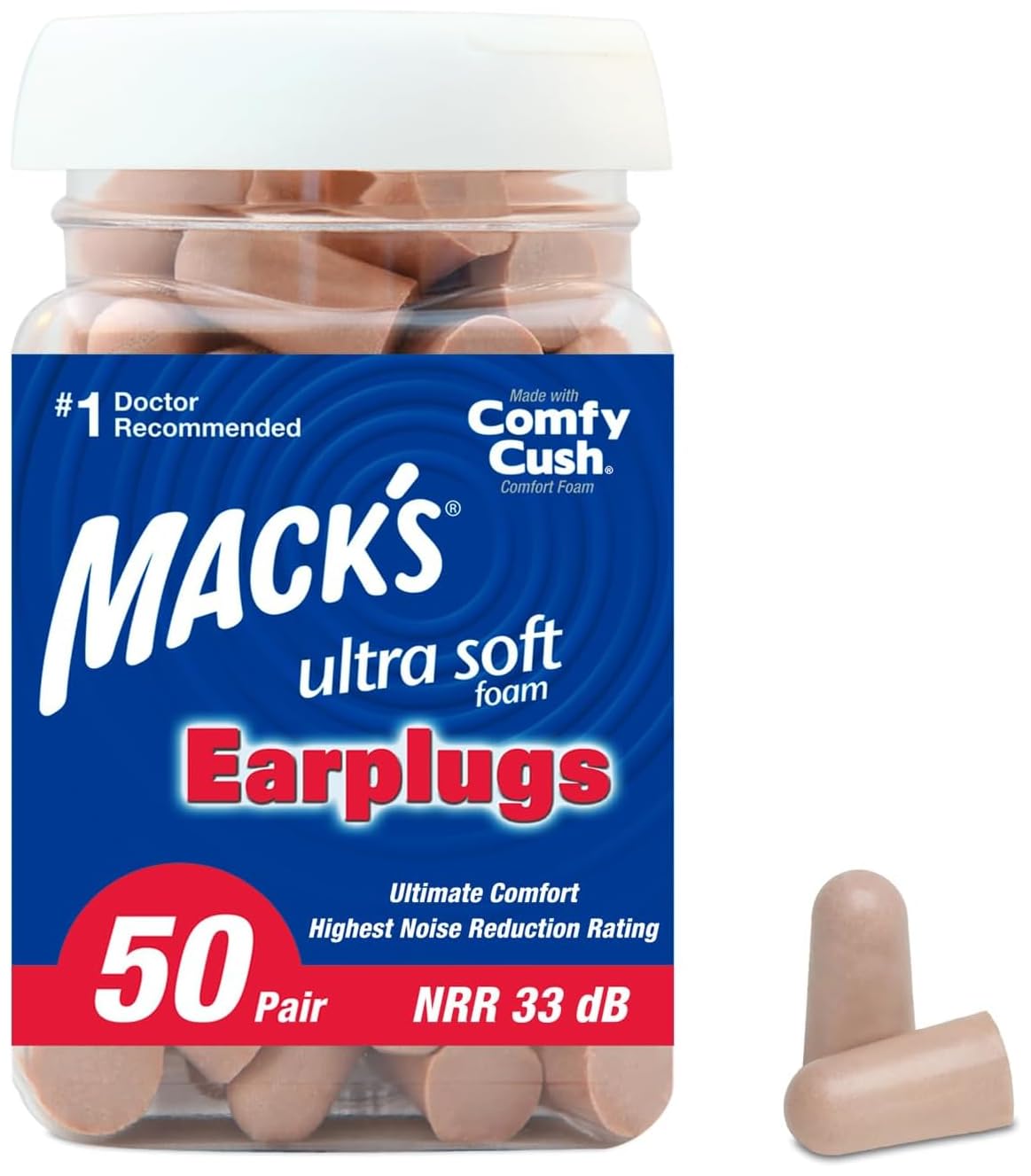
Mack's Ultra Soft Foam

91 /100
Traveler Score Outstanding

Key details

Quantity
50 pairs
Container
Flip-top jar
Foam Type
Low-pressure slow-release
Noise Reduction
NRR 33 dB
Check Details on Amazon

An NRR of 33 is as high as anything in this group, and Mack's gets there in foam that feels almost weightless between your fingers: low-pressure, slow to release, and soft enough that a night on your side does not leave the canal tender. That combination is the point. A plug your ear wants to push out stops blocking sound the moment your cheek hits the pillow, so soft foam earns the rating rather than just declaring it.

We settled on it as the default for a reason that has nothing to do with features. Fifty pairs in a flip-top jar means there is always one within reach, so nobody rations them or wears a pair three nights past usefulness. The lid opens one-handed in the dark, and a jar by the bed removes the small friction that otherwise has you digging through a drawer at midnight.

Where it gives ground is fit. Foam comes in one shape, and on a narrow canal the plug sits high, works loose as you roll, and takes the seal with it. If you already know that small plugs suit you better, start with something you shape yourself rather than hoping this one shrinks to order.

For most people, though, this is the whole purchase: a soft plug, the best blocking here, and a supply that lasts months. Keep the jar out of direct sun, replace a pair once it stops springing back, and a quiet night stays close to free.

Pros

  • Low-pressure foam that does not ache after hours
  • NRR 33, matching the highest here
  • Fifty pairs in a one-handed flip-top jar

Cons

  • Chemical smell when the jar is first opened
Our verdict

The pair we reach for on a normal night: low-pressure foam, an NRR of 33, and a jar of 50 so you never ration them.

Check Latest Price
2

Best Moldable Fit

Mack's Pillow Soft Silicone

88 /100
Traveler Score Excellent

Key details

Fit
Molded over the ear opening
Material
Silicone putty
Quantity
18 pairs
Waterproof
Yes
Check Details on Amazon

Every plug that sits inside the ear canal shares one weak point. Your cheek presses the pillow, the pillow presses the plug, and a soft canal wall gets nudged sideways all night. That is the pressure half of side sleeping, and it is separate from how well a plug blocks sound. It is why a pair can seal perfectly at bedtime and be half out by three.

Mack's answer is a putty rather than a plug. You warm one of the silicone pillows between your fingers, press it over the ear opening like a small disc, and let body heat finish the seal. Nothing goes deep, so nothing has to be held against the canal wall, and the fit is whatever you make it. The same material is waterproof, which is why swimmers buy it by the box.

We reach for it when the pillow is the problem more than the noise, when foam that seals fine on your back has wandered by morning. Shaping takes about ten seconds, and it is the most reliable thing here for genuinely small or awkwardly angled canals, because you are not choosing between three sizes and hoping.

Expect to replace them more often than foam. A disc that has stopped gripping is finished, and silicone picks up oils from your fingers, so that happens sooner than a foam pair wears out. Eighteen to a box sounds generous until you count the nights.

Pros

  • Sits outside the canal, so the pillow has nothing to press
  • Shapes to small or awkwardly angled canals
  • Body heat finishes the seal
  • Waterproof, so it works in the pool too

Cons

  • Tacky surface grabs hair and lint
Our verdict

For anyone woken by their own ear throbbing against the pillow, this putty is the fix: it sits flush and takes the shape of your ear.

Check Latest Price
3

Best Reusable

Loop Quiet 2

84 /100
Traveler Score Excellent

Key details

Case
Included
Ear Tips
XS, S, M, L
Reusable
Washable
Noise Reduction
24 dB SNR
Check Details on Amazon

Four sets of ear tips in the box, XS through L, is the reason this one works for side sleepers at all. Most earplug failures are sizing failures, and a silicone plug that seats properly in a small canal sits closer to the ear than a foam cylinder does. Loop's body is built low rather than proud, the medium tips come pre-installed, and swapping a size takes a second.

What you give up is silence. At 24 dB SNR you get a softened room rather than the near-quiet of a well-seated foam plug, so a neighbour's television fades but a snorer two feet away still gets through. If your problem is the building rather than the bed, that is plenty. If it is the bed, foam does more.

The other trade is upkeep. These get washed, dried, and returned to the case rather than thrown away, which is either the appeal or the chore depending on your patience at eleven at night. The spare tips are what we count as the real feature: a set can be refitted rather than replaced, which is more than any foam plug here can claim.

Pros

  • Four tip sizes, XS through L, in the box
  • Washable and reusable night after night
  • Carry case included

Cons

  • Premium price with less blocking than foam
  • Can feel uncomfortable on a long night
Our verdict

Worth the money if you want a washable plug with four tip sizes, though a foam pair still blocks more noise.

Check Latest Price
4

Best Budget Foam

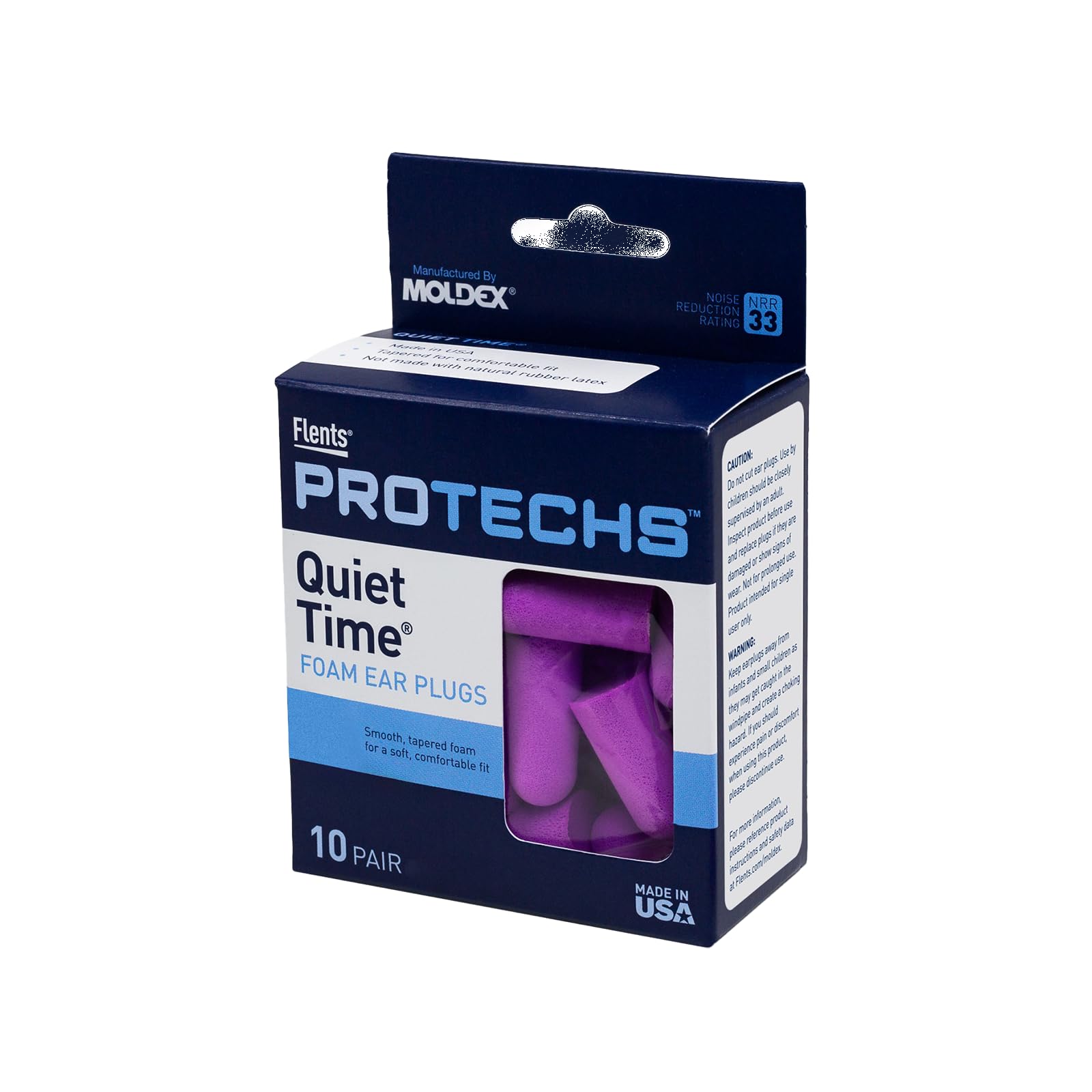
Flents Quiet Time Foam

89 /100
Traveler Score Excellent

Key details

Quantity
10 pairs
Foam Type
Slow-recovery
Noise Reduction
NRR 33 dB
Check Details on Amazon

An NRR of 33 in a slow-recovery foam that seals when you roll it thin, hold it, and let it expand: that is the whole proposition, and it is the same rating our top pick carries. No sizes to choose, no case. Just a small box of purple plugs doing the basic job at the lowest outlay here.

That small box is the point. Ten pairs is enough to find out whether expanding foam suits your ears, small enough to pack for a trip, and cheap enough that abandoning the experiment costs almost nothing. If you already know foam works for you, buy the fifty-pair jar and stop thinking about it.

Pros

  • NRR 33, level with our top pick
  • Ten pairs to test before committing
  • Slow-recovery foam that seals with a roll

Cons

  • Firmer than soft foam, and stiffens with use
Our verdict

A ten-pair box that answers the only question that matters first: whether expanding foam suits your ears at all.

Check Latest Price
5

Best for Small Ears

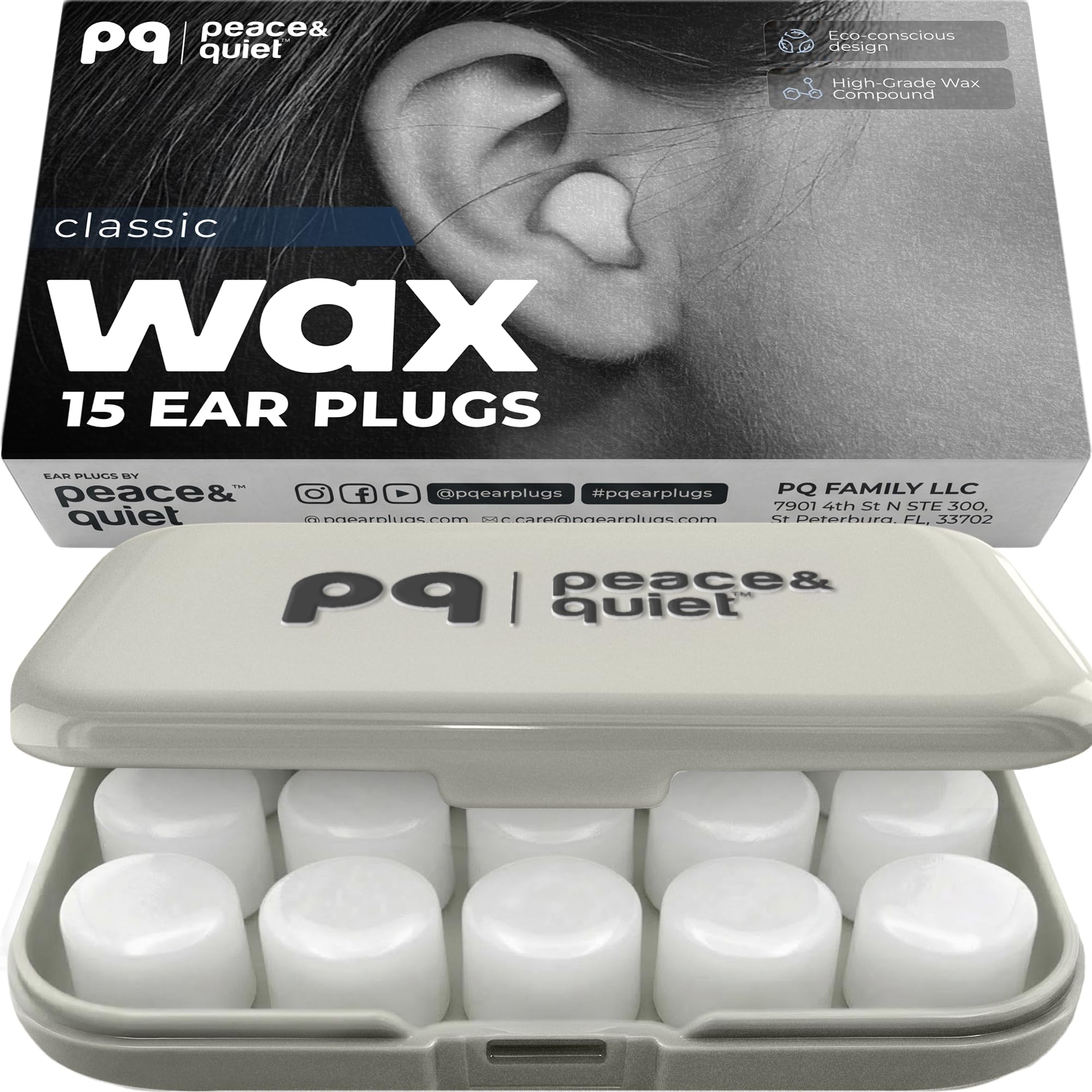
Peace&Quiet Wax Ear Plugs

88 /100
Traveler Score Excellent

Key details

Fit
Shaped by hand
Case
Included
Material
Moldable silicone wax
Quantity
15 pillows
Check Details on Amazon

If foam has never quite worked, too big, half out by morning, sore on the side you sleep on, the shape of your canal is probably the problem rather than the plug. Wax sidesteps the argument entirely. There is no size to get wrong, because you make the size with your fingers.

Fifteen pillows arrive in a small case, and each one splits in half, which is how the brand arrives at its 150-use figure. Warm a piece, press it over the ear opening, flatten the edges, and it sets into a low dome that barely clears the ear. Nothing projects into the pillow, which is the entire point.

The tackiness is the catch. Wax grabs loose hair and pillow lint, and a piece that has collected enough fluff stops sealing cleanly, so tie your hair back and keep the case shut. A cold room also firms the wax until your hands warm it, which makes it a poor choice for a bedside table beside an open window.

Where it earns its place is the narrow case it was built for: small canals, an ear set at an awkward angle, or a sleeper who rolls from side to back and over again. For those people we think it is the most comfortable thing here, and it is the only pick that gets better the more carefully you use it.

Pros

  • No size to get wrong
  • Sits flat against the ear
  • Each pillow splits in half
  • Small carry case included

Cons

  • You shape it fresh every night
  • Wears out faster than a foam pair
Our verdict

Our pick for genuinely small canals, because you decide the size when you shape the wax, and it lies flat against the ear.

Check Latest Price
6

Keeping a House Stocked

AZEN Bulk Foam Ear Plugs

89 /100
Traveler Score Excellent

Key details

Format
Disposable foam
Quantity
100 pairs
Noise Reduction
NRR 32 dB
Check Details on Amazon

A hundred pairs is a lot of earplugs, and for a household where they vanish, a snorer's partner, a shift worker, a guest room, the arithmetic is the appeal. The rating is NRR 32, a single decibel below the best here, and the blue foam is easy to spot in a drawer.

The thing to know before you buy is speed. This foam comes back fast, so you get one attempt: roll it thin, seat it, and hold. Hesitate and you are starting over with a plug that has already fattened. That is a technique problem rather than a fault, but it is the difference between these and the slow-release picks, and it is why this jar is not our default.

Where it wins is volume. This is the least expensive way here to keep a drawer, a glove box, and a travel bag stocked, and nothing about the plug asks for special handling beyond a quick roll. Leave a few pairs wherever you sleep badly and stop thinking about earplugs until next year.

Pros

  • A hundred pairs at the lowest cost per night here
  • NRR 32, close to the best in this group
  • Nothing to wash or maintain

Cons

  • Firmer against the canal than the softest foam
Our verdict

A hundred pairs for a household that burns through them, provided you can roll and seat fast, because this foam springs back quickly.

Check Latest Price
7

Travel and Repeat Use

ANBOW Silicone Ear Plugs

86 /100
Traveler Score Excellent

Key details

Material
Soft silicone
Quantity
3 pairs
Reusable
Washable
Check Details on Amazon

The part that decides whether a reusable silicone plug works on your side is the stem, the short neck between the tip and the outside world. It is what sits between your ear and the pillow, and it is what you feel first if the fit is wrong. On this pair the soft tip does the sealing, and the stem is the part to think about before you commit.

Three pairs come in the box, washable and reusable, with a softness closer to gel than to foam. Insertion is easy: pull the top of the ear up, twist the tip in, and it seats without the roll-and-hold that foam demands. Removal is just as quick, which matters when someone knocks or the phone goes at the wrong moment.

As a travel pair, we think it makes a lot of sense. Nothing to roll, nothing to throw away, and a set that can be rinsed in a hotel sink and be dry by bedtime. Three pairs also means one can live in a carry-on, one in a gym bag, and one in the drawer that never gets emptied.

Pros

  • Three washable pairs in one box
  • Seats without rolling or holding
  • Soft silicone with no canal pressure

Cons

  • Reduces noise rather than blocking it
Our verdict

A low-cost way to try reusable silicone: three washable pairs that seat easily and sit gently in the canal, with volume cut rather than silenced.

Check Latest Price

How We Tested 14 Pairs Over Four Months

To build the shortlist, we started with the earplugs that keep coming up in sleep and audiology forums, then filtered out anything with a stem that protrudes past the ear canal opening, since that's the part that digs into a pillow. From roughly 40 options we bought 14 pairs across foam, flanged silicone, and moldable putty, from budget multipacks to pairs around $30.

Each pair got at least five consecutive nights of real sleep, always starting on one side. Every morning we logged how many times we woke, whether a plug had fallen out, and whether we'd pulled one out in the night. Midweek we lay on each side for ten minutes on a firm pillow and a soft one, pressing a finger where the ear met the pillow to feel for hard edges or pinching.

Noise blocking was tested against real sound, not a lab tone: a partner ran a vacuum one room over, set a phone alarm, and started a shower while the sleeper stayed on their side with no white noise machine running. We also noted the character of the quiet. Foam flattened noise into a soft hiss, while some silicone pairs amplified our own breathing and heartbeat into a hollow thump that was worse than the original noise.

We also tracked fit after reinserting in total darkness, any tacky residue left on the ear or in hair by morning, how quickly foam picked up lint and went sticky, and how each pair held up after washing. Value got judged per night of use rather than sticker price, since a cheap pair that degrades in a week costs more than a durable one.

How to Choose Earplugs for Side Sleepers

Start With What Touches the Pillow

Two designs sit on either side of the pressure question. Foam and silicone tips go into the canal and leave a little material at the opening; putty and wax sit over the opening and stay nearly flush. Neither is automatically better, because a foam plug seated below the rim of your ear is as invisible to the pillow as wax is. The trap is the word low-profile on a listing, which usually describes the case or the plug's overall size rather than how far it travels into the canal. Look at the shape, not the adjective.

Foam, Putty, or Reusable Silicone

Foam gives the most noise reduction for the least money and the shortest life: it is disposable, it stiffens, and a pair loses its spring after a handful of nights. Moldable putty and wax trade some blocking for a fit you control, which is what makes them the answer for small or awkwardly angled canals and for anyone whose ear throbs against a pillow. Washable silicone sits between the two, with tip sizes that dial in fit but usually a lower rating than foam.

We put a big number lower on the list than most shoppers do. Pick the family that solves the way your current plugs fail, then compare ratings inside it.

Size and Seal Beat the Rating

The NRR on a box is measured in a lab with the plug inserted properly, and it is an average across frequencies rather than a guarantee. A 33 dB plug that leaks at the seal can block less than a 24 dB plug that does not. The tell is behaviour: something that works loose when you roll, or that you can feel pressing on the canal wall, is usually too big rather than too small. Sizing down, or switching to something you shape yourself, fixes more sleep than another decibel ever will.

What It Costs to Keep Wearing Them

The cheapest box is rarely the cheapest habit. Foam is disposable by design, so the real question is how many pairs a month you go through: a jar of 50 answers that for a year, while a ten-pair box is a trial. Wax and putty last until they stop gripping, and silicone lasts until you lose it, which makes a case worth more than it sounds. If you travel, count what you will pack; a jar stays home and a case goes in the bag.

Frequently Asked Questions

Final Verdict

Buy the jar of Mack's Ultra Soft and stop there. It pairs the highest noise reduction here with foam soft enough that lying on it does not hurt, and fifty pairs means you replace them when you should rather than when you run out.

If your pillow is what wakes you up, the Pillow Soft putty is the better buy: it sits flush, so there is nothing to press on. And if you want one set you wash instead of throw away, the Loop Quiet 2 earns its price, provided you accept less silence than foam gives.