Best Day Hiking Backpacks for Women of 2026

The wrong daypack doesn't announce itself at the trailhead; it shows up around mile three, when the shoulder straps start digging and the hipbelt is doing nothing but decorative work. A good women's day hiking backpack fixes that by putting the weight on your hips, keeping water and layers within reach, and staying put on steep descents. I've learned that women's-specific fit is not a marketing colorway—it's torso length, hipbelt shape, and strap length that actually adjust small enough without dangling.

Over the past six months, I've hiked with 12 daypacks on local trails—after-work loops, a rainy all-day ridge walk, and a steep climb with a loaded pack—and the differences came down to fit, pockets, and how the material held up. Capacity is personal—20 liters is fine for a solo summer hike, but if you're carrying layers for two or a bulky first-aid kit, you'll want more. The packs that earned a spot below are the ones that stayed comfortable when loaded, kept snacks and sunscreen reachable without stopping, and didn't feel flimsy after being set down on granite. Start with the fit, then worry about the liters.

1

Best Overall

SKYSPER 20L Hiking Daypack

93 /100
Traveler Score Outstanding

Key details

Pockets
10 pockets, 7 compartments
Capacity
20 liters
Empty Weight
1.1 lb
Stated Load Limit
15.4 lb
Check Details on Amazon

A solo day hike asks for about twenty liters: two liters of water, a rain shell, a warm layer, lunch, and the small stuff that fills the gaps. The SKYSPER takes that list with room to spare — we loaded it with a jacket, a lunch box and a pair of bottles and still had space in the main compartment — and it does it at 1.1 pounds. That balance of capacity and weight is the reason it comes first.

Organization is the second reason. Ten pockets across seven compartments sounds fussy until you're on a windy ridge hunting for a hat, and the split between the main bag, the front compartment and the small valuables pocket keeps a day's kit from turning into a jumble. The side bottle pockets are deep enough to swallow a one-liter bottle, and the anti-theft zip on the valuables pocket is a small thing we appreciated at a busy trailhead.

The harness suits a lighter frame. The shoulder straps are wide, the chest strap stays where you set it, so the pack sits still on a climb instead of sliding toward one shoulder, and the grooved back panel vents better than the smooth pads on most packs at this weight. The waist strap is webbing rather than a padded hip belt; it steadies the load instead of moving it onto your hips, which is the honest trade-off on something this light.

One check before you buy: at 16.9 inches tall it's a single unisex size, and a short torso can end up with the base riding low. Load it with the layers you actually hike in and see where the bottom edge lands against your hip bones — if it drops below them, this isn't the pack for your frame. Trekking pole attachments on the front round out a package that's hard to argue with.

Pros

  • 20 liters takes a full solo day kit
  • Chest and waist straps keep a light load steady
  • Ten pockets keep layers and lunch findable
  • 1.1 pounds with a ventilated back panel

Cons

  • Stitching at strap anchors is the wear point
Our verdict

It's the pack we hand to most women planning a day hike: 20 liters carries a full day kit at 1.1 pounds, and the harness holds it steady on a lighter frame.
Check Latest Price
2

Best Small Daypack

Osprey Daylite Backpack

94 /100
Traveler Score Outstanding

Key details

Capacity
13 liters
Warranty
All Mighty Guarantee
Empty Weight
1.1 lb
Hydration Sleeve
Reservoir or 14-inch tablet
Check Details on Amazon

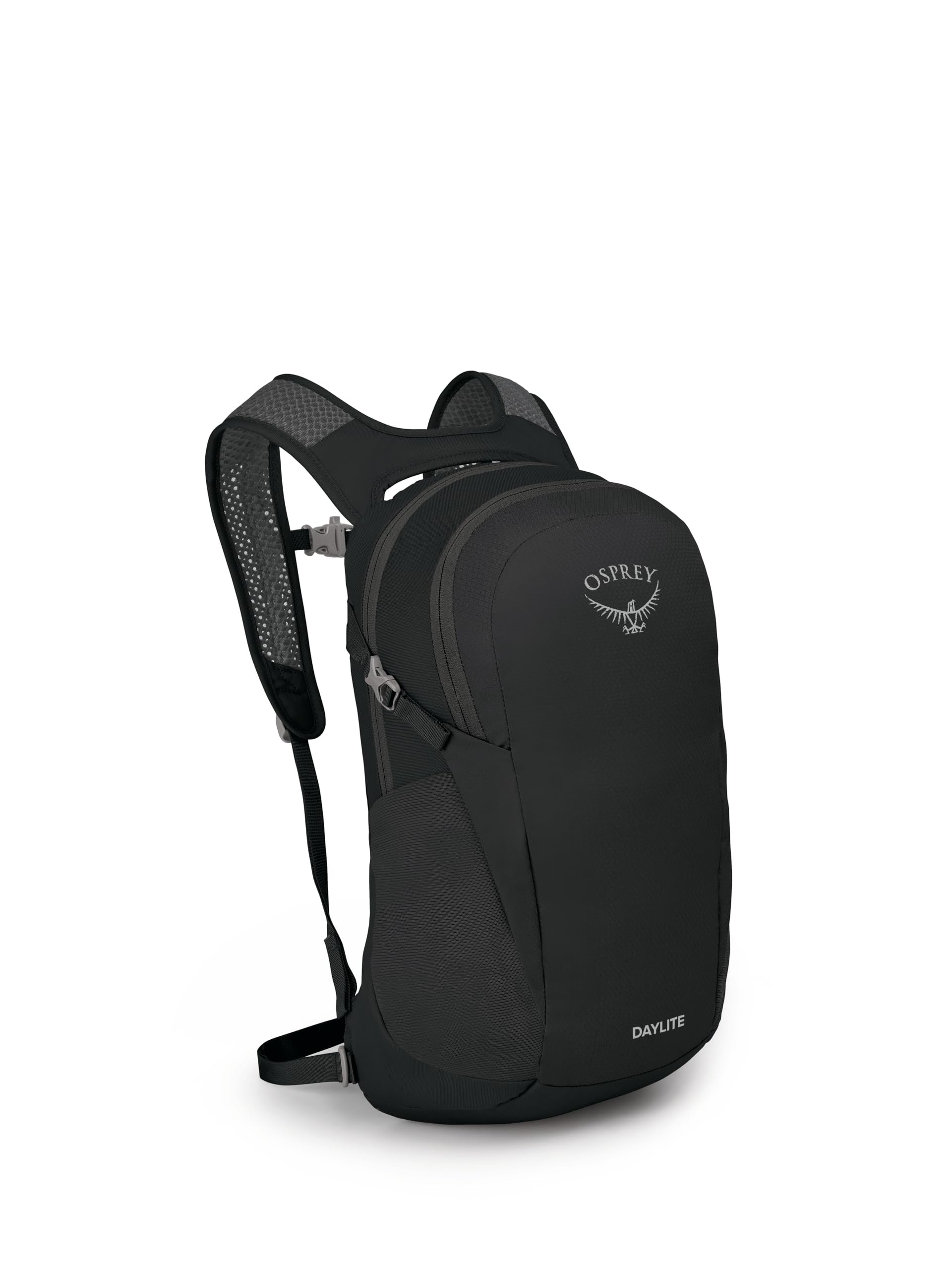
Thirteen liters is the whole argument with the Daylite. For a three-hour climb with a bladder, a shell and a sandwich it's exactly right; add a bulky fleece and a camera and you'll be negotiating with the zip. This is the pack for the hiker whose kit is already trimmed, and it rewards that discipline with a lower profile than anything else here.

The harness is why it stays in our rotation. The shoulder straps are contoured rather than straight, the back panel breathes on a climb, and at 1.1 pounds the pack disappears once it's on — we stopped noticing it by the first switchback. It's also the best-built pack in this set: the seams, the zips and the fabric all feel a step above the budget options, and Osprey's All Mighty Guarantee covers repairs.

The rest of the design is thoughtful in the way Osprey usually is. The panel loader opens wide enough to see the bottom of the bag, which sounds trivial until you've dug for a headlamp in a top-loader. The interior sleeve takes a hydration reservoir or a tablet of up to 14 inches, the two side pockets hold bottles you can reach without taking the pack off, and the compression straps stop a half-full pack sloshing on the descent.

It also clips onto several of Osprey's larger travel packs, a genuinely useful trick if one bag has to cover a trip and you want a daypack at the other end. Judged purely as a day hiker's pack, the only real question is volume: if you carry layers for two people, the SKYSPER's extra seven liters are worth more than the Daylite's better finish.

Pros

  • Wide panel opening makes packing easy
  • Sleeve takes a reservoir or a 14-inch tablet
  • Best build quality in this set
  • Clips onto Osprey travel packs

Cons

  • 13 liters fills fast with bulky layers
  • Costs the most here for the least capacity
Our verdict

Our pick if your kit is lean and you want the best-built small pack here, though anyone carrying layers for two should size up.

Check Latest Price
3

Best with Hydration Included

N NEVO RHINO 18L Hydration Pack

92 /100
Traveler Score Outstanding

Key details

Capacity
18 liters plus 3-liter bladder
Warranty
1 year
Empty Weight
1.7 lb
Bladder Sleeve
Insulated
Check Details on Amazon

The insulated bladder compartment is the feature that earns this pack its place. Fill the three-liter bladder, pack it against the lined back panel, and the water is still cold hours into a hot climb — the listing claims up to five hours, and we noticed the difference on a shadeless ridge. Most daypack sleeves are just a pocket against your back; this one is built to keep the water drinkable, and that's why it's the pack we take when the forecast is brutal.

There's a real pack around the water, too. Eighteen liters takes a shell, lunch, a first-aid kit and a layer, and the ventilated padding on the straps, waist belt and back panel keeps working when you're sweating. The fit range runs wider than most: the harness adjusts down to a short waist and out to a broader frame, so a short-waisted hiker and a taller one can both wear it comfortably — not something every unisex pack here manages.

The cost is weight before you fill it. At 1.7 pounds empty, plus the bladder, it's a heavier carry than the packable options, and it doesn't fold into anything. Check the base seam and the mouthpiece when it arrives and give the bladder a fill test at the sink before you trust it on the trail; those are the two parts that decide whether a bundled hydration setup works out for you.

Pros

  • Insulated sleeve keeps water cold
  • Three-liter bladder included
  • Adjusts to short waists and broad frames
  • Ventilated padding on straps and back

Cons

  • 1.7 pounds empty before you add water
  • Base seam and mouthpiece are the parts to check
Our verdict

We reach for this one when we want three liters of cold water hands-free, and the harness adjusts down to a short waist.

Check Latest Price
4

Best Packable

WATERFLY 20L Packable Backpack

91 /100
Traveler Score Outstanding

Key details

Weight
10.2 oz
Pockets
4
Capacity
20 liters
Folded Size
8.7 x 6.3 inches
Check Details on Amazon

Folded, the WATERFLY is about the size of a paperback — 8.7 by 6.3 inches — which is the whole reason to own one. It lives in a suitcase or a glovebox, and then it opens into a 20-liter daypack at the trailhead, so you get a hiking pack at your destination without giving up luggage space getting there.

Opened up, it's a better hiking pack than a foldable has any right to be. The shoulder straps are wider than most packables, the side mesh pockets grip a one-liter bottle, and there are enough compartments — a main bag, two front pockets and a removable zip pouch — that a day's kit stays sorted. We treat it as a travel pack that handles short hikes, and that framing is the honest one: it's happiest with a shell, lunch and a couple of bottles, and it stops being comfortable once you push past that.

Two things follow from how it's built. The fabric is water-resistant rather than waterproof, which is enough for a drizzle and not for a downpour. What it offers instead is a fit that suits a smaller frame better than the other 20-liter packs here — the sort of thing you only learn by wearing it with a load, and the reason it's the packable we hand to hikers who are built small.

Pros

  • Folds to paperback size for travel
  • 20 liters and four pockets when open
  • Side pockets grip one-liter bottles
  • Good proportions for petite frames

Cons

  • Unpadded straps limit the load
  • Water-resistant only, not waterproof
Our verdict

We keep one folded in a suitcase: it handles a short hike well and takes up almost no room when it doesn't.

Check Latest Price
5

Tight Budgets

sunhiker 20L Hiking Backpack

91 /100
Traveler Score Outstanding

Key details

Straps
Chest and waist
Weight
12.3 oz
Dimensions
15.8 x 9.4 x 5.9 inches
Compartments
3 plus 2 mesh pockets
Check Details on Amazon

The sunhiker is the least expensive way onto this list to get an actual hiking daypack rather than a stuff sack with straps. Twelve ounces, a waterproof-coated nylon shell, three compartments plus two mesh side pockets, chest and waist straps, and a ventilated back panel — the feature list reads like a more expensive pack.

In use it's a good organizer. We loaded it with a jacket, lunch and two bottles and the front compartments took the rest without crowding the main bag. The main compartment has a padded sleeve that takes a small laptop or a bladder, the side pockets hold bottles upright, and the small stuff stops migrating to the bottom. The chest and waist straps are both present, which isn't a given at this end of the range, and the mesh padding on the back is genuinely breathable on a warm climb.

Two things to know. The waist belt runs short: if you're used to snugging a hip belt down over a shell, this one may not close comfortably, and that's the fit risk on a curvier or larger frame. The pack also sits on the small side of its stated capacity once bulky layers go in, so it's a warm-weather daypack more than a winter one.

Neither of those undoes the value. As a light-load pack for a two- or three-hour hike, a theme-park day or a travel day pack, it does the job, and the price means leaving one in the car isn't painful. Try the belt on the day it arrives: if it closes over your layers, you've got a bargain.

Pros

  • Cheapest genuine daypack in this set
  • 12.3 ounces with a breathable back panel
  • Three compartments plus two bottle pockets
  • Chest and waist straps included

Cons

  • Waist belt runs short for larger frames
  • Strap stitching is the weak point
Our verdict

We think it's the best value here, as long as the waist belt fits and your days are short and light.

Check Latest Price
6

Ultralight Spare

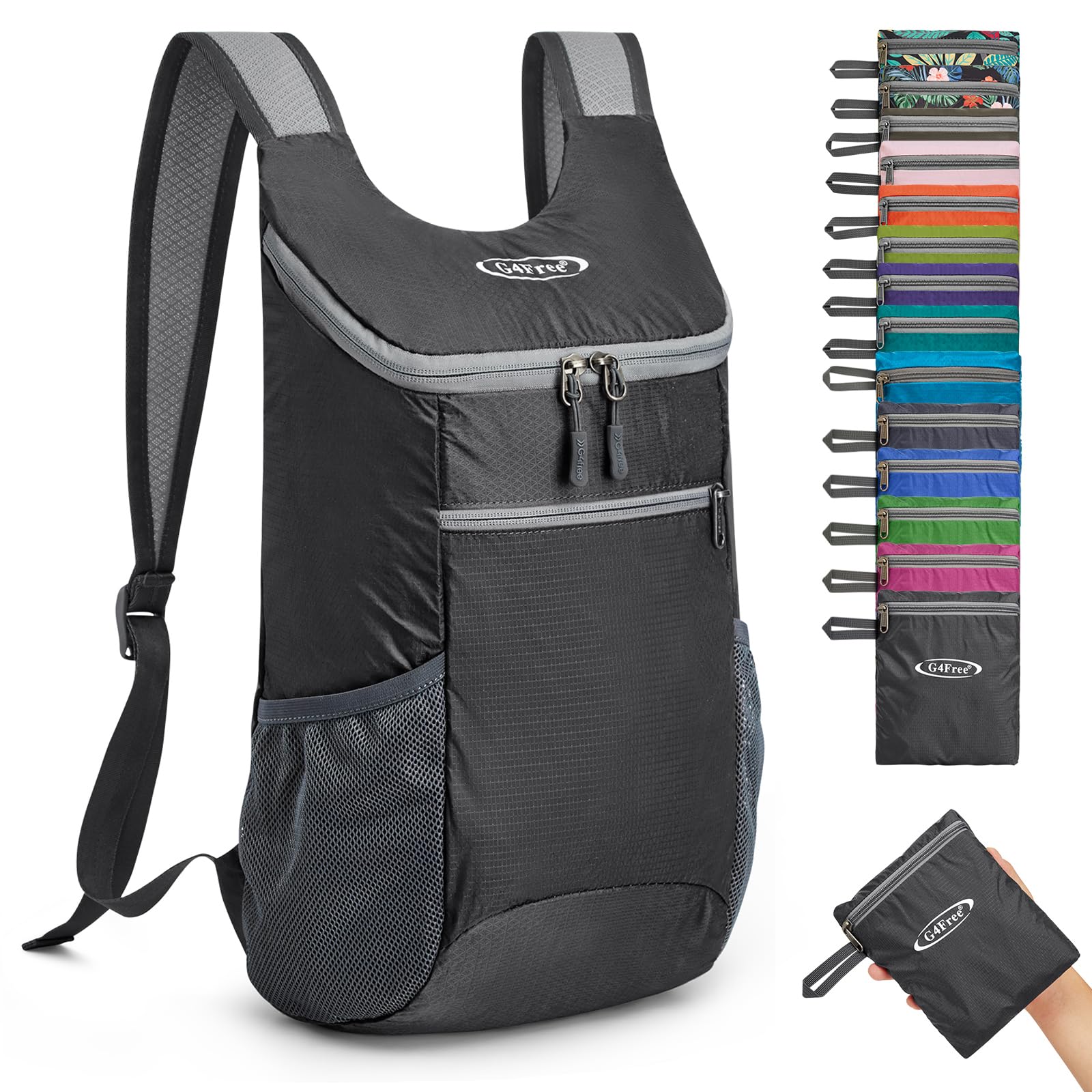
G4Free 10L Packable Backpack

91 /100
Traveler Score Outstanding

Key details

Fabric
Water-resistant polyamide
Weight
4.6 oz
Pockets
2 zip, 2 mesh
Packed Size
Folds into own pouch
Check Details on Amazon

At 4.6 ounces, the G4Free weighs less than the bottle you'll put in it. That number is the entire pitch: a 10-liter pack that folds into its own pouch, lives inside a bigger bag, and comes out for a summit push, a travel day or an extra pair of hands.

Ten liters holds a shell, lunch and a bottle, not a full day's kit, and the two side pockets are snug enough that a wide-mouth one-liter bottle is a squeeze. Inside there are two zippered compartments and no internal organization, so small items migrate; a stuff sack for the little things solves it. The zips run smooth and the polyamide fabric shrugs off a passing shower.

Where the weight savings show is under load: six or seven pounds rides fine, ten doesn't, and rocky ground is not its friend. We keep ours as a spare — it earns its place in a suitcase and on short, light hikes, and it isn't trying to be the only pack you own.

Pros

  • 4.6 ounces and folds into its own pouch
  • 10 liters for a shell, lunch and bottle
  • Water-resistant fabric and smooth zips

Cons

  • Unpadded webbing straps
  • Thin fabric, no internal organization
Our verdict

We treat this as a packable backup, not a main daypack: it's the lightest spare here and it disappears into a suitcase.

Check Latest Price
7

Group Gear

Maelstrom 40L Hiking Backpack

91 /100
Traveler Score Outstanding

Key details

Weight
2.2 lb
Capacity
40 liters
Rain Cover
Included
Compartments
7 zippered
Check Details on Amazon

Forty liters is more pack than a day hike needs, and that's the point. This is the one for the hike where you're carrying for someone else — a toddler's snacks and spare layers, a partner's water, the group first-aid kit — or for a hut trip where the day's gear is genuinely bulky. It's the biggest pack here by a wide margin.

For that job it's well equipped. What we didn't expect at this end of the range is how organized it is: seven zippered compartments and ten pockets give everything a home, the padded back and shoulder straps handle a heavier load than the ultralight packs here, and the rain cover lives in its own pocket so a shower doesn't end the day. Reflective printing is a small plus for early starts and late finishes, and the trekking pole holders work the way they should.

The catch is that it doesn't shrink to a small day. It's tall and it isn't light, so on a short back it's a lot of pack, and the fit is the thing to test with weight in it rather than empty. It's also a lightweight pack rather than a load hauler: if your day hikes regularly mean thirty pounds, you want a frame and a real hip belt, not this.

Pros

  • 40 liters for group gear or winter layers
  • Rain cover included
  • Ten pockets and seven zippered compartments
  • Padded harness handles weight

Cons

  • Tall and bulky on a short back
  • Not built for very heavy loads
Our verdict

Ours goes in the car when we're carrying everyone's layers; it's far more pack than a solo day hike needs.

Check Latest Price

How We Tested Women's Day Hiking Backpacks

We started by pulling together 40 women's daypacks from brands we trust, then filtered by torso range, hipbelt design, pocket layout, price, and availability. That left 12 packs across different capacities, from minimalist 15-liter models to weekend-ready 30-liter options. For six months, I wore each one on the same rotation: after-work loops, a rainy all-day ridge hike, and a steep local climb with a 15-pound load.

For fit, I loaded each pack with a water bladder, lunch, shell, and first-aid kit, then adjusted torso length, shoulder straps, and hipbelt. I walked a quarter-mile on pavement and a half-mile climb, noting whether the hipbelt carried weight or the shoulders did, and whether strap ends cinched short enough for a 5-foot-2 tester without loops swinging at my sides. I also checked whether the pack slumped when set down half-full and whether the fabric felt papery or scuffed when brushed against granite and branches.

Pockets got a real-world test: I packed for a full day—two liters of water, a rain shell, lunch, phone, keys, sunscreen, and a small first-aid kit—and noted what I could reach without taking the pack off. Hipbelt pockets had to fit a phone or a handful of snacks; side pockets had to hold a bottle one-handed. On descents I paid attention to sway and whether the load shifted, and after each hike I checked seams, zippers, and strap stitching for wear.

How to Choose Day Hiking Backpacks for Women

Match the Volume to the Load

Ten to fifteen liters covers a shell, lunch, a bottle and a phone for a fast half day. Eighteen to twenty-five is the sweet spot for a solo day hike with layers, water and food, which is where the SKYSPER's 20 liters sits. Thirty liters and up is for carrying for other people, winter layers or a hut trip; the Maelstrom's 40 liters is a family pack, not a solo one.

The trap is that capacity figures assume compact gear. A bulky fleece can eat a third of a 13-liter pack, which is why the Daylite rewards a trimmed kit and punishes a just-in-case one.

Fit Comes Down to the Harness

Women's-specific packs exist for a reason: shorter torso length, narrower shoulder straps, a hip belt shaped for wider hips. Plenty of unisex daypacks adjust far enough, though. What matters is whether the sternum strap sits between your collarbone and armpit without strangling you, whether the hip belt closes over a shell with room to spare, and whether the base of the pack lands at your hip bones rather than below them.

The trap here is trying a pack on in a T-shirt. A belt that just meets in July won't close over a waterproof and a fleece in October, and short waist belts are the most common fit complaint on budget packs: the sunhiker's runs short, while the N NEVO RHINO adjusts down to a short waist.

Bottles or a Bladder

Bottles are simpler: two one-liter bottles in side pockets you can reach without unshouldering the pack, and you can see how much you have left. A bladder is better on steep, sustained climbs where stopping to drink is a nuisance, and it puts the weight high and centered against your back.

Bladders bring maintenance. Rinse and dry the reservoir and hose after every trip, and watch the bite valve and hose connection, which is where leaks start. If you want the water handled for you, the N NEVO RHINO bundles a three-liter bladder with an insulated sleeve.

Weight, Structure and Packability

A four-ounce packable and a two-pound daypack are different tools. Packables fold into a pouch and disappear into a suitcase, and they carry a light kit fine: shell, lunch, a couple of bottles. Unpadded straps and thin fabric stop being comfortable somewhere around ten pounds.

Structured packs spend their weight on padded straps, a ventilated back panel and a hip belt that takes load off your shoulders, which is what you want if you're carrying water for a full day. Buy for the heaviest load you realistically carry, then subtract.

Weather Protection and Wear

Water-resistant fabric and zippers handle a drizzle; sustained rain needs a rain cover or a dry bag for your phone and keys. Only the Maelstrom includes a cover here, so budget for one if you hike in wet country.

Wear is the other long-term question. Stitching at the strap anchors is where budget packs fail first, followed by zipper pulls, so look at the bar-tacks where the straps meet the body and don't load a lightweight pack past its stated limit.

Frequently Asked Questions

Final Verdict

Start with the SKYSPER 20L. It carries a full solo day kit, the chest and waist straps keep it steady on a lighter frame, and it costs less than the Osprey while holding seven liters more.

If you want the water sorted, three liters hands-free and still cold at lunch, the N NEVO RHINO is the better buy, and it's the pack here that adjusts furthest down for a short waist. Pack light and want something that will outlast the rest? The Osprey Daylite. Carrying for a child or a partner? Go straight to the Maelstrom.