Best Camping Backpacks of 2026

A camping backpack has to solve two problems that pull against each other: it needs to swallow a weekend's worth of gear, and it has to feel reasonable on your shoulders at mile eight. Most packs lean one way — cavernous but sloppy, or beautifully fitted with no room for a stove. The best ones find the middle, and it shows up in small places: a lid pocket you can reach without shrugging the pack off, a hipbelt that actually takes the weight, zippers that don't quit after three seasons. Get that right and the pack disappears.

I've carried enough overloaded packs up muddy trails to have opinions. Over the past eight months my team and I have loaded, adjusted, and worn 12 of them on real trips, handing each one to friends with different torso lengths to see where it pinched. What separated the keepers was rarely the headline spec — capacity on paper is cheap; a pack that still feels right at the end of a long day isn't. The ones worth your money are below.

1

Best Overall

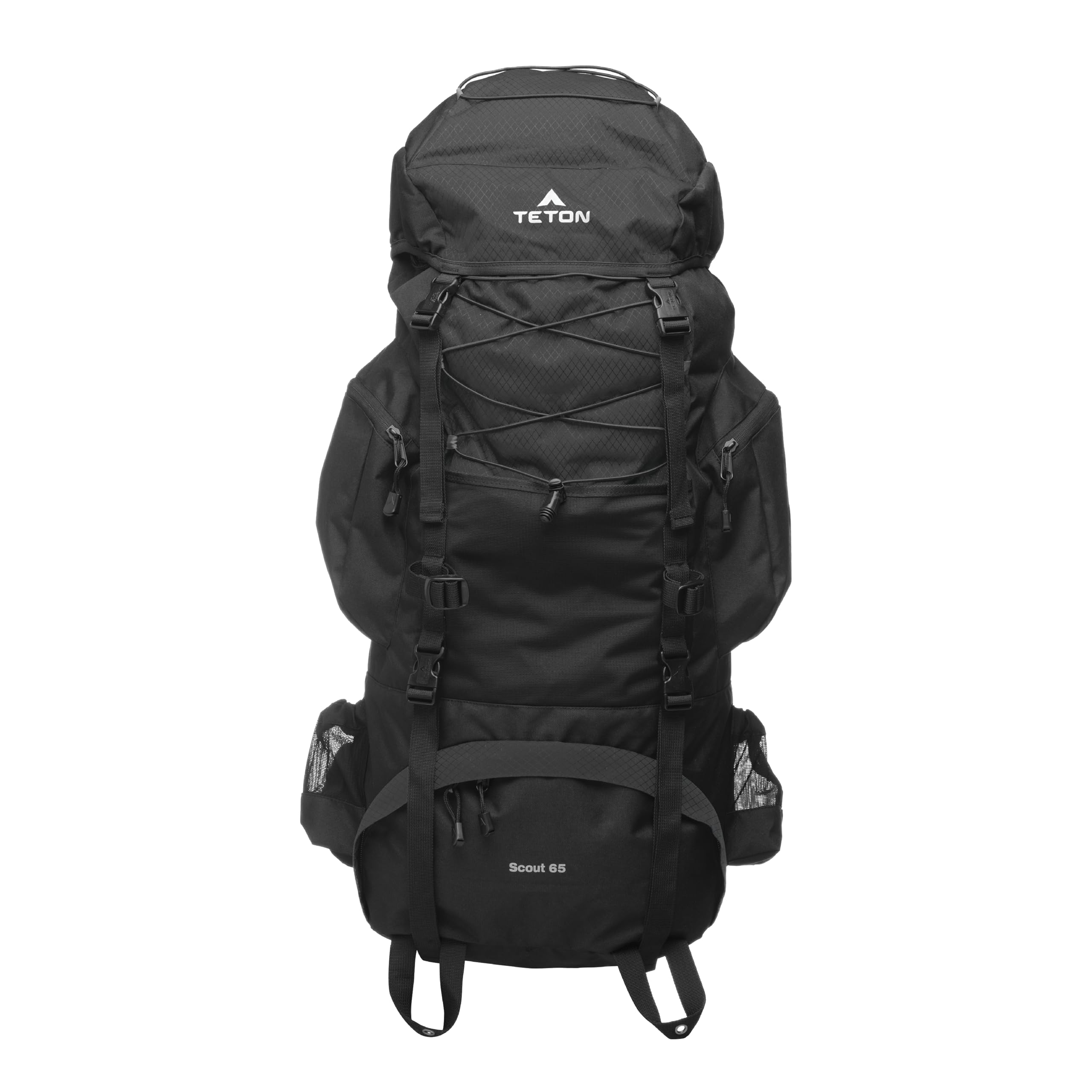
Teton Scout 65L

95 /100
Traveler Score Outstanding

Key details

Frame
Internal frame
Capacity
65 liters
Rain Cover
Included
Item Weight
4.5 lb
Check Details on Amazon

Sixty-five liters is the number that settles most camping trips. It covers a tent, a sleeping bag, a pad, a stove and three days of food without a second bag, and it's the size we point people toward when the plan runs from Friday night to Sunday afternoon. The Scout is the pack we hand over first, and it handles that job better than anything else on this list.

What earns it the top spot is where the money went: into the carry. The torso panel slides through a multi-position range, so the hip belt comes down onto your hip bones even if you have a short back, and the open-cell foam lumbar pad with its molded channels keeps air moving on a climb. We loaded ours with a full weekend's kit, and on the descent the weight stayed on our hips instead of hanging off our shoulders.

The sleeping-bag compartment is the feature people underestimate at this size. Unclip the divider and a bag drops to the bottom where its weight belongs, separate from everything you need during the day. There's a hydration sleeve with a hose port, multi-directional compression straps that pull a part-full load tight, and a rain cover kept in its own pocket rather than loose in the lid.

A few details are worth planning around. The bottle pockets are cut for slim bottles, so a wide-mouth one is a fight, and the sleeping-bag compartment suits a mummy bag rather than a bulky rectangular one; if that's what you own, use the main compartment and let the compression straps do the work. Under a genuinely heavy load the straps creep and want re-tightening after the first mile, which is a two-second stop. The lifetime warranty is the other reason we don't hesitate on this one.

Pros

  • 65 liters covers a three-day trip
  • Adjustable torso fits short and tall backs
  • Sleeping bag compartment plus included rain cover
  • Covered by a lifetime warranty

Cons

  • Bottle pockets fit slim bottles only
  • Sleeping bag compartment suits mummy bags
Our verdict

This is the pack we recommend to most camping shoppers: 65 liters, a torso fit that works on short and tall backs, and load transfer that keeps a weekend of gear off your shoulders.
Check Latest Price
2

Best for Long Trips

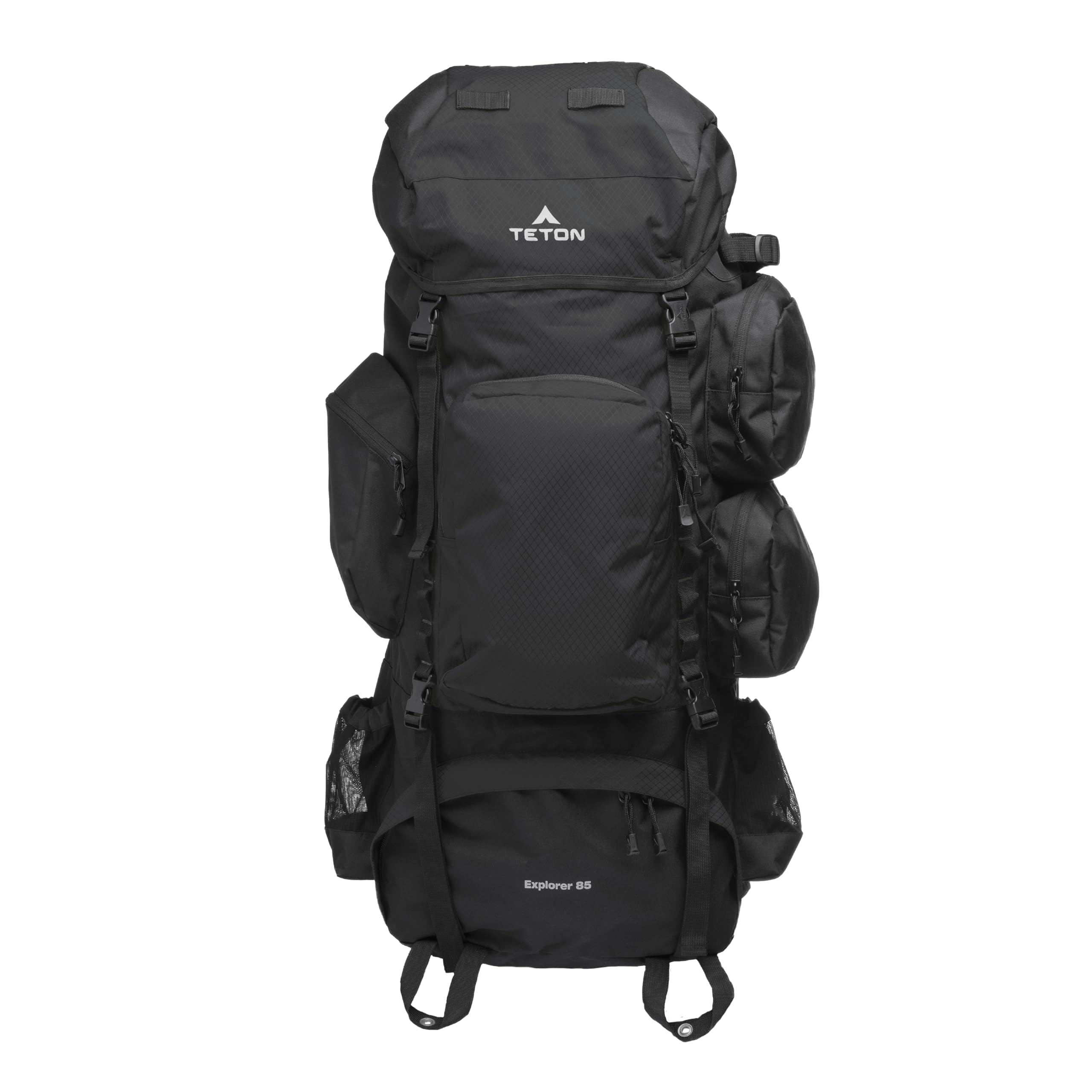
Teton Explorer 85L

93 /100
Traveler Score Outstanding

Key details

Pockets
5
Capacity
85 liters
Rain Cover
Included
Item Weight
5.8 lb
Check Details on Amazon

Five-point-eight pounds, empty. That figure is the whole argument about the Explorer, and it's why the pack feels heavy before you've put anything in it. For a trip that runs five days or more, or one where you're carrying a share of someone else's gear, the weight buys a harness with real padding, a lumbar pad that sits deep against your back, and a frame that stops 85 liters from turning into a sack. We carried it loaded and it behaved like a pack doing a job rather than a bag you fight.

Eighty-five liters is a lot of room, and that's the point. On a long trip with food and a wet tent, the space stops being a luxury and becomes the reason you can bring the tent you own rather than the one that fits a smaller pack. The sleeping-bag compartment takes a mummy bag with room to spare, five pockets and six compartments keep a week's kit sorted, and a rainfly comes with it.

That rainfly has one catch we ran into: it fits the pack as packed, not as loaded. Strap a tent or a foam pad to the outside and the cover won't stretch over it, so keep the bulky gear inside on wet days or carry a separate cover.

If you're on the smaller side, this is a lot of pack to manage at full capacity, and the 65-liter Scout carries the same weekend with less to wrestle. The hip belt has no zip pocket either, which we noticed every time we wanted a snack without stopping.

Pros

  • 85 liters for week-long or two-person loads
  • Plush harness spreads weight to the hips
  • Sleeping bag compartment fits a mummy bag easily
  • Rainfly included with the pack

Cons

  • 5.8 pounds before you pack anything
  • More capacity than a weekend trip needs
Our verdict

Buy the Explorer when the trip is long enough that capacity decides everything: 85 liters and a genuinely comfortable harness make the extra weight worth carrying, as long as you're not small-framed.

Check Latest Price
3

First Overnight Trips

Loowoko 50L

91 /100
Traveler Score Outstanding

Key details

Capacity
50 liters
Dimensions
7.9 x 11.8 x 23.6 inches
Rain Cover
Included
Item Weight
2.8 lb
Check Details on Amazon

Fifty liters at two-point-eight pounds makes this the lightest full-size pack here, well over a pound less than the Scout and nearly three less than the Explorer. You feel that on the walk in, particularly when the group has split the tent and the stove and your share came out heavier than you planned.

The layout is more thought-through than the weight suggests. The main compartment swallows a bag and a pad, several zip pockets on the outside hold what you want without unpacking, the side pockets take bottles, and there's a rain cover. It also flattens down to almost nothing when it's empty, which is why ours lives in the back of the car between trips.

Here's the honest read: this is the pack we hand someone going camping once or twice this summer who doesn't want to rent or borrow. It carries a two-night load without punishing you, and if it ends up in a closet after August you haven't lost much. What it isn't is the pack for a week in the alpine or for a big share of group gear, which is a job for a framed pack with a serious hip belt.

The 50-liter figure assumes compact gear, too. A synthetic bag and a small tent fill it faster than a down bag and a two-person ultralight, and the compression straps are what stop a part-full load from sloshing around on the descent.

Pros

  • 2.8 pounds at 50 liters
  • Plenty of external pockets
  • Packs down small when empty

Cons

  • Strap seams can tear under a heavy load
Our verdict

A sensible first camping pack for one or two nights: 50 liters at 2.8 pounds, light enough to forget on the walk in, and cheap enough that a single season justifies it.

Check Latest Price
4

Day Hikes

Maelstrom 40L

91 /100
Traveler Score Outstanding

Key details

Pockets
10
Capacity
40 liters
Material
210D ripstop nylon
Item Weight
2.2 lb
Check Details on Amazon

Forty liters is where a camping pack stops being an overnight pack and starts being a daypack. That's not a knock on the Maelstrom; it's the whole point of it. If the tent stays at the site and your days are loops out to a summit and back, a 40-liter bag is far more pleasant to carry than a 65-liter frame with nothing in it.

At 2.2 pounds it disappears on your back, and the organization is the part we keep coming back to: ten pockets and seven zippered compartments mean a shell, lunch, first-aid kit, headlamp and map each have a home instead of living in one jumbled sack. Reflective printing across the front matters more than it sounds when you're walking back to camp at dusk, and the trekking-pole loops mean you're not carrying your poles when the trail turns scrambly.

Where it stops working is a trip that moves camp. A tent, a bag, a pad and three days of food won't fit, and the harness isn't built to make a heavy load comfortable anyway, which is a job for the Scout. This is the pack for the trip where the tent is the destination rather than the thing you carry between destinations.

It slides under an airplane seat as well, which makes it the one here you can fly with and then walk straight out of the terminal. Between the trail and the overhead bin, that's a lot of use out of something this light.

Pros

  • 2.2 pounds for 40 liters
  • Ten pockets and seven zip compartments
  • Fits under an airplane seat
  • Reflective details and trekking-pole loops

Cons

  • Seams and fabric can tear after light use
Our verdict

The pack for campers whose tent stays put: light, pocket-rich, and easy to fly with, but it can't carry the gear for a trip that moves camp every night.

Check Latest Price

How We Tested Camping Backpacks

We built the shortlist from thru-hiker forums, retailer review sections, and the packs people who guide for a living keep recommending, then cut it down by weight, capacity, and price until 12 remained — enough to cover what a first-time buyer actually shops. Each pack went on at least three trips over eight months: weekend overnights, one wet three-day loop, and plenty of unglamorous Friday-night packing in a driveway with a headlamp on.

Loading told us most of what we needed. We weighed every pack empty, packed the same kit into each one — sleeping bag, pad, stove, food for three days, a warm layer — and weighed it again, noting how much of the stated capacity was genuinely usable once dividers and over-built compartments took their share. Then we counted pockets and, more usefully, timed how long it took to dig out a headlamp or a snack without stopping to take the pack off.

Fit got the closest look, because it's where packs fail quietly. Testers from 5'2" to 6'3" adjusted torso length and hipbelt on each pack, then walked a two-mile loop with 30 pounds aboard to see whether the load rode on hips or dug into shoulders by the end. Durability took the longest: we dragged the packs over granite, hosed them down after a rainy night, and checked seams, zippers, and strap stitching after every trip to see what gave first. Price came last — a pack only kept its spot if the cost made sense against the hardware and capacity you actually got.

How to Choose Camping Backpacks

Match Liters to Nights, Not to Ambition

Capacity is the first decision and the easiest to get wrong, because liters mean nothing until you translate them into nights. A 40-liter pack is a daypack that can stretch to a night in a shelter; 50 to 65 liters covers one to three nights with a tent, bag, pad, stove and food; 75 liters and up is for trips of a week or more, cold-weather gear, or carrying a share of someone else's load.

Your sleeping bag changes the answer more than the trip length does: a synthetic rectangular bag eats space that a down mummy bag leaves for everything else. Pile your actual gear into a box and measure it before deciding you need 85 liters. Most weekend trips don't.

Load Transfer Beats Padding

Padding is what you can feel in a shop; load transfer is what you feel on hour six. A pack carries well when the hip belt sits on the crest of your hip bones and takes most of the weight, and that only happens when the torso length is right. Measure from the bony bump at the base of your neck to the top of those hip bones, then check that the pack's torso range covers the number.

This is why the Scout's sliding torso panel matters more than its pocket count: the shoulder harness moves up and down the frame, so a short back can still get the belt down onto the hips. Shoulder straps doing the carrying instead of steadying is the single most common reason a camping pack hurts.

What the Empty Weight Buys

A spread of 2 to 6 pounds looks small on paper and feels enormous four miles in. The Maelstrom's 2.2 pounds comes from thin fabric and a simple harness, and it makes a day's walking effortless; the Explorer's 5.8 pounds pays for the frame and padding that hold 85 liters of gear off your shoulders.

Match weight to the load rather than to a preference. Once you're carrying a tent, food and water for several days, the frame earns its pound back by the second mile. A light pack loaded heavy is a worse experience than a heavy pack loaded well.

Organization You'll Actually Use

A sleeping bag compartment, a lid pocket and a hydration sleeve do more for daily life than a dozen small zip pockets. The compartment matters most because it puts the bag's weight low and lets you dig for a headlamp without unpacking the whole load.

Two traps live here. Sleeping bag compartments are usually cut for mummy bags, so a bulky rectangular bag may only fit the main body of the pack. And check what a rain cover actually covers: several will stretch over a packed pack but not over one with a tent strapped to the outside, which is exactly the day you need it.

Durability Starts at the Seams

Fabric gets the attention, and there's a real difference between the 600-denier polyester on the Tetons and the 210-denier nylon on the Maelstrom. But seams, strap attachments and zippers are what fail first. Pull hard on a shoulder strap where it meets the body of the pack; if the stitching looks sparse at that junction, the harness is the weak point.

Water resistance is the same story. A coated fabric shrugs off drizzle, while seams and zippers let water through in a real storm, so the cover or an internal liner is doing the work. Treat the fabric rating as a head start, not a guarantee.

Frequently Asked Questions

Final Verdict

The Teton Scout 65 is the pack we point most camping shoppers toward, and it wins on the thing that decides a trip: it puts a three-day load on your hips and keeps it there, with a torso adjustment that fits a short back as readily as a tall one.

Take the Explorer 85 if your trips run a week or you're carrying for two. Take the Maelstrom 40 if the tent is staying at the site and you just need a light pack for the days in between.