Best Camping Blankets of 2026

The fire burns down around 11, but the cold doesn't really arrive until 3 a.m. — that's when someone starts fumbling for a jacket to drape over a sleeping bag. A camping blanket is what solves that: something you can wrap around your shoulders at the fire, spread on the ground for lunch, and throw over your bag when the temperature slides past what your sleep system was rated for. It's the piece of gear that earns its place in the car for the least space and the least money.

My team and I have spent the better part of eight months living with a dozen of these, in tents, around backyard fire pits, and unfolded on the living room floor between trips. The thing I keep coming back to is that softness out of the package tells you almost nothing. A blanket can feel wonderful on day one and then pill, shed, or hold onto a campfire-and-tent smell by the second wash, and the warmest ones we used were rarely the heaviest. The picks below are the ones that held up.

1

Best Overall

USGI Industries Woobie Blanket

96 /100
Traveler Score Outstanding

Key details

Fill
Polyester batting
Size
62" x 82"
Shell
Water-resistant nylon
Weight
1.75 lb with sack
Check Details on Amazon

A poncho liner is a military design first and a camping blanket second, and that order is exactly why it works outdoors. The 62-by-82-inch cut runs long enough to cover an adult from chin to boots, and the eight pairs of tie cords around the edge let you lash it to a poncho, a pack, or the underside of a hammock instead of just draping it over your legs.

A nylon shell over quick-dry polyester batting is what separates it from every fleece on this list. Wave-pattern quilting holds the fill in place so it doesn't migrate into the corners overnight, and the shell shrugs off dew on the tent wall, a misting rain at breakfast, and a wet log you want to sit on. It dries fast once the sun comes up, which is more than we can say for a soaked fleece throw.

Warmth for the weight is where it takes the top spot. It's 1.75 pounds including the compression sack, and it holds a comfortable night from cool spring evenings through early fall; below freezing you want wool or a sleeping bag. For the three-season camping most of us actually do, we prefer this to a heavier blanket that ends up staying in the car.

In its sack it disappears into the bottom of a daypack, and that is really the test that decides whether a blanket comes along at all. On our trips it has done duty as a pillow, a picnic mat, and a windbreak, which is a lot of jobs for something this light.

Pros

  • Sheds dew and light rain
  • Full-body 62 x 82 coverage
  • 1.75 lb including the stuff sack
  • Tie cords for hammock and poncho use

Cons

  • Stitching can come undone
Our verdict

A poncho liner is the smartest shape a camping blanket can take, and this one is warm, weather-shedding, and full-body long — it's the blanket we recommend packing first.

Check Latest Price
2

Best for Wet Weather

Down Under Outdoors Waterproof Stadium Blanket

94 /100
Traveler Score Outstanding

Key details

Face
350 GSM fleece
Size
82" x 55"
Weight
2.43 lb
Backing
Waterproof
Check Details on Amazon

Two faces, two jobs. One side is a 350 GSM plush fleece, the other a waterproof laminate, and the layers are ultrasonically quilted rather than stitched, so there are no seam holes for water to find. At 82 by 55 inches and 1.1 kilograms — roughly 2.4 pounds — it's a wrap rather than a bedspread.

We take it exactly where a normal blanket gives up: wet grass at a game, a foggy picnic table, wind coming off a lake. The laminate blocks wind as effectively as it blocks water, and the toggle-and-loop at the neck lets you wear the whole thing like a cape with your hands free for a coffee or a camera. Lay it laminate-down on soaked ground and you stay dry right through the second half.

It also carries a lifetime warranty, which for a blanket built to be sat on, dragged over gravel, and spilled on is more than a line on a page. That is part of why it edged out lighter options as our wet-weather pick.

Pros

  • Waterproof backing handles wet ground
  • Blocks wind on exposed sidelines
  • Wear-it-like-a-cape toggle and loop
  • Covered by a lifetime warranty

Cons

  • Only the backing is waterproof; fleece face wets out
  • Heavier and bulkier than a poncho liner
Our verdict

For wet grass, cold sidelines, and a drizzle you refuse to cancel for, this two-sided blanket is the one we hand people — the waterproof backing does real work.

Check Latest Price
3

Best for Cold Nights

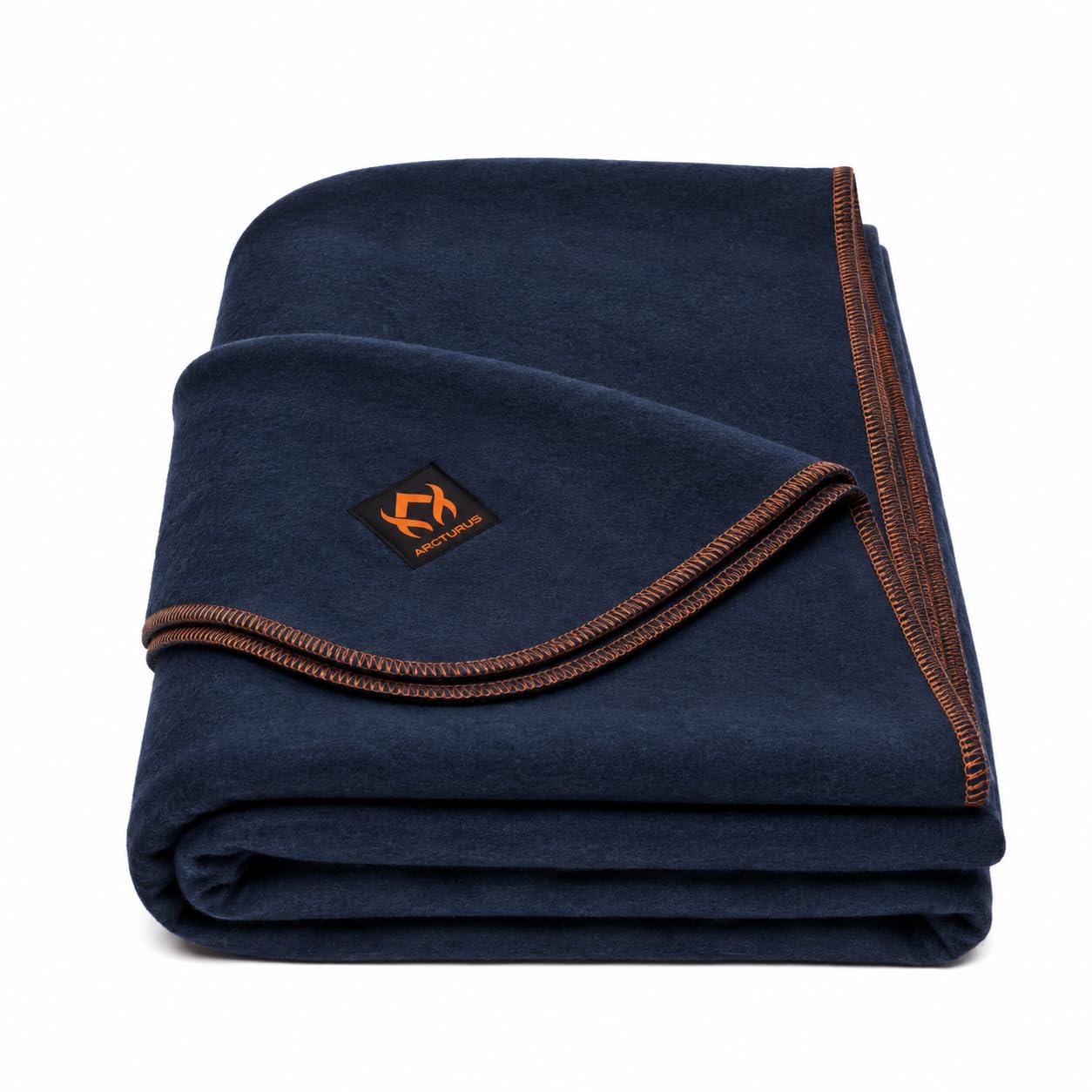
Arcturus Military Wool Blanket

93 /100
Traveler Score Outstanding

Key details

Care
Washable
Package Weight
4.37 lb
Package Dimensions
19.33" x 12.01" x 5.04"
Check Details on Amazon

The first thing you notice is the weight. The listing puts the package at 4.37 pounds, and it feels like every ounce of that: a dense, tightly woven blanket that settles over you instead of floating, so it doesn't slide off at 2 a.m. or let a draft creep in underneath.

Wool is why we take it on late-season trips. It keeps insulating when it picks up a little damp, which the fleece blankets here do not, and it's comfortable against skin rather than itchy — the hand softens further after a wash. Pile it over a camp chair and it stays put in wind. This is a car-camping blanket, not a backpacking one, and we carry it only when the cold is the whole reason for the trip.

Plan for the smell out of the bag. A chemical whiff turns up often enough that we unpack it the day it arrives and hang it outside for a day, rather than discovering it the night before a trip. After that it's the blanket we want at a cold, still campsite with a fire going.

Pros

  • Dense wool warmth for cold nights
  • Keeps insulating when slightly damp
  • Soft rather than itchy against skin
  • Washable and softens with use

Cons

  • Sheds fibers, especially through the wash
Our verdict

For cold car camping and long evenings around a fire, this dense wool blanket is the warmest thing in this guide — just budget a day of airing it out first.

Check Latest Price
4

Best Budget

Bedsure Soft Fleece Throw

93 /100
Traveler Score Outstanding

Key details

Size
50" x 60"
Weight
1.3 lb
Material
100% polyester
Water Resistance
Not water resistant
Check Details on Amazon

Fifty by sixty inches and 1.3 pounds, with half an inch of flannel fleece pile — that's a throw, not a bedspread, and for a summer night in a tent or an afternoon in a hammock it is plenty. We keep coming back to it because the pile is genuinely soft rather than slick, and it doesn't go clammy the way inexpensive fleece sometimes does.

It washes and dries without drama, which matters more in a camping blanket than it sounds: sand, sunscreen, and woodsmoke all come out in a cold machine wash. On a shoulder-season night, layer it inside a heavier blanket and it adds warmth without adding much bulk to your pack.

Between trips it folds into a car seat or the bottom of a tote, and it's the blanket we're least precious about — the one that goes to the beach, the drive-in, and the tent without anyone worrying about it.

Pros

  • Very light at 1.3 pounds
  • Soft, dense-feeling fleece pile
  • Machine washes and dries easily
  • Packs down to almost nothing

Cons

  • No water resistance; dew soaks straight through
  • Thin pile gives little warmth in the cold
Our verdict

If your camping is summer camping, this is the blanket we hand people: light enough to forget in a daypack, soft enough to argue over, and inexpensive enough to own two.

Check Latest Price
5

Tall Campers

PuTian Wool Camp Blanket

94 /100
Traveler Score Outstanding

Key details

Size
87" x 63"
Fabric
25% Wool, 72% Polyester, 3% Nylon
Water Resistance
Water resistant
Check Details on Amazon

Eighty-seven by sixty-three inches is a lot of blanket. Laid out, it runs well past the foot of a standard camp cot, which is exactly what you want if you're tall or sharing: your feet stay covered when you roll over instead of poking out into the cold.

The hand of the fabric is softer than the word wool usually promises — brushed rather than scratchy, with the drape of a real blanket instead of a fleece. It's warm for its size, and the striped Kaki Flame pattern looks better in person than a camp blanket has any right to. It also came out of the bag smelling of nothing in particular, which is not something every wool blanket here manages.

Where it earns a place is comfort per inch. This size covers two people on a picnic blanket or wraps one tall person completely, and it does it without the heft of the wool blanket above. The stripes also forgive what a camp blanket collects over a weekend, and it's the one we leave out on a bunk for a whole trip rather than folding away each morning.

Pros

  • Longest here at 87 x 63 inches
  • Soft, brushed hand that isn't itchy
  • Warm without the weight of pure wool

Cons

  • Only 25% wool despite the merino name
Our verdict

At 87 inches it is the longest blanket here, and the one we pick for a tall camper or a bunk two people share — the size is the whole argument.

Check Latest Price
6

Warm-Weather Lounging

Edenleaf Leopard Print Throw

94 /100
Traveler Score Outstanding

Key details

Size
50" x 60"
Warmth
Lightweight
Material
Fleece
Check Details on Amazon

Leopard print is doing a lot of the work here, and that's fine — a blanket that makes you smile when you unroll it at a campsite earns its place. Under the print it's a genuinely soft plush throw, cozy rather than clammy, with the pattern printed the same on both faces so it doesn't matter which way up it lands.

We treat it as a lounging blanket that travels. It goes in a duffel for a van trip, gets used in a hammock on a warm afternoon, and doubles as a picnic layer for two. It washes on a cold cycle and tumble-dries low, so mud and spilled coffee aren't a crisis, and it packs into a daypack lid without complaint — more than most print throws manage.

Pros

  • Soft plush that doesn't feel clammy
  • Print on both faces
  • Packs small and washes easily

Cons

  • Thin pile offers little insulation
  • No weather resistance
Our verdict

A thin, soft, print-forward throw for warm nights and hammock naps — it won't carry you through a cold snap, but it stuffs into a daypack without complaint.

Check Latest Price

How We Tested a Dozen Camping Blankets

We built the shortlist by pulling every blanket sold as a camping or outdoor blanket that we could reasonably recommend, then filtering by fabric content, packed size, machine-washability, and price so the final group covered synthetics, wool blends, and quilted options rather than twelve versions of the same thing. That left us with twelve, which we then used for eight months — at home first, then on trips.

Each blanket came to at least two backyard fire pits and one weekend away. We timed how long we could sit outside in a light layer before reaching for it, then wrapped up in each for a full twenty minutes and noted where the cold hit first — shoulders, lower back, feet — and whether the blanket slid off when we moved. We also sat on them directly on cold ground to see how much chill came through, and paid attention to whether the fabric felt clammy or scratchy against bare arms, since that's what decides whether you actually keep it around you.

Back inside, we weighed each one on a kitchen scale and compared that number against how small it packed down, because a heavy blanket that stuffs to the size of a pillow is a different purchase than a light one that takes up half a duffel. We shook each out over a dark sheet to see how much fiber came loose, smelled them straight out of the package and again after two nights in a closed tent, and checked the wool content on the tag against how the blanket actually performed. Everything was washed twice, then inspected at the hems for pulled stitches, pilling, and fill that had shifted into one corner.

By the end, value came down to how each blanket looked and felt after eight months of real use rather than what it cost on the day we bought it. The ones that made the list are the ones we'd still hand someone on a cold night.

How to Choose Camping Blankets

Match the warmth to your coldest night

A blanket's warmth claim is written for the best case, so work backward from the overnight low you expect. A lightweight fleece throw is a summer layer and a hammock nap; a quilted synthetic liner covers cool spring through early fall; dense wool is what you want as the temperature slides toward freezing. Wool has one real advantage beyond raw warmth — it keeps insulating when it takes on damp, while fleece stops working once it's wet. If you camp straight through the seasons, two lighter blankets layered beat one heavy one, because you can split them between a warm night and a cold one.

Weight and bulk decide whether it comes along

The gap between a 1.3-pound throw and a 4.37-pound wool blanket is the gap between a blanket that rides in a daypack and one that lives in the trunk. If you're carrying it, treat weight as the price of warmth and pay it deliberately. If the car does the work, buy the heavier, warmer blanket and don't apologize for it. One trap: folded dimensions in a listing describe how the blanket ships, not how small it stuffs. Look for a compression sack or tie cords — the woobie packs down small precisely because it was designed to be carried rather than folded.

Damp is the real enemy

Tents condense, and ground holds water. A water-resistant shell handles dew, mist, and a passing shower, but it is not a rain fly, and a waterproof laminate protects only the side it is on — lay that side down on wet grass and the fleece facing up still soaks through in a downpour. Laminates don't breathe either, so keep one off your skin and use it as the outer or ground-facing layer. Mostly dry trips: a plain nylon shell is enough. Sitting on soaked grass every weekend: the laminate earns its extra weight.

Cleaning, smell, and shedding

Camp blankets get washed far more than bed blankets, so read the care label before you commit to a fabric. Most fleece throws take a cold machine wash and a low tumble; dense wool softens with washing but can shed fibers through the first few cycles; blending wool with polyester brings down both the cost and the itch. Air a new wool blanket outside for a day before it goes in a tent — a chemical smell straight out of the bag is the most consistent complaint in this category, and it usually fades.

What it can do besides keep you warm

Tie cords, a cape toggle, a waterproof face: the small design choices are what let one blanket handle three jobs around camp. Cords turn a liner into a hammock underquilt or a poncho attachment, a toggle lets you wear the thing hands-free at a game, and a laminate makes it a ground mat for a picnic. None of these replaces a sleeping pad or a bag, and cords are for positioning only — never hang weight from them. If you're buying one blanket, buy the one whose second job you'll genuinely use.

Frequently Asked Questions

Final Verdict

The USGI woobie is the one we recommend first. It covers a full adult, shrugs off dew and light rain, and packs into a sack at 1.75 pounds, which is the whole difference between a blanket that comes along and one that stays in the garage.

If your trips are wetter than they are cold, take the Down Under Outdoors instead — the waterproof backing and wind-blocking laminate earn their extra bulk on soaked grass and rainy sidelines. If cold is the entire point, the Arcturus wool blanket is the warmest thing here, as long as you're not the one carrying it.