Best Backpacking Sandals of 2026

The best part of a backpacking day is often the moment the boots come off—and the worst is when your camp shoes can't handle the walk to the creek. A proper backpacking sandal is more than a camp slipper: it's your backup plan for blisters, river crossings, and the occasional town day. The right pair feels comfortable mile after mile, fits without hot spots, supports your arch on rocky ground, and earns its place in your pack by doing more than one job.

Over the past six months, I've hiked, waded, and camped in 12 pairs to find the ones worth carrying. Fit and arch support mattered far more than looks, though a pair that doesn't look like a science experiment is a bonus. Value isn't just price, either—it's how many trips a sandal can handle before the tread wears smooth, the straps stretch, or the hook-and-loop closures stop gripping. One thing first-time buyers should know: strap length matters as much as strap adjustment, because extra webbing flapping against your calf gets old fast—and the picks below are the ones that held up.

1

Best Overall

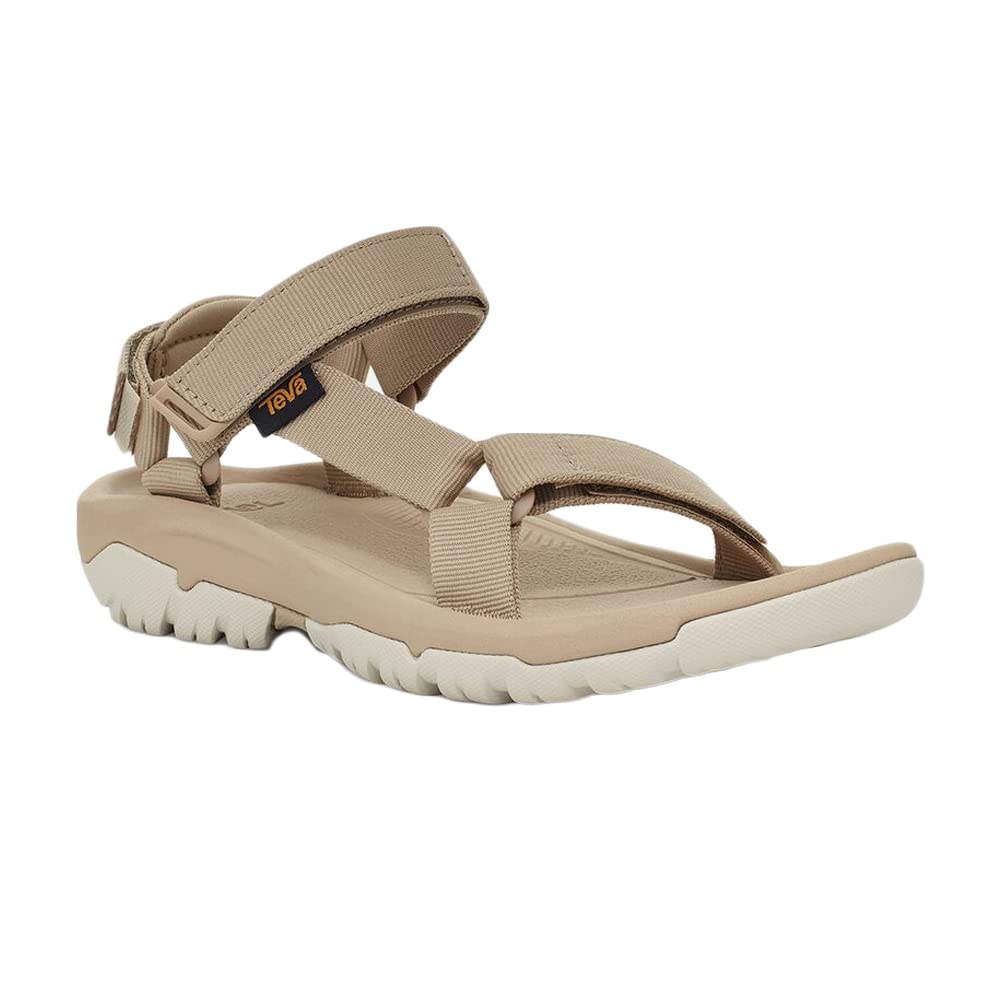
Teva Hurricane XLT 2

91 /100
Traveler Score Outstanding

Key details

Style
Sport sandal
Sizing
Women's
Listed Weight
1.3 lb
Check Details on Amazon

Three straps is the first thing we check on a trail sandal, and this Teva has them: one around the heel, one at the ankle, and one across the forefoot. Cinching the back down while leaving the toes roomy is what stops a foot sliding forward on a steep, loose descent, and it is the adjustment we make most often with a pack pushing us downhill.

That adjustability is the main reason the Hurricane XLT 2 is our top pick for backpackers. The webbing shakes off a soaking and dries on the walk out, the sole grips wet rock instead of skating across it, and the volume opens wide enough for a broad forefoot. The strap count also gives you more places to take up slack than most of the picks here, which matters on day three when your feet have swollen.

The forefoot strap is also the one that can rub. Ours left a hot spot above the big toe on the first long day until we backed the tension off, and a couple of short walks beforehand would have saved us that. If your forefoot is wide, start loose and tighten as the webbing softens.

At a listed 1.3 lb they ride on the outside of a pack without much thought, straps flattened against the side rather than tangled in a knot. Where they have quietly earned their keep is the ordinary walking between the big days: the trip to the water source, the scramble above camp, the shuffle to the shower block, none of it requiring a lace to be tied.

Pros

  • Three independent straps fine-tune the fit
  • Webbing dries fast after a soaking
  • Grippy sole on wet rock and roots
  • Wide-friendly volume across the forefoot

Cons

  • Soles can separate after a season of hard use
Our verdict

If you want one sandal for trails, stream crossings, and camp, start here: three straps that take up slack, a sole that grips wet rock, and webbing that is dry before you reach camp.

Check Latest Price
2

Best Arch Support

Chaco Z/1 Classic

91 /100
Traveler Score Outstanding

Key details

Style
Classic sport sandal
Sizing
Men's
Listed Weight
1.7 lb
Check Details on Amazon

The Z/1 Classic is the heaviest sandal in this guide at a listed 1.7 lb, and after a few days of wearing it we stopped resenting the weight. What you are carrying is a molded footbed with a deep, firm arch, the kind that keeps a foot steady when a pack is trying to roll you off balance.

Arch support is where this sandal separates from the others. The footbed is contoured rather than flat, with a heel cup that holds the back of the foot, and the sole is stiff enough to stay put under a load instead of folding around a stone. The single continuous strap takes a few minutes of threading and re-threading to settle the first time; after that it holds its tension.

Packed purely as a camp spare it is more sandal than you need, and the lighter Hurricane is the easier carry. Give the arch a couple of short walks before committing to a long day, too. It is pronounced enough that you notice it underfoot at first, and this is not a soft footbed. That firmness is the point.

Pros

  • Deep, contoured arch that holds a load
  • Stiff sole that will not fold over stones
  • One continuous strap that keeps its tension
  • River to town without a second pair

Cons

  • Long strap ends hang loose once fitted
Our verdict

Buy it when the pack is heavy and the ground is rough: the contoured footbed holds a loaded foot steady where softer sandals fold, and the extra weight is the price of that.

Check Latest Price
3

Best Toe Protection

KEEN Arroyo 2

91 /100
Traveler Score Outstanding

Key details

Style
Closed-toe hiking sandal
Sizing
Men's
Listed Weight
15 oz
Check Details on Amazon

A rubber cap over the toes looks like overkill until you are picking your way down loose scree. The Arroyo 2 is the pick here for that ground: the bumper takes the hits, the heel is closed in more than an open sandal's, and pebbles stay out instead of working their way under your arch.

Underfoot it behaves more like a hiking shoe than a sandal. The sole has real lugs, it edges on rock rather than skidding, and there is enough cushioning that a long day on hard trail does not leave your heels aching. The arch is supportive without being aggressive, which suits people who want support rather than a molded cradle.

It is also the least fussy thing here to put on: two straps, nothing to retie at a stream crossing, and a shape that stays put when wet. On a hot, dry trip the closed upper is more shoe than you want, and an open webbing sandal breathes better when the trail is dust and sun.

At a listed 15 oz it is light enough to justify carrying as your only footwear on a warm-weather trip. What we noticed most on rough ground is how little you think about your feet in them: no grit, no stubbed toes, no stopping mid-trail to adjust a strap.

Pros

  • Rubber toe bumper handles scree and roots
  • More enclosed heel keeps grit out
  • Lugged sole edges well on rock
  • Cushioned enough for all-day wear

Cons

  • Runs large, so narrow feet will swim
Our verdict

The pick for scree, roots, and river rock: a rubber bumper, a closed heel, and a lugged sole that behave more like a hiking shoe than a sandal.

Check Latest Price
4

Best Ultralight

WHITIN C51 Hiking Sandal

88 /100
Traveler Score Excellent

Key details

Style
Hiking sandal
Sizing
Women's
Listed Weight
5.29 oz
Check Details on Amazon

The listed 5.29 ounces makes the WHITIN C51 the lightest pair in this guide, and that is the whole idea: something that disappears into a pack and gives your feet a break when the boots come off.

As a second pair, it is our favorite here. The footbed has a shaped arch you can feel working on a long walk, the three hook-and-loop straps take up slack across the toes and the instep, and the whole sandal flexes with the foot instead of clumping along. On a narrow foot it sits close without gaping, which is not something we can say for most sandals in this price range.

What it is not is a load-bearing sandal. On a long descent with a heavy pack you feel more of the ground through the sole than you do in the Chaco, and the straps are better at holding a foot in place than at carrying real weight. For camp, water stops, and day hikes with a light pack, none of that matters much.

Pros

  • Lightest listed weight in this guide
  • Shaped arch that holds up on long walks
  • Three straps fit narrow feet closely

Cons

  • Ankle strap frays with heavy use
Our verdict

A five-ounce spare that punches above its weight: shaped arch support, three straps, and a price that makes a second pair easy to justify.

Check Latest Price
5

Best Budget

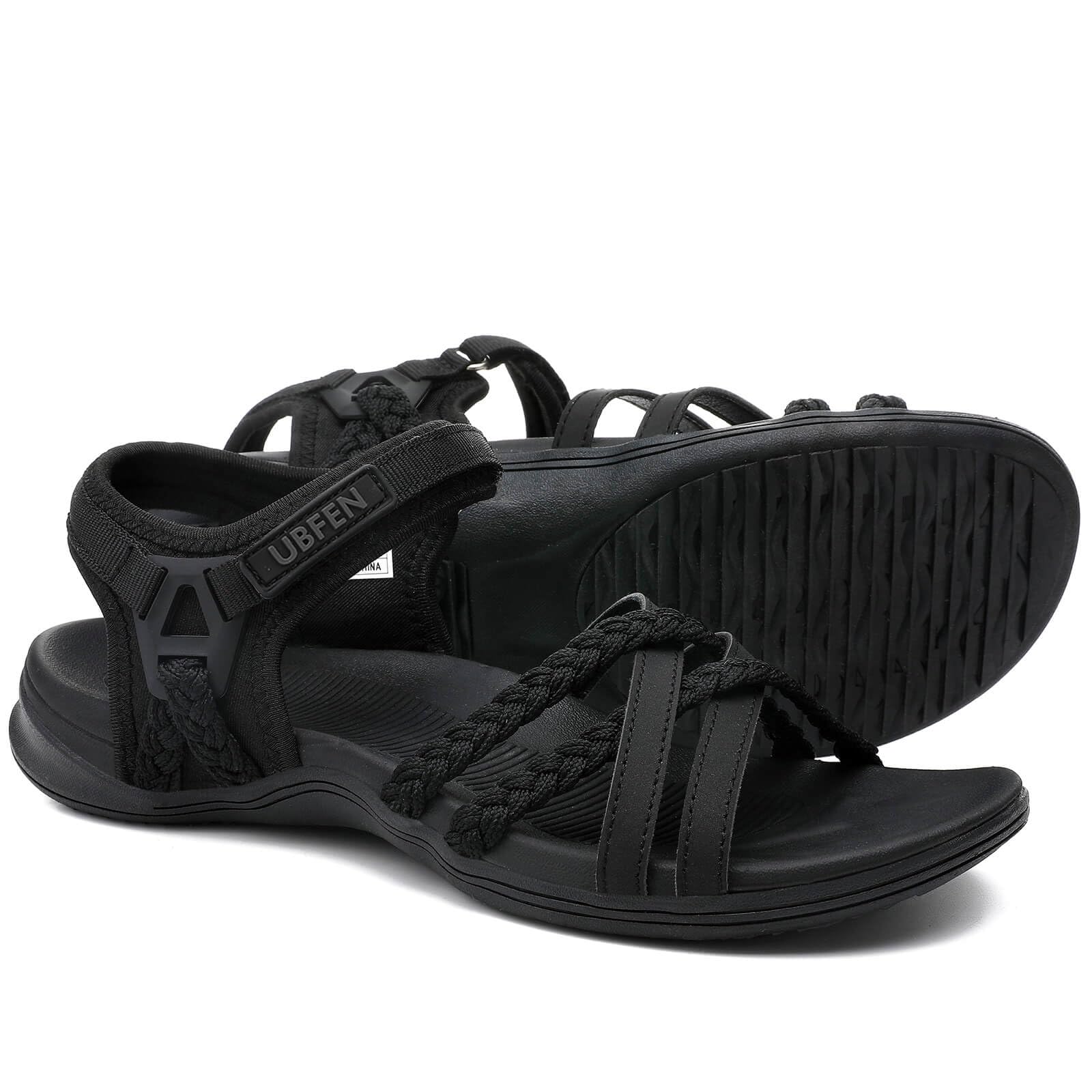
UBFEN Hiking Sandal

91 /100
Traveler Score Outstanding

Key details

Style
Hiking sandal
Sizing
Women's
Arch Support
Built in, per listing
Check Details on Amazon

Wide feet usually mean settling for something. The UBFEN hiking sandals ask for the least settling of anything here: the toe box is roomy without looking like a boat, and the straps run over a bunion instead of pressing into it.

Cushioning is the other half of the case. The footbed is soft enough to feel springy underfoot on pavement and packed trail, and it flexes as you walk rather than staying rigid, which is what makes them comfortable for hours instead of minutes. The arch is modest but present: it supports a neutral foot rather than correcting anything.

Where these make the most sense is a first backpacking sandal, or a second pair for a trip where you expect mud and river crossings. Feet that swell by mid-afternoon still have somewhere to go in the toe box, and that is the sort of thing you appreciate only after a hot day on trail.

Pros

  • Generous toe box for wide feet
  • Soft footbed that flexes as you walk
  • Straps sit clear of a bunion

Cons

  • Sole and straps can fail with hard use
Our verdict

The pair we suggest when every sandal you try feels narrow and stiff: a roomy toe box, a soft flexing footbed, and straps that sit over a bunion rather than into it.

Check Latest Price
6

Best for Water Crossings

Dannto Closed Toe Sandal

91 /100
Traveler Score Outstanding

Key details

Use
Athletic water shoe
Style
Closed-toe sport sandal
Sizing
Women's
Check Details on Amazon

The Dannto barely looks like a sandal: closed toe, fabric upper, a bungee lace across the top, and a hook-and-loop strap around the heel. That is the point on wet, muddy ground, where an open sandal ends up full of grit within a mile.

Comfort is where it surprised us. The toe box is wide and squared off rather than tapered, so toes sit flat instead of stacking, and the footbed has enough arch to feel supportive without pressing anywhere in particular. In water the foot slides a little inside the shoe until you tension the heel strap; tighten it wet and the fit settles.

Set against the KEEN, it is the softer, lighter option: less structure underfoot, more give, and a fit that suits a wide forefoot better than a narrow one. The heel strap is the detail that makes it work, because it adjusts length as well as tension, so a half size of gap closes up and a soaked upper stops sliding.

Pros

  • Closed toe keeps grit off the footbed
  • Drains and dries after crossings
  • Wide, squared toe box
  • Heel strap adjusts length and tension

Cons

  • Closed upper holds heat on dry days
Our verdict

For wet, gritty trails where you want toe coverage without a boot, this is the pair we take: it drains, it dries, and it keeps the grit out.

Check Latest Price
7

Camp and Town

Teva Original Universal

93 /100
Traveler Score Outstanding

Key details

Style
Original sport sandal
Sizing
Women's
Listed Weight
6.1 oz
Check Details on Amazon

The Original Universal is the sandal most people picture when they hear the name Teva: flat webbing straps, a simple footbed, and a shape that has barely changed in decades. It is also the pair most likely to already be in your closet.

As a camp and town sandal it earns its keep. The listed weight is 6.1 oz, it packs flat against the outside of a pack, and the webbing is dry again not long after a river dunking. The hook-and-loop forefoot strap opens wide enough for a foot that has swollen over a long day, which is why it ends up being the pair we leave by the tent door.

The trail is a different question. The sole is thin and flexible, and under a loaded pack you feel roots and sharp stones through it; the structure that makes a stiff footbed worth carrying is not here. On level paths, short walks, and the stroll into town it is entirely fine.

So buy it as the second pair, not the only one. It is the least expensive way in this guide to guarantee dry feet at camp, and it is what we suggest when a trip is mostly about the evenings rather than the miles.

Pros

  • Packs flat at a listed 6.1 oz
  • Webbing dries quickly after water
  • Adjustable forefoot strap fits wide feet

Cons

No notable drawbacks to flag.

Our verdict

A camp shoe, not a trail shoe: light, inexpensive, and quick to dry, it earns its place by the tent rather than under a loaded pack.

Check Latest Price
8

Inexpensive Men's Sandal

visionreast Athletic Sandal

89 /100
Traveler Score Excellent

Key details

Sole
Air cushion
Style
Open-toe athletic sandal
Sizing
Men's
Check Details on Amazon

For a fraction of what a premium hiking sandal costs, the visionreast gives you an open-toe, air-cushioned men's sandal with three hook-and-loop straps and doubled stitching on most seams. It looks like a lot of sandal for the money, and mostly it is.

The forefoot strap sits behind the little toe rather than across it, a placement you notice only when it is wrong. Strap overlap is generous, so a wide foot or a swollen ankle still has somewhere to adjust to, and the cushioned sole takes the sting out of pavement and packed trail alike.

Construction is the pleasant surprise. Stitching is doubled on nearly every seam, the tread has enough depth for gravel and wet ground, and the arch gives a high instep something to push against without digging into a low one.

A pair in this price range is the one you do not worry about leaving outside the tent, and for a first sandal, a spare, or a trip where footwear takes a beating, that is exactly the right role. The seams are not the part to watch.

Pros

  • Adjustable straps fit wide, swollen feet
  • Doubled stitching on nearly every seam
  • Deep tread for gravel and wet ground

Cons

  • Hook-and-loop can lose its grip over time
Our verdict

The men's budget pick: wide straps, doubled seams, and a cushioned sole that make a first or spare pair an easy call.

Check Latest Price

How We Chose and Tested Backpacking Sandals

We started with a shortlist of more than 30 pairs, then narrowed it by reading specs and customer reviews and filtering for weight, secure heel straps, cushioned footbeds, and price. Over six months, the final 12 pairs went on real trips: weekend backpacking loops, day hikes with loaded packs, creek crossings, camp evenings, and the inevitable town errand.

I wore each pair for full days, starting with a short walk to the trailhead before loading a pack. I noted where hot spots formed, whether my arch felt supported on rocky descents, and if the straps stayed put without overtightening. Fit got checked across different foot volumes—narrow, wide, high instep—because a sandal that only works for one foot shape isn't versatile. We also wore them from trail to town to see if they looked presentable enough for a casual dinner.

After each trip, I inspected tread wear, stitching, and buckle hardware. For hook-and-loop straps, I opened and closed them dozens of times and watched for fraying or loss of grip. I checked strap length on wider feet and noted whether excess webbing flopped around. Finally, we compared what each pair delivered against its price to judge value—not just what it cost, but how much use it could take.

How to Choose Backpacking Sandals

Start With the Straps, Not the Sole

Retention is what separates a backpacking sandal from a beach sandal. You want a heel strap that closes around the back of the foot, plus independent adjustment over the instep and the forefoot, so the heel can be locked down on a descent while the toes still have room on the flat. A slide or a flip-flop has nothing to pull against.

When you try a pair on, tighten the heel first and roll onto the ball of your foot. If the footbed twists out from under your arch, it will twist under a pack too. The Hurricane XLT 2 is the clearest example of the multi-point approach in this guide, with three separate straps to take up slack.

Match the Footbed to the Load

A stiff, contoured footbed is worth its weight when you are carrying a pack; a soft, flexible one is pleasanter around camp. The Chaco Z/1 sits at the firm end here, with a deep arch and a sole that refuses to fold over stones, while the Teva Original Universal shows the other extreme: thin, light, and happy on level ground.

Decide which job the sandal is doing. If it lives by the tent and comes out for the walk to the water, buy light and soft. If it is your only footwear for days at a time, pay for structure, because a folding sole is what turns a long descent into a slog.

Decide How Much Toe You Want

Open webbing drains and vents better; a closed toe or rubber bumper absorbs impacts from scree, roots, and rock. On maintained trail in warm weather an open sandal wins on airflow, and most hikers never need more.

On rough, rocky ground, or anywhere you would otherwise stub a toe, the KEEN Arroyo 2 and the Dannto are the picks here, and both trade ventilation for protection. Be honest about the terrain you actually walk rather than the terrain in the trip photos.

Count the Weight Before You Pack a Second Pair

Listed weights across these picks run from around five ounces to over a pound and a half, and that spread is the difference between a pair you notice on your hip all day and one you forget. A camp-only sandal has to be light and dry fast; a sandal that shares trail duty has to hold up under load.

Synthetic webbing dries fastest. Fabric uppers and closed toes stay damp longer, which matters on a cold, wet trip. Hang the pair outside the pack rather than stuffing them wet, and they will be wearable again by morning.

Frequently Asked Questions

Final Verdict

The Teva Hurricane XLT 2 is the sandal we tell most backpackers to buy: three straps that take up slack where your foot needs it, a sole that holds on wet rock, and webbing that is dry by the time you reach camp.

Carrying a heavy pack and want a footbed that takes the load? The Chaco Z/1 earns its extra weight. Headed for scree and roots? The KEEN Arroyo 2 and its toe bumper are the reason to pick it instead.