Best Backpacking Boots of 2026

Backpacking boots force a trade-off. The burly full-leather pairs haul a loaded pack without complaint, but they're stiff and heavy for the first 30 miles. The light, sneaker-adjacent ones feel wonderful going uphill and then beat up your toes on a long, loaded descent. There is a middle ground, and finding it comes down to three questions: how much weight you carry, how many days you're out, and how rough the ground underfoot. Get those right and your feet simply stop being the thing you think about at mile nine.

What a good pair actually fixes is quiet: no blisters to tape every morning, no bruised toenails on the way down. I've learned the hard way that fit outranks every spec, since a boot that's half a size off will rub you raw whether it's the cheapest pair in the shop or the priciest. Over eight months, my team and I have hiked in 12 pairs, and the ones that worked all locked the heel down while leaving room to splay your toes on descents. One thing no product page tells you: get fitted late in the day, when your feet are at their biggest, and bring the socks you actually hike in. Our picks are below.

1

Best Overall

Merrell Moab 3 Mid Waterproof

91 /100
Traveler Score Outstanding

Key details

Cut
Mid
Department
Men's
Waterproofing
Waterproof
Check Details on Amazon

The Moab 3 Mid is the boot we reach for when a trip means several days of load carrying and we do not want to think about our feet. Its mid-cut cuff gives the ankle something to work against without feeling like a cast, and the fit leaves room in the toes while holding the heel reasonably close. That combination is why it sits at the top of this group rather than the middle.

What settled it for us is how little drama the Moab 3 Mid asks for. It feels comfortable early, has a secure, planted ride under a pack, and is the most convincing multi-day boot here. On dry dirt and rock, traction is confident. We prefer it to the lighter budget picks for a multi-day trip because it feels more substantial without becoming a burden on the climb.

Water is the main boundary: the Moab handles rain and puddles, but not sustained soaking or water over the cuff. Wet, slick rock is also the surface where we trust it least. Treat those as the edges of a three-season backpacking boot, not reasons to look elsewhere. For the miles most backpackers actually walk, it is the safest place to start.

Pros

  • Supportive mid-cut for loaded packs
  • Comfortable without a long break-in
  • Strong all-around trail manners

Cons

  • Sizing can run small; try a half size up
Our verdict

For multi-day trips with a real pack, the Moab 3 Mid is the pair we recommend first: supportive, comfortable early, and more balanced than anything else here.

Check Latest Price
2

Best Value

Columbia Transverse Hike Waterproof

91 /100
Traveler Score Outstanding

Key details

Model
206740
Department
Men's
Waterproofing
Waterproof
Check Details on Amazon

The Transverse is the value story of this group: a budget boot that gets the trail fundamentals right instead of just looking the part. The toe box is genuinely roomy, the waterproof upper keeps socks dry in wet grass and shallow puddles, and the lacing snugs the midfoot without pinching across the toes. We recommend it for overnight trips where the forecast is mixed and the pack is not enormous.

It has enough structure for a loaded day, but it feels lighter and less burly than the Merrell. For a first backpacking boot or a second pair for easier trails, that is a sensible trade. The stock insole is firm, so plan on swapping in a cushier one if you like a softer step. The tongue sits high enough to keep splashes from running straight into the laces, which is a small detail that matters in real rain.

Durability is a bright spot at this price. The upper and sole have the kind of unglamorous toughness that suits rocky, muddy weekends, and the boot cleans up without fuss. If you want a roomy, waterproof starter boot and you can find your size, this is the one we point to first.

Pros

  • Roomy toe box for thick socks
  • Reliable wet-weather protection
  • Solid durability for the price

Cons

  • Fit can run large for some hikers
Our verdict

The Transverse is our value pick for backpackers who want a roomy, waterproof boot without paying premium prices; start here if the fit works.

Check Latest Price
3

Best for Women

Columbia Newton Ridge Plus Amped

90 /100
Traveler Score Outstanding

Key details

Model
1718822
Department
Women's
Waterproofing
Waterproof
Check Details on Amazon

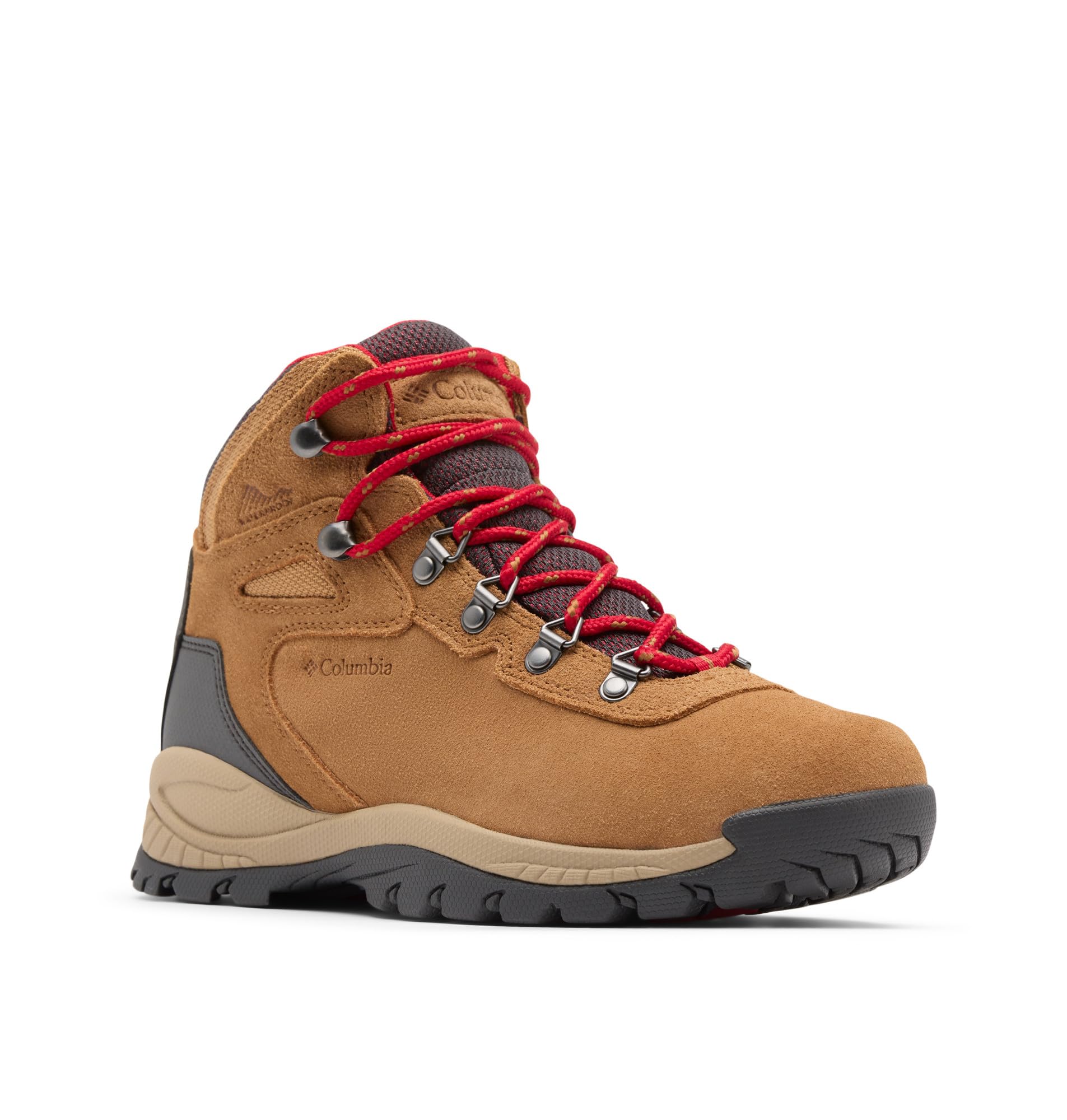
Women with wide toes often have to choose between a boot that fits and one that feels stable. The Newton Ridge Plus Amped is the rare pair here that does both: the wide width gives toes room without letting the heel swim, and the ankle collar is supportive without wrapping the leg like a brace.

We also appreciate that the waterproofing is not an afterthought. The upper shrugs off wet grass, mud, and shallow stream splashes, and the boot stays comfortable through a long day on established trails. The pink laces are a small visual lift without making the boot feel like a costume. For a women's-specific backpacking boot, this is the most complete package in the group.

Comfort is the split. Some women find these pain-free over long miles; others feel pressure around the ankle. That makes fit and break-in more important than usual. Try them with the socks you will hike in, and take a few short walks before a multi-day trip. The reward is a supportive women's boot that does not feel bulky.

Pros

  • Wide width with a roomy toe box
  • Strong ankle support without bulk
  • Reliable waterproofing

Cons

  • Ankle pressure can develop before break-in settles
Our verdict

For women with wider feet or a need for stable ankle support, the Newton Ridge Plus Amped is the women's boot we recommend first; check the ankle fit early.

Check Latest Price
4

Best for Wide Feet

Timberland Mt. Maddsen Waterproof

91 /100
Traveler Score Outstanding

Key details

Department
Men's
Waterproofing
Waterproof
Listed Dimensions And Weight
14 x 9 x 5 inches; 3 pounds
Check Details on Amazon

For a wide foot, the Mt. Maddsen is the easiest fit in this group. The wide sizing leaves room across the forefoot, the ankle height is supportive without crowding the calf, and the open eyelets make the boot quick to loosen at camp or tighten for a descent.

We found it comfortable from the first walk, which is unusual for a boot with this much structure. It has a solid, planted feel on gravel and packed dirt, and the waterproof upper handles wet grass and slush without drama. The lacing is simple to adjust with gloves on, a detail we notice on cold mornings.

The boot is not the lightest here, but the support is worth the trade for wide-footed hikers who want a traditional hiking-boot feel. Check the size carefully, because the fit can run a half size small, and do not expect it to feel like a soft trail shoe out of the box. If it fits, it is a supportive, comfortable option that does not ask for a long break-in.

Pros

  • Wide sizing that accommodates thick socks
  • Easy open-eyelet lacing
  • Comfortable right out of the box

Cons

  • Seams can separate with hard use
Our verdict

For wide-footed backpackers who want a supportive, traditional boot, the Mt. Maddsen is our pick; watch the seams over time.

Check Latest Price
5

Best Budget Men's

NORTIV 8 Ankle High Waterproof

89 /100
Traveler Score Excellent

Key details

Cut
Ankle high
Department
Men's
Waterproofing
Waterproof
Check Details on Amazon

The NORTIV 8 Ankle High is what a budget backpacking boot looks like when the maker spends the money on structure instead of polish. It has a stiff, substantial feel underfoot, a supportive ankle, and enough tread for rocky, muddy trails. It is not the soft, slipper-like boot some buyers expect.

The stiffness helps on rough ground, but it makes easy trails feel like more work, and the sole lands heavily on pavement. Waterproofing is decent for puddles and wet grass, not for sustained rain or a soaked trail. For the money, it is a fair way to get ankle support and traction without spending much.

The fit is not consistent across sizes, so buy with a return window in mind and inspect the sole edges before you commit. If your trips are short, your pack is light, and you want a sturdy boot at a low price, this one earns a place.

Pros

  • Supportive ankle for a budget boot
  • Good traction on rough trails
  • Sturdy feel underfoot

Cons

  • Sole separation can occur with hard use
Our verdict

For short trips and light loads, the NORTIV 8 Ankle High delivers surprising ankle support for the money; just do not expect a soft, refined ride.

Check Latest Price
6

Best Budget Women's

NORTIV 8 Women's Waterproof

91 /100
Traveler Score Outstanding

Key details

Style
Trekking
Department
Women's
Waterproofing
Waterproof
Check Details on Amazon

The women's NORTIV 8 is the budget boot we feel best about for weekend backpacking trips. It is light on the foot, soft enough to wear all day, and has a supportive ankle that handles uneven ground better than its price suggests.

We like it most for three-season overnights where the trail is established and the weather is not extreme. The toe box is roomy enough for thick socks, the lacing is simple, and the boot has a comfortable, almost sneaker-like feel that makes it easy to wear on the approach and around camp.

The caveats are specific. Fit is mixed, with some women needing to size up and others finding the boot too big, so try it with the socks you will hike in. The laces can work loose on a long descent, and the waterproofing stops at the ankle; a stream crossing above the cuff will get your feet wet.

The value here is not that it competes with the premium boots. It is that it gives a weekend backpacker a comfortable, supportive-enough boot without much outlay. We recommend it for established trails and light loads, not for a rugged multi-day route where sharp rock and sustained wet are part of the plan.

Pros

  • Light, comfortable feel
  • Supportive ankle for the price
  • Durable for a budget boot

Cons

  • Traction is uncertain on wet rock
Our verdict

For women who want a light, comfortable boot for weekend trails, the NORTIV 8 is the budget pick we recommend; keep it off slick, steep rock.

Check Latest Price
7

Cold-Weather Hikes

XPETI Thermator Mid

89 /100
Traveler Score Excellent

Key details

Cut
Mid-rise
Department
Men's
Insulation
Insulated
Waterproofing
Waterproof
Check Details on Amazon

The Thermator is a cold-weather boot, and that is the only reason to buy it. Its insulation makes it warm and dry in snow and slush, and the mid-rise cuff keeps the ankle covered. For a winter overnight or a cold-weather day hike, that combination is genuinely useful.

The boot is at its best when the ground is cold and wet. It sheds slush, keeps feet warm on long walks, and has a sturdy, protected feel that suits snowy trails and muddy fields. It is not the boot for a warm-weather backpacking trip; the insulation that helps in winter makes it too hot for summer miles.

Fit is the other thing to watch. The ankle can rub before the boot softens up, so break it in on short walks rather than taking it straight out on a long trip. If your trips are cold and wet, the Thermator has a place. If they are warm and long, choose one of the lighter pairs here.

Pros

  • Warm in cold, wet weather
  • Keeps feet dry in snow
  • Sturdy, protected feel

Cons

  • Seams and heel fabric can wear
Our verdict

The Thermator is the right boot for cold, wet trips where warmth matters more than breathability; for a summer backpacking trip, it is the wrong tool.

Check Latest Price

How We Tested 12 Pairs of Backpacking Boots

We started wide, with a list of roughly 40 pairs, and cut it down on the things a spec sheet can tell you: shank stiffness, whether the boot comes in half sizes and wide widths, weight per boot, and what kind of waterproofing it uses. Reviews were the second filter. Any model with a pattern of soles wearing flat by 200 miles, rands peeling away from the upper, or toe boxes that ran small got dropped before we ever laced it up. That left 12 pairs, which we hiked in over eight months.

Each pair went out with a pack loaded to 25 to 35 pounds on day hikes, overnighters, and a few 8-to-12-mile pushes over rock, mud, roots, and gravel. I wore the same liner-and-wool-sock combination in every boot so the fit comparison meant something, and I noted heel lift on steep climbs, toe contact on long descents, and whether my usual size felt true or needed a half size up. A few pairs also got worn on the drive home and to the grocery store, because a boot that can't handle an errand feels like a costume.

Water resistance went past the hangtag. I stood in a shallow creek for a minute, walked through wet knee-high grass, and wore each pair through a full day of rain, then checked whether my socks came out damp or soaked. Traction was judged on the same slick rock slab and the same muddy descent, on repeat. For durability, I measured lug depth with a gauge before and after and watched for rand separation, worn lace hooks, and deep midsole creasing. Value came down to miles per dollar and whether the brand would resole the boot rather than retire it.

How to Choose Backpacking Boots

Start With the Load, Not the Label

A day hiker can get away with a light low-cut shoe. A backpacker carrying a multi-day load needs more underfoot structure and a cuff that helps the ankle without restricting it. That is the real difference between the boots here: the Merrell Moab 3 Mid and Columbia Transverse have enough substance for an overnight pack, while the NORTIV 8 pairs suit lighter loads and shorter trips. The XPETI Thermator adds insulation for cold weather, which makes it a specialist rather than a three-season default.

Choose the lightest boot that still feels stable with your expected pack weight, and try it on with that weight in a pack if you can. A boot that feels fine empty can collapse under a loaded pack on a long descent.

Fit the Foot You Have

Toe room is not the same as overall width. You want enough space for your toes to spread, a heel that stays put, and no pressure across the top of the foot when you lace up. Wide-footed hikers should look at the Timberland Mt. Maddsen or a wide-width Columbia; women with wide toes have a strong option in the Newton Ridge Plus Amped.

Sizing advice is inconsistent across this group, so treat the listed size as a starting point. Wear the socks you plan to hike in, try boots late in the day when feet are larger, and walk on an incline to check heel lift. If one boot feels tight across the toes, go up or change width rather than hoping break-in will fix it.

Waterproofing Has a Ceiling

A waterproof membrane is useful for rain, wet grass, mud, and shallow puddles. It is not a wading boot. Water over the cuff, a soaked trail for hours, or a stream crossing above the ankle can still get in. The same membrane that keeps water out can also hold sweat in, so waterproof boots demand more sock management on warm trips.

Choose waterproofing for wet climates and shoulder-season trips. In hot, dry conditions, a breathable non-waterproof boot may be more comfortable. If you go waterproof, carry a spare pair of socks and air your feet at breaks; that does more for comfort than any coating.

Traction and Durability Decide the Second Season

Outsole grip matters most on wet rock, roots, and mud, not on the shoe-store carpet. The Merrell is confident on dry trails but less sure on slick rock; several budget boots here have similar limits. Before a trip, test your boots on a wet, sloping surface and see how the rubber behaves.

Durability is where price shows up. Sole separation and seam failures are the two problems to watch, especially on lower-cost boots. Inspect the bond line around the sole and the stitching at the flex point before you leave. A boot that fits well but starts separating mid-trip is not a bargain.

Frequently Asked Questions

Final Verdict

The Merrell Moab 3 Mid is our default backpacking boot because it gets the fundamentals right: supportive under a load, comfortable early, and durable enough for repeated three-season trips. If the fit is wrong or the budget is tighter, the Columbia Transverse is the alternative we point to first, especially for a roomy toe box. Women with wide toes should start with the Columbia Newton Ridge Plus Amped; cold-weather specialists should look at the XPETI Thermator instead of forcing a summer boot to do winter work.