Best Backpacking Boots for Men of 2026

The wrong backpacking boot doesn't announce itself at the trailhead. It waits until mile eight, when your heel starts slipping on a climb or your toes jam into the front on a descent, and suddenly the whole trip is about your feet. A good pair should disappear under a loaded pack: stable on loose rock, comfortable with a 30-pound load, and light enough that you're not lifting bricks with every step. Over the past 10 months, I've hiked in 12 pairs of men's backpacking boots, and the differences in fit, cushioning, and weather protection are real.

What you're solving for is fewer distractions: no hot spots, no wet socks after a stream crossing, no wondering whether the sole will hold up for another season. Fit matters more than any spec sheet, and sizing and width vary so much between models. I also look at value—what the construction and support actually get you for the money. The picks below are the ones that handled long days, rocky descents, and wet weather without turning my feet into the problem.

1

Best Overall

Oboz Bridger Mid B-DRY

89 /100
Traveler Score Excellent

Key details

Cut
Mid
Fit
Runs small and snug
Waterproofing
B-DRY membrane
Check Details on Amazon

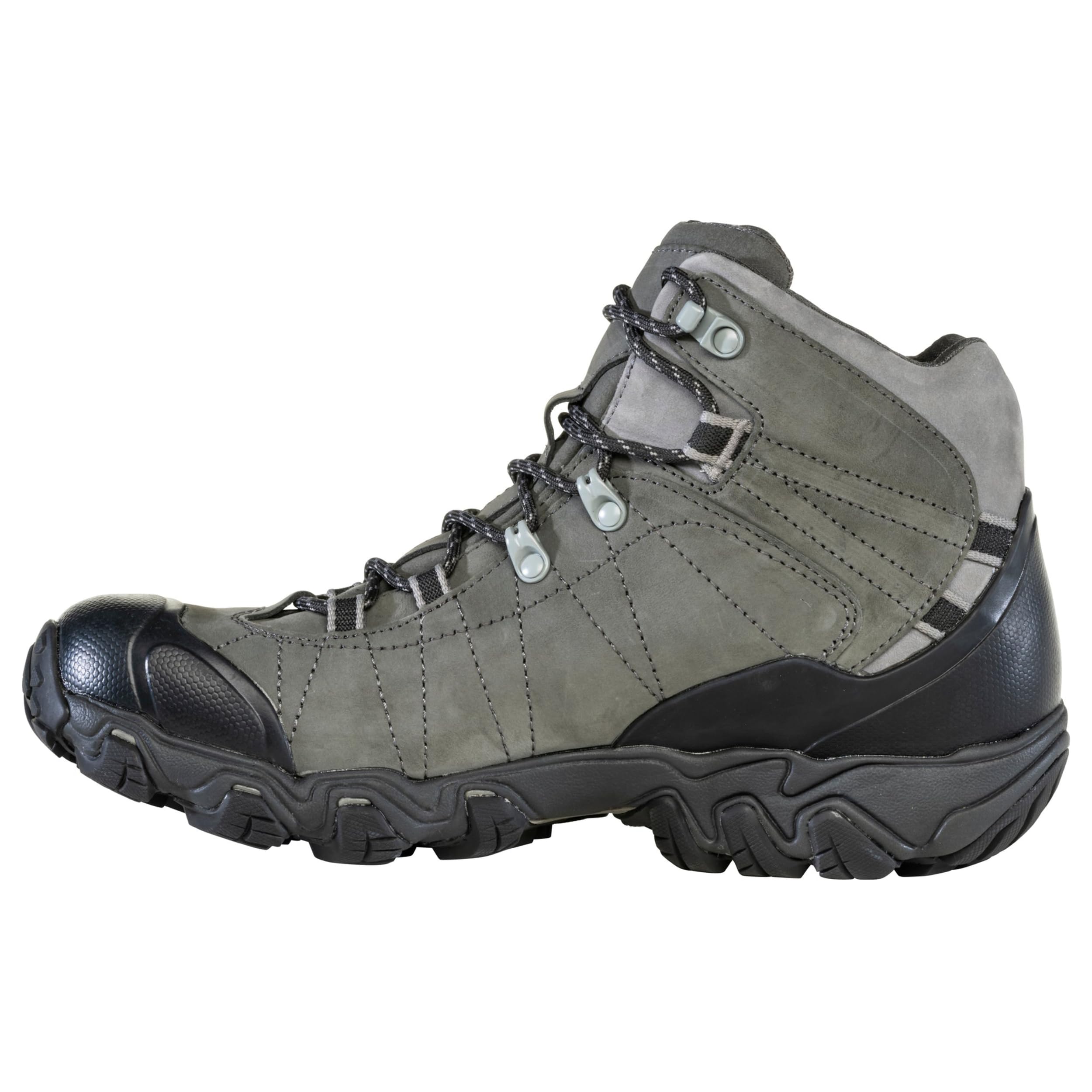
Put a loaded pack on your back and the differences between these boots stop being subtle. The Bridger Mid is the one here built around the weight: a stiff platform under the arch, a mid collar high enough to hold the ankle, and a B-DRY membrane doing the waterproofing.

Support is why we recommend it. The platform stays stiff under the arch with a pack on, which is exactly what the light hikers here trade away, and the heel stays locked down on steep descents instead of sliding forward into the toe box. The waterproofing is the most convincing in this group too — stream crossings and a long day of rain sit inside its range, where several boots here start letting water through once the trail stays wet for hours.

Two practicalities. The Bridger is happiest with real weight aboard; for a daypack it's more boot than the job needs, and you're carrying structure you never use. And Oboz cuts this one close: the fit runs small and snug across the top of the foot, so try a half size up, and look at the wide if you have a high instep or want room for thick socks.

What you're paying for is a platform that doesn't fold under a multi-day load. That's a third-afternoon difference, the kind you notice while everyone else is picking their way down a rocky descent in something softer.

Pros

  • Stiff platform carries a loaded pack
  • Best arch and ankle support in this group
  • Waterproofing holds through crossings and rain
  • Heel stays put on descents

Cons

  • The most expensive boot here
Our verdict

If your trips involve a loaded pack and rough ground, this is the boot we point you to first; the support is worth paying for.
Check Latest Price
2

Best Value

Merrell Moab 3 Mid Waterproof

91 /100
Traveler Score Outstanding

Key details

Cut
Mid
Fit
Runs small
Waterproofing
Waterproof upper
Check Details on Amazon

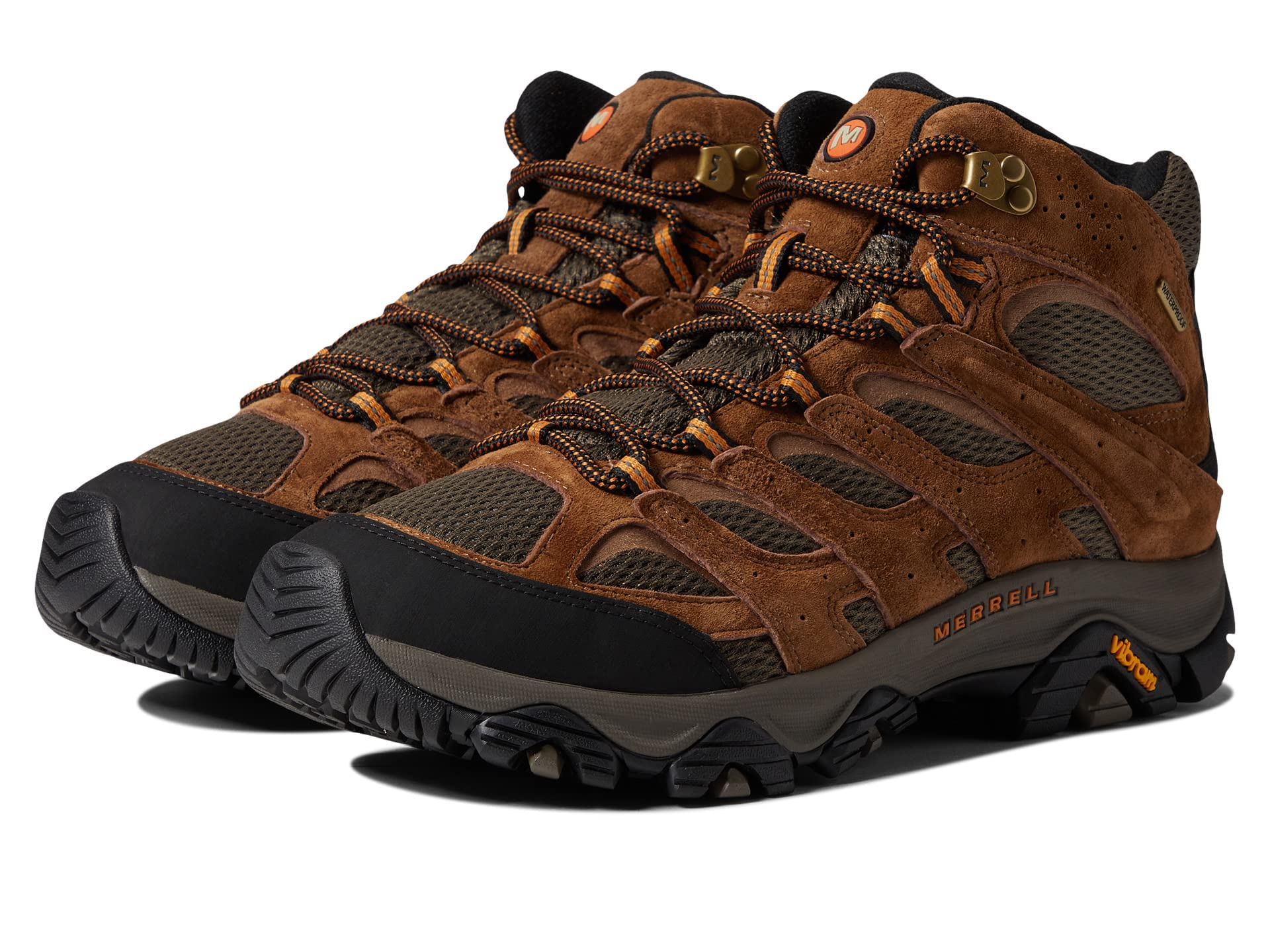
The Moab 3 is the boot we recommend to anyone who wants to spend far less than our top pick and still walk into a three-day trip. It has the best durability showing in this group, it's comfortable from the first mile, and Merrell has had long enough to dial the fit.

Comfort is the other half of the case. There's no break-in to plan around — these feel broken in in the box — and the toe box leaves enough room for your toes to spread on descents, which is usually what decides whether a boot works for you on day three rather than day one.

Waterproofing is where expectations need setting. The membrane handles mud, wet grass and shallow puddles, but a trail that stays wet for hours — soaked roots, boggy stretches, rain that doesn't let up — is where these can let water through, and a damp sock on the second morning is miserable. If your trips are mostly dry with the odd shower, none of that matters.

Sizing is the last thing to get right: these run small, so order a half size up, particularly if you're planning thick wool socks.

Pros

  • The best durability showing in this group
  • Comfortable straight out of the box
  • Toe box leaves room on descents
  • Costs far less than our top pick

Cons

  • Water gets through on long wet days
Our verdict

Buy the Moab 3 if you want a proven, comfortable three-season boot without the premium price — size up, and don't count on it in a downpour.

Check Latest Price
3

Best Lightweight

Danner Mountain 600

92 /100
Traveler Score Outstanding

Key details

Height
4.5-inch mid
Outsole
Vibram
Listed Weight
1.2 lb
Check Details on Amazon

The Mountain 600 is the boot here that behaves most like a sneaker: light on the foot, flexible through the sole, comfortable from the first mile rather than the tenth. That's a deliberate choice, and it's why this is the pick for trips measured in speed rather than supplies.

The Vibram outsole is the part we keep coming back to. Wet rock, loose dirt, roots glossed with rain — this is the grip we trust most in this group, and it comes with a 4.5-inch cut that steadies the ankle without clamping it. The leather earns its keep too; scuffed and dusty, it looks better than it did new.

Where the Mountain 600 stops is load. This is a fast-and-light boot — a light pack and a long day, yes; four days of food and a tent, no. The sole flexes under real weight in a way our top pick doesn't, and the ankle support here is for balance, not for carrying. Keep it for trips where you move fast and sleep light and it's one of the most enjoyable boots on this list.

Pros

  • Grip that holds on wet rock and roots
  • Sneaker-like comfort from day one
  • Light enough to move fast in
  • Leather that looks better with age

Cons

  • Sizing runs large for many feet
Our verdict

For fast, light trips where grip and comfort beat brute support, the Mountain 600 is the boot we reach for — just don't load it past a weekend pack.

Check Latest Price
4

Best for Wet Weather

Timberland Mt. Maddsen Mid

91 /100
Traveler Score Outstanding

Key details

Cut
Mid
Fit
Runs half a size small
Waterproofing
Waterproof upper
Check Details on Amazon

Some leather boots announce themselves for the first fifty miles. The Mt. Maddsen doesn't, and that's the best thing about it: soft from the moment you lace it up, a padded collar that sits where it should, and none of the break-in most boots in this category demand.

That easy comfort is the reason we recommend it, but the waterproofing is what keeps it on our shortlist for wet country. The boot handles ankle-deep mud, slush and standing water without the cold seep you get from a boot that's only water-resistant, and it does it while staying light enough to move fast in.

It's also quick to loosen at the end of the day, which sounds like a small thing until you're fumbling with cold fingers at a shelter in the dark. Pair it with midweight wool socks and it covers three-season trips comfortably; deep winter is a different boot's job.

Pros

  • Dry feet in mud, slush and shallow water
  • No break-in period to plan around
  • Light enough for fast miles
  • Quick to lace and pull off

Cons

  • Runs about half a size small
  • Seams are the first thing to fail with hard use
Our verdict

For wet, muddy three-season trails this is the boot we point to: dry feet from day one, almost no break-in, and an honest lifespan.

Check Latest Price
5

Best Budget

NORTIV 8 Ankle High Waterproof

89 /100
Traveler Score Excellent

Key details

Cut
Ankle-high
Fit
Sizes a little large
Waterproofing
Waterproof upper
Check Details on Amazon

The NORTIV 8 is the least expensive boot in this guide, and it's the one to hand a first-time backpacker heading out for a two-night trip with a light pack.

What the money buys is a genuinely sturdy boot. The upper holds its shape, the ankle collar gives real lateral support on rock and mud, and the sole is stiff enough that sharp stones don't come through. It also wipes clean in a way leather boots don't, and it looks better than the price has any right to.

Comfort is the one thing we can't promise: these suit some feet and not others, and the difference shows up late in a long day rather than in the first mile. Keep your first trip short and find out before you rely on them.

Our read is that they make sense as a first pair, a spare for a friend, or the boot that lives by the door for muddy weekends — not as the boot you build a week-long trip around. For the money, that's a fair trade.

Pros

  • Costs the least of any boot here
  • Stiff sole and solid ankle support
  • Easy to wipe clean
  • Room for thick socks

Cons

  • Waterproofing gives out in sustained rain
  • Soles separate at the toe over time
Our verdict

For a first pair or a light-load weekend, the NORTIV 8 is the budget boot we point to — just keep it out of multiday rain.

Check Latest Price
6

Best for Cold Weather

XPETI Thermator Mid

89 /100
Traveler Score Excellent

Key details

Cut
Mid-rise
Insulation
Insulated
Waterproofing
Waterproof upper
Check Details on Amazon

If your season runs past the first hard frost, the Thermator is the boot on this list that makes sense: insulated, waterproof, and warm enough that a below-freezing morning at camp doesn't end the trip.

The warmth is the reason to pick it, and it delivers. Insulation under a waterproof upper keeps feet dry and warm in deep snow and slush, and the boot stays light enough to walk in all day, which insulated boots often don't. For late-season overnights and snowy approaches it does the job a three-season boot can't.

Two things to know. Sizing runs small — go up a half size and plan around a thick sock. And this is a cold-weather tool: in July it will cook your feet, so it belongs in the closet from May to September.

Pros

  • Warm below freezing
  • Dry in deep snow and slush
  • Light for an insulated boot
  • Costs little for the warmth

Cons

  • Ankle collar rubs until broken in
  • Seams and heel lining wear through
Our verdict

For late-season trips and cold mornings at camp, the Thermator buys real warmth for very little — size up and break it in before a long day.

Check Latest Price
7

Classic Leather Hikers

Columbia Newton Ridge Plus II

91 /100
Traveler Score Outstanding

Key details

Cut
Mid
Fit
Runs narrow
Upper
Leather
Check Details on Amazon

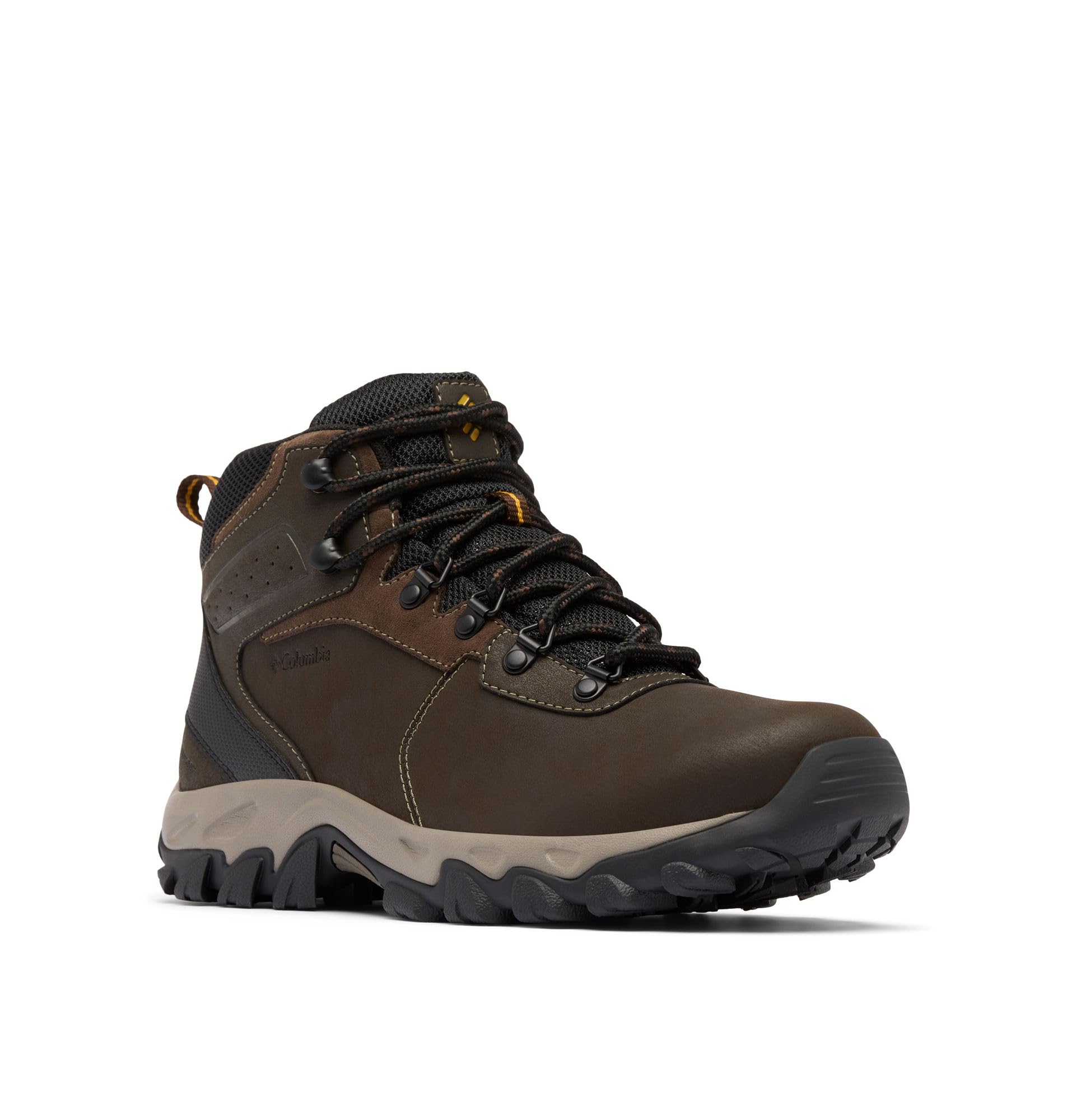
The Newton Ridge Plus II is the best-looking boot in this group, full stop: brown leather, red accents, the classic hiker silhouette that has been on trails since before any of us started hiking.

It's a capable boot underneath the looks. Waterproofing is better than the price suggests — puddles, wet grass and shallow crossings stay out — and the comfort holds up over long days and hard surfaces. The leather takes a scuff and keeps going, which is more than the synthetic uppers at this price manage.

The forefoot is narrow, and for us that's the deciding detail. If your feet run wide, this boot tells you within a mile, and no amount of breaking in fixes a last that's too narrow — the Merrell or the Timberland are the better calls. For everyone else it's a good-looking, genuinely waterproof hiker that doubles as a town boot.

Pros

  • Waterproof through puddles and wet grass
  • Classic leather looks that clean up well
  • Comfortable for long days on hard ground
  • Good value for a leather hiker

Cons

  • Sole and upper start separating after heavy use
Our verdict

If you want a leather hiker that looks as good in town as on the trail — and your feet aren't wide — the Newton Ridge is an easy yes.

Check Latest Price
8

Cushioned Trail Comfort

KEEN Targhee 2 Mid

86 /100
Traveler Score Excellent

Key details

Cut
Mid height
Toe Box
Wide
Waterproofing
Waterproof upper
Check Details on Amazon

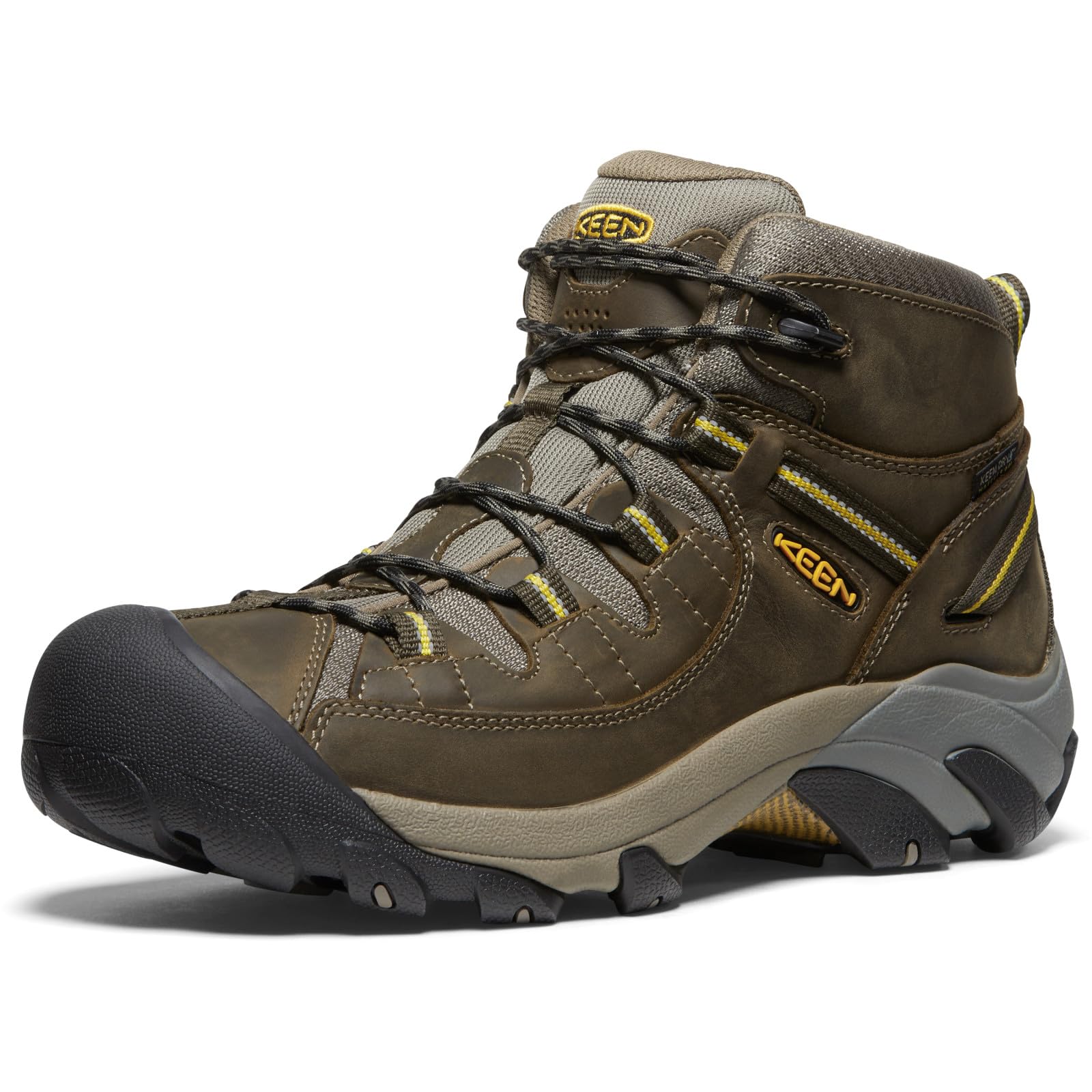
The Targhee has a reputation older than most of the boots here: comfortable immediately, wide through the toe box, waterproof, cushioned enough for a long day. Our reservation is about how long it keeps that up.

Comfort is where it delivers. Cushioning is generous, the arch support has real structure to it, and the waterproofing holds in rain and wet snow. Getting all three right at once is rarer than it sounds.

The problem sits at the bottom of the boot. Soles and the glued seams above them are what give out — separation and delamination on uppers that are otherwise in good shape — and wet-rock traction is less consistent than the Vibram sole on the Danner. When a boot fails early, that's usually where it starts.

So how do we feel about it? As a comfortable, supportive boot for someone who replaces footwear every couple of seasons, there's a lot to like here. As the boot you build multi-day trips around year after year, our money goes to the Oboz.

Pros

  • Generous cushioning for long days
  • Wide toe box for broad feet
  • Waterproofing holds in rain and snow
  • Strong arch and ankle support

Cons

  • Soles and glued seams separate with use
  • Wet-rock traction is inconsistent
Our verdict

If plush comfort and a wide toe box matter more to you than longevity, the Targhee earns its spot — just don't plan a decade around it.

Check Latest Price

How We Tested Men's Backpacking Boots

We built the shortlist by scanning specs and customer reviews for men's backpacking boots, filtering for available sizes and widths, waterproof construction, weight, and price, then narrowed it to 12 pairs. Over 10 months, I wore them on local day hikes with a 25- to 30-pound pack, on two overnight trips, and through wet spring trails and rocky summer descents. Each pair went on at least three hikes, and I wore my usual hiking socks every time so fit comparisons stayed fair.

Fit and comfort got the most attention. I checked heel lift on steep climbs, toe contact on descents, and whether the lacing let me lock the heel without pinching the instep; I noted hot spots before they turned into blisters and how the cushioning held up on long rocky descents. We weighed each boot on a kitchen scale, then loaded our packs and walked a shallow creek crossing to see whether socks stayed dry. I also paid attention to sizing—whether the pair ran true, short, or narrow—and how much break-in each boot needed.

After each trip, I inspected seams, toe caps, and sole wear, and checked whether the waterproof membrane still beaded water or had started to soak through. I wore the boots around town and to trailheads to judge appearance with shorts and hiking pants, noting which scuffs brushed off and which stuck. Value came last: I compared what each pair offered—resoleable soles, wide sizing, a reliable membrane—against what it cost, then asked whether I'd trust it on a multi-day trip.

How to Choose Backpacking Boots for Men

Match the boot to the weight on your back

Backpacking boots aren't one thing. At one end there are light mids that feel like trail shoes with a collar; at the other, stiff platforms built to stop a loaded foot from rolling inward under the pack. The dividing line is total pack weight and terrain, not price. A light load on smooth trail is exactly what the Danner Mountain 600 is for; add a tent, several days of food and a talus field, and the Oboz Bridger's stiffness stops being overkill and becomes the point.

Buy for the trip you take most often rather than the one you're planning for next summer. Most people over-boot and then pay for it in weight and break-in.

What waterproofing actually buys you

Almost every boot here claims it, and the claims hold up in different conditions. A membrane keeps out rain, mud and shallow water. It does not turn a mid-cut boot into a wader — water coming over the collar or running down your leg ends up inside regardless — and it does not breathe like mesh on a hot climb, so the same layer that keeps rain out keeps sweat in.

The trap is buying waterproofing as insurance and then hiking in August with wet socks anyway. If your trips are mostly dry heat, the money is better spent on fit.

Fit: your usual size is a guess

Boot lasts vary enough that your shoe size means less here than anywhere else in your closet. Several boots on this list run small, one runs large, and with a pack on, a foot that slides forward puts your toes into the front of the boot for hours. Try them late in the day, with the socks you'll hike in, and walk up an incline to check that the heel stays down.

Between sizes, go up. A thicker sock fixes half a size too big, and nothing fixes half a size too small.

How these boots actually wear out

Sole adhesion is the recurring failure in this category — not tread worn smooth, but a sole or a glued seam letting go while the upper still looks new. That shapes how you spend. A resole is cheap and worth doing while the leather and stitching are sound, and pointless once the seam above the sole has opened.

Check the bond at the toe when a boot arrives, dry them properly between trips, and expect a handful of seasons of real use rather than a decade.

Frequently Asked Questions

Final Verdict

For loaded multi-day trips, buy the Oboz Bridger Mid. It costs more than anything else here, and it's the boot whose support and waterproofing we trust on the fourth day, when everyone else is nursing sore feet.

If your miles are lighter and faster, the Merrell Moab 3 gives up surprisingly little for a lot less money, and the Danner Mountain 600 is the better call when the pack stays light and the trail turns technical.