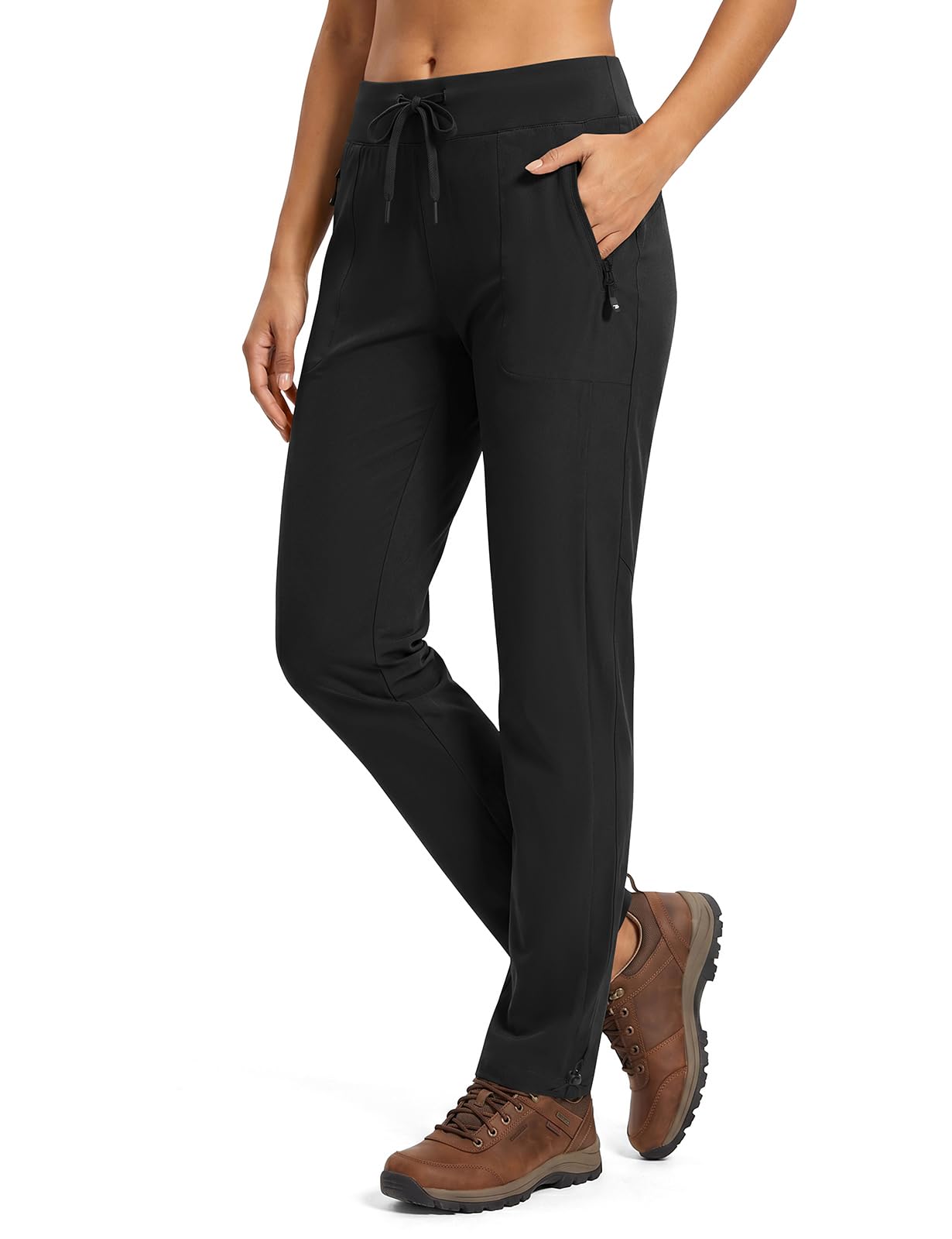
Best Waterproof Hiking Pants for Women of 2026

Waterproof pants carry a built-in tradeoff: the ones that genuinely keep rain out often feel like a plastic bag with a waistband, and the ones that feel lovely against your skin tend to soak through by mile three. The pairs worth owning land in the middle — water beads up and rolls off, but you can still hear your own footsteps. What you're buying, really, is a hike that doesn't end early because your legs are wet and cold.

I've spent enough drizzly afternoons on Pacific Northwest trails to be fussy about this. My team and I have hiked through six months and 10 pairs. We learned quickly that the details decide it: a waistband that doesn't dig under a hipbelt, a length that stays put on steep steps, pockets deep enough that a phone doesn't slide out when you scramble, and a seat that dries before the next morning. Below are the ones that stayed dry and stayed comfortable, including a few you'd happily wear into town afterward.

1

Best Overall

baleaf Women's Hiking Pants

89 /100
Traveler Score Excellent

Key details

Hem
Cinch toggle at ankle
Waist
Elastic
Fabric
Quick dry, lightweight
Water Resistance
Water resistant
Check Details on Amazon

Rain isn't the thing that separates the pants in this guide; recovery is. The baleaf pair beads a drizzle for a while and then starts taking on water if you stay out in it, which is exactly what a water-repellent finish does on a thin synthetic. What matters is what happens next: the fabric lets go of that moisture quickly, and the thighs and seat were dry again well before we stopped for the day.

For three-season hiking we prefer that trade to a heavier waterproof pant. The fabric is thin enough that air moves through it on a climb, so you don't get the sauna a membrane builds up, and it packs down to roughly the size of a t-shirt. On a cold, windy ridge you'll feel the lack of it, and that's the morning to have a base layer on underneath.

The details are the ones that keep a budget pair in rotation. The waistband is wide and elastic and sits high enough to stay put under a hipbelt; the pockets zip, so a phone stays where you put it on a scramble. The toggle at each cuff is the bit we appreciated most: cinched, the hem stops collecting mud and wet grass, and it shortens the leg by an inch or so when you want that.

Washing is where they earn their place on a two-week trip. They come out of a machine or a sink without a crease worth ironing and hang dry overnight, which is more useful on the road than any performance claim printed on the label.

Pros

  • Dries fast enough to wear the next day
  • Breathes on hot climbs instead of trapping heat
  • Cinch cuffs keep the hem out of mud
  • Zippered pockets and a wide, forgiving waist

Cons

  • Runs large; size down if between sizes
Our verdict

Our default pick for a wet-weather trip: they shed a drizzle, dry fast enough to wear again the next morning, and still breathe on a hot climb.

Check Latest Price
2

Best for Sun and Heat

Rdruko Hiking Cargo Pants

89 /100
Traveler Score Excellent

Key details

Fabric
Quick dry
Pockets
Zipper pockets
Sun Protection
UPF 50+
Water Resistance
Water resistant
Check Details on Amazon

Not every wet-weather hike is actually wet. Plenty are bright, humid and long, and the Rdruko pair is built for those: the fabric carries a UPF 50+ rating, moves sweat off quickly and stays quiet when your thighs rub together — no windbreaker swish with every step. We wore them through the hottest days of testing and never felt cooked, which is the whole argument for an unlined summer pant.

Stretch does the rest of the work. The waist gives, the thighs have room, and you can get a knee up onto a rock without the fabric pulling tight across the seat. They hand-wash and hang dry overnight, and they come out of a stuff sack without a crease worth mentioning.

Pockets are where cargo pants usually go wrong, and these get them right: the zips run smoothly, the pockets sit flat when empty, and there are enough of them to keep a phone, keys and a snack off your hands. They also read less like technical gear than the price suggests, which is why we've kept wearing them into town after a hike.

Pros

  • UPF 50+ for long exposed days
  • Quick-dry fabric that sheds wrinkles
  • Stretch through the waist and thigh

Cons

  • Inseam runs short for taller hikers
  • Crotch seam is the first place to fail
Our verdict

If your wet-weather hikes are really sun-and-sweat hikes, these are the pair we point you to: UPF 50+, quick-drying, and roomy enough to climb in.

Check Latest Price
3

Best Budget

Rrosseyz Cargo Hiking Pants

88 /100
Traveler Score Excellent

Key details

Fabric
Lightweight
Pockets
4 pockets
Water Resistance
Water resistant
Check Details on Amazon

These are the least expensive pants in this guide, and the savings aren't hiding in the parts that matter outdoors. The fabric is a flat, smooth woven that dries in minutes in sun and wind, resists wrinkles, and brushes clean once it's dry — trail mud doesn't need a wash, just a wait.

The gathered cuffs are the reason we pack these for somewhere buggy or overgrown: they close the gap at the ankle that ticks and grass seeds find their way into. The side pockets are roomier than the price suggests, deep enough for a phone and a folded map, and the whole pant folds down small in a daypack.

For a first pair, a spare pair on a long trip, or pants that will spend more time in a bag than on a trail, the trade is easy to make. The drying speed that matters most is here, the waistband stays where you put it, and the money saved buys a second color.

Pros

  • Dries in minutes in sun and wind
  • Gathered cuffs close the ankle gap
  • Roomy side pockets for the price

Cons

  • Roomy, wide leg rather than a tailored cut
  • Inseam runs long on shorter frames
Our verdict

The pair we hand to anyone building a travel kit on a budget: quick-drying fabric, roomy pockets, and cuffs that stay out of the mud.

Check Latest Price
4

Town-To-Trail Trips

TBMPOY Stretch Hiking Pants

87 /100
Traveler Score Excellent

Key details

Waist
Elastic with drawstring
Fabric
Lightweight stretch
Pockets
Zippered
Water Resistance
Water resistant
Check Details on Amazon

A drawstring at each cuff sounds like a gimmick until the trail turns to shin-deep mud. Cinch the hem and these sit clear of the muck; loosen it and they cover the top of a boot. It's the smallest feature on the pant and the one we used most, and it means you aren't locked into a single inseam the way you are with almost everything else here.

The rest of the pant is quietly good. The fabric is stretchy and light, with more give and less crackle than the crisp nylons in this guide, and the cut is slim enough that they pass as plain trousers in a town restaurant at the end of the day. The zippered pockets are deep enough for a phone, and the pulls are big enough to work with cold hands.

That makes them the pair for a trip that mixes trail and town: they pack smaller than the cargo styles, dry quickly, and don't announce themselves as hiking gear. On a cold morning they're a shell and nothing more, so plan on a base layer until the sun is up.

Pros

  • Drawstring hem sets the length and clears mud
  • Quiet, stretchy fabric that passes as plain trousers
  • Deep zippered pockets

Cons

  • Waist drawstring can pull out of its channel
Our verdict

We like these for trips that mix trail and town: a drawstring hem sets the length, deep zip pockets hold a phone, and they pass as plain trousers.

Check Latest Price

How We Tested the Best Waterproof Hiking Pants

We started by gathering every pair of women's waterproof hiking pants we could find from brands we already trust, then cut anything that came in only a few sizes, anything with a seam running straight across the seat, and anything priced like a technical mountaineering shell. That left 10 pairs, which we wore from late fall into spring — about six months of testing.

Each pair went on real hikes: muddy forest loops, a shoulder-season climb where sleet turned to rain, and one memorably wet three-day trip. We also wore them for the unglamorous stuff — a 20-minute dog walk in a downpour, a rainy errand run, an hour of standing around a soggy campsite. We weighed each pair on a kitchen scale and packed them into a daypack to see how much room they ate.

Then we got specific. We loaded the pockets with a phone and a granola bar and climbed over blowdowns to see what stayed put, noting whether a phone in a thigh pocket swung against the knee. We hiked a full day with a loaded pack to check whether the waistband dug in or rolled under a hipbelt, and put the pants on testers of different heights to see where the hem landed on steep descents. To judge durability, we sat on wet granite and pushed through scratchy brush, then checked the seat seams and inner ankles for abrasion. For drying time, we soaked each pair, hung it in a motel room overnight, and checked it at breakfast. Appearance got a fair hearing too — we wore them to dinner afterward and asked ourselves honestly whether we would.

How to Choose Waterproof Hiking Pants for Women

What Water-Resistant Really Means

On nearly every pair in this guide, the water resistance is a finish applied to a fast-drying synthetic rather than a membrane sealed inside it. That finish beads a drizzle and sheds splashes, which is often all a day hike asks for. It also gives out under steady rain, and the seat and knees go first, because pressure pushes water through where falling rain alone does not.

Match the claim to the forecast. For showers and a drying wind, a treated quick-dry pant is more comfortable than a hardshell because it breathes. For hours of steady rain, plan on a lightweight rain shell over the top — no pant at this level keeps you dry through that on its own.

Sizing and Inseam Beat Every Other Specification

Length is the disappointment that turns up most often in this category, and it cuts both ways: several of these styles run short of their marked inseam, and a couple run long and wide through the leg. Measure your own inseam — floor to crotch, in the shoes you hike in — rather than shopping by height, and read the number instead of the size letter.

Waistbands here are forgiving, mostly elastic and often adjustable, so a slightly small waist is easier to live with than a slightly large one; if you're between sizes, take the smaller. If the cuff has a drawstring or a toggle, it buys you an inch or two at the ankle when the inseam is close but not quite right.

Pockets, Waistbands, and the Pack You're Wearing

Zippered pockets are worth insisting on. A phone in an open cargo pocket ends up in a stream the first time you crouch, and a velcro flap that's quiet to open doesn't stay shut when you're moving fast. Cargo pockets sitting low on the thigh can also rub under a pack strap or a hipbelt.

The waistband matters as much as the pockets. A wide, flat elastic band sits comfortably under a hipbelt; a cord-and-toggle waist adjusts more but can loosen as you walk, and cords can pull out of their channel over time. If your pack carries the weight, choose the flat band.

Unlined or Fleece-Lined?

A fleece lining is a winter garment, not a wet-weather one. It's warm standing still, too hot on the climb, and once it's damp it stays damp far longer than an unlined shell — which is why every pant we recommend here is unlined.

You get more range from a thin synthetic base layer under an unlined pant: add it on a cold morning, strip it at the first switchback, and the shell dries in minutes either way. Choose a lined pair only for cold, low-effort, mostly dry days.

Frequently Asked Questions

Final Verdict

Our default for a wet-weather trip is the baleaf pair: it sheds a drizzle, dries fast enough to wear the next morning, and still breathes when the sun comes out. If your hiking is mostly hot and exposed, the Rdruko's UPF 50+ rating is worth the step up in price. If the budget decides it, the Rrosseyz pair dries just as quickly and gives up a little in the cut.