Best Sunglasses for Kids of 2026

By mid-morning the sun is straight in your kid's eyes, and the sunglasses you bought in June are already lost, scratched, or being used as a pretend steering wheel. The pair that actually works has to do two jobs at once: block UV properly and survive being handled by a child. A dark lens with no real UV protection can be worse than no sunglasses at all, since the pupil widens behind it. That is the whole challenge of this category — a frame tough and comfortable enough to be forgotten about, at a price where losing one isn't a family crisis.

Over four months, my team and I put 16 pairs on kids aged three to nine and let real life sort them out. The pairs that actually got worn were the ones a child could put on without help and forget about within a minute. Flexible frames, temples that hooked behind the ears, and lenses that didn't scratch after a week in a backpack did more for a pair's survival than any name on the box. Below are the ones that came back.

1

Best Overall

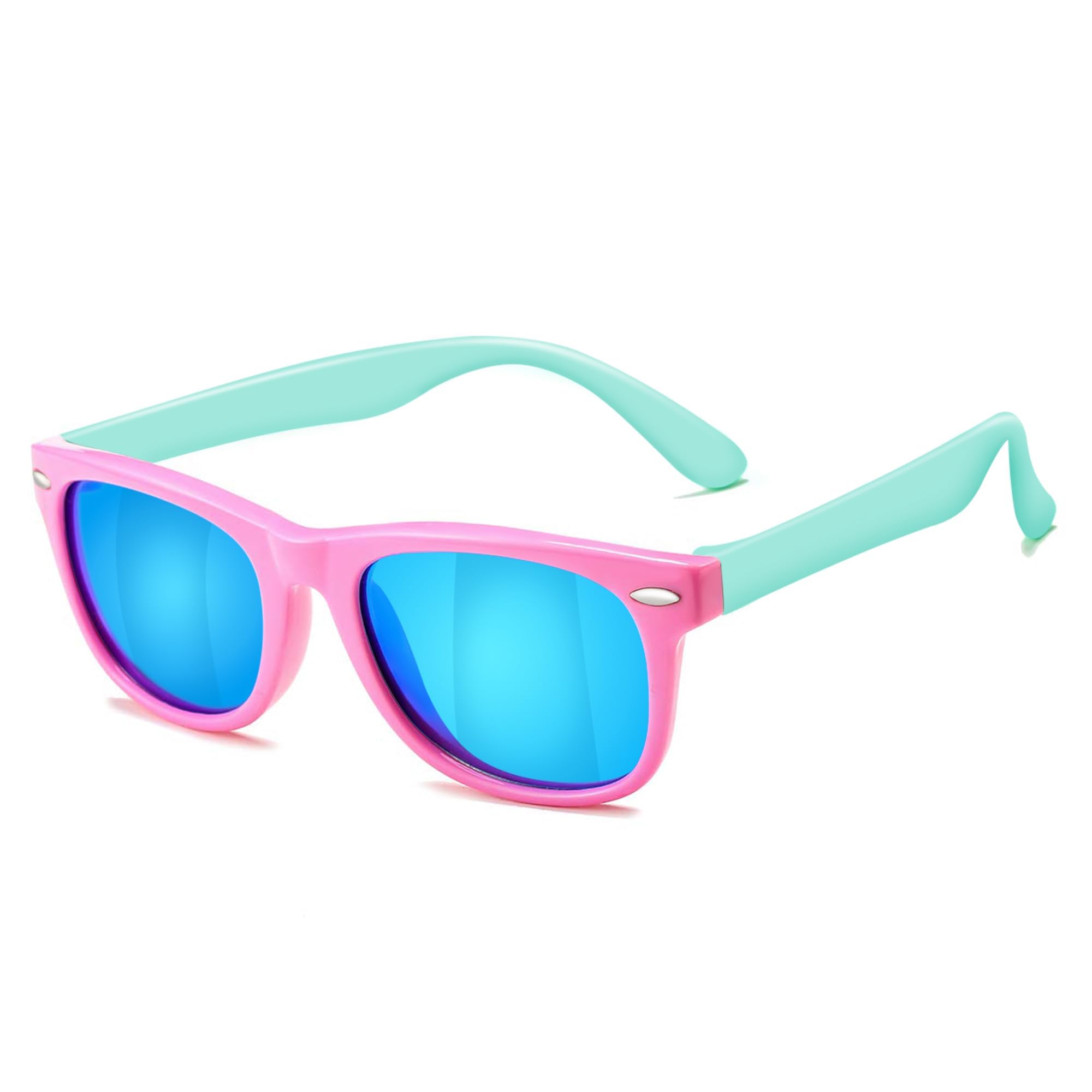
AZorb Kids Polarized Sunglasses

95 /100
Traveler Score Outstanding

Key details

Lens
Polarized
Frame
Flexible TPEE
Included
Pouch and cloth
Stated Age Range
3 to 8 years
Check Details on Amazon

Polarized lenses, a frame that bends nearly double, and a place at the budget end of this list: that combination is why this is the pair we point most families to first. The frame is TPEE, the same rubbery material the better toddler glasses use, so it takes being pulled apart by the arms without cracking at the hinge. The lenses are dark enough to be genuinely useful on a bright afternoon, and a drawstring pouch and a cleaning cloth come in the box.

We rank it first because it's the easiest pair to live with. It's neutral enough in style that a 4-year-old and a 7-year-old will both wear it, and cheap enough that losing one at the beach doesn't end the outing. Nothing about it is precious, which is exactly right for something a child will stuff into a backpack.

Two things to know before you order. There's no strap, so a toddler who yanks glasses off the moment you put them on is better served by our Jan & Jul pick. The 3-to-8 range also runs out early, so compare the arms against a pair the child already wears if they're tall for their age. For a preschooler or a first-grader, this is the pair that stays on, survives rough handling, and costs little enough to replace without ceremony.

Pros

  • Polarized lenses at the budget end
  • TPEE frame bends without cracking
  • Pouch and cleaning cloth included
  • Cheap enough to keep a spare

Cons

  • Sizing tops out around age 8
Our verdict

The pair we point most families to: polarized lenses, a frame that bends instead of snapping, and a price low enough that a lost pair is a shrug rather than a scene.
Check Latest Price
2

Best for Older Kids and Sports

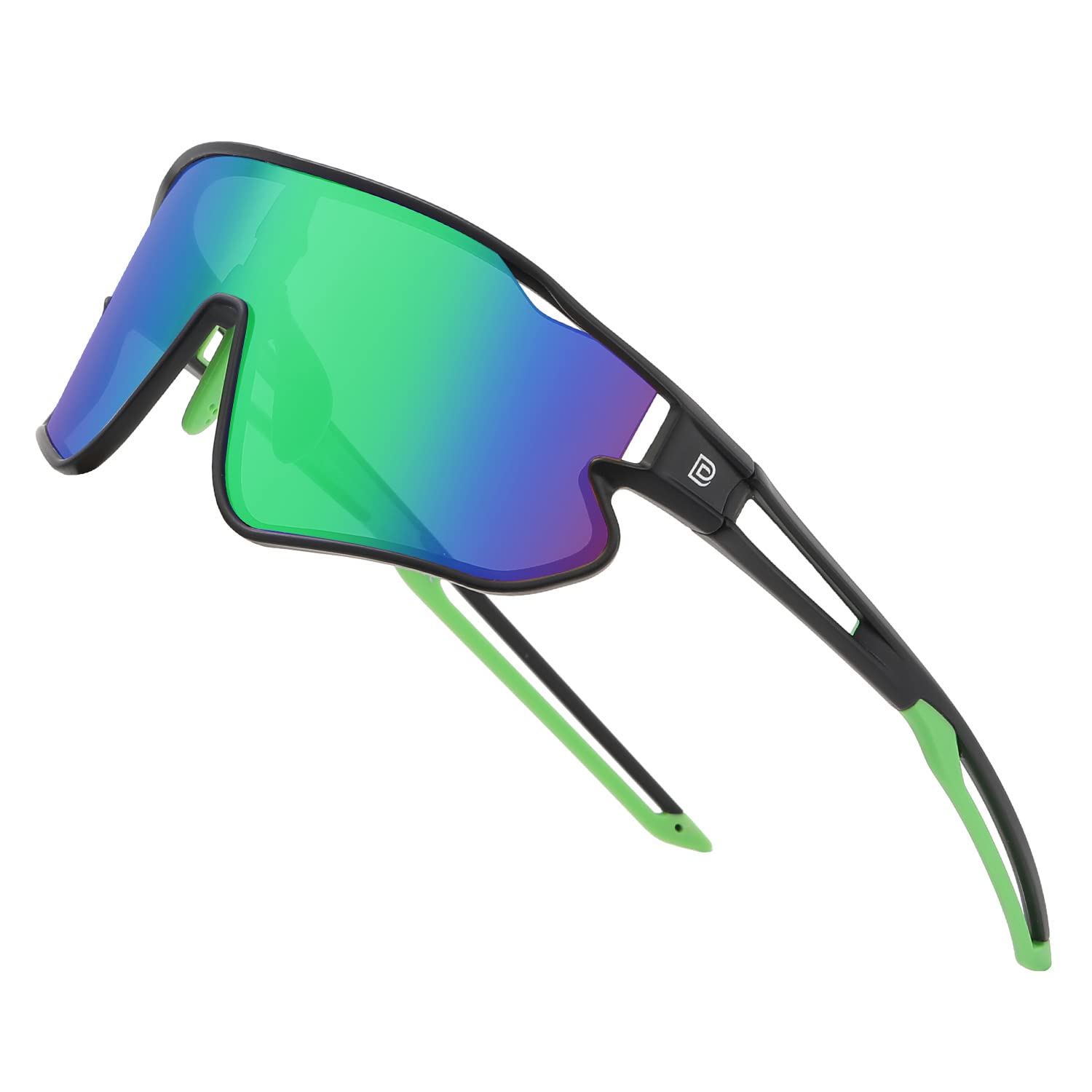
DUCO DK268 Kids Sports Sunglasses

94 /100
Traveler Score Outstanding

Key details

Lens
Polarized TAC
Included
Hard case and cloth
Lens Width
6.4 centimeters
Stated Age Range
8 to 16 years
Check Details on Amazon

Almost every pair on this list stops at 8 or 10; this one is built for the kid who has outgrown them, with a stated 8-to-16 range and a 6.4-centimeter lens width that's close to a small adult frame. It's the pair we point to for a middle-schooler heading to practice, and it's the only one here that fills that role without compromise.

The wrap is the point. A full-frame shield curves around the outer corner of the eye, so it cuts the glare coming off the infield or the water instead of just darkening what's straight ahead. The TR90 frame holds the whole thing to 22 grams, light enough that it doesn't slide down a sweaty nose, and the fit is the strongest part of this pair: snug without pinching, and it sits under a batting helmet or a catcher's mask without complaint.

It ships with a hard case, a soft bag, a cloth, and a lanyard, and the case is the piece we rate highest, because sunglasses loose in a school backpack are scratched by June. The look is loud, with a colorful mirrored lens and a shape that reads as pit-viper to anyone who knows the type. Some kids want exactly that; if yours wants something quieter, the Vcarsian offers similar coverage in a plainer package. The one caution is width, since a small 8-year-old will swim in this frame.

Pros

  • Wrap lenses cut side glare
  • 22-gram frame stays put under a helmet
  • Hard case and lanyard in the box

Cons

  • Too wide for a small 8-year-old
  • Loud wrap styling isn't for every kid
Our verdict

For a 9-to-16-year-old playing ball, this is the pick: wrap-around polarized coverage, a 22-gram frame that stays put, and a hard case that keeps the lenses clean in a bat bag.

Check Latest Price
3

Best for Toddlers

Jan & Jul Xplorer Sunglasses

94 /100
Traveler Score Outstanding

Key details

Lens
Polarized UV-400
Frame
Flexible
Strap
Adjustable, included
Included
Storage sleeve
Check Details on Amazon

The band is the whole idea. It's adjustable and runs behind the head, so a toddler can shove the glasses up onto their forehead or let them hang around the neck without handing them to you, and it holds the frame against a small face that hasn't got the bridge to do it alone. For the 1-to-4 stretch, that's the difference between sunglasses that get worn and sunglasses that get carried.

The rest is built for the same age. The lenses are polarized and rated UV-400, the frame is a soft flexible resin that gives when a child pulls them on by themselves, and a storage sleeve comes in the box. The cut is small and deliberate: it flatters a 2-year-old and gets snug by kindergarten, so this isn't a pair to buy a size up in.

The strap and the small cut solve the two problems that actually make toddler sunglasses fail, and a child can learn to put this pair on alone, which is why it's our toddler pick. It's also the shortest-lived option here, since a 5-year-old will have outgrown it. This is a pair you buy for the strap years, not for the long haul.

Pros

  • Adjustable strap keeps them on and handy
  • Polarized UV-400 lenses
  • Cut small for ages 1 to 4

Cons

  • Priciest of the toddler-friendly picks
  • Flexible arms can still crack
Our verdict

The toddler pair we reach for when a child won't leave glasses alone: an adjustable strap, a deliberately small fit, and UV-400 polarized lenses for the years when a pair gets worn nine seconds at a time.

Check Latest Price
4

Best Multipack

FANNYGO 3-Pack Kids Sunglasses

91 /100
Traveler Score Outstanding

Key details

Lens
Polarized
Pack
3 pairs
Frame
Flexible, bendable
Stated Age Range
3 to 10 years
Check Details on Amazon

Three pairs arrive in one order, which sounds like a gimmick until you've got two kids and a car. One goes in each backpack, one lives in the glovebox, and the arguing stops. They're polarized, the frames bend enough that a child can wrench the arms sideways getting them on, and the colors are different enough that siblings claim their own without a fight.

We rate it the best multipack here for the younger end of the range. The listing says 3 to 10, but these are small glasses: they suit roughly 2 to 6, and a 9-year-old will look like they borrowed them. In a house with two toddlers and a preschooler, that's not a problem. If you're buying for a fourth-grader, it is.

The frames are the flexible rubbery kind rather than the thinner construction of the aviators on this list, so they give instead of snapping when they're stretched, which is the property that keeps a pair alive through being stepped on and shoved into a bag. These are the pairs that live in door pockets and get replaced without ceremony, which is exactly what a three-pack is for.

Pros

  • Three pairs for siblings and spares
  • Polarized lenses
  • Bendable frames shrug off handling

Cons

  • Runs small against the stated 3-to-10 range
Our verdict

The sensible buy for a household with more than one small child: three polarized, bendy pairs that split across backpacks and the glovebox so nobody has to negotiate.

Check Latest Price
5

Best Budget Sports Pair

Vcarsian Kids Baseball Sunglasses

91 /100
Traveler Score Outstanding

Key details

Lens
Polarized
Strap
Included
Included
Carry case
Stated Age Range
3 to 12 years
Check Details on Amazon

If your kid wants the baseball look and your budget doesn't stretch to our big-kid sports pick, this is the pair. The wrap mirrors what the older kids wear, the polarized lenses knock down glare off grass and water, and the whole thing is light enough that a 6-year-old forgets it's there. We think it's the better first sports pair for a family with more than one child in the 4-to-8 window.

Fit is where it earns the spot. The frame sits close to the face and doesn't slide when a child runs, which is the one thing a practice pair has to do, and it manages that on its own, with the included strap as backup for a kid who takes them off between innings. The stated range goes to 12, but the cut is snug: a big 10-year-old needs the DUCO, and a 3-year-old wearing this is at the very edge of it.

A strap and a carry case come with it, which is more than most of the budget picks here include. The styling is plainer than the mirrored wraps elsewhere on this list, and that's a feature if your child wants to look like the team rather than the mascot.

Pros

  • Snug wrap stays put while running
  • Polarized lenses cut glare
  • Strap and carry case included

Cons

  • Cut small for the top of its 3-to-12 range
Our verdict

A snug, sporty pair for the 4-to-8 crowd that stays put through practice without the price of our big-kid pick, with a strap and a case along for the ride.

Check Latest Price
6

Dress-Up Style

SOJOS Round Kids Sunglasses

94 /100
Traveler Score Outstanding

Key details

Lens
Polarized UV400
Shape
Round
Included
Pouch and cloth
Check Details on Amazon

Round frames are the one shape here that doesn't look like sports equipment. The lenses aren't overly dark, the tint is even, and the whole pair has the look of something a child chose rather than something a parent grabbed at the beach. That matters more than it should: sunglasses a child likes are sunglasses a child wears.

The lens is polarized and rated UV400, and a pouch and microfiber cloth come in the box. Fit is where the round shape shows its limits, since a narrow bridge and a wide round lens run large on a 1-year-old and small on a 6-year-old, with the sweet spot roughly between 2 and 5.

We keep it on the list because it's the pair most likely to be worn voluntarily by a child with opinions, and because the frame is sturdier than the thin profile implies. Buy it as the outings-and-photos pair rather than the one that goes to daycare, and the narrow size window stops mattering.

Pros

  • Round shape kids choose themselves
  • Polarized UV400 lens
  • Pouch and cleaning cloth included

Cons

  • Narrow size window, roughly ages 2 to 5
Our verdict

The pair a child picks for themselves: a round frame that looks nothing like sports gear, polarized UV400 lenses, and a build that holds up better than its delicate look suggests.

Check Latest Price
7

Classic Aviator Look

Pro Acme Kids Aviator Sunglasses

91 /100
Traveler Score Outstanding

Key details

Lens
Polarized
Style
Aviator
Included
Hard and soft case
Stated Age Range
3 to 18 years
Check Details on Amazon

This is an aviator shrunk down, and it's the pair to buy for the kid who has started noticing what adults wear. The thin frame, the teardrop lens, the double bridge: it reads grown-up in a way the rubber sports wraps never will, and it's the one pair on this list a 12-year-old won't be embarrassed to be seen in.

It comes with a hard case, a soft case, and a cloth, which is more protection than most pairs here ship with and the reason a mirrored lens stands a chance of staying clean. The stated range runs 3 to 18, which is generous. In practice this is a small adult frame, happiest on a 10-to-14-year-old and big on a 5-year-old.

The lens is polarized and not overly dark, so it works for everyday wear, a school trip, or a pony ride rather than full-sun sports, and the shape suits a child who has grown out of the cartoonish stage but isn't ready for a sports wrap.

It earns its place on the style question rather than the sports question. If your child wants to look older, this does that better than anything else here; if they need something that tolerates being sat on, it isn't the one.

Pros

  • Aviator style older kids accept
  • Hard and soft cases included
  • Polarized lenses, not overly dark

Cons

  • Suits about age 9 and up despite the label
  • Mirrored coating scratches visibly
Our verdict

For the kid who wants to look older: a proper little aviator with polarized lenses, a hard case, and a fit that suits about age 9 and up rather than the whole 3-to-18 range.

Check Latest Price

How We Tested Kids' Sunglasses (With Plenty of Help From the Kids)

We started by gathering every pair we could find that made a specific UV claim, whether UV400 or 100 percent UVA and UVB protection, then narrowed by size range, frame material, lens quality, and price. Pairs with tinted lenses and no stated protection were cut before they ever reached a child — you cannot judge UV blocking by looking at how dark a lens is.

Sixteen pairs went into rotation with four families across four months. They rode along on the walk to school and the carpool line, spent afternoons at playgrounds and splash pads, sat through weekend soccer games, and got stuffed into backpacks and beach bags. Because kids are the real testers here, we mostly stepped back and watched: which pairs a five-year-old could put on by herself, which ones slid down the nose the moment she looked down, and which ones even made it home.

Flexibility got checked the hard way — we twisted frames and bent temples back and forth, then handed them over to see whether they still fit. We noted where hinges loosened, whether lens coatings scratched after a week in a bag, and if nose pieces left marks on small faces. Fit was judged against each kid's head width and whether the temples stayed put during a dead sprint across a field. We also asked the bluntest question available: which pair they would actually choose to wear, which covers appearance and, honestly, value — a cheap pair that gets worn beats an expensive one that lives in a drawer.

How to Choose Sunglasses for Kids

Fit Beats the Age Label

Two pairs can both claim 3 to 8 and sit completely differently on the same child. What you're checking is simple: the frame should sit close to the face without the lens resting on the cheek, the arms should reach the ear without pinching, and nothing should slide when the child tips their head forward.

Bring the child along if you can, or measure a pair they already wear across the front and compare. A pair that's slightly too big becomes the pair that gets pushed up the nose all afternoon, and then left at home.

UV400 First, Polarized Second

UV protection is the reason to buy sunglasses at all; polarization is the comfort upgrade on top. A UV400 label means the lens blocks the full ultraviolet range, and it's the first thing to look for. Polarization goes further and cuts the glare bouncing off water, sand, snow, and a freshly mowed ball field, which is why every sports pair in this guide has it.

The trap is a very dark lens with no UV claim. That combination is worse than a lighter lens that's rated, because the tint opens the pupil while letting the UV through.

Flexible Frames and Where They Actually Break

A rubbery TPEE or TR90 frame bends nearly in half and springs back, which is what keeps a pair alive through the preschool years. The part that fails is usually the hinge, not the frame itself, and a strap helps by holding the glasses on so they aren't yanked off by one arm.

For a child under 6, look at the bendy frames here. Once a kid is old enough to take sunglasses off with two hands, a more grown-up frame is reasonable and will look better in photographs.

Straps: Worth It for Toddlers, Optional After That

A strap is the single biggest upgrade for a child under 4. It runs behind the head, so the glasses stay on through a tantrum and hang around the neck when they come off, which is often the difference between a pair that lasts the summer and one that vanishes in a parking lot.

Past about 5, straps start getting refused, and a snug-fitting wrap does the same job without the babyish association.

One Good Pair or a Multipack

Multipacks make sense in two situations: more than one child, and a child who loses things. Three pairs split across backpacks and a glovebox cost less than replacing one good pair twice, and nobody has to negotiate over who holds what.

A single pair is the better call once a child keeps track of their own things and wants the pair they picked out. Either way, buy for the next six months rather than the next three years, because the fit will change before the frames wear out.

Frequently Asked Questions

Final Verdict

For most families the AZorb pair is the answer: polarized, flexible, and inexpensive enough that a lost pair doesn't ruin an afternoon.

Move up to the DUCO once your child is 9 or playing ball, since the wrap coverage and hard case are worth the step up. And if you're buying for a toddler who treats sunglasses as a toy, the Jan & Jul strap is the one place on this list where paying more buys something real.