Best Snowboard Socks of 2026

The warmest sock in your drawer can be the worst sock in your snowboard boot. A thick, fuzzy pair feels great in the parking lot, but inside a snug boot it can bunch at the heel, press on your toes, or make a good fit feel sloppy by midday. The right snowboard sock disappears: warm without extra bulk, cushioned in the right places, and sized to stay flat from first chair to last. I have ridden in everything from thin liners to thick wool hike socks, and over the past six months our team wore 14 pairs on snow, including several ski days. What separated them was fit, comfort, warmth, durability, and value, not just thickness.

Build quality shows up fast in socks you wash after every ride. A flat toe seam, a heel that stays put, and a size that matches your boot liner matter more than a plush lining, and a cheap pair that goes thin at the heel by February is no bargain. The picks below cover different budgets and riding habits.

1

Best Overall

WEIERYA Merino Ski Socks

93 /100
Traveler Score Outstanding

Key details

Fabric
Merino wool
Height
Over-the-calf
Cushioning
Full cushion
Check Details on Amazon

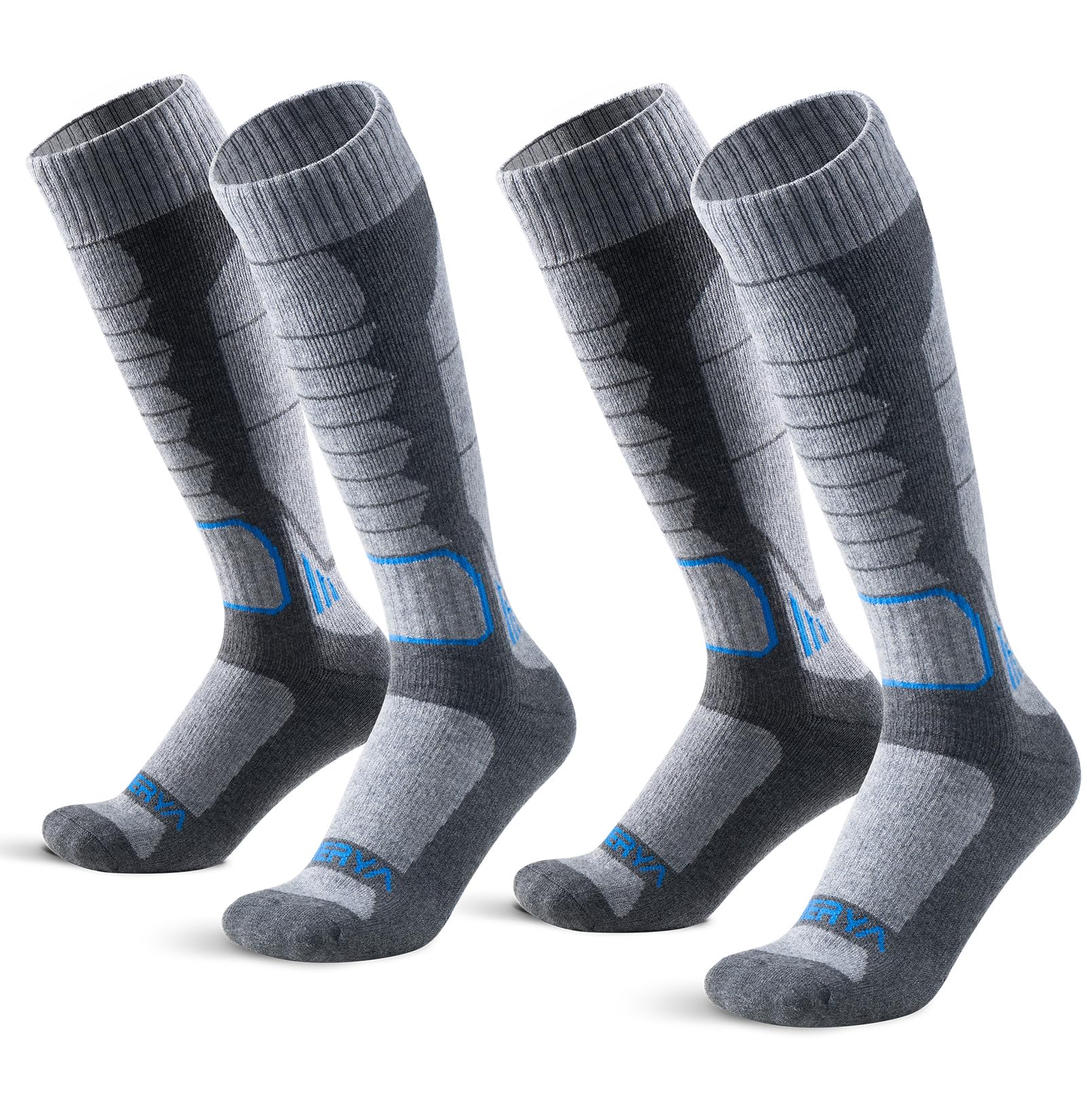
A snowboard boot works on a sock all day: the liner grabs, the cuff pushes, and by the last run the top has usually migrated halfway down the calf. The pair that held its ground best in our testing is this one — full cushion through the foot and up the leg, wool in the knit, and a cuff that sits over the boot liner rather than inside it. Warmth and staying power are the two things it does better than anything else in this group, and they happen to be the two things you notice on a cold chairlift.

The stretch is what makes the fit work. It settles onto a wide calf without cutting in and onto a slender one without hanging loose, which takes calf width out of the decision almost entirely — unusual here, where the top of the sock is usually the first thing to disappoint. The cuff runs generous, so on shorter legs there may be more sock above the boot than you expected.

Full cushion has a cost, and the cost is volume. If your boots were fitted with a thin sock, these will change the fit slightly, so give them a groomer day before committing them to a powder trip. What you get back is a soft footbed under the heel and a panel up the shin that takes the edge off the boot's tongue.

Budget pricing makes the last part easy. Keeping a second pair in rotation matters more than any single feature here — a dry sock on day two beats a fancy one — and this is one of the least expensive ways in the group to do it.

Pros

  • Full cushion without excess bulk
  • Cuff stays over the calf all day
  • Stretches to fit wide and narrow calves
  • Budget price for a wool sock

Cons

  • Calf length runs long on shorter legs
Our verdict

We recommend it as the default snowboard sock: full cushion, a cuff that stays over the liner, and enough stretch for wide and narrow calves, all at the budget end.

Check Latest Price
2

Best Wool-Blend Value

OutdoorMaster Merino Ski Socks

95 /100
Traveler Score Outstanding

Key details

Toe
Seamless toe
Pairs
2 pairs
Fabric
30% merino wool blend
Check Details on Amazon

Most socks in this group print merino wool on the label and leave it at that. This one puts a number on it: 30% merino, with acrylic, nylon, polyester, elastane, and a little rubber making up the rest. We appreciate the honesty, and we appreciate what the blend buys — wool's softness and moisture handling against the skin, with the synthetics supplying stretch and keeping the price reasonable.

The detail that earns its keep is the seamless toe. A snowboard boot has a firm toe box pressing on everything inside it, and a stitched seam ridge is exactly where a hot spot starts. Flat from the instep forward, these vanish inside the boot the way you want a sock to. We were also struck by how light the knit is: warm, but it doesn't pad out a boot that already fits.

The calf is the inconsistent part. The top sits lower on tall legs than the over-the-calf label implies, so if you're long in the shin, size up rather than hope. Elsewhere it's a steady, warm, soft sock that handles a genuinely cold day, and the two-pair pack means a spare lives in your bag without any thought.

Pros

  • Stated 30% merino blend
  • Seamless toe reduces hot spots
  • Warm without padding the boot
  • Two pairs in the pack

Cons

  • Ankle wears through first under hard use
Our verdict

We recommend it to anyone who wants a stated merino blend and a flat toe seam without paying premium money — just size up if you're long in the shin.

Check Latest Price
3

Best Cushioning for Snowboard Boots

CS CELERSPORT Wool Ski Socks

94 /100
Traveler Score Outstanding

Key details

Pairs
2 to 4 pairs
Fabric
Wool
Sizing
Unisex
Check Details on Amazon

The padding in these sits where a snowboard boot actually presses: a strip up the shin, another across the top of the foot, and a reinforced heel behind it. That's a different map from the all-over cushion of our top pick, and for a rider whose boot tongue has been leaving a mark on the shin, it's the more useful one.

Fit is where these quietly earn their place. The cuff hugs the calf without tourniquet pressure, holds its shape, and doesn't bunch or slide down the hill — the failure that turns a good sock into a bad day. We also appreciate that the heel is reinforced rather than simply thick: that's the spot taking the friction when you skate a flat or hike a ridge.

They handle a wide range of days, from a cold morning to mild spring slush, without turning into a swamp by the afternoon. Between the shin panel and the cuff, this is the pair in the group that thinks hardest about the way a snowboard boot loads the leg.

Pros

  • Padding at the shin and top of foot
  • Cuff holds without pinching
  • Reinforced heel
  • Works from cold mornings to mild days

Cons

  • Less cushion underfoot than the plush picks
Our verdict

We recommend these for riders whose boot tongue is the problem: the shin and instep padding is the most purposeful in this group, and the cuff stays put.

Check Latest Price
4

Best Premium Pair

Smartwool Ski Targeted Cushion

91 /100
Traveler Score Outstanding

Key details

Height
Over-the-calf
Sizing
Men's
Cushioning
Targeted cushion
Check Details on Amazon

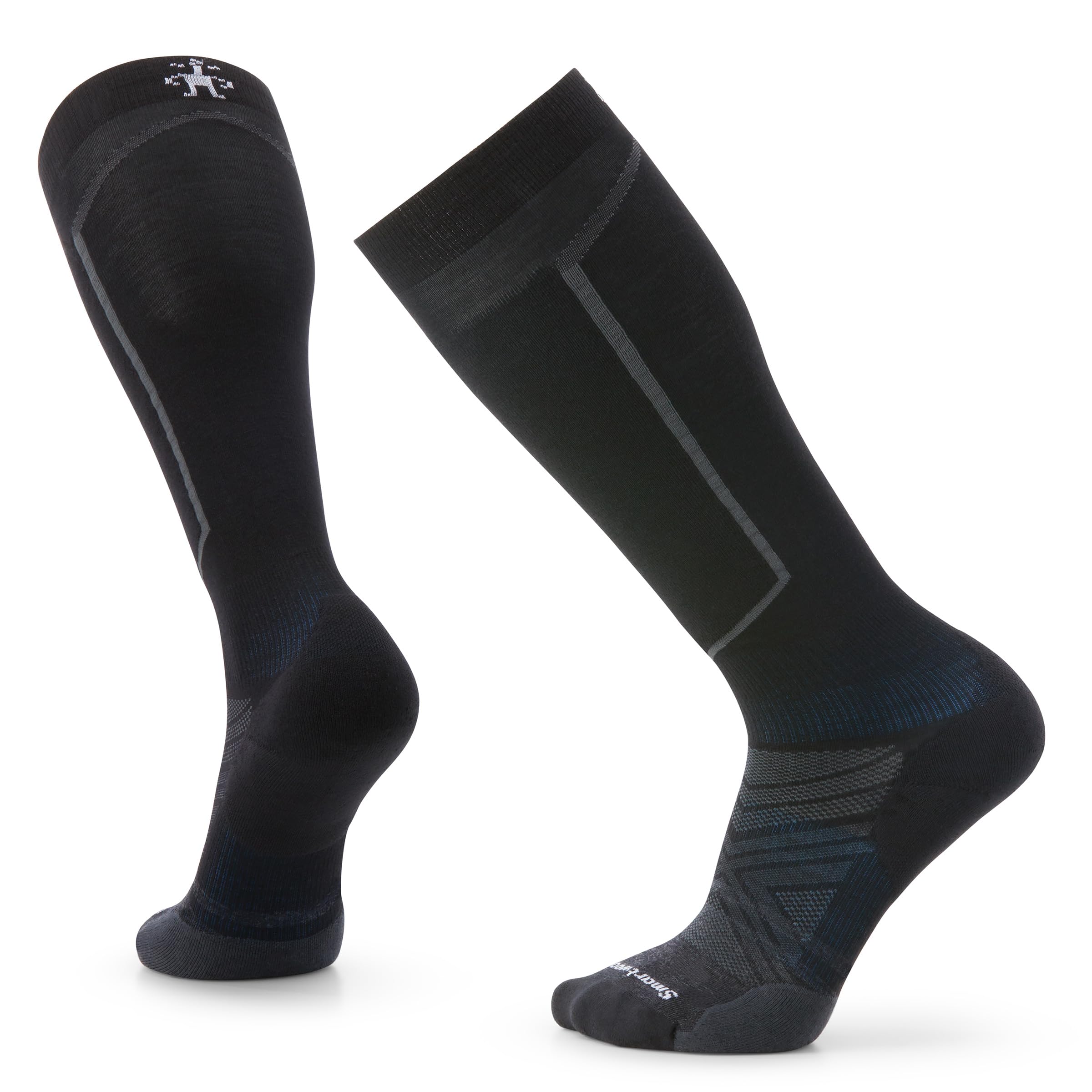
Targeted cushion is the idea here: padding at the shin, heel, and toe, thinner through the arch and instep. The point isn't fewer features, it's a sock that adds warmth and protection without changing the fit of a boot you've already dialed in. We noticed it most in a snug, well-fitted boot, where the bulkier socks in this group pressed and this one didn't.

The wool has the close, dry feel you want against the foot, and the cuff keeps its grip — no creeping down the calf, no bunching at the ankle after a run of lift rides. It also came through repeated washing with its shape and softness intact, which is the argument for buying one good pair instead of a pack of three.

Where it gives ground is deep cold. Warmth here is steady rather than furnace-like, so on a windy January day our thicker picks are the ones we reach for; this is the pair for spring conditions, a roomy boot, or anyone who hates the feel of a padded sock. That's a real trade, and it's the right one for a lot of riders.

Pros

  • Padding only where boots press
  • Thin through arch and instep
  • Holds shape through washing
  • Cuff stays on the calf

Cons

  • Priciest per pair in this set
Our verdict

We recommend it for snug, custom-fitted boots and anyone who wants warmth without added volume; it's the premium pair here and it behaves like one.

Check Latest Price
5

Best Budget Two-Pack

Cirorld Merino Ski Socks

92 /100
Traveler Score Outstanding

Key details

Pairs
2 pairs
Fabric
Merino wool
Sizing
Unisex
Check Details on Amazon

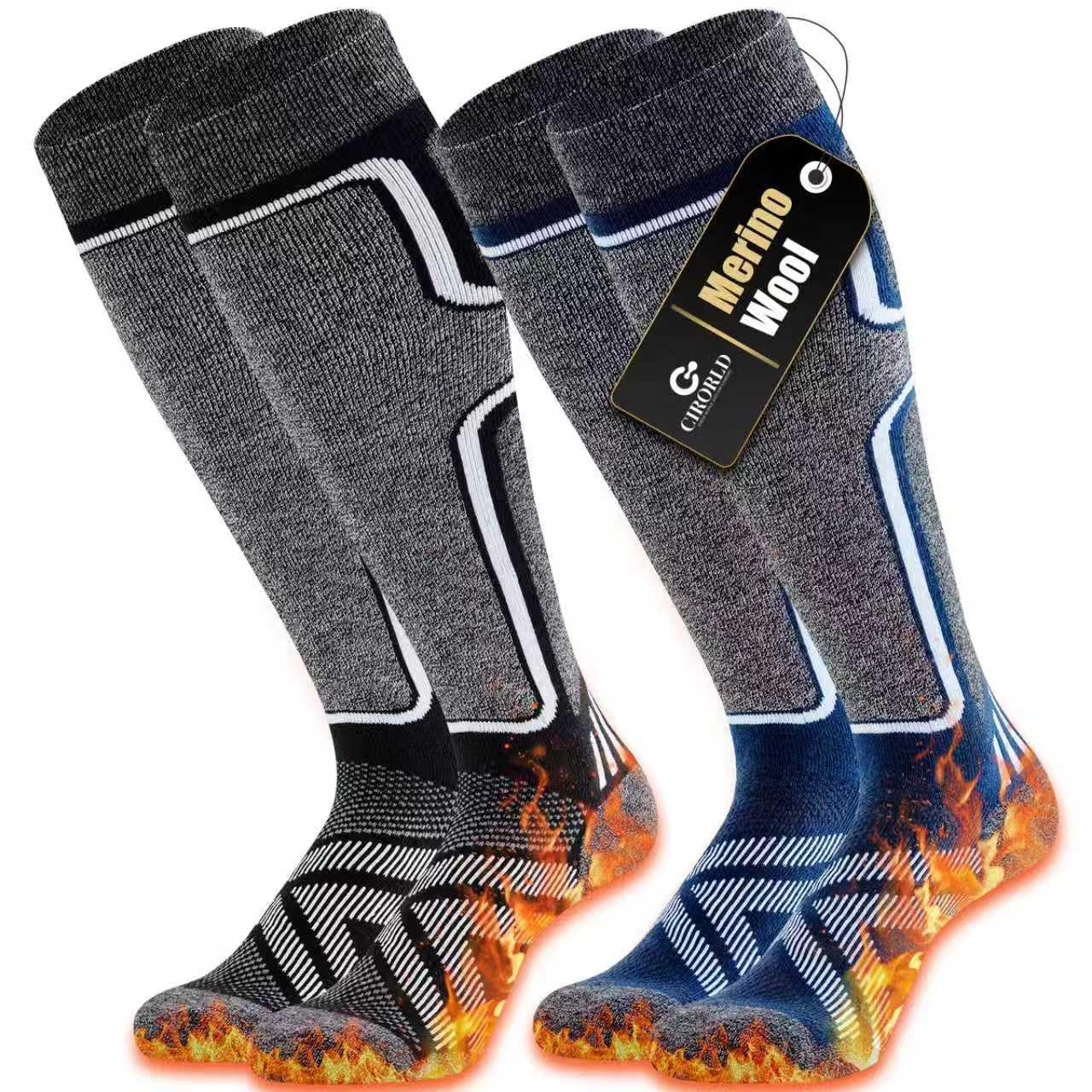
This is the least expensive way into a wool sock in this group, and it doesn't ride like a cheap one. Knee-high, snug without squeezing the calf, and it stays up — no sagging into the boot, no twisting around the ankle on the way down. We were pleasantly surprised by how much of the premium feel survives at the bottom of the price range.

The knit is soft and on the thin side for a wool sock, which suits a boot that fits closely. The seams are flat enough that you won't find them with your toes, and the cuff has enough grip to stay over the liner without leaving a mark on the calf.

Warmth is honest: it handles a cold morning and a mild afternoon without complaint, and it kept its shape through the wash. What it won't give you is the plush footbed of the thicker picks — think of it as a sock that disappears inside your boot rather than one you notice.

Pros

  • Lowest price tier in the group
  • Knee-high cuff that stays up
  • Flat, unnoticeable seams
  • Soft knit for a budget sock

Cons

  • Only two pairs, so less rotation on a long trip
Our verdict

We recommend it as the cheapest way into wool here — knee-high, soft, and steady on the calf, as long as two pairs cover your trip.

Check Latest Price
6

Compression Fit

Hylaea Merino Ski Socks

91 /100
Traveler Score Outstanding

Key details

Pairs
3 pairs
Fabric
Merino wool and Thermolite
Height
Knee high
Cushioning
Terry loop at forefoot, heel, and toe
Check Details on Amazon

An elastic band through the arch and moderate compression up the leg: these hold the calf more than anything else in this group. If you like a sock that feels like it's doing something — and plenty of riders do once a boot cuff starts pushing — that's the appeal here.

The knit runs above the knee, with terry-loop padding at the forefoot, heel, and toe, and three pairs in the pack — enough to cover a long weekend with a wash in the middle. Merino blended with Thermolite is the fiber story: wool for feel and moisture, the synthetic to keep the knit warm without weight.

It suits a rider who wants support and doesn't mind a firm cuff. If a sock has ever bunched under your arch or slid down mid-run, the compression and the arch band are aimed squarely at that, and three pairs means one can be drying in the lodge while another is on your feet.

Pros

  • Compression holds the calf
  • Padding at forefoot, heel, and toe
  • Runs well above the knee
  • Three pairs per pack

Cons

  • Sizing runs large
  • Heels can wear through early
Our verdict

We recommend it for riders who want compression and a firm hold on the calf, and for anyone who wants three pairs rather than one perfect pair.

Check Latest Price
7

Cold-Day Warmth

Welwoos Merino Ski Socks

91 /100
Traveler Score Outstanding

Key details

Pairs
3 pairs
Fabric
Merino wool
Height
Knee high
Sizing
Men's
Check Details on Amazon

The small thing we ended up valuing most: these stay on your foot when you pull it out of the boot. Anyone who has hopped around a lodge doorway on one leg knows why that matters.

Warmth is what this pair is known for, and it delivers — one of the warmest wool socks here, with a soft, non-itchy inside and a cuff that doesn't pinch the calf. The colors and patterns are cheerful without shouting, which is not something these socks needed to be.

Three pairs, knee-high, firm enough at the top to stay over a liner without leaving a ridge in your calf, and substantial enough to feel like a winter sock without changing how your boot closes.

For a trip where warm feet matter more than anything else, this is a strong choice, and a three-pair pack covers a week of riding with one wash in the middle. It's the pair we pack for a cold destination, and the one we hand over when someone complains their feet are always cold.

Pros

  • Very warm for a wool sock
  • Soft, non-itchy inside
  • Cuff doesn't pinch the calf
  • Three pairs per pack

Cons

  • Heels wear through within a season
Our verdict

We recommend it when warm feet matter most: it's among the warmest socks here, soft inside, and it stays on your foot when the boot comes off.

Check Latest Price
8

Soft Knit Comfort

Sandsuced Merino Ski Socks

90 /100
Traveler Score Outstanding

Key details

Pairs
3 pairs
Fabric
Merino wool
Height
Knee high
Sizing
Unisex
Check Details on Amazon

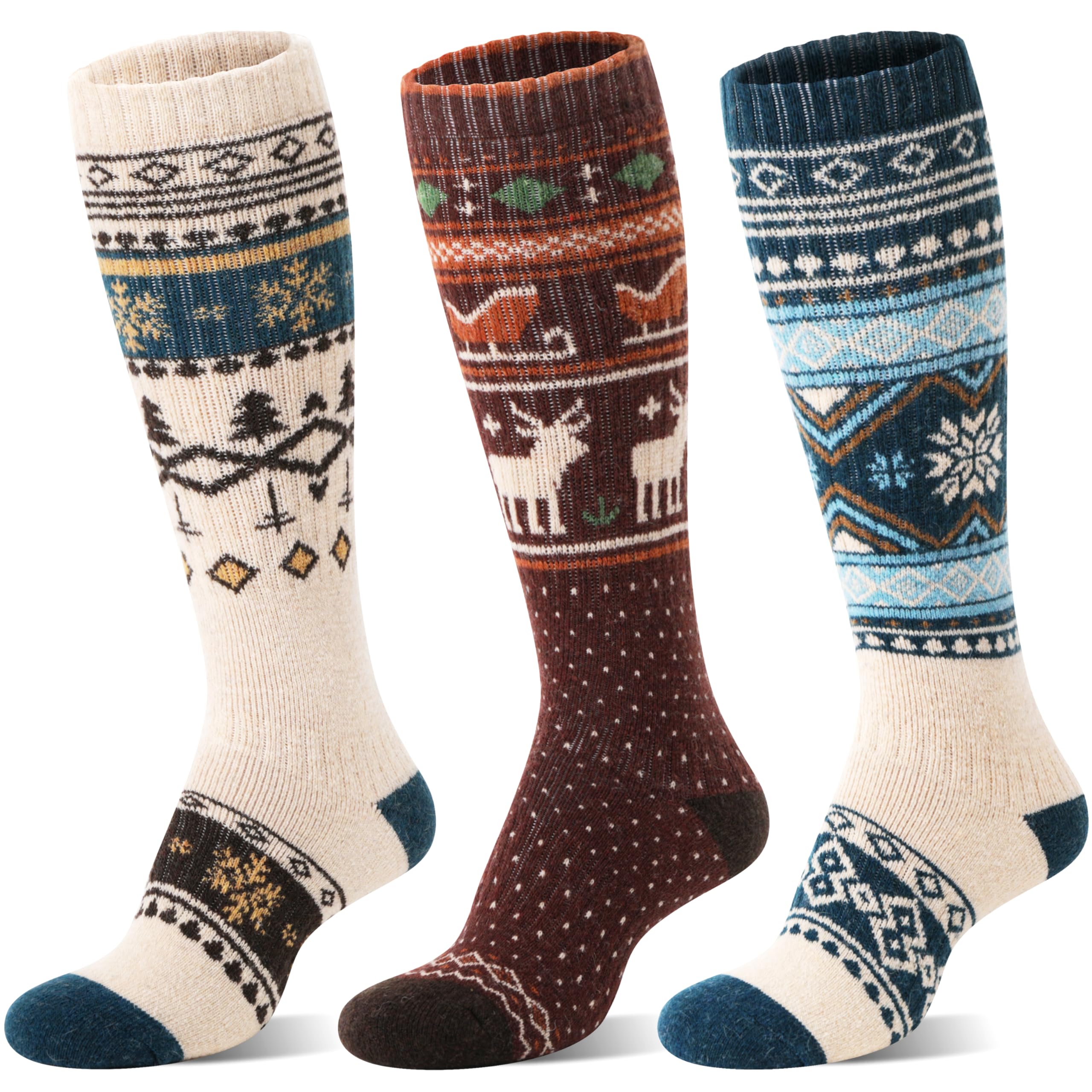
The knit is the first thing you notice — patterned, closer to a proper wool sock than a technical tube, in colors that look good enough to wear around the cabin afterwards.

Under a boot, the details that matter are less photogenic. It stays up over the calf on the descent, doesn't bunch under the arch, and handles sweat the way wool should, taking it up rather than letting it sit against the skin.

Softness is the other thing it does well. It's the pair we reach for on a day off as much as on the hill, and it kept that softness through washing instead of going scratchy.

There's a pattern in this group: the socks that feel best next to the skin are usually the ones that stay put, and this one proves the rule. For warmth, a soft hand, and a look you'll wear off the hill too, it earns its place.

Pros

  • Soft knit that holds through washing
  • Stays up over the calf on descents
  • Handles sweat well
  • Three patterned pairs

Cons

  • Mid-weight rather than plush
Our verdict

We recommend it for the rider who wants a soft, good-looking wool sock that stays up — three pairs of them, in patterns worth wearing.

Check Latest Price

How We Tested Snowboard Socks

We started by reading rider reviews and shop fit guides, then narrowed the field by material, cushioning placement, seam construction, size range, and price. We looked for socks that were thick enough to cushion without crowding a boot, and we skipped anything that came only in one size. That left us with 14 pairs, which we wore over six months of resort days, cold morning lift lines, and a few ski trips.

Each pair went into a snowboard boot for a full day, from the first run to the last lift. I checked mid-day for bunching under the arch, heel slip, seams rubbing at the toes, and whether the sock made the boot feel tighter or looser than usual. On long chair rides and after standing around in the snow, I noted whether toes stayed warm or went cold. Testers with narrow feet and wide calves tried their normal size; when a pair pinched at the calf, we sized up and compared.

We also compared thin, midweight, and heavy pairs in the same boot to see how thickness changed fit, and several testers wore their pairs under ski boots on ski days. After every use, each pair went through the wash, and we inspected heels and toes for thinning, pilling, and holes. At the end, we weighed how they looked and felt against how often we reached for them, because a sock that costs a little more but survives a full season is a better value than a cheap pair that goes thin by February.

How to Choose Snowboard Socks

Coverage: get the cuff over the liner

A snowboard boot's liner rises well up the shin, and a sock that ends below it gets dragged down all day. Every pair here is over-the-calf or knee-high, but those labels are applied loosely — the same sock that reaches the knee on a shorter rider sits well below it on a taller one. The cuff should clear the top of your liner with something to spare.

The practical test: pull your liner on, note where its top edge lands on your calf, then compare that with the stated height of the sock you're considering. If you're long in the shin, size up so the extra length sits above the boot rather than gambling on a calf-height sock.

Cushioning: match it to boot volume

Cushion arrives in two useful shapes: targeted padding at the shin, heel, and toe, or full cushion through the whole sock. Targeted cushion protects the places a boot loads without adding volume elsewhere, which matters if your boots were fitted with a thin sock and feel precise. Full cushion is warmer and softer underfoot, and it fills space — sometimes that fixes a roomy boot, and sometimes it's why your toes go numb.

If you're between the two, think about the boot you already own. A snug, heat-molded liner wants the Smartwool or the CS CELERSPORT; an older, roomier boot is more comfortable with the full-cushion WEIERYA. Buy the sock for the boot, not for the photograph.

Fiber: read the wool percentage

Merino in the name tells you very little. The OutdoorMaster pair states 30% merino, with acrylic and nylon making up most of the rest — typical of this price range, and enough wool to soften the feel and handle moisture while the synthetics supply stretch, shape, and wear resistance. More wool feels better against the skin, costs more, and can wear at the heel sooner.

The action is simple: look for a number. Where a listing says only merino wool, you're buying the feel of the knit rather than a stated blend, so judge that pair on fit and cushioning instead.

Pairs, wear, and washing

Socks come off damp, and a wet sock on day two is the quickest route to cold feet. Two pairs cover a weekend; three cover a week with a wash in the middle. Pack counts here run from two to four pairs, and cost per pair is what separates them more than the headline price does.

Expect the heel and ankle to go first, because that's where boot friction concentrates. Machine washing is standard for this category, but heat is what shrinks wool, so wash cool and skip the dryer if you want the fit to last the season.

Frequently Asked Questions

Final Verdict

After working through the whole set, the WEIERYA pair is the one we point most riders to: full cushion, coverage that stays over the liner, and budget pricing that makes a second pair an easy call. Warm feet and a cuff that doesn't creep are most of what a snowboard sock is for, and it does both.

If your boots are already dialed in and you want cushion without added bulk, the Smartwool Targeted Cushion is the upgrade worth paying for. If the boot tongue is the part that hurts, take the CS CELERSPORT and its shin padding. Those three decisions cover almost every rider; the rest of the list is a variation on them.